


Jonas Fouquet Navarra Pattern
Navarra Pattern by Jonas Fouquet, c.1720 and c.1820.
The Spanish Navarra pattern was produced in The Netherlands by the Fouquet dynasty of card makers who had emigrated from France (Rouen) to Amsterdam in 1685 due to religious persecution. Rather than for export, this pattern appears to have been produced for the Jewish community living in the Low Countries. Sephardic Jews (“The Jews of Spain”) are a Jewish ethnic division who emerged as a distinct community on the Iberian Peninsula but suffered repeated persecutions by Catholics more →
Around six manufacturers are known from the Fouquet dynasty, mostly named Jonas but also including Jordan Fouquet (1751-1807), the last one being Jonas Fouquet (1807-1818). In both the examples shown below, the cards are numbered from 1 to 10 and there are no ‘pintas’ (border breaks) as normally seen on Spanish cards.
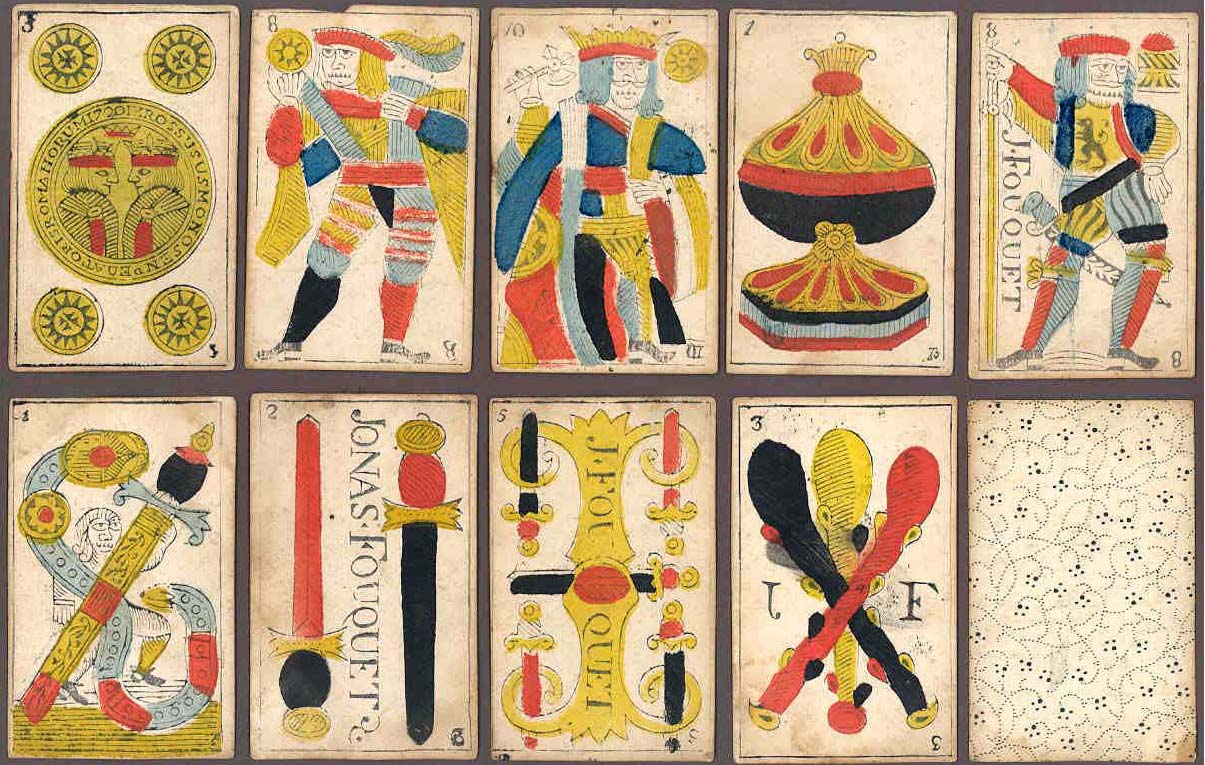
Above: Navarra Pattern by Jonas Fouquet, Amsterdam c.1720.
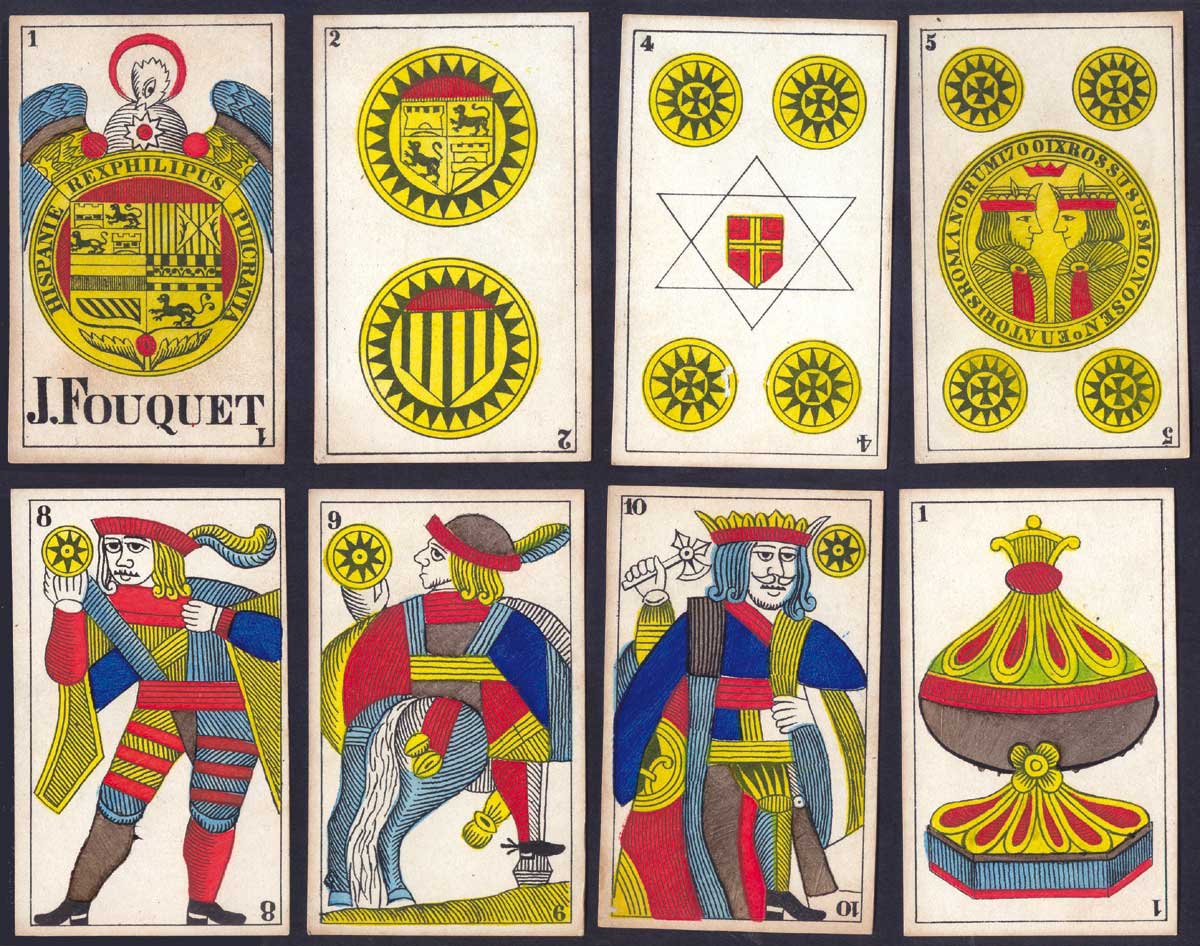
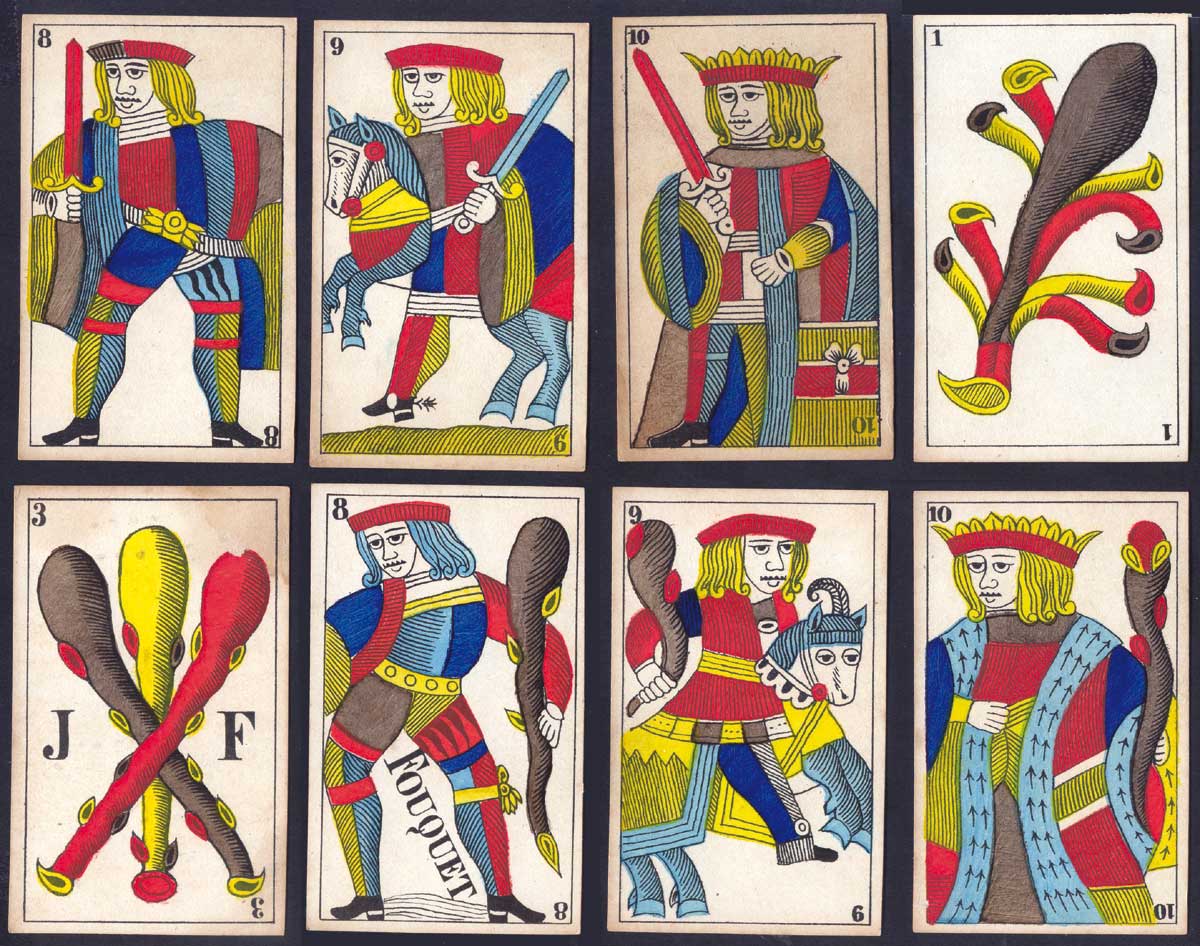
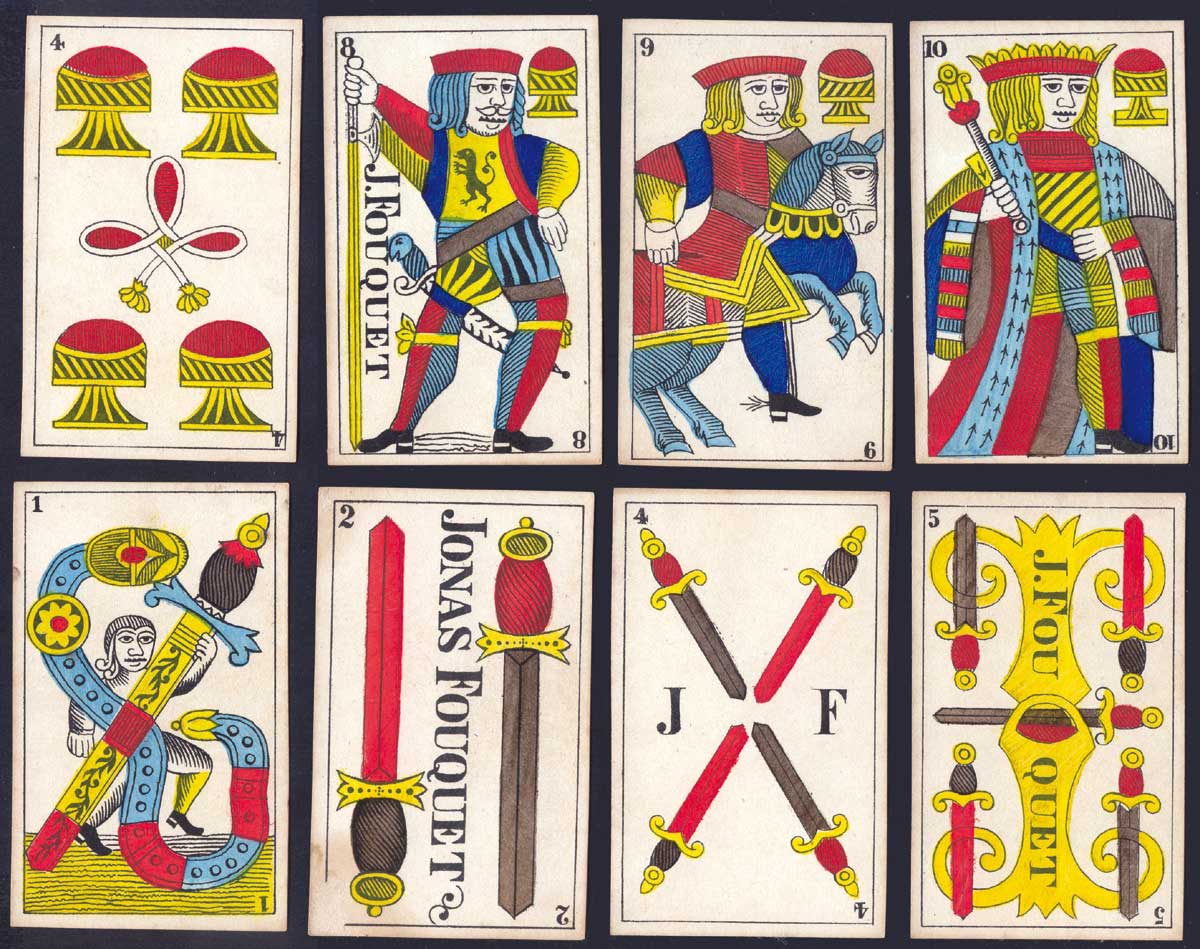
Above: Navarra Pattern by Jonas Fouquet (1807-1818), Amsterdam c.1810. It is likely that these cards were produced by Jordan & Company (owned by Abraham Kemp) who acquired the Fouquet business in 1818 and closed it in 1844. From the collection of Enrique García Martín.
In 1705 Jean Fouquet of Amsterdam denounced Belgian cardmakers from Liège for imitating his products including his name and trademark.
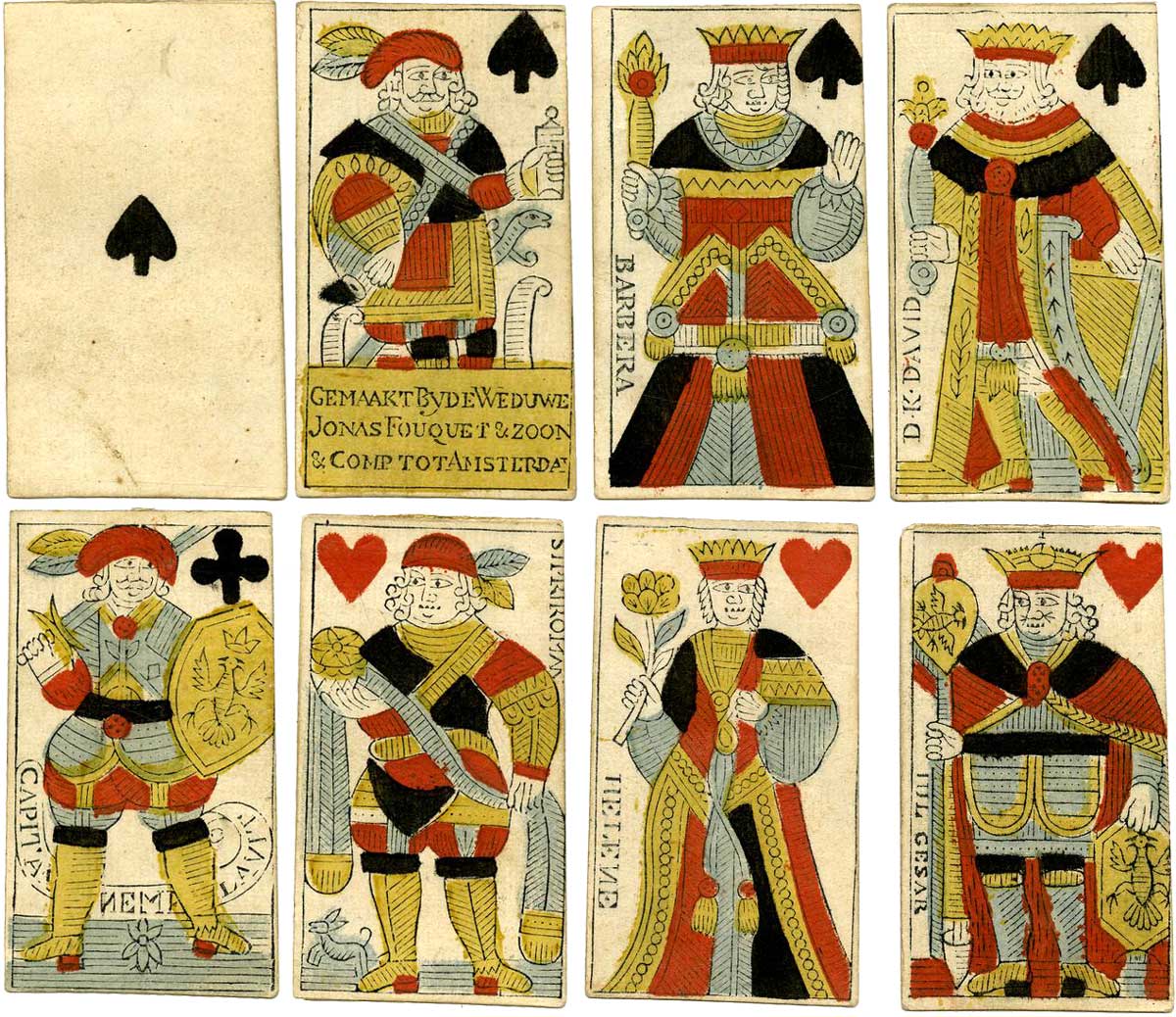
Above: piquet pack of 32 playing-cards, hand-coloured woodcut, edges gilt. On the knave of spades is "Gemaakt by de Weduwe Jonas Fouquet & zoon & Comp. tot Amsterdam" (Made by the Widow of Jonas Fouquet & Son & Comp. to Amsterdam). Copied from old French cards. The court cards have unusual names; the knave of hearts is "Sipri Roman" and the queen of spades is "Barbera". Backs printed with a pattern of hexagons enclosing suns, 18th Century. © The Trustees of the British Museum.
CREDITS & REFERENCES
The 18th century French-suited piquet pack by Jonas Fouquet can be viewed on the British Museum website►
Additional research by Alberto Pérez González.

By Simon Wintle
Spain • Member since February 01, 1996
I am the founder of The World of Playing Cards (est. 1996), a website dedicated to the history, artistry and cultural significance of playing cards and tarot. Over the years I have researched various areas of the subject, acquired and traded collections and contributed as a committee member of the IPCS and graphics editor of The Playing-Card journal. Having lived in Chile, England, Wales, and now Spain, these experiences have shaped my work and passion for playing cards. Amongst my achievements is producing a limited-edition replica of a 17th-century English pack using woodblocks and stencils—a labour of love. Today, the World of Playing Cards is a global collaborative project, with my son Adam serving as the technical driving force behind its development. His innovative efforts have helped shape the site into the thriving hub it is today. You are warmly invited to become a contributor and share your enthusiasm.

Activity for Jonas Fouquet Navarra Pattern
Sign in to comment or save this article.

Related Articles
Most Popular
Our top articles from the past 60 days


