

Spanish Playing Cards ~ La Baraja Española
Spain has played a pivotal role in the history of playing cards in Europe and Latin America.
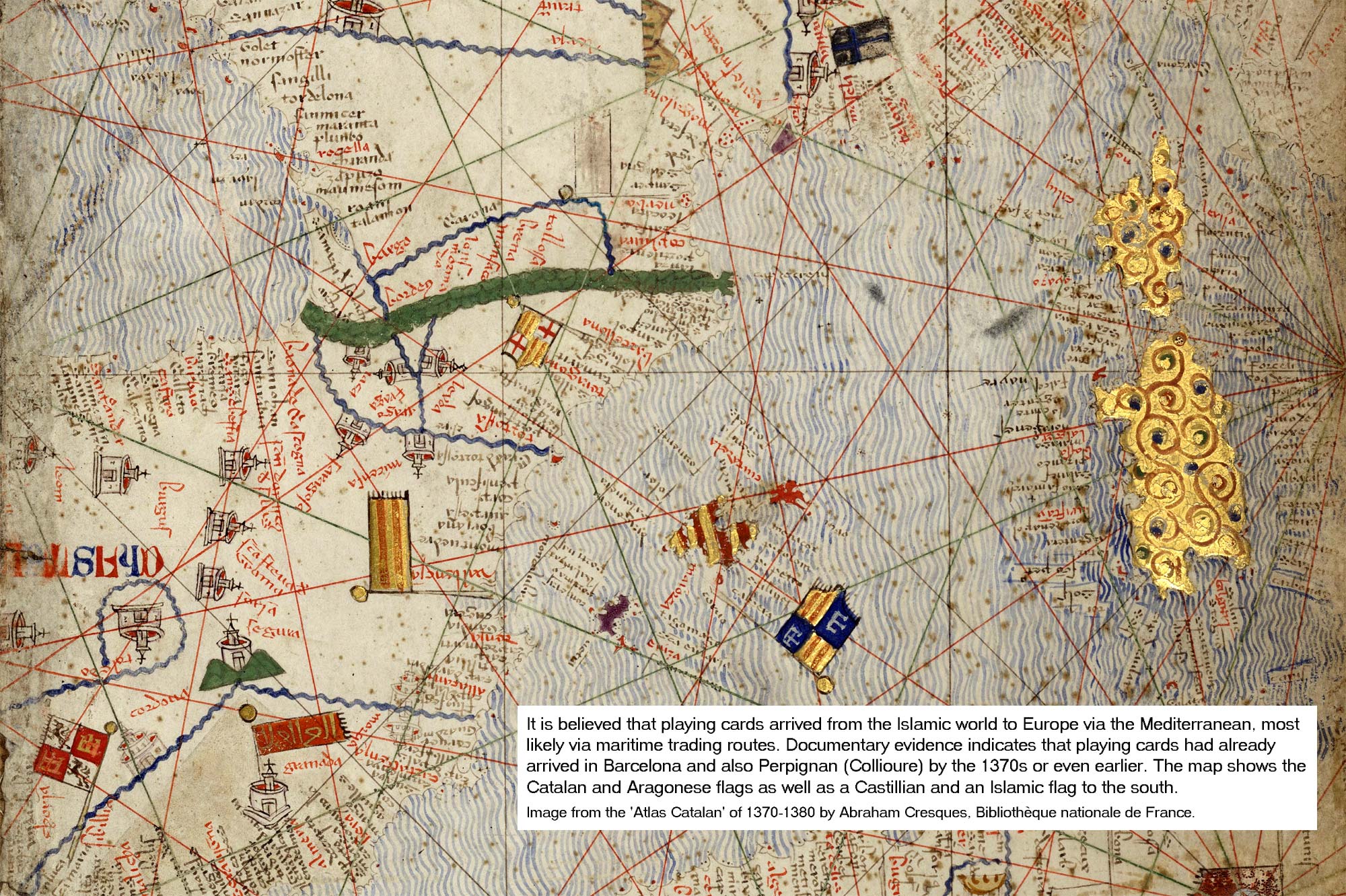
SPAIN has played a pivotal role in the history of playing cards in Europe and Latin America. One view is that the early history of playing cards in Europe was related to the invasion of North Africa, Spain and Sicily by Islamic forces during the Mamluk Sultanate of Egypt which ended in 1517. The Arabic word naip ( naipe = playing card ) has been used in Catalonia since 1370 or even earlier. Spain has had a complex colonial history and Spanish playing cards have travelled to the ‘New World’ where the legacy of Spanish-suited playing cards still prevails today from Mexico to Patagonia, as well as other remote parts of the globe.
An abundance of early literary references are in the Catalan or Spanish languages. Playing cards have been popular in Spain since their very first introduction there. Early sources refer to playing cards and card games in dictionaries and merchants’ inventories, to various card-makers and to prohibitions of card games, mostly around Barcelona and Valencia, in the late 1300s and early 1400s. Historical archives from Barcelona, 1380, mention a certain Rodrigo Borges, from Perpignan, and describe him as “pintor y naipero” (painter and playing card maker). He is the earliest named card-maker. Other card makers named in guild records include Jaime Estalós (1420), Antonio Borges (1438), Bernardo Soler (1443) and Juan Brunet (1443). The types of cards mentioned include “large cards, painted and gilded” as well as “Moorish” cards and “small” cards. “Naïps moreschs” are also mentioned in several inventories in distinction to other types of cards and those authors presumably had evidence to support the distinction.
With the marriage in 1468 of the Catholic monarchs Ferdinand of Aragon and Isabella of Castille, the Spanish nationality came into existence in its definitive form. The catholic monarchs inherited the trading routes linking the Cantabrian ports with Flemish and French production centres. To this they soon added trade routes to England, North Africa and Italy. Catalonia experienced a revival of its importance in the Mediterranean reaching as far as Egypt. And, of course, Columbus discovered the 'New Indies' in 1492… thus Spain became a sort of emporium for the exchange of goods and artefacts from a very broad compass reaching almost literally to all four quarters of the globe.
Some of the earliest-known tarot cards, hand painted and illuminated in the 15th century, were supposed to have been discovered in Seville although the game of tarocchi has never been played in Spain. At the same time many Spanish-suited packs were engraved in Germany during the second half of the fifteenth century. Other 15th and 16th century evidence of Spanish playing cards have turned up in Latin American museums and archives. An interesting example are the archaic Spanish-suited cards unearthed in the Lower Rimac valley, Peru during archaeological excavations which are very similar to cards by Francisco Flores preserved in the Archivo de Indias (Seville).
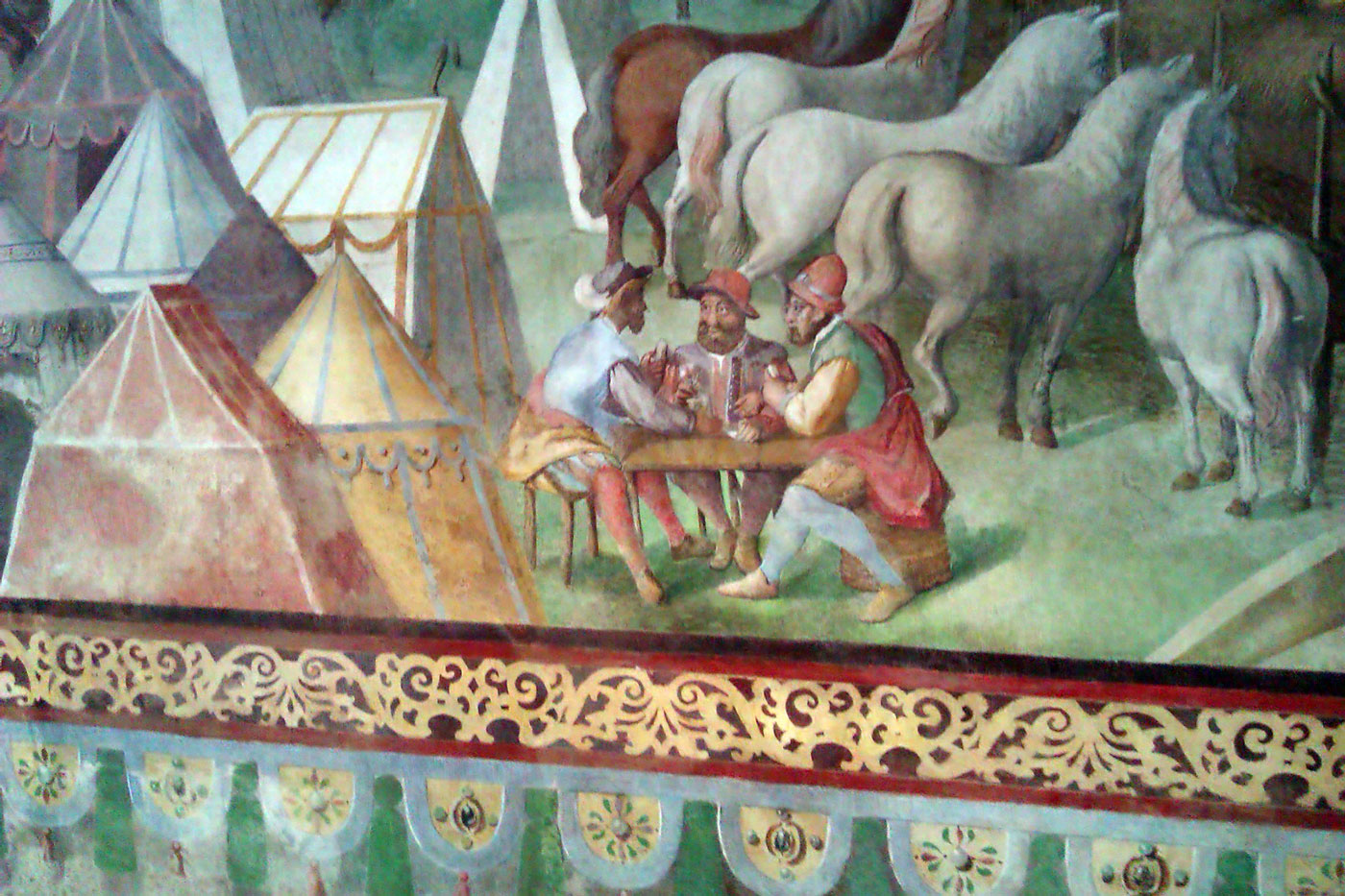
Above: detail from “La Sala de Las Batallas” mural painting in El Escorial palace (Madrid) produced by a team of Italian artists, late 16th century.
The Spanish state playing card monopoly was first established during the reign of Felipe II, in the 16th century. It was divided into several regions, including Mexico and ‘New Spain’, Toledo, Castile and Seville. Leases for these respective monopolies were awarded on a competitive basis to the highest bidder and subject to strict controls. Lease holders also enjoyed the protection of laws governing the playing card monopolies, which included the outlawing of contraband playing cards read more →.
Spanish playing cards are today divided into several distinctive types or patterns, some more ancient than others, which are often associated with different regions, as well as a wide range of non-standard cards which testify to the creative genius of Spanish artists. The suits are usually numbered through 1 - 12. A peculiarity to be observed in Spanish cards is that the suits of cups, swords and clubs have respectively one, two and three gaps or intervals in the upper and lower marginal lines of every card, called pintas.
REFERENCES:
- Agudo Ruiz, Juan de Dios: Los Naipes en España, Diputación Foral de Álava, 2000
- Denning, Trevor: The Playing-Cards of Spain, Cygnus Arts, London, 1996
- Garrigue, Jean-Pierre: La Carte à Jouer en Catalogne XIV & XVI siècles, Les Presses Littéraires, 2015
- Pratesi, Franco: Cinco Siglos de Naipes en España, in La Sota nº 16, Asescoin, Madrid, March 1997, pp.27-51

By Simon Wintle
Spain • Member since February 01, 1996 • Contact
I am the founder of The World of Playing Cards (est. 1996), a website dedicated to the history, artistry and cultural significance of playing cards and tarot. Over the years I have researched various areas of the subject, acquired and traded collections and contributed as a committee member of the IPCS and graphics editor of The Playing-Card journal. Having lived in Chile, England, Wales, and now Spain, these experiences have shaped my work and passion for playing cards. Amongst my achievements is producing a limited-edition replica of a 17th-century English pack using woodblocks and stencils—a labour of love. Today, the World of Playing Cards is a global collaborative project, with my son Adam serving as the technical driving force behind its development. His innovative efforts have helped shape the site into the thriving hub it is today. You are warmly invited to become a contributor and share your enthusiasm.

Leave a Reply

Your Name
Just now Your comment here. Your comment here. Your comment here. Your comment here. Your comment here. Your comment here. Your comment here. Your comment here. Your comment here. Your comment here. Your comment here. Your comment here. Your comment here. Your comment here. Your comment here. Your comment here. Your comment here. Your comment here. Your comment here. Your comment here. Your comment here. Your comment here. Your comment here. Your comment here. Your comment here. Your comment here. Your comment here. Your comment here. Your comment here. Your comment here. Your comment here. Your comment here.
Related Articles

QAIPES – cartas españolas
Spanish-suited cards made in China inscribed “QAIPES” and “BAIPES”!

Pere Pau Rotxotxo Puigdoura
Spanish national pattern by Pere Pau Rotxotxo Puigdoura (1766–1797).
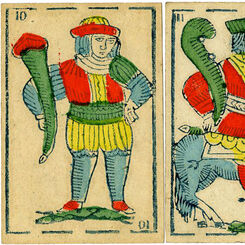
P. Buscaglia: Spanish-suited cards
Spanish-suited cards published by P. Buscaglia, Mele & Genova.
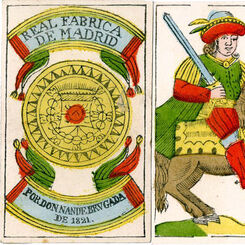
Juan de Brugada
Spanish National pattern by Juan de Brugada e hijo, Real Fábrica de Madrid, 1821.
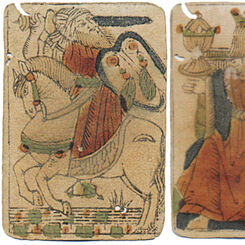
XV Century Spanish-suited playing cards
XV Century Spanish-suited playing cards with moorish influences
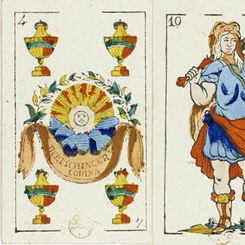
Bertschinger y Codina
Fantasy Spanish-suited playing cards by Bertschinger y Codina (Barcelona), c.1850.
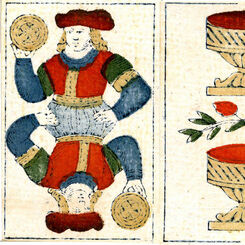
Clemente Roxas double-ended Spanish pack
Double-ended Spanish-suited playing cards published by Clemente de Roxas in Madrid, 1814.
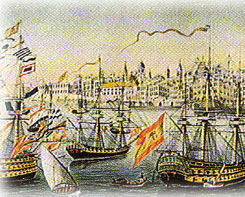
Cádiz Pattern playing cards
A popular Spanish playing card pattern widely exported to Spanish-influenced markets.
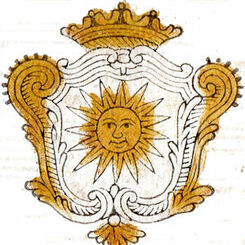
Pedro Rotxotxo
Standard Spanish National pattern by Pedro Rotxotxo, Barcelona, late 18th century.
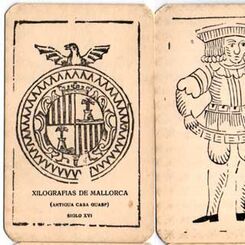
Xilografías de Mallorca
Spanish National pattern re-printed from original woodblocks which are preserved in the monastery at...

Naipes del Salitre
Playing cards recovered from the Northern Chile saltpetre workers. The cards are mostly from Spanish...

S. Giráldez, Barcelona
Standard Spanish Catalan pattern playing cards by S. Giráldez, Barcelona, c.1905.
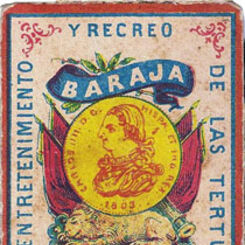
Baraja de Amor
Hijos de José Garcia Taboadela was a book-seller who also published this charming pack of lovers' fo...
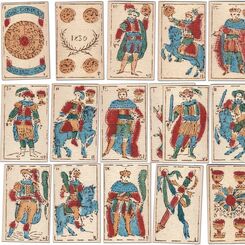
José Gombau
Deck of half-sized Spanish-suited playing cards in the Maciá pattern produced by José Gombau, Zarago...
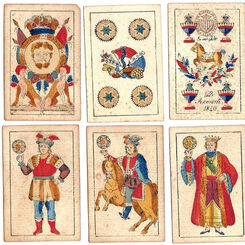
Sanmartí, 1840
Sanmartí, 1840.
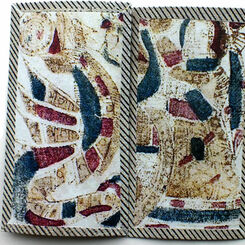
Francisco Flores
Playing cards in this style have been discovered in various parts of the world, suggesting that they...
Significado de los Naipes Españoles
Cartomantic meanings of Spanish playing cards by Benita the Witch (XVI century), published by Chocol...
Juan Roura Catalan
Catalan type by Juan Roura, La Hispano-Americana, Barcelona (1872 - 1962).
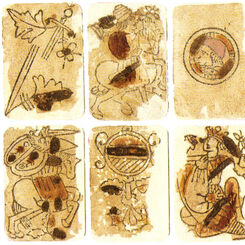
Baraja Morisca — Early XV century playing cards
Primitive Latin suited pack, dated by paper analysis as early XV century, which makes this one of th...
Hand-made Spanish Suited Playing Cards
Decks are made on two-ply pasteboard which reproduces the tactile quality of antique cards.
Most Popular
Our top articles from the past 60 days


