Cartes Recréatives
Cartes Recréatives is a set of Transformed playing cards designed by Armand-Gustave Houbigant (1790-1863) and first published by Terquem et May, Metz, in 1819.
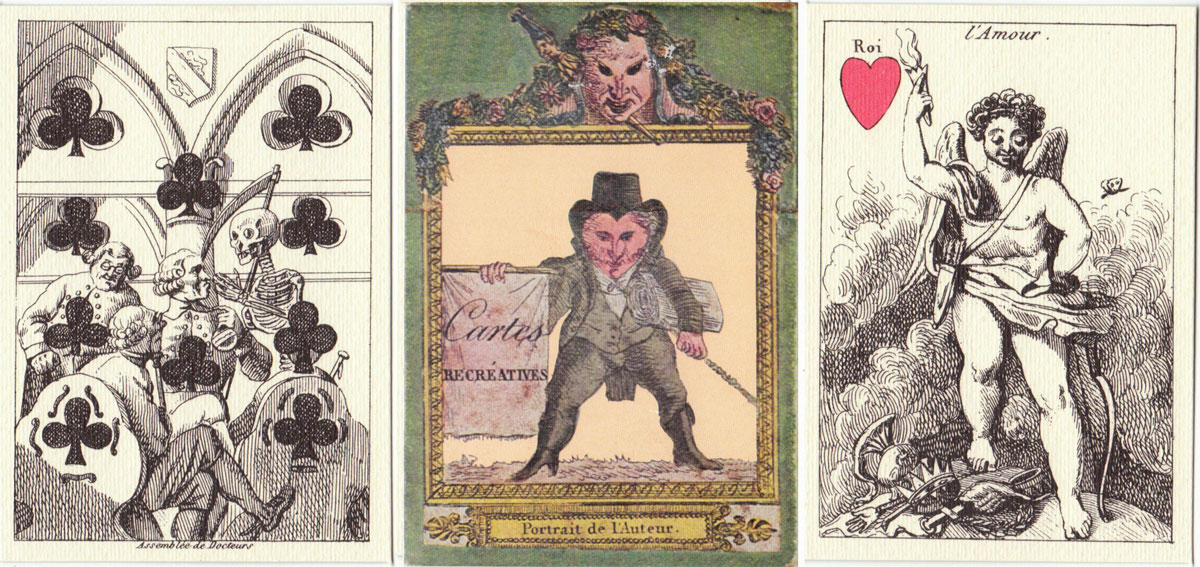
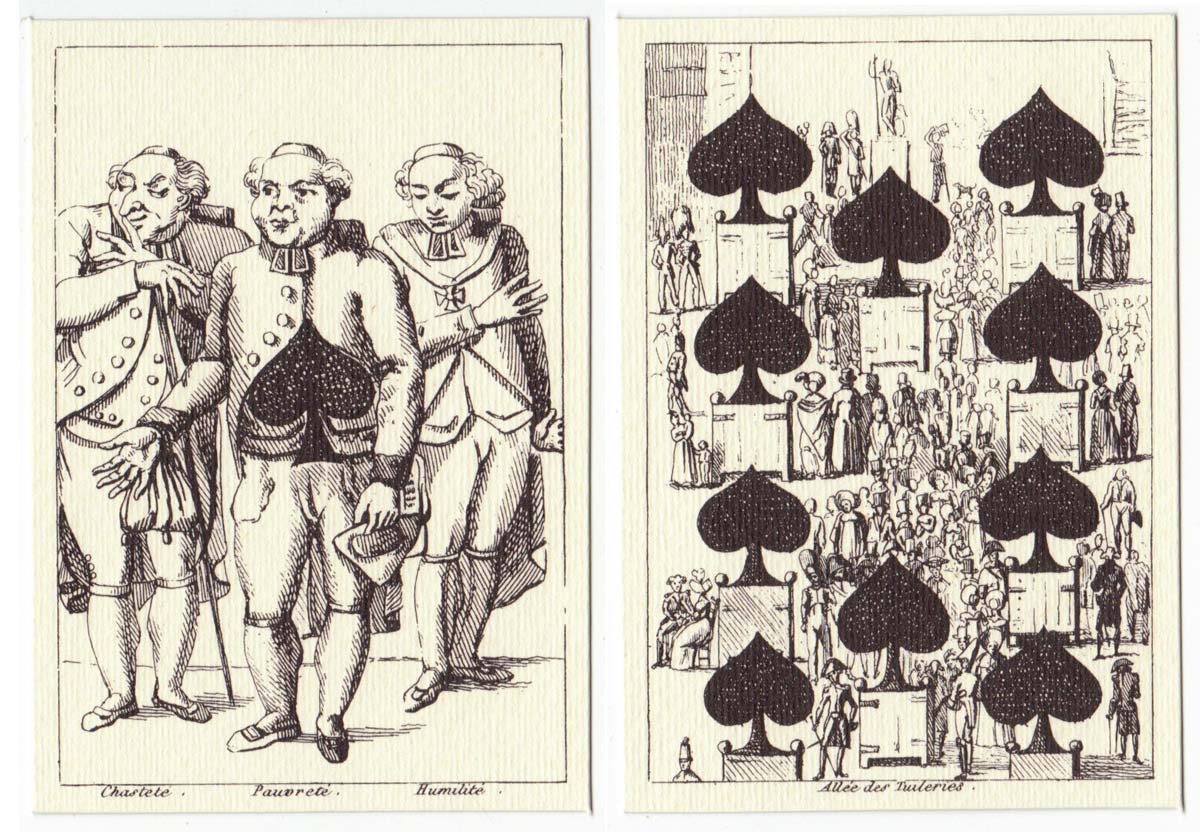
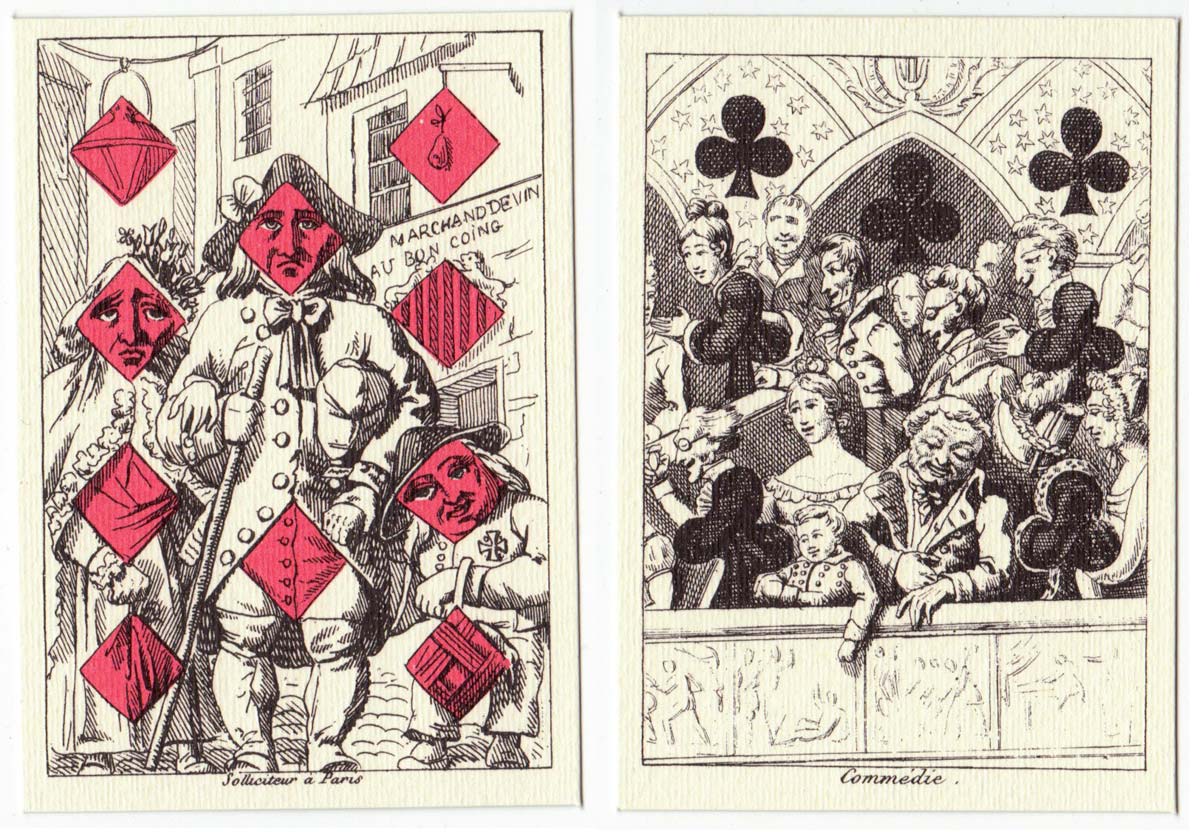
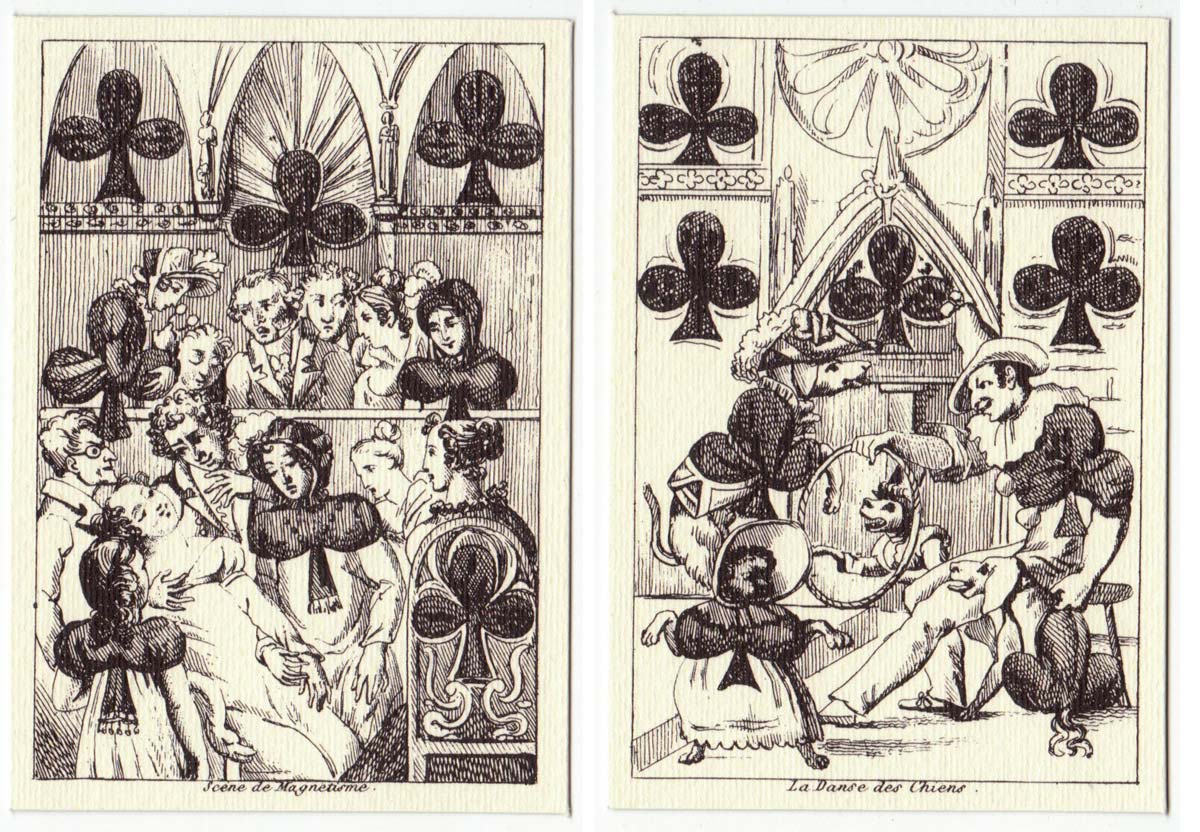
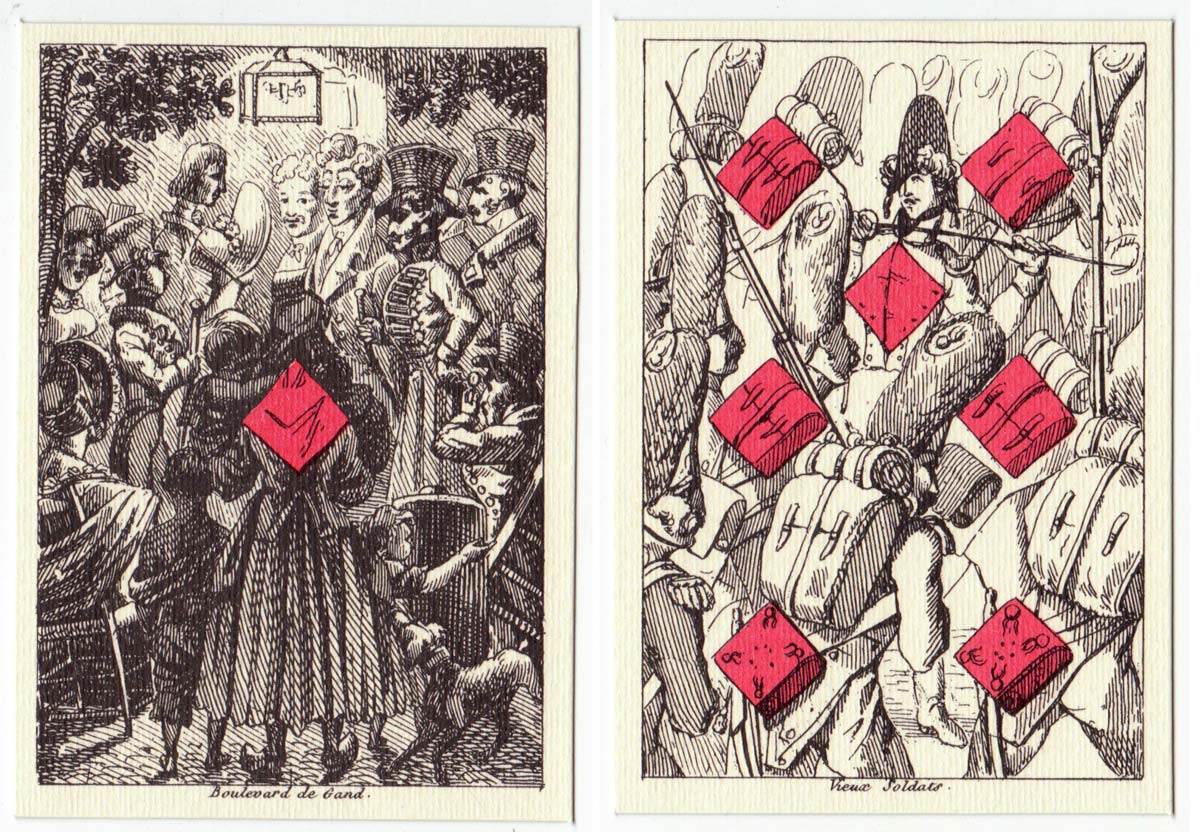
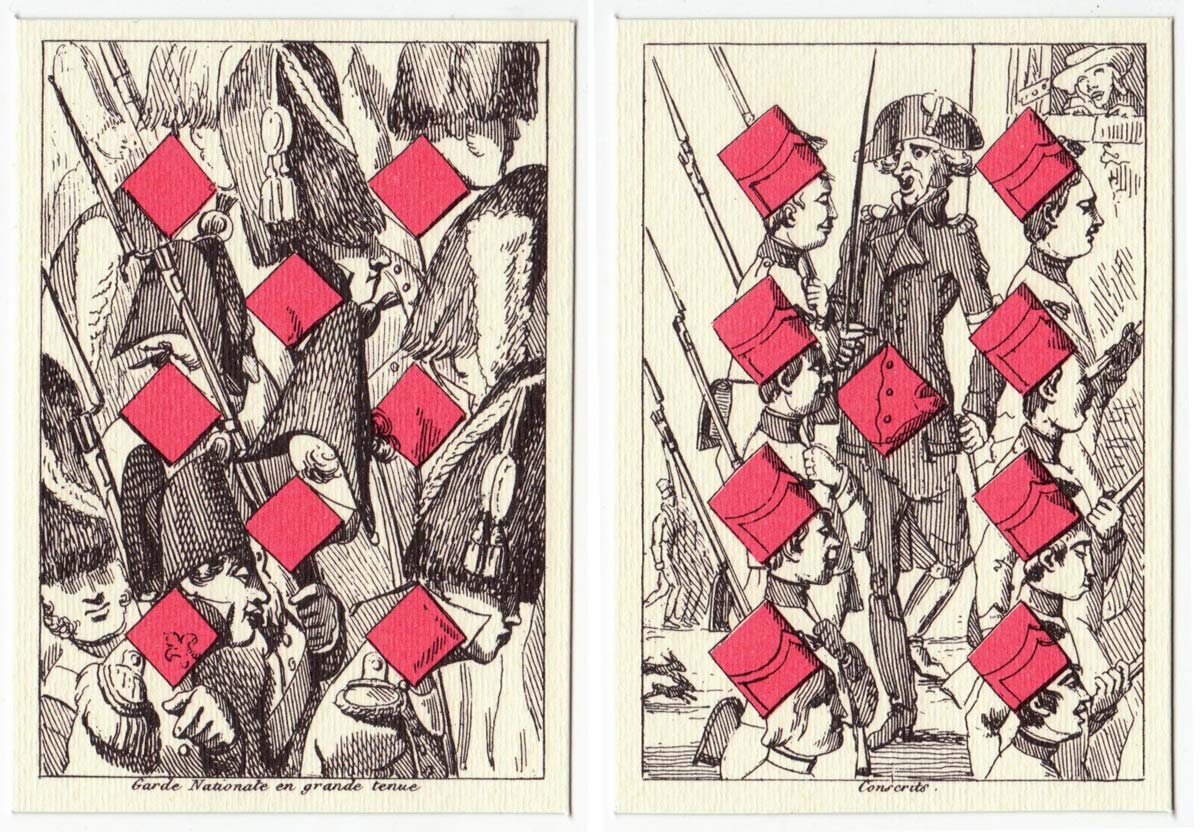
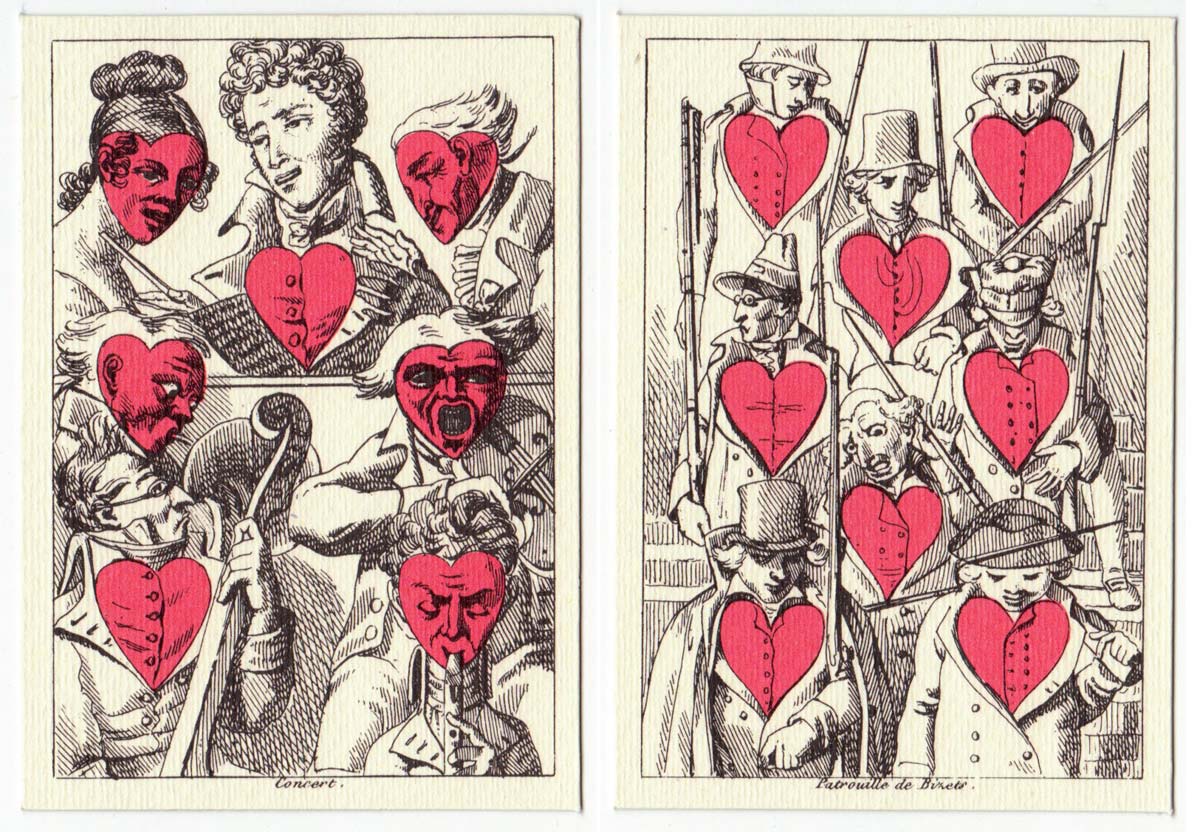
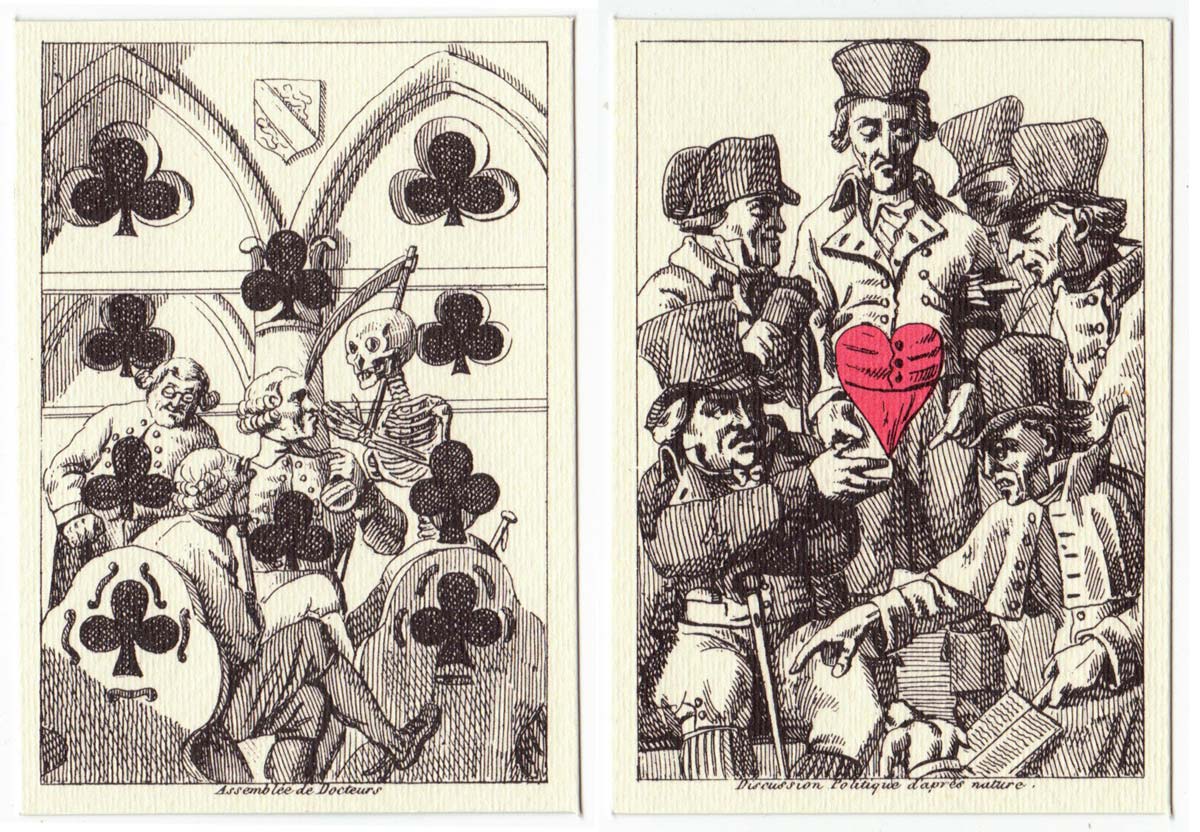
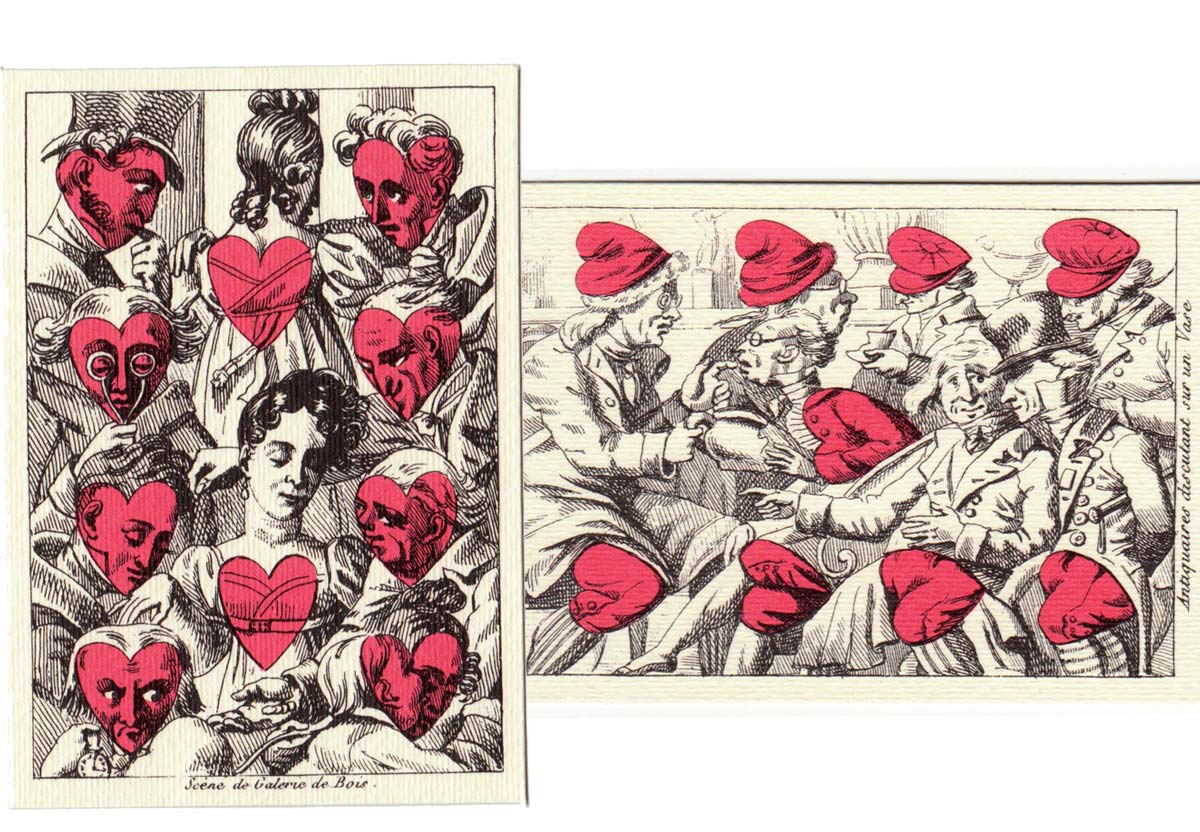
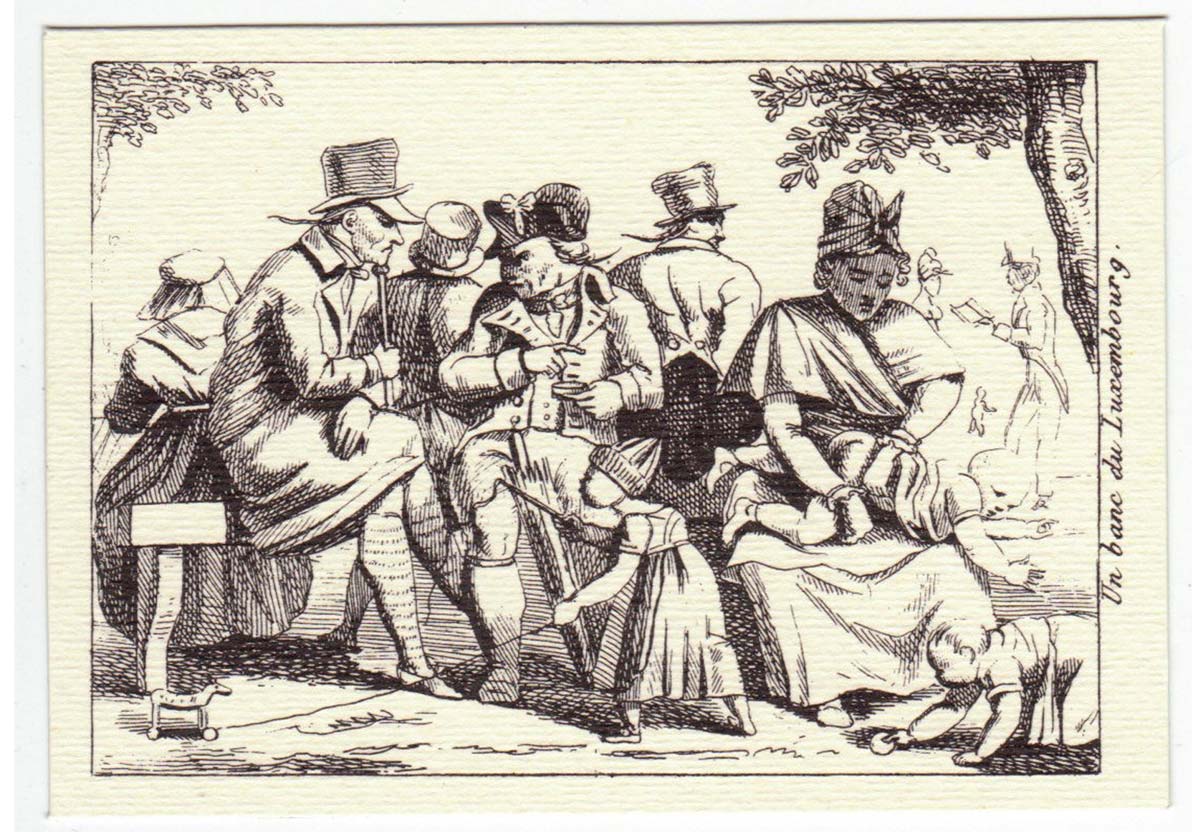
Cartes Recréatives is a set of 32 Transformed playing cards, plus a title card (right→), designed by Armand-Gustave Houbigant (1790-1863) and first published by Terquem et May, Metz, in 1819. At least seven packs are now known to have survived, all with slight differences, suggesting that several alternative transformations may have been produced by the artist whilst the entire set was being created. The practice of transforming ordinary playing cards into caricatures or everyday scenes was a fashionable recreation pastime in those days and a challenge of artistic imagination.
The facsimile edition shown here was published by Edizioni del Solleone in 1984 and is based on a complete, reconstituted pack with the title and explanation cards borrowed from another set. Original cards can be viewed online at the Bibliothèque Nationale de France►
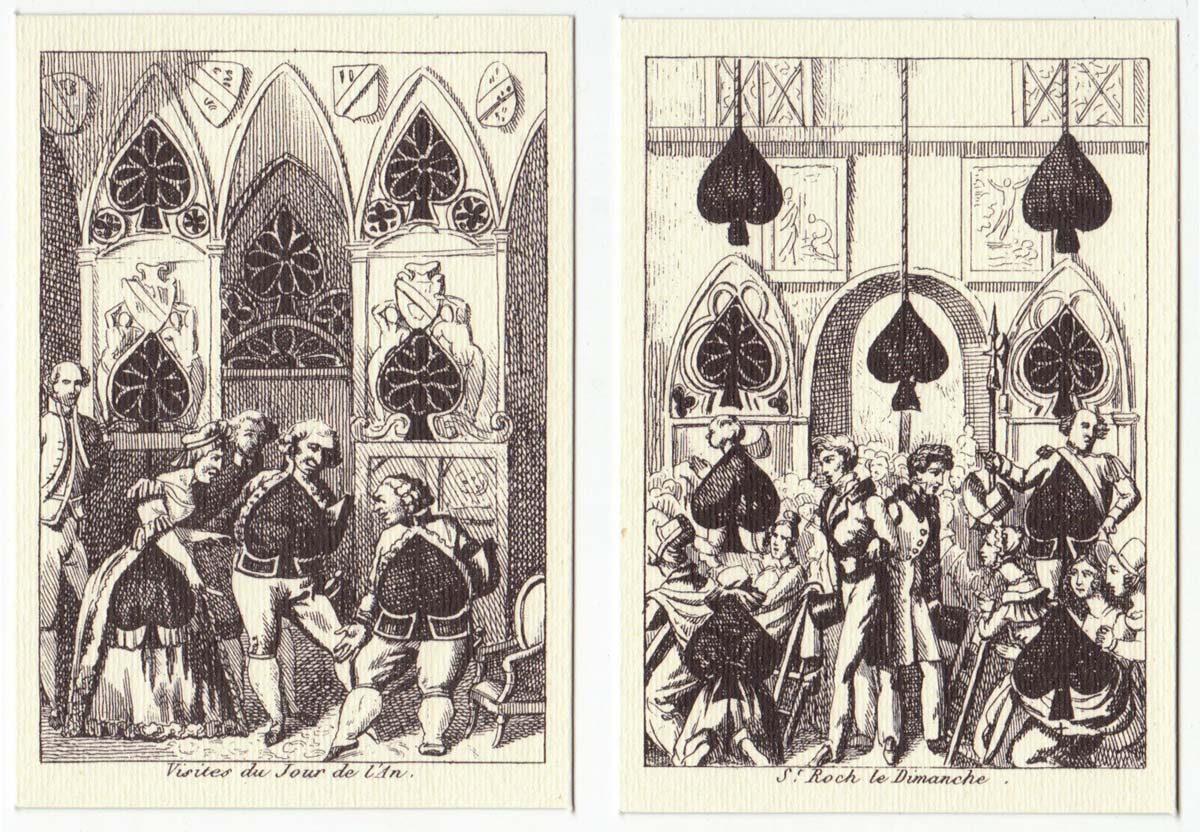
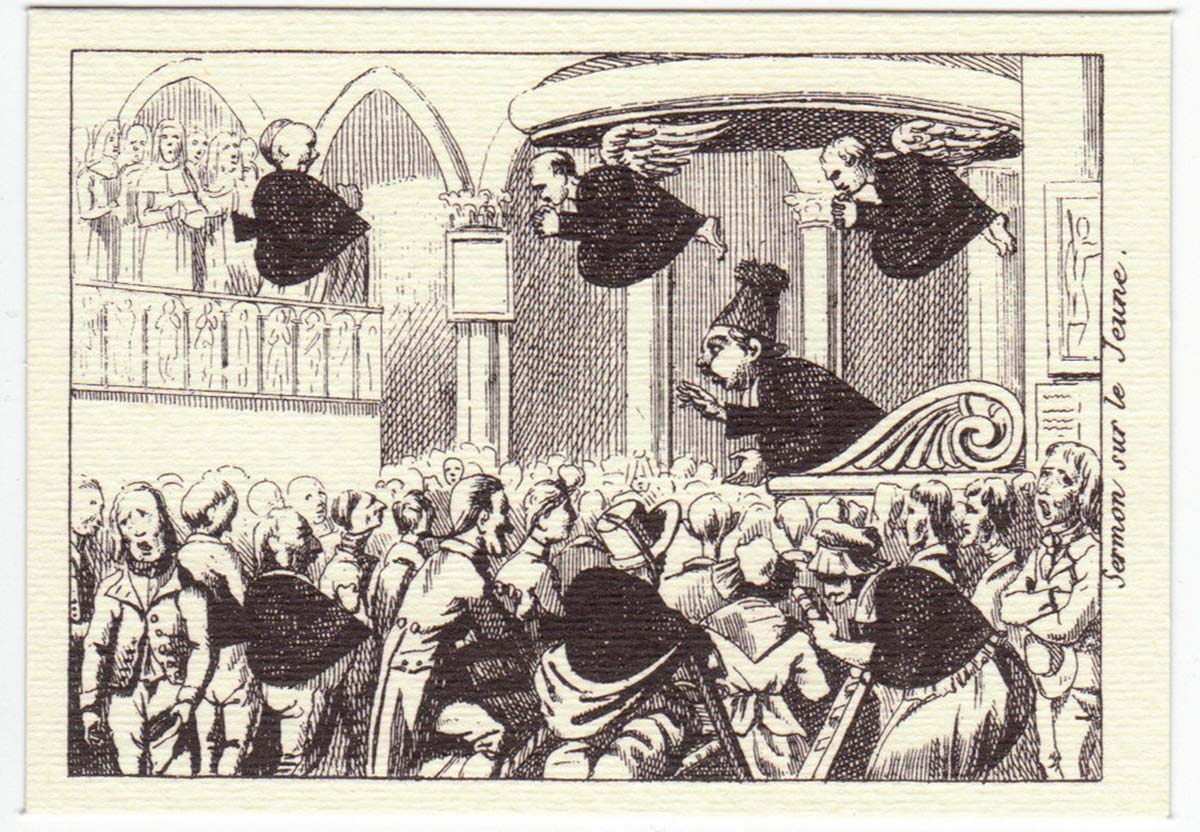
The transformations are refined and skillfully engraved. Images include everyday social scenes and cartoons of soldiers, theatre audiences, a séance, a sermon, dancing dogs, a gathering of doctors, politicians, a musical group, etc. all executed with a satirical sense of humour. The pip cards and valets are titled at the bottom of each card. The box has a caricature “Portrait de l’Auteur.”
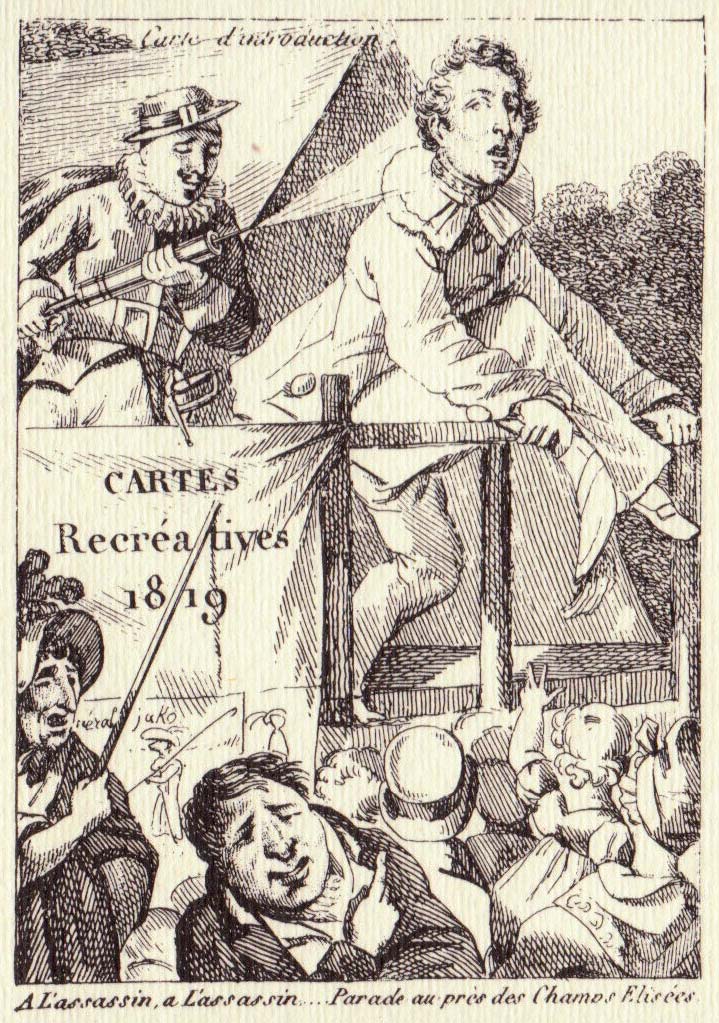
Above: title card from Cartes Recréatives, 1819. The original cards can be viewed online at the Bibliothèque Nationale de France►
The Court Cards
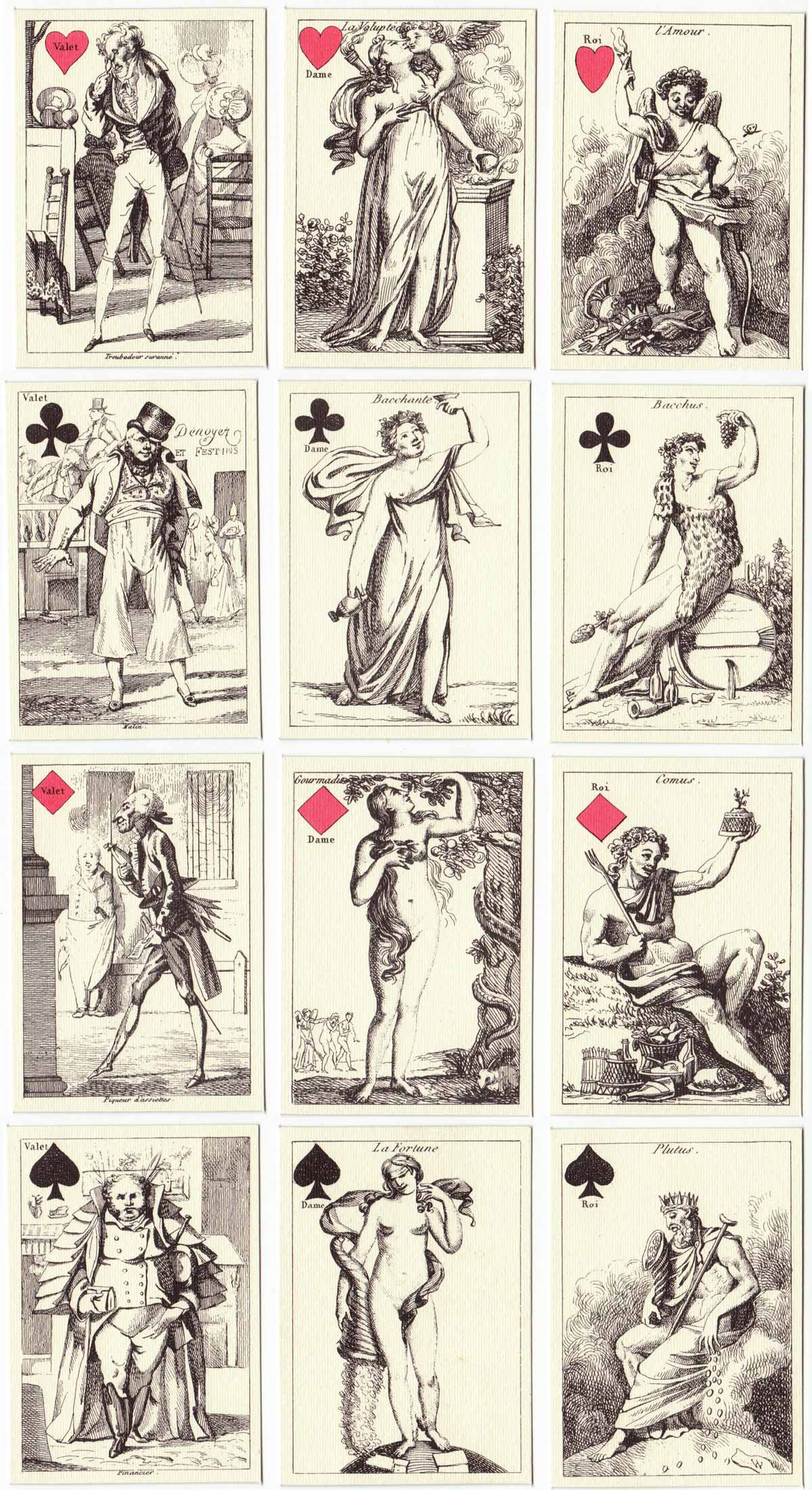
Above: the kings and queens, according to the artist, are named allegories of gods and goddesses which govern our pleasures, that fit well with the twenty transformed numeral cards, whilst the valets are suitable attendants.

By Rex Pitts (1940-2021)
United Kingdom • Member since January 30, 2009
Rex's main interest was in card games, because, he said, they were cheap and easy to get hold of in his early days of collecting. He is well known for his extensive knowledge of Pepys games and his book is on the bookshelves of many. His other interest was non-standard playing cards. He also had collections of sheet music, music CDs, models of London buses, London Transport timetables and maps and other objects that intrigued him.
Rex had a chequered career at school. He was expelled twice, on one occasion for smoking! Despite this he trained as a radio engineer and worked for the BBC in the World Service. Later he moved into sales and worked for a firm that made all kinds of packaging, a job he enjoyed until his retirement. He became an expert on boxes and would always investigate those that held his cards. He could always recognize a box made for Pepys, which were the same as those of Alf Cooke’s Universal Playing Card Company, who printed the card games. This interest changed into an ability to make and mend boxes, which he did with great dexterity. He loved this kind of handicraft work.
His dexterity of hand and eye soon led to his making card games of his own design. He spent hours and hours carefully cutting them out and colouring them by hand.

Activity for Cartes Recréatives
Sign in to comment or save this article.

Related Articles
Karten-Almanach
Fifth Transformation Card Almanac published by J.G. Cotta’s bookshop, 1810.
Le Geant, or Second Empire pack
Transformation cards issued during the Second Empire under Napoleon III.
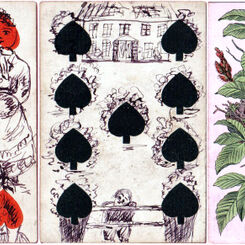
Hand-drawn transformation cards, c1870
Whimsical pen-and-ink drawings copied from the Maclure, Macdonald & Macgregor transformation pack.
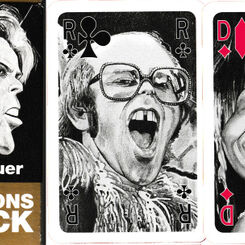
Les Tontons du Rock
Caricatures of rock and pop stars in black and white by Charles Da Costa.
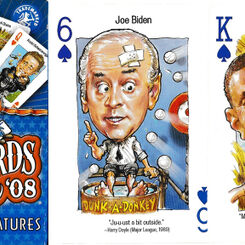
Politicards 2008
Politicards ’08 with caricatures cast as characters from classic movies, USA.
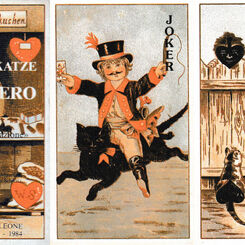
Schwarze Katze (or Gioco del Gatto Nero)
Reproduction of a 40-card transformation pack with designs by “WS”, adapted for the game of Black Ca...
Le Jeu de Marseille (Vigno)
Amusing depiction of characters whom you might meet in the city and port of Marseille, as created by...
Nine art-nouveau transformation playing cards
by an unknown artist
The Deck
The Deck semi-transformation playing cards, USA, 1983.
Histoire de France
“Histoire de France” facsimile of French historical deck of 1820.
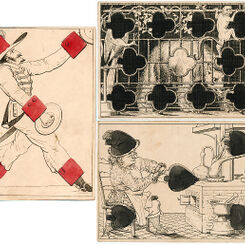
Baron Louis Atthalin’s Transformation Playing Cards, 1817
Baron Louis Atthalin (1784-1856) designed these cards whilst on a sea crossing from Palermo to Marse...
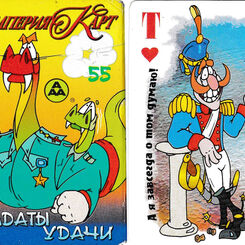
Soldaty Udachi
“Soldaty Udachi” (Soldiers of Fortune) Army and Police humour playing cards, Russia, 2001.
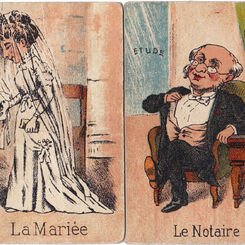
La Mariée du Mardi-Gras
La Mariée du Mardi-Gras, published by Jeux et Jouets Français. Paris, early 1900s.
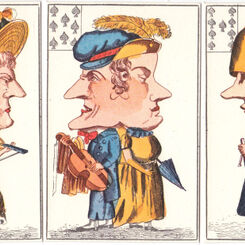
Jeu Grotesque
Jeu Grotesque was first published in France c.1800.
Cartes à Rire
Transformed playing cards featuring satirical caricatures of political figures then in the ascendant...
Habemus Boda, 2004
“Habemus Boda” deck celebrating the royal wedding of Prince Felipe and Princess Letizia of Spain wit...
Cartes Comiques du Colonel Atthalin
“Jeu de cartes comiques” transformation cards designed by Louis Atthalin (1784-1856) and published i...
Transformation of Playing Cards
The best-known fantasy playing cards are Transformation cards, in which figurative scenes are drawn ...
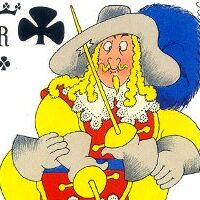
Les Mousquetaires
Philibert "Les Mousquetaires" Playing Cards, designed by Albert Dubout (1905-1976).
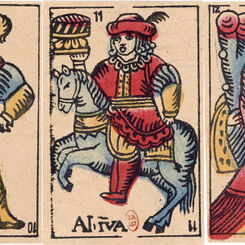
Moroccan pattern by Camoin & Cie.
Spanish Moroccan pattern by J.B. Camoin and A. Camoin & Cie, Casablanca & Marseille.
Most Popular
Our top articles from the past 60 days