


Andrew Dougherty c.1850
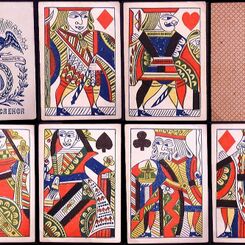
The idiosyncratic courts used in this deck were used by several other U.S. manufacturers, including Crehore and Hart, and continued into the early 1900s in Faro decks.
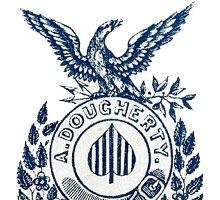
Andrew Dougherty's story is a key part of the development of the American playing card industry and he can be credited with several innovations to playing cards. In late 1849 Dougherty moved his business to 78 Cliff Street in New York and operated from that address until c.1858. The idiosyncratic courts used in this early deck, with features reminiscent of the woodblock & stencil technique, were used by several other U.S. manufacturers, including Crehore and Hart, and continued into the early 1900s in Faro decks see example →
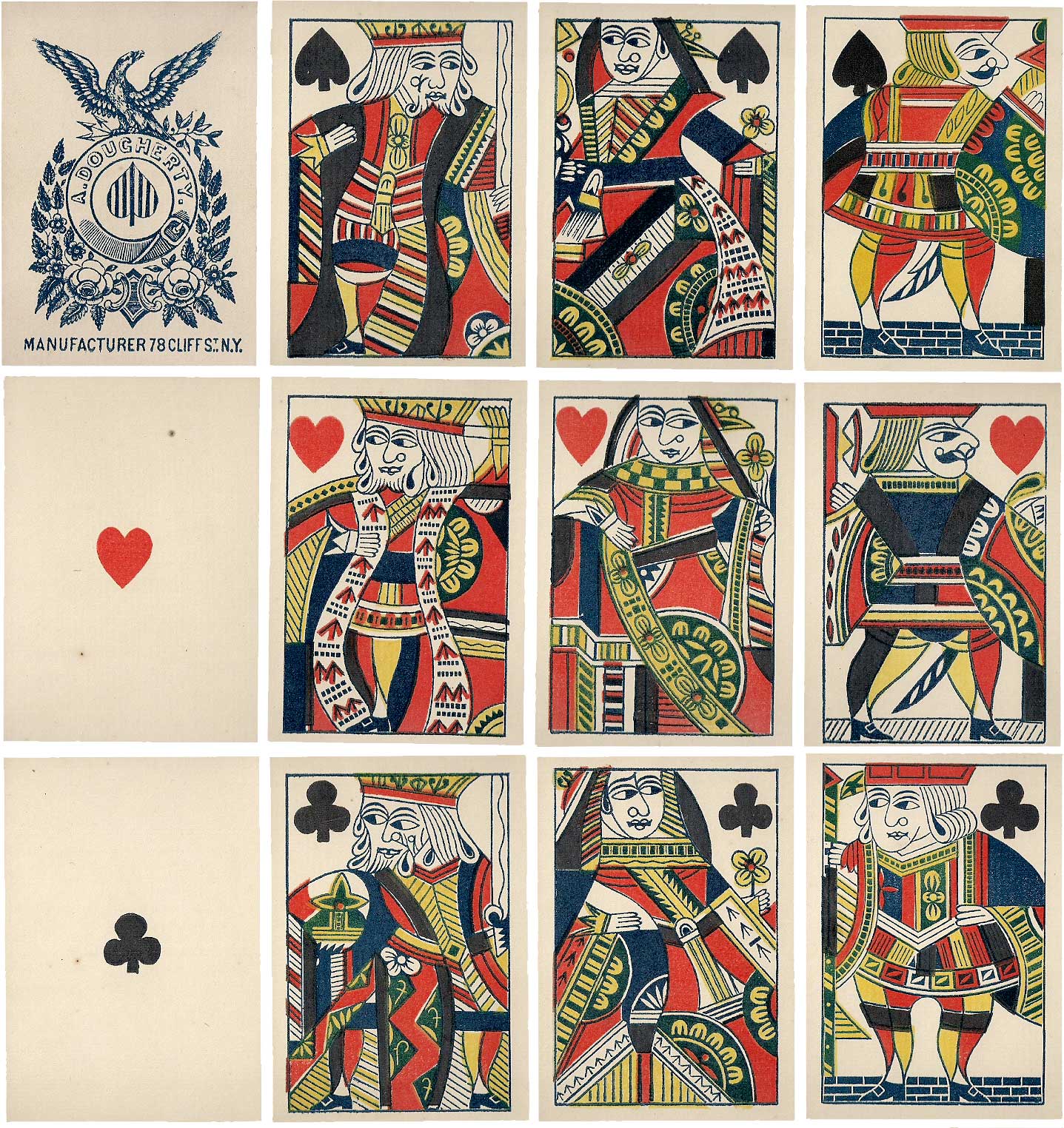
Above: an early single-ended deck with the Cliff Street address on the Ace of Spades, c.1850, printed with blue outlines. The one-way pip cards were applied using stencils. These courts were used by several manufacturers and continued into the early 1900s in Faro decks. Images courtesy Rod Starling.

REFERENCES
Dawson, Tom & Judy: The Hochman Encyclopedia of American Playing Cards, U.S. Games Systems Inc., 2000
Images from the collection of Rod Starling.

By Rod Starling (1936-2023)
United States • Member since January 09, 2013
Rod Starling was one of the founding members of the 52 Plus Joker card collectors club. He authored many articles for the club's quarterly newsletter, Clear the Decks. His collection encompasses both foreign and American decks. Rod also authored a book titled The Art and Pleasures of Playing Cards.

Activity for Andrew Dougherty c.1850
Sign in to comment or save this article.

Related Articles
Paper Empires by Jason McKinstry
A review of Jason McKinstry’s Paper Empires, Volume I, an illustrated study of early American...
Corner Indices
Corner Indices were a major innovation in playing card production.
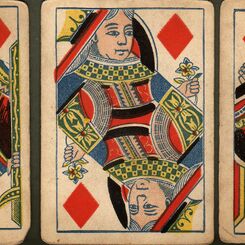
42: Andrew Dougherty
Andrew Dougherty was one of the biggest American card-makers in the 19th century
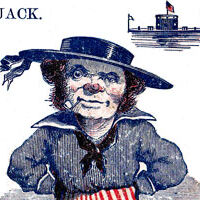
Army & Navy
Andrew Dougherty’s Army & Navy deck from the Civil War era, c.1865.
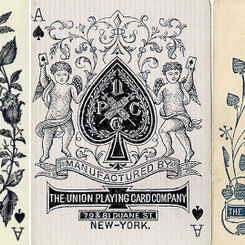
Union Playing Card Co.
Not much is known about this early manufacturer who is reckoned to have traded between c.1860s-1890s...
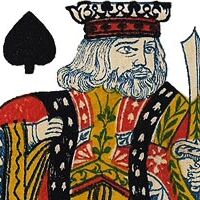
Charles Bartlet
Elaborate court cards on a deck by Charles Bartlet, Philadelphia, (who was in fact Samuel Hart) c.18...
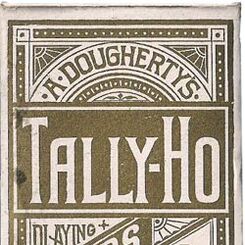
Tally-Ho
The earliest Ace of Spades had the Centre Street address and the Jolly Joker was used until the “Tal...
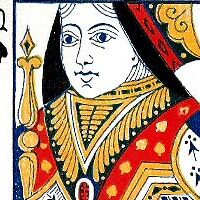
Indicator No.50
No.50 appears at the bottom of the Ace of Spades and the cards have corner indices and miniature sui...
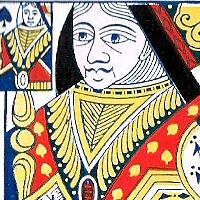
Triplicate No.18
Dougherty first secured a patent for “Triplicates” in 1876, a novel type of indices with a miniature...
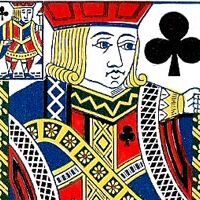
Ivorette
Dougherty was at the forefront of innovation, adding Best Bowers and then Jokers, rounded corners an...
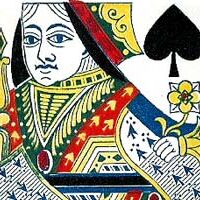
Cruiser Playing Cards
Dougherty's ‘Cruiser No.96’, first published c.1897, was dedicated to the U.S. Navy..
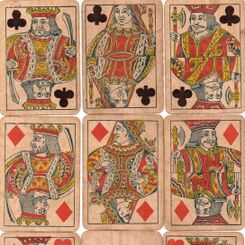
13: Some North American Cards
I deal with some of the US makers in more detail on other pages, but here is a brief introduction.
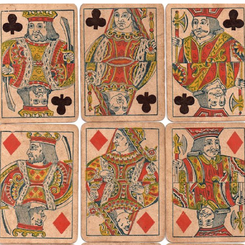
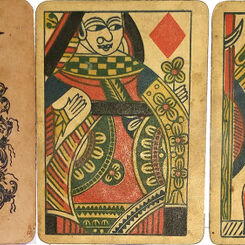
Excelsior
Excelsior by A. Dougherty, c.1870.
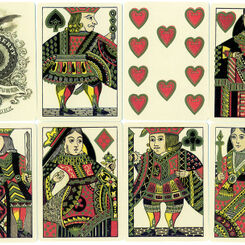
Illuminated Playing Cards, c.1865
Facsimile edition of Andrew Dougherty's Illuminated deck, c.1865, published by U.S. Games Systems, I...
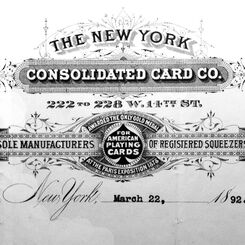
New York Consolidated Card Company
The New York Consolidated Card Company was formed in 1871 by the merging of Lawrence & Cohen, Samuel...
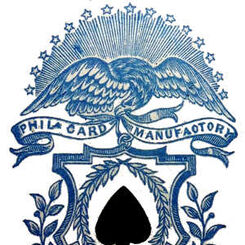
Samuel Hart, 1846-1871
Samuel Hart was a prolific manufacturer of playing cards who commenced business sometime around 1845...
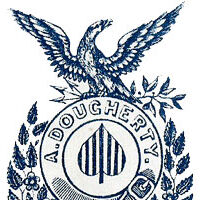
Andrew Dougherty 1848-1930
Andrew Dougherty was born in Donegal in Northern Ireland in 1827. He started his playing card busine...
Thomas Crehore copy, c.1850
Thomas Crehore copy, c.1850.
Squeezers No.35
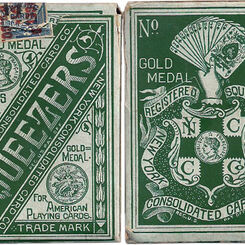
By 1877 the New York Consolidated Card Co's "Squeezers" were a great success on account of the indic...
Most Popular
Our top articles from the past 60 days


Athena McCarty
14 March 2026, 20:39SavedSaved this article to history