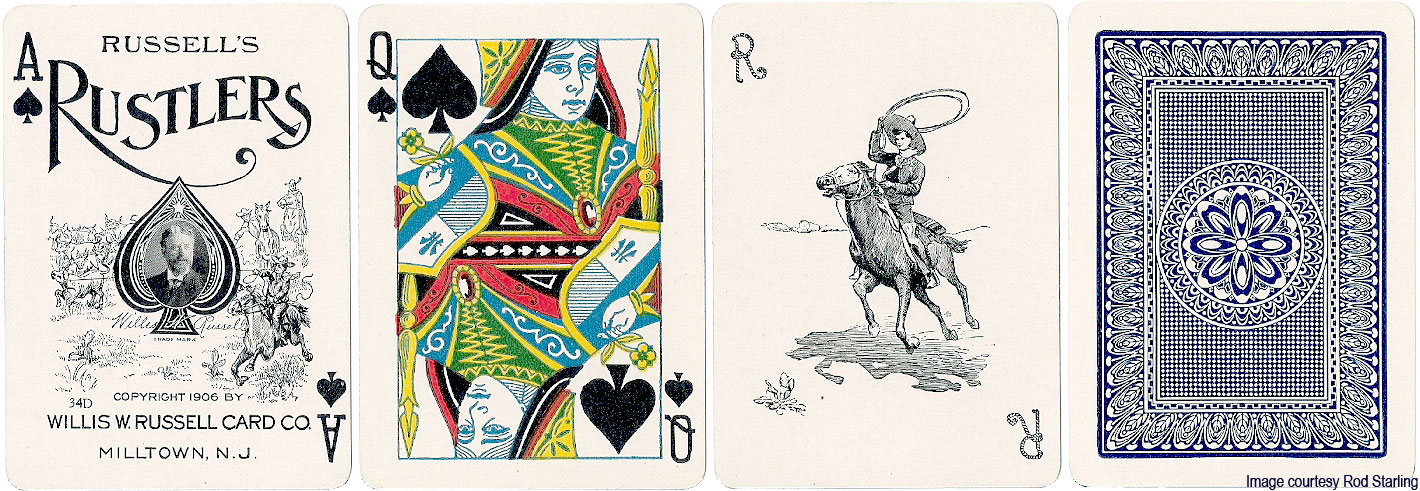
Russell Playing Card Co.
Willis W. Russell started a modest playing card business in Milltown, a small town in northern New Jersey, in 1905.
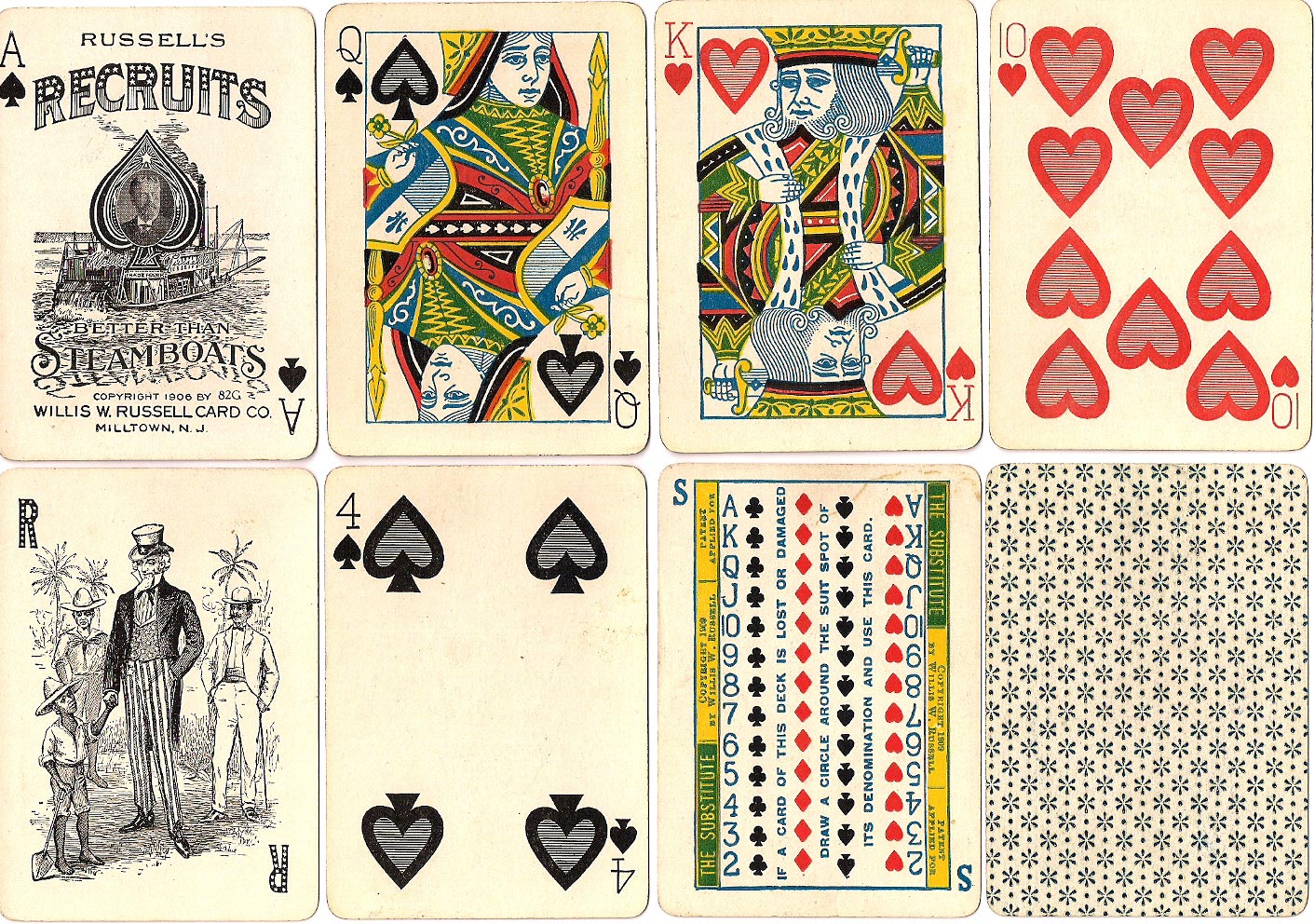
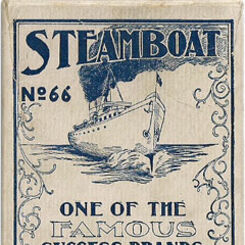
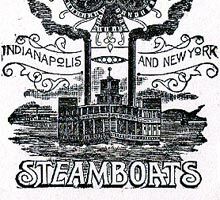
Above: nearly all card makers of this period produced a “Steamboat” brand which was usually the bottom of the line in quality. Russell employed a clever marketing device by picturing a steamboat on its “Recruits” brand Ace of Spades with the logo “Better than STEAMBOATS” and included a Joker clearly associated with the plantations that were located in states through which the steamboats sailed on their voyages up and down the Mississippi River. Click image to zoom
Right: portrait of Willis W. Russell on the Ace of Spades, c.1905 →
Willis W. Russell started a modest playing card business in Milltown, a small town in northern New Jersey, early in the 20th century. Production commenced in 1905 and numerous brands were successfully introduced. These include Recruits, Regents, Rustlers, Regulars, Rattlers, Moguls, Club Moguls, Retrievers and Blue Ribbon. However, the company fell into financial difficulties, which was unfortunate seeing that their cards were of a superior quality. It ceased operations in 1911 and was sold at public auction. The business was salvaged by Mr Benjamin Rosenthal who merged the former Willis W. Russell and Kalamazoo Playing Card Companies into Russell Playing Card Company. In 1914 the American Bank Note Company's playing card division was also acquired and merged into the company, and thereafter the Russell Playing Card Company became successful.
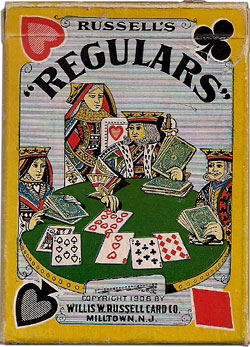
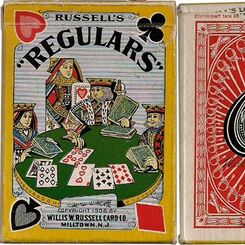
Left: the colourful front of a box of Russell's "Regulars" with ‘Long Distance Pips’, c.1906.
Willis W. Russell's “Regulars” were first issued in c.1906, a brand aimed at the armed forces, in tribute to men of the “regular army”. It was patented with ‘Long Distance Pips’ with shading in the hearts and spades. These are sometimes known as ‘No Revoke’ decks. The pictured box is one of the most attractive ever produced. Read more →
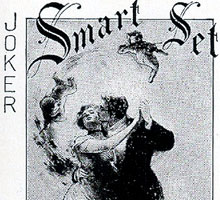
Above: “Smart Set 400” series.
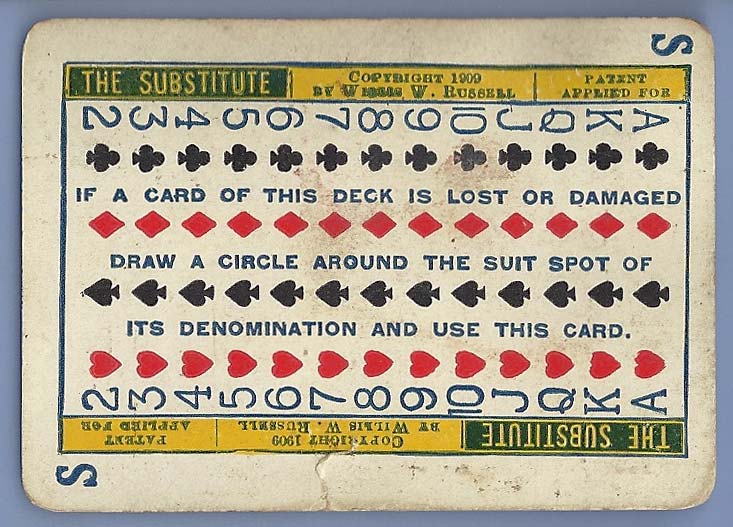
Willis W. Russell included an extra card in each deck to allow the owner to request a replacement for any lost card.
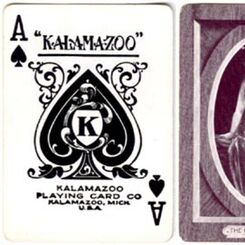
The “Smart Set 400” brand with named backs had been introduced by the Kalamazoo Playing Card Co. in Michigan. After Kalamazoo merged with the Russell Playing Card Co the “Smart Set 400” series continued to be published by the Russell Playing Card Co under its own name and with its own Ace of Spades. Read more →
In 1929 Russell Playing Card Co became a division of the United States Playing Card Company and many brands continued to be produced with the Russell Ace of Spades.
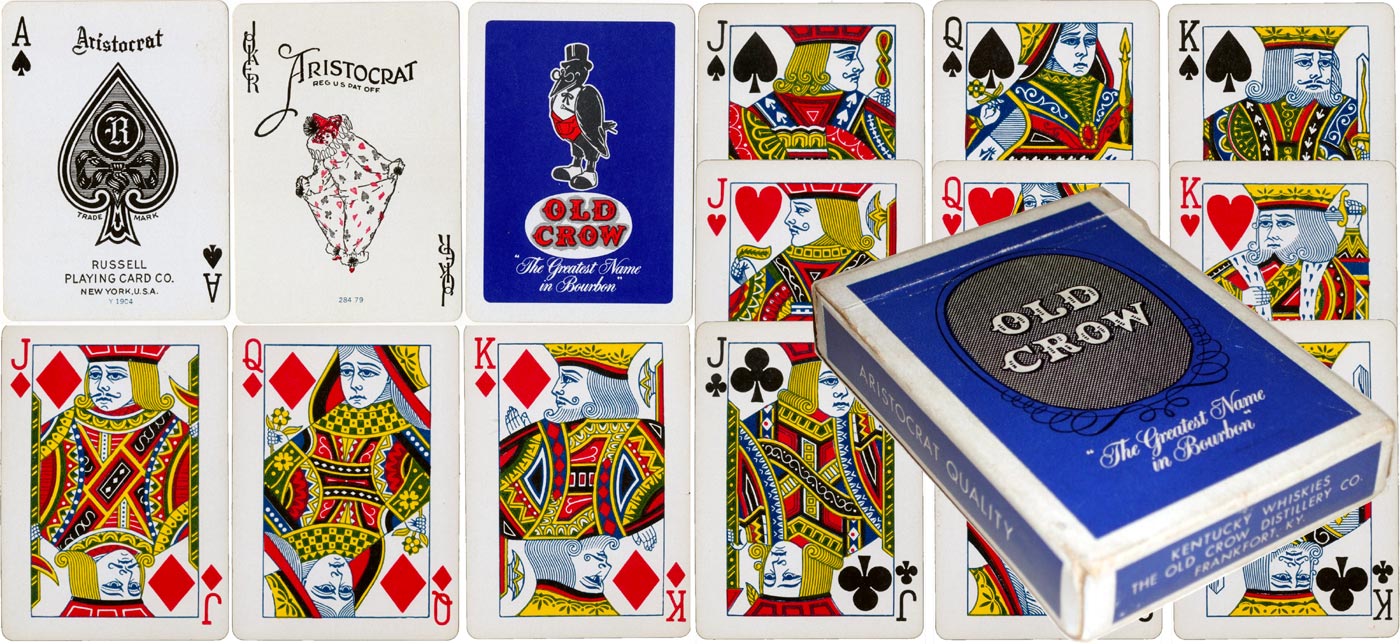
Above: “Aristocrat” brand with Russell ace of spades, derived from former American Bank Note Company and printed by USPCC, c.1958. Image courtesy Matt Probert.
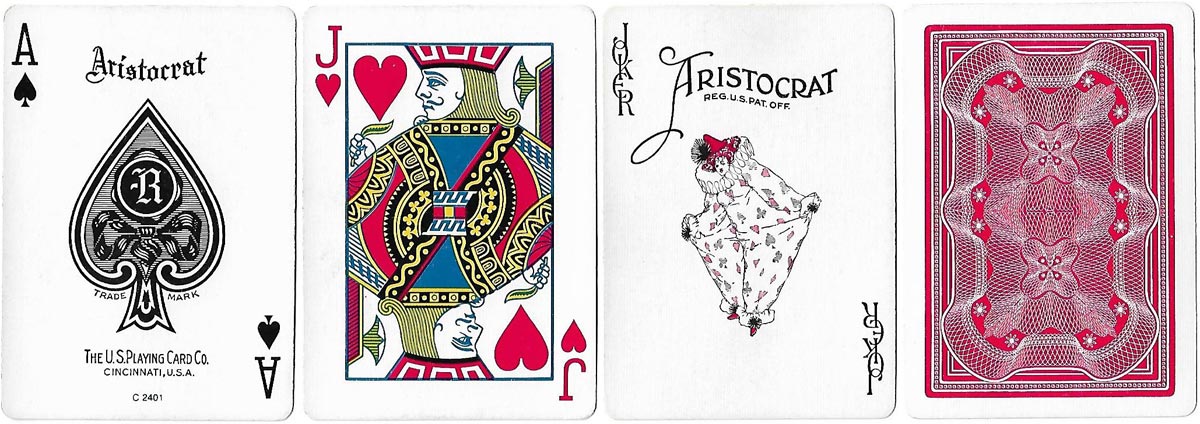
Above: “Aristocrat” brand with U.S.P.C.C ace of spades and former American Bank Note Company joker and back, c.1981. The box has the company seal where the tax stamp used to be. The tax on cards was repealed in 1965. Image courtesy Rod Starling.
REFERENCES
Dawson, Tom & Judy: The Hochman Encyclopedia of American Playing Cards, U.S. Games Systems Inc., 2000.
Starling, Rod: Faces that Launched 1000s of Decks, in 'Clear the Decks', the Newsletter for 52 Plus Joker (edited by Judy Dawson), Sept 2008.
All images on this page courtesy Rod Starling unless stated otherwise.

By Rod Starling (1936-2023)
United States • Member since January 09, 2013
Rod Starling was one of the founding members of the 52 Plus Joker card collectors club. He authored many articles for the club's quarterly newsletter, Clear the Decks. His collection encompasses both foreign and American decks. Rod also authored a book titled The Art and Pleasures of Playing Cards.

Leave a Reply

Your Name
Just now Your comment here. Your comment here. Your comment here. Your comment here. Your comment here. Your comment here. Your comment here. Your comment here. Your comment here. Your comment here. Your comment here. Your comment here. Your comment here. Your comment here. Your comment here. Your comment here. Your comment here. Your comment here. Your comment here. Your comment here. Your comment here. Your comment here. Your comment here. Your comment here. Your comment here. Your comment here. Your comment here. Your comment here. Your comment here. Your comment here. Your comment here. Your comment here.
Related Articles
A Look Back with Hope for the Future
“A Look Back with Hope for the Future” by Rod Starling
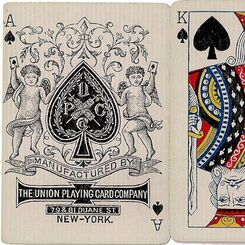
The Traveler’s Companion
The “Traveler’s Companion”, Union Playing Card Co., New York, c.1886.
Card Fabrique Company
Card Fabrique Company had connections with several other manufacturers and their complete history is...
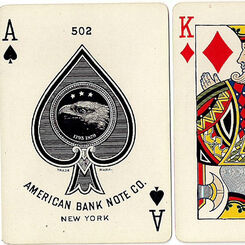
American Bank Note Company
The American Bank Note Company was a long-established firm producing national currency, finely engra...

Perfection Playing Card Co.
Tip-Top No.350 playing cards manufactured by Perfection Playing Card Company, Philadelphia, c.1887

Kismet Temple
The deck was made to honour Conrad V. Dykeman as Imperial Potentate of the Kismet Temple of the Anci...
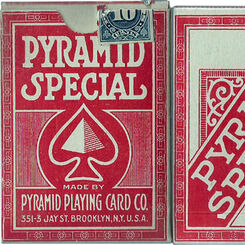
Pyramid P.C.C.
The company introduced a number of standard brands until it was absorbed into U.S.P.C.C. and its aff...
Navy No.303
The second edition of 1883 has slightly larger indices and a more simplified Ace of Spades showing t...

Kalamazoo Playing Card Co
This firm commenced producing playing cards with the name Kalamazoo Paper Box & Card Co in 1903.
Steamboats No.66
Steamboats #66 playing cards manufactured by the Kalamazoo Paper Box & Card Co., c.1903.
Superior Steamboats No.9
This deck was of slightly superior quality than it's predecessor “National Steamboats No.9” and is e...

Tigers No.101
In 1881 Russell, Morgan & Company commenced playing card production by issuing six grades of cards w...
Tales from the Stage
"Tales from the Stage" - an article about theatrical playing cards by Rod Starling
Stage Playing Cards, 1908
This beautiful deck features an oval half-tone photo of a theatre star on each card, many of them le...
De Luxe No.142
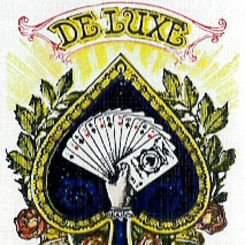
A wide size version of De Luxe No.142 had been published in c.1920, with a similar Ace of Spades and...
Lighthouse No.922
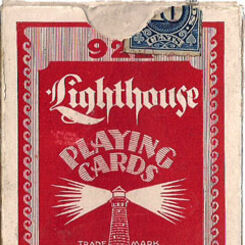
“Lighthouse No.922” playing cards were introduced in c.1920.
Triton No.42
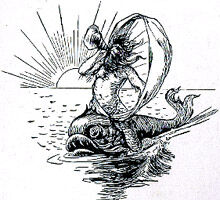
There have been at least three different versions of the Triton deck, with different Jokers, differe...
Russell’s Regulars
Willis W. Russell’s “Regulars” were first issued in c.1906, a brand aimed at the armed forces, in tr...
Smart Set 400
The “Smart Set 400” brand with named backs was introduced in c.1906 by the Kalamazoo Playing Card Co...

Norwood #85, c.1909
The deck features a colourful Ace of Spades and Joker, decorated Aces, unique courts and two beautif...
Most Popular
Our top articles from the past 60 days