


Spanish National Pattern
Probably originating in Spain in the seventeenth century or even earlier, this pattern became strongly established by the Catalan cardmakers Rotxotxo of Barcelona.
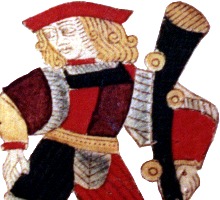
Pere Rotxotxo, Barcelona, c.1650
Probably originating in Spain in the seventeenth century or even earlier, this pattern became strongly established by the Catalan cardmakers Rotxotxo of Barcelona. It was also manufactured in France and Italy. Although no longer used in Spain, during the 17th and 18th centuries it was extensively exported to Latin American colonies, and it provides the basis for many of the designs which are used today in Spain as well as South America. The Real Fábrica de Naipes de Macharaviaya (1776-1815) was manufacturing cards for export to South America based on these designs (see below). Several derivatives of this deisgn have survived in various parts of the world, such as French ‘Aluette’ cards, French ‘Cartes Catalanes’, ‘Parisian’ Spanish pattern (used in Uruguay) and cards used in North Africa.
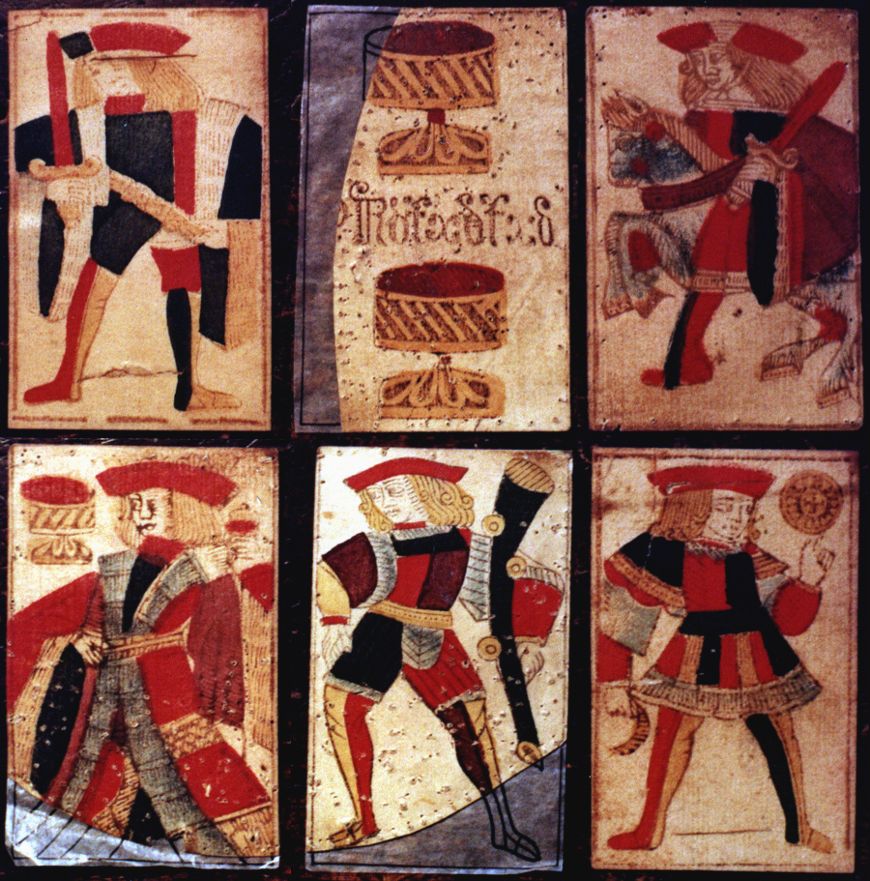
Above: six Gothic playing cards by P. Rotxotxo which evidently have been used for a secondary purpose - possibly sewn in as stiffening inside a garment.
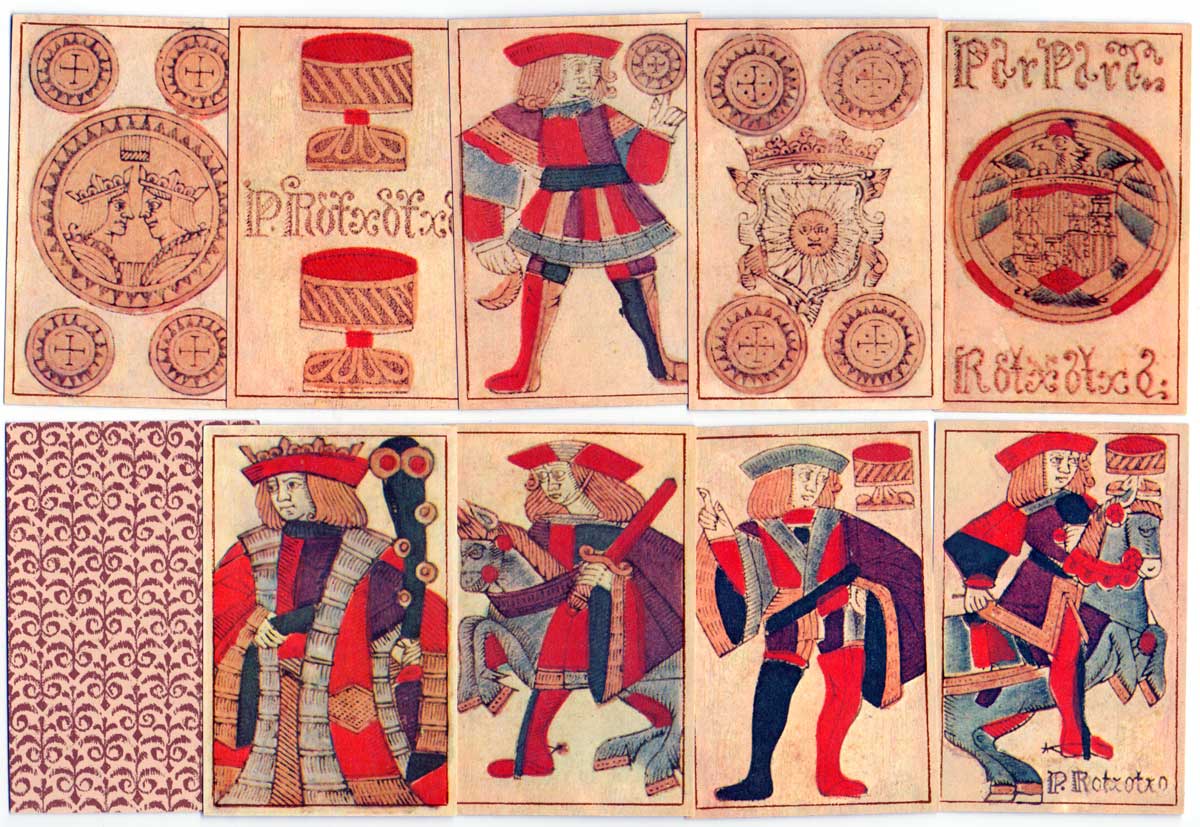
Above: Baraja Española Gótica siglo XVII facsimile of deck manufactured by Pere Rotxotxo, reproduced by Naipes Heráclio Fournier, S.A., 1983. 40 cards in presentation case.
See also: Navarra 17th Century • Seville 17th Century • Rotxotxo Workshop Inventories, Barcelona • Agostino Bergallo • Benoist Laius • Pedro Bosio and ‘Money Bag’ pattern • Joan Barbot • Gandarillas • Naipes Artiguistas • Macharaviaya
Félix Solesio - Real Fábrica de Macharaviaya, 1787
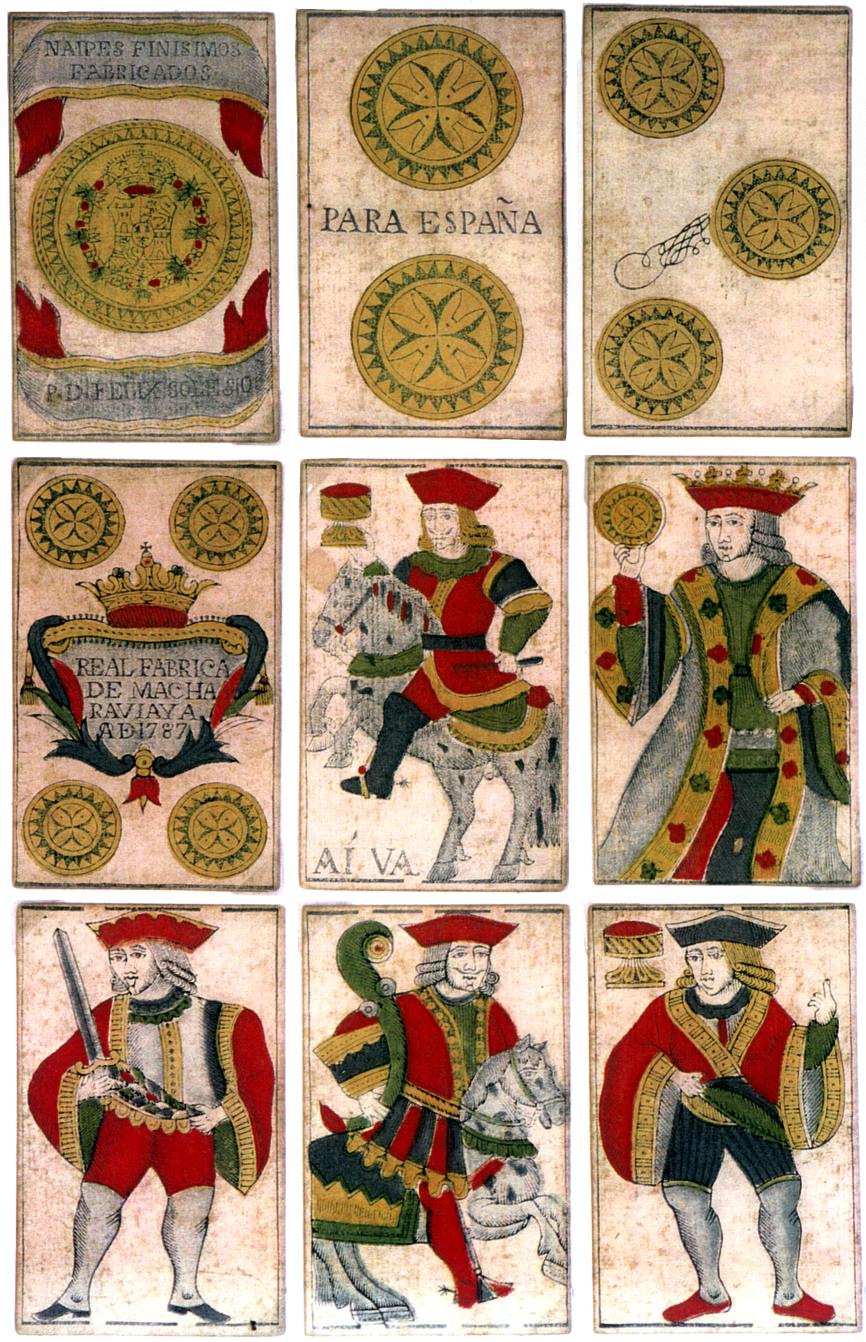
The pattern was used by Felix Solesio in his factories in Madrid and Macharaviaya and was exported to Spanish Colonies in the West Indies. Official signatures on certain cards, in this example the Three of Coins, were proof that taxes had been paid to the treasury.

By Simon Wintle
Spain • Member since February 01, 1996
I am the founder of The World of Playing Cards (est. 1996), a website dedicated to the history, artistry and cultural significance of playing cards and tarot. Over the years I have researched various areas of the subject, acquired and traded collections and contributed as a committee member of the IPCS and graphics editor of The Playing-Card journal. Having lived in Chile, England, Wales, and now Spain, these experiences have shaped my work and passion for playing cards. Amongst my achievements is producing a limited-edition replica of a 17th-century English pack using woodblocks and stencils—a labour of love. Today, the World of Playing Cards is a global collaborative project, with my son Adam serving as the technical driving force behind its development. His innovative efforts have helped shape the site into the thriving hub it is today. You are warmly invited to become a contributor and share your enthusiasm.

Activity for Spanish National Pattern
Sign in to comment or save this article.

Related Articles
The archaic “Classic Madrid” Pattern
Centralisation, standardisation and consolidation of the Spanish card tradition.
La baraja de Almagro
De la chimenea al monumento nacional: la baraja de Almagro y el renacer del corral de comedias.
Sant Jordi playing cards
Catalonia’s patron saint celebrated on cards with non-standard suits designed by Jan Baca and Marta ...
Sevilla 1647 reproduction
Facsimile of Spanish-suited pack produced in Sevilla, Spain, 1647.
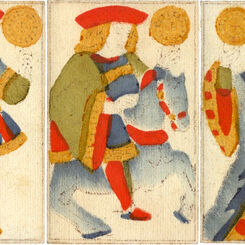
Pere Pau Rotxotxo Puigdoura
Spanish national pattern by Pere Pau Rotxotxo Puigdoura (1766–1797).
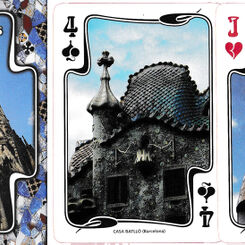
Gaudí playing cards
Gaudí playing cards with photography by Ramon Manent, Spain, 2002.
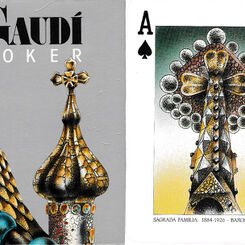
Gaudí poker
Gaudí poker playing cards illustrated by Josep Opisso, Spain, c. 1992.
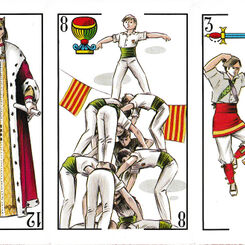
Festa Major de Vilafranca 1988
Colourful figures associated with the annual festival held in Vilafranca, Catalonia.
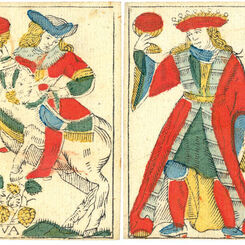
Baraja Carlos IV by Félix Solesio, 1800
Baraja Carlos IV, Félix Solesio en la Real Fábrica de Macharaviaya, 1800.
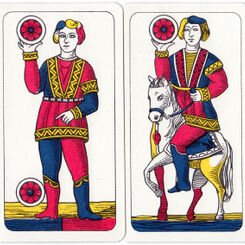
Trentine Pattern
Trentine Pattern
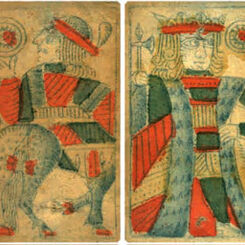
Pedro Varangot, 1786
Archaic Navarra pattern produced for the Pamplona General Hospital Monopoly by Pedro Varangot in 178...
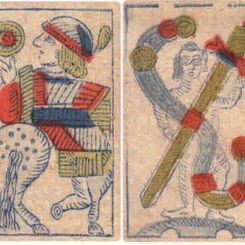
Navarra Pattern, 1793
Navarra pattern by an unknown cardmaker with initials I. I., 1793.
Anonymous Spanish Suited pack, c.1760
Anonymous archaic Spanish suited pack, c.1760.
Pedro Rotxotxo
Standard Spanish National pattern by Pedro Rotxotxo, Barcelona, late 18th century.
XV Century Catalan playing cards
XV Century Catalan Playing Cards, featuring four female Sotas, four Aces and four cards from the sui...
1: Playing Cards and their History: An Introduction and some links to other sites
What was considered the first mention of playing cards in England is in 1463 when Edward I banned th...
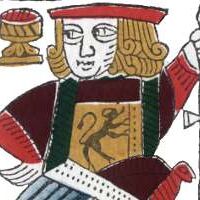
Navarra, XVII Century
Facsimile of 17th century Spanish-suited playing cards produced by Erregeak, Sormen S.A., Vitoria-Ga...
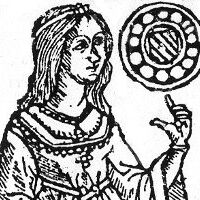
Gothic Spanish-suited cards
These cards may be a typical example of early 'standard' Spanish playing cards, maybe from before Co...

Real Fábrica de Macharaviaya
Production was controlled from Madrid as a source of national or regional revenue and, as a rule, th...
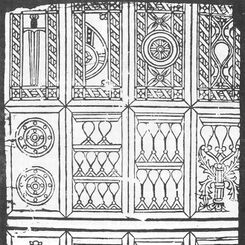
A Moorish Sheet of Playing Cards
This article was originally published in “The Playing-Card”, the Journal of the International Playin...
Most Popular
Our top articles from the past 60 days


Stephen Scharber
29 March 2026, 17:32SavedSaved this article to Stephen Scharber's Collection