


Tarock Cards
The earliest Tarot decks originated in Italy in the fifteenth century, with Italian suit symbols. However the game was very popular elsewhere and tarots with French suit signs, usually called "tarok" or "tarock", appeared around 1750 which are now mainly produced in Austria.
Austrian Tarock Cards
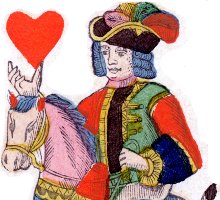
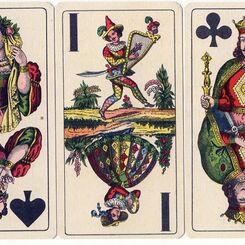
The earliest Tarot decks originated in Italy in the fifteenth century, with Italian suit symbols (cups, coins, clubs or batons and swords). However the game was very popular elsewhere and tarots with French suit signs (hearts, diamonds, clubs and spades), usually called "Tarok" or "Tarock", appeared around 1750 and which are now mainly produced in Austria. The four-suited pack with court cards King, Queen, Cavalier and Page follow the same arrangement except that the Italian suit symbols were replaced with French ones. The numeral cards were sometimes reduced so that the pack contained a total of 54 cards, instead of the full 78 cards. See also: Tarock deck made by Johann Herrl in Graz 1815►
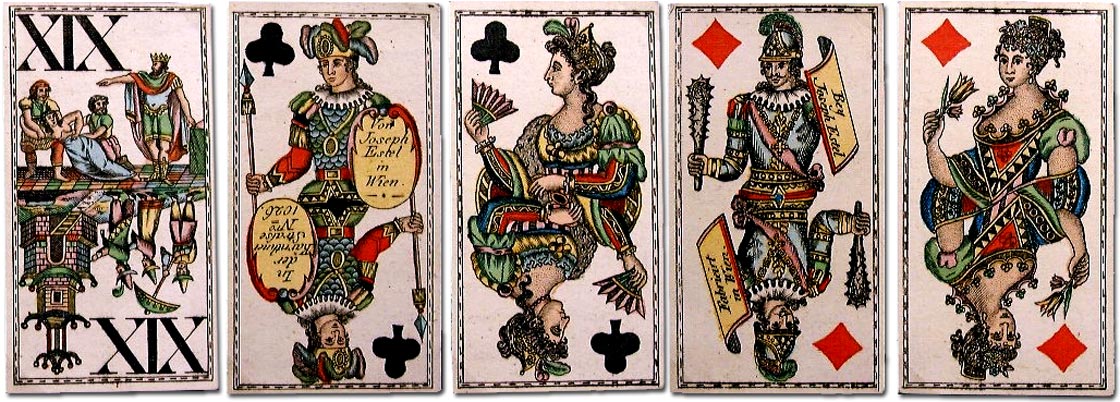
Above: Cards from 54-card Tarock pack manufactured by Joseph Estel (Vienna), dated 1820 on the Ace of Hearts. Learn more →
The subjects appearing on the Trumps of Tarock packs varies from the Italian prototypes. In the 18th century there was a vogue for animals or hunting scenes on the Trump cards, and later on mythological and literary subjects became popular. By the beginning of the 19th century it was possible to find almost any series of pictures on the Trumps. Very often these pictures alluded to popular proverbs, fables, social criticism, satire or heroic actions. The "Fool" is usually depicted as a harlequin. One particular series was widely copied and has become known as "Industrie und Glück" or "Rural Scenes" tarot in which the Trumps feature rural scenes and costumes from different regions. Most of these show a crowned eagle with a sword and sceptre clasped in one claw, perched on a rock with the legend "Industrie und Glück" on Trump II.
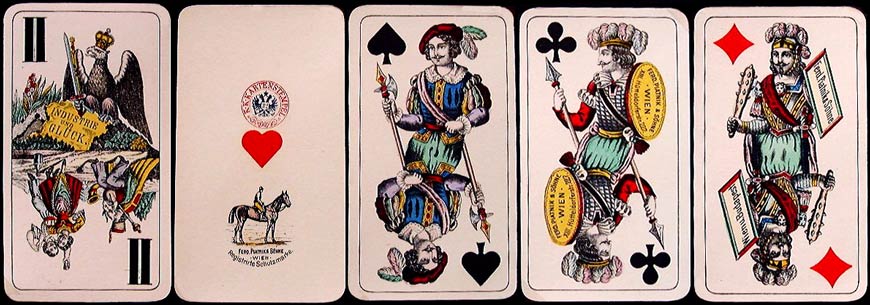
Above: cards from a 54-card "Industrie und Glück" Tarock pack manufactured by Ferd Piatnik & Söhne, Vienna, c.1900. More →
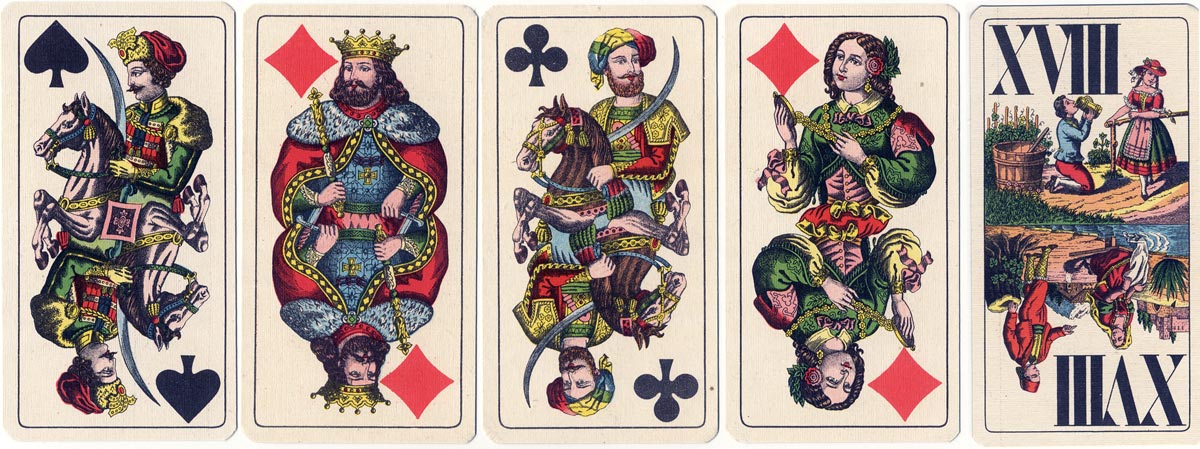
Above: cards from a 54-card "Industrie und Glück" or "Rural Scenes" Tarock pack manufactured by Franz Adametz, Vienna, c.1948. See more →
An Animal Tarock pack was published in Denmark by Jean Friedrich Mayer (1752-1783) and L.P. Holmblad published newly-designed packs depicting prominent buildings from in and around Copenhagen. The "Rural Scenes" Tarock pattern has also been used as the basis of divinatory fortune-telling cards manufactured in Argentina by Vigor S.R.L. with the title "Cartas Gitanas"►

By Simon Wintle
Spain • Member since February 01, 1996
I am the founder of The World of Playing Cards (est. 1996), a website dedicated to the history, artistry and cultural significance of playing cards and tarot. Over the years I have researched various areas of the subject, acquired and traded collections and contributed as a committee member of the IPCS and graphics editor of The Playing-Card journal. Having lived in Chile, England, Wales, and now Spain, these experiences have shaped my work and passion for playing cards. Amongst my achievements is producing a limited-edition replica of a 17th-century English pack using woodblocks and stencils—a labour of love. Today, the World of Playing Cards is a global collaborative project, with my son Adam serving as the technical driving force behind its development. His innovative efforts have helped shape the site into the thriving hub it is today. You are warmly invited to become a contributor and share your enthusiasm.

Activity for Tarock Cards
Sign in to comment or save this article.

Related Articles
Luxury No. 2167
A Piatnik classic that lives up to its title.
Tarock Cards by Antonín Kratochvíl
Excerpt from the catalog of a prominent Prague workshop.
Tarock Nr. 71 by Ferd. Piatnik & Söhne
Special tarock deck for the Tyrolean game Droggn.
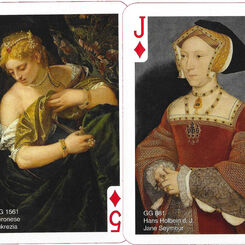
Art pack I
Art pack featuring Old Masters, including Bruegel, Vermeer, Titian, Raphael, Caravaggio, Canaletto, ...
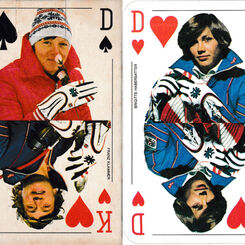
Rika playing cards
Playing cards depicting famous Austrian skiers of the 1970s.
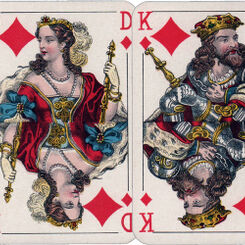
Piatnik No.97
Non-standard French-suited cards published by Ferd Piatnik & Sõhne, Vienna, c.1940s.
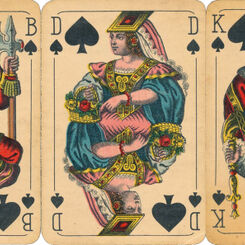
Vienna (ex-Lyon) pattern
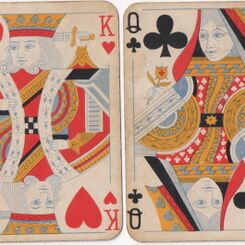
‘Vienna pattern’ derived from archaic Lyon pattern by Ferd Piatnik & Söhne A.G., c.1926-1934.
48: Ferdinand Piatnik & Sons
Ferd. Piatnik produced a very large range of cards with many different standard and non-standard pat...
Popular No.257
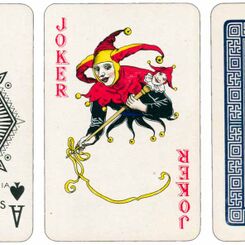
Piatnik’s “Popular Playing Cards” No.257
Salzburger Pattern
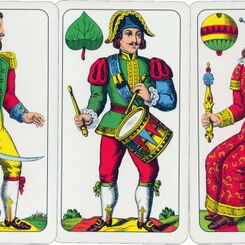
Salzburger pattern by Ferd. Piatnik & Söhne, Vienna
Die Neue ÖVP
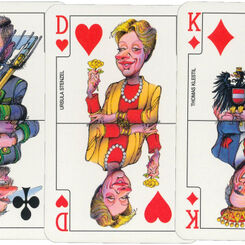
Promotional deck for the Austrian People’s Party (ÖVP) printed by Piatnik, 1996.
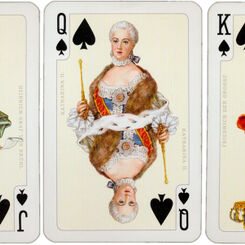
Rococo No. 2130
Piatnik: Rococo No. 2130 playing cards designed by Prof. Kuno Hock, c.1975
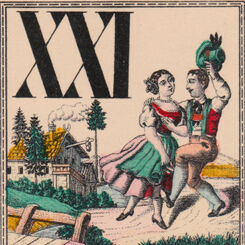
Tarok c.1900
Piatnik & Söhne “Industrie und Glück” Tarock c.1905-1910.
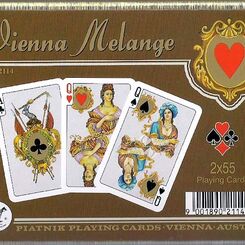
Vienna Melange
“Vienna Melange” Playing Cards by Piatnik with a historical feel representing the four races that ma...
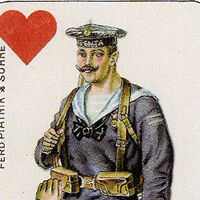
Soldaten Tarock
Piatnik was known for their magnificent quality of chromo-lithographic printing, and this facsimile,...
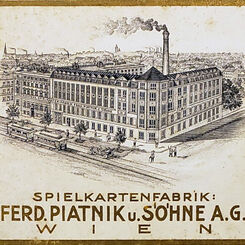
Ferd. Piatnik & Söhne
Ferdinand Piatnik was born in Ofen on October 14, 1819.
Piatnik Tarock
Deck of "Industrie und Glück" or "Rural Scenes" tarock cards manufactured by Ferd Piatnik & Söhne, V...
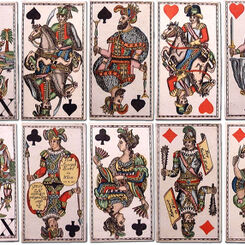
Estel Tarok
J. Estel Tarok, 1820.
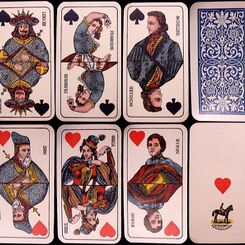
Literary Figures
Non-Standard Literary Figures playing cards manufactured by Ferd. Piatnik & Söhne A.G., Vienna, 1924...
Adametz, Vienna
Cards from a 54-card "Austrian Tarock" or "Industrie und Glück Tarock" pack made by Franz Adametz of...
Most Popular
Our top articles from the past 60 days


