Estonian Historic Playing Cards
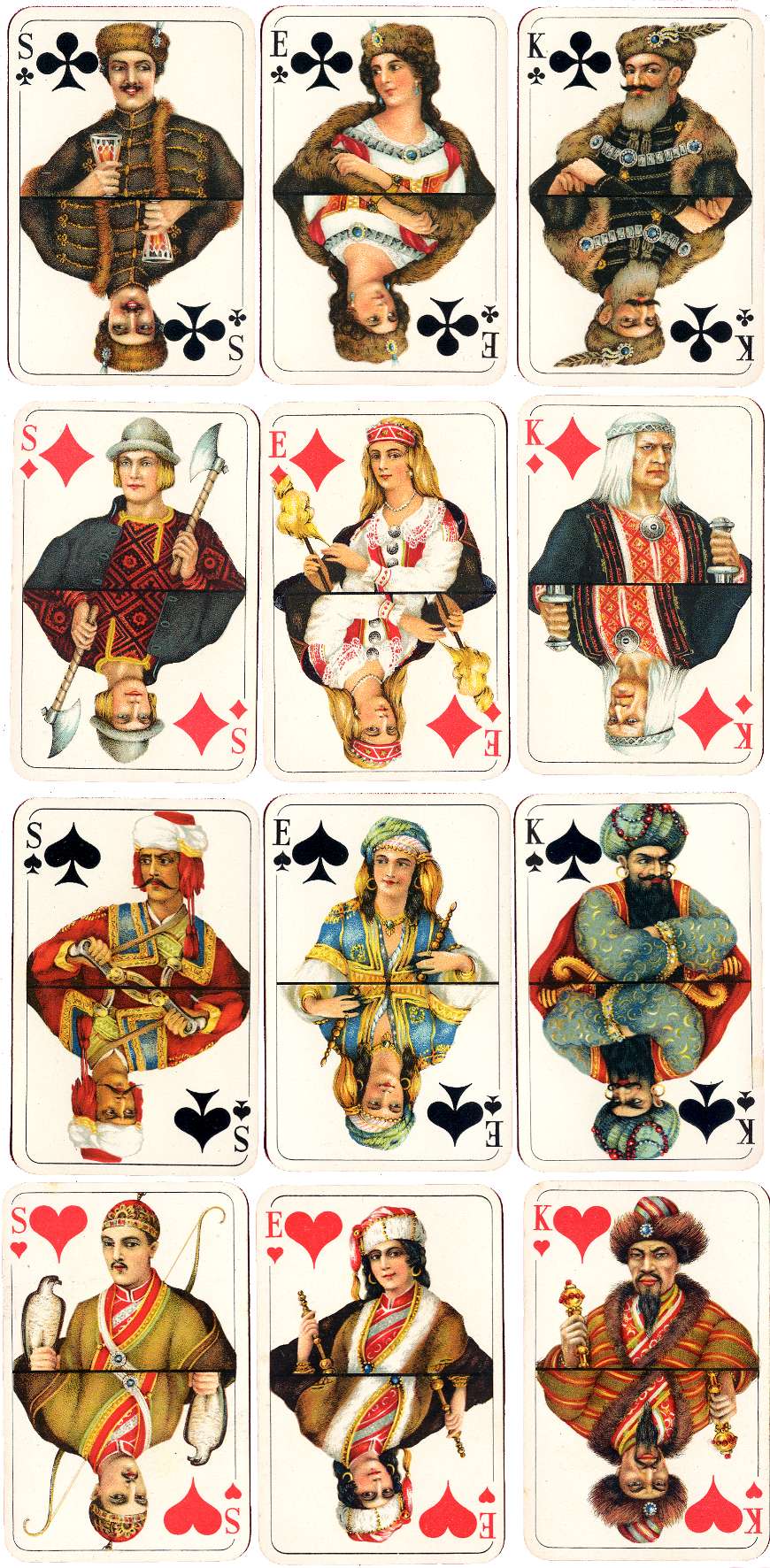
The court cards and indices on Estonian playing cards are Södur, Emand, Kuninga.
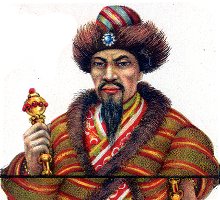
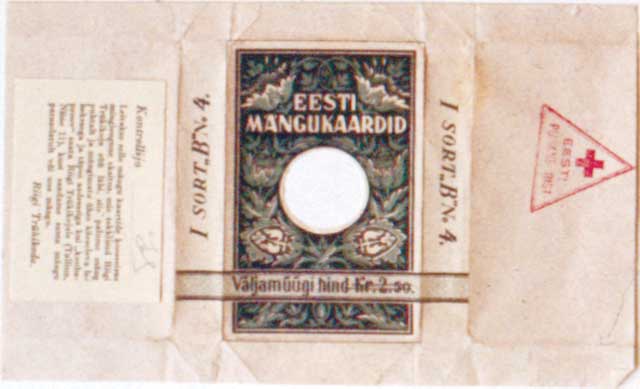
The cards illustrated below were designed by Axel Rosmann and printed chromolithographically in Estonia by the State Printing House in Tallinn, c.1930. A full-sized pack and a patience pack were produced. The designs of the court cards reflect Estonia's early history, showing Calmics/Tartars from Russia and Gypsies or Persians who had migrated. Click here to see the wrapper.
The court cards and indices on Estonian playing cards are Södur, Emand,Kuninga.

By Simon Wintle
Spain • Member since February 01, 1996
I am the founder of The World of Playing Cards (est. 1996), a website dedicated to the history, artistry and cultural significance of playing cards and tarot. Over the years I have researched various areas of the subject, acquired and traded collections and contributed as a committee member of the IPCS and graphics editor of The Playing-Card journal. Having lived in Chile, England, Wales, and now Spain, these experiences have shaped my work and passion for playing cards. Amongst my achievements is producing a limited-edition replica of a 17th-century English pack using woodblocks and stencils—a labour of love. Today, the World of Playing Cards is a global collaborative project, with my son Adam serving as the technical driving force behind its development. His innovative efforts have helped shape the site into the thriving hub it is today. You are warmly invited to become a contributor and share your enthusiasm.

Activity for Estonian Historic Playing Cards
Sign in to comment or save this article.

Related Articles
Ubo cards
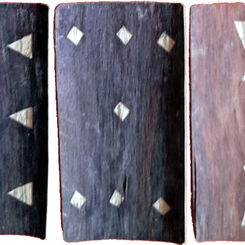
Traditional Ubo cards from the Philippines made from tree bark.
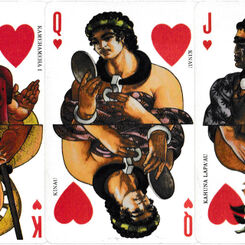
The Times of Kamehameha The Great
Figures from Hawaiian history and scenes of everyday life designed by Joseph Feher.
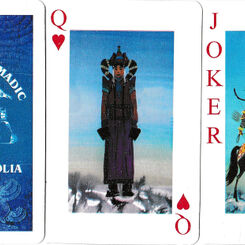
Traditional Nomadic Life of Mongolia
Playing cards depicting paintings of Traditional Nomadic Life of Mongolia.
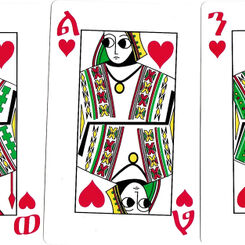
Habesha playing cards
Habesha playing cards published by “Ethiopian Reflection”
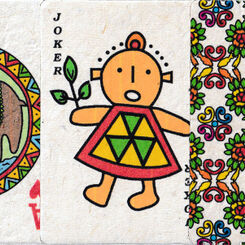
Happy Playing Cards
Cheerful, colourful designs on handmade paper from Nepal.
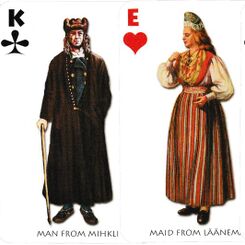
Estonian Ethnographic Playing Cards
Estonian national costumes and everyday items feature on this pack made in Estonia.
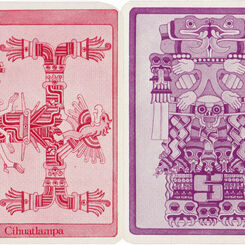
Tonalamatl
Baraja Tonalamatl Mexican Aztec playing cards based on the prehispanic Codex Borgia manuscript.
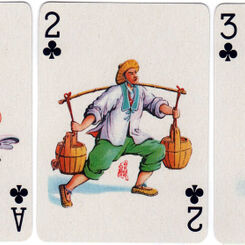
Characters of “The Water Margin”
Characters from the Chinese novel “The Water Margin” - 水滸撲克.
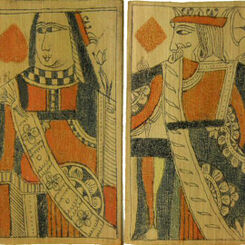
Banana Leaf Cards
English Standard pack hand drawn & coloured on banana leaf, c.1820.
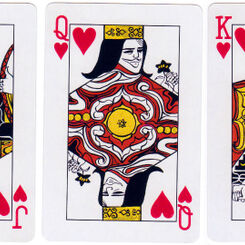
Ainu culture
A terrific deck of cards made by Nintendo c.1979 with original designs on every card showing the Ain...
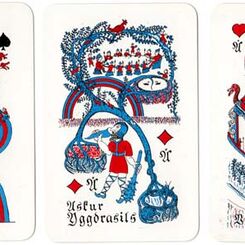
Iceland Mythological Playing Cards
Iceland Mythological Playing Cards designed by Sigurlinna Pétursson, 1958
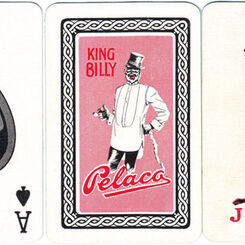
Pelaco
‘Pelaco’ playing cards with Aboriginal characters by Sands & McDougall, Australia, c.1930.
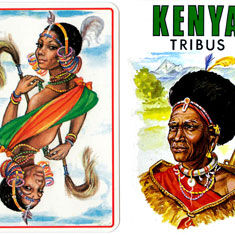
Kenya Tribes Playing Cards
“Kenya Tribus” playing cards published by Sapra, Mount Kenya Sundries Ltd, Nairobi, 1991
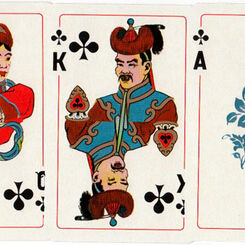
Mongol Playing Cards
Mongol Playing Cards with courts in traditional costume.
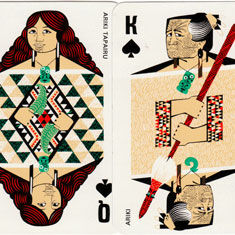
Maori
Maori themed playing cards from New Zealand depicting Maori Kings, Queens and Chiefs
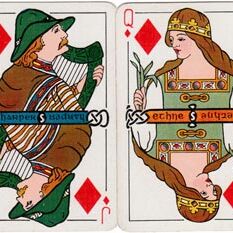
Irish Historic
Irish Historic Playing Cards celebrating history and art, 1920.
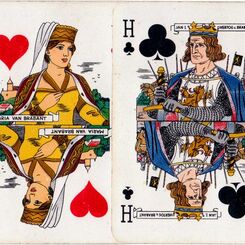
Noord Braband
“Historical Playing Cards” originally commissioned by Northern Brabant Insurance Society and manufac...
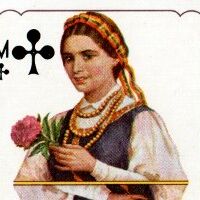
Istorinės
Istorinės Historical Deck from Lithuania manufactured by Spindulys Playing Card Manufactory, Kaunas,...
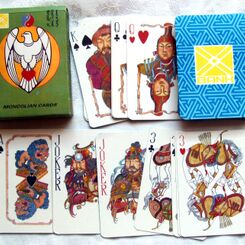
Mongolian Playing Cards
Mongolian Playing Cards.
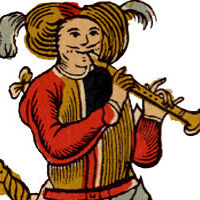
History of Danish Playing Cards
The earliest mention of playing-cards in Denmark dates from 1487 when King Hans, who reigned from 14...
Most Popular
Our top articles from the past 60 days