


Bohemian Pattern
The Bohemian Pattern, sometimes called the Prager Pattern, has roots in the 16th century.
The Bohemian pattern has roots in the 16th century
These images recall some 16th century German cards by Heinrich Hauk and others and which are also related to the Bavarian and Franconian patterns. These patterns are shared in neighbouring countries, in Austria as the Salzburger pattern and in Czechoslovakia it has become known as the Bohemian pattern. They are descended from the oldest of German-suited packs. As playing card designs were copied from workshop to workshop, characteristics from archaic models still survive today in cards such as these which have become standard patterns. The Knaves are divided into military categories and hold long spears, or halberds, swords and musical instruments. The Kings are seated and each has two suitmarks. The numeral cards have little vignettes at the bottom with animals or rural scenes.
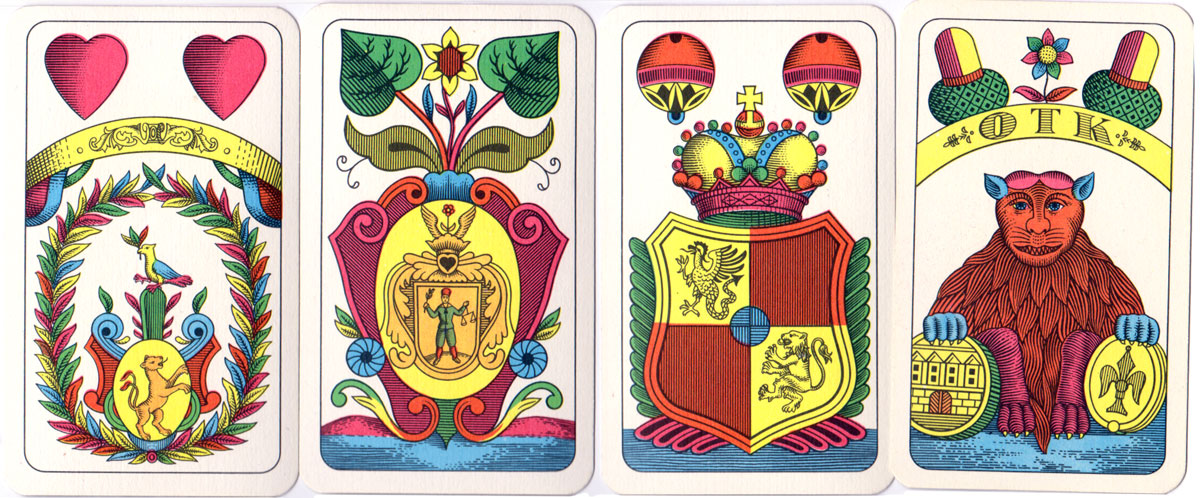
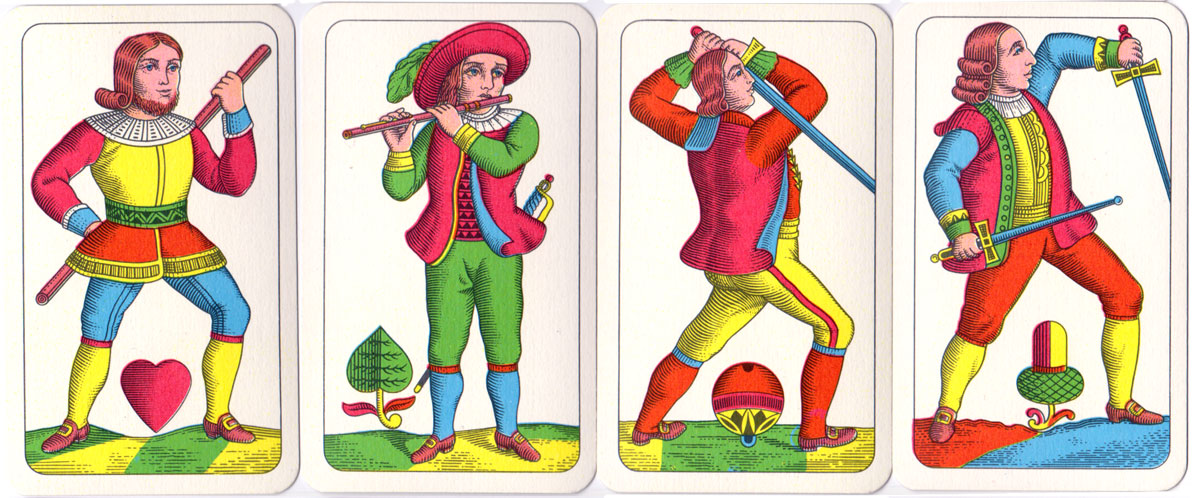
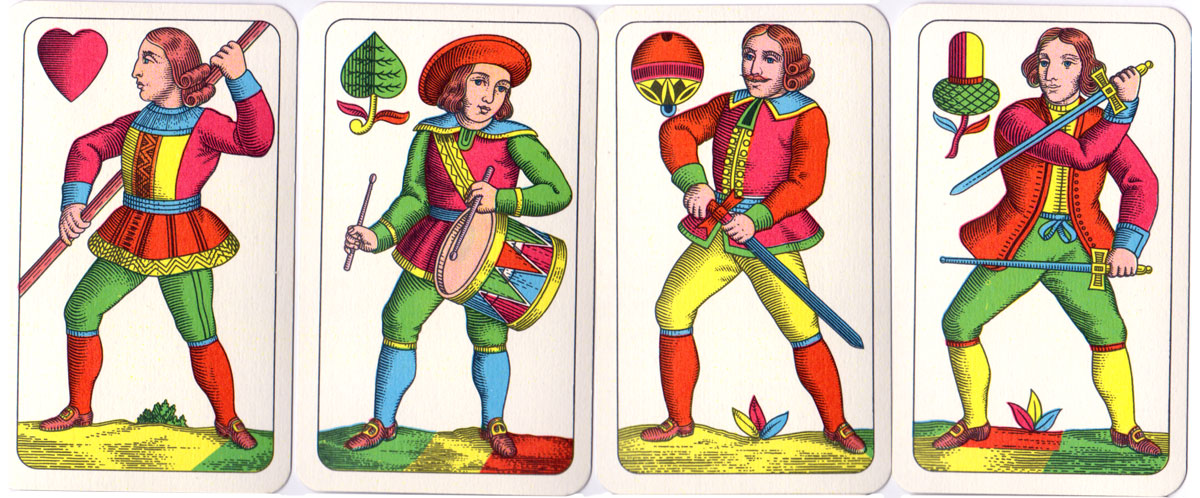
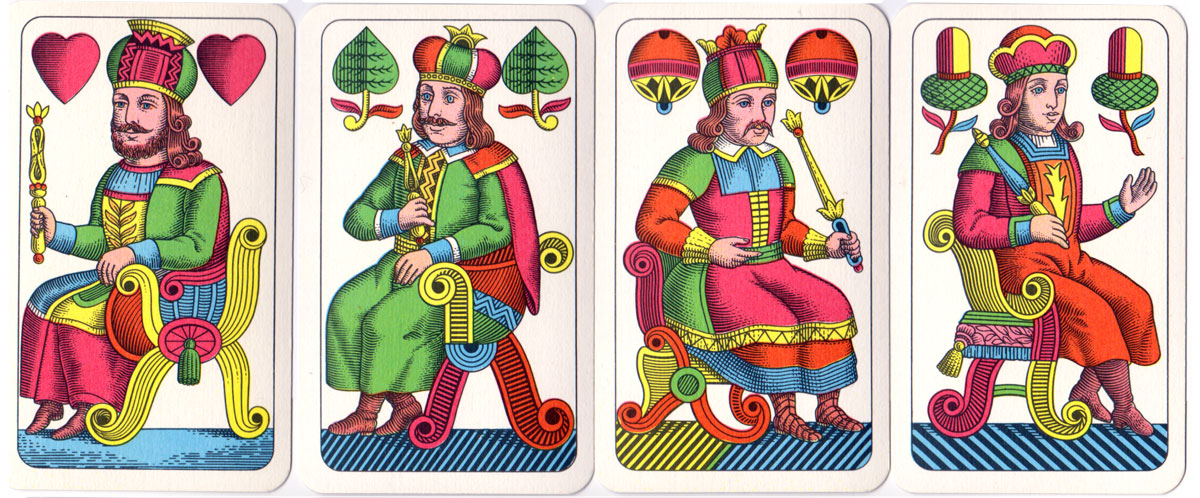
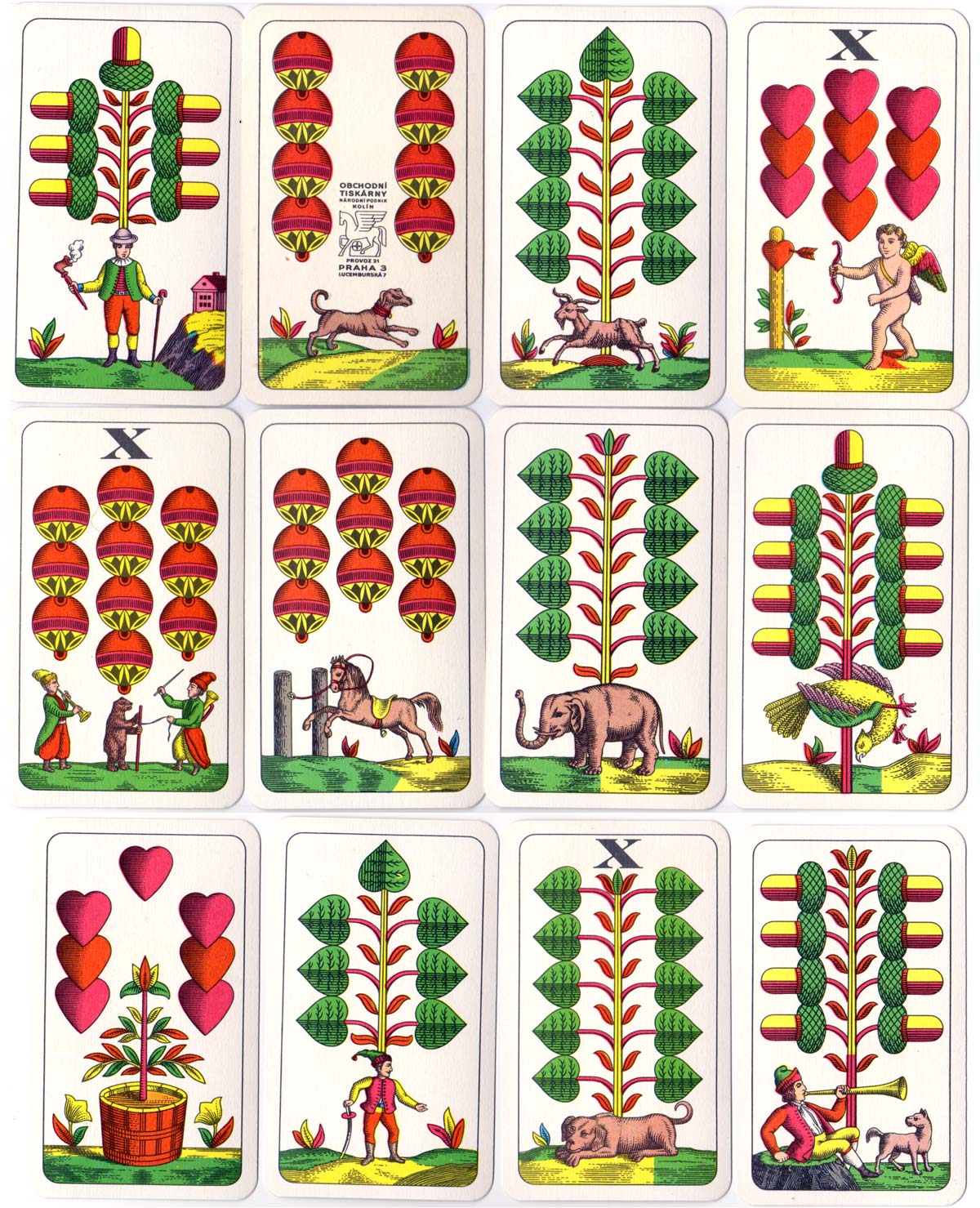
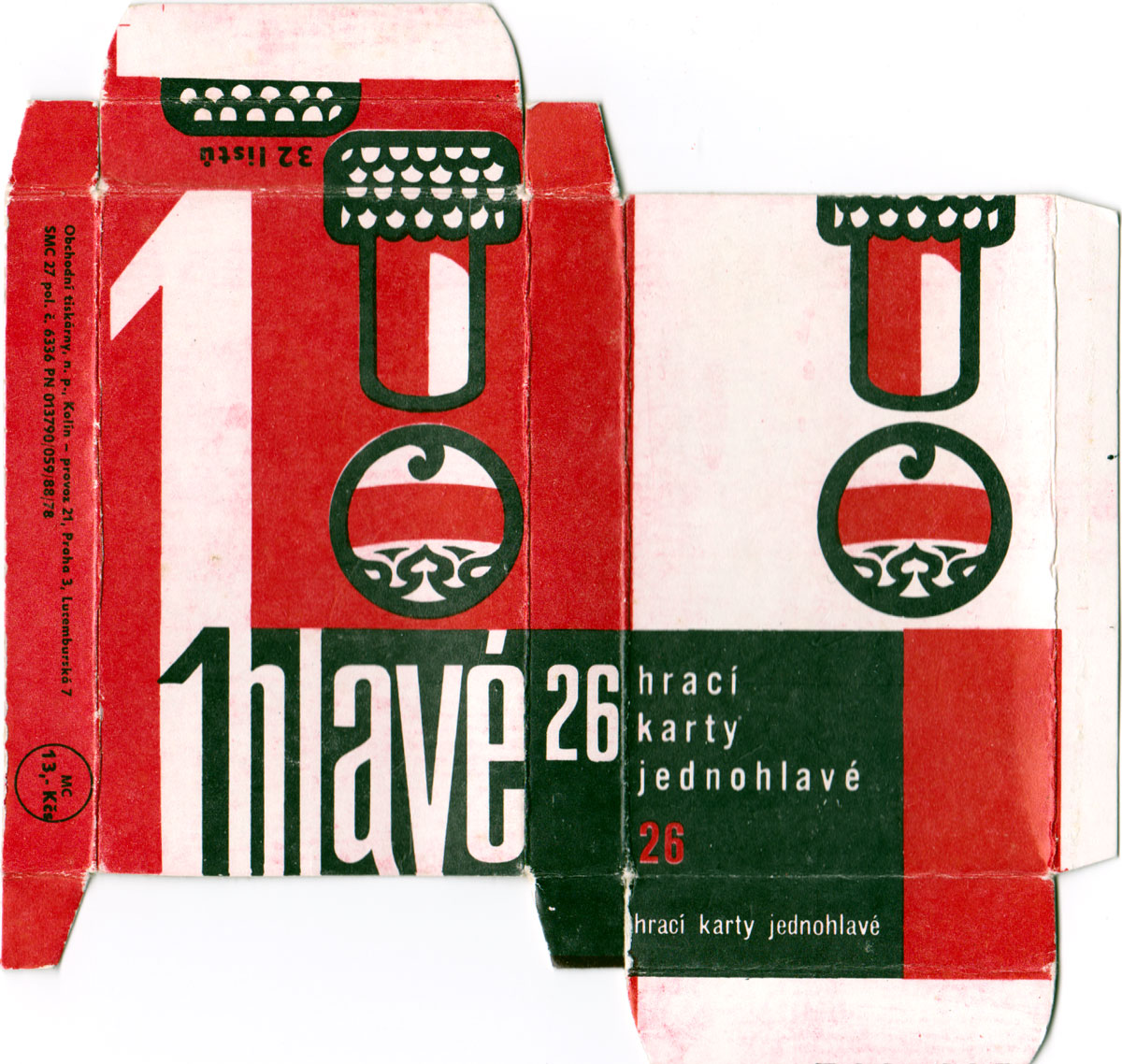
Above: cards from Bohemian or Prager pattern, 32 cards, manufactured by Obchodní Tiskárny, Prague, Czechoslovakia, c.1970. Some of the features in this pattern originate in much earlier German cards in the 16th century. The Pegasus motif on the reverse and on the eight of bells was inherited from Ritter & Cie, Prague. Click the image to see the box→
Cards from the area which was formerly the Austro-Hungarian Empire are immensely varied. Some of them have special regional differences and are named accordingly. Just as regional dialects are spoken within different areas, similarly, regional styles of playing cards follow the fashion for certain games, ethnic groups or social classes. The Bohemian pattern, also known as the Prager pattern, shares similarities with other old German-suited patterns, such as the Bavarian and Franconian, and preserves details which have survived from the earliest days of German cardmaking, such as soldiers holding weapons and animal or burlesque vignettes on the numeral cards.
German-suited packs have tended to remove the lower numeral cards, apart from the Deuces (Twos), to reduce the number of cards from 52 to 36 or 32 cards. This is a northern custom, whereas in areas using Spanish or Italian suit systems, it is more customary to drop the 8 & 9s and to have 10, 11 & 12 as the three courts, making 40 card decks.
• See also: Czech Nationalistic • Czech 'Hussite' pack • 1908 Prague Jubilee Exhibition • 'Jugendstil' designed by Artuš Scheiner, 1920 • Ritter & Cie "Art Deco", 1933 • Eagle Playing Card Co., Ltd.
Piatnik Prager Bild
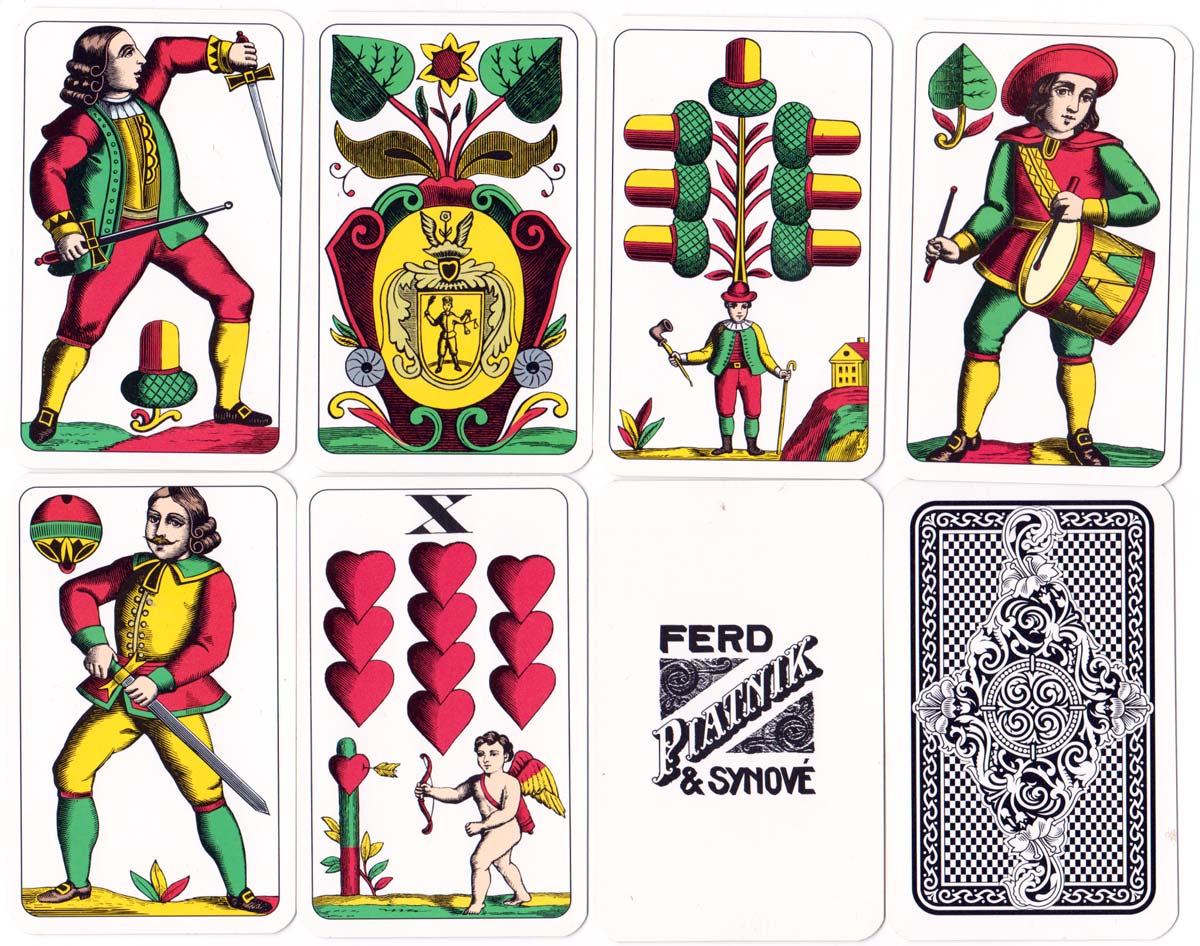
Above: the 'Prager' or 'Bohemian' pattern manufactured by Ferd Piatnik & Synové, Vienna, c.1995.

By Simon Wintle
Spain • Member since February 01, 1996
I am the founder of The World of Playing Cards (est. 1996), a website dedicated to the history, artistry and cultural significance of playing cards and tarot. Over the years I have researched various areas of the subject, acquired and traded collections and contributed as a committee member of the IPCS and graphics editor of The Playing-Card journal. Having lived in Chile, England, Wales, and now Spain, these experiences have shaped my work and passion for playing cards. Amongst my achievements is producing a limited-edition replica of a 17th-century English pack using woodblocks and stencils—a labour of love. Today, the World of Playing Cards is a global collaborative project, with my son Adam serving as the technical driving force behind its development. His innovative efforts have helped shape the site into the thriving hub it is today. You are warmly invited to become a contributor and share your enthusiasm.

Activity for Bohemian Pattern
Sign in to comment or save this article.

Related Articles
Dielo playing cards
Heroic Socialist-style version of the Four Seasons pattern from Bratislava.
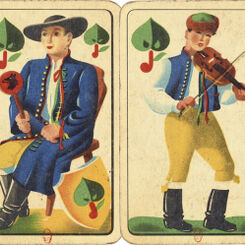
Czech Bohemian style playing cards
Czech Bohemian style playing cards with a charming aesthetic, reflecting the cultural and social lif...
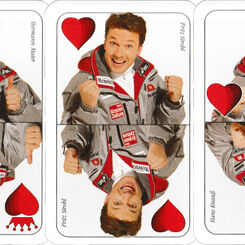
Austria Ski Team playing cards
Photos of members of the Austrian skiing team replace the normal courts on two different packs.
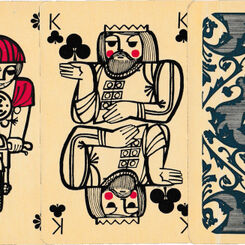
ČZ playing cards
Advertising pack for the Czechoslovak motorcycle factory Česká Zbrojovka.
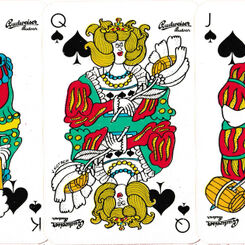
Budweiser Budvar beer
Colourful designs promoting Budweiser Budvar beer from Czechoslovakia.
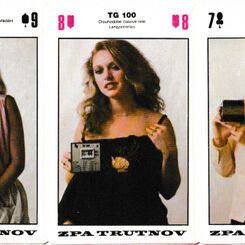
ZPA Trutnov
Publicity pack for a Czech company making mains receivers and electrical control units.
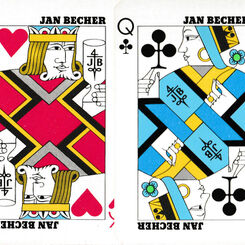
Jan Becher playing cards
Publicity pack for Jan Becher, a Czech liqueur company, with modified international courts.
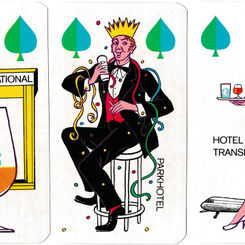
Interhotel playing cards
Interhotel playing cards printed by Obchodni Tiskárny (OTK), Prague, and published by the Interhotel...
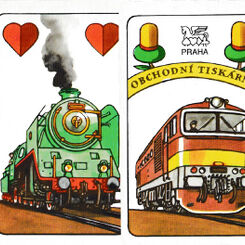
150 Years of Czechoslovakian Railways
Czech trains and railwayana from 1839 to 1989, made by Obchodní Tiskárny, Prague, Czechoslovakia.
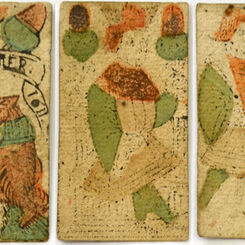
Georg Kapfler
Antique deck of old Bohemian playing cards of the German type manufactured by Georg Kapfler and date...
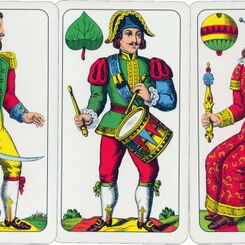
Salzburger Pattern
Salzburger pattern by Ferd. Piatnik & Söhne, Vienna
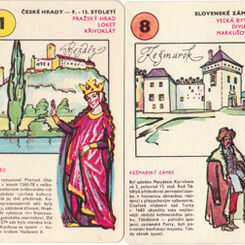
Castles Quartet
“Castles” Quartet Illustrated by Vladimir Kovářík.
Casino No.240
Piatnik-Ritter No.240 - Obchodní Tiskárny Casino No.240.
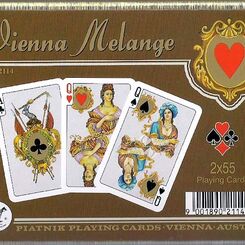
Vienna Melange
“Vienna Melange” Playing Cards by Piatnik with a historical feel representing the four races that ma...
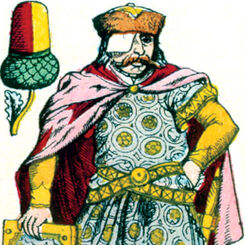
Czech Hussite Deck
Czech “Hussite” Pack engraved by Karel Hoffmann and first printed by Jan Ritter in 1895.
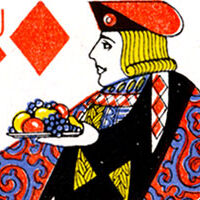
Ritter & Cie, 1933
A colourful re-working of the standard Anglo-American pattern in Art Deco style.
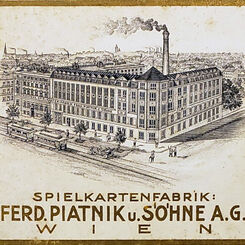
Ferd. Piatnik & Söhne
Ferdinand Piatnik was born in Ofen on October 14, 1819.
1: Playing Cards and their History: An Introduction and some links to other sites
What was considered the first mention of playing cards in England is in 1463 when Edward I banned th...
OTK Bridge-Rummy
OTK Bridge-Rummy by Obchodní Tiskărny, c.1990.
Hofamterspiel, c.1460
Hofamterspiel, c.1460
Most Popular
Our top articles from the past 60 days


Stephen Scharber
07 March 2026, 04:15SavedSaved this article to Stephen Scharber's Collection
Jason Somers
10 June 2026, 06:21SavedSaved this article to Jason Somers's Collection