


Johann Jobst Forster
Deck made by Johann Jobst Forster, Nürnberg, first half of 18th century in the Paris pattern.
A deck made by Johann Jobst Forster, Nürnberg, first half of 18th century, copper engraved, hand-coloured with 10 colours.
The French “Paris pattern” was established as such around the middle of the seventeenth century (based, perhaps, on the cards of Hector of Troyes). The cards had single-figure courts until around 1830 when the double-ended version came into use. The court cards are usually named. French-suited cards arrived in Germany during the 18th century and many beautiful French-suited packs were produced in Germany, including some local variations derived from the Paris pattern. In some cases the manufacturers incorporated Austro-Hungarian eagles into the designs of this pattern, whilst others retained the fleur-de-lis as well as the French names on the courts. This pattern was superseded in Germany by the rise of the Hamburg pattern.
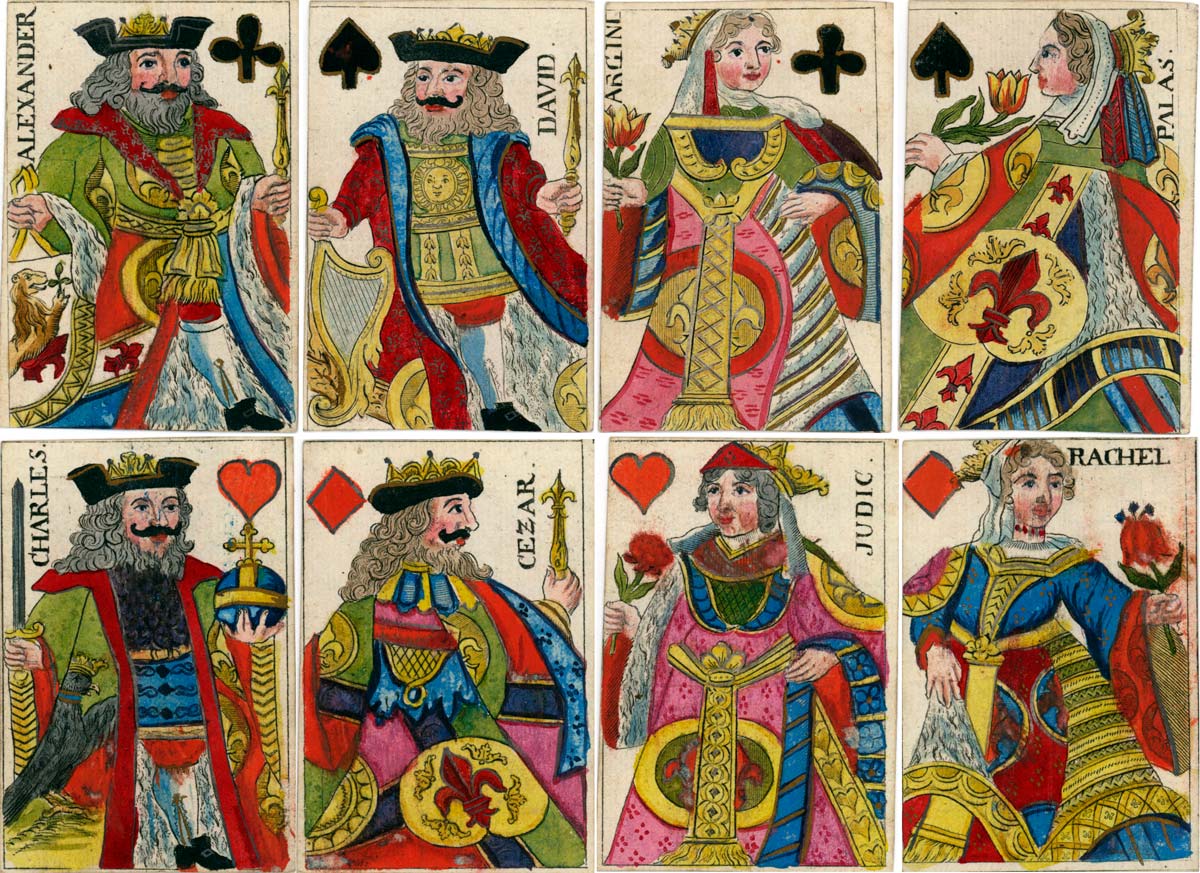
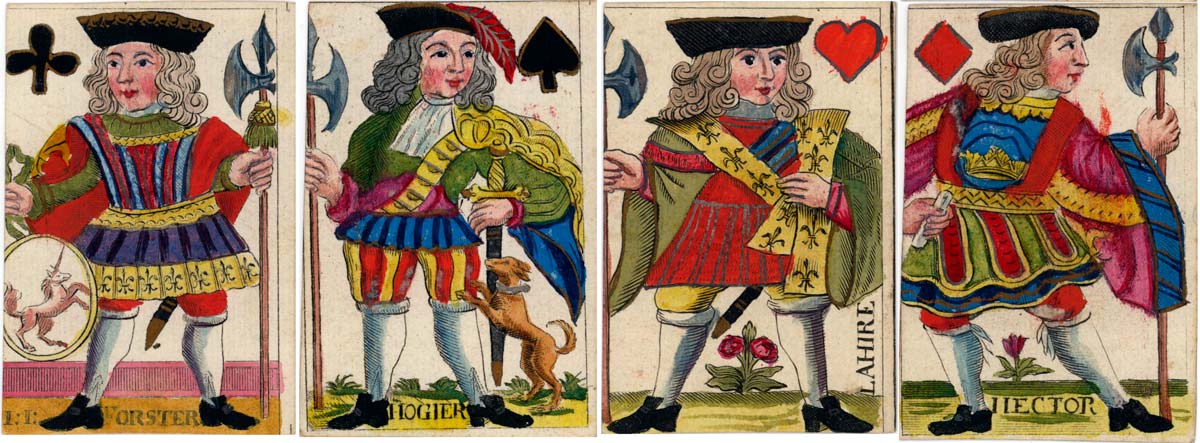
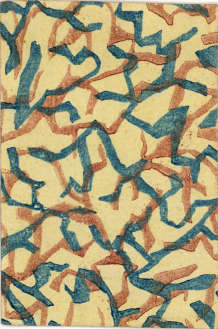
Above: twelve cards and back design from deck made by Johann Jobst Forster, Nürnberg, first half of 18th century. Paris pattern, copper engraved, hand-coloured. The manufacturer's name can be read on the Jack of Clubs, whose shield bears a unicorn motif.
See also: similar decks by Johann Backofen Joseph Losch.

By Klaus-Juergen Schultz (1948-2025)
Germany • Member since February 03, 2024
From the collection of Klaus-Jürgen Schultz.

Activity for Johann Jobst Forster
Sign in to comment or save this article.

Related Articles
Calligraphy Card Game
Military figures executed in calligraphic flourishes by Johann Christoph Albrecht.
Songs with Flute accompaniment
Eighteenth century English engraved cards with music for voice and flute.
Dr Sacheverell
Dr. Henry Sacheverell's impeachment in 1710 sparked widespread public unrest and political upheaval,...
Johann Nejedly Tarok Cards
Johann Nejedly, a 19th-century Viennese card maker, produced Tarock cards featuring modern scenes th...
Animal Tarot by Johann Jobst Forster
French-suited 78-card animal tarot deck of the Bavarian type.
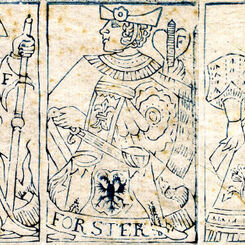
Uncut Sheet by Johann Jobst Forster
A proof sheet containing twelve court cards of conventional French type.
Illustrated Playing Cards, c.1740
Illustrated playing cards featuring comical engravings and rhymes about saints, c.1740.
XVII Century Engraved Animal Cards
Anonymous French-suited German engraved cards c1610 to 1650.
Forrest Cards, c.1750s
Hand-coloured Forrest Cards produced for “Young Gentlemen & Ladys who are Lovers of Ingenuity”, c.17...
Delightful Cards, c.1723
Delightful Cards, containing variety of entertainment for young Ladies and Gentlemen c.1723.
Master of the Playing Cards
Animal suited playing cards engraved by the Master of the Playing Cards, Germany, c.1455
Unknown Maker
Early German deck by unknown maker, c.1825
Joseph Losch
French-suited pack with full-length courts by Joseph Losch, c.1800.
Das Kupferstichspiel des I.M.F. von 1617
Playing cards had been made as precious objects for wealthy clients since the late 14th century. The...
Master PW Circular Cards
Master PW Circular Playing Cards: roses, columbines, carnations, parrots and hares... everyday objec...
Johann Matheus Backofen
French-suited deck manufactured by Johann Matheus Backofen, Nürnberg c.1800.
Alphonse Arnoult
Finely engraved deck by Alphonse Arnoult (Paris), c.1860. 52 cards.
José Martínez de Castro, page 2
The most noteworthy feature of its history is that this design has since been adopted for use in Sar...
South German Engraver
A pack of 52 cards with banner 10s, female 'Sotas', horsemen and kings, the pack was engraved in the...
Art in Playing Cards
Playing cards have long served as miniature canvases—hand-painted, gilded, engraved and printed with...
Most Popular
Our top articles from the past 60 days


