


Portrait Playing Cards
Portrait playing cards, featuring realistic drawings of people on the court cards instead of traditional stylized figures, originated in the 18th century and continue to gain popularity.
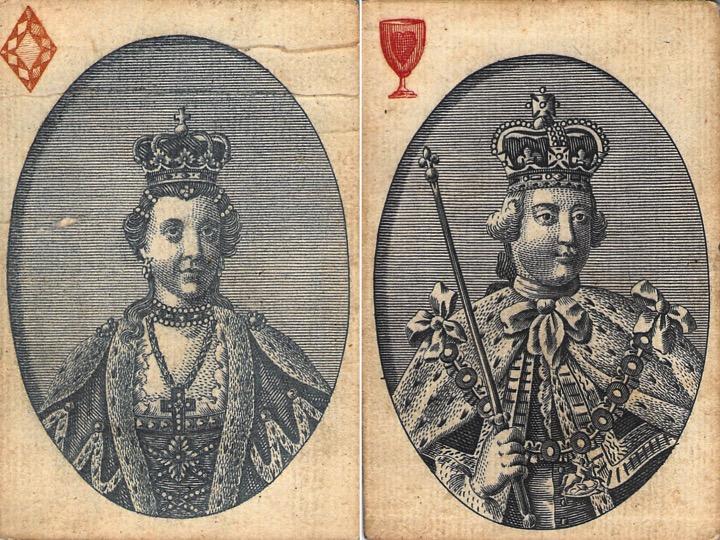
Above: Monarchs of Europe by Rowley and Co, c. 1775. Note also the new suit signs.
Portrait playing-cards are one of my favourite types, but before I get going, this is not (yet) a standard term, so I need to explain what they are. The easiest way to get what I am describing is to look ahead at the illustrations. Portrait cards are a variant of standard playing-card patterns in which the traditional and highly stylized Jacks, Queens and Kings have been replaced with more realistic drawings of people – real or imaginary…
The first English example was made by Rowley and Co. and bears a taxed A♠ valid from 1765-1776. These cards are printed with copper plate, not the cruder wooden blocks used for the standard packs, and the faces are from European royal families. Their intention was to restore clarity to the Kings and Queens depicted - and thereby to make their fortunes! These cards probably sold quite well at the time, as quite a few survive, but they were not popular with card-players, who want their cards to be immediately familiar. They did not last long.
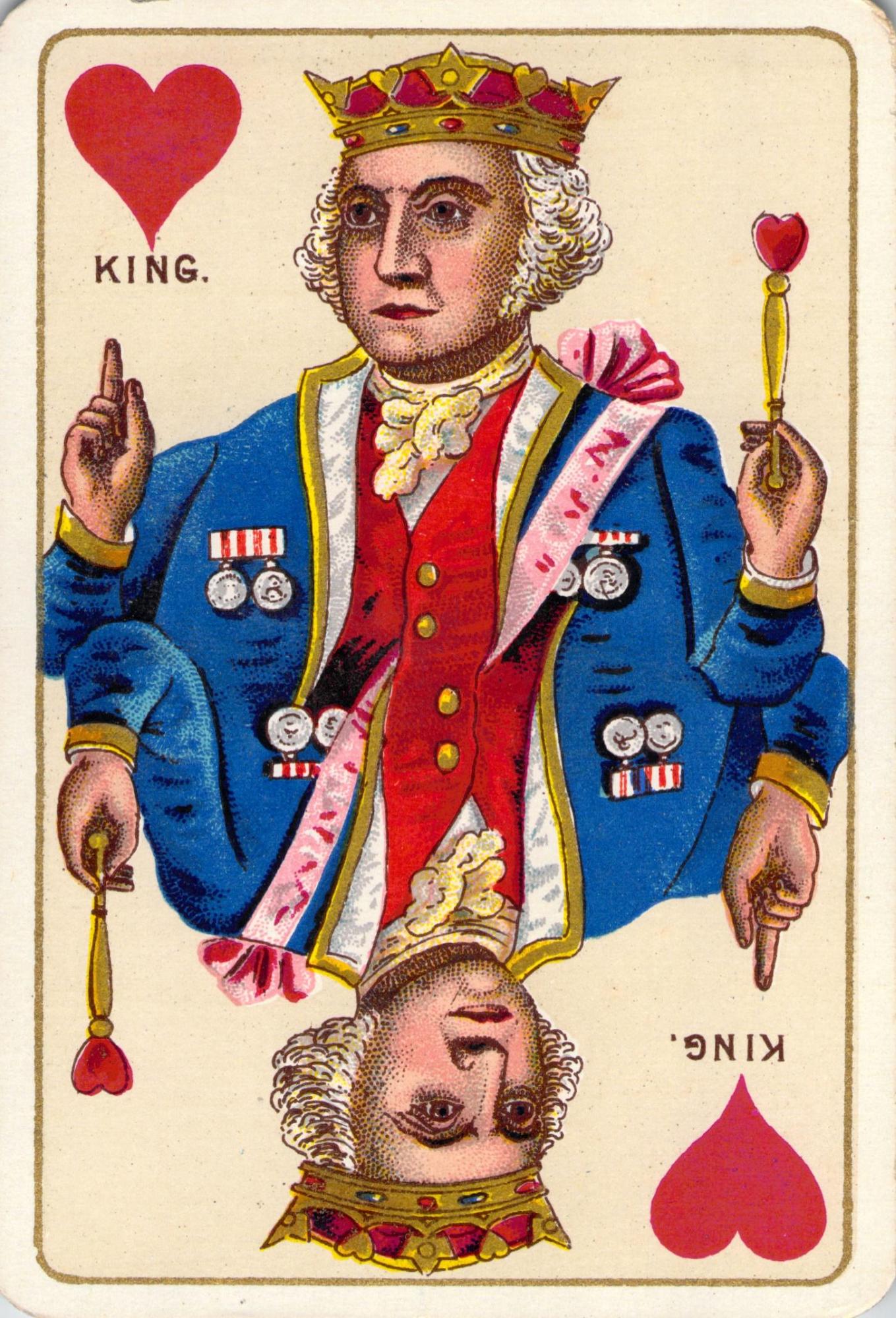
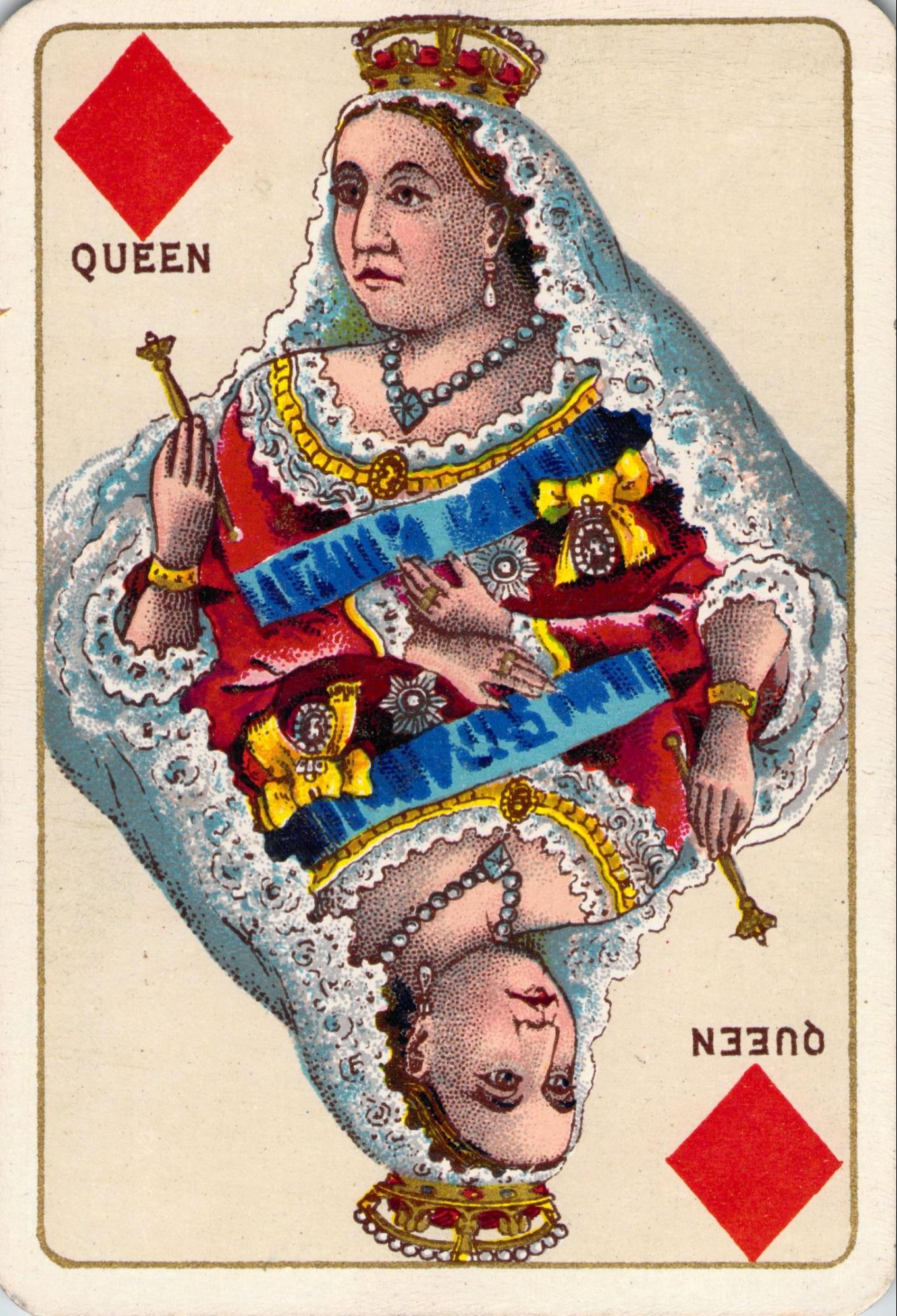
A fine English example is the Kimberley ‘Patriotic’ card design from 1893-1897. Unlike the Rowley cards, these have conventional suits and could easily have been used to play card games. Five Editions were made, so these must have been popular. The court cards show famous people from different countries (England, USA, Germany and France). In the following image, the Q♦ depicts Queen Victoria, the K♥ shows George Washington.
The next set is by Reynolds & Co of London and it was made around 1850. At a glance it is almost standard, but it features drawings by the artist and caricaturist Alfred Crowquill. The faces are humorous and gently mock the appearance of conventional playing-cards. The pips on all the numeral cards are also filled in with drawings of faces.
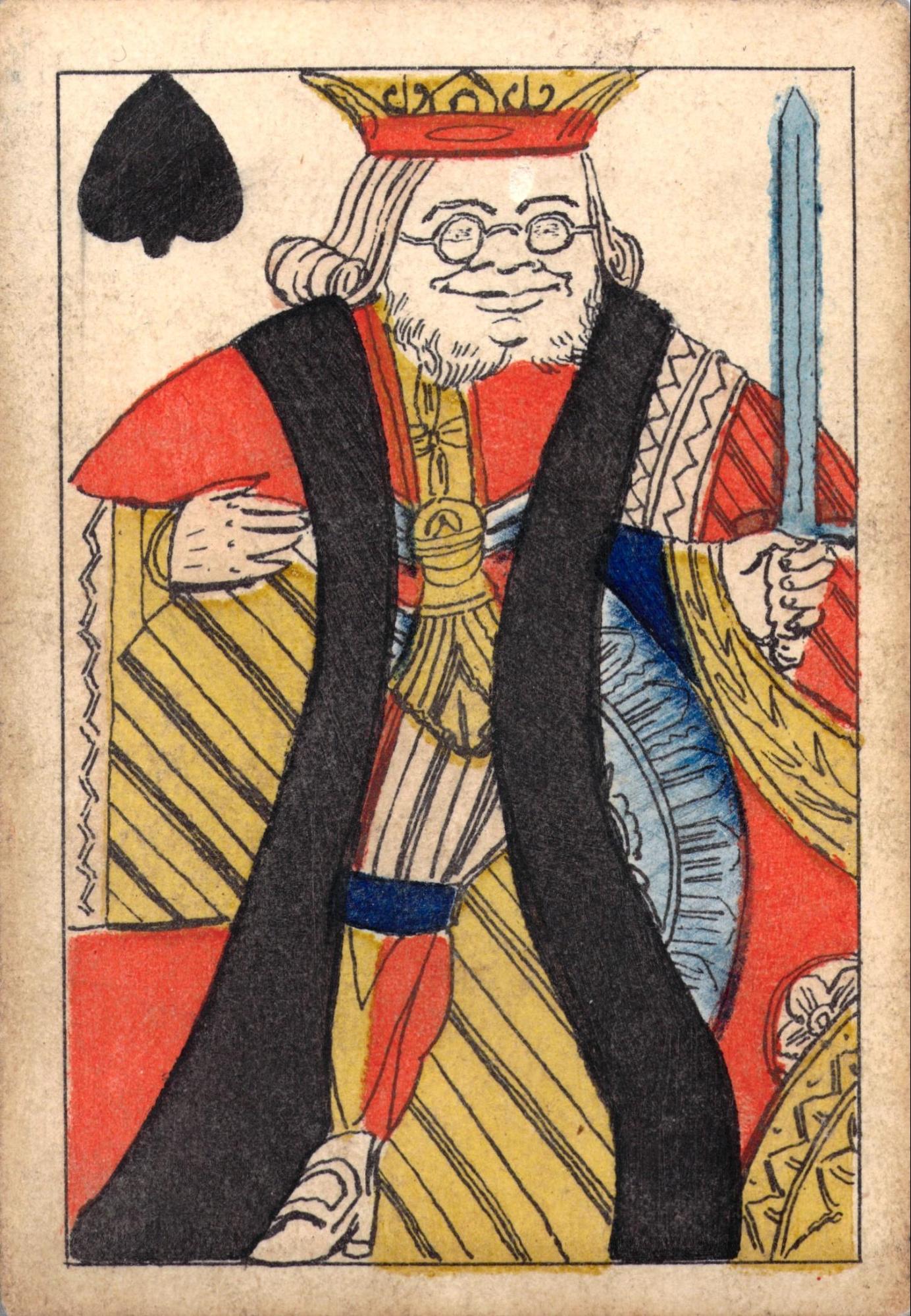
The brilliant Tiffany Harlequin transformation pack of 1879 takes this idea further, but it is more natural to call it a transformation rather than a portrait type.
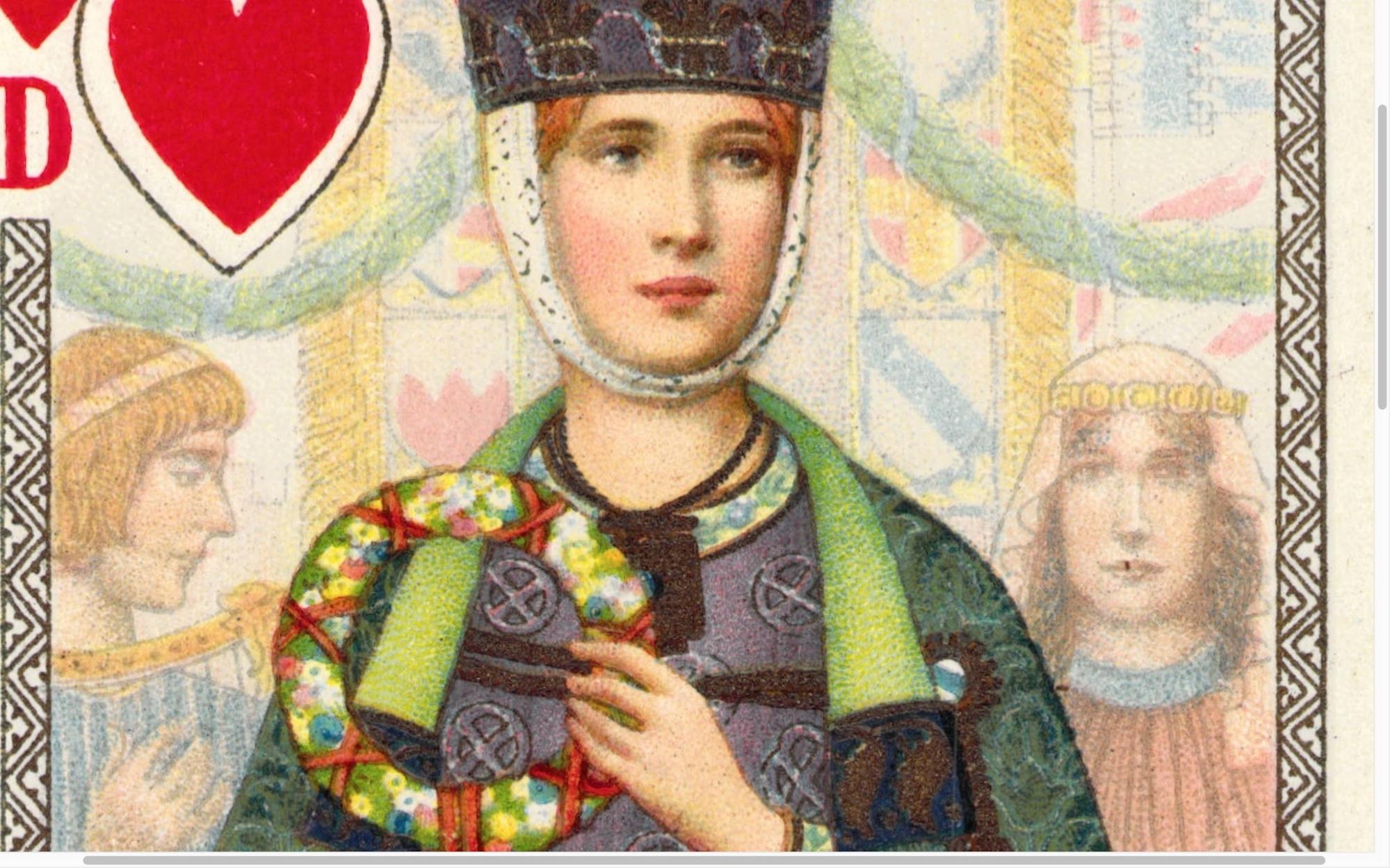
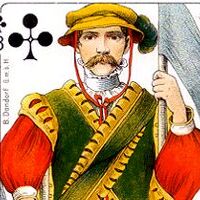
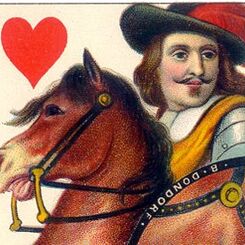
The ‘Hundertjahrkarte’ by B Dondorf of Frankfurt was made to celebrate the Manufacturer’s 100th year in operation - 1933. This deck is considered by many people as a very good candidate for “best ever”. The figures here are imaginary and perhaps figures of folk legend. It is said that sixteen lithographic stones were used – each one creating a different color. Legend has it that making these cards reduced the Company to bankruptcy; the truth is that the 1930s were hard times and Dondorf was already being taken over.
Portrait packs are enjoying something of a revival in the 21st century. The Dondorf Centenary Pack just mentioned is currently being restored by Mike Ratledge and Lotrek Oath. Every aspect of the original will be faithfully reproduced, exploiting the best available modern inks. Judging by their previous productions, this should be a fabulous recreation, one that will be online by the time this CTD is mailed out.
Half-moon playing cards’ “Icons (Imperial Edition)”, also designed by Lotrek, is a great contemporary example of a portrait pack. Lotrek has included some of the team – it is great to see the 52+J member and United Cardists’ leader Mike Ratledge as a convincingly ancient King of Spades.
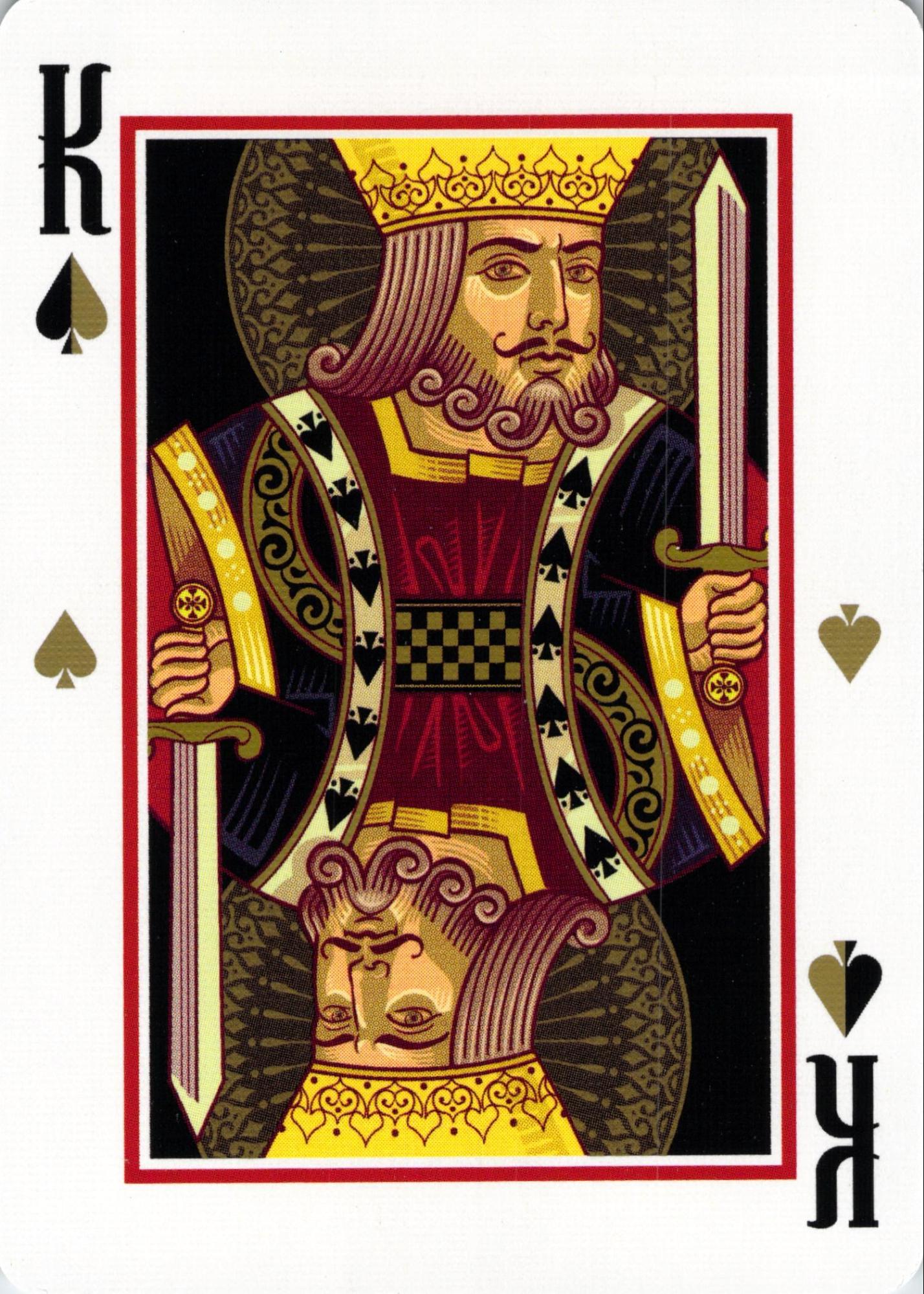
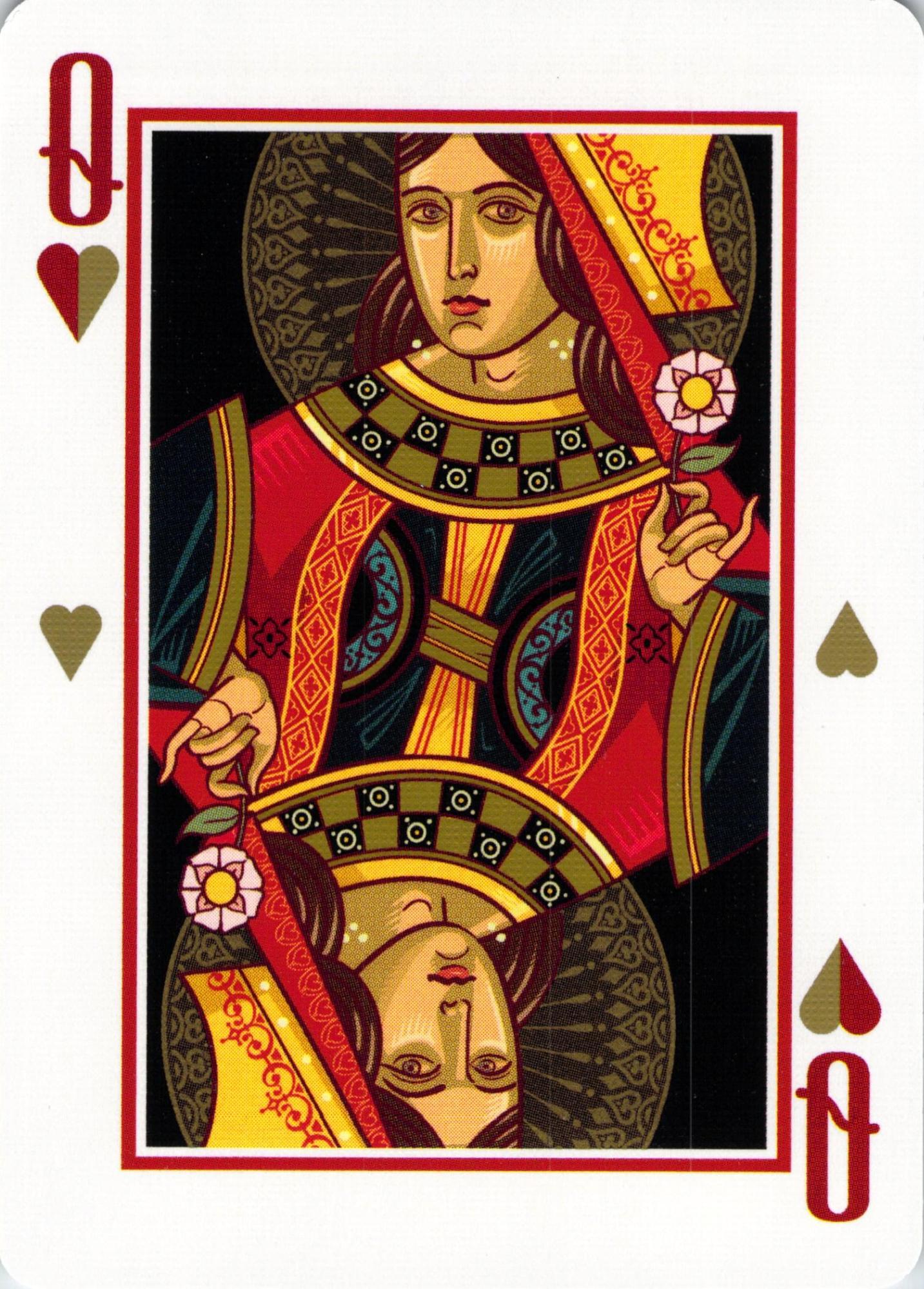
Above: United Cardists Icons Imperial 2015
The modern cards show at least as much diversity as the older ones. Two packs will show what I mean: the first is “Origins” (2015) by Rick Davidson, an artist based in New Zealand. Rick researched the early French cards, the Ancestors of the English and American standards, and chose a set by Maréchal of Rouen as a reference. The court cards have the correct clothing and faces that remind us of those early designs. The ‘Medieval’ set (2016) was designed by Egor Klyuchnyk of the Ukraine. These have full-length figures on the courts, and it is a pleasure to see this feature in new cards.
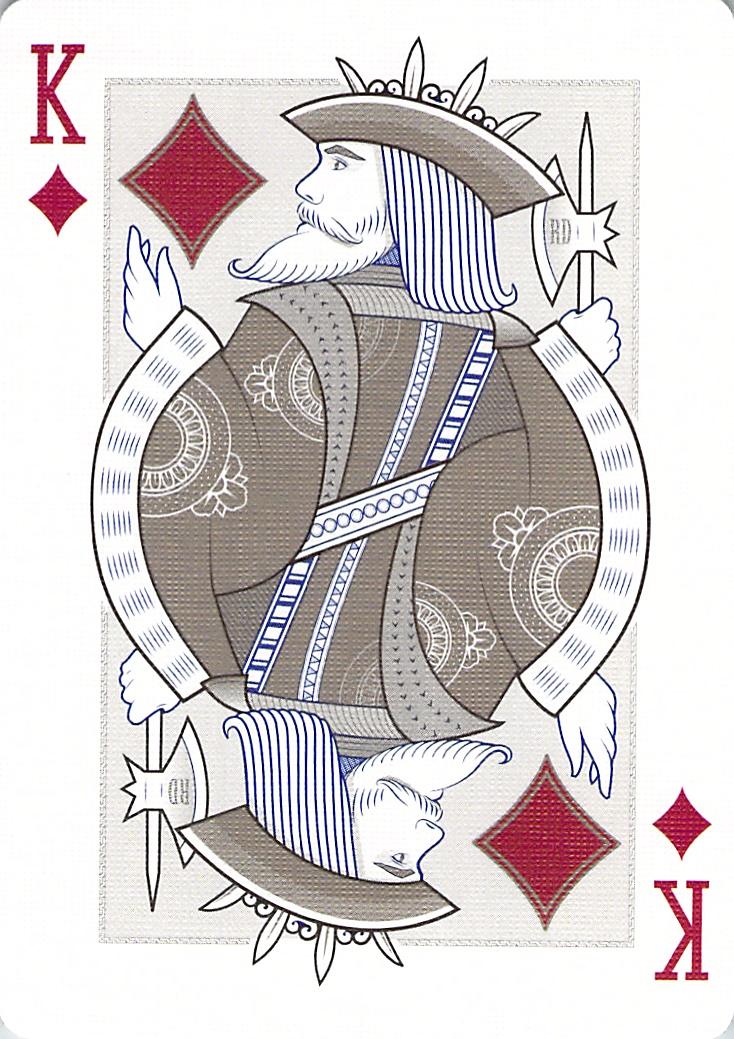
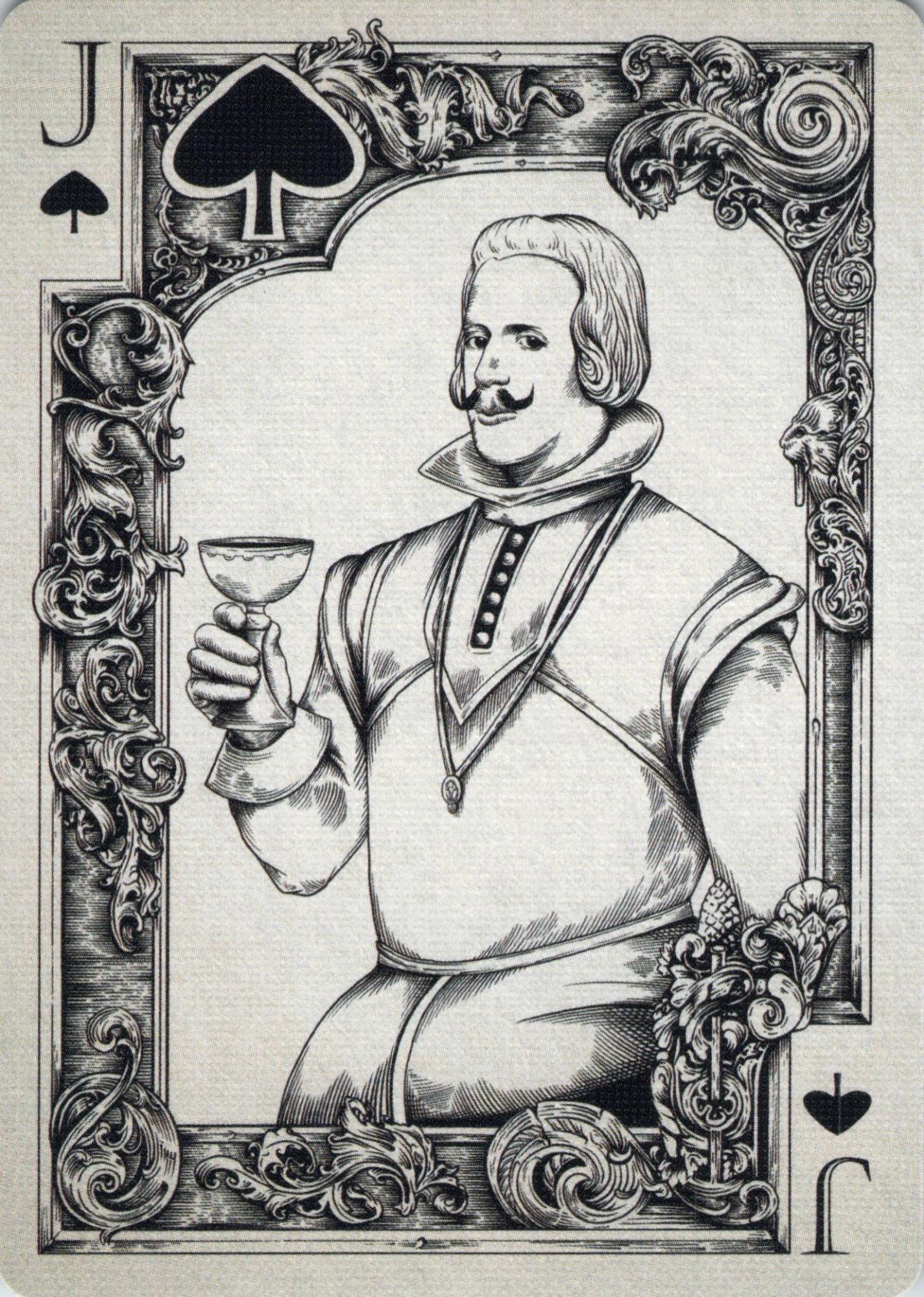
Above: Origins 2015 and Medieval 2016.
By now I hope you have been thoroughly convinced that this is an appealing category of playing cards, that this type has been popular for more than two centuries and it is now enjoying a renaissance. It seems unfortunate, therefore, that this type of card does not have an official name.
Experts on classification might say that they are ‘pictorial’ or ‘artistic’. Otherwise terms like ‘redrawn’ or just plain ‘custom’ can be used. None of these terms makes it clear that they are just as useful as standards for playing real games, they are usually very attractive and interesting designs and they are very popular with the public and with collectors. Surely they deserve a name of their own?
In The Playing Card (Vol 45 Spring 2017), I wrote a short piece suggesting the name of ‘Portrait Cards’. While this is a little tame, perhaps, it is reasonably clear and describes the main addition to the court cards. (With a wry sense of humor I actually like ‘non-standard Standards’, but I don’t see that catching on.
If anyone has a better idea, and whether you agree or disagree, I would be delighted to hear from you – please send an email.
References
- Bostock, Paul; Clear the Decks, 52 Plus Joker, Vol. 31, No. 2 (June 2017)

By Paul Bostock
United Kingdom • Member since May 07, 2024
Paul has been a collector of playing cards since his early teenage years, the mid 1970s. In the last 20 years or so he has specialised in standard English cards and their story. His collection, including many other English Standards, are featured on his website plainbacks.com. Paul is currently editor of Clear the Decks, the Journal of 52 Plus Joker, the American club for playing card collectors, and is a member of the IPCS Council, an EPCS member and a Past Master of the Worshipful Company of Makers of Playing cards, a City of London livery company.

Activity for Portrait Playing Cards
Sign in to comment or save this article.

Related Articles
Balearic Souvenir Cards
Mediterranean Souvenir deck by Rioba Studio, Pollença, Mallorca.
Englische Karten nr.190
Dondorf Nr.190“Englische Karten”, 1867-1895.
Schweizer Trachten
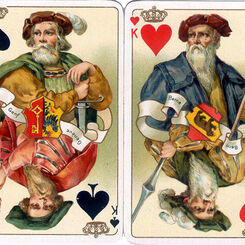
Schweizer Trachten No.174 (Costumes Suisses) by Dondorf.
Bicycle Butterfly
Bicycle Butterfly playing cards from RSVP Magic with artwork by ‘Lotrék’ and printed by USPCC, 2012....
Crowquill Transformation
Transformation playing cards designed by the illustrator, comic artist and stage designer ‘Alfred Cr...
Birma Karte or Englische Karten
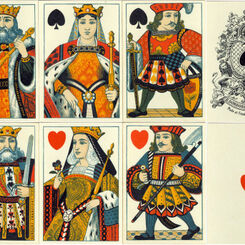
Based upon older ‘standard’ patterns, the Kings and Queens are three-quarter length figures whilst t...
Hauptstadte Spiel
Each Ace shows views of two European capital cities.
Luxus Club Karte No.184
Another of Dondorf's masterpieces of chromolithography, the detailed artwork on these cards has mult...
Whist No.178 ‘Stuart Zeit’
Although not historically accurate this example is subtitled “Stuart period”, with rich costumes cre...
14: Back Designs
A few examples of the many interesting back designs.
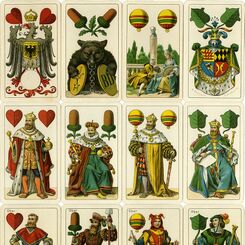
Einköpfige Deutsche Spielkarte No.303
Dondorf's ‘Einköpfige Deutsche Spielkarte No.303’ (‘Single-ended German Playing Cards’) were produce...
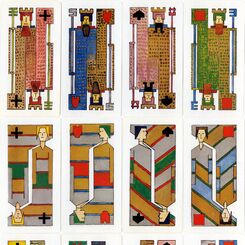
Arnold Schönberg
In around 1909 he created three sets of playing cards. His inventiveness was driven by a passion for...
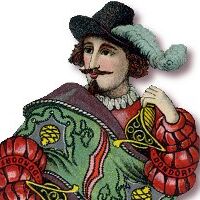
Club Karte
There have been many variations in the design of “Club Karte” including the introduction of borders,...
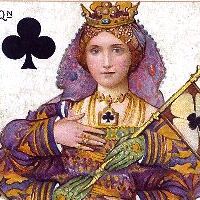
Shakespeare Playing Cards
Shakespeare playing cards published in the 1890s with original paintings by John H. Bacon.
Dondorf
The luxury playing card factory founded in Frankfurt am Main by Bernhard Dondorf in 1833 existed for...
Reynolds non-standard
Sometime around c.1850 Reynolds & Sons produced this non-standard or variant pack with courts inspir...
Playing Card Design
The playing card calls for artistic treatment and although the constrained size imposes some limitat...
Naipes Finos — No.304 Spanish Pack
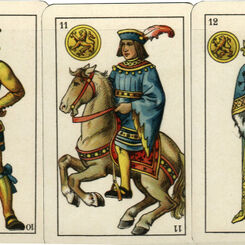
Spanische Spielkarten "Naipes Finos" No.304, manufactured by B. Dondorf designed by the catalan arti...
The History of Playing Cards
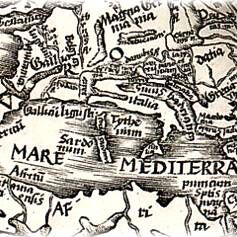
Playing cards appear in European records in the late 14th century, but their earlier history lies fu...
Most Popular
Our top articles from the past 60 days


