Carte Romane
“Carte Romane” designed by Giorgio Pessione, 1973, celebrating the history of Rome.
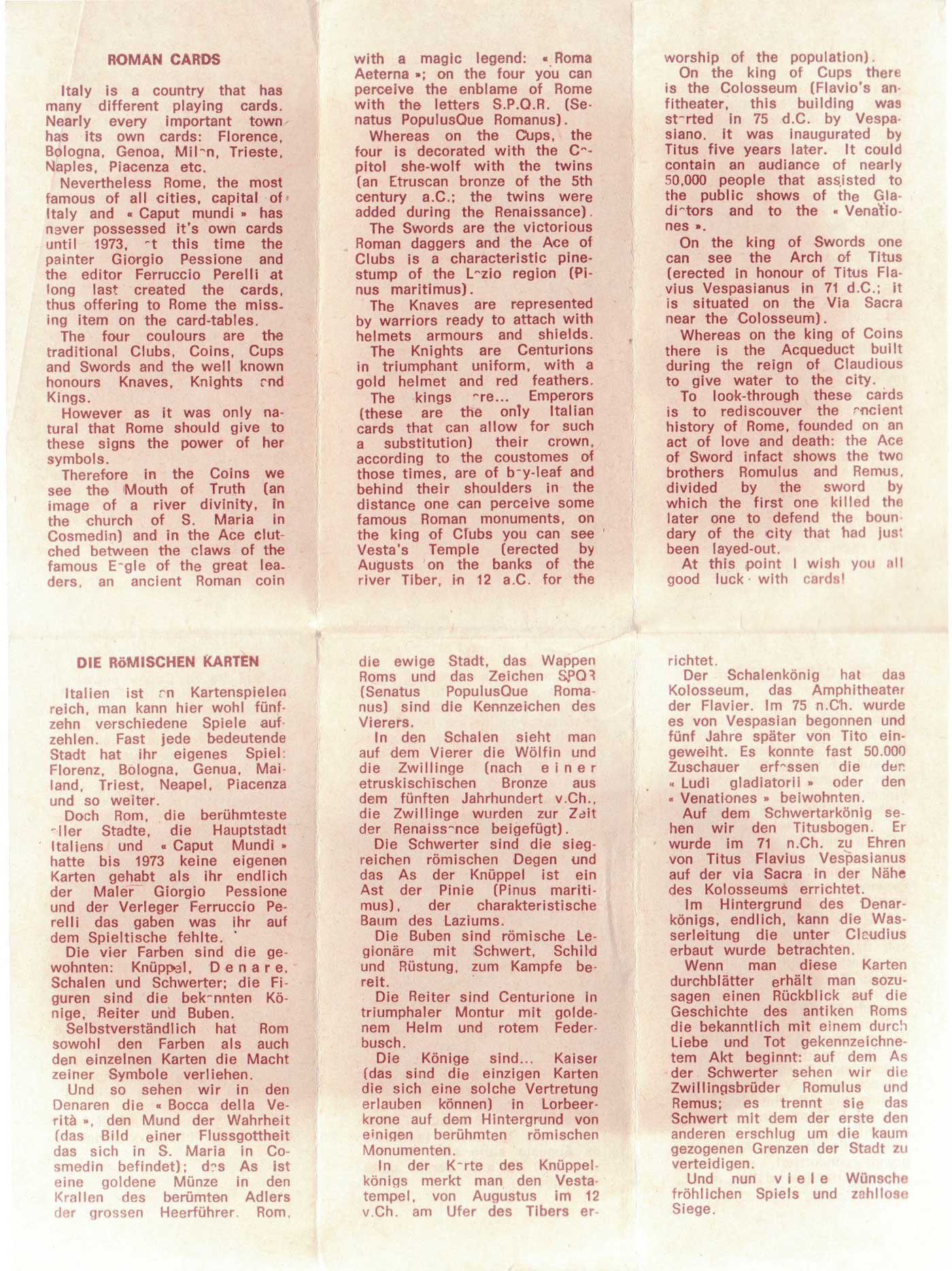
Carte Romane were designed by Giorgio Pessione for Capitol Carta Roma, 1973. The publishers were aiming to establish “Carte Romane” as a distinctive regional pattern for Rome, the most famous of all cities, capital of Italy, which up to that time was missing from card tables. The deck celebrates the ancient history of Rome, founded on an act of love and death... See the Leaflet►
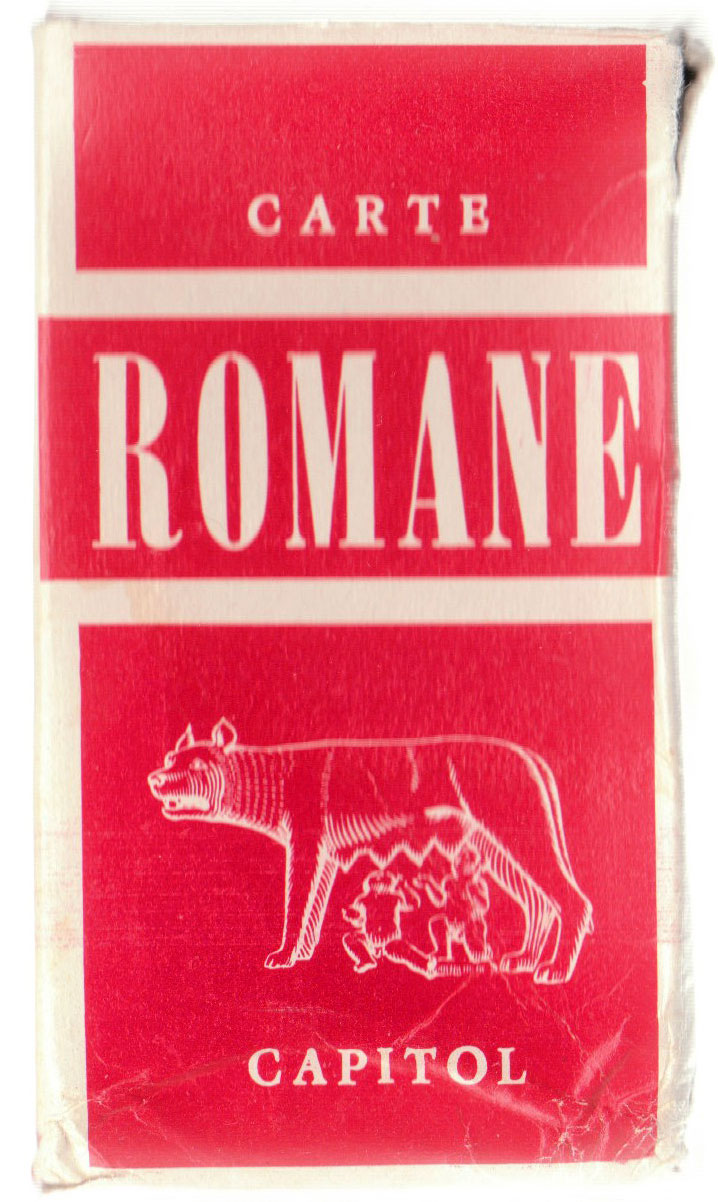
The cards have traditional Hispano-Italian suit symbols, and the courts feature Roman-style warrior-knaves, centurion-knights and emperor-kings. Symbols and allegories such as the Mouth of Truth for coins, Roman daggers, Vesta’s Temple, the Colosseum, Arch of Titus, the letters S.P.Q.R. etc. decorate the cards. Unfortunately they were not successful owing to the greater popularity of the Piacentine pattern. See the Box►
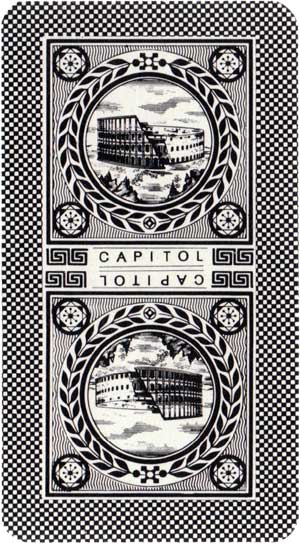
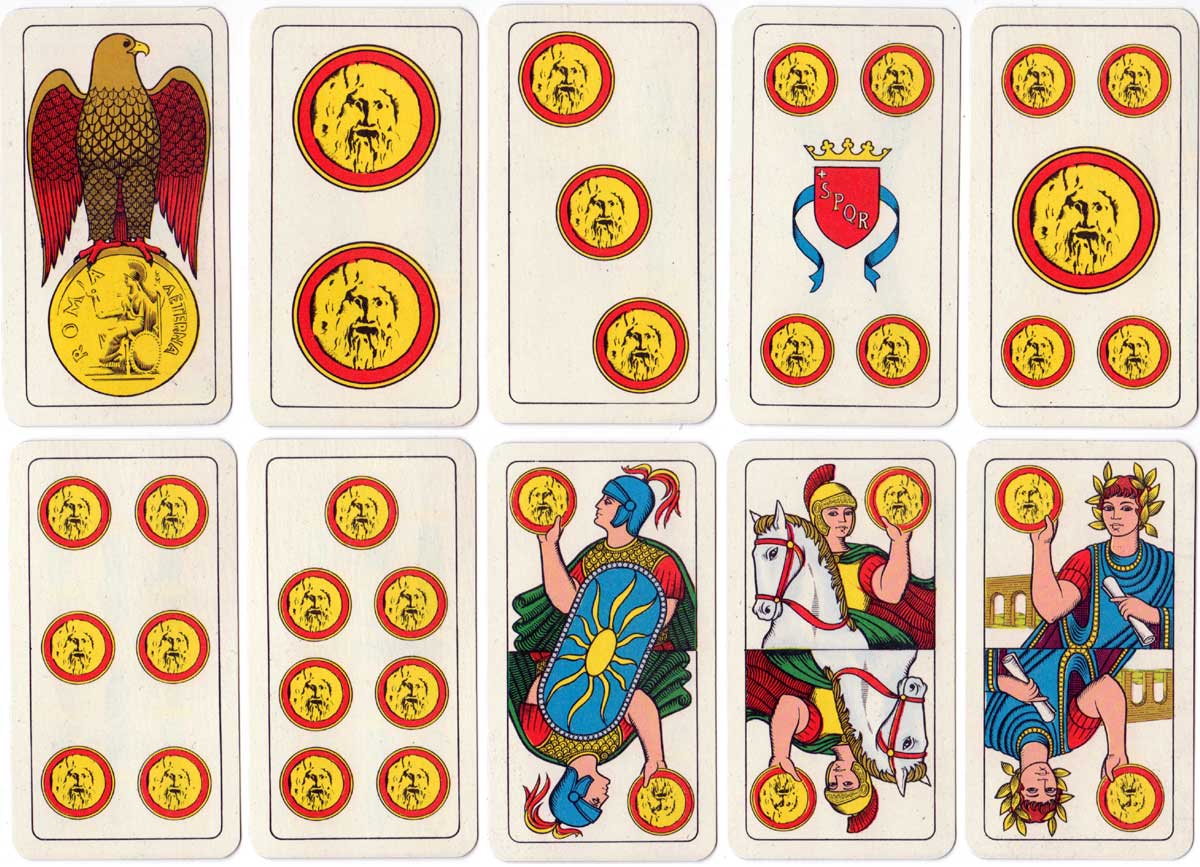
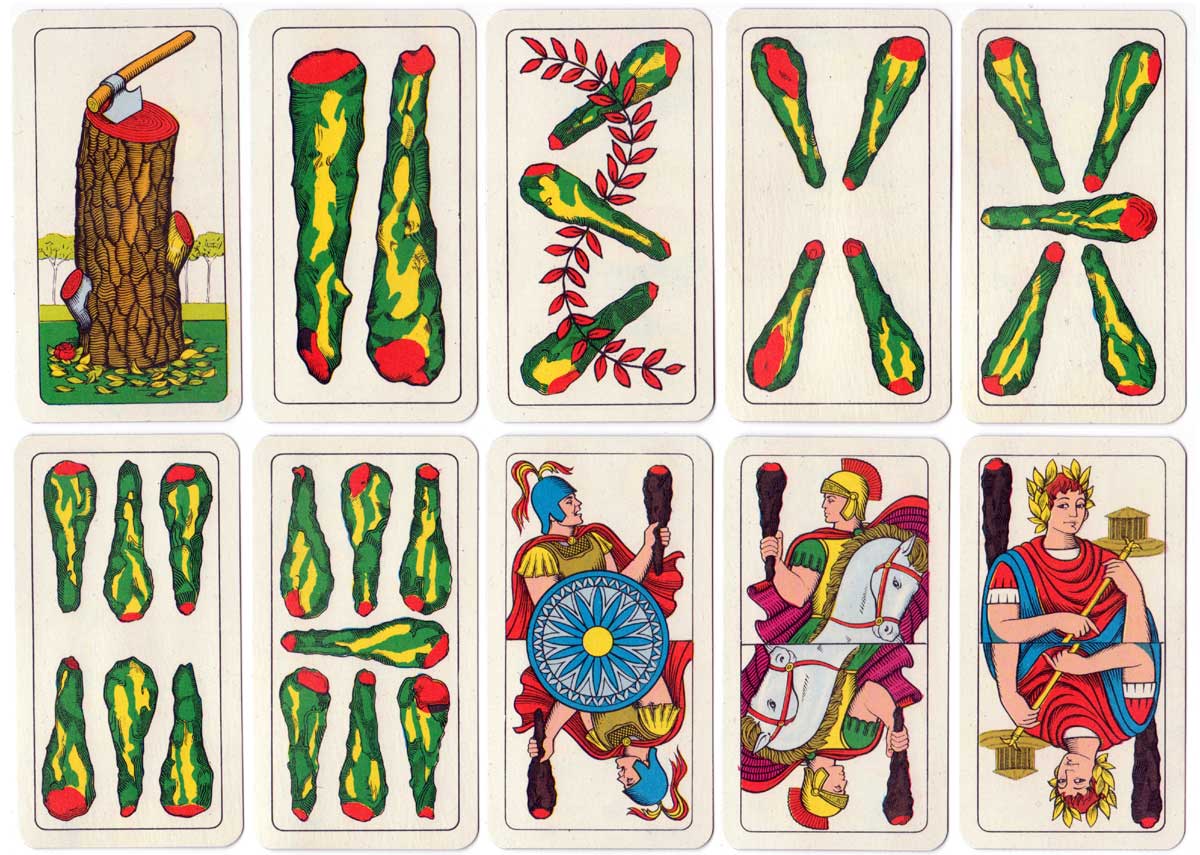
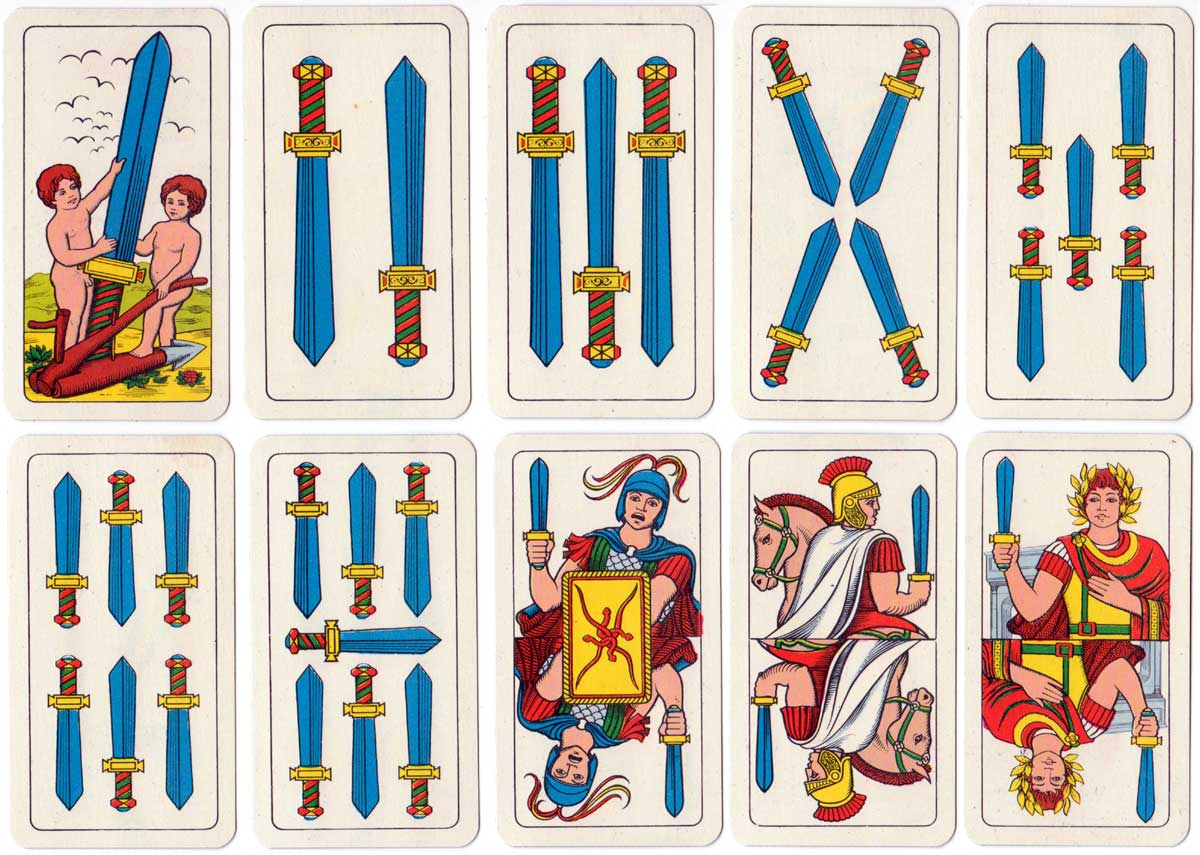
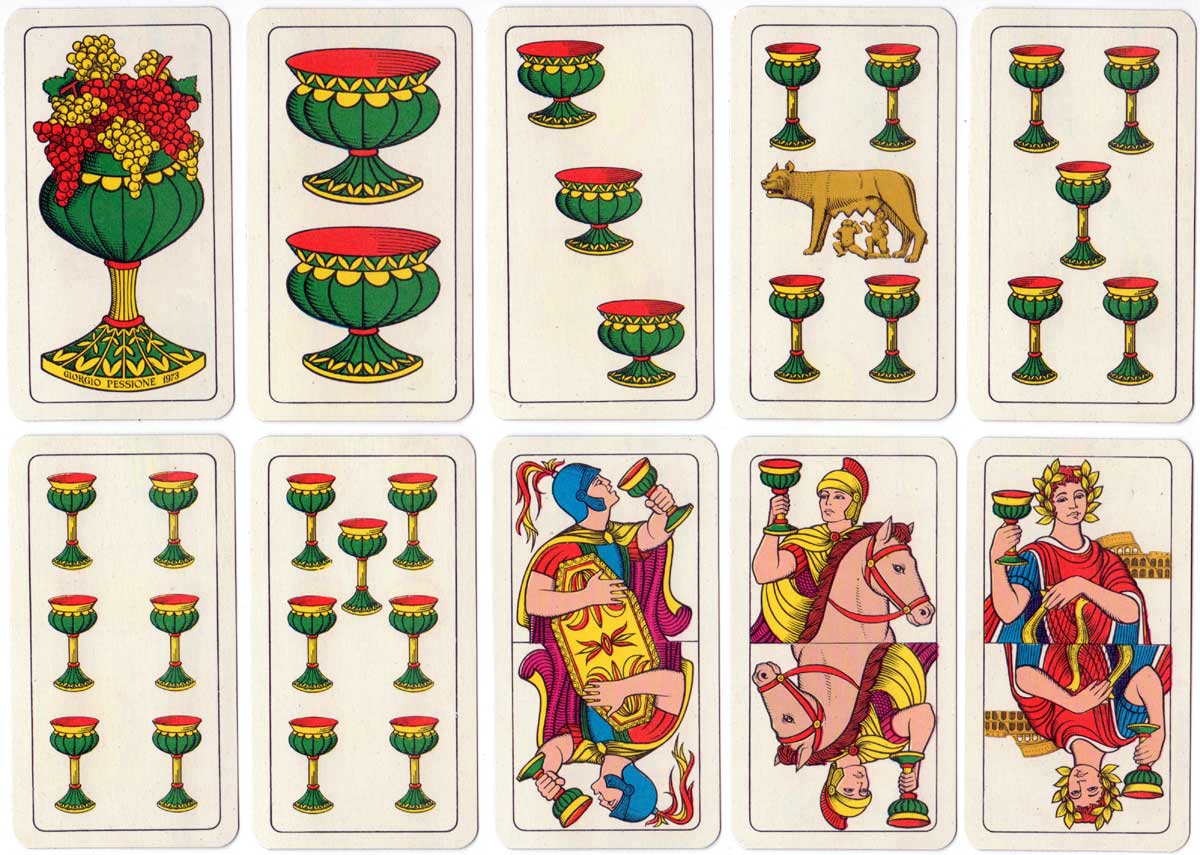
Above: Carte Romane designed by Giorgio Pessione for Ferruccio Petrelli, Capitol Carta Roma, 1973. The name of the designer, Giorgio Pessione, appears around the base of the ace of cups. Images courtesy Rex Pitts.
Capitol Carte Poker
An international Poker deck was also produced by Capitol Carte Roma showing Romulus and his twin brother Remus, founders of the city of Rome, on the ace of diamonds.
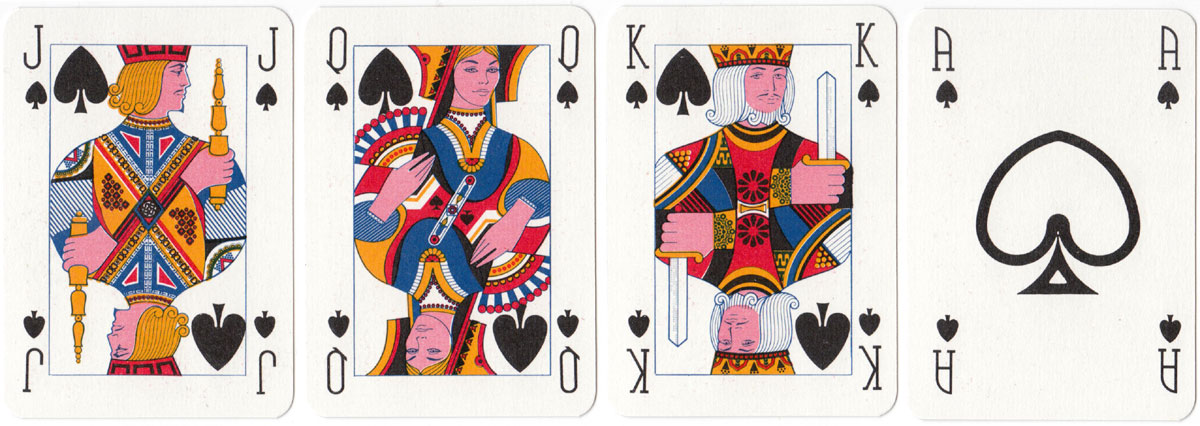
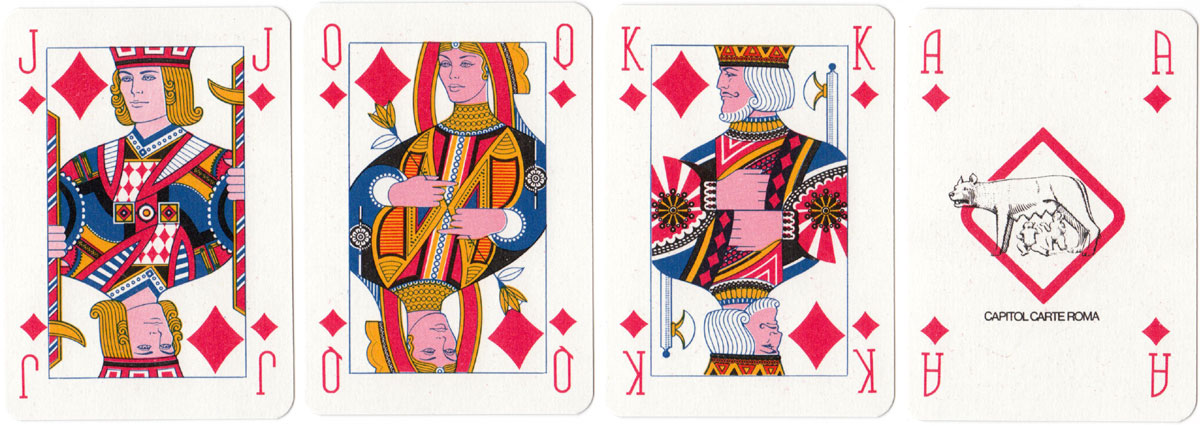
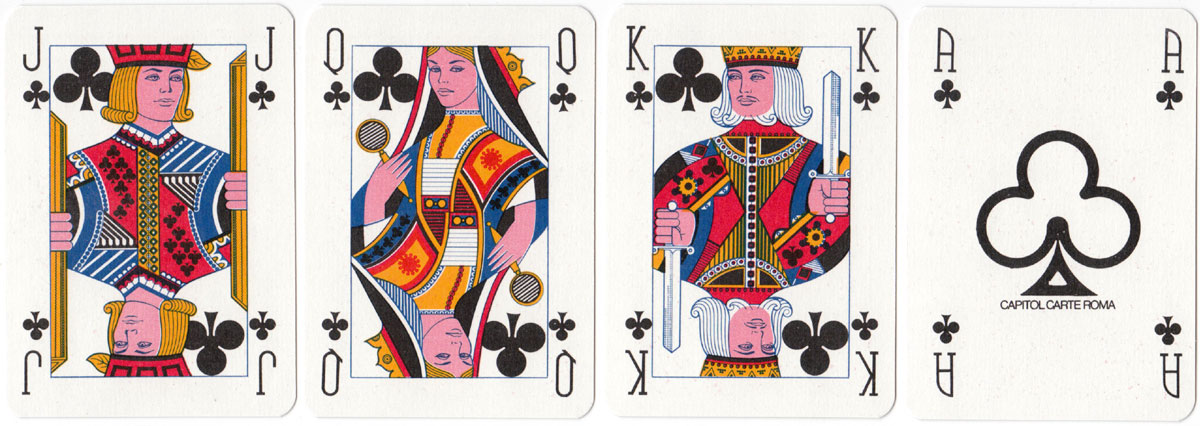
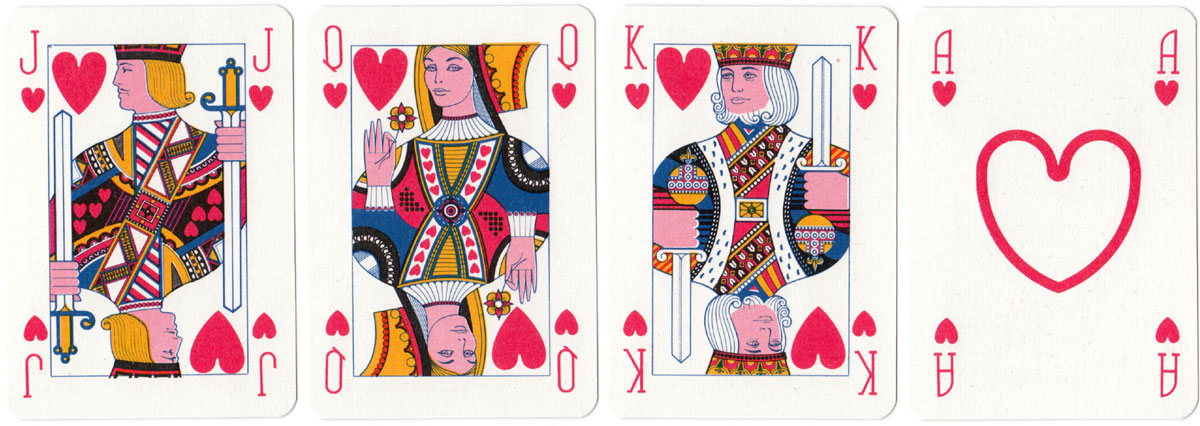
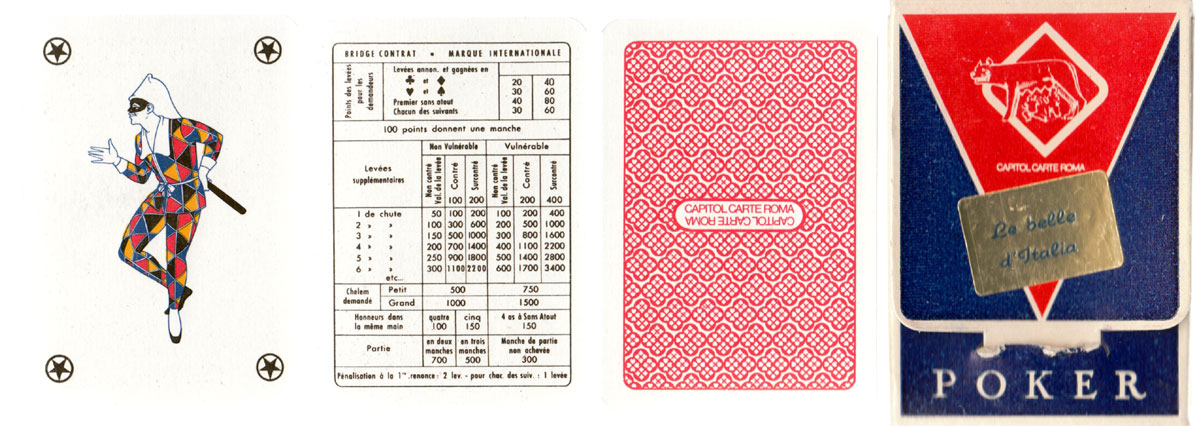
Above: international Poker deck produced by Capitol Carte Romaan, c.1973, featuring original designs with a lot of non-standard features.

By Rex Pitts (1940-2021)
United Kingdom • Member since January 30, 2009
Rex's main interest was in card games, because, he said, they were cheap and easy to get hold of in his early days of collecting. He is well known for his extensive knowledge of Pepys games and his book is on the bookshelves of many. His other interest was non-standard playing cards. He also had collections of sheet music, music CDs, models of London buses, London Transport timetables and maps and other objects that intrigued him.
Rex had a chequered career at school. He was expelled twice, on one occasion for smoking! Despite this he trained as a radio engineer and worked for the BBC in the World Service. Later he moved into sales and worked for a firm that made all kinds of packaging, a job he enjoyed until his retirement. He became an expert on boxes and would always investigate those that held his cards. He could always recognize a box made for Pepys, which were the same as those of Alf Cooke’s Universal Playing Card Company, who printed the card games. This interest changed into an ability to make and mend boxes, which he did with great dexterity. He loved this kind of handicraft work.
His dexterity of hand and eye soon led to his making card games of his own design. He spent hours and hours carefully cutting them out and colouring them by hand.

Activity for Carte Romane
Sign in to comment or save this article.

Related Articles
La Provence
A Piatnik pack drawing on Provençal heraldry and local legend.
Baraja Mexicana Calendárica
Scholarly Mexican playing cards with Aztec and Maya calendar motifs.
The Dark Knight Joker Calling Cards
Joker “Calling Card” set issued in connection with the film The Dark Knight (2008).
Il Tarocco Mitologico
Fully pictorial Tarot designed by Amerigo Folchi with figures mainly from Greek mythology.
Heathen Divinities
Handmade playing cards from the British Museum depicting classical Greek and Roman gods and goddesse...
Euskal Herriko Mitologia
Important figures from Basque mythology, named in four languages.
Calon Arang • Калон Аранг - Бали
Calon Arang, a figure from 12th-century Javanese and Balinese folklore known as a witch skilled in b...
Burgdorf Abschreckhärtetechnik
Promotional pack for a German steel hardening business, with designs by Costante Costantini.
Jeu de Cartomancie pour l’amusement des Dames
Early French Cartomancy deck "for the amusement of Ladies" but also referred to as "Jeu divinatoire ...
Instructive and Educational Playing Cards
Playing cards with an educational and instructive purpose first trended in mid-17th century France, ...
Possible early astrological playing cards
Two early woodcuts that I believe to be playing cards.
Gods of Egypt
Gods of Egypt playing cards dedicated to the culture of Ancient Egypt.
Pantheon or Heathen Mythology
Pantheon or Heathen Mythology cards for instruction of youth, c.1770.
Iceland Mythological Playing Cards
Iceland Mythological Playing Cards designed by Sigurlinna Pétursson, 1958
Pathfinder Playing Cards
The Pathfinder deck of cards has been inspired by Odin, the Norse god of wisdom, war and death.
East Slavonic Mythology
East Slavonic Mythology designed by Aleksey Orleansky (1994) featuring creatures from the watery und...
Cyprus Souvenir
Cyprus souvenir playing cards showing scenes alluding to ancient history and myths.
Grand Jeu Lenormand
Chaotic Grandeur in a collage of astrology, folklore and mythology from Parisian salons.
Suicide King
The King of Hearts, holding a sword behind his head, is sometimes nicknamed the “Suicide King”. He c...

Celtic Journey
Celtic Journey playing cards - where art and culture meet - designed by Carmen G. Carballeira, 2011
Most Popular
Our top articles from the past 60 days