


Laurenzo Propagine
Spanish-suited cards made in Italy by Laurenzo Propagine.
This edition of the so-called Franco-Spanish pattern was made in Italy by Laurenzo Propagine. The maker’s name can be found on the sota (jack) of cups and the two of swords, while his initials ‘LP’ occur on other cards. “Alla guglia” appears on the sota of batons and the five of swords. “A ripetta di M. Matteo” can be seen on the ace of coins, which also contains the inscription “Filipus • Dei • Grat Hispaniar • Rex” surrounding what looks like the coat-of-arms of Felipe II
The phrases "A ripetta di M. Matteo" and "Alla guglia" likely serve as indicators of the card-maker’s shop location, an identifier of quality and origin, as was common practice at the time. The cards are preserved in the Bibliothèque nationale de France [here], where the catalogue notes that they were published for Malta. We cannot find any confirmation of this, but it is feasible that as Italy served as a key partner in the Spanish Crown’s Mediterranean defense strategy, linking Italy, Malta and Spain into a network of mutual support and influence, that playing cards like these were indeed being produced for Malta.
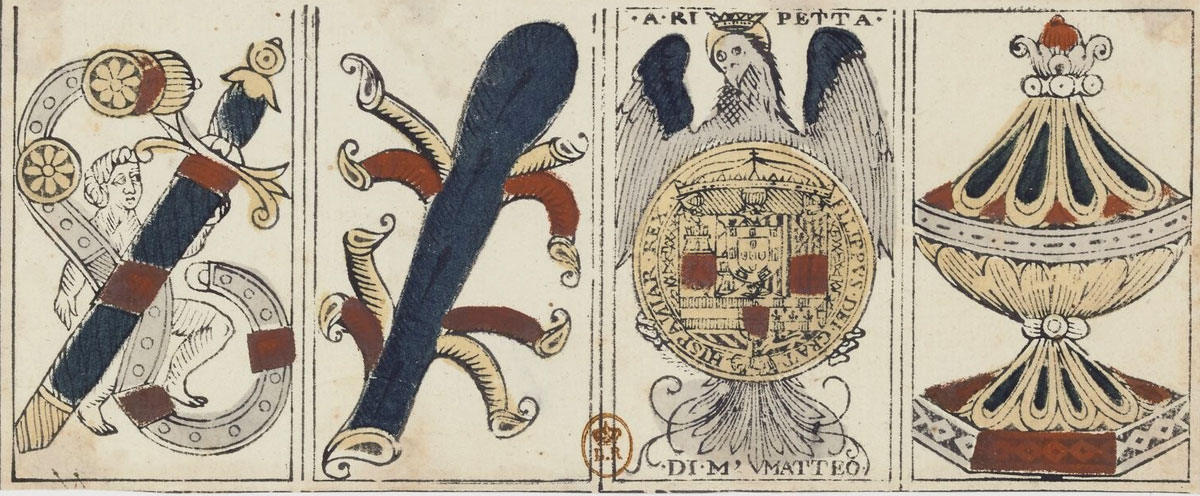
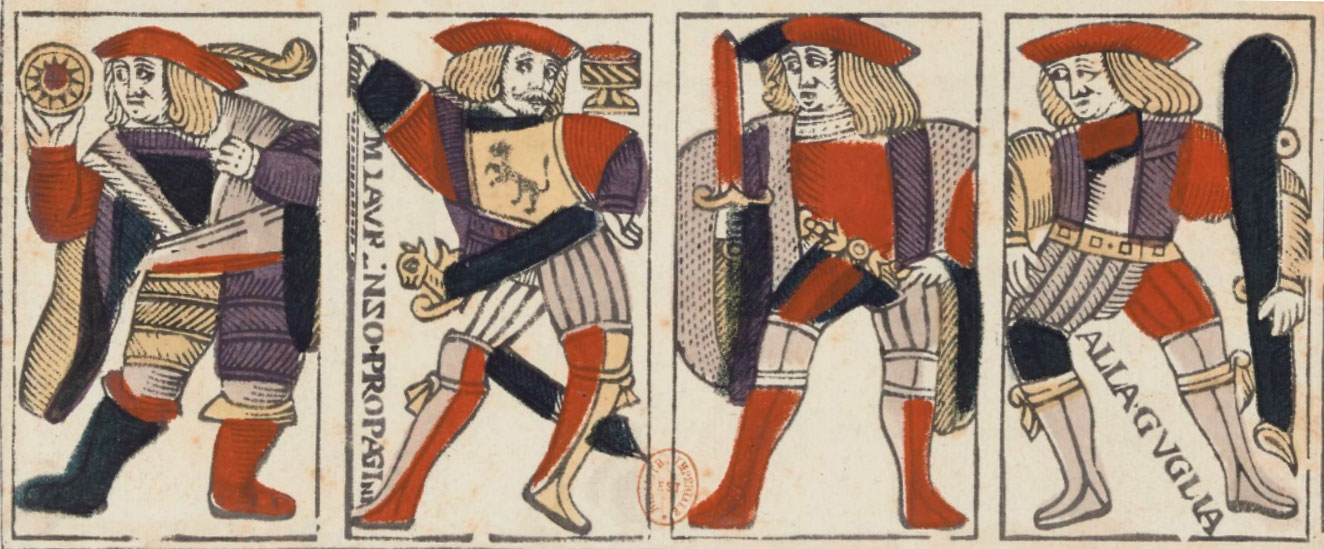
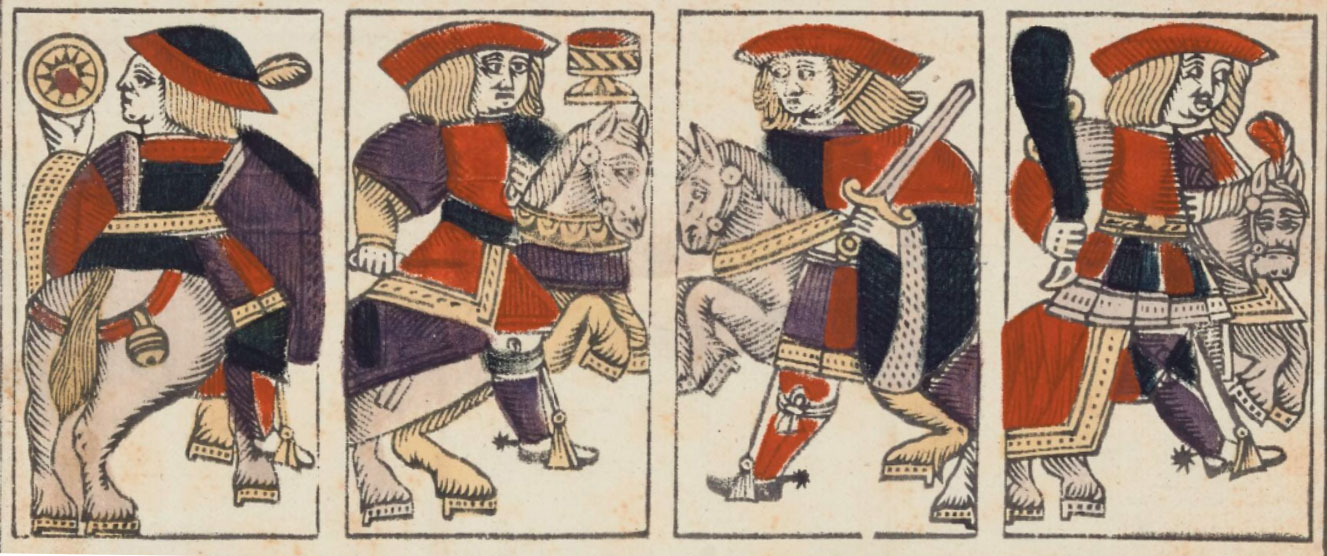
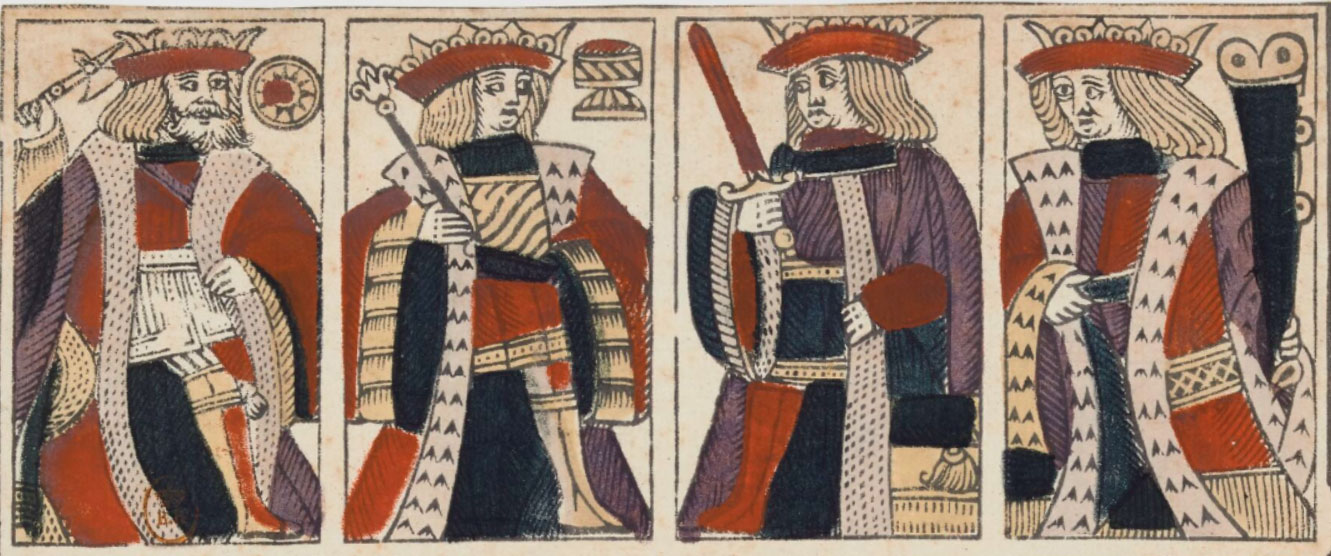
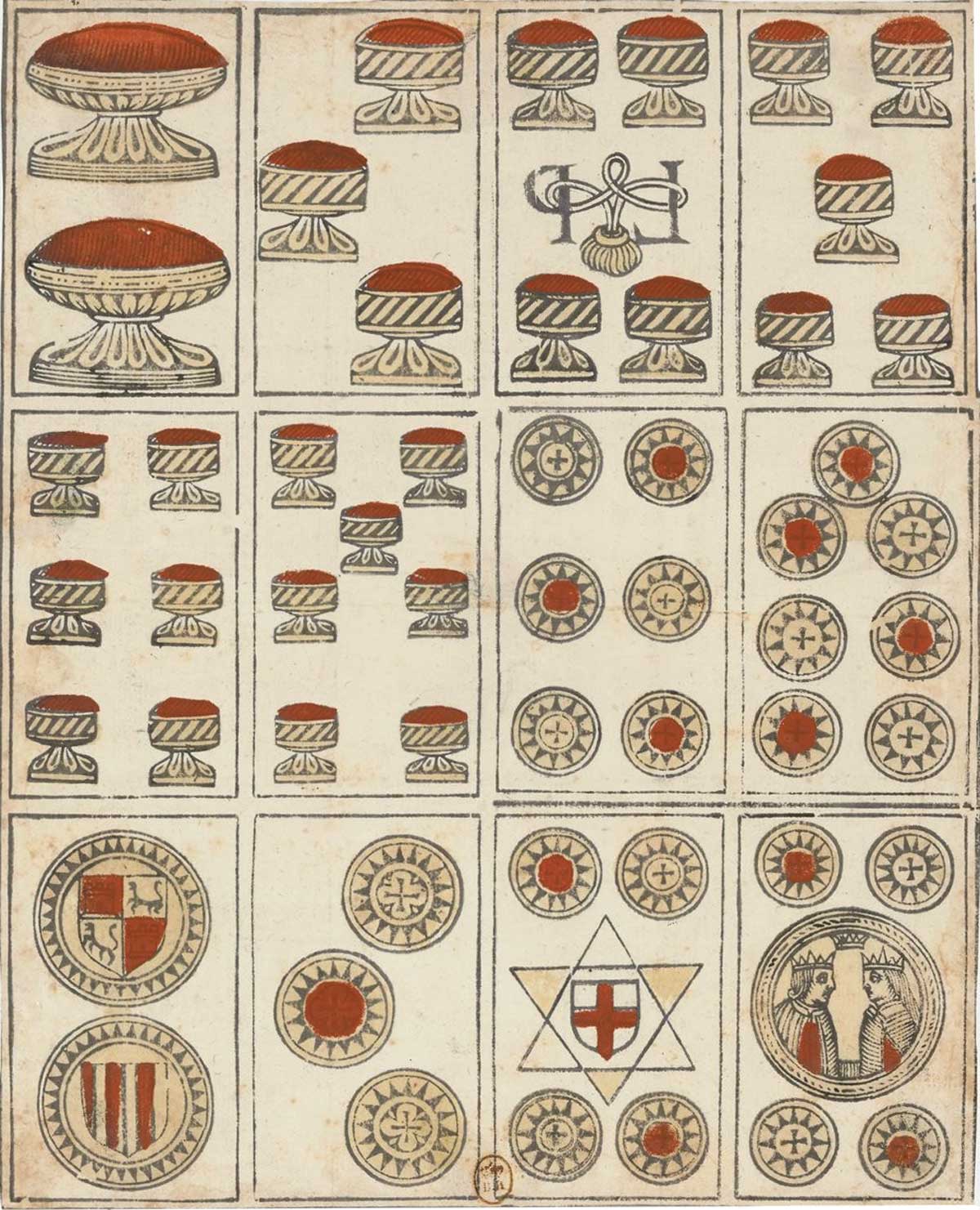
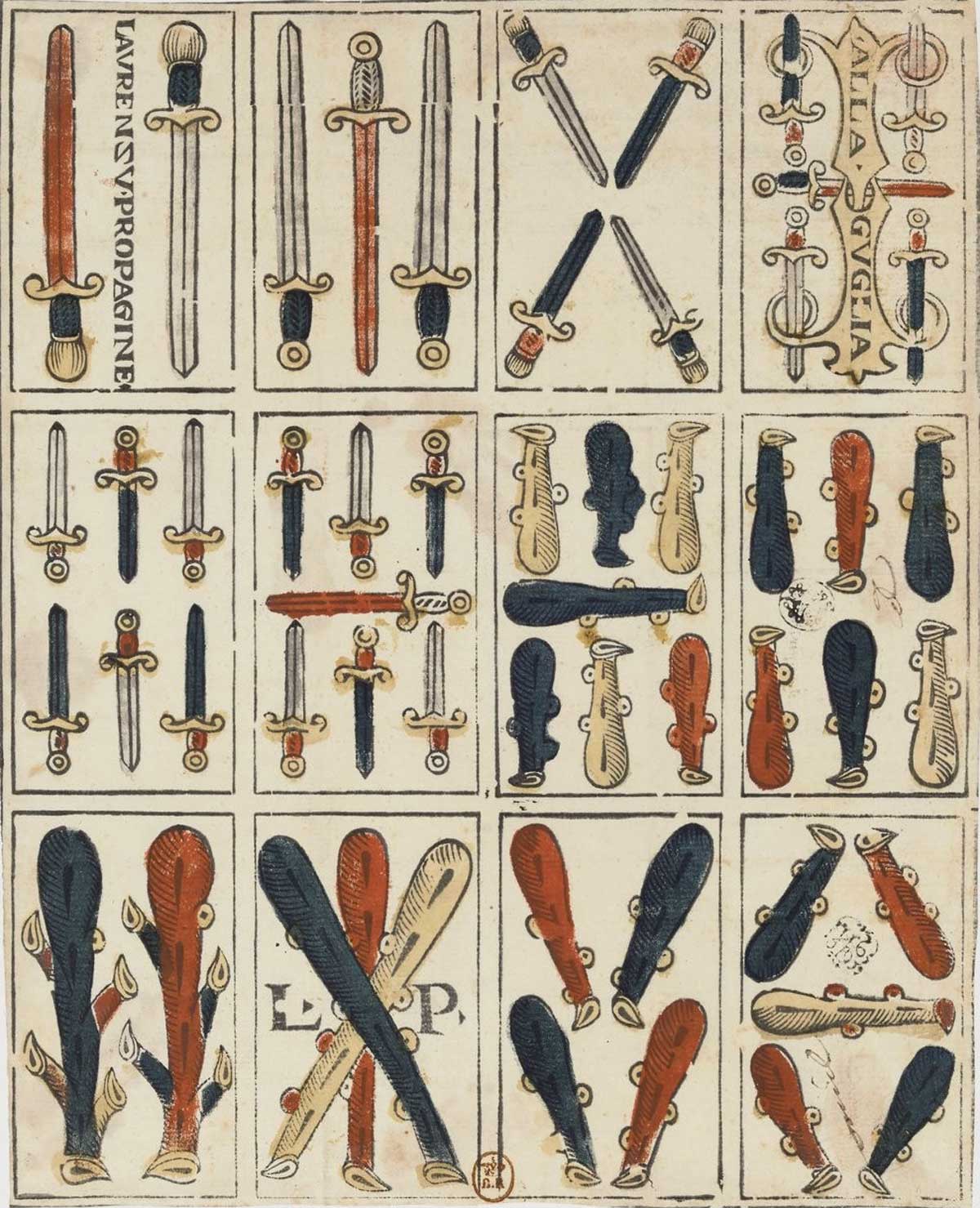
Above: Archaic Spanish-suited cards by Laurenzo Propagine, Italy, second half XVI century (?). Four uncut proof sheets. We cannot identify the tax stamps on the five and six of batons. Source Bibliothèque nationale de France.
Reference
Bibliothèque nationale de France: Jeu de cartes aux enseignes espagnoles édité pour Malte►

By Simon Wintle
Spain • Member since February 01, 1996
I am the founder of The World of Playing Cards (est. 1996), a website dedicated to the history, artistry and cultural significance of playing cards and tarot. Over the years I have researched various areas of the subject, acquired and traded collections and contributed as a committee member of the IPCS and graphics editor of The Playing-Card journal. Having lived in Chile, England, Wales, and now Spain, these experiences have shaped my work and passion for playing cards. Amongst my achievements is producing a limited-edition replica of a 17th-century English pack using woodblocks and stencils—a labour of love. Today, the World of Playing Cards is a global collaborative project, with my son Adam serving as the technical driving force behind its development. His innovative efforts have helped shape the site into the thriving hub it is today. You are warmly invited to become a contributor and share your enthusiasm.

Activity for Laurenzo Propagine
Sign in to comment or save this article.

Related Articles
Sarde Pattern
Sarde pattern published by Modiano, c.1975, based on early XIX century Spanish model.
Most Popular
Our top articles from the past 60 days


