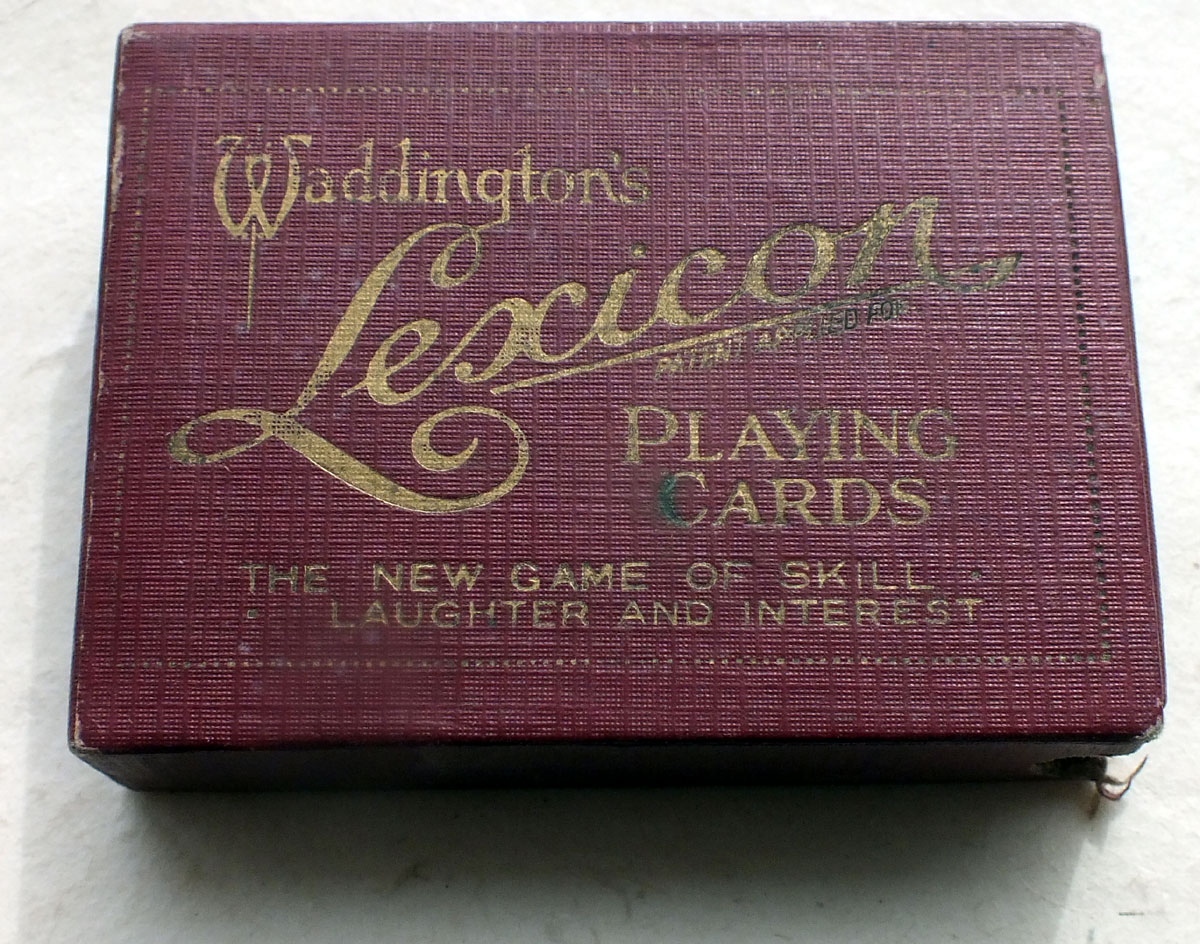
Lexicon
The summer of 1932 saw the introduction of Lexicon, when a small edition was produced and sold to test the market.
During the time of the introduction of cartons and of jigsaw puzzles another change was taking place which was developing much more slowly. A writer by the name of David Whitelaw persuaded the company to produce and sell a word game - Lexicon. This was basically a pack of cards but with the faces changed from court cards and pips to letters of the alphabet. The summer of 1932 saw the introduction of this game, when a small edition was produced and sold to test the market. This was the first Waddingtons game and its introduction had an unsuccessful beginning. The first edition was sold through the stationery shops at 1s. 9d. each and sales were practically non-existent. It was decided to pack Lexicon more attractively and raise the price to 2s. 6d. per pack. This was an unprecedented approach in the stationery world and there was much opposition and criticism. However, when the real launching took place in the autumn, heralded by an intensive newspaper advertising campaign, sales, instead of being a hundred a month were thousands a day, and there was a wonderful success which has continued up to the present time.
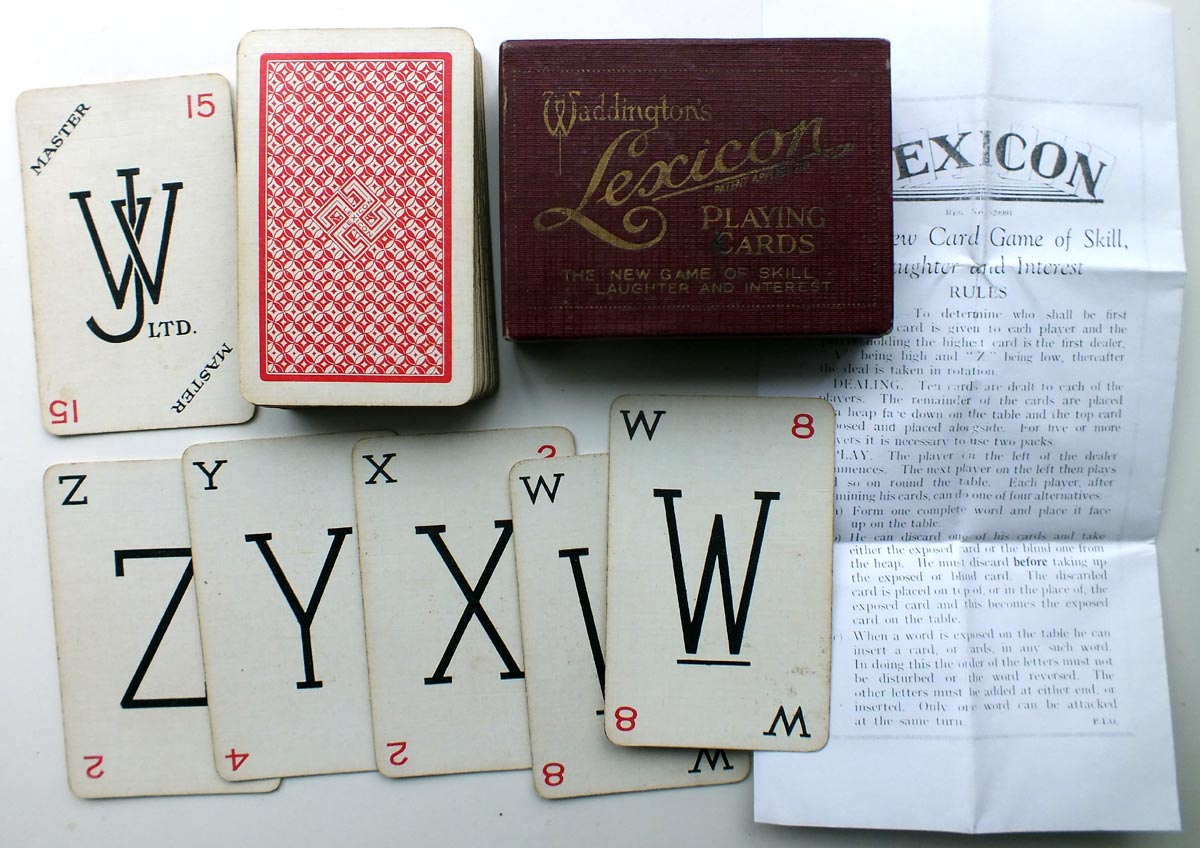
Above: 1st edition of Lexicon, 1932. The set comes in a maroon slip case with the text "Patent applied for" and no registration number. The rules leaflet has the date 18/7/1932 printed at the bottom.
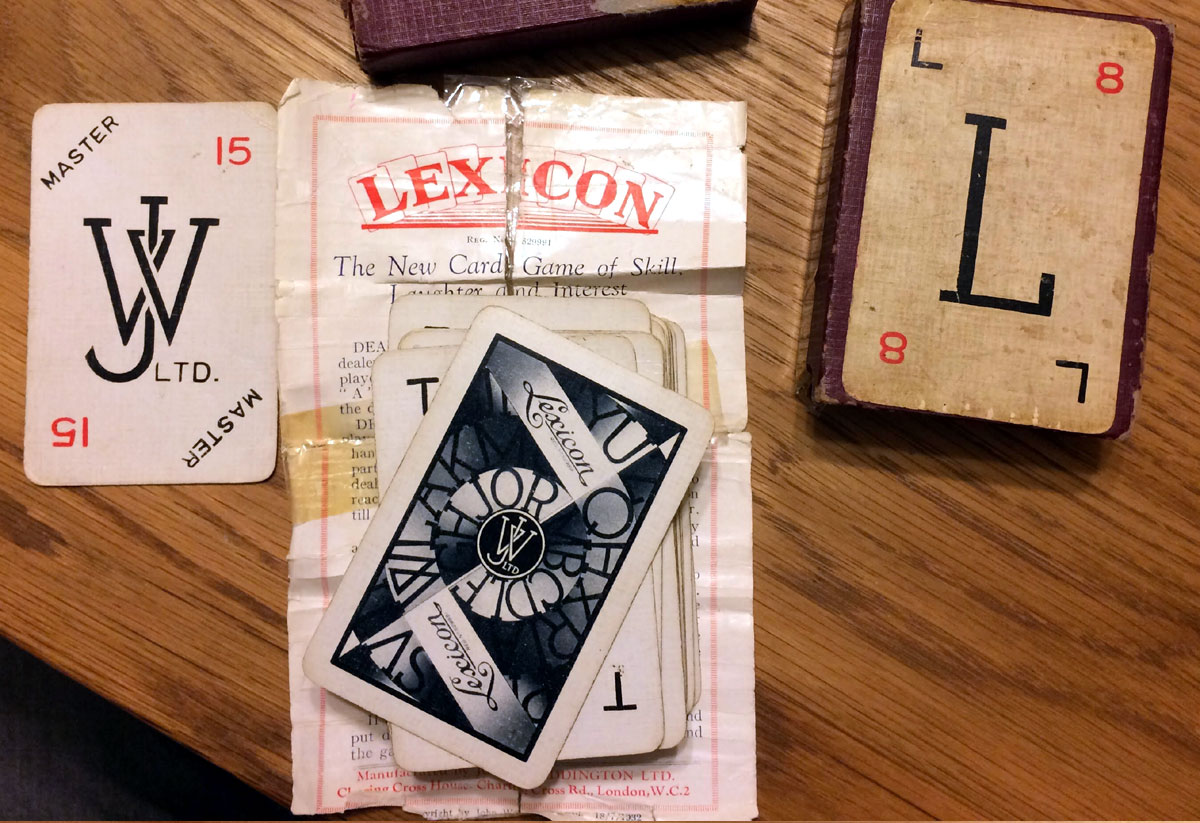
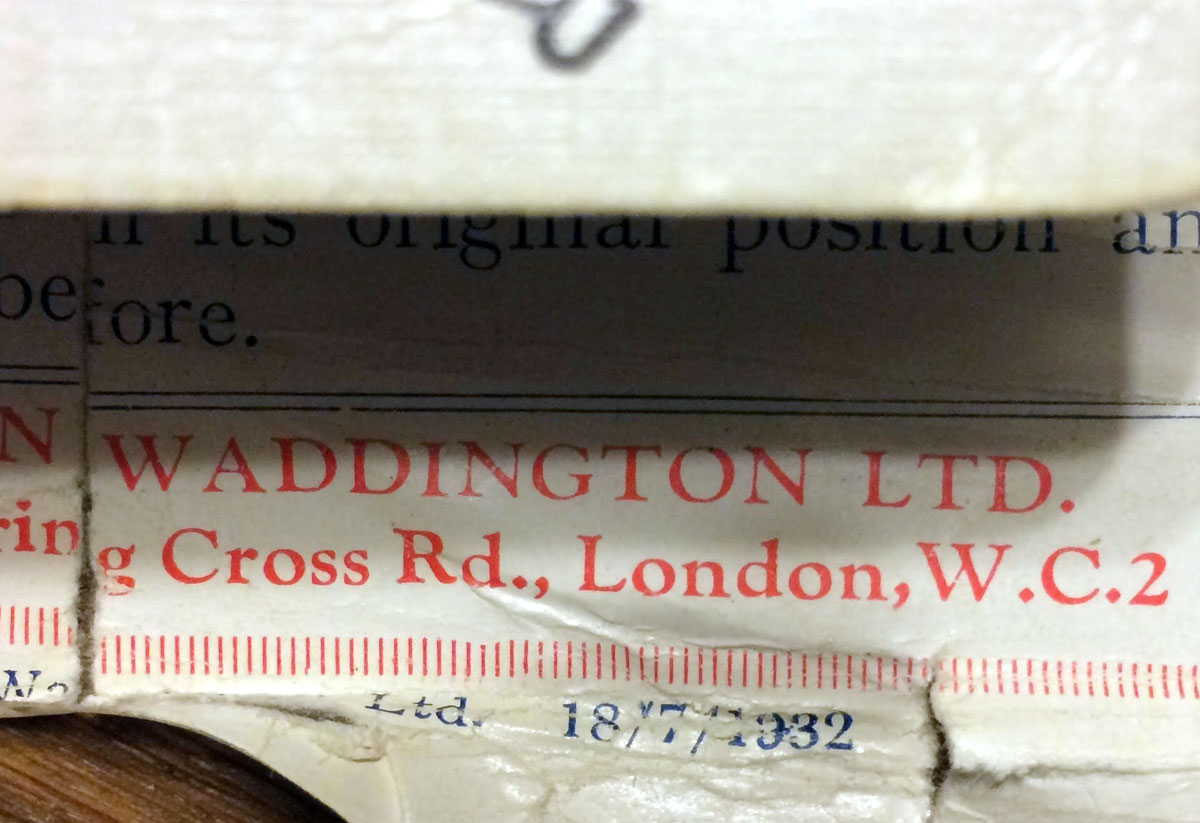
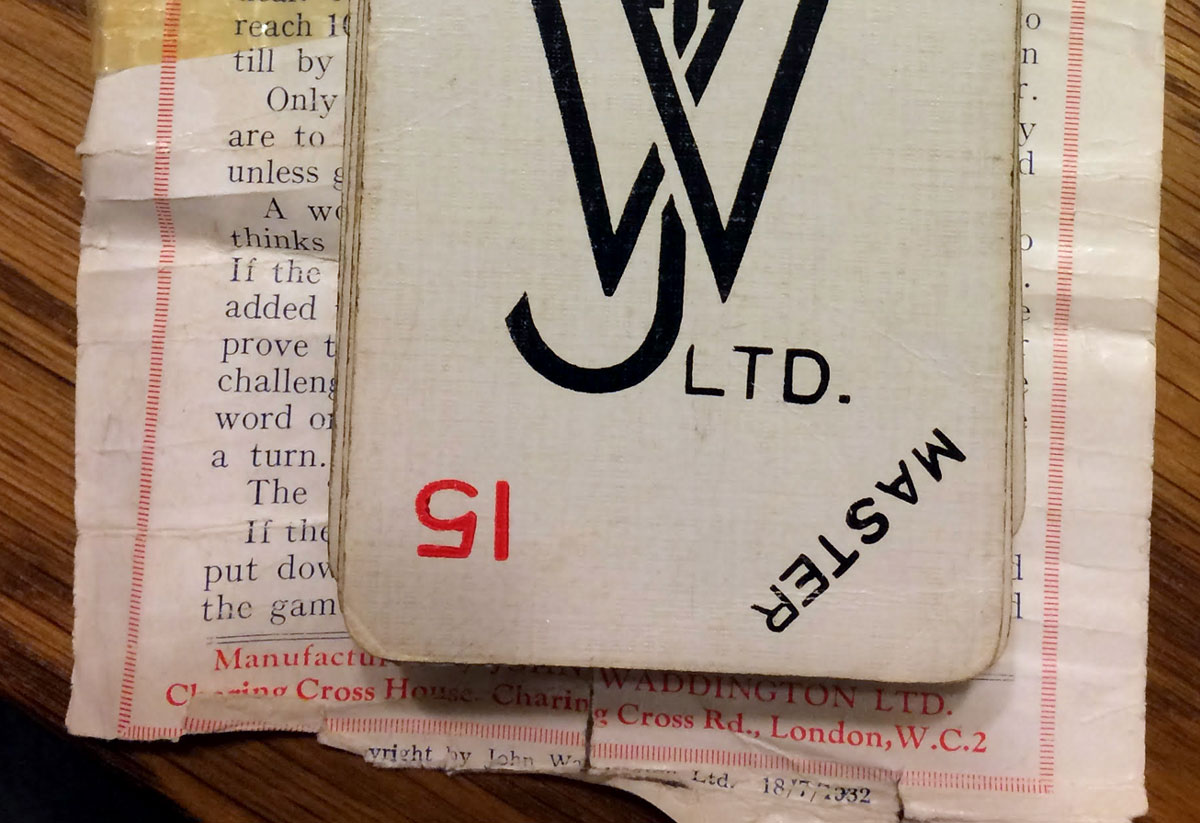
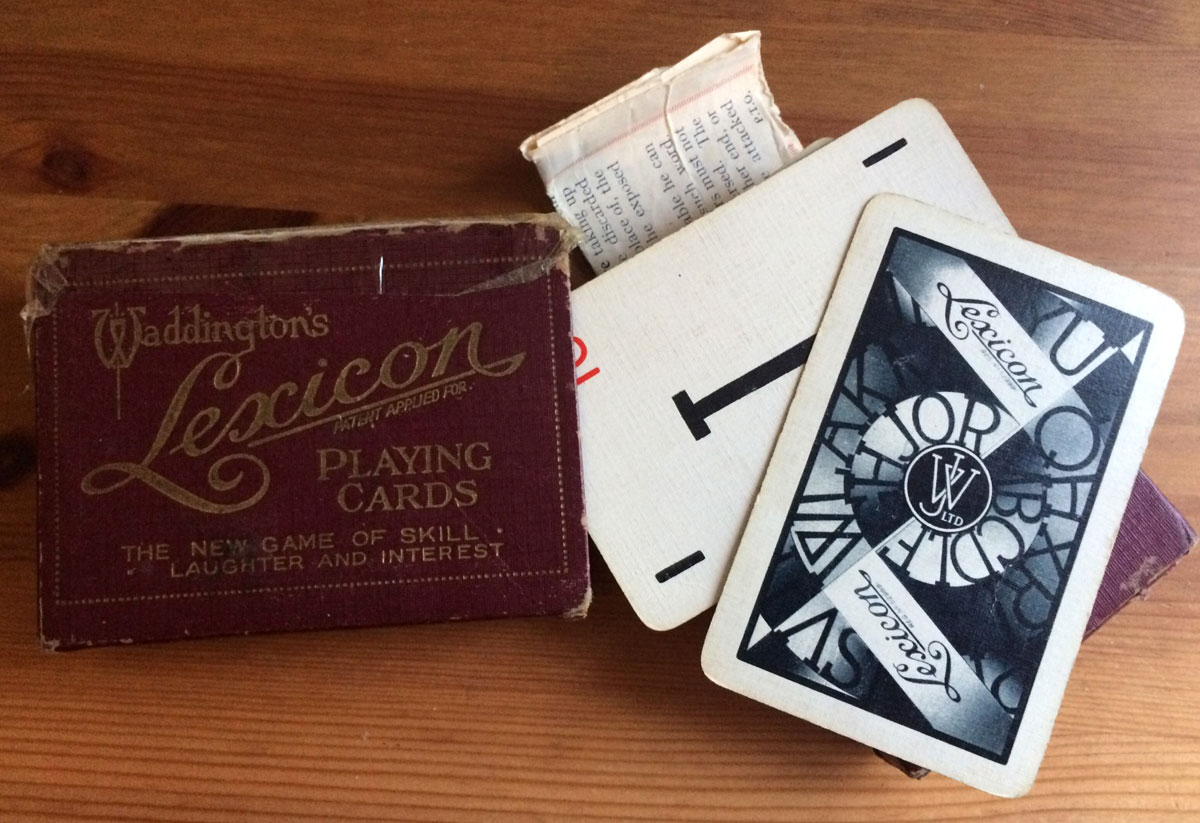
Above: early edition of Lexicon with date 18/7/1932 printed at the bottom of rules leaflet. The box says “Patent Applied For” but the backs give a Reg. No. so we guess it dates from around 1932-33. Images courtesy Pete Bond.
It was Lexicon which created the opportunity for Waddingtons to get Monopoly, because it gave the company credibility.
Lexicon is now owned and marketed by Winning Moves, who purchased the brand from Hasbro, along with Waddingtons No.1 Playing cards. (Hasbro bought Waddingtons Games Ltd in 1994).
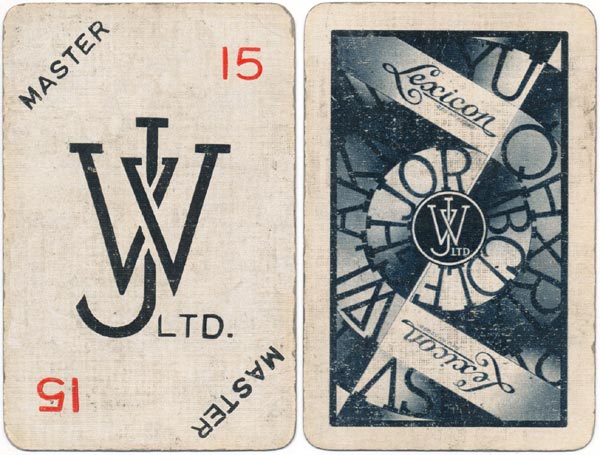
Above: the spine of the re-designed box carries the text “Lexicon”, “By Atozed”, “Waddingtons” and the box and back design have the text “Regd No.529991”. The words ‘Master’ and ‘Ltd’ are printed in a different typeface to the earlier edition. The monogram is more or less the same but has been re-drawn. Click image to see alternative box. Image courtesy Matt Probert.
Soon Lexicon was published in a smart slip case and many different editions have followed, including foreign language versions.
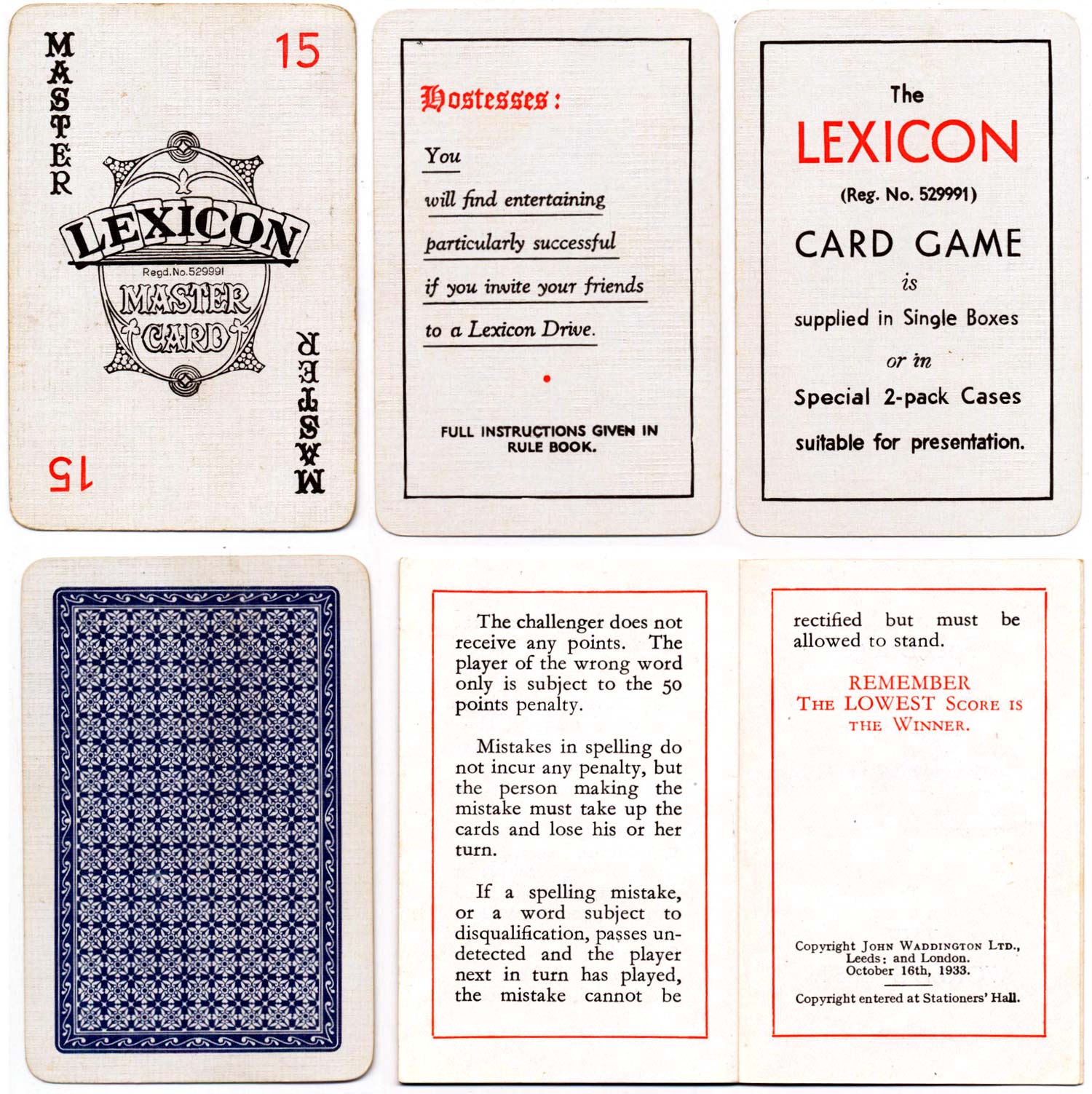
Above: The rule book carries a date of October 1933, and a section on "How to Arrange a Lexicon Drive". The documentation also refers to "the increasing popularity of Lexicon Drives". (Click image to zoom). Image courtesy Matt Probert.
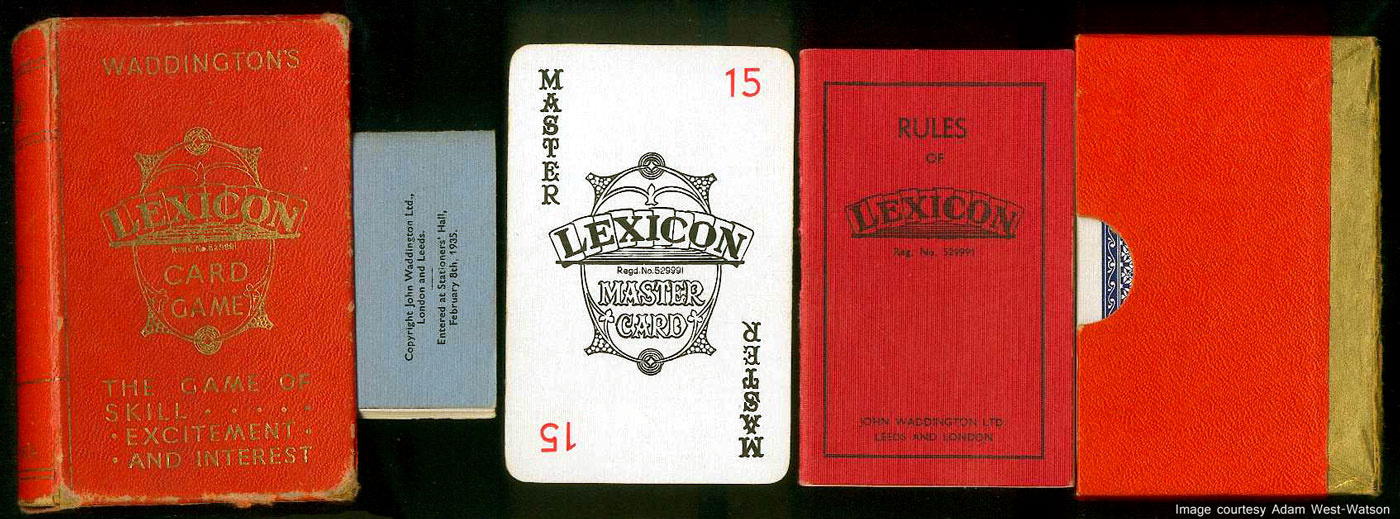
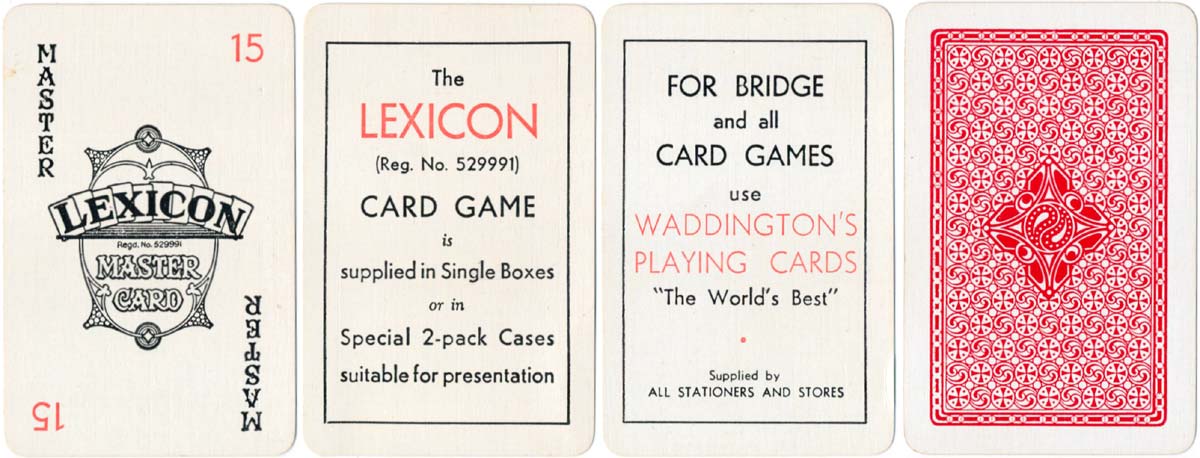
Above: later edition of Lexicon in red or orange slip case in the shape of a book.
Above: supplied in a cheap cardboard tuckbox, possibly during wartime paper rationing restrictions. Image courtesy Matt Probert.
Note: the above account of the introduction of Lexicon is taken from “A History of Waddingtons” by Victor Watson, Northern Heritage Publications, 2008.
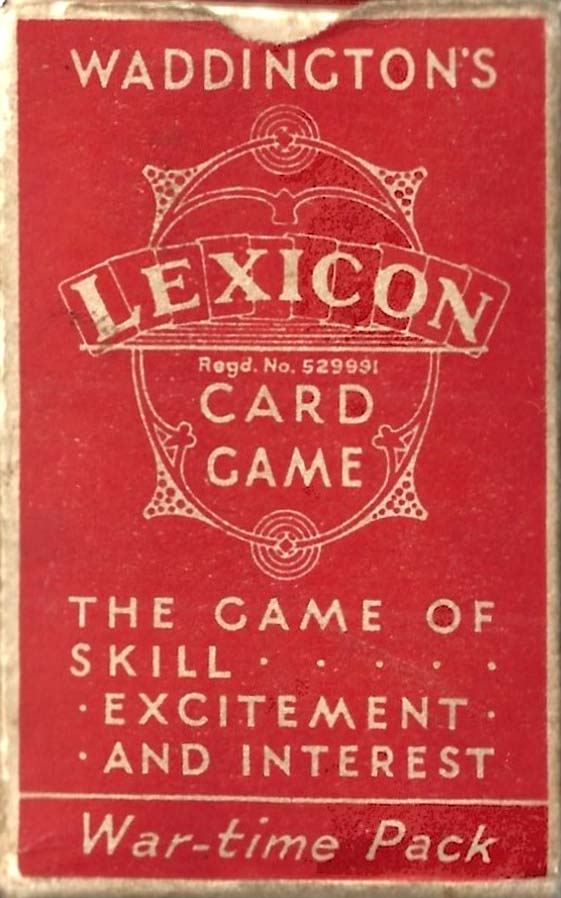
Above: Lexicon wartime pack using lower-grade cardboard. Image courtesy Ian Taylor.
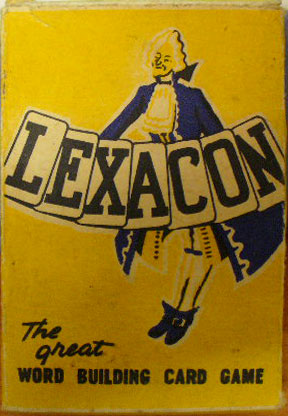
Left: imitation ‘Lexacon’ word building game from Australia.

By Simon Wintle
Spain • Member since February 01, 1996 • Contact
I am the founder of The World of Playing Cards (est. 1996), a website dedicated to the history, artistry and cultural significance of playing cards and tarot. Over the years I have researched various areas of the subject, acquired and traded collections and contributed as a committee member of the IPCS and graphics editor of The Playing-Card journal. Having lived in Chile, England, Wales, and now Spain, these experiences have shaped my work and passion for playing cards. Amongst my achievements is producing a limited-edition replica of a 17th-century English pack using woodblocks and stencils—a labour of love. Today, the World of Playing Cards is a global collaborative project, with my son Adam serving as the technical driving force behind its development. His innovative efforts have helped shape the site into the thriving hub it is today. You are warmly invited to become a contributor and share your enthusiasm.

Related Articles
My Word
My Word “The last word in card games” designed by Michael Kindred and Malcolm Smith, published in 19...
The Royal Historical Game of Cards
The Royal Historical Game of Cards invented by Jane Roberts and published by Robert Hardwicke, c.184...
Bobs y’r Uncle
“Bobs y'r Uncle” nursery rhyme card game designed by Frank H. Simpson for John Waddington Ltd. in 19...
Cheers & Tears
Cheers & Tears by John Waddington Ltd, 1963.
Quits
Jaques' Quits card game, c.1880-85, with portraits of monarchs inside suit symbols in red, blue and ...
Jaime Margarit - Recreo Infantil
'Recreo Infantil' children's educational cards published by Jaime Margarit, Palamós (Gerona) c.1888....
Chitrashala Press
Chitrashala Press produced some charming children's pictorial alphabet cards for early learning purp...
Sum-it Card Game
‘Sum-it’ Card Game published by Sum-It Card Games Ltd. c.1935.
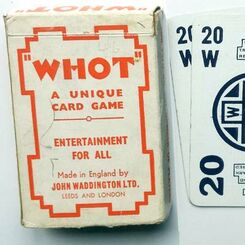
Whot
Whot was invented by William Henry Storey in 1935. It comes from the days when friends and family pl...
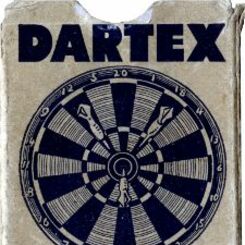
Dartex
Dartex, the Thrilling New Card Game of Skill (1938) based on the traditional pub game where darts ar...
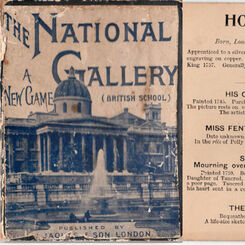
National Gallery (British School)
Jaques' The National Gallery Card Game, c.1895.

John Waddington Ltd, early type
John Waddington Ltd, early type Ace of Spades and court cards, 1922-30.
Waddington’s Playing Cards
John Waddington Limited was a leading producer of playing cards and card games in the UK during the ...
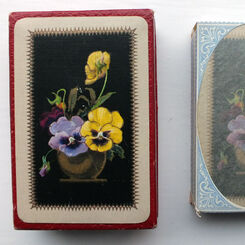
Waddington’s “Envoy“ Series
Waddington’s “Envoy“ Series.
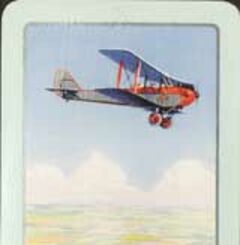
Waddington’s “Flying” Series, 1933
Waddington’s “Flying” Series, 1933.

Waddington’s Classic and Wildlife Series, 1933
Waddington’s Classic and Wildlife Series, 1933.
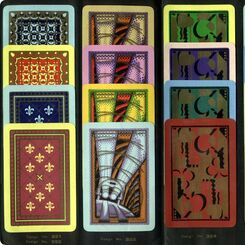
Waddington’s Varsity Series
Waddington’s Varsity Series.
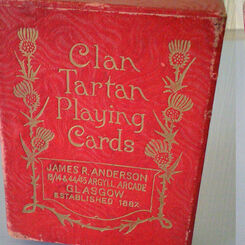
Waddington’s Clan Tartan Series
Waddington’s Clan Tartan Series, 1933.
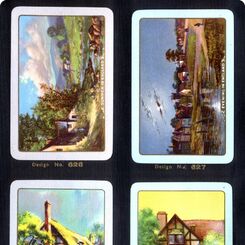
Waddington’s “Rural England” Series, 1933
Waddington’s "Rural England" Series, 1933.
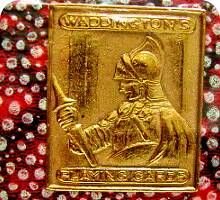
Waddington’s Old Master Series, 1933
Waddington’s Old Master Series, 1933
Most Popular
Our top articles from the past 60 days