


New York Consolidated Card Company
The New York Consolidated Card Company was formed in 1871 by the merging of Lawrence & Cohen, Samuel Hart & Co and John J. Levy.
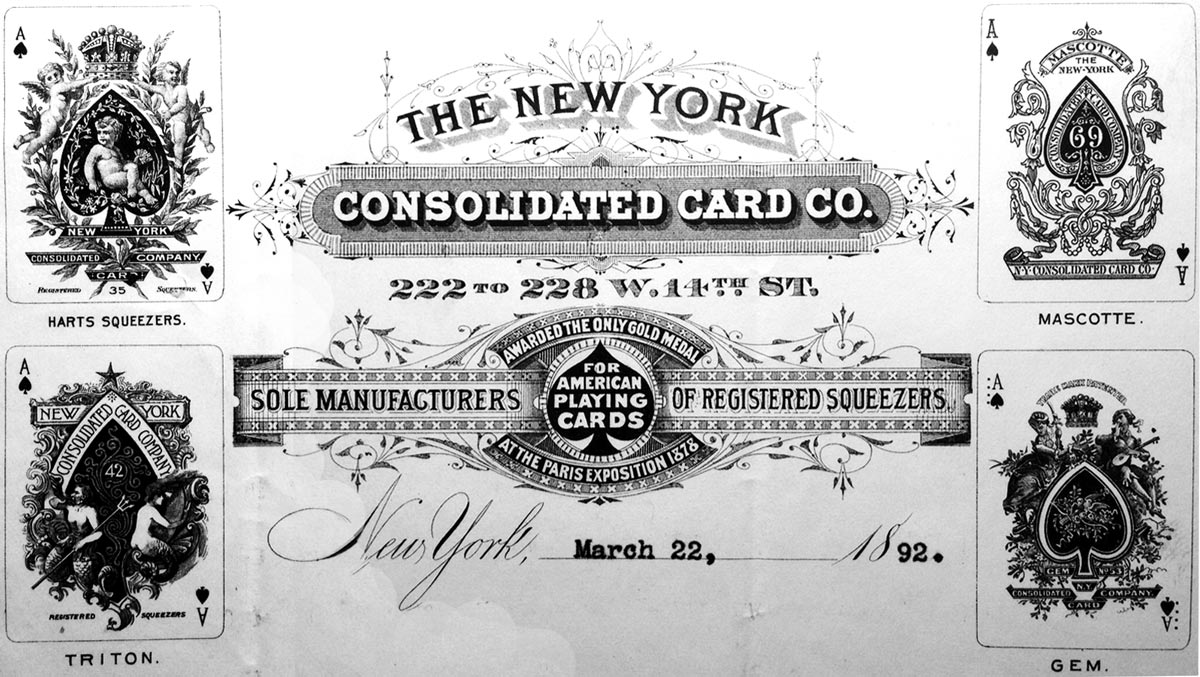

The New York Consolidated Card Company was formed in 1871 by the merging of three earlier firms which had flourished during the mid-19th century. These were Lawrence & Cohen (which had been founded in 1832 by Lewis I. Cohen), Samuel Hart & Co (founded c.1849 by Samuel Hart) and John J. Levy.
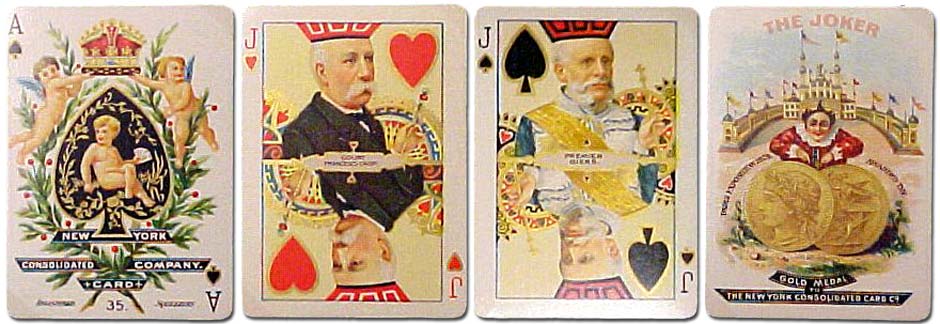
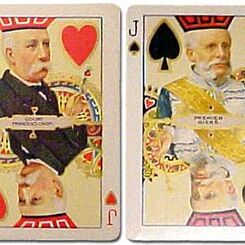
Above: "Royal Playing Cards" published in the mid-1890s to commemorate the Triple Alliance of Germany, Austria and Russia (subsequently replaced by Italy). The suits depict personages from Germany (clubs), Austria (diamonds), Italy (hearts) and Russia (spades). more...
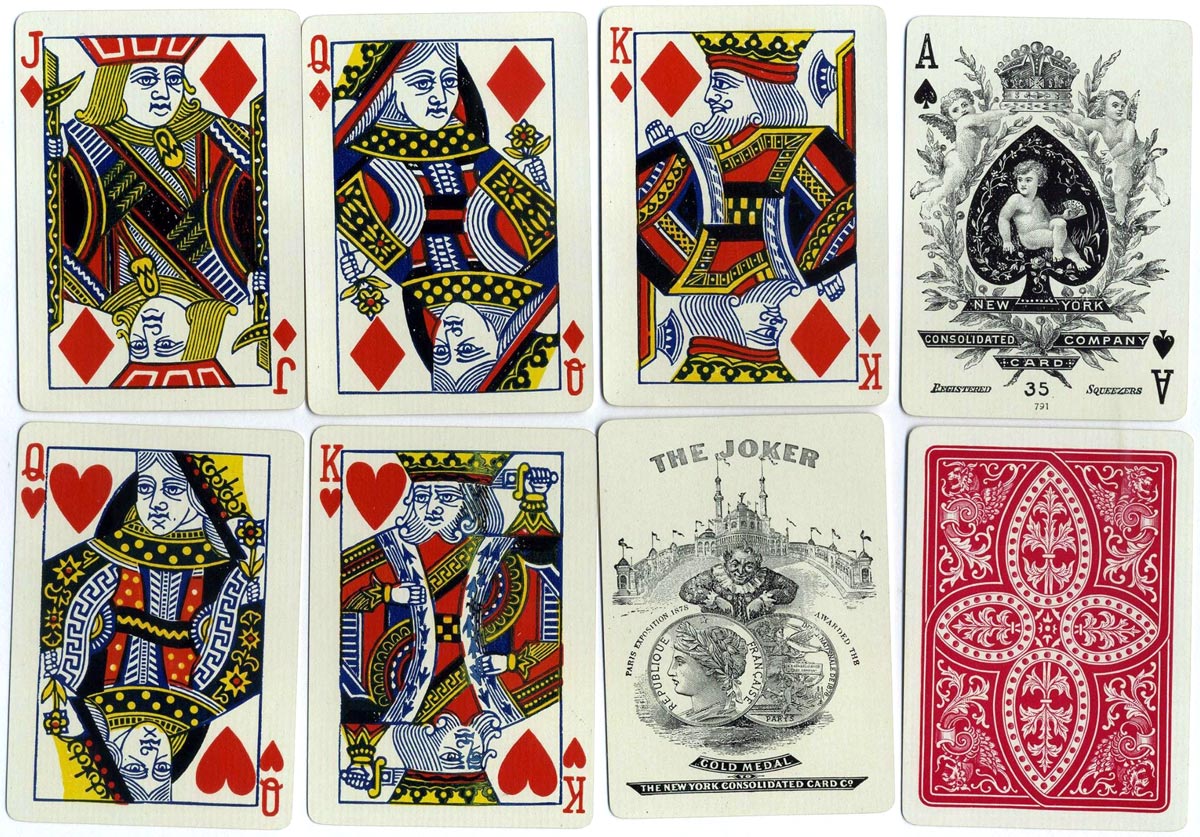
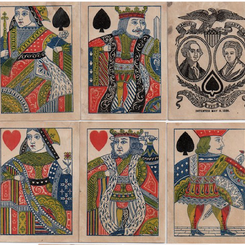
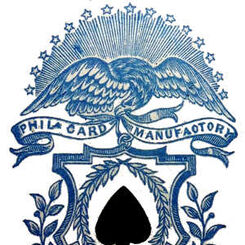
This Ace of Spades and the Gold Medal Joker were first issued c.1880 and subsequently used in "Squeezer" decks.
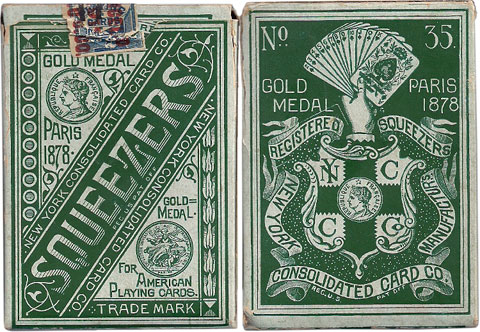
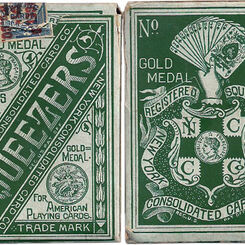
“No.35 Squeezers”
Right: “No.35 Squeezers” manufactured by the N.Y. Consolidated Card Co. more →
In 1876 the New York Consolidated Card Company produced its Patented Squeezers brand, in the same year that Alexander Graham Bell invented the telephone and the National Baseball League was founded. It was also the year in which Wild Bill Hickok was assassinated while playing in a poker game. When the fatal bullet struck, Bill was holding a hand consisting of two Aces and two Eights. Such a poker hand has to this day come to be known as the “Dead Man’s Hand”. The invention of “Squeezers” paved the way for indices to come into common use on English and American cards. The brand was celebrated with a Gold Medal Joker and a magnificent Ace of Spades. The term “Squeezers” was also used on other brands manufactured by the New York Consolidated Card Co., including “Triton” playing cards, “Squeezer Steamboats”, “Angel Back Squeezers” and several others.
“Hart’s Squeezers”
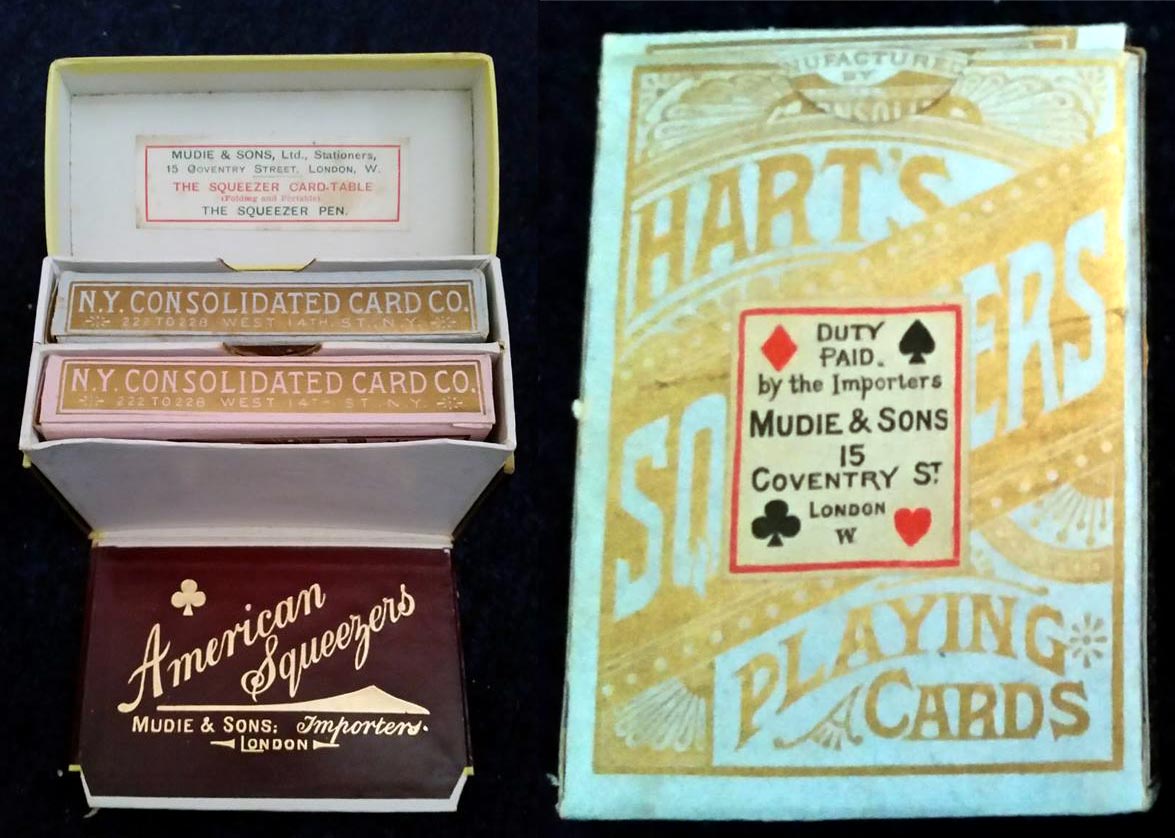
Above: boxed set of two packs of “Hart's Squeezers” imported into UK by Mudie & Sons, c.1890. The pack in the blue box has blue backs, the pack in the pink box has red backs. All the cards are gold-edged. Image courtesy Pat Waddington.
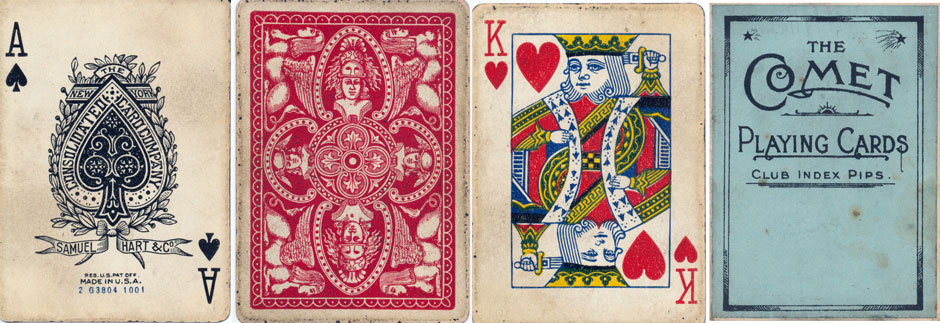
Above: this particular Ace of Spades was used by NYCC from c.1910 onwards (til 1930) when manufacturing private brands for department stores, drug chains, private clubs, etc., using the customer’s name and/or designated brand on the box or, as in this case, a label stuck onto the box. There was no special Ace of Spades of Joker for these decks, presumably to keep costs down. Image courtesy Matt Probert.
“Franco-American”
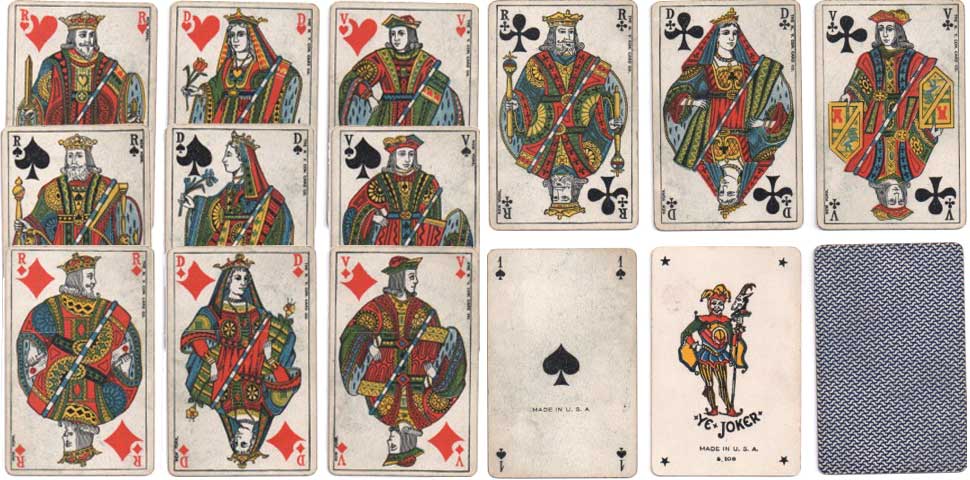
Above: Genoese or Belgian style cards complete with 'Ye Joker' from a Nain Jaune box with board, counter holders and boxes of ivory chips, c.1900. Image courtesy Ken Lodge.
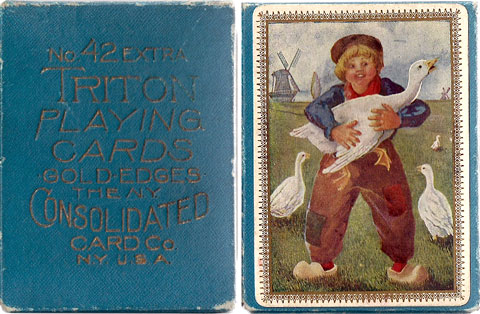
“Triton No.42”
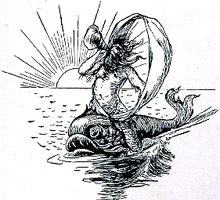
The “Triton No.42” brand was first introduced by the N.Y. Consolidated Card Co. in around 1890 as one of their more expensive brands and part of their “Squeezer” range read more →
“Sterling Whist”
“Sterling Whist #196” by The New York Consolidated Card Company, Long Island City, N.Y, c.1904. The absence of a date code on the ace of spades suggests they may precede the Ace of Spades date coding which USPCC started in 1904. This brand continued to be produced for some years. The court cards are similar to “Hart’s French Whist”.
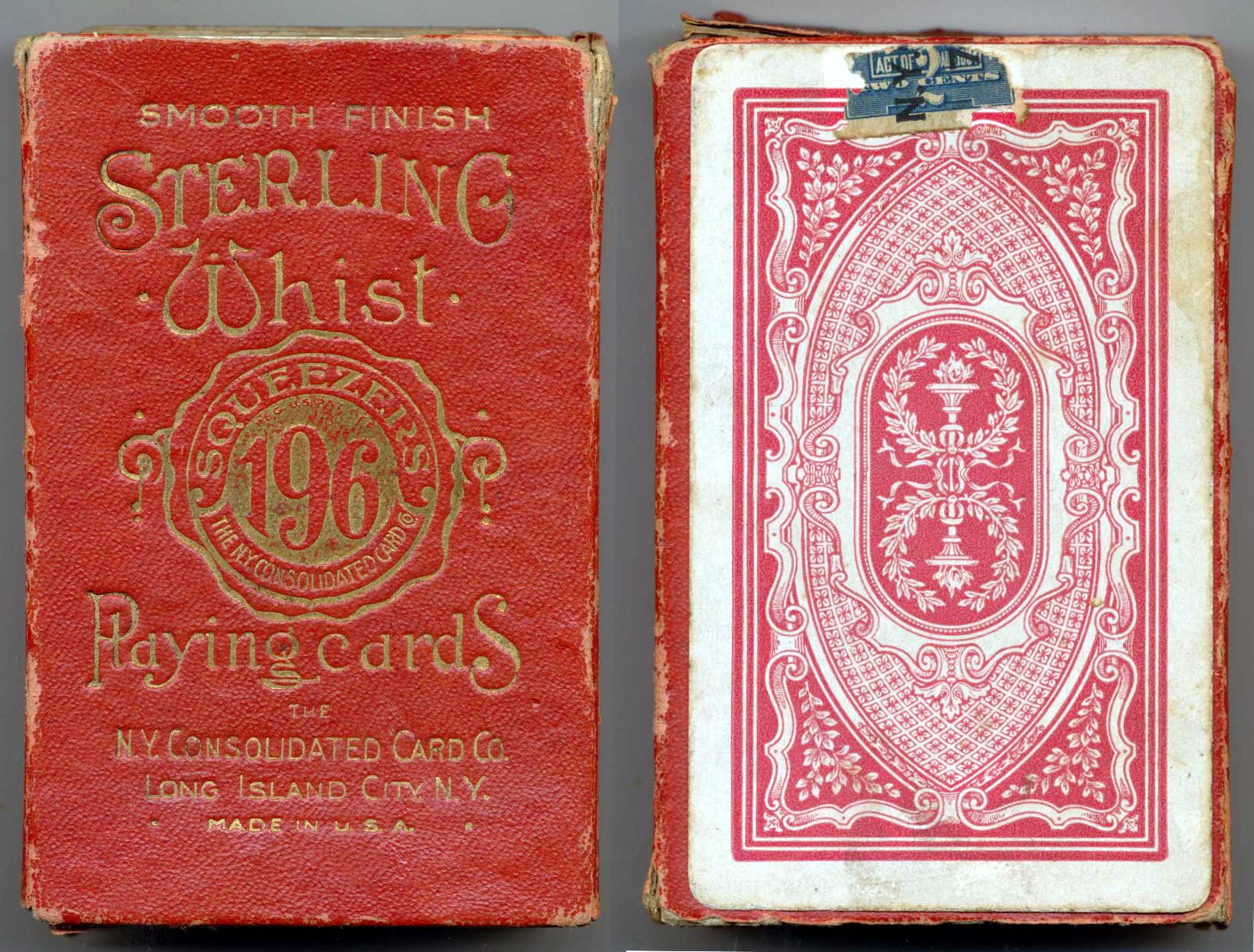
Above: Sterling Whist Squeezers #196 by The New York Consolidated Card Company, Long Island City, N.Y, c.1904. Images courtesy Matt Probert. Click to see the box.
“Hart’s French Whist”
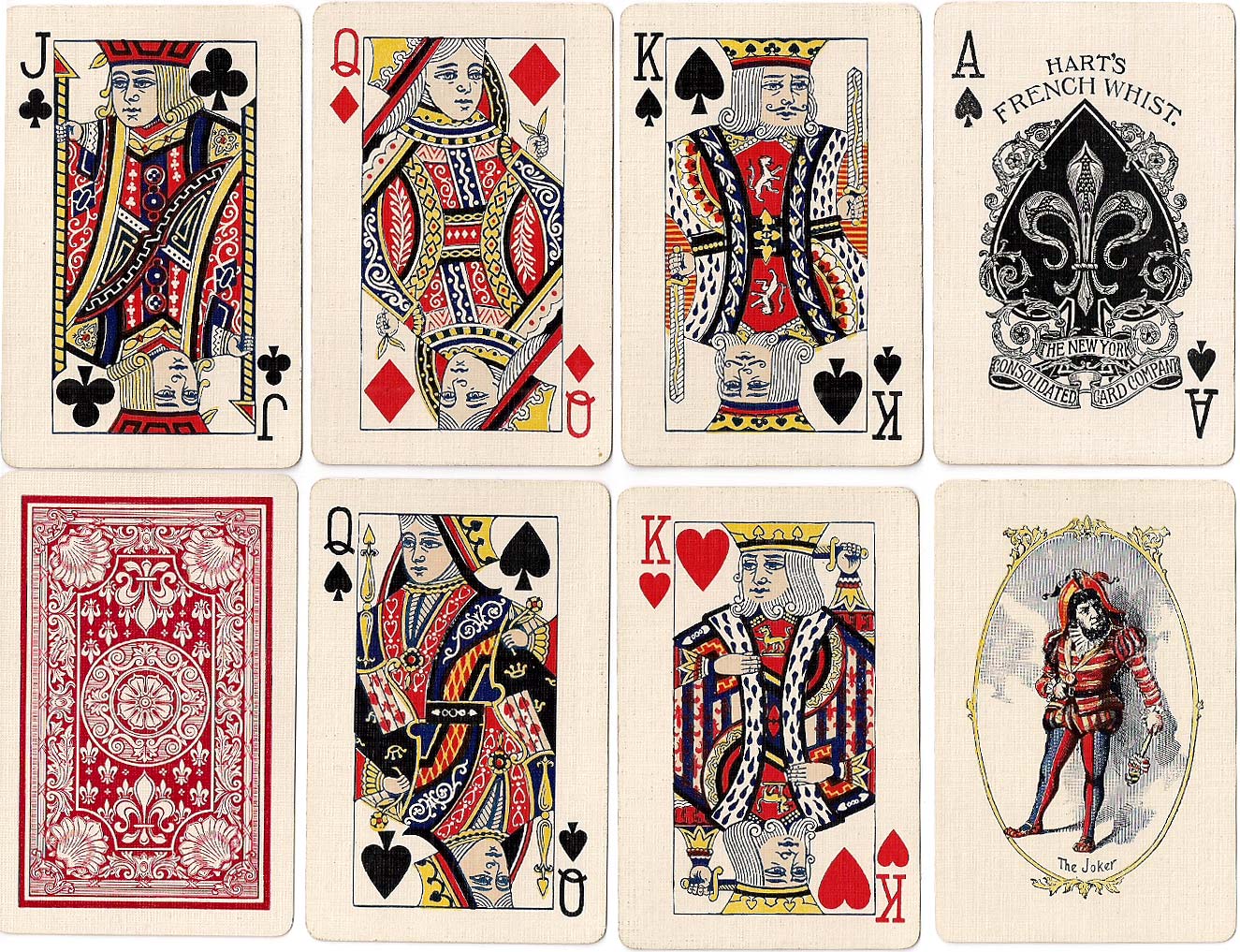
“Hart's French Whist #96”, by The New York Consolidated Card Company, dates from c.1905. It is one of the earliest whist size decks by NYCCC with a great Joker. Although the cards are standard bridge size, the court cards seem to make them appear longer. Click image to zoom →
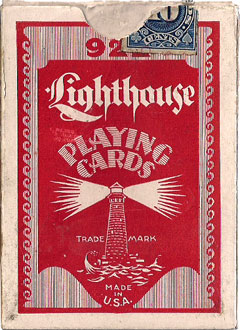
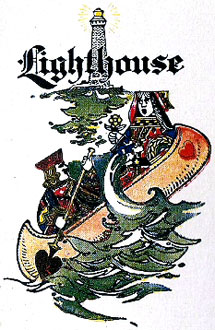
“Lighthouse No.922”
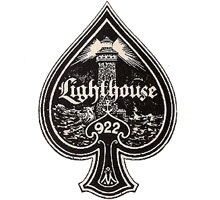
The “Lighthouse No.922” brand was first introduced by the N.Y. Consolidated Card Co. in around 1920 read more →
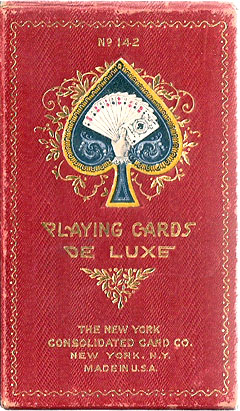
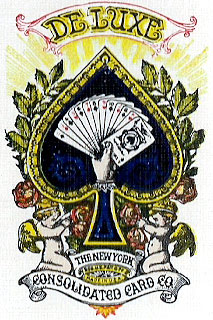
“De Luxe No.142”

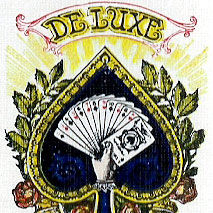
The “De Luxe No.142” brand was first introduced by the N.Y. Consolidated Card Co. in around 1920 in wide size format, then shortly afterwards by a Bridge size edition with multi-coloured Ace of Spades read more →
In the early 1900s NYCC moved its main plant to larger premises at 4th & Webster Aves, Long Island City, N.Y.
From 1894 until 1930 NYCC operated as a separate company under the umbrella and guidance of USPCC. In 1930 the New York Consolidated Card Co and the Andrew Dougherty Co (which became part of USPC in 1907) merged into Consolidated-Dougherty Co., with headquarters in New York. This company was dissolved in 1962 when it became a division of the United States Playing Card Co. of Cincinnati.
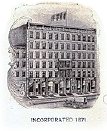
Earlier History of NYCCC
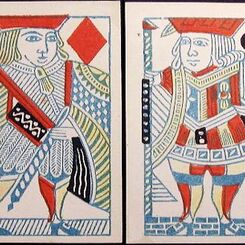
Lewis I. Cohen was a pioneering manufacturer who made his first deck of cards in 1832. In 1835 Mr Cohen invented a new machine to print four colours on a sheet at once, which was to revolutionise the entire playing card industry. This innovation soon led to his dominance in the market.
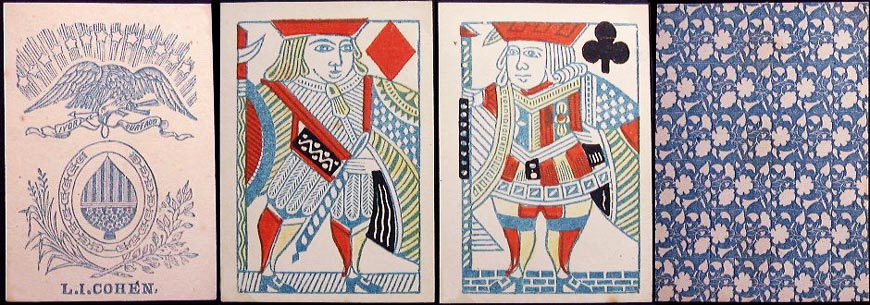
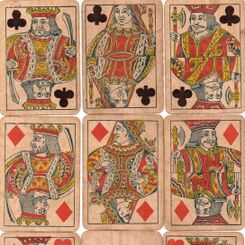
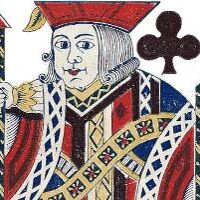
Above: 'Highlanders' deck produced by L.I. Cohen, c.1840-60. The full-length courts have been made to resemble the wood-block courts of earlier times. more...
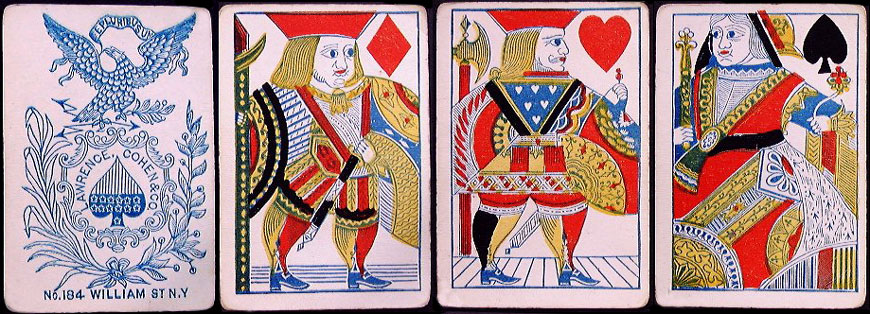
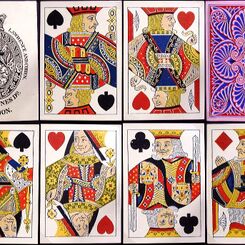
Above: one of the earliest decks with the Lawrence, Cohen & Co. name, which can be read on the Ace of Spades along with the 184 William Street address, c.1860. This subsequently became the address for the New York Consolidated Card Company when this was formed in the early 1870s. more...
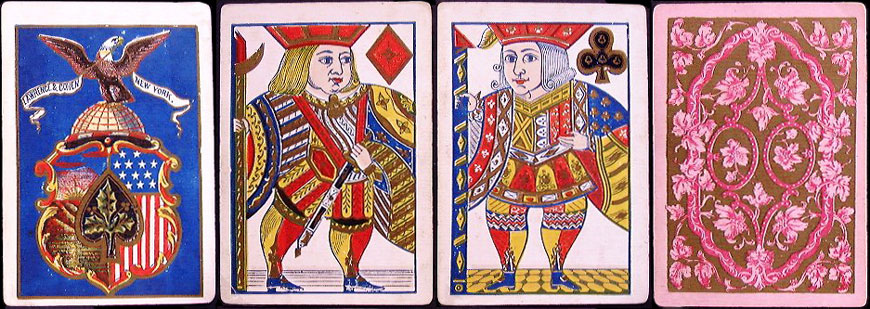
Above: 'Superfine Florigated Playing Cards', a richly illuminated deck produced by Lawrence & Cohen, c.1863, with gold added to the colour scheme. more...
Bee #92
The "Bee #92" brand was first produced by NYCCC in c.1895 and is still being produced today, making it one of the longest running brands ever made. It has been exported extensively around the world and customised for casino use where required. Over the years the design of the Ace of Spades has been simplified, losing the decorative detail seen on earlier examples. Today "Bee #92" cards are manufactured by the United States Playing Card Co., Cincinnati.
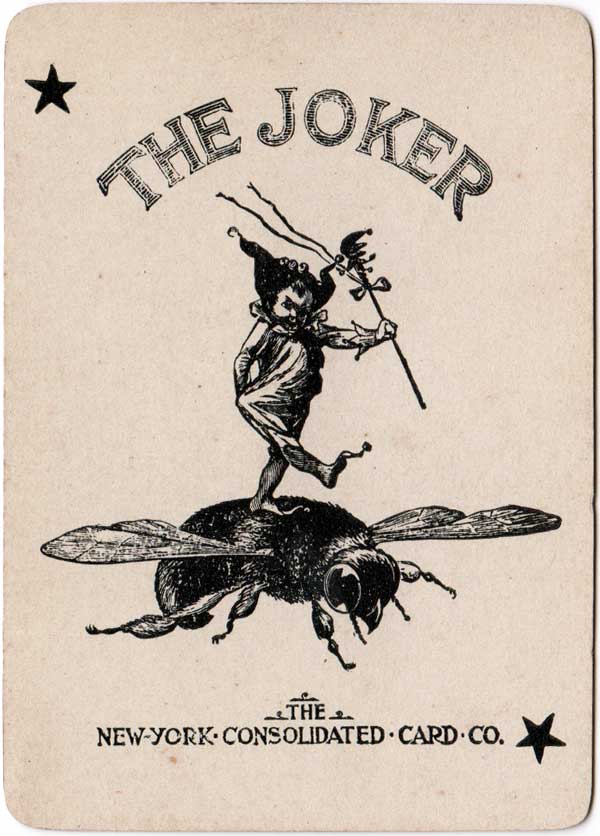
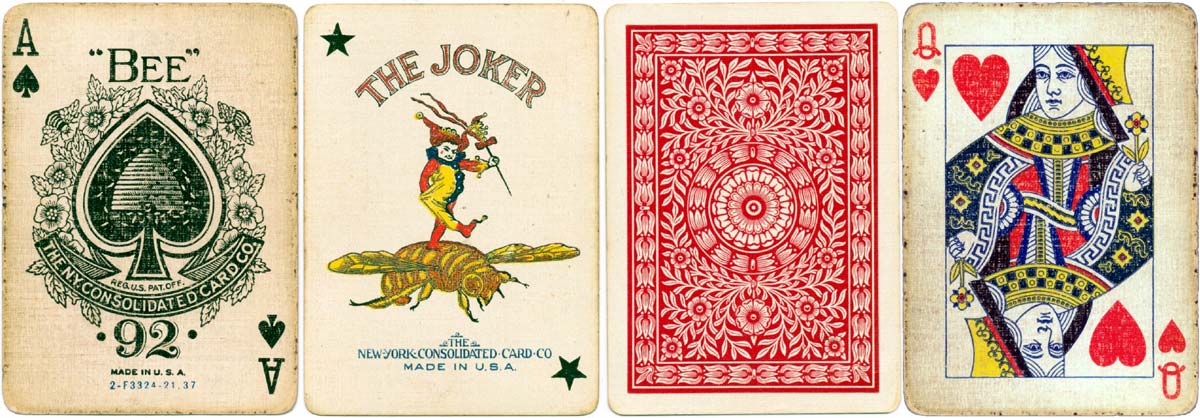
Above: No-92 Bee, N. Y. Consolidated Card Co.
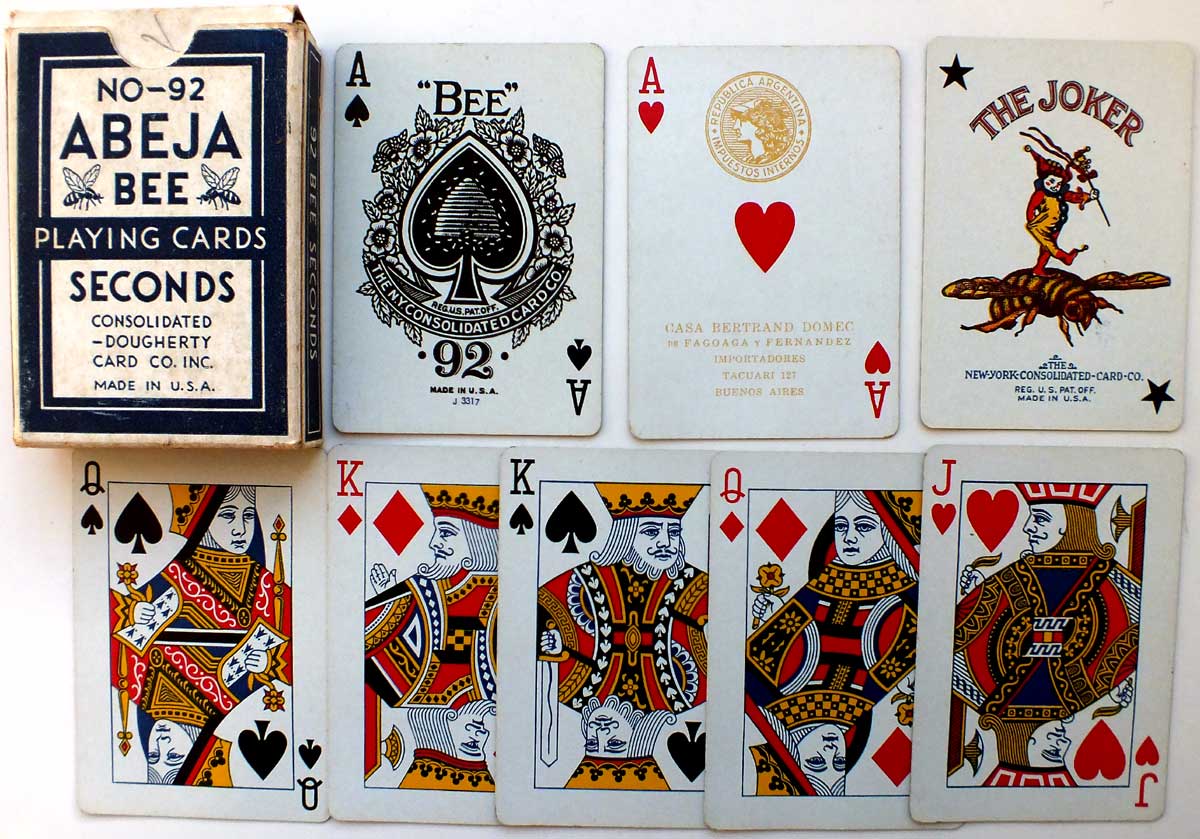
Above: No-92 Abeja Bee Seconds produced for export to Argentina, Consolidated Dougherty Card Co., c.1930s.
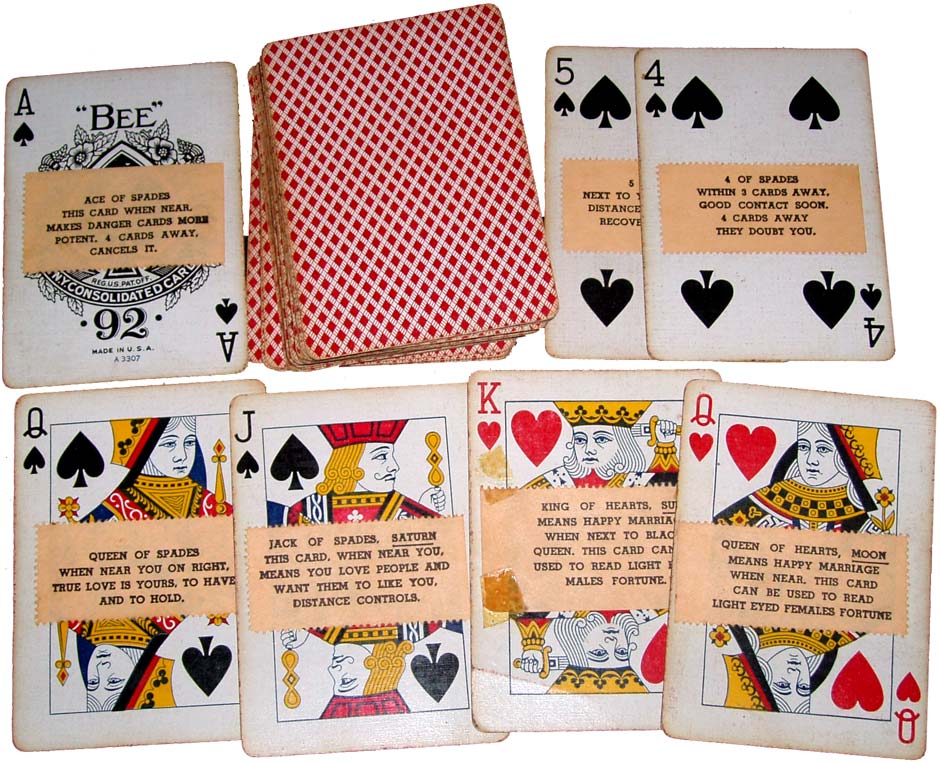
Above: "Bee #92" playing cards which have been prepared for fortune-telling by the addition of adhesive paper labels on each card detailing the divinatory meaning.
REFERENCES
Dawson, Tom & Judy: The Hochman Encyclopedia of American Playing Cards, U.S. Games Systems Inc., 2000
Starling, Rod: Shuffling Along with History, in 'Clear the Decks', the Newsletter for 52 Plus Joker (edited by Judy Dawson), September 2010
We are grateful to Rod Starling for generously contributing information and images of cards and from his collection.

By Simon Wintle
Spain • Member since February 01, 1996
I am the founder of The World of Playing Cards (est. 1996), a website dedicated to the history, artistry and cultural significance of playing cards and tarot. Over the years I have researched various areas of the subject, acquired and traded collections and contributed as a committee member of the IPCS and graphics editor of The Playing-Card journal. Having lived in Chile, England, Wales, and now Spain, these experiences have shaped my work and passion for playing cards. Amongst my achievements is producing a limited-edition replica of a 17th-century English pack using woodblocks and stencils—a labour of love. Today, the World of Playing Cards is a global collaborative project, with my son Adam serving as the technical driving force behind its development. His innovative efforts have helped shape the site into the thriving hub it is today. You are warmly invited to become a contributor and share your enthusiasm.

Activity for New York Consolidated Card Company
Sign in to comment or save this article.

Related Articles
The Reserve
Where the wild things are.
Ute Mountain Casino Hotel & Resort
Casino playing cards featuring Native American courts.
Paper Empires by Jason McKinstry
A review of Jason McKinstry’s Paper Empires, Volume I, an illustrated study of early American...
Mediaeval Playing Cards
Finely executed late 19th century pack from the USA featuring courts in medieval costume.
Shuffle Along With History
A brief chronological note linking the introduction of familiar American decks (1848–1908) with cont...
A Case Study
Case Study: using detective work to identify and date a pack discovered in charity shop.
43: The United States Playing Card Co.
The United States Playing Card Co. (USPCC) represents an amalgamation of all the major American card...
De Luxe No.142
A wide size version of De Luxe No.142 had been published in c.1920, with a similar Ace of Spades and...
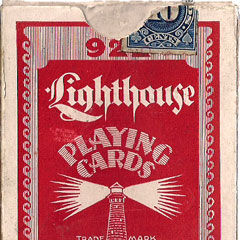
Lighthouse No.922
“Lighthouse No.922” playing cards were introduced in c.1920.
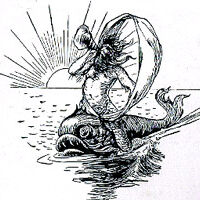
Triton No.42
There have been at least three different versions of the Triton deck, with different Jokers, differe...
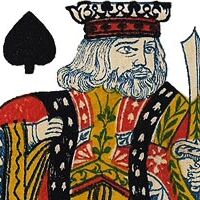
Charles Bartlet
Elaborate court cards on a deck by Charles Bartlet, Philadelphia, (who was in fact Samuel Hart) c.18...
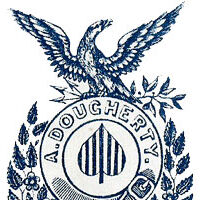
Andrew Dougherty c.1850
The idiosyncratic courts used in this deck were used by several other U.S. manufacturers, including ...
13: Some North American Cards
I deal with some of the US makers in more detail on other pages, but here is a brief introduction.
Lawrence & Cohen
Lawrence & Cohen were successors to Lawrence, Cohen & Co.
Royal Playing Cards, 1890s
Royal Playing Cards, 1890s
Lewis I. Cohen
Lewis I. Cohen made his first deck of cards in 1832. In 1835 Mr Cohen invented a new machine to prin...
Samuel Hart, 1846-1871
Samuel Hart was a prolific manufacturer of playing cards who commenced business sometime around 1845...
Squeezers No.35
By 1877 the New York Consolidated Card Co's "Squeezers" were a great success on account of the indic...
Lawrence & Cohen, New York
Lawrence & Cohen decided to hire Owen Jones, the English playing card designer who produced back des...
Most Popular
Our top articles from the past 60 days


