

Standard Playing Card Company
Standard Playing Card Co. started producing playing cards in c.1890 but was in business for only about four years before United States Playing Card Company acquired it in 1894.
Standard Playing Card Co., Chicago
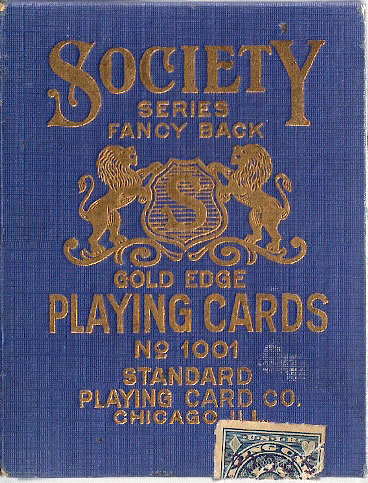
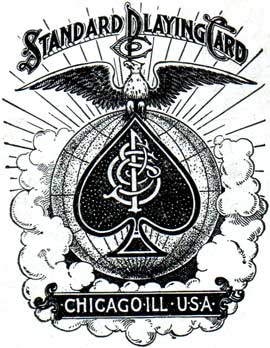
Standard Playing Card Co. started producing playing cards in c.1890 but was in business for only about four years before the newly founded United States Playing Card Company acquired it in 1894. The Standard Playing Card Company continued operating as an independent company in Chicago, as shown on their Ace of Spades and packaging. The Aces of Spades did not normally carry a brand name, but over the years the Standard P.C.Co produced a large number of brand names which were identified on the boxes and wrappers and in some cases on a special Joker. As the name suggests, cards were mainly standard in appearance, with some colourful jokers and a range of pictorial back designs by contemporary designers and artists in brands such as ‘Lido’, ‘Society #1000’, ‘Peerless #304’ & ‘Austen Beauties’.
Standard P.C.Co was also known to have produced novelty concave decks, patience and souvenir decks some of which were credited to a different publisher. The Bay State Card Co. became a part of the Standard Playing Card Company of Chicago in the early 1890s.
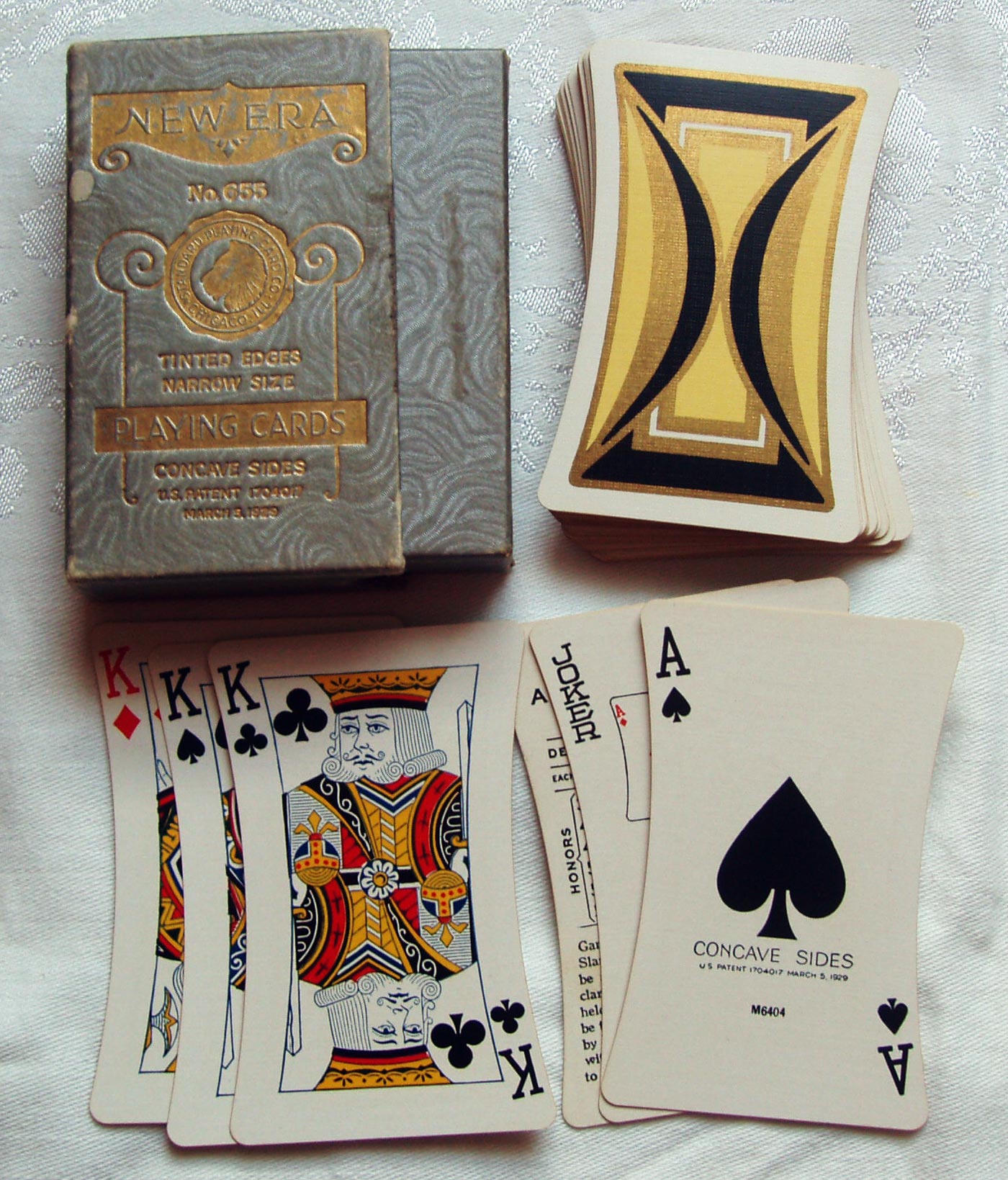
• See also: Peru Souvenir, c.1910 • New Era Concave Playing Cards.
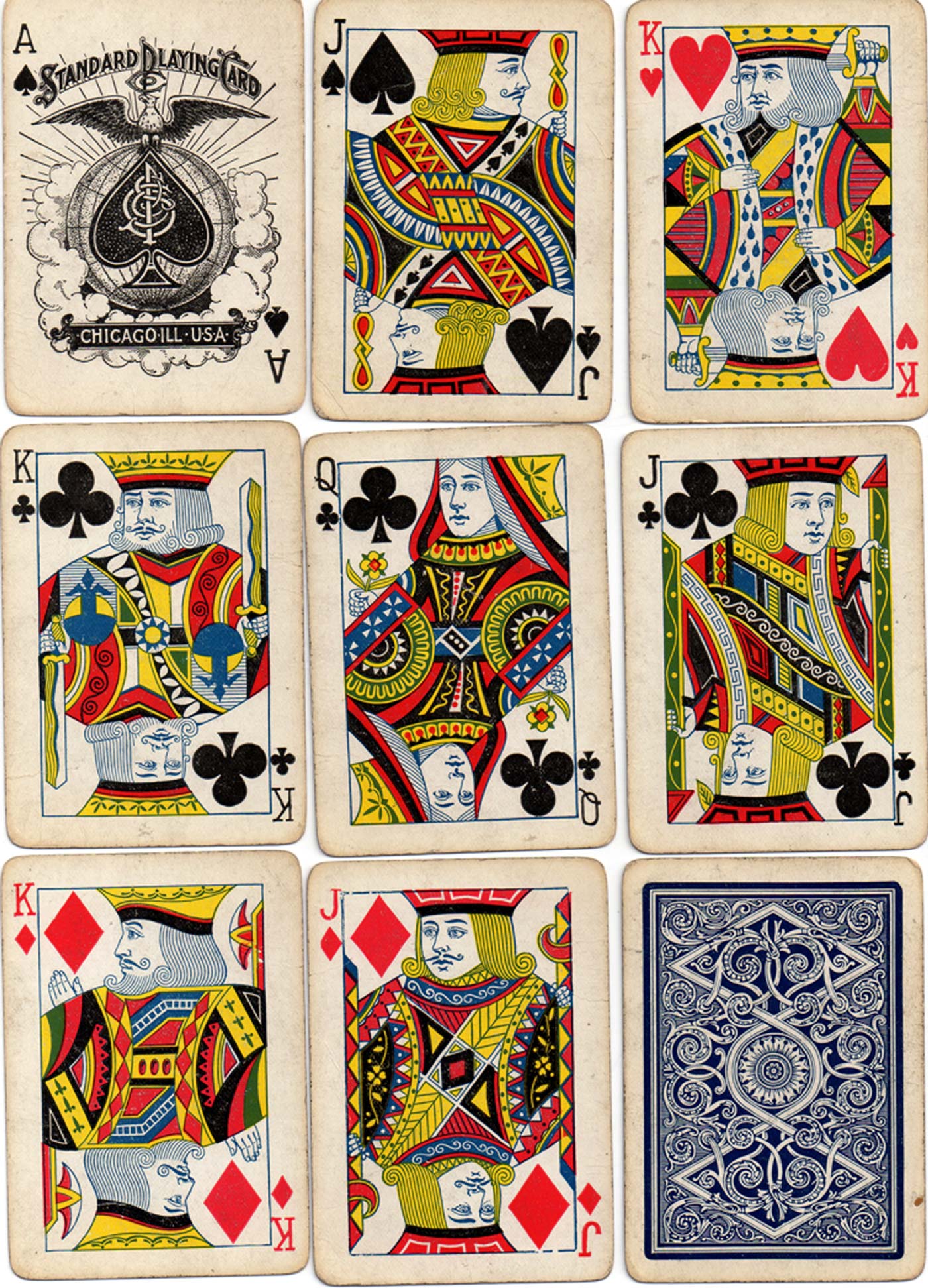
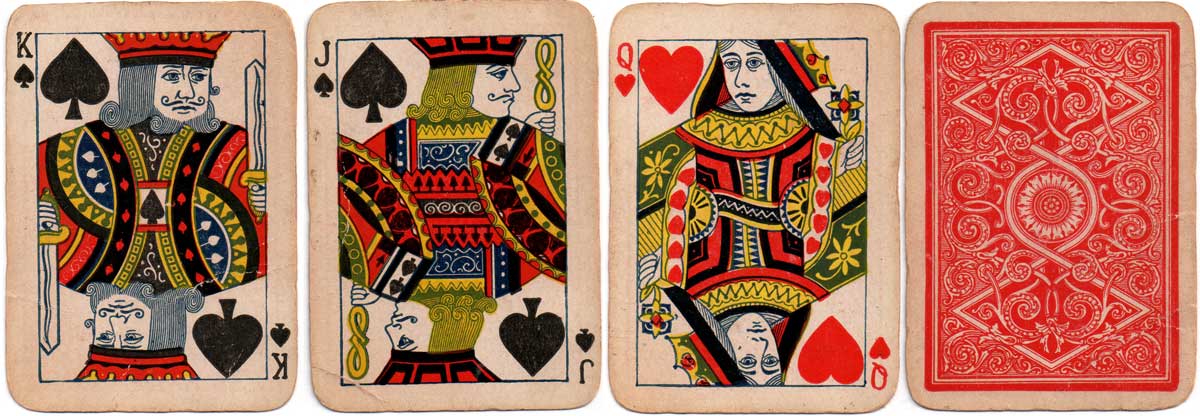
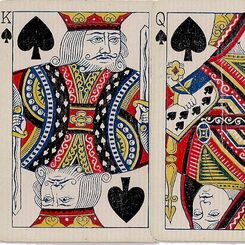
Above: Ace of Spades and court cards from two early Standard Playing Card Co. decks, c.1895-1900. The court designs in the lower set may have been acquired via Bay State Card Co. Images courtesy Ken Lodge.
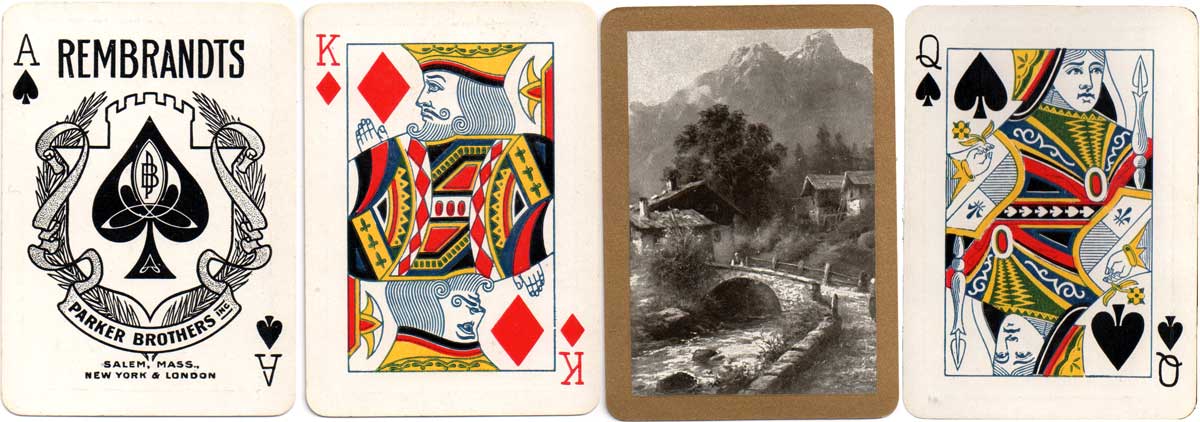
Above: a brand made for Parker Brothers, Salem, Mass. by the Standard Playing Card Co, c.1900 with scenic backs. Image courtesy Ken Lodge.
The Bay State Card Co. became a part of the Standard Playing Card Company of Chicago in the early 1890s and thereby part of the U.S.P.C.C. fold in 1894.
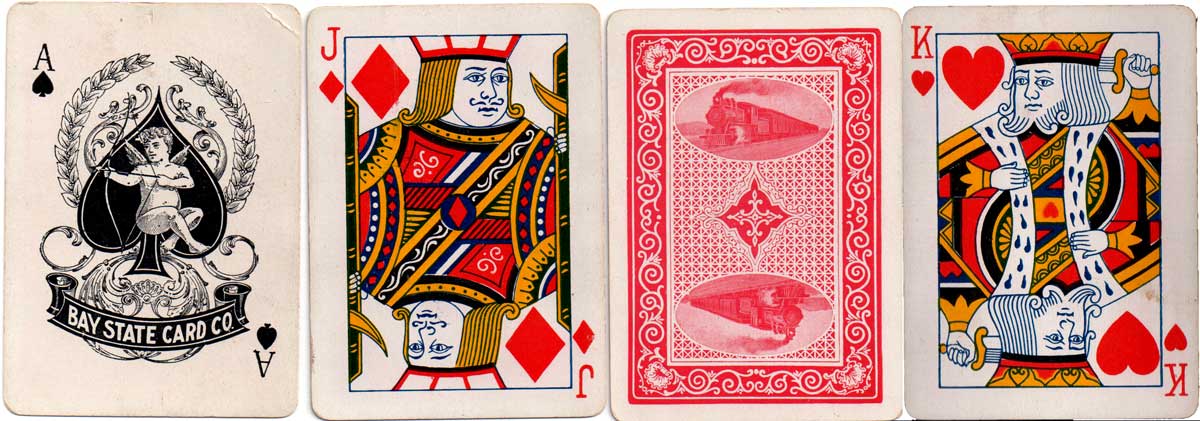
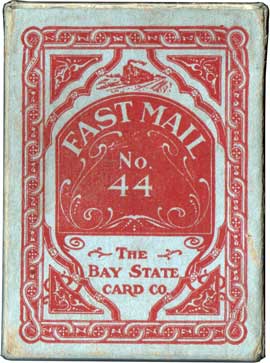

Above: cards from a pack of 'Fast Mail #44' playing cards with a Bay State Card Co. Ace of Spades. The box and back design both feature the steam train motif. The Bay State Card Co. became a part of the Standard Playing Card Company of Chicago in the early 1890s. The courts are like those of the American PCCo/Kalamazoo, but this version has the same courts (same plates) as a pack by the Consolidated Litho & Manufacturing Co of Montreal. Images courtesy Ken Lodge.

Gypsy Witch Fortune Telling Cards
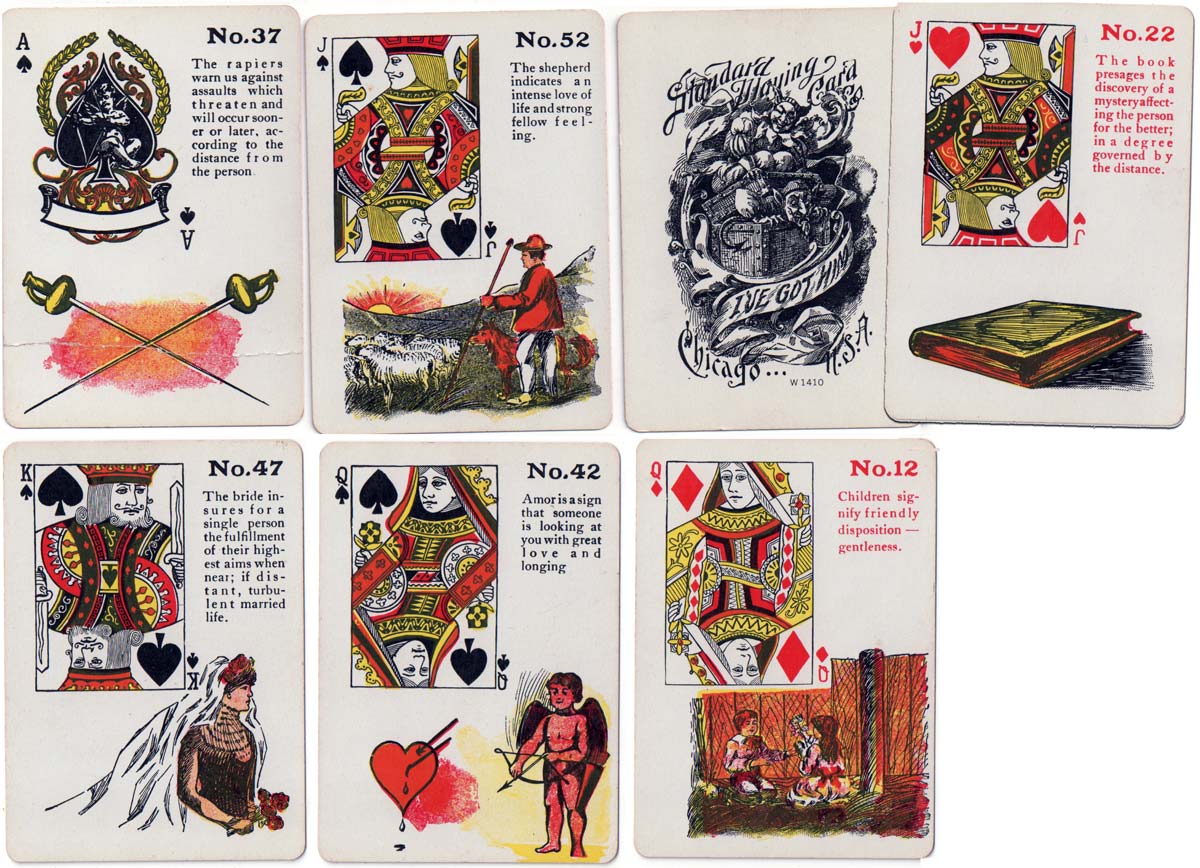
Above: Gypsy Witch Madame Lenormand Fortune Telling Cards, copyright 1903 by Frederick J. Drake & Co. This deck has been published continuously ever since, this copy is from 1936. Each card has an inset picture of a playing card, a second image, and a text giving the meaning of the card. Some of the court figures have the wrong suit symbol: both the Jacks are the same, and the two Queens have the wrong suit signs. Images courtesy Ken Lodge.
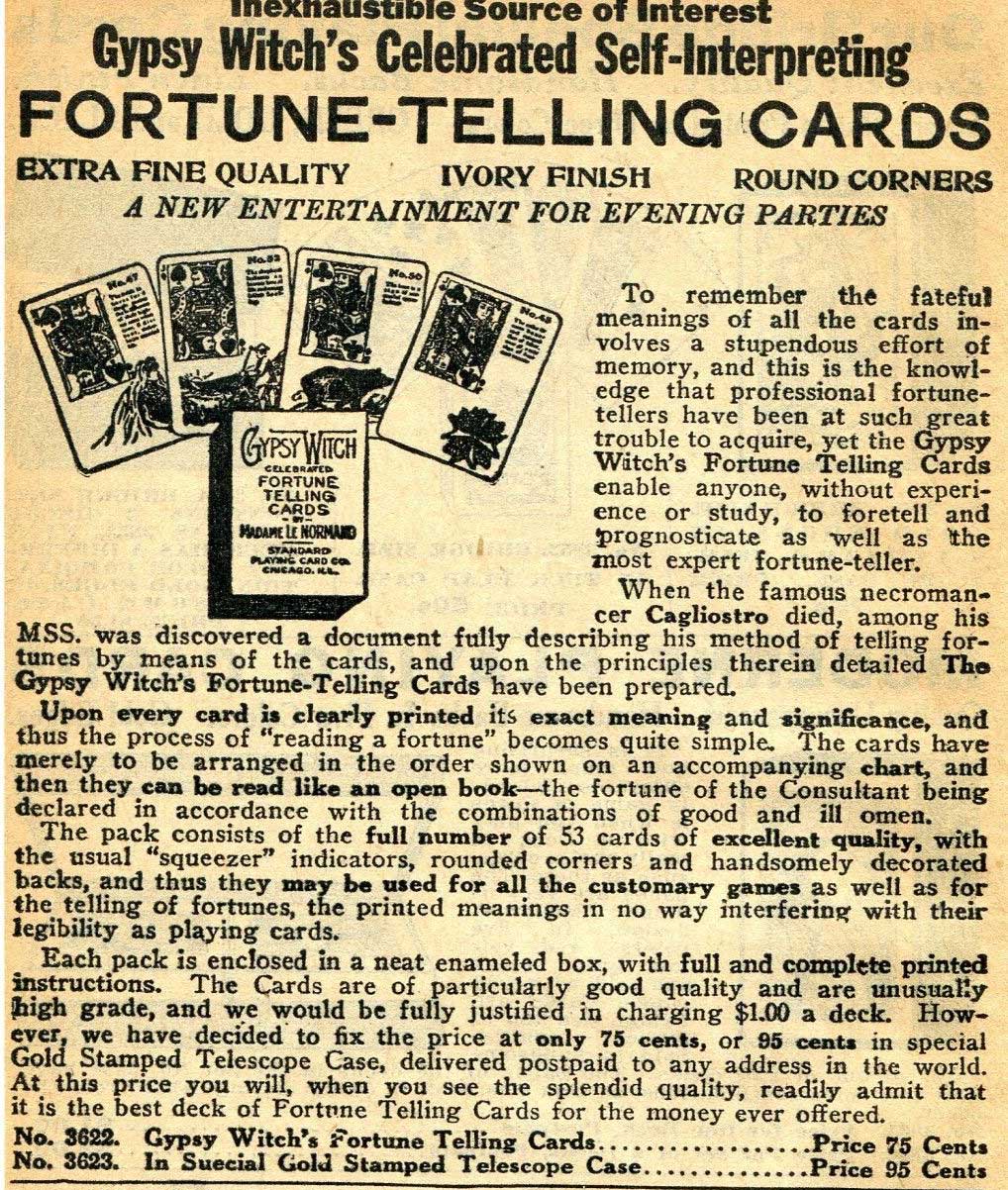
1929 advert for Gypsy Witch Fortune Telling Cards
Other Brands
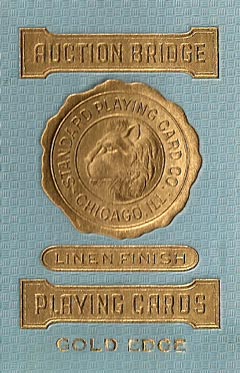
← Left: box from 'Auction Bridge' deck, c.1910
The Standard Playing Card Co also had its own courts similar to those of U.S.P.C.C. in two sizes, but shortly after their take-over Standard P. C. Co packs had standard U.S.P.C.C. courts.
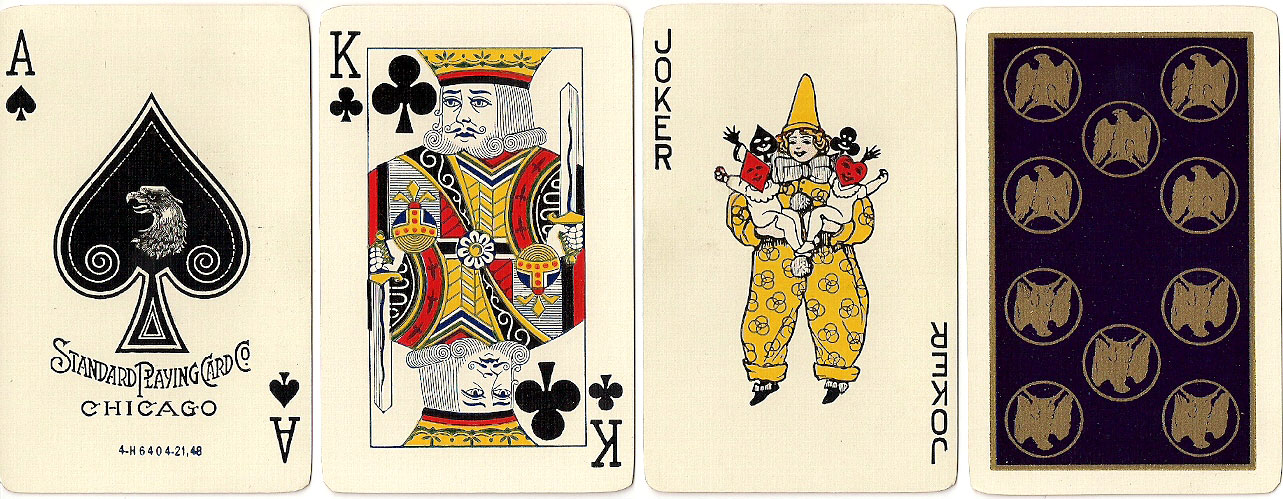
Above: 'Auction Bridge', c.1910. This Ace of Spades had recently been redrawn as their earlier one closely resembled that of the American Bank Note Co. A.B.N.Co advertising exhorted its customers not to buy the Standard P.C.Co's cheap imitation. Images courtesy Rod Starling.
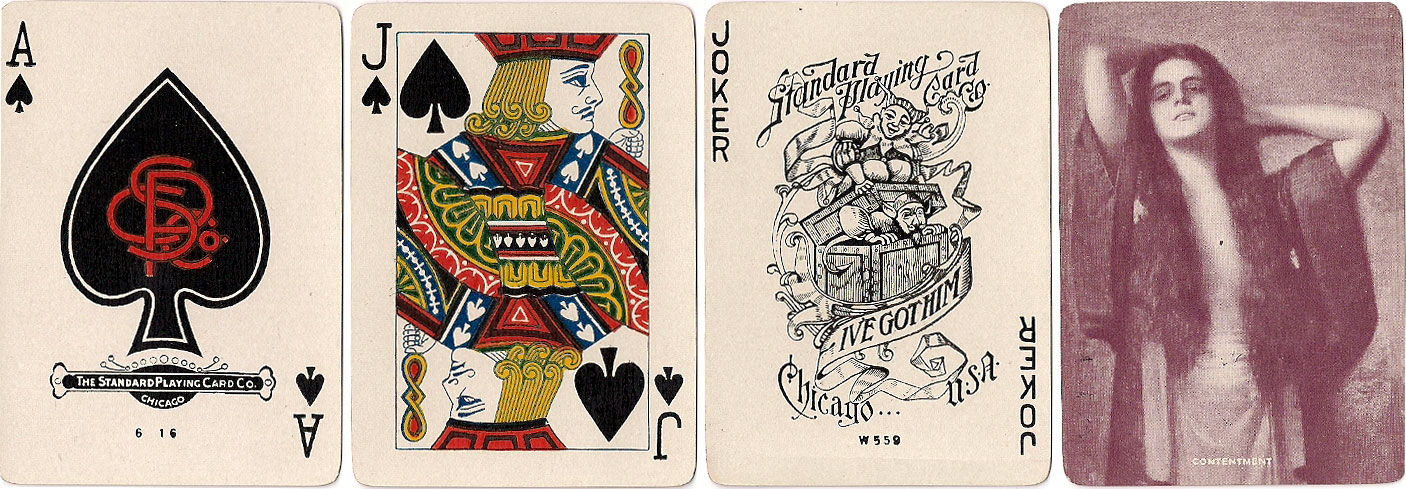
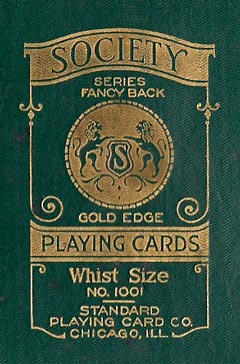
Above: Society #1000 playing cards with back titled 'Contentment', c.1918, with coloured version of the Ace of Spades. Images courtesy Rod Starling.
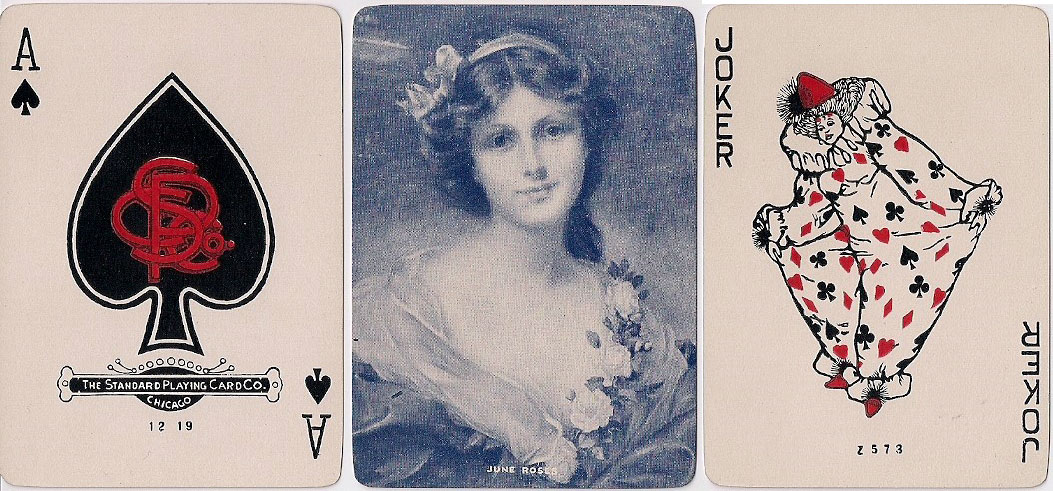
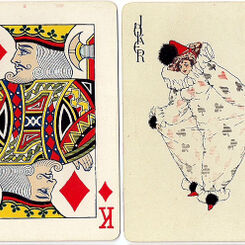
Above: Society Series playing cards with back titled 'June Rose', c.1919, with coloured version of the Ace of Spades (click to zoom). This is a wide deck, is gold edged and the Joker is the same as was used by the American Bank Note Company, c.1906. It has a tax stamp on the box that is cancelled “1920”. Images courtesy Rod Starling.
This “Park Lane” deck was made by Standard Playing Card Company, Chicago, c.1925, as a souvenir/advertising deck for the Park Lane Apartments which was actually an apartment hotel located at 299 Park Avenue, one of the most expensive parts of Manhattan. It was a very posh establishment that catered to a clientèle that appreciated the finer niceties of life and could afford them.
Decks were presented in individual boxes housed in an outer double box.
Unfortunately, it is now not only closed but the original building was demolished and replaced by a 47 story office building that opened in 1967.
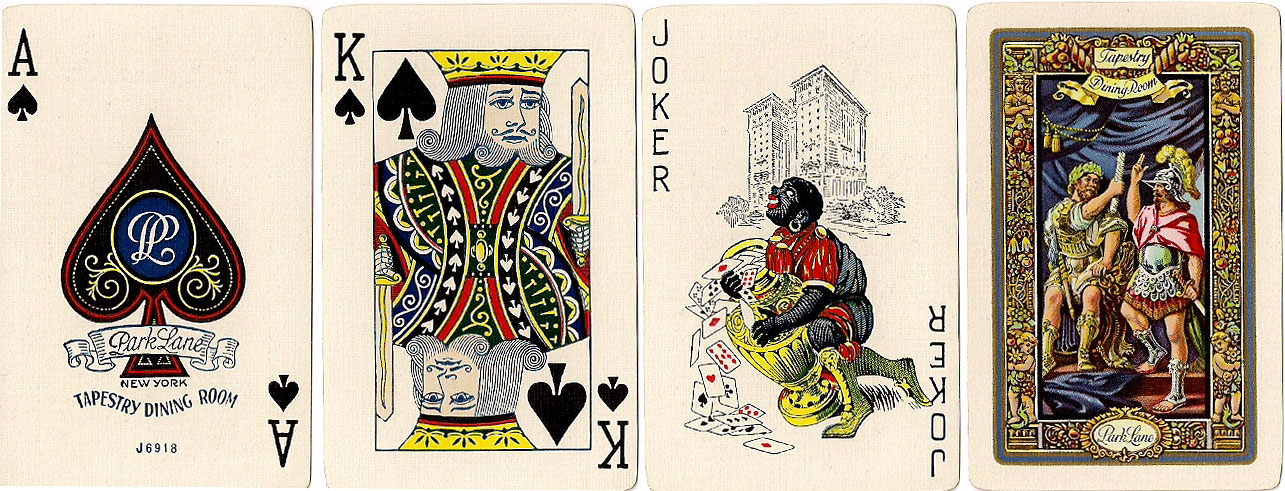
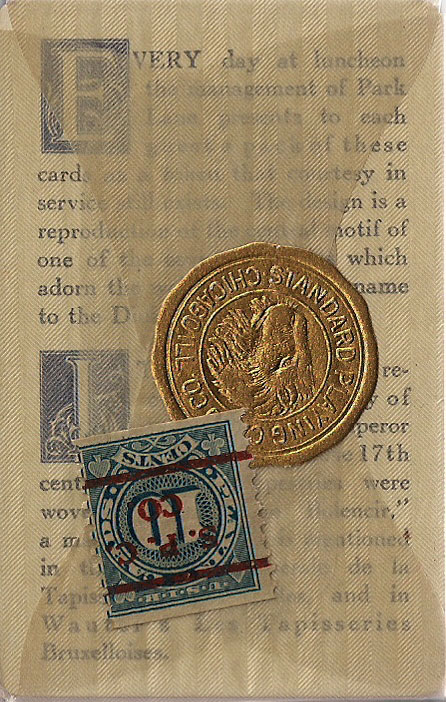
Above: the back design is a detail from a tapestry that hung in the Tapestry Room Dining Room. The information card, barely visible, reads as follows: "Every day at luncheon the management of Park Lane presents to each guest a pack of these cards as a token that courtesy of service still exists." The deck is gold edged and was one of Standard's best productions. Images courtesy Rod Starling.
Right: the sealed deck showing the Information Card (click to zoom) →
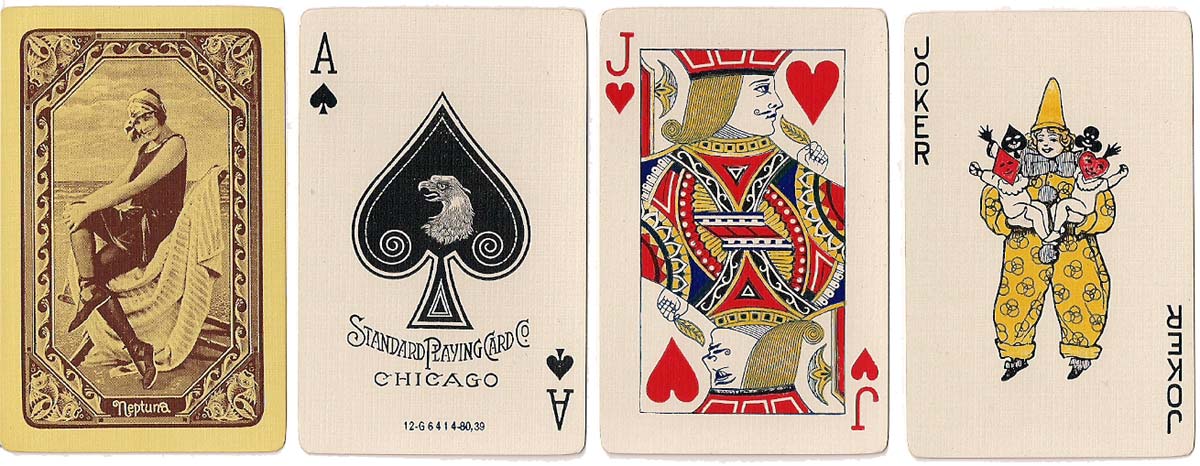
Above: “Neptuna” made by the Standard Playing Card Company, 1925.
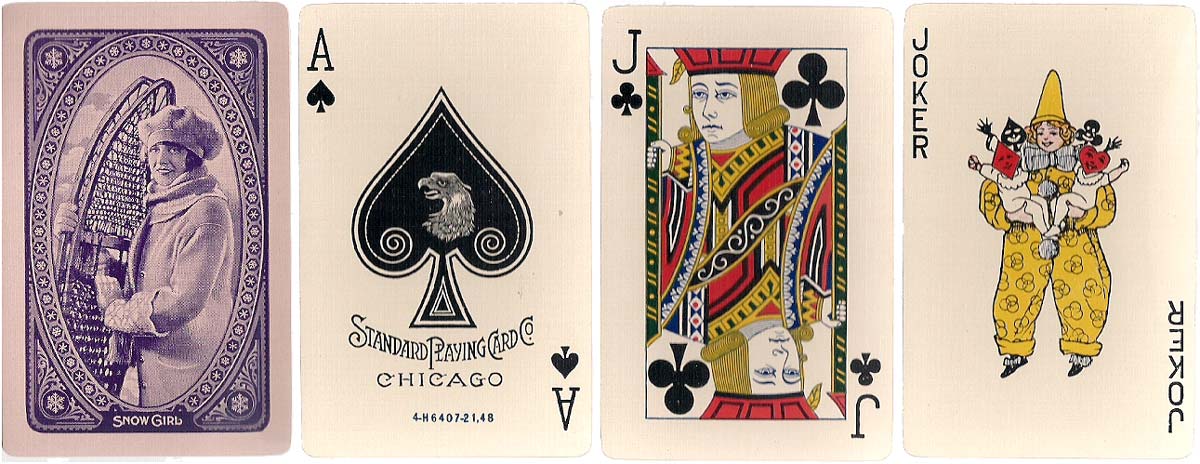
Above: “Snow Girl” made by the Standard Playing Card Company, 1926.
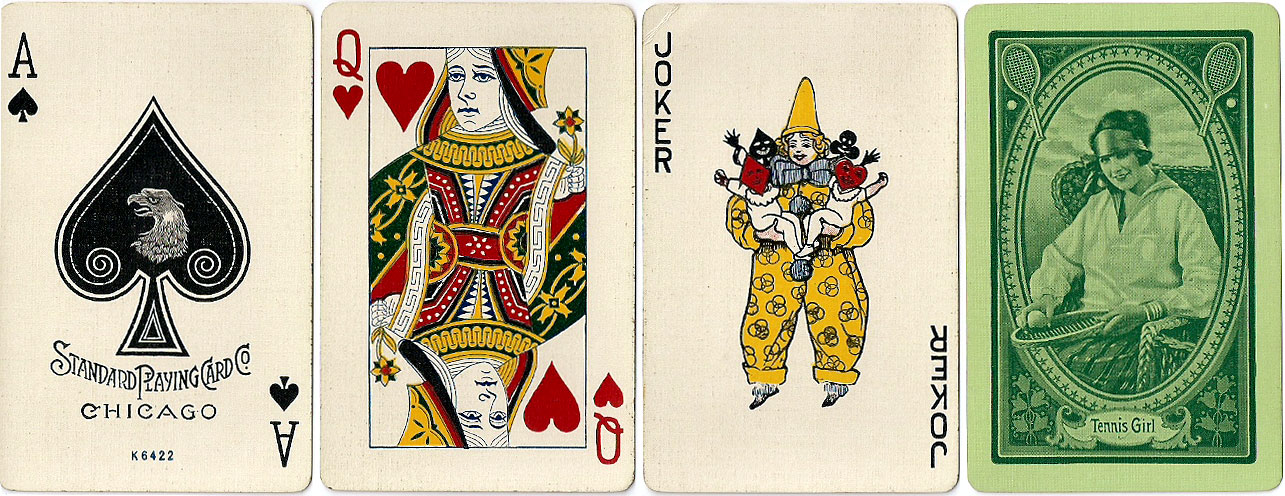
Above: 'Tennis Girl - Society' playing cards and box, c.1928. Images courtesy Rod Starling. See also: Golf Belle c 1925-6→
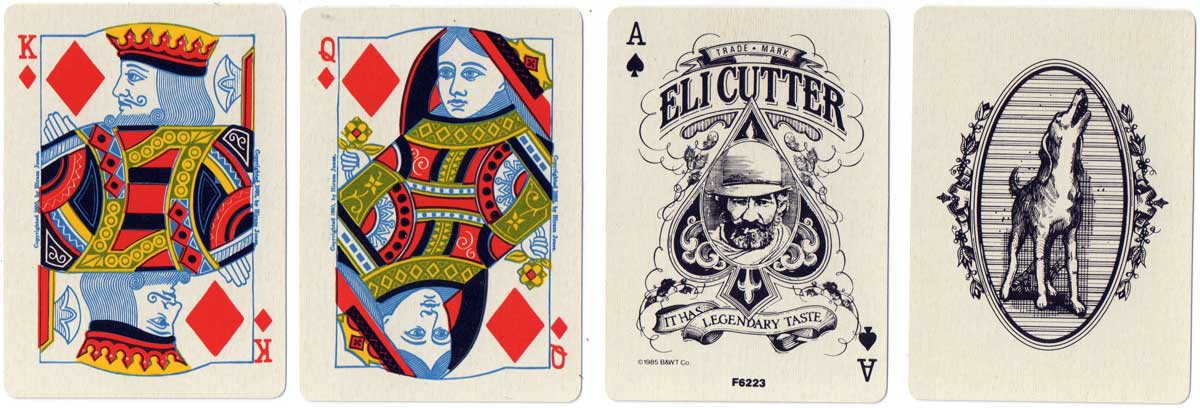
Above: a revival of the old Standard/Bay State courts in a pack advertising ''Eli Cutter' cigarettes published by USPCC, 1985. The court have the inscription "Copyright 1895 Hiram Jones" down the sides. Images courtesy Ken Lodge.
REFERENCES
Dawson, Tom & Judy: The Hochman Encyclopedia of American Playing Cards, U.S. Games Systems Inc., 2000
Lodge, Ken: The Standard English Pattern (second revised and enlarged edition), Bungay, Suffolk, 2010
All images on this page are from the collections of Ken Lodge and Rod Starling.

By Rod Starling (1936-2023)
United States • Member since January 09, 2013
Rod Starling was one of the founding members of the 52 Plus Joker card collectors club. He authored many articles for the club's quarterly newsletter, Clear the Decks. His collection encompasses both foreign and American decks. Rod also authored a book titled The Art and Pleasures of Playing Cards.

Activity for Standard Playing Card Company
Sign in to comment or save this article.

Related Articles
Pendleton playing cards
Pendleton playing cards inspired by indigenous American artwork, USA, 2019.
A Look Back with Hope for the Future
“A Look Back with Hope for the Future” by Rod Starling
The Traveler’s Companion
The “Traveler’s Companion”, Union Playing Card Co., New York, c.1886.
Card Fabrique Company
Card Fabrique Company had connections with several other manufacturers and their complete history is...
American Bank Note Company
The American Bank Note Company was a long-established firm producing national currency, finely engra...
Perfection Playing Card Co.
Tip-Top No.350 playing cards manufactured by Perfection Playing Card Company, Philadelphia, c.1887
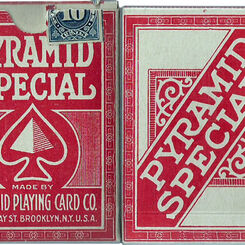
Pyramid P.C.C.
The company introduced a number of standard brands until it was absorbed into U.S.P.C.C. and its aff...
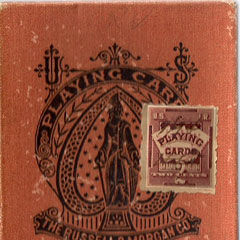
Cabinet No.707
Russell & Morgan's “Cabinet No.707” brand was first introduced in 1888.
Navy No.303
The second edition of 1883 has slightly larger indices and a more simplified Ace of Spades showing t...
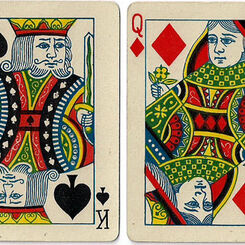
Kalamazoo Playing Card Co
This firm commenced producing playing cards with the name Kalamazoo Paper Box & Card Co in 1903.
Superior Steamboats No.9
This deck was of slightly superior quality than it's predecessor “National Steamboats No.9” and is e...
Tigers No.101
In 1881 Russell, Morgan & Company commenced playing card production by issuing six grades of cards w...
Tales from the Stage
"Tales from the Stage" - an article about theatrical playing cards by Rod Starling
Stage Playing Cards, 1908
This beautiful deck features an oval half-tone photo of a theatre star on each card, many of them le...
De Luxe No.142
A wide size version of De Luxe No.142 had been published in c.1920, with a similar Ace of Spades and...
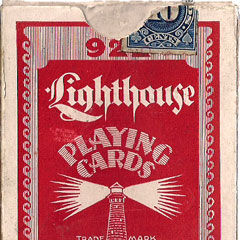
Lighthouse No.922
“Lighthouse No.922” playing cards were introduced in c.1920.
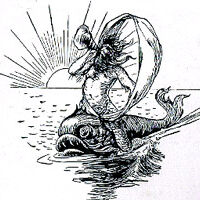
Triton No.42
There have been at least three different versions of the Triton deck, with different Jokers, differe...
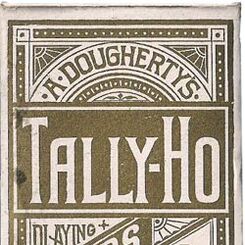
Tally-Ho
The earliest Ace of Spades had the Centre Street address and the Jolly Joker was used until the “Tal...
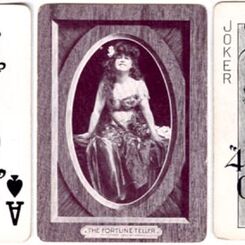
Smart Set 400
The “Smart Set 400” brand with named backs was introduced in c.1906 by the Kalamazoo Playing Card Co...

Norwood #85, c.1909
The deck features a colourful Ace of Spades and Joker, decorated Aces, unique courts and two beautif...
Most Popular
Our top articles from the past 60 days