


Malta
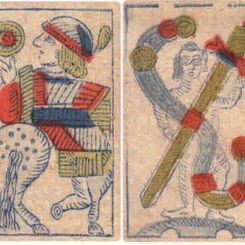
The so-called ‘Dragon Cards’, with winged monsters on the four Aces, are an enigmatic aspect of early playing card history.
Maltese ‘Dragon Cards’
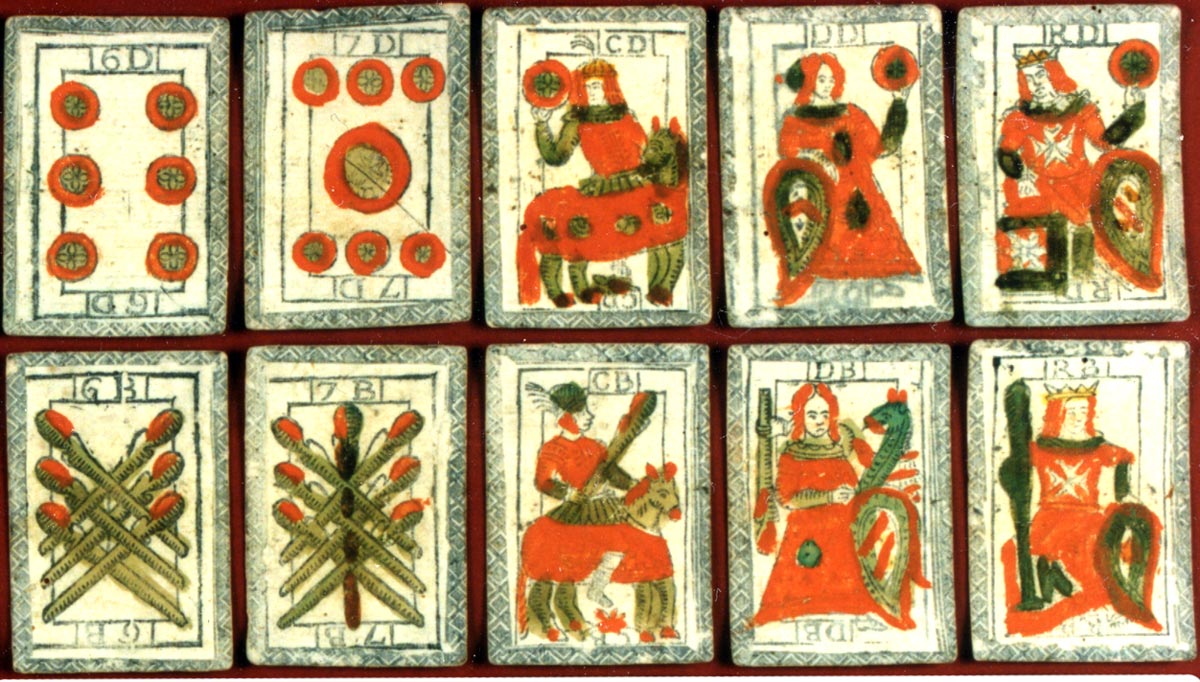
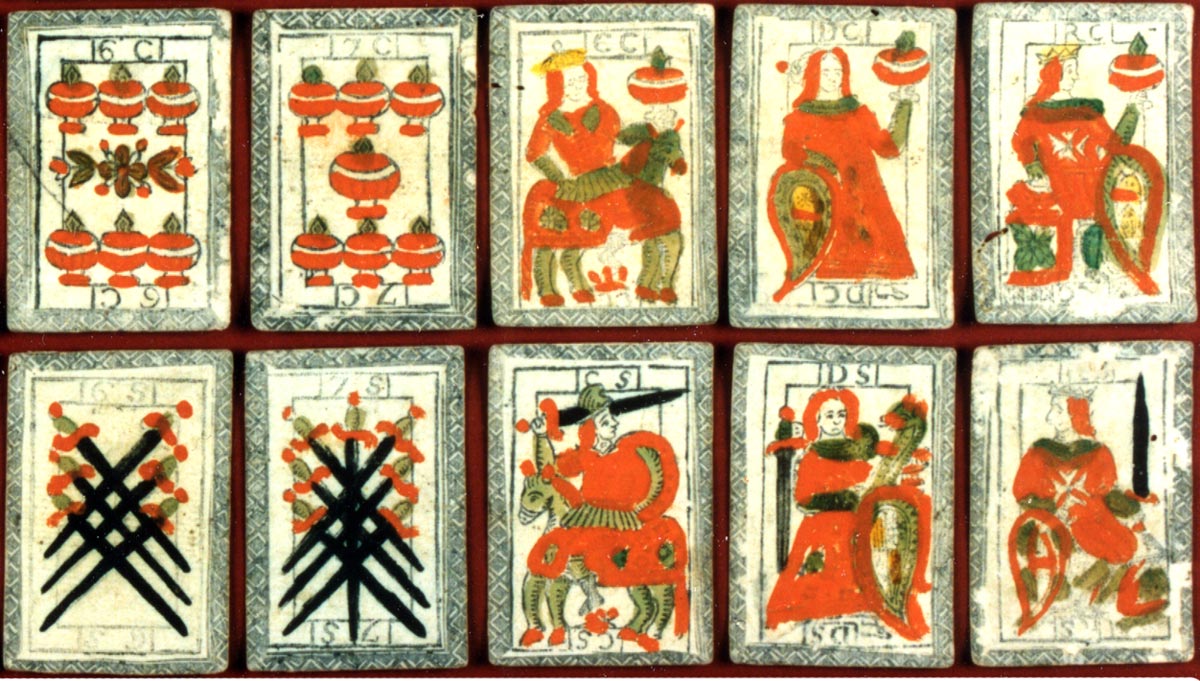
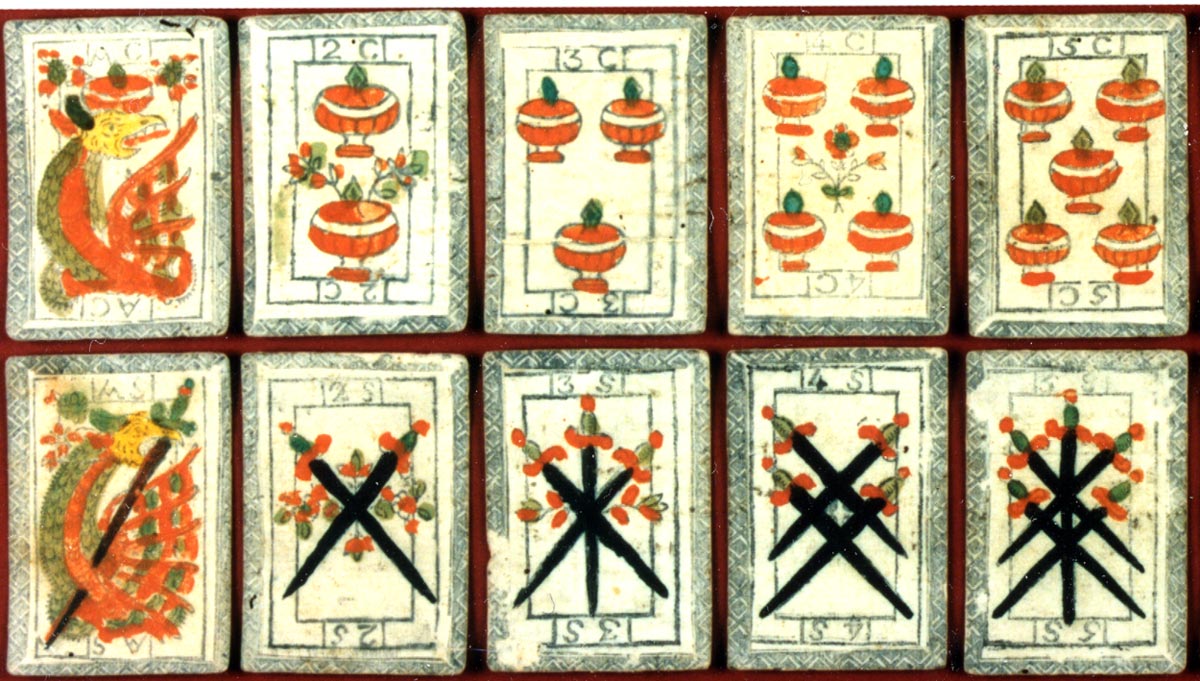
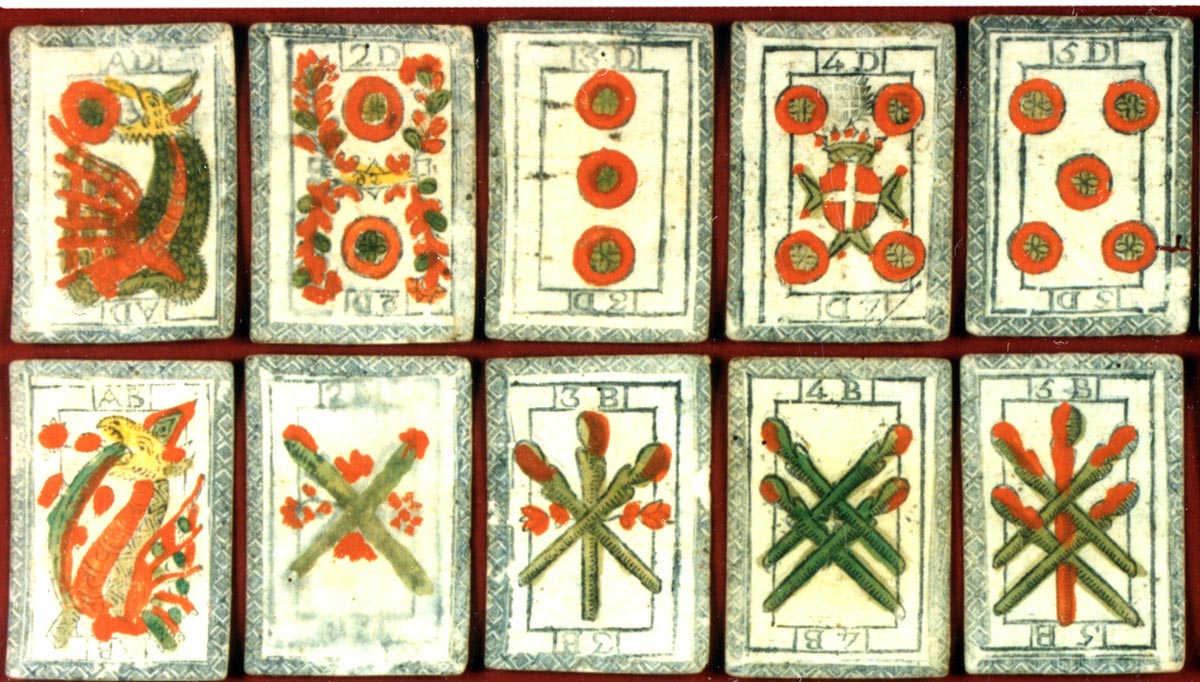
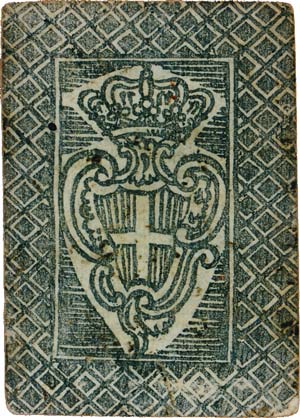
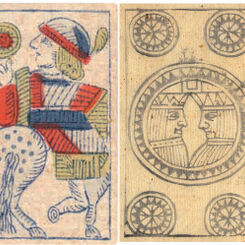
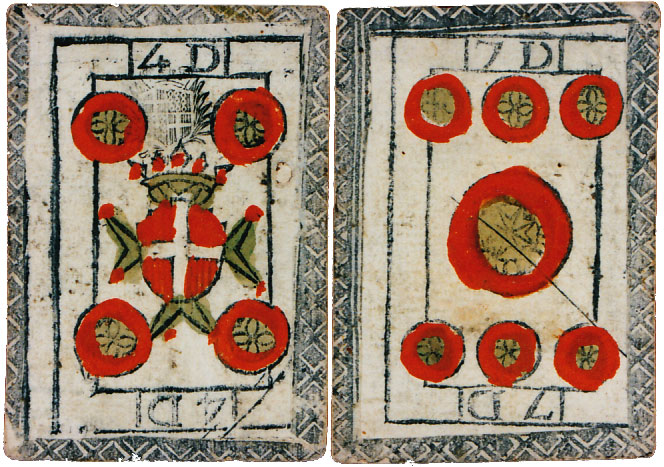
Above: a unique, complete set of 40 playing cards printed during the reign of Grandmaster de Rohan (1775-1797), stencil-coloured in yellow, red, then green. The four Kings are seated on thrones and have Maltese crosses of the Order of St John on their breasts. The Four of Coins is stamped with the coat-of-arms of the grandmaster. The verso of the cards shows the Order's escutcheon. The cards were made into pasteboard and the back paper is folded round to form a border around the front. Cards measure 85x60mm.
The so-called ‘Dragon Cards’, with winged monsters on the four Aces, are a colourful and somewhat enigmatic aspect of early playing card history. The earliest known examples are Spanish from about 1550 and the latest surviving descendents can be seen in Japanese mekuri cards today. At various times cards of this type have appeared in Italy, Portugal, Malta and elsewhere in Europe, and their influence has been noted in cards from Japan, Brazil, India and Indonesia. Cards of this type were also discovered in archaeological digs in Peru, having been taken there by Spaniards.
The inscriptions at the tops and bottoms of the cards shown here suggest an Italian model (rather than Spanish) and the cards closely resemble late seventeenth century Italian cards known as ‘Infirrera’ cards, after the name of the maker. Earlier examples of similar cards also found in Malta suggest that they were being printed and assembled in Malta since the seventeenth century. The Kings have Maltese crosses of the Order of St John on their breasts which is curious since any form of gambling was not permitted in the Order. However, the Four of Coins is stamped with the coat-of-arms of the grandmaster which could indicate his approval.
REFERENCES
Denning, Trevor & Schirò, Joseph: ‘Maltese Dragon Cards’ in The Playing-Card, journal of the International Playing-Card Society, Volume 30 No.1, July/Aug 2001, pp.33-42.
Schirò, Joseph & Lupi, Theresa Zammit: ‘The conservation and preservation of rare ‘dragon’ playing cards’ in The Paper Conservator, Volume 27, Issue 1, 2003.
See also: Francisco Flores • Cards discovered in Peru • Early Spanish/Portuguese Cards • Dragon Cards from Portugal • Belgian 'Dragon' Cards (Mesmaekers Frères) • Belgian 'Dragon' Cards (Léonard Biermans) • Tensho Mekuri • Japanese Akahachi • Japanese Kurofuda • Japanese Kabufuda.

By Simon Wintle
Spain • Member since February 01, 1996
I am the founder of The World of Playing Cards (est. 1996), a website dedicated to the history, artistry and cultural significance of playing cards and tarot. Over the years I have researched various areas of the subject, acquired and traded collections and contributed as a committee member of the IPCS and graphics editor of The Playing-Card journal. Having lived in Chile, England, Wales, and now Spain, these experiences have shaped my work and passion for playing cards. Amongst my achievements is producing a limited-edition replica of a 17th-century English pack using woodblocks and stencils—a labour of love. Today, the World of Playing Cards is a global collaborative project, with my son Adam serving as the technical driving force behind its development. His innovative efforts have helped shape the site into the thriving hub it is today. You are warmly invited to become a contributor and share your enthusiasm.

Activity for Malta
Sign in to comment or save this article.

Related Articles
Early German playing cards
Some early examples of popular German playing cards from the XV and XVI centuries.
Toledo, 1584
Archaic Spanish-suited deck with 48 cards made in Toledo in 1584.
Navarra Pattern, 1682
Navarra pattern produced for the Pamplona General Hospital Monopoly in 1682.
Navarra Pattern
Navarra Pattern produced for the Pamplona General Hospital Monopoly.
Navarra Pattern, 1793
Navarra pattern by an unknown cardmaker with initials I. I., 1793.
Archaeological find: old playing cards under the floorboards
The municipal archaeological service in Dordrecht (Netherlands) recently found some antique playing ...
Suicide King
The King of Hearts, holding a sword behind his head, is sometimes nicknamed the “Suicide King”. He c...
Lyon Pattern type iii
This pattern was used in various parts of eastern France but was ultimately replaced by the official...
1: Playing Cards and their History: An Introduction and some links to other sites
What was considered the first mention of playing cards in England is in 1463 when Edward I banned th...
Netherlands
Playing cards have been known in the Low Countries since the 14th century
Navarra, XVII Century
Facsimile of 17th century Spanish-suited playing cards produced by Erregeak, Sormen S.A., Vitoria-Ga...
Agostino Bergallo
Agostino Bergallo Spanish pattern made for South American countries
History of Blackjack
Over the years the origin of Blackjack, like many other games, has eluded researchers for a long tim...
Paris Pattern
The Paris pattern was established as such around the middle of the seventeenth century (based, perha...
Mamluk Playing Cards
Nã'ib, the game of lieutenants... these cards are amongst the earliest Arabic playing cards ext...
XV Century Italian Playing Cards
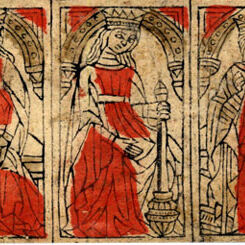
Cards from a pack of an early form of north Italian playing cards, with the swords back-to-back and ...
Sicilian playing cards by Antonio Monasta
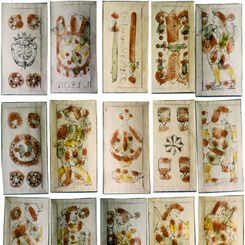
"Il Leon" Sicilian playing cards, 40-card pack based on Spanish designs, made in Sicily by Antonio M...
Italian Playing Cards
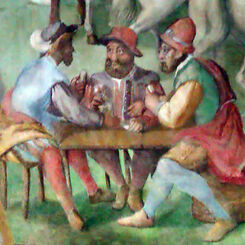
The first reliable evidence that playing cards were being used in Italy is from 1376, when a game ca...
The History of Playing Cards
Playing cards appear in European records in the late 14th century, but their earlier history lies fu...
History of English Playing Cards & Games
The History of English Playing Cards dates probably from the mid 15th century
Most Popular
Our top articles from the past 60 days


Alannyë Daeris
19 November 2025, 09:47SavedSaved this article to Decks Históricos