


Pack of Thieves?
“Pack of Thieves? 52 Port Arthur Lives” playing cards documenting life in an Australian penal settlement.
Port Arthur is a village and historic site in southern Tasmania, Australia. Between 1830 and 1877 it was a 19th-century penal settlement and is now an open-air museum. Once known as the inescapable prison, it is the best-preserved convict site in Australia and among the most significant convict era sites in the world.
In 1999, the Port Arthur Historic Site Management Authority (PAHSMA) published this extraordinary deck of cards titled “Pack of Thieves? 52 Port Arthur Lives.”
The pack has 52 cards with 2 Jokers, and features the art work of Tom Samek, a local artist from Tasmania. Each card depicts the artist’s renderings of a documented named individual inmate. Full biographical details are provided in the accompanying 127-page book by Hamish Maxwell-Stewart and Susan Hood, which charts the lives of the 52 prisoners who served time in the 1830s.
Port Arthur started as a timber station and expanded throughout the following decades with the establishment of ship building, smithing, shoemaking and timber and brick making. All this work is displayed on the cards, and also the convicts' non-work activities such as fishing (Jack of Spades), drinking and playing cards.
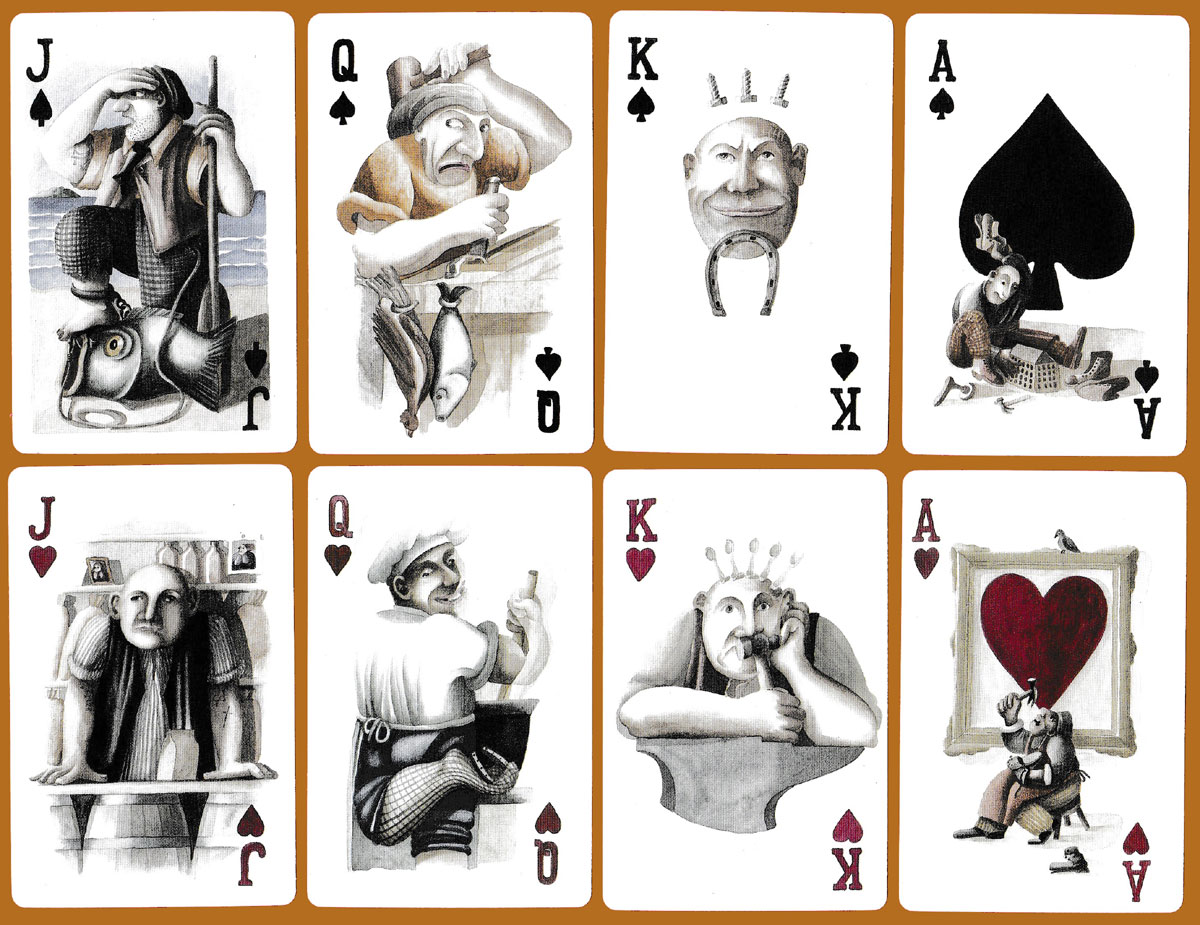
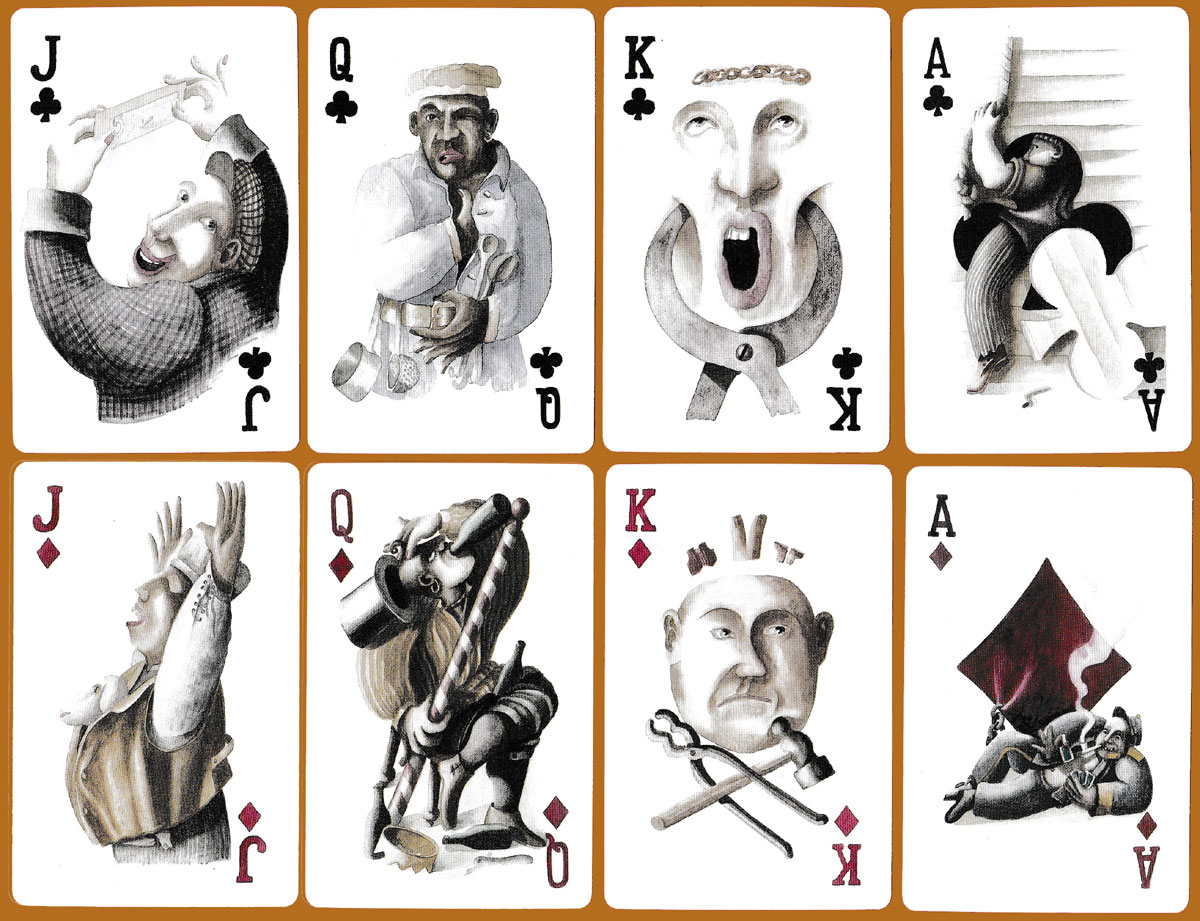
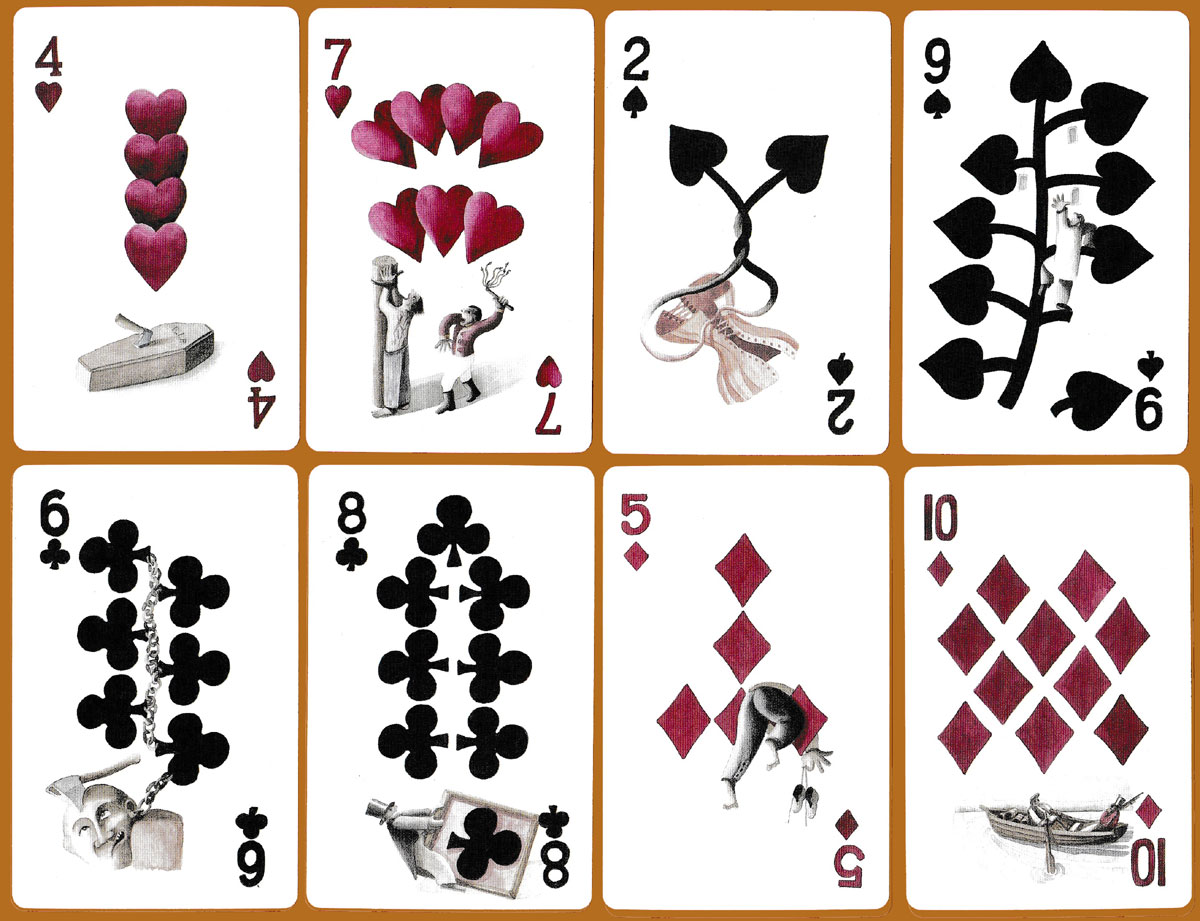
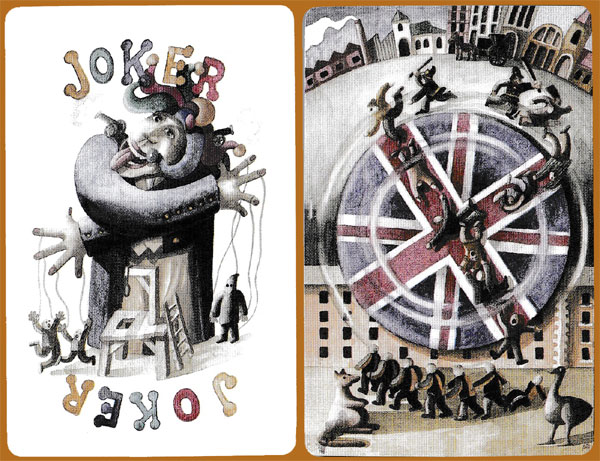
Above: “Pack of Thieves? 52 Port Arthur Lives” playing cards with artwork by Tom Samek published by the Port Arthur Historic Site Management Authority (PAHSMA), Australia, c. 1999.
The backs of the cards show a short history of the convicts’ life featuring the chase and capture by British Police, the chain gang and finally the prison, the kangaroo and emu images of Australian life after deportation and arrival in Tasmania. The pip cards are arranged in non-standard patterns, with each card having a different illustration integrated into the design.
For more information about the artist and the story of the pack creation see here►

By Peter Burnett
United Kingdom • Member since July 27, 2022
I graduated in Russian and East European Studies from Birmingham University in 1969. It was as an undergraduate in Moscow in 1968 that I stumbled upon my first 3 packs of “unusual” playing cards which fired my curiosity and thence my life-long interest. I began researching and collecting cards in the early 1970s, since when I’ve acquired over 3,330 packs of non-standard cards, mainly from North America, UK and Western Europe, and of course from Russia and the former communist countries.
Following my retirement from the Bodleian Library in Dec. 2007 I took up a new role as Head of Library Development at the International Network for the Availability of Scientific Publications (INASP) to support library development in low-income countries. This work necessitated regular training visits to many sub-Saharan African countries and also further afield, to Vietnam, Nepal and Bangladesh – all of which provided rich opportunities to further expand my playing card collection.
Since 2019 I’ve been working part-time in the Bodleian Library where I’ve been cataloguing the bequest of the late Donald Welsh, founder of the English Playing Card Society.

Activity for Pack of Thieves?
Sign in to comment or save this article.

Related Articles
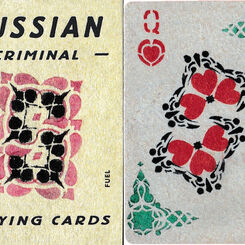
Russian criminal tattoos and playing cards
Russian criminal tattoos and playing cards, United Kingdom, 2018.
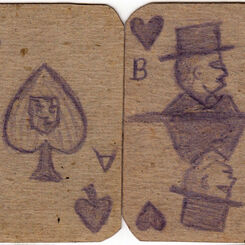
Hand made WW2 Prisoner of War Playing Cards
made by German soldiers held captive by US troops
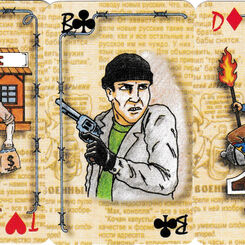
Kolotushki
Kolotushki playing cards designed by Vitalii Buslovskikh, Russia, 2000.
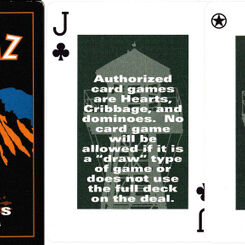
Alcatraz: Rules and Regulations Playing Cards
Rules and regulations that guided prison life in America’s most notorious prison.
Bone Playing Cards
My late mother found these miniature cards in a skip around 50 years ago.
Prisoners of War
Hand-made playing cards by French prisoners of war in Porchester Castle, Hampshire, c.1796.
Dienst Justitiële Inrichtingen
Playing cards published by the Dutch Prison Service, giving a look behind the gates of Judicial / Cu...
Most Popular
Our top articles from the past 60 days


