


44: Australia
Two early makers, Thomas and Sands & McDougall, used courts copied from those of the New York Consolidated Card Co.
For more detail about Australian card-makers, see elsewhere on the wopc site. For a full list of the Australian cards in my collection, click here►
There's a wealth of information there, so I thought I'd simply add illustrations of the cards themselves and say something about the models they were taken from.
What early 19th century Australian playing cards were like is anybody's guess, though any that there were were probably taken out from England for the most part. Van Genechten supplied cards for Australia, as can be seen from the rip-off Bancks-like AS of c.1880.
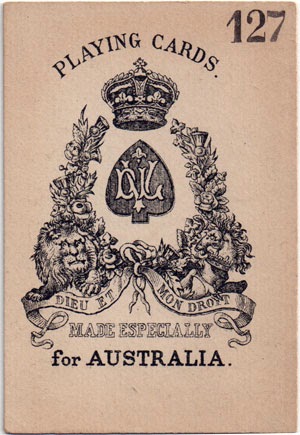
What the courts were like is difficult to say; some of the courts illustrated on page 25 would be possibles. Most of the early makers used copies of other makers' courts, mostly American or British. One of the earliest makers, Troedel & Co., used De La Rue's courts as a model in the mid-1880s.
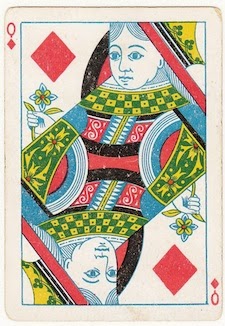
Above: Troedel copy of D6
Two early makers, Thomas and Sands & McDougall, used courts copied from those of the New York Consolidated Card Co.
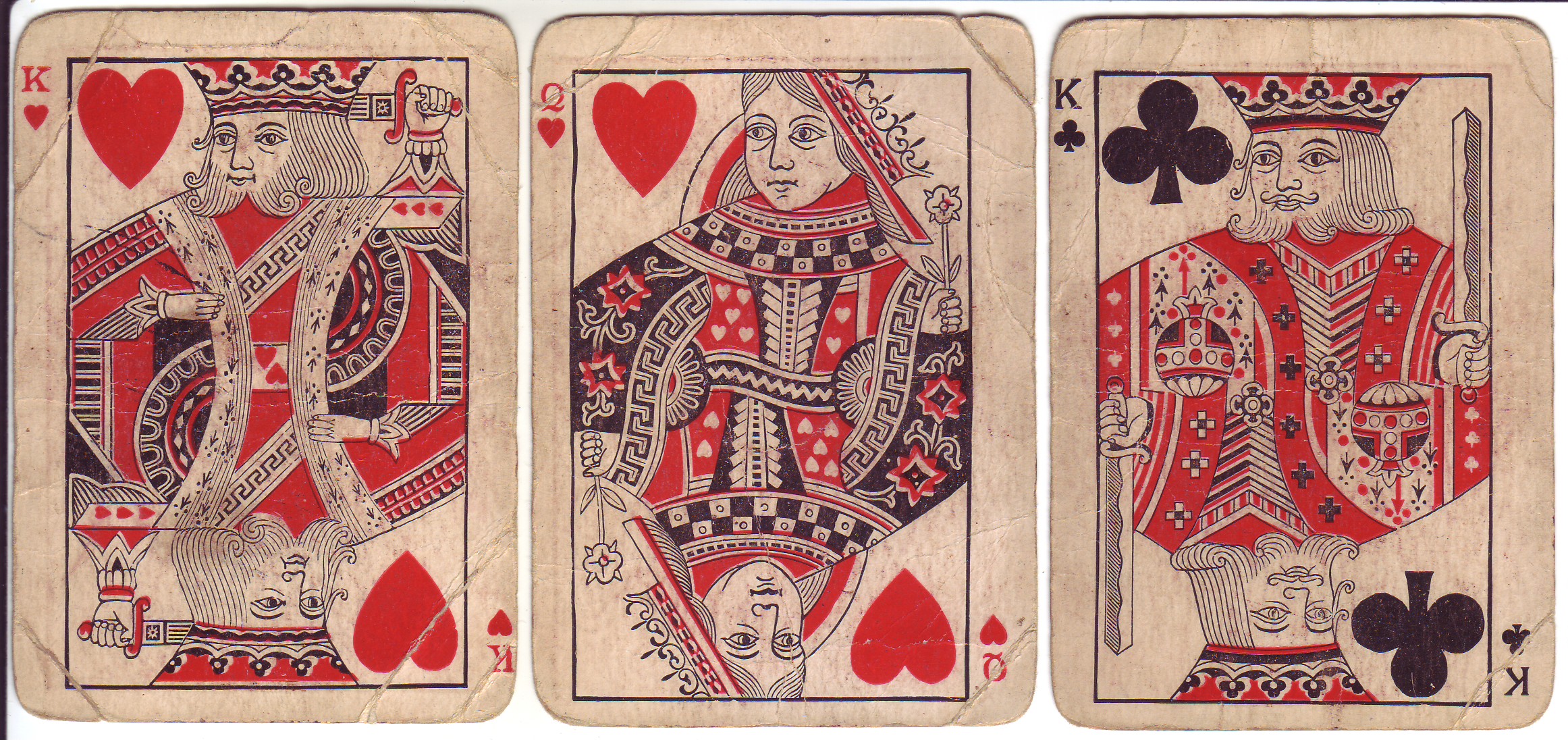
Above: Thomas, c.1890
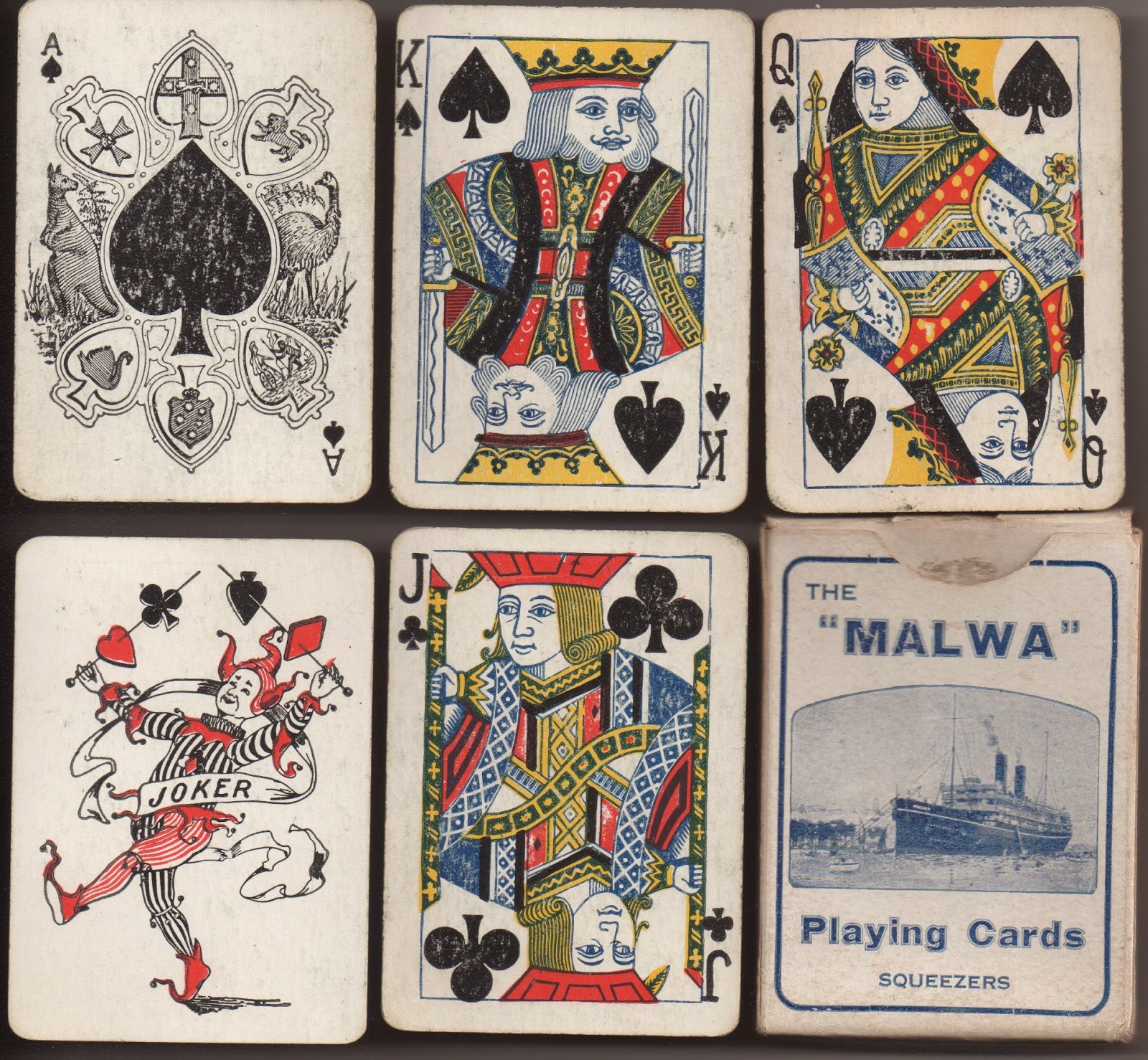
Above: Sands & McDougall, c.1908
The NYCCC originals are reproduced below.
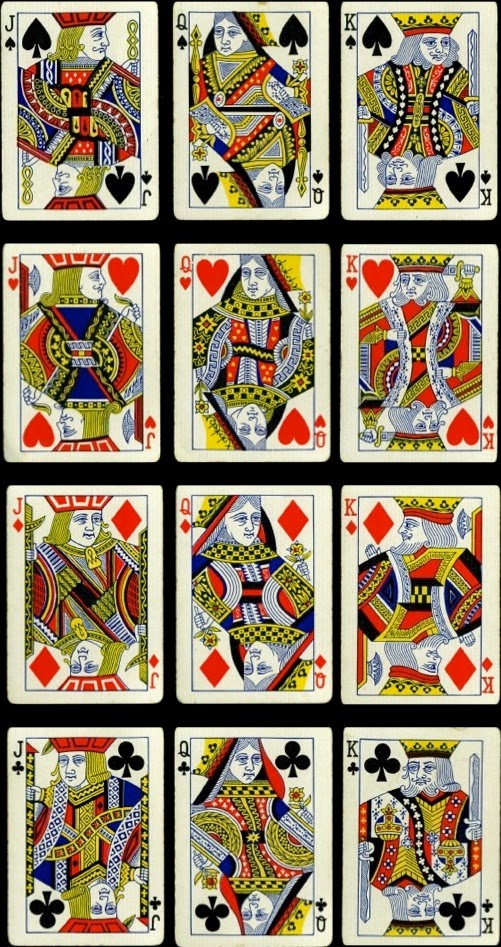
Above: NYCCC Squeezers, c.1885
Thomas became W. Detmold & Co. in c.1907 and changed their court design to one that resembles a USPCC wide, unturned design US3. These were produced in both two and four colours.
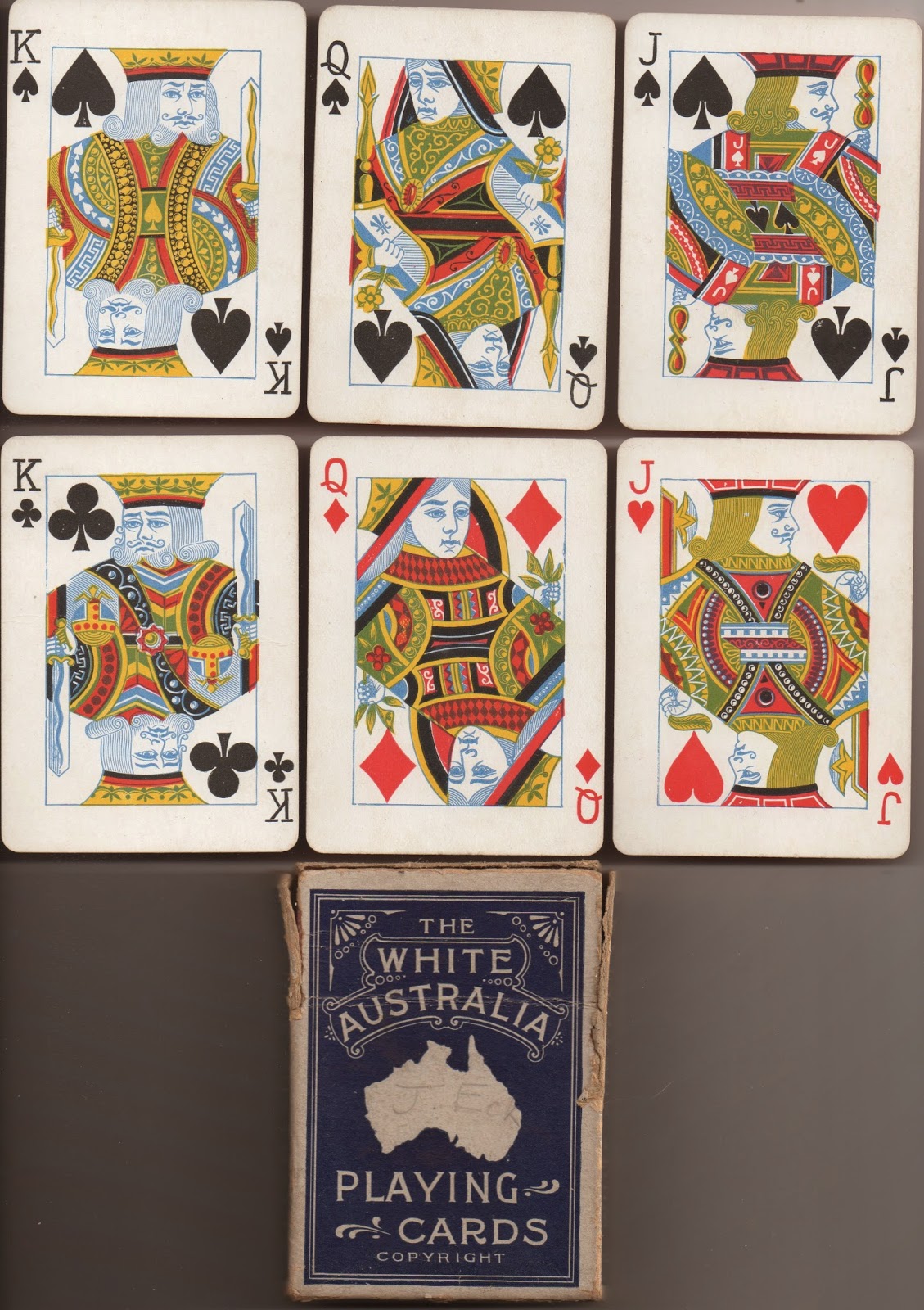
Above: The somewhat dubious sounding White Australia pack by Detmold.
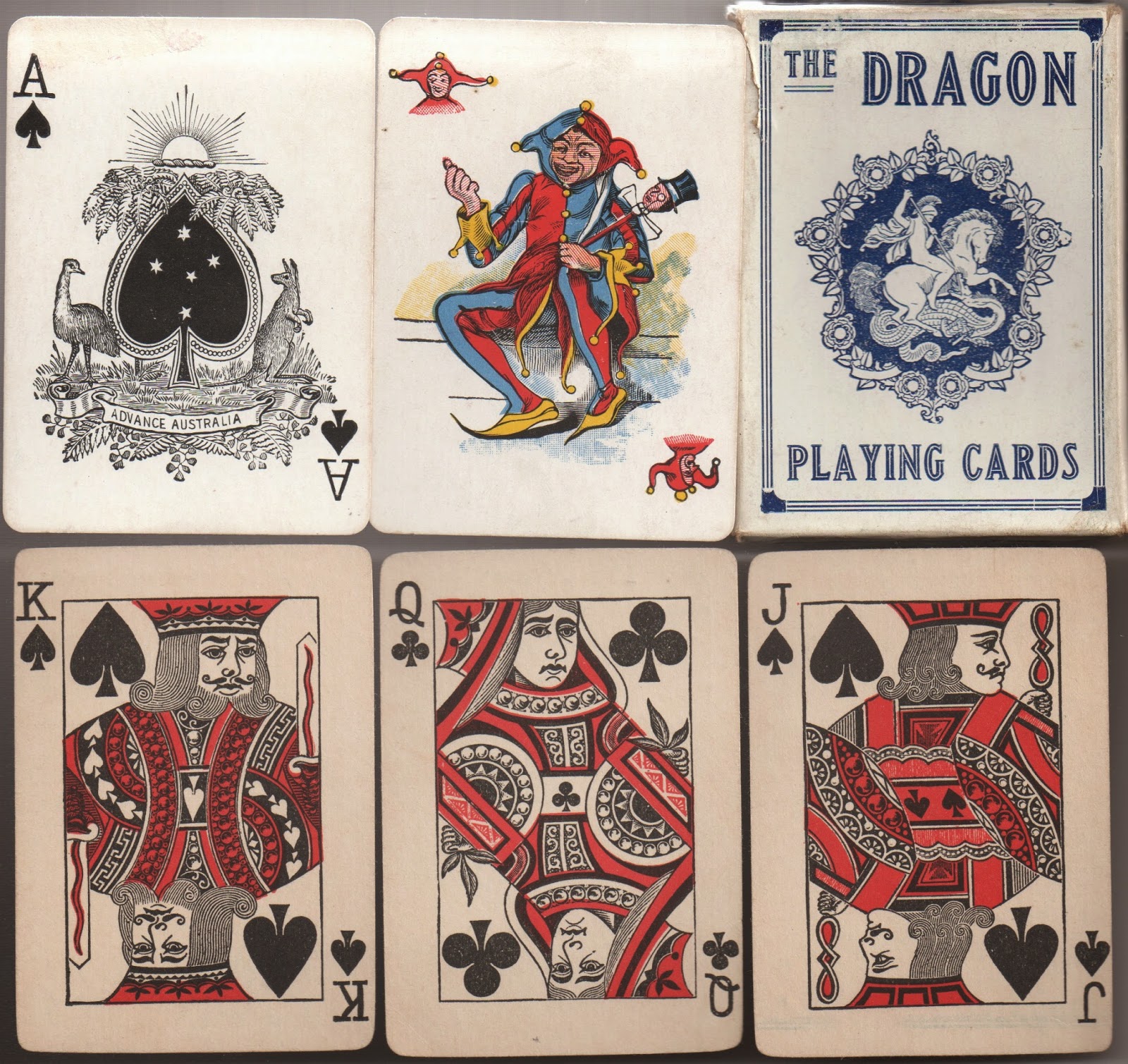
Above: Two-colour version
The original US3 is illustrated below.
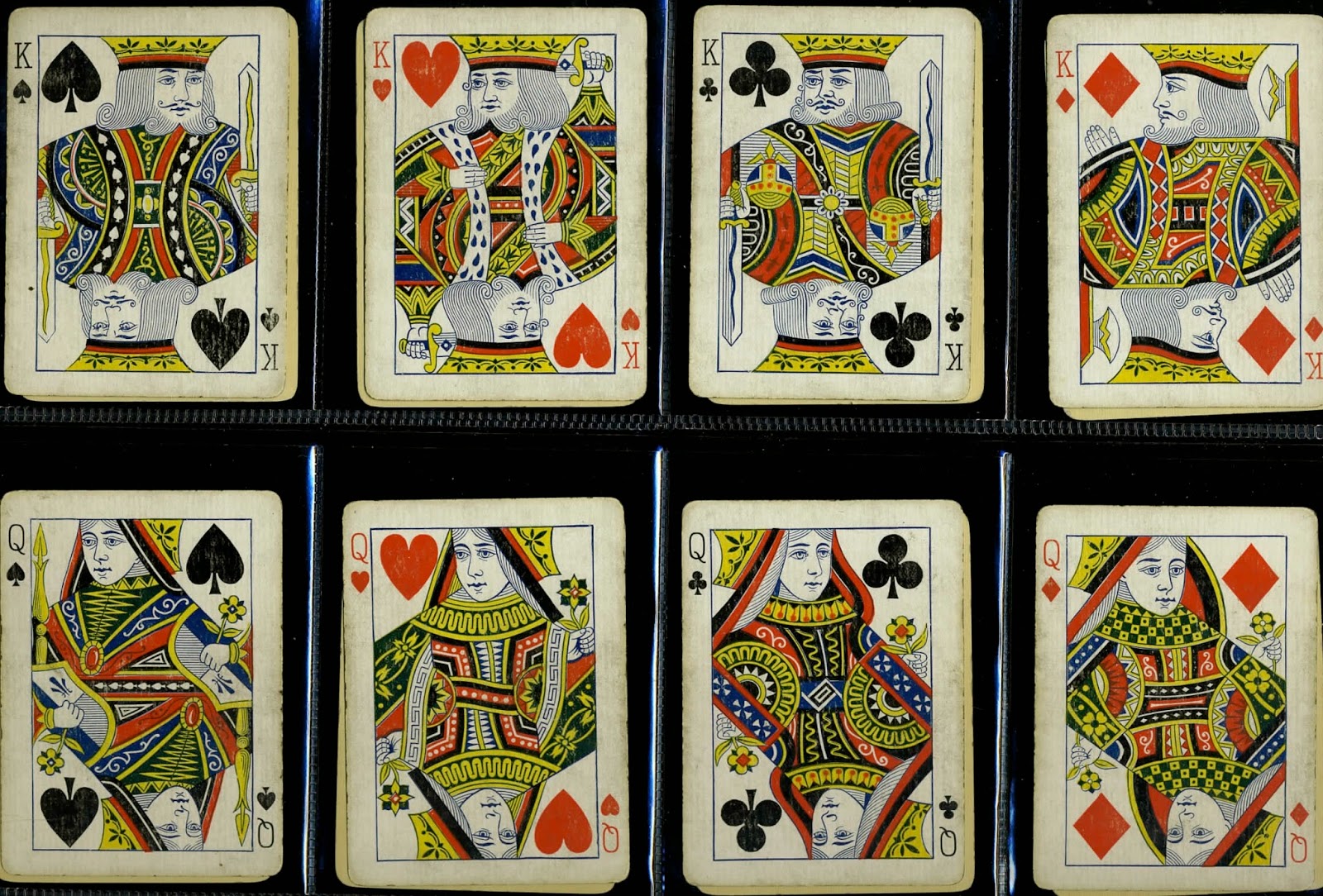
Above: USPCC US3, c.1900
There is also a bridge-width version of the Detmold courts.
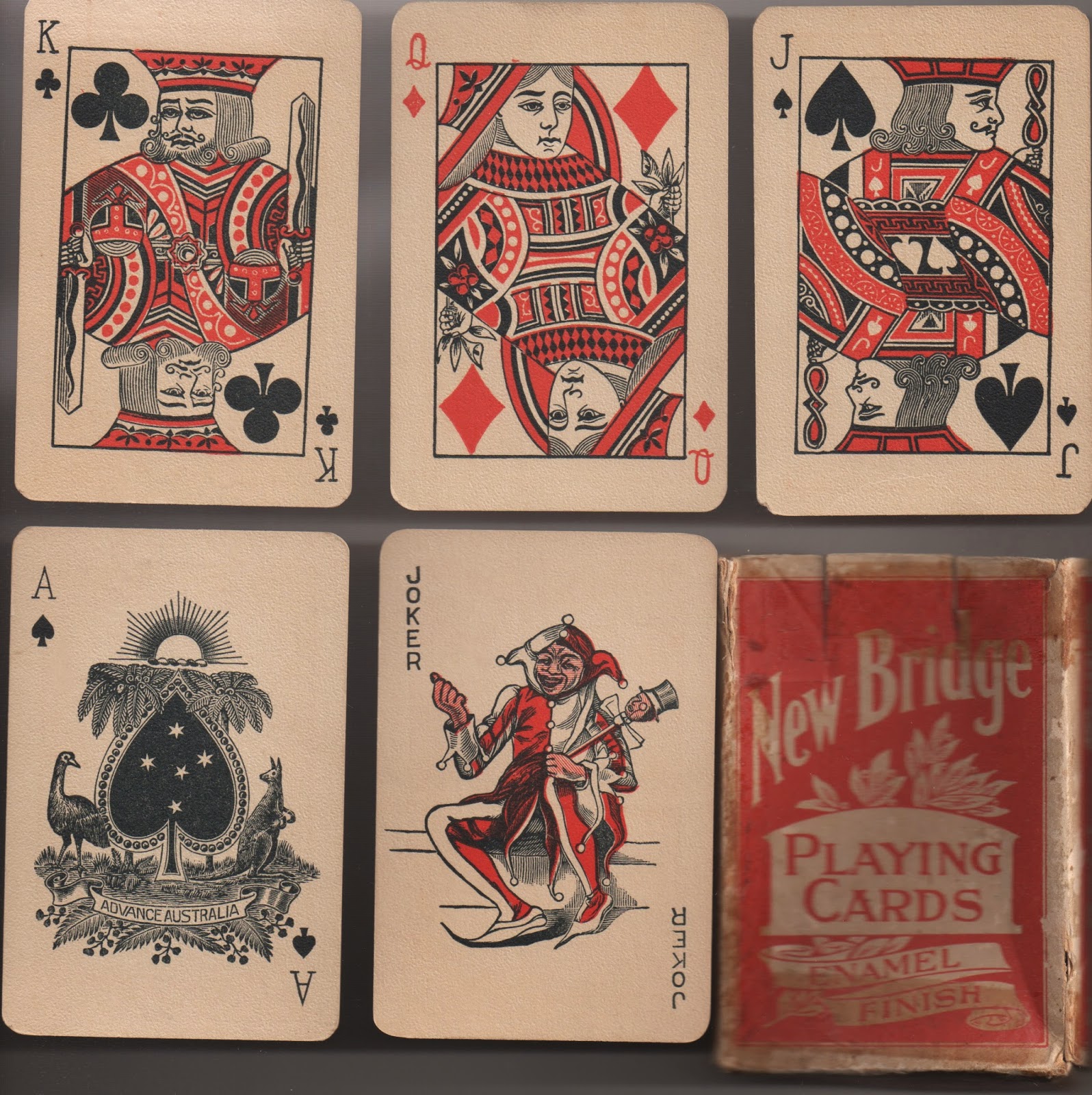
Above: c.1920
In c.1922 Detmold became Spicer & Detmold and the courts were revised with six courts turned. These are found in bridge packs in two and four colours.
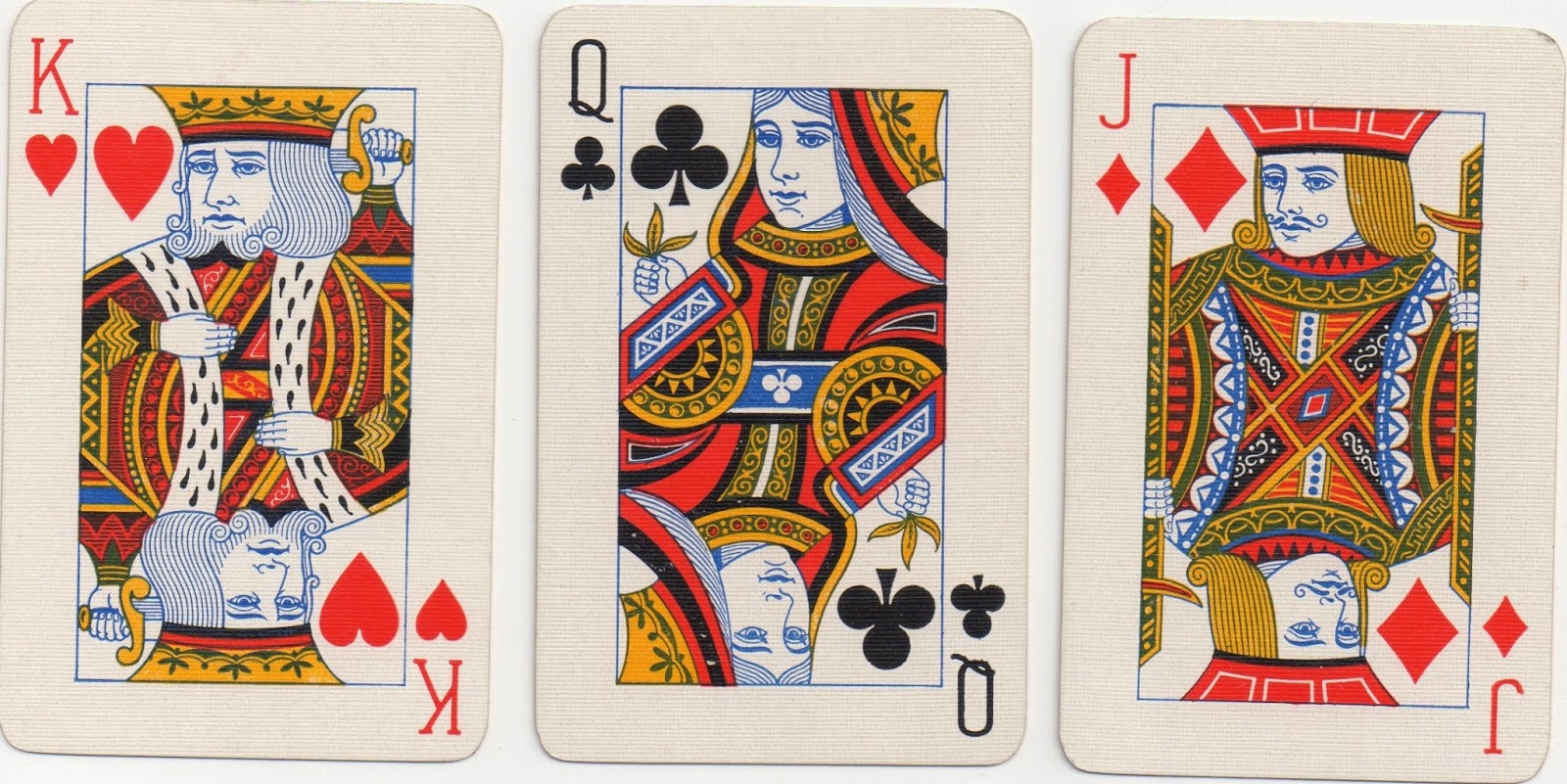
Above: Spicer & Detmold, c.1930
These courts were used up until the end of Spicer's as a card-maker, surviving a series of take-overs and changes.
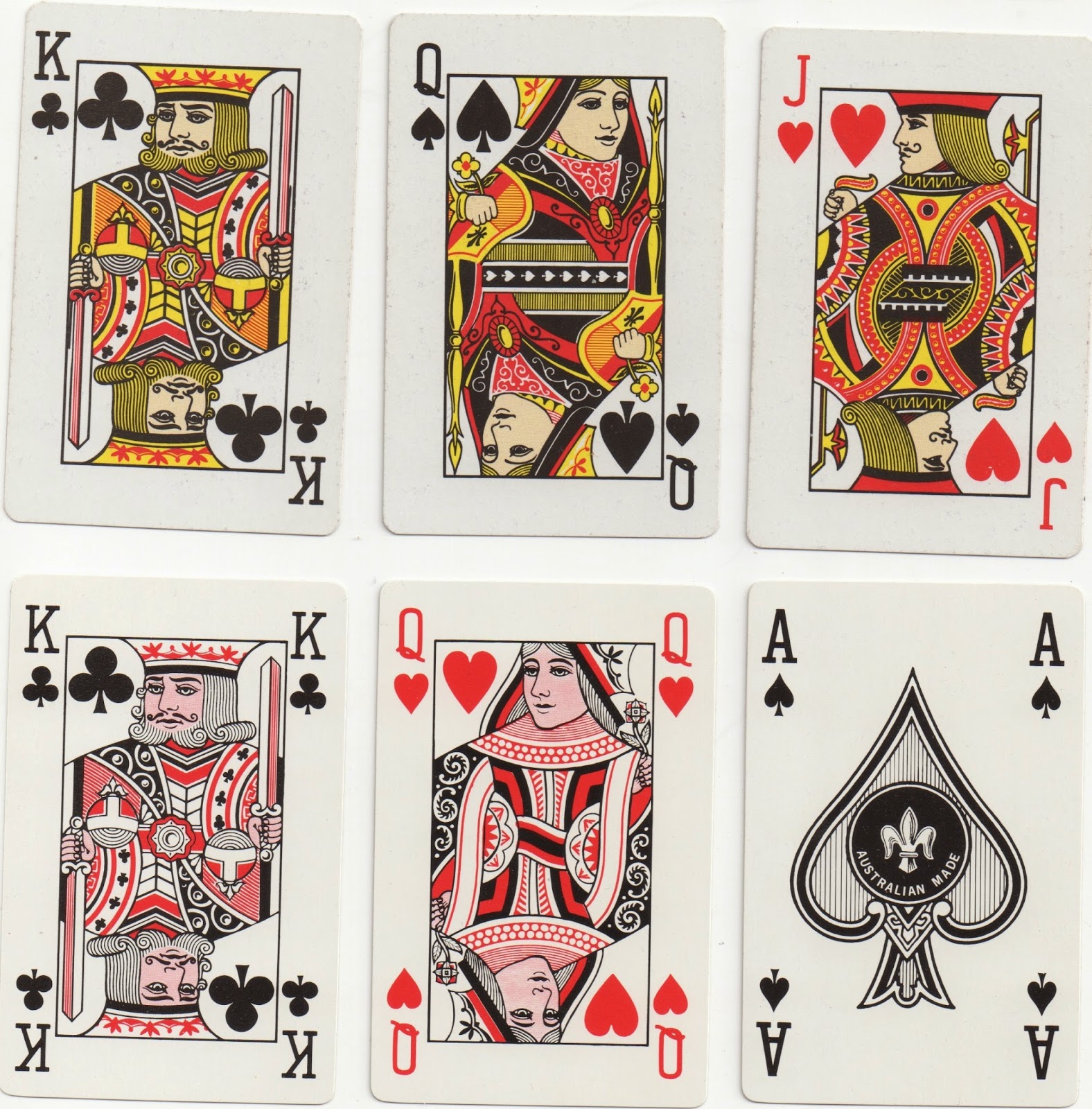
Above: Later versions in three and two colours with the Reed's AS, 1980s
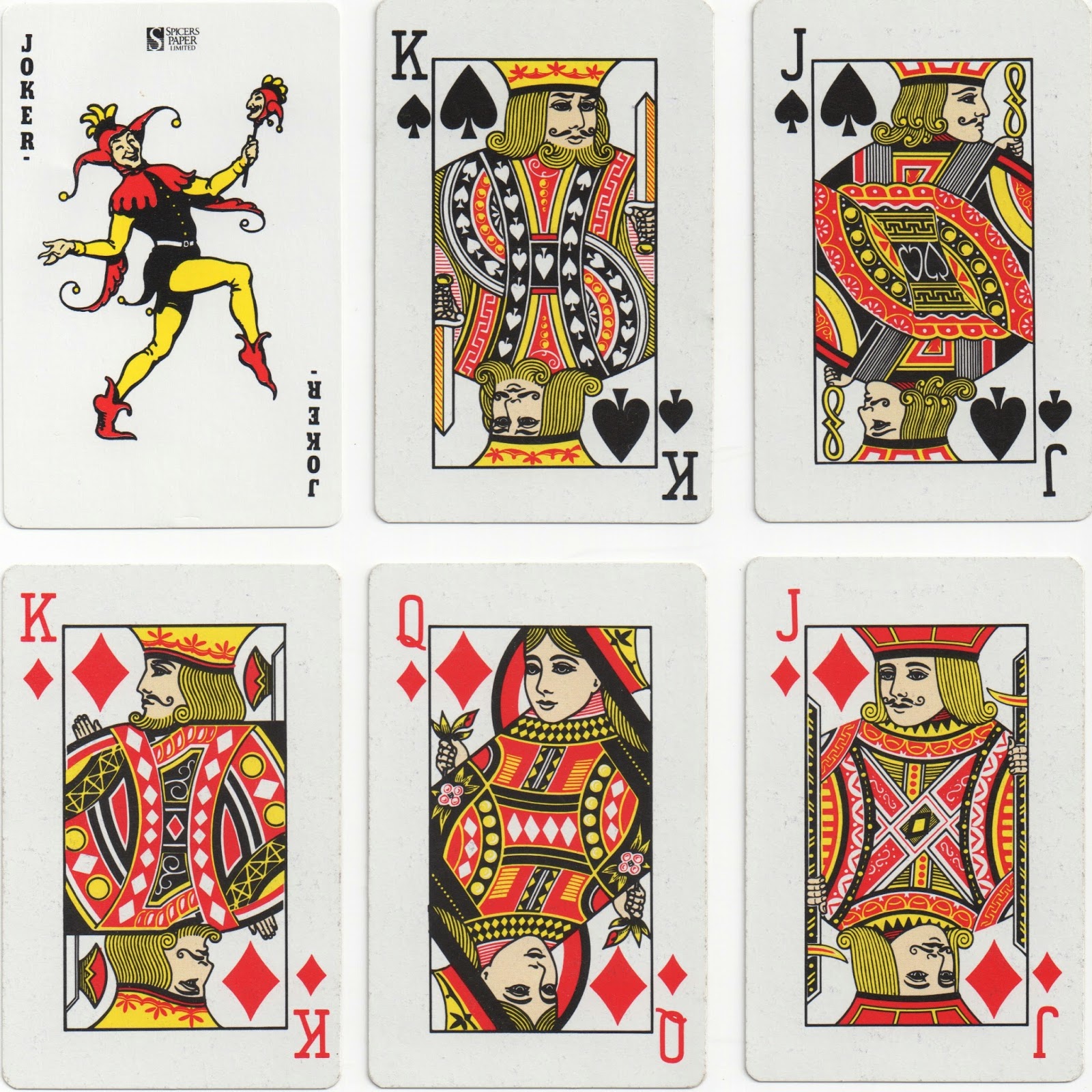
Above: With Spicer's Paper on the joker, c.1990
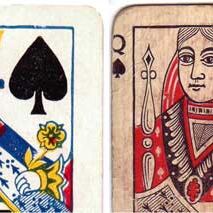
Sands & McDougall used a design that was idiosyncratic after it stopped using the ex-US6 design shown above.
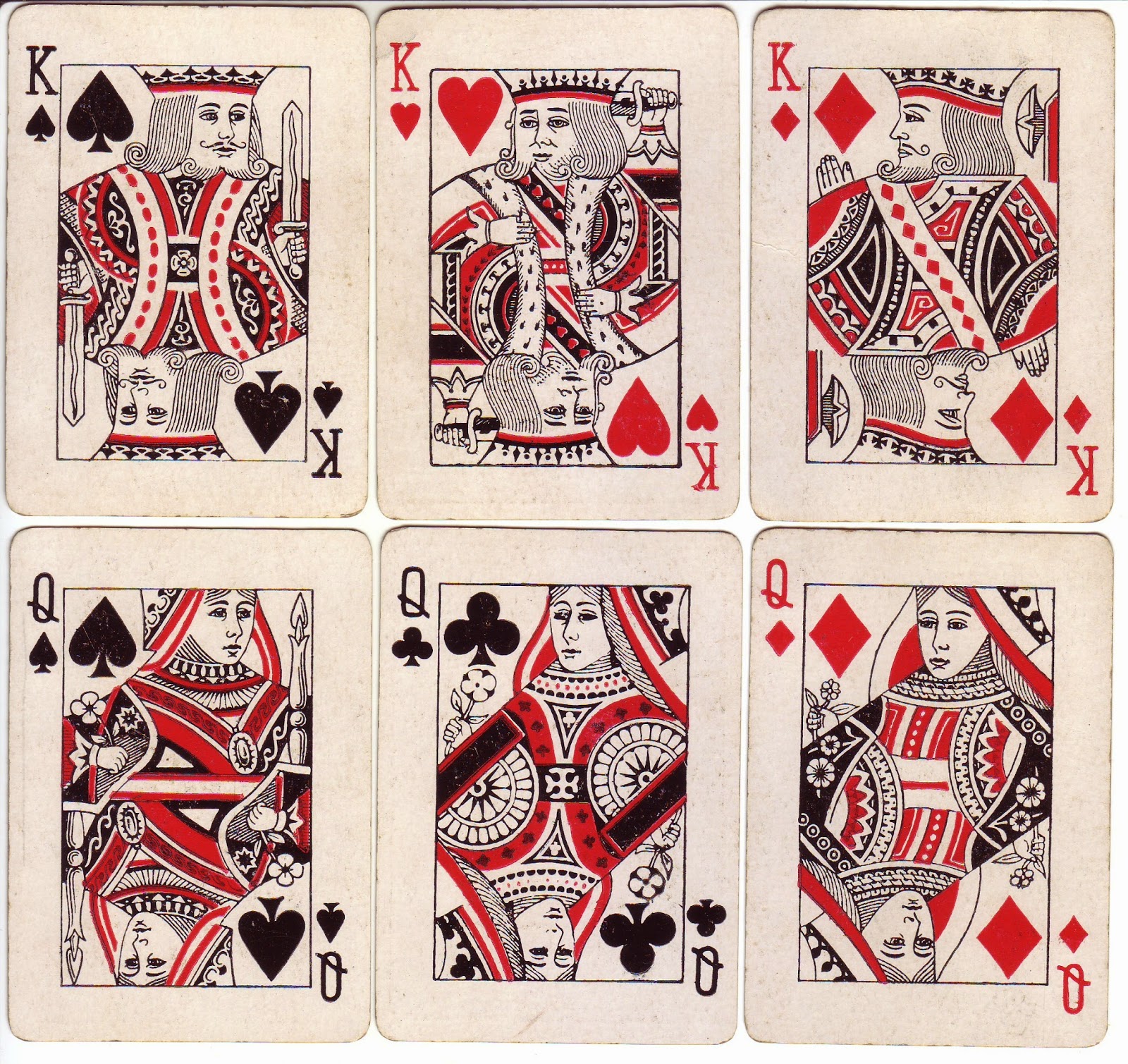
Above: Sands & McDougall, c.1910-30 (thanks to John Daniels for the images)
The courts changed again with the introduction of bridge-size cards in the 1930s. Interestingly, the design is similar to that of the Canadian PCCo., US2.1.
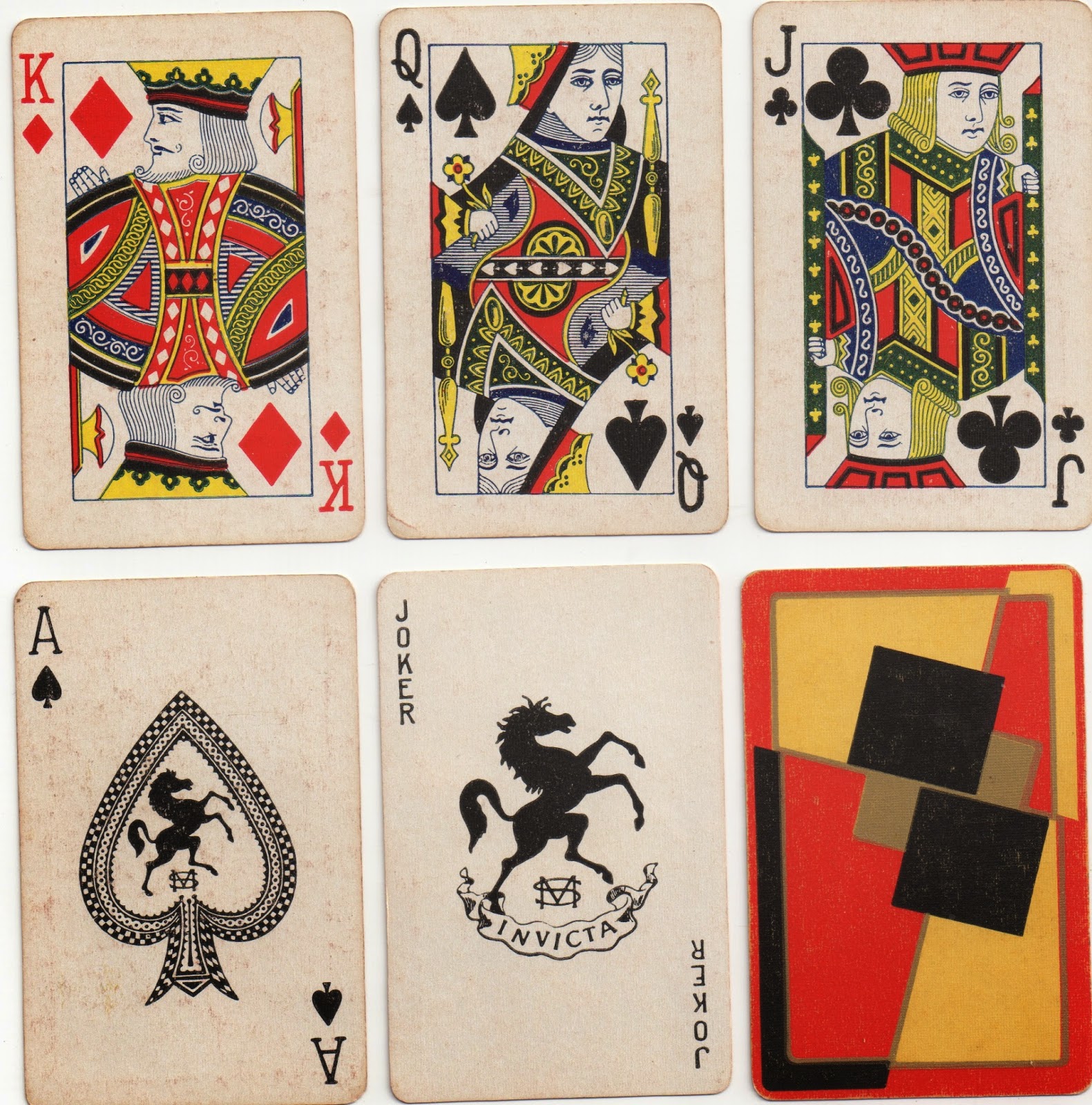
Above: c.1935
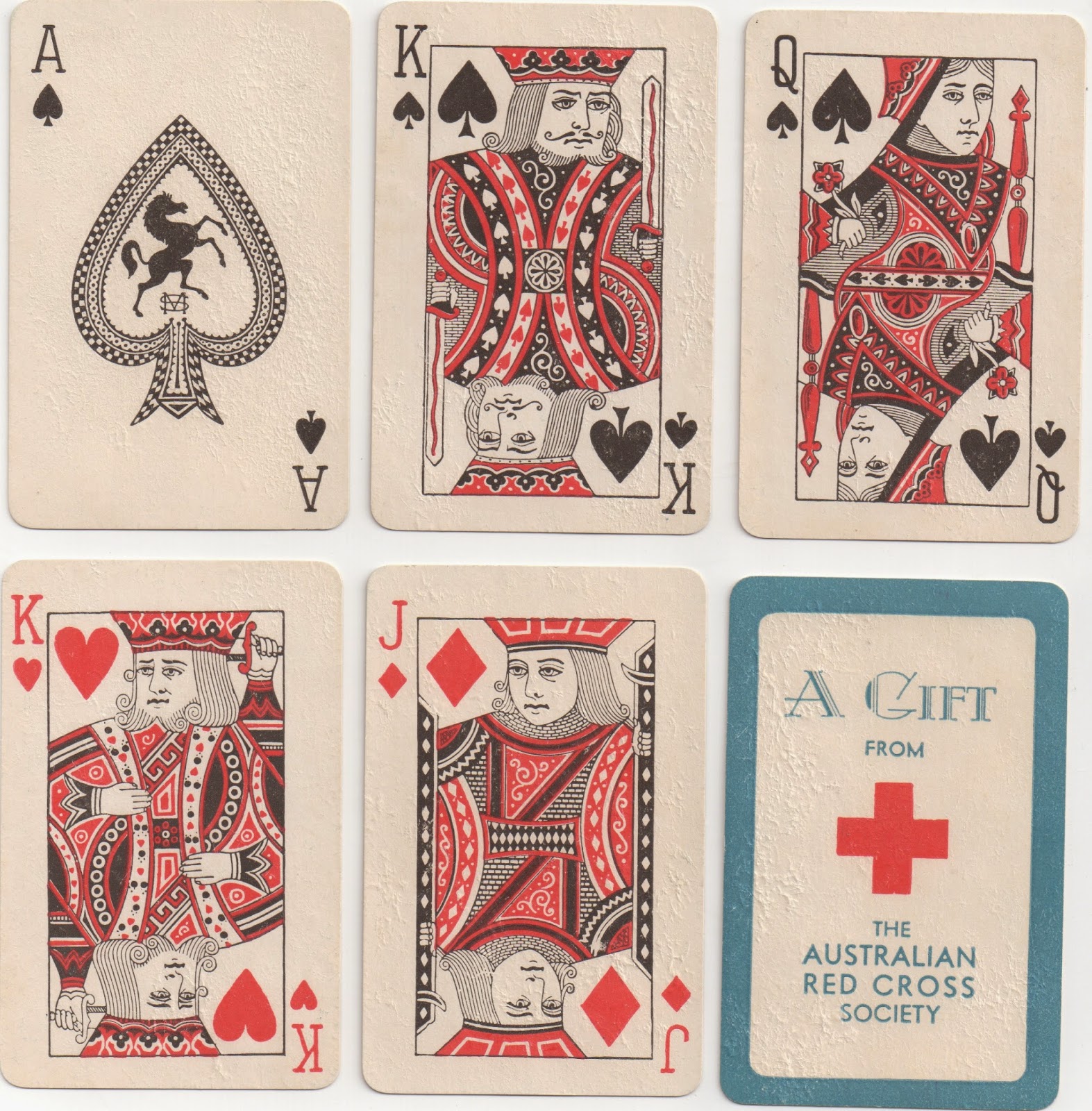
Above: c.1945
The original US2.1 courts are illustrated below.
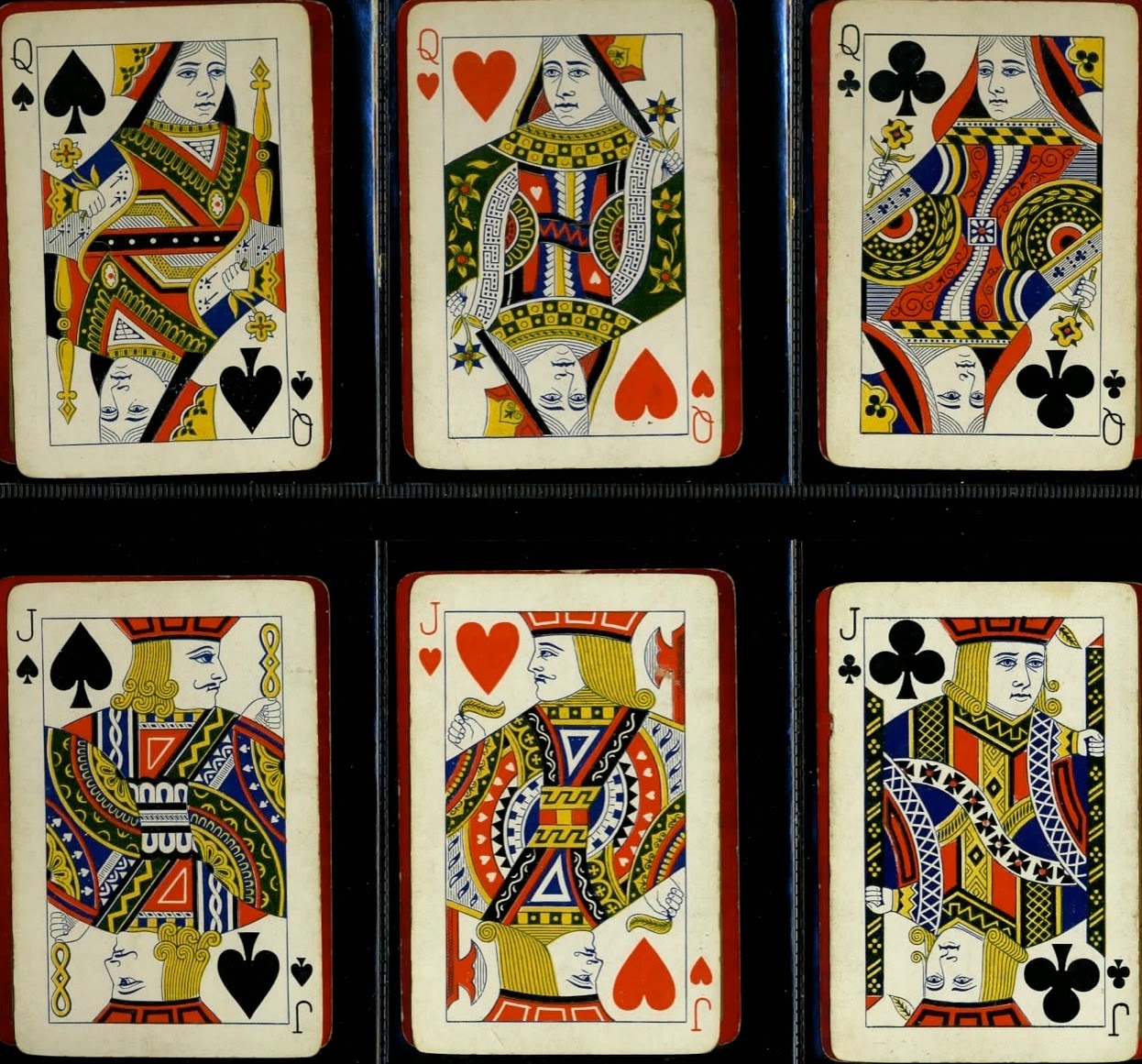
Above: Canadian PCCo, c.1940
Another important maker is Hudson, who started up in the 1920s. Their court cards were modelled on US5, the design inherited by USPCC from the American Banknote Company. It has the distinctive features of a left-facing JS and a QH with her pip to the right rather than the usual left.
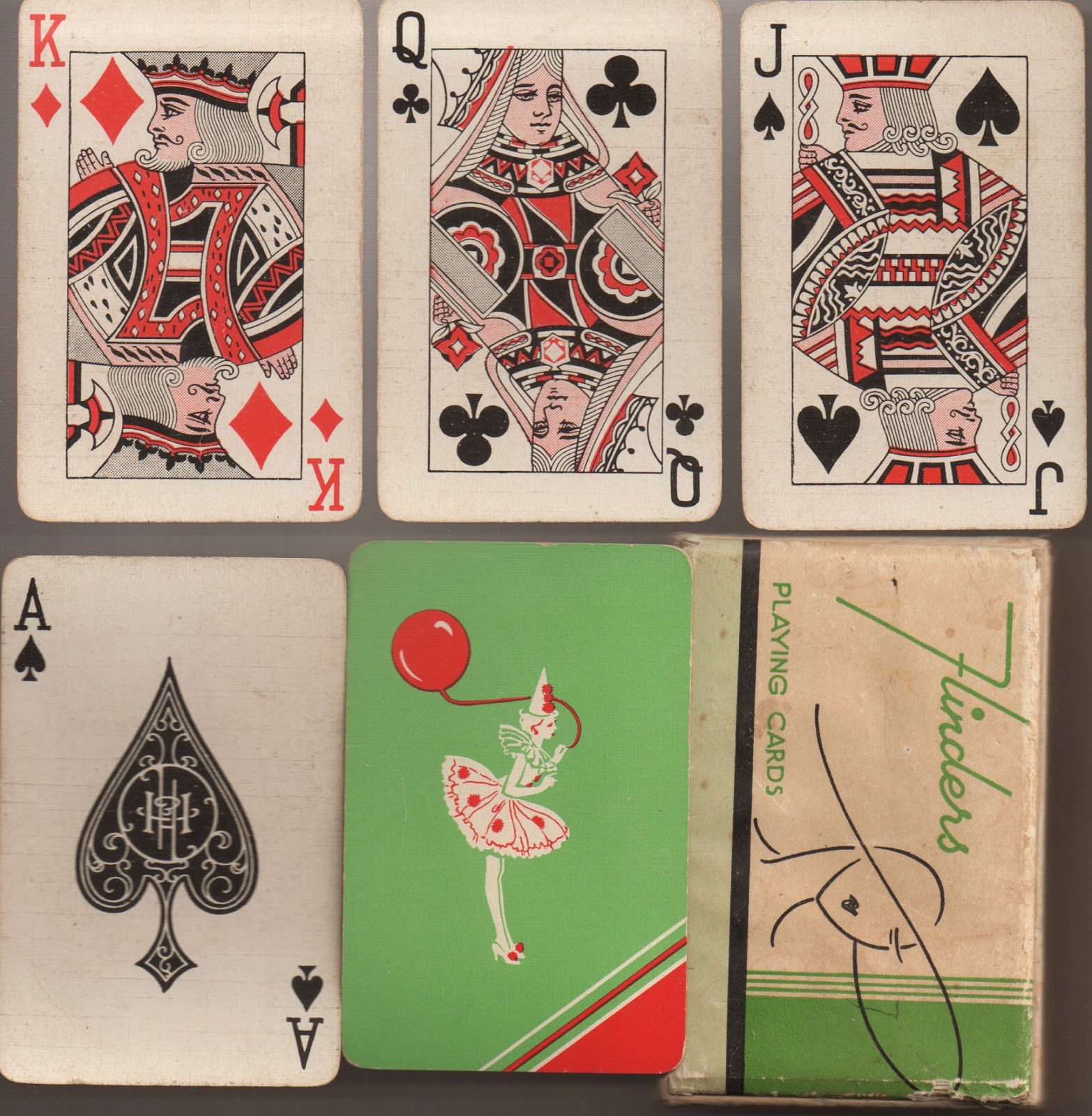
Above: 2-colour courts, c.1930
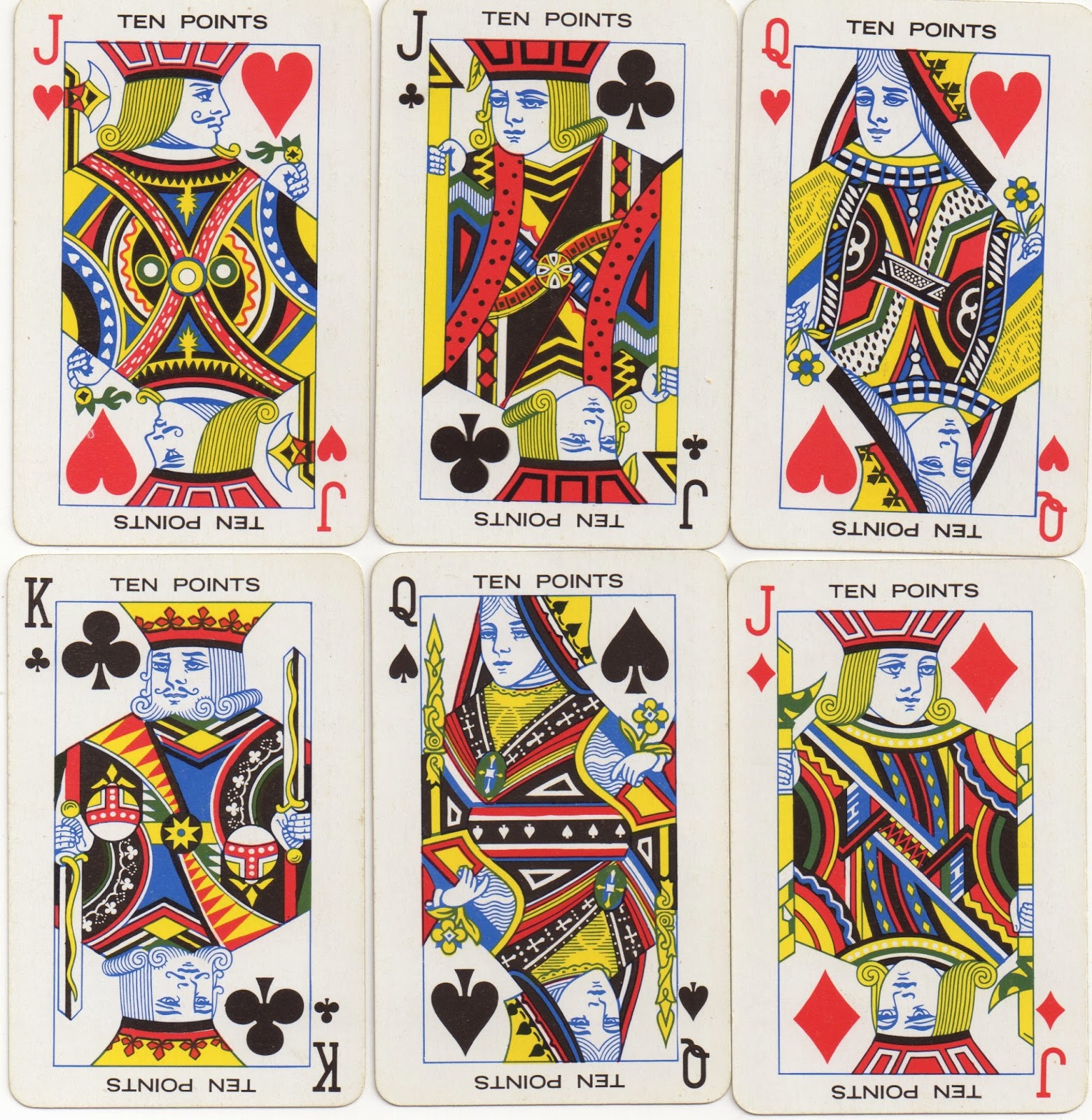
Above: 4-colour courts from a Valentine canasta pack, c.1975
This design was used throughout the life of the firm, passing to Valentine, when they took it over in 1972, and again to John Sands in the 1990s.
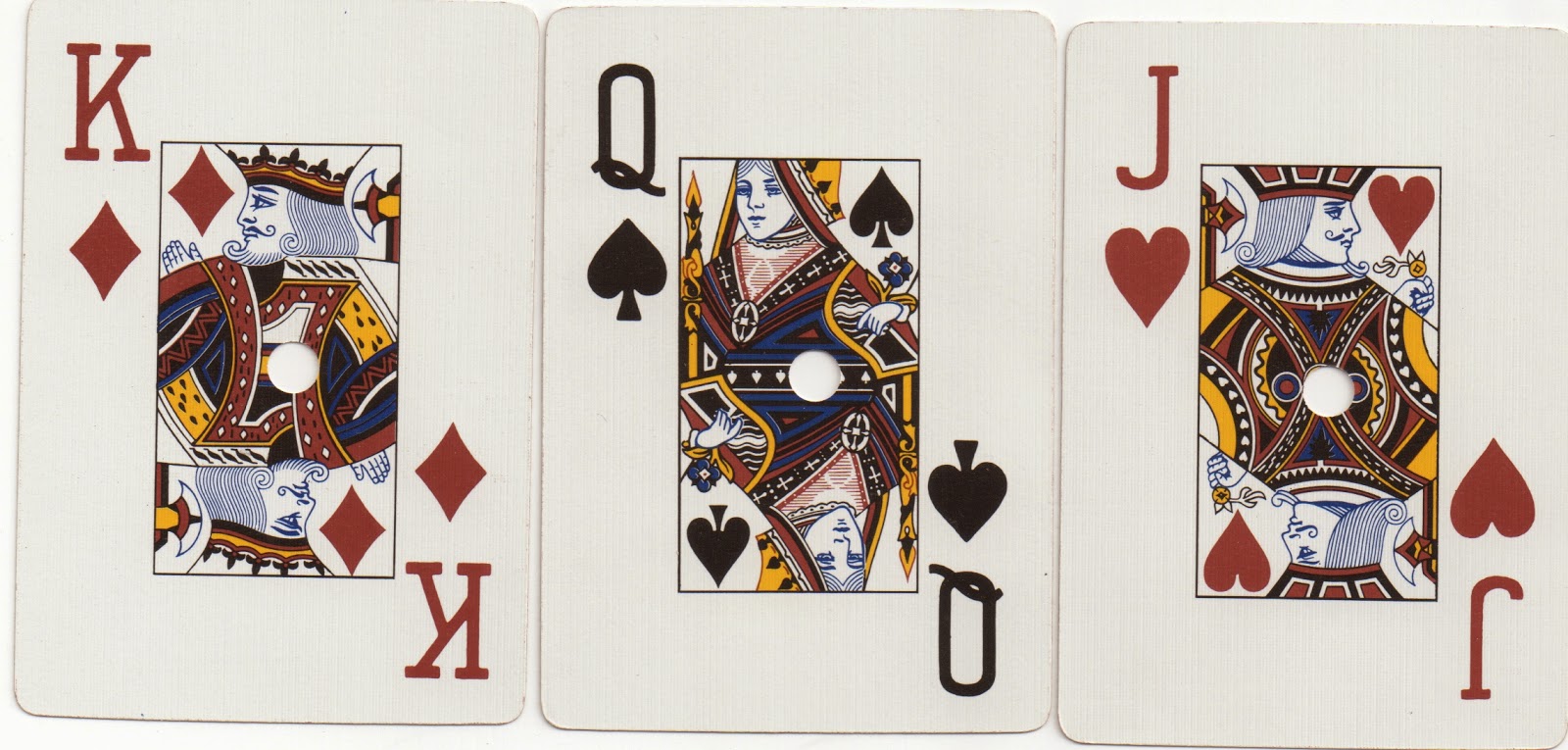
Above: John Sands holed casino pack, 1992
The other major card producer is Reed, originally Paper Products Ltd. They used a faithful copy of the USPCC bridge courts (US3.1), which ran from c.1930 right up to the present day in the Queen's Slipper packs in two colours only.
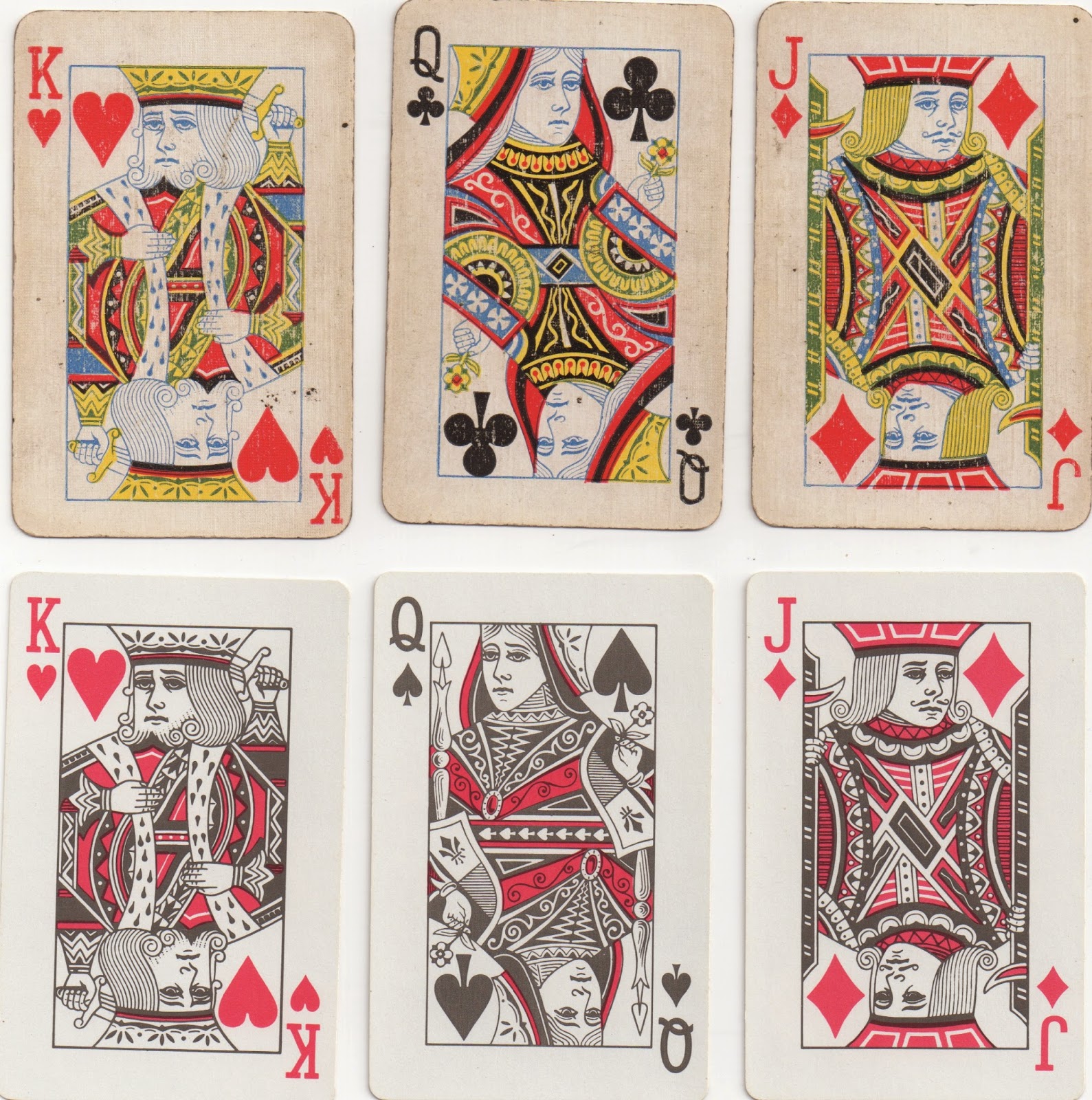
Above: Top, c.1932; bottom, c.1990
In an early patience pack, Southern Cross, the USPCC turned courts (US4) were used.
For some reason in 1982 a pack for the Brisbane Commonwealth Games used Piatnik courts and joker in two colours with Reed/Spicer number cards. Shortly after that the former Spicer & Detmold courts were redrawn and used in casino packs.
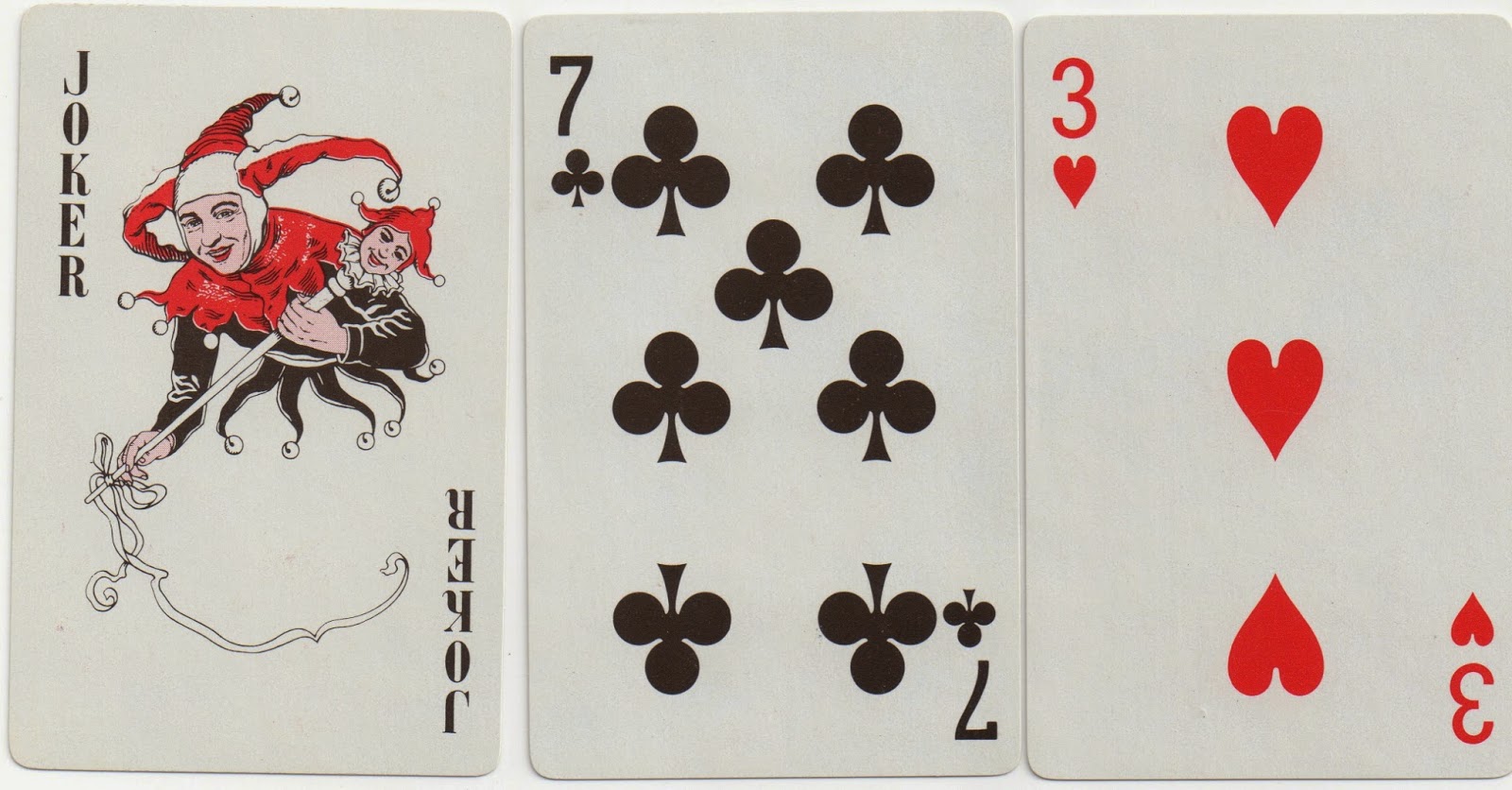
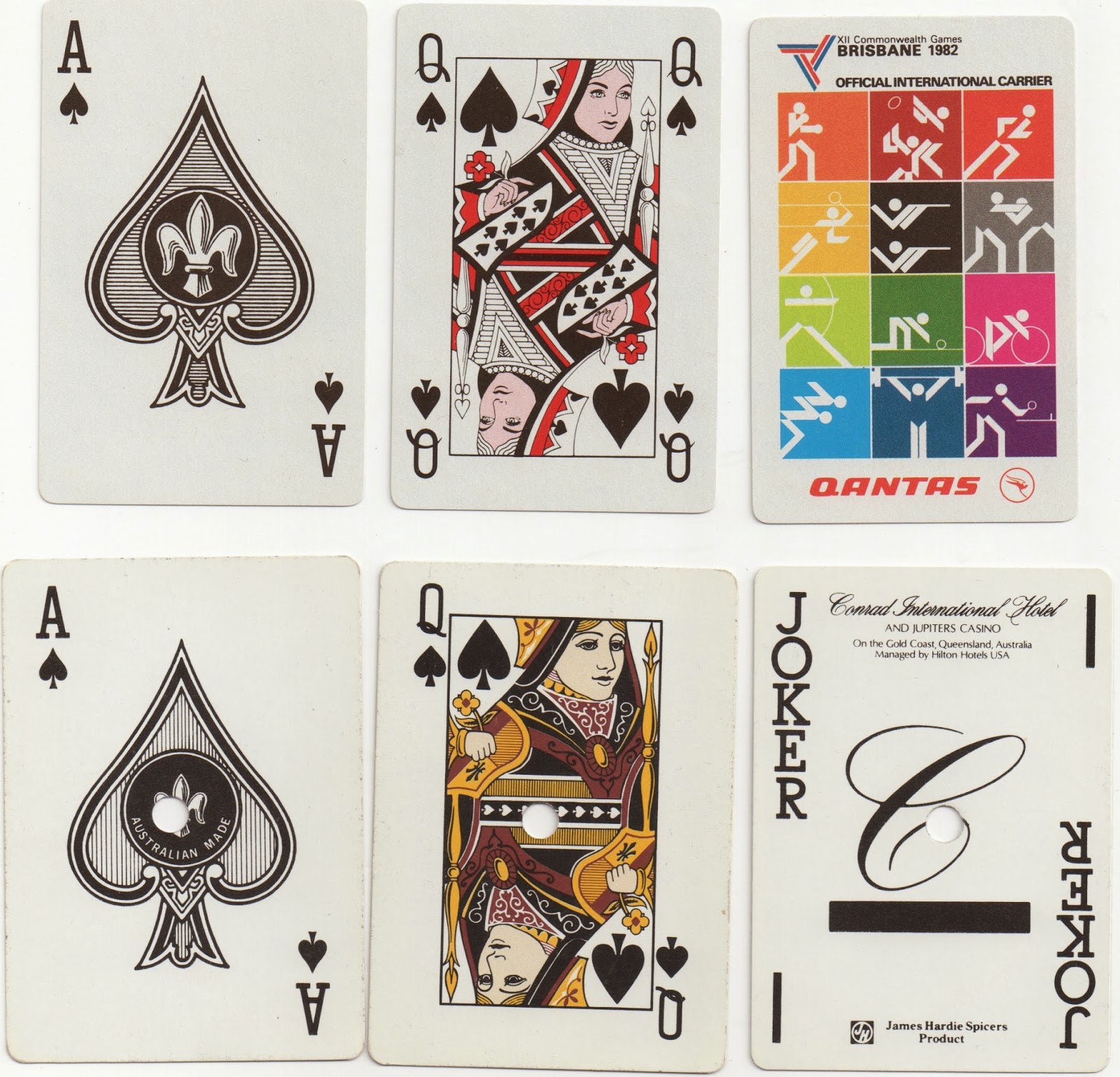
Above: Top two rows: Reed, 1982 with Piatnik courts; bottom row: Hardie Spicer, 1987
As regards idiosyncratic designs I know two only. One is anonymous and from c.1930.
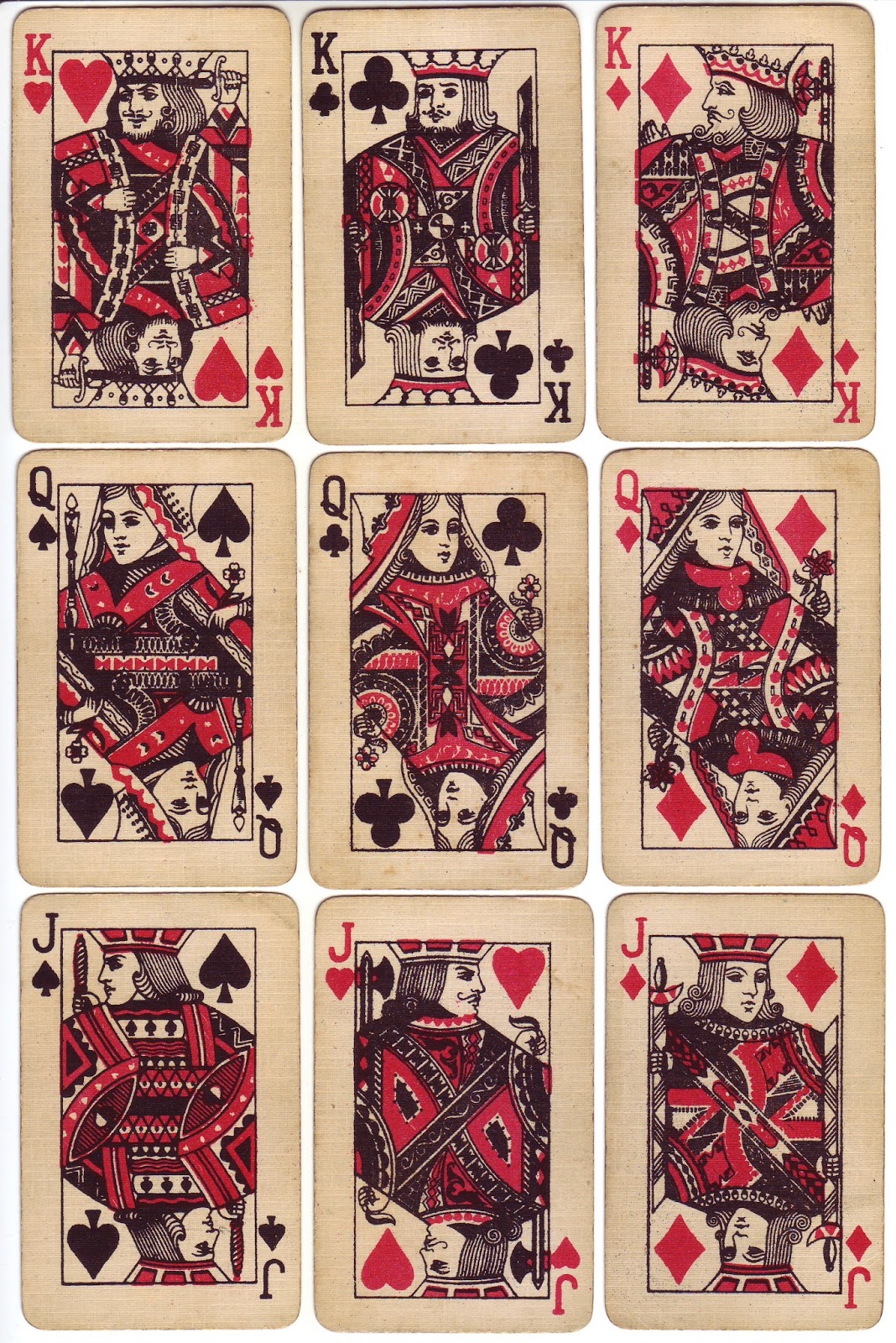
Above: Anonymous with some elements of Whitman's US5.1 courts. (Thanks to John Daniels for the scan.)
The other one is much more recent, produced by the Singapore-based SNP. Note the turned QH to put her suit-sign on the right in line with the other queens.
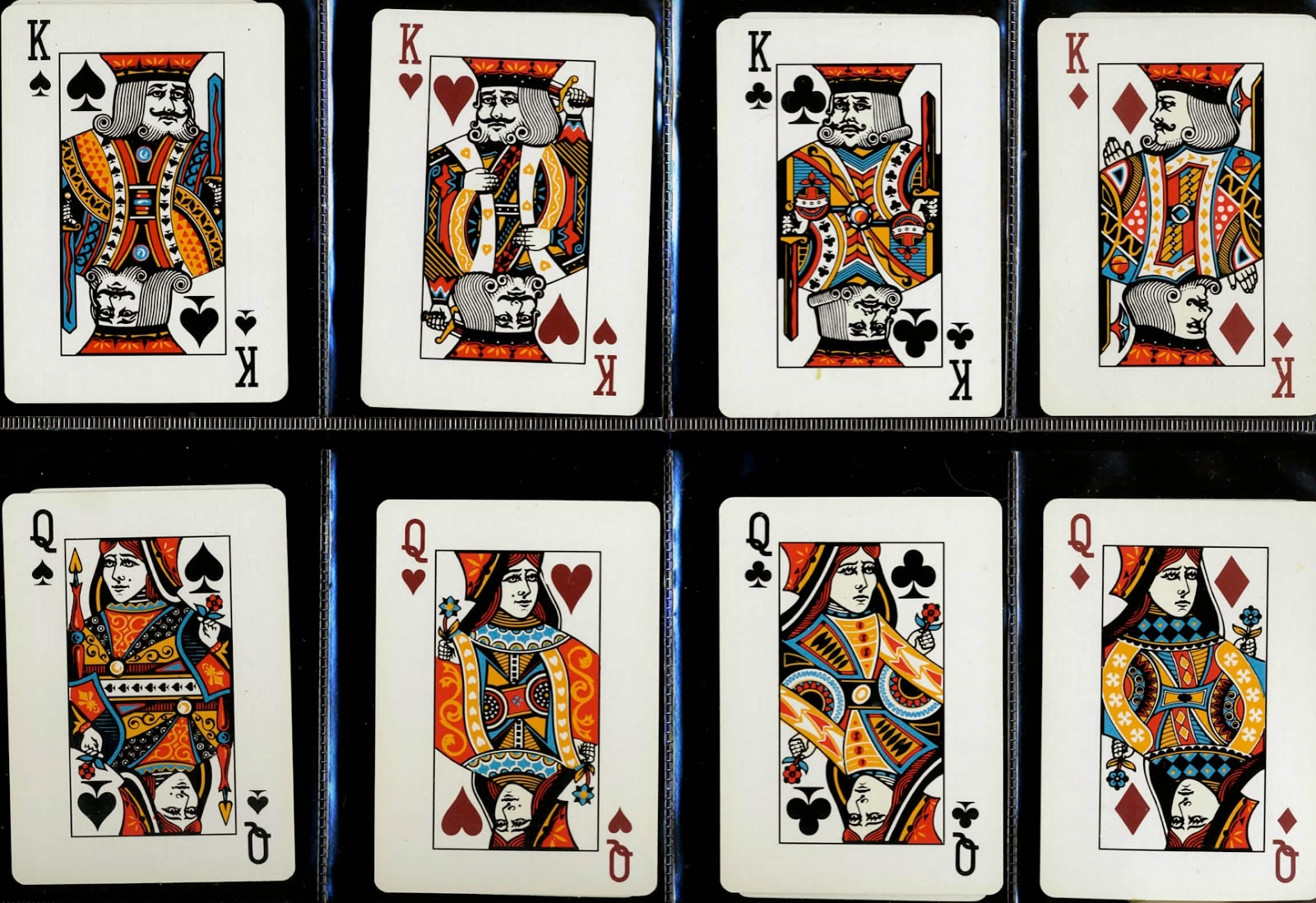
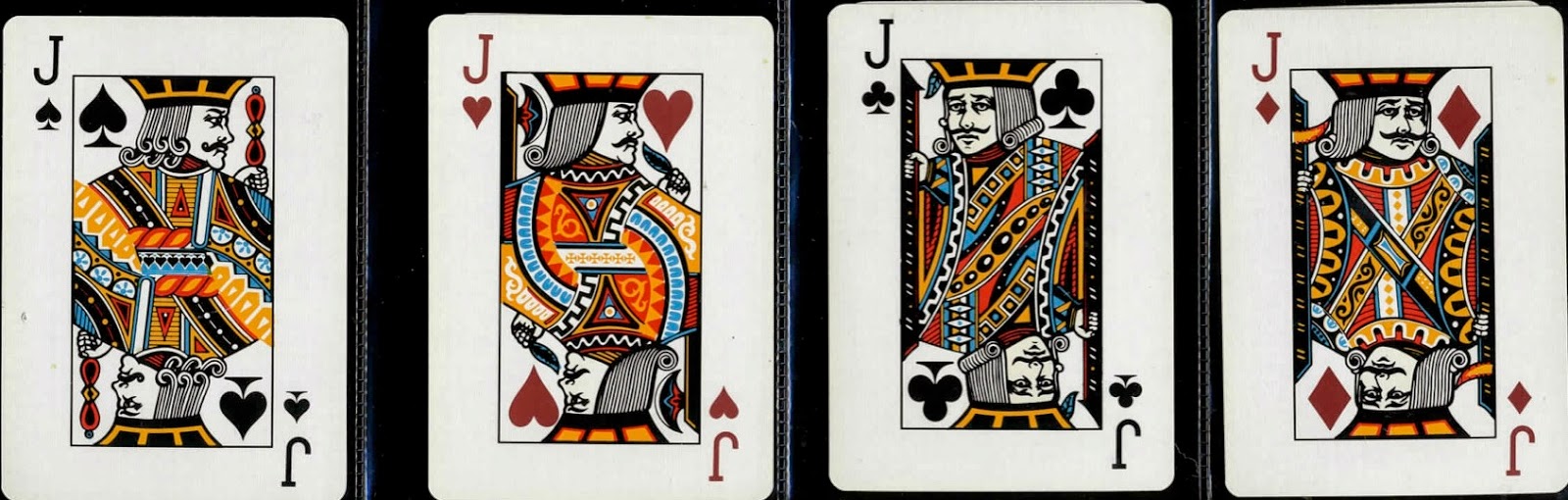
Above: Players' Choice, c.1990

By Ken Lodge
United Kingdom • Member since May 14, 2012
I'm Ken Lodge and have been collecting playing cards since I was about eighteen months old (1945). I am also a trained academic, so I can observe and analyze reasonably well. I've applied these analytical techniques over a long period of time to the study of playing cards and have managed to assemble a large amount of information about them, especially those of the standard English pattern. About Ken Lodge →

Activity for 44: Australia
Sign in to comment or save this article.

Related Articles
Billabong playing cards
Billabong Dual Deck by Hudson Industries, 1950s.
Flinders playing cards
Flinders playing cards manufactured by Hudson Industries Pty Ltd (Australia).
Hudson Industries
Hudson Industries Pty Ltd of Carlton in Victoria was first registered as a printing company in 1920....
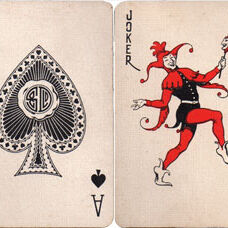
Spicer & Detmold
Spicer & Detmold (1922-48) produced a lot of pictorial back designs. Most decks with picture backs w...
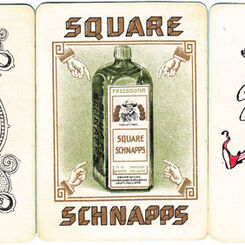
Sands & McDougall Aces & Jokers
Sands & McDougall produced many beautiful Spade Aces and Jokers.
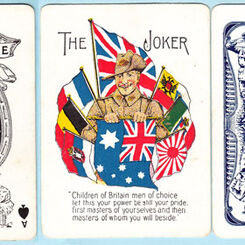
Sands & McDougall
Sands & McDougall, playing card manufacturers, Melbourne, late 1890s-c.1970.
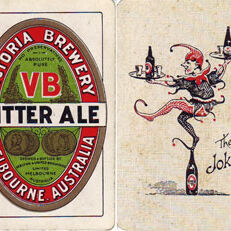
Brewery Advertising
Australian Brewery Advertising.
Sands & McDougall Court Cards
Sands & McDougall Court Cards
Pelaco
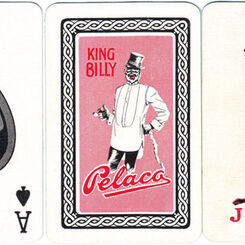
‘Pelaco’ playing cards with Aboriginal characters by Sands & McDougall, Australia, c.1930.
William Detmold Limited
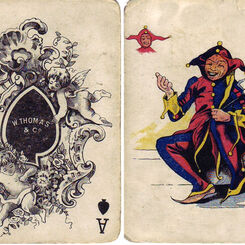
William Detmold Limited, manufacturers of playing cards.
John Sands
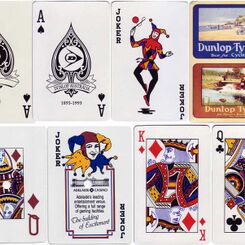
John Sands had incorporated the earlier playing card manufacturing businesses of Hudson Industries P...
The Valentine Group
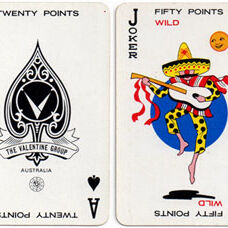
The Valentine Group, Australia.
Miniature Playing Cards
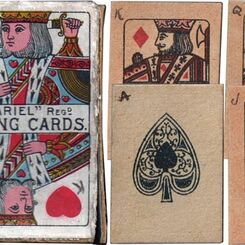
Miniature Playing Cards from around the world.
Most Popular
Our top articles from the past 60 days


