Löschenkohl’s Musical Playing Cards
Johann Hieronymus Löschenkohl (1753-1807) produced a copper engraved deck of playing cards titled “Das Musikalische Kartenspiel” in 1806.
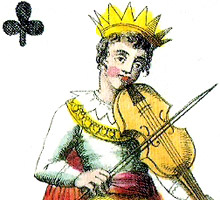
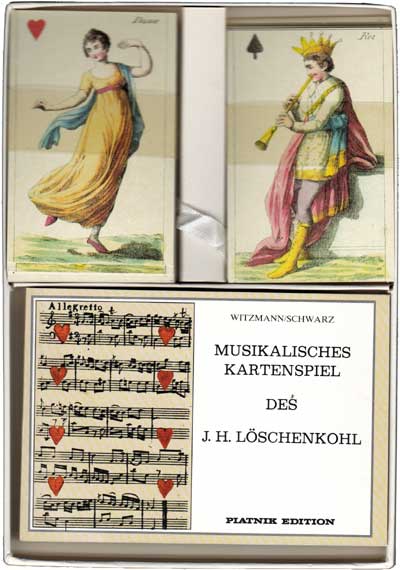
Johann Hieronymus Löschenkohl (1753-1807) was a goldsmith and a popular Viennese engraver who had already been granted a royal privilege as a fan printer. In 1806 he produced a copper engraved and daintily hand coloured deck of playing cards titled “Das Musikalische Kartenspiel”. The cards were aimed at a bourgeois public who enjoyed graphic arts which were didactic in character. The pip cards are overlaid on sheets of music, some of which are songs and some, when properly laid out, are actual pieces by Mozart. It is quite a delightful deck with court cards rendered in colouring that is close to pastel. See the Box►
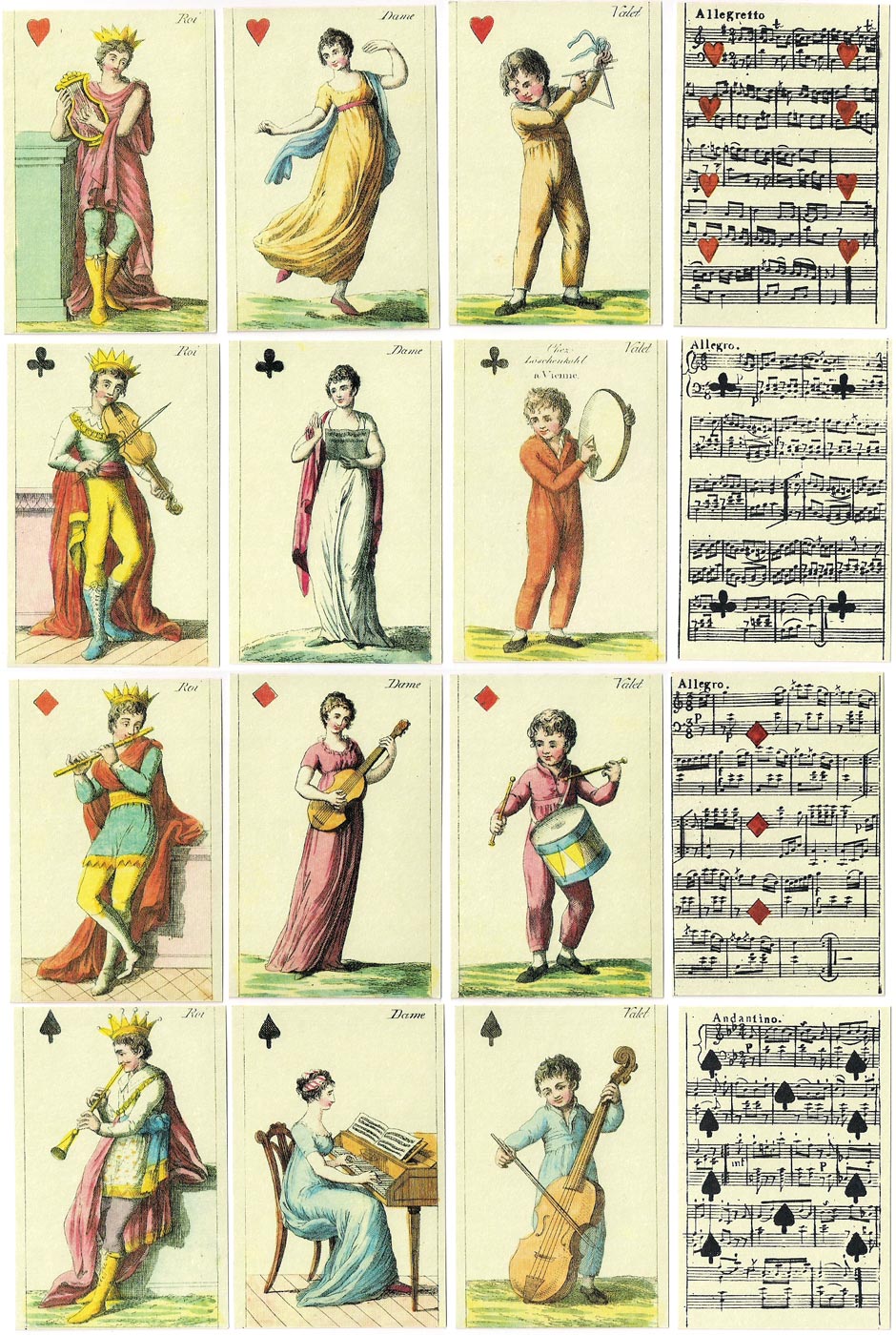
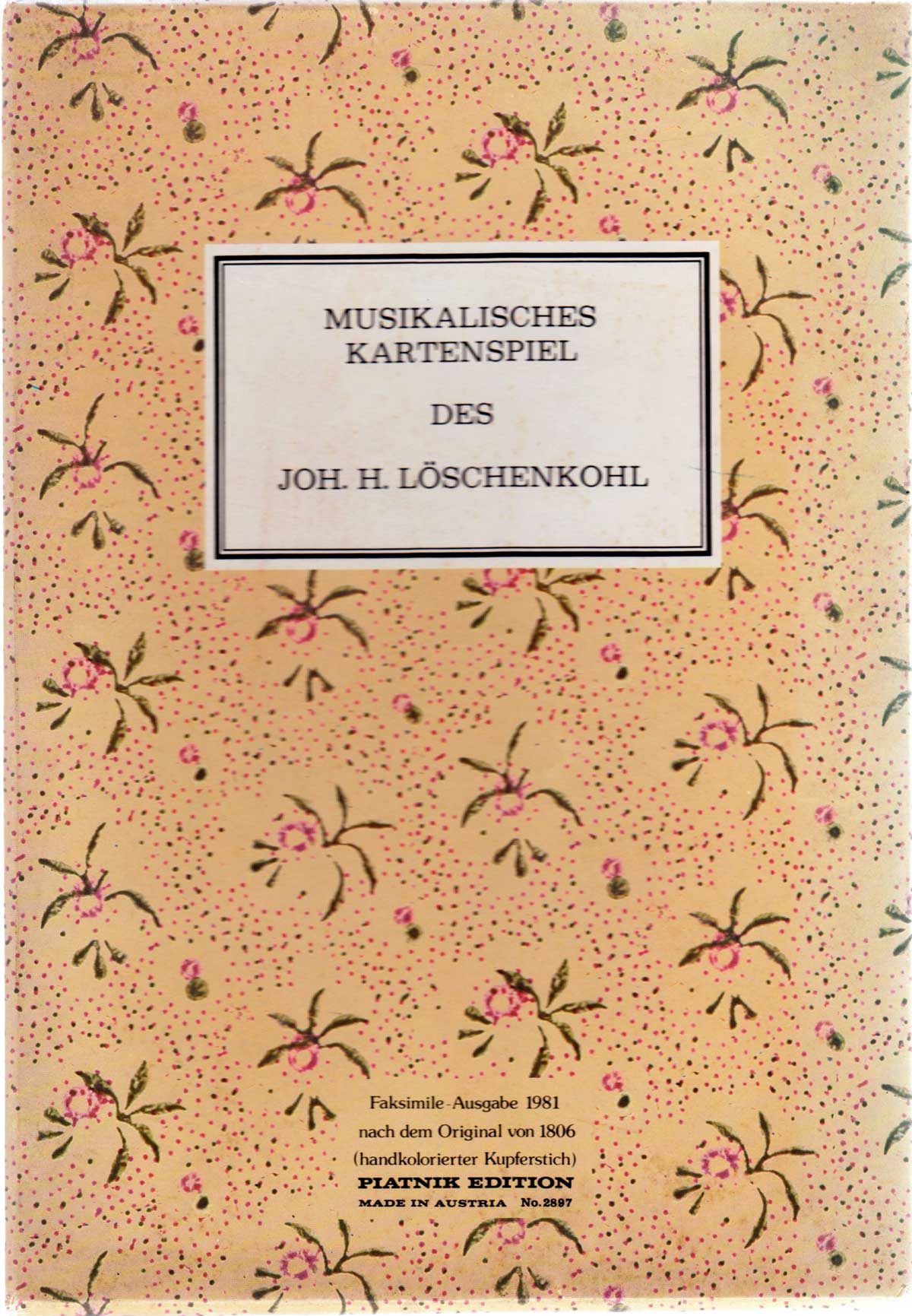
Above: facsimile of Johann H. Löschenkohl's Musical Playing Cards, originally published in Vienna in 1806. Only one set is known to exist and it is housed in the Historical Museum of the City of Vienna. In 1981 Piatnik issued a numbered facsimile edition of the deck, Piatnik Edition no.2897. Images from that facsimile edition courtesy Rod Starling.
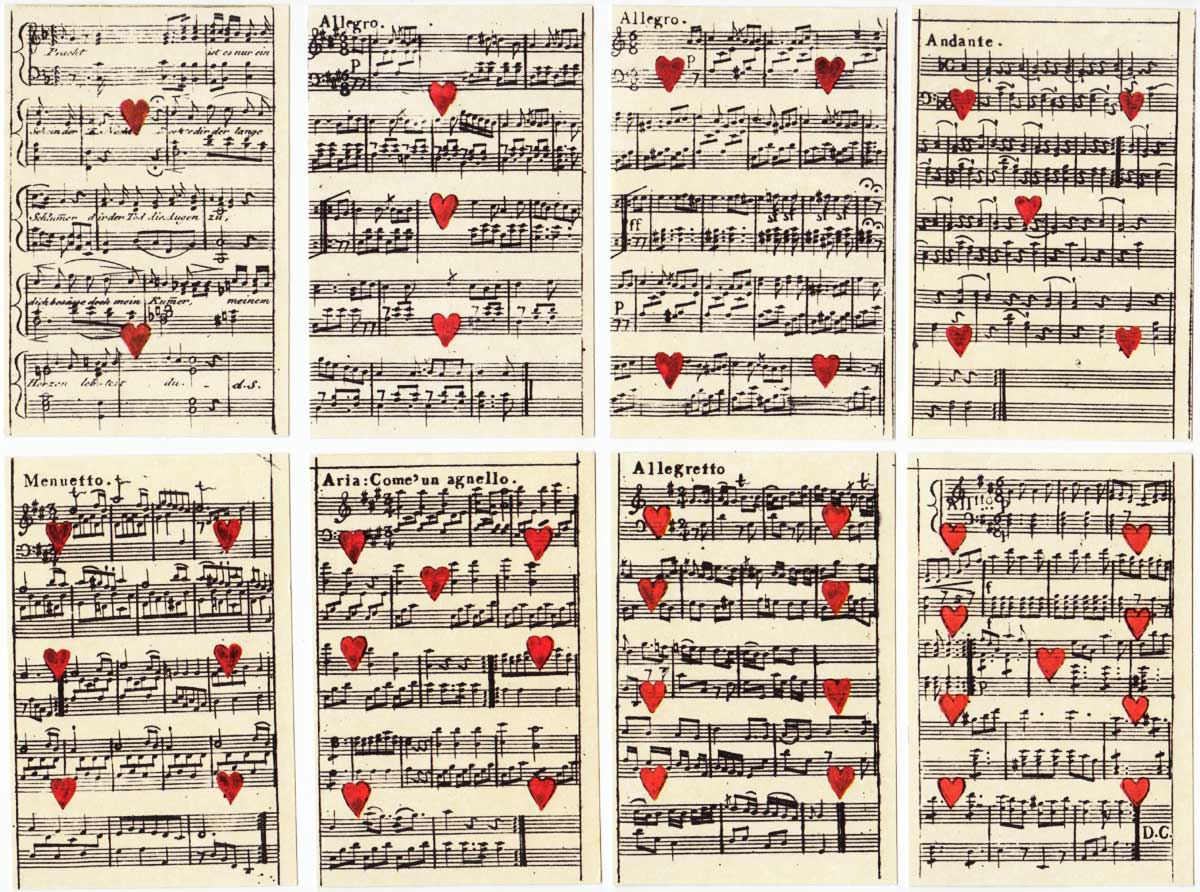
Above: numeral cards from facsimile of Löschenkohl's Musical Playing Cards, Piatnik Edition no.2897. The boxed set also contains a booklet: the cards are placed in 2 stacks side by side and the booklet on its own shelf beneath. Images courtesy Rex Pitts.
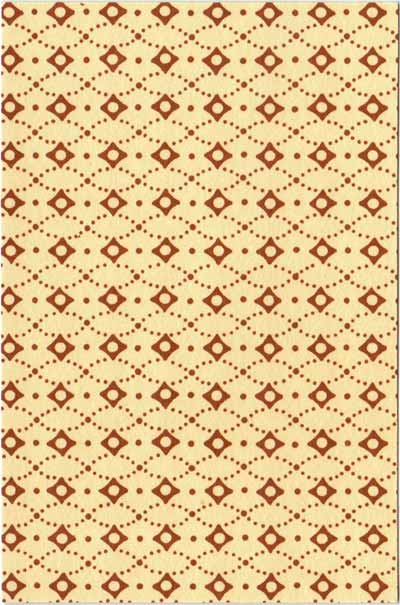
Above: back from facsimile edition.
Löschenkohl also produced a second copper engraved deck of Botanical Playing Cards►

By Rex Pitts (1940-2021)
United Kingdom • Member since January 30, 2009
Rex's main interest was in card games, because, he said, they were cheap and easy to get hold of in his early days of collecting. He is well known for his extensive knowledge of Pepys games and his book is on the bookshelves of many. His other interest was non-standard playing cards. He also had collections of sheet music, music CDs, models of London buses, London Transport timetables and maps and other objects that intrigued him.
Rex had a chequered career at school. He was expelled twice, on one occasion for smoking! Despite this he trained as a radio engineer and worked for the BBC in the World Service. Later he moved into sales and worked for a firm that made all kinds of packaging, a job he enjoyed until his retirement. He became an expert on boxes and would always investigate those that held his cards. He could always recognize a box made for Pepys, which were the same as those of Alf Cooke’s Universal Playing Card Company, who printed the card games. This interest changed into an ability to make and mend boxes, which he did with great dexterity. He loved this kind of handicraft work.
His dexterity of hand and eye soon led to his making card games of his own design. He spent hours and hours carefully cutting them out and colouring them by hand.

Activity for Löschenkohl’s Musical Playing Cards
Sign in to comment or save this article.

Related Articles
Luxury No. 2167
A Piatnik classic that lives up to its title.
Art pack I
Art pack featuring Old Masters, including Bruegel, Vermeer, Titian, Raphael, Caravaggio, Canaletto, ...
Romania playing cards
Romanian voivodes and their wives from the 15th and 16th centuries.
Rika playing cards
Playing cards depicting famous Austrian skiers of the 1970s.
Tell Wilmoś
Facsimile of ‘Wilhelm Tell’ Hungarian deck by Salamon Antal, Keczkemét, 1860.
Piatnik No.97
Non-standard French-suited cards published by Ferd Piatnik & Sõhne, Vienna, c.1940s.
Vienna (ex-Lyon) pattern
‘Vienna pattern’ derived from archaic Lyon pattern by Ferd Piatnik & Söhne A.G., c.1926-1934.
48: Ferdinand Piatnik & Sons
Ferd. Piatnik produced a very large range of cards with many different standard and non-standard pat...
Popular No.257
Piatnik’s “Popular Playing Cards” No.257
Salzburger Pattern
Salzburger pattern by Ferd. Piatnik & Söhne, Vienna
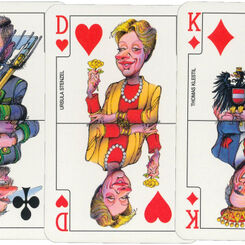
Die Neue ÖVP
Promotional deck for the Austrian People’s Party (ÖVP) printed by Piatnik, 1996.
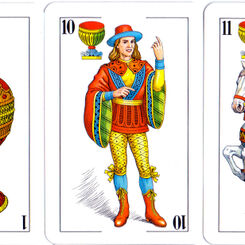
El Jokey by Piatnik, 1990s
‘El Jokey’ Spanish-suited pack by Piatnik & Sons, Vienna, 1990s
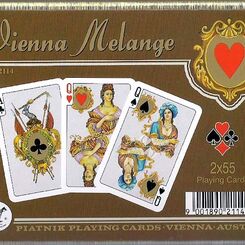
Vienna Melange
“Vienna Melange” Playing Cards by Piatnik with a historical feel representing the four races that ma...
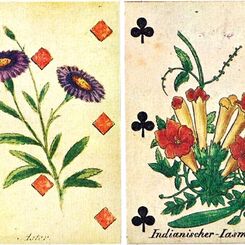
Löschenkohl’s Botanical Playing Cards
Löschenkohl produced a second copper engraved deck, the Botanical Playing Cards, in 1806. This deck,...
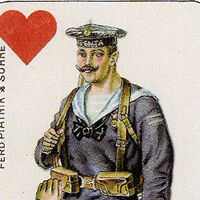
Soldaten Tarock
Piatnik was known for their magnificent quality of chromo-lithographic printing, and this facsimile,...
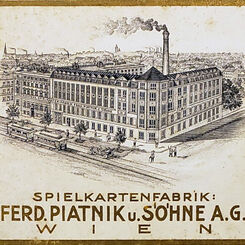
Ferd. Piatnik & Söhne
Ferdinand Piatnik was born in Ofen on October 14, 1819.
Piatnik Tarock
Deck of "Industrie und Glück" or "Rural Scenes" tarock cards manufactured by Ferd Piatnik & Söhne, V...
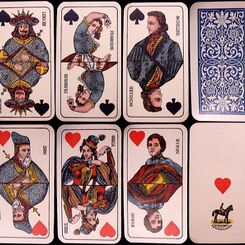
Literary Figures
Non-Standard Literary Figures playing cards manufactured by Ferd. Piatnik & Söhne A.G., Vienna, 1924...
Piatnik & Sons for the“Estanco de Naipes del Perú”
Playing Cards made by Piatnik & Sons for the“Estanco de Naipes del Perú”, c.1960.
Hofamterspiel, c.1460
Hofamterspiel, c.1460
Most Popular
Our top articles from the past 60 days