


J. W. Spear and Sons: ‘Zoology’
Quartet games with scientific illustrations became popular during the Victorian and Edwardian eras. J. W. Spear and Sons Zoology quartet game is a lesson in natural history.
In the 19th century numerous professional and amateur artists were engaged illustrating zoological, botanical and other scientific subjects. Interesting specimens were obtained from overseas and people had a passion for natural history. Zoology quartet games became popular during the Victorian and Edwardian eras and many fine lithographed sets of animal images were published to engage children’s imagination.
J. W. Spear and Sons’ Zoology quartet game is a lesson in animal identification, with a total of 60 different species illustrated and classified under fifteen headings: Apes, Beasts of Prey, Beetles, Birds, Cats, Cattle, Deer, Dogs, Fish, Lizards, Pachyderms, Rodents, Ruminants, Serpents and Ungulates. As in most quartet games the idea is to collect sets of the same type, or ‘family’, but at the same time educational benefits are imparted through learning to recognise the different types of animal.
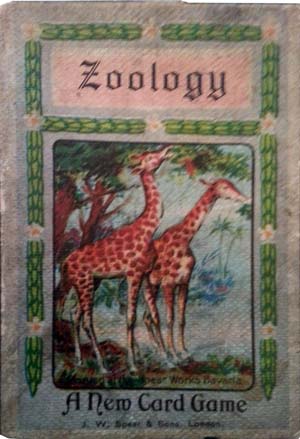
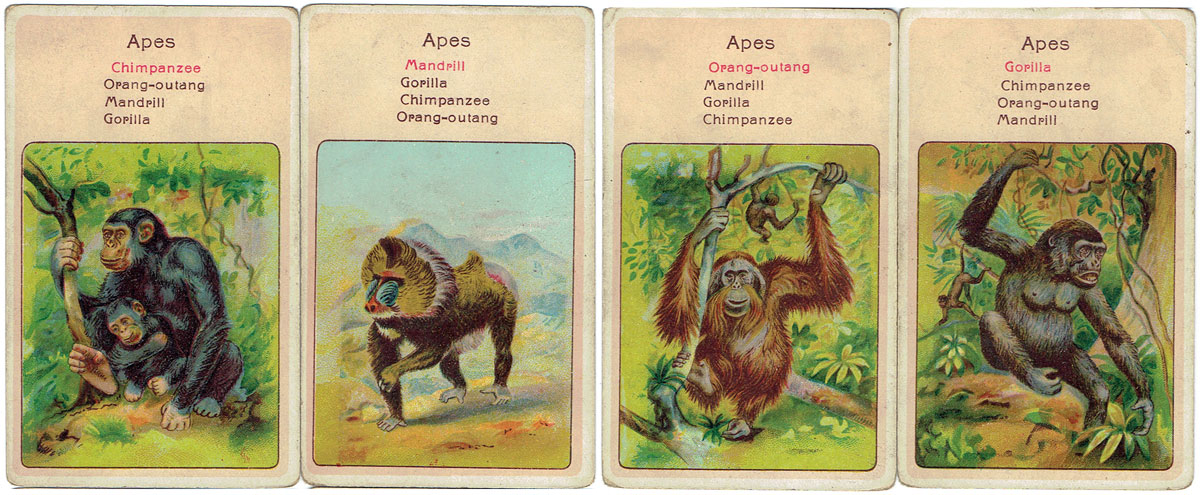
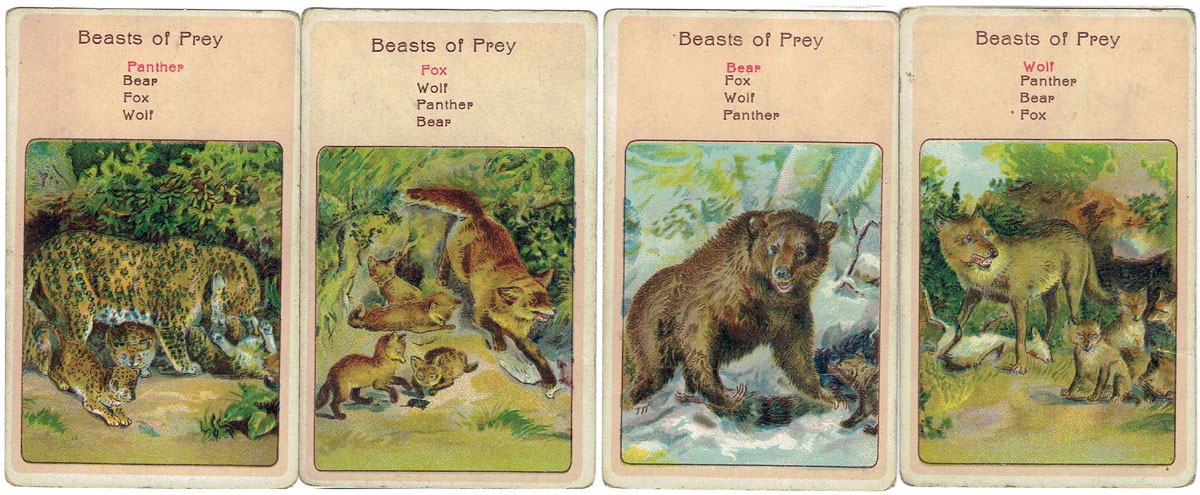
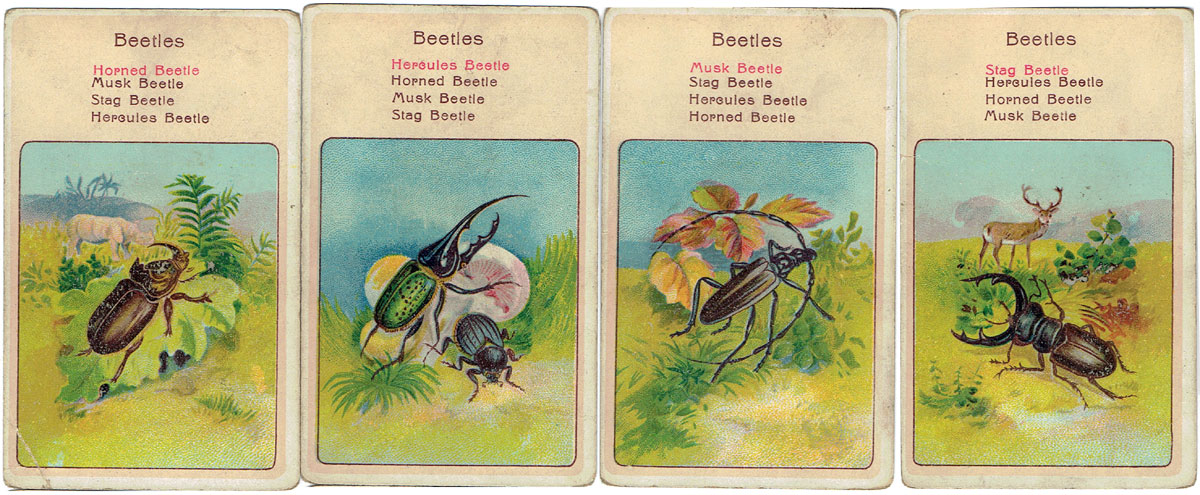
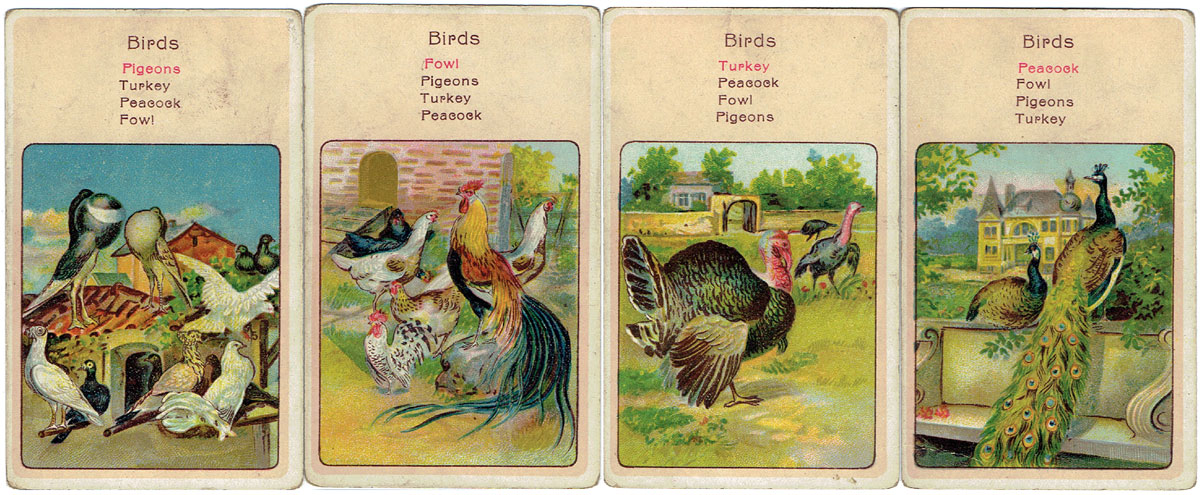
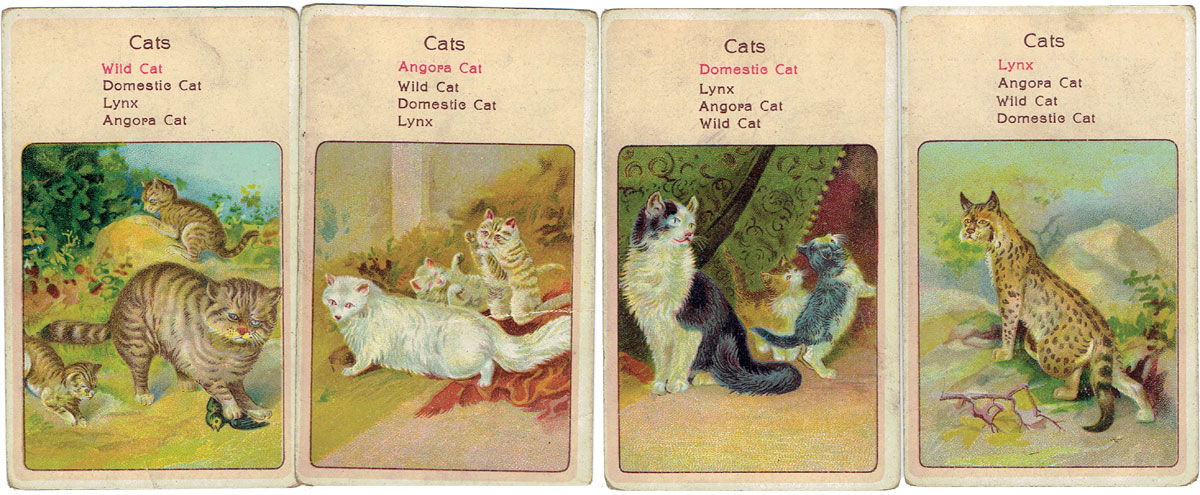
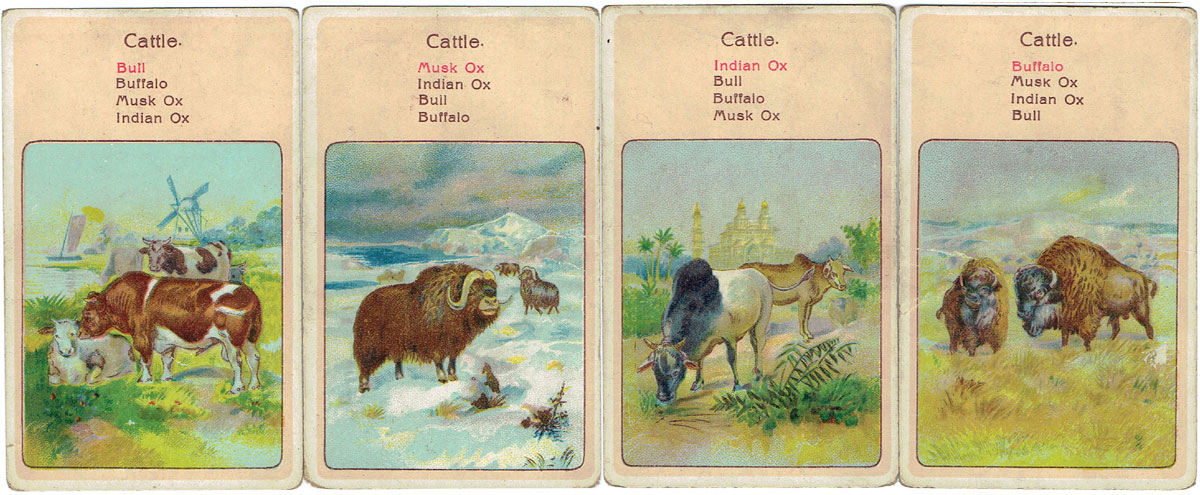
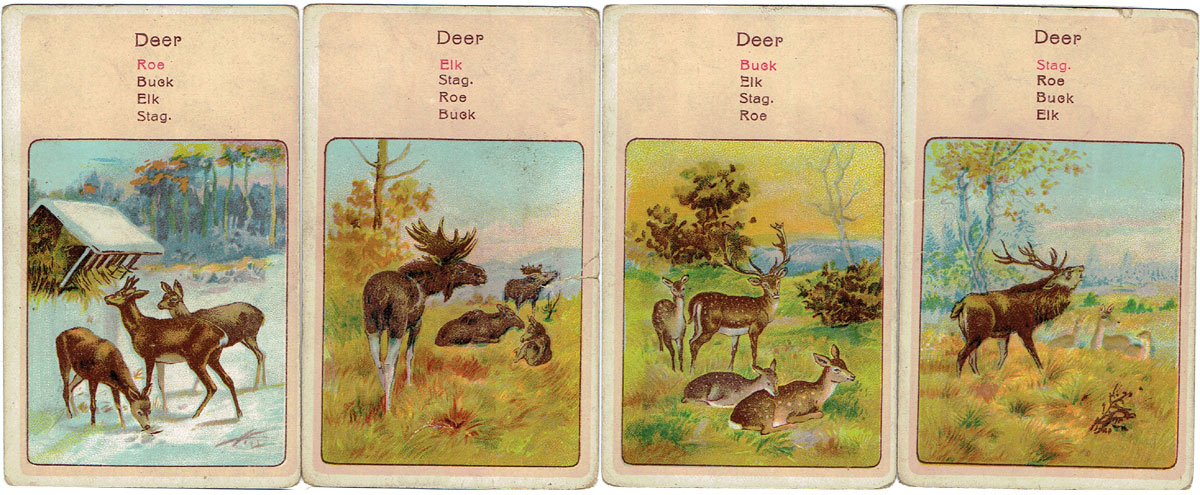
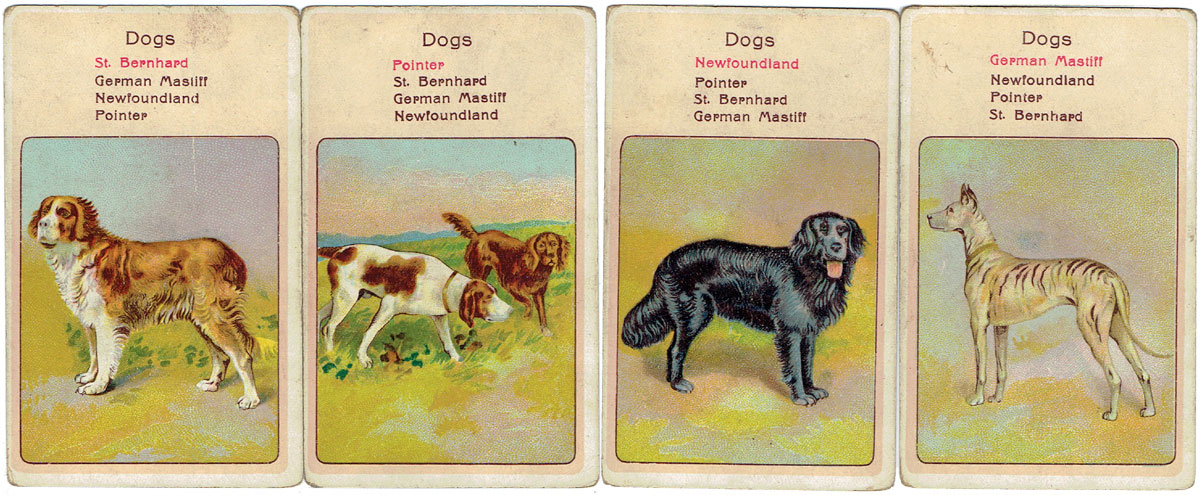
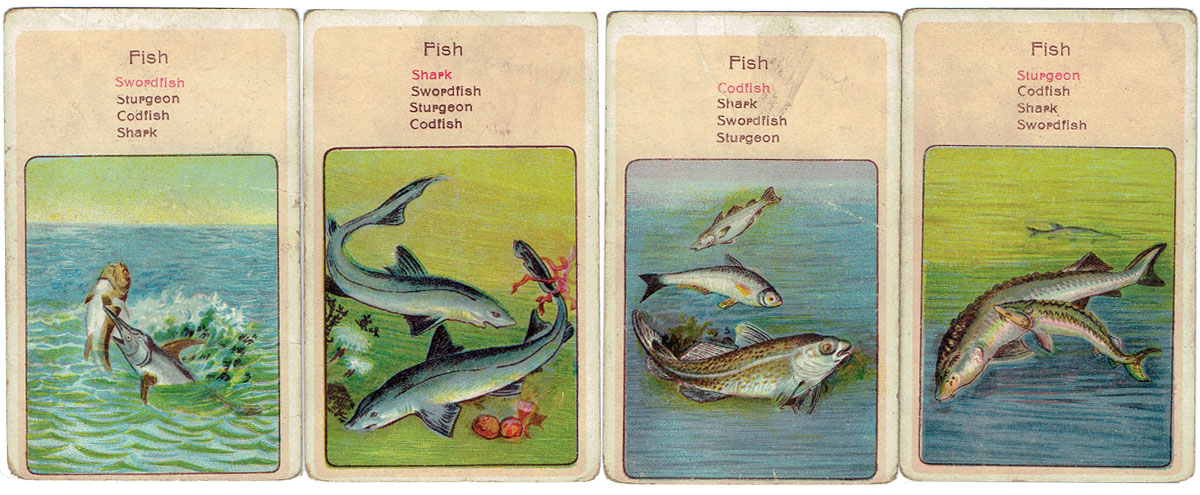
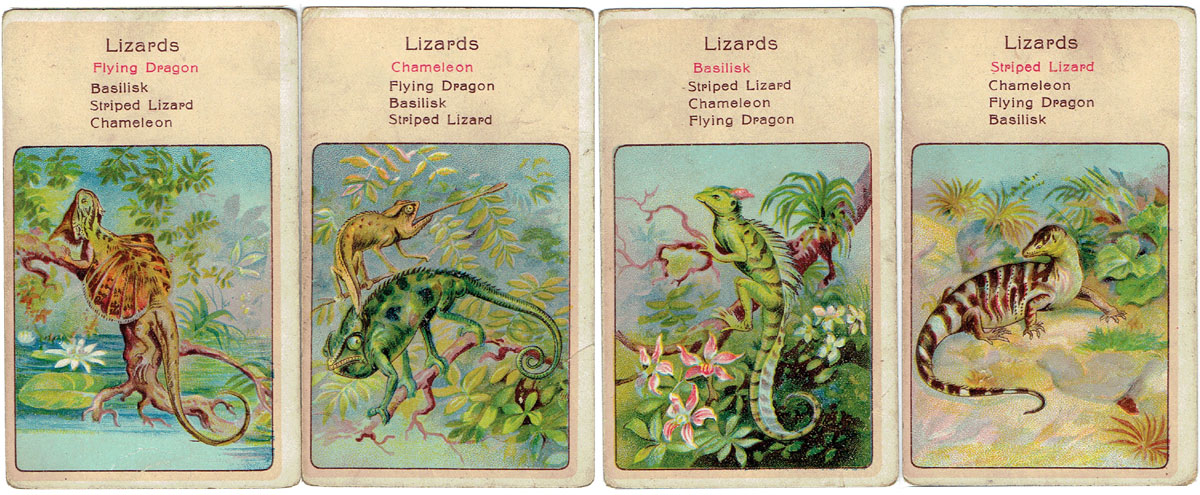
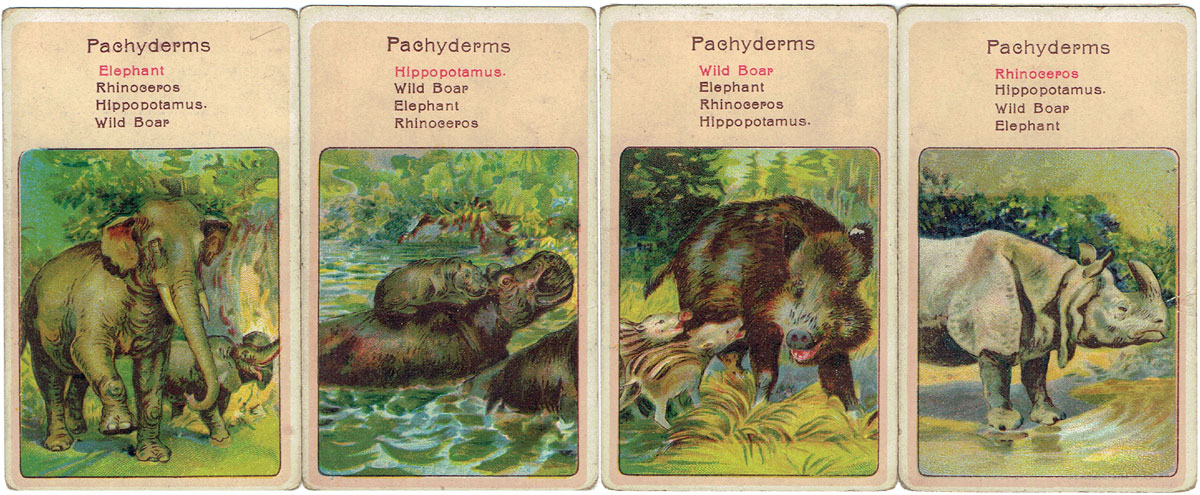
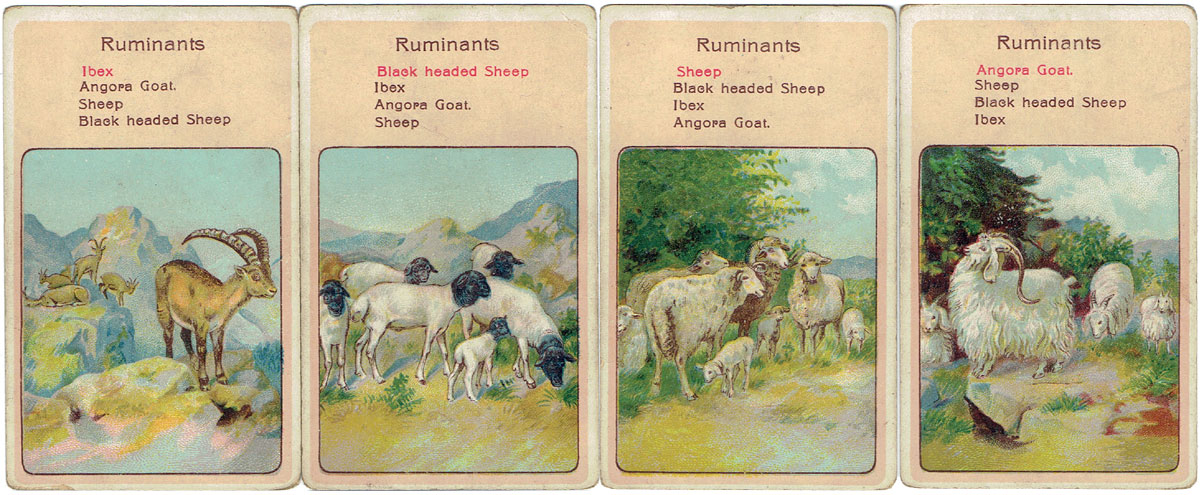
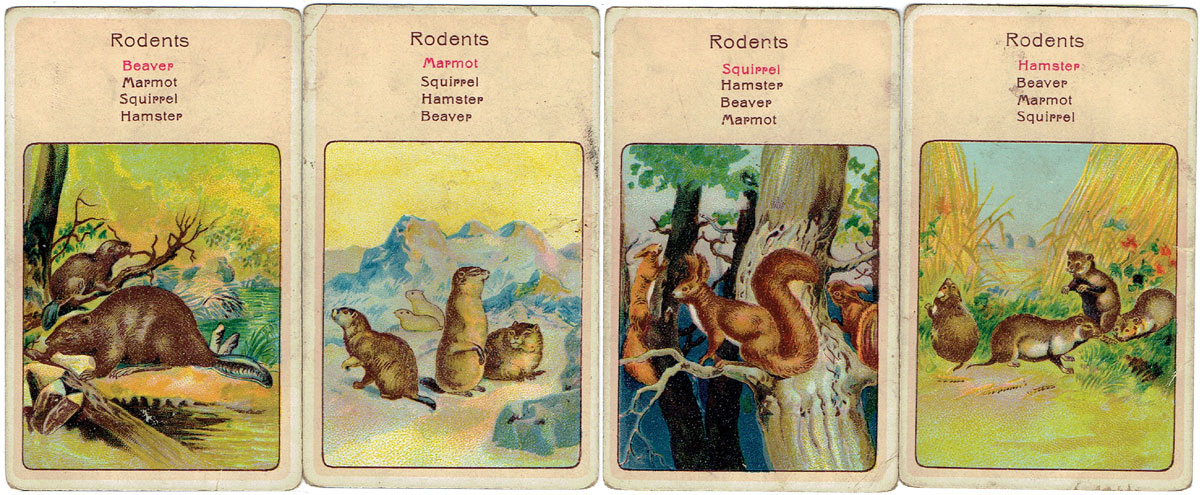
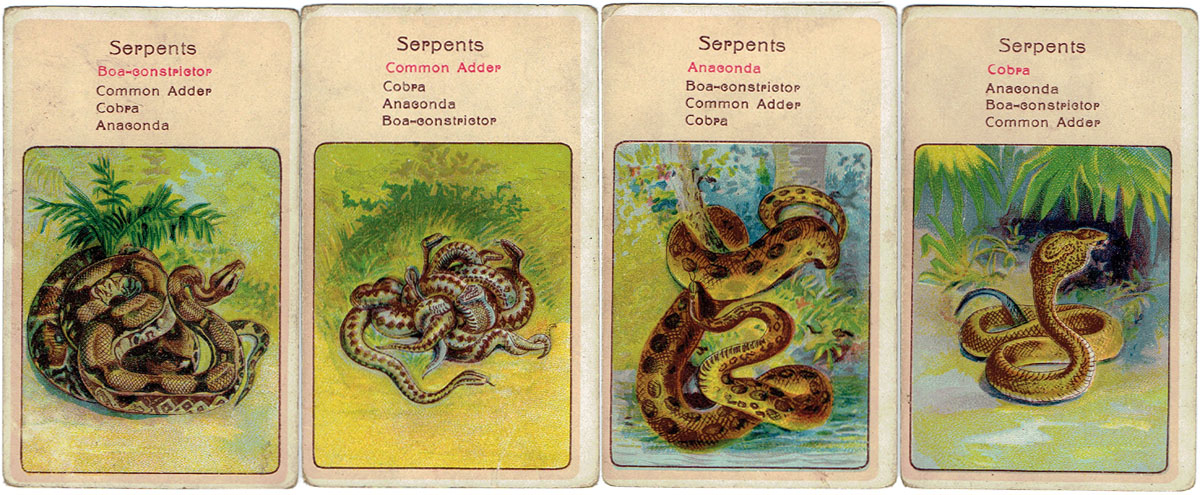
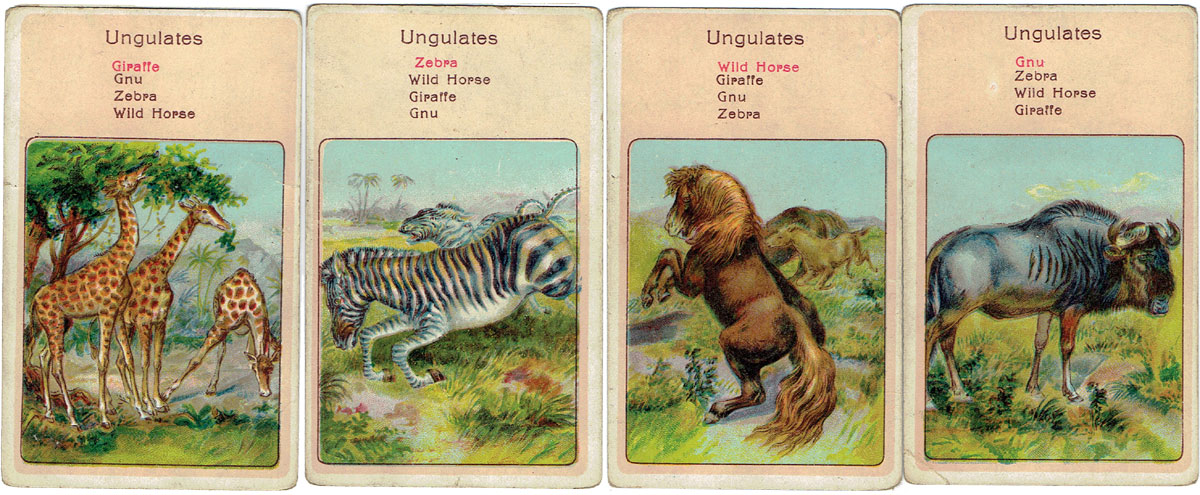
Above: ‘Zoology’ card game published by J. W. Spear and Sons, London, c.1910. 60 cards, chromolithography, manufactured at the Spear Works Bavaria. Images courtesy Richard Strand.

German Zoology Game - maker unidentified
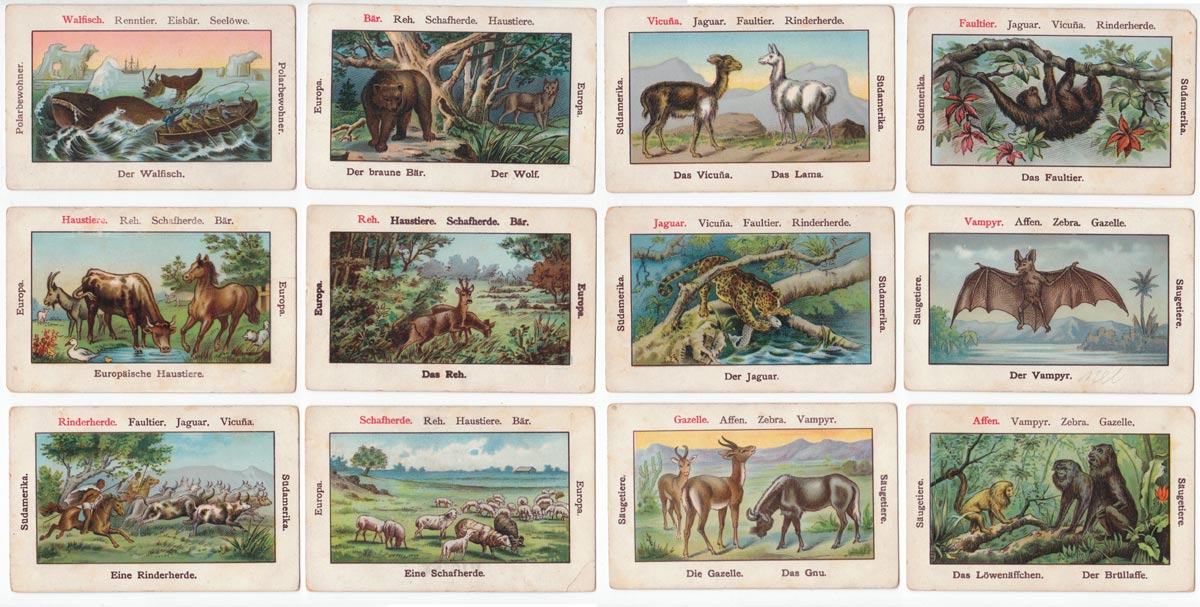
Above: unidentified German pack featuring animals which may well be called ‘Zoology’, probably late 19th century.

By Rex Pitts (1940-2021)
United Kingdom • Member since January 30, 2009
Rex's main interest was in card games, because, he said, they were cheap and easy to get hold of in his early days of collecting. He is well known for his extensive knowledge of Pepys games and his book is on the bookshelves of many. His other interest was non-standard playing cards. He also had collections of sheet music, music CDs, models of London buses, London Transport timetables and maps and other objects that intrigued him.
Rex had a chequered career at school. He was expelled twice, on one occasion for smoking! Despite this he trained as a radio engineer and worked for the BBC in the World Service. Later he moved into sales and worked for a firm that made all kinds of packaging, a job he enjoyed until his retirement. He became an expert on boxes and would always investigate those that held his cards. He could always recognize a box made for Pepys, which were the same as those of Alf Cooke’s Universal Playing Card Company, who printed the card games. This interest changed into an ability to make and mend boxes, which he did with great dexterity. He loved this kind of handicraft work.
His dexterity of hand and eye soon led to his making card games of his own design. He spent hours and hours carefully cutting them out and colouring them by hand.

Activity for J. W. Spear and Sons: ‘Zoology’
Sign in to comment or save this article.

Related Articles
Learning to play Cribbage
I learned to pay cribbage when I was very young, aged around six or seven.
Quaterne
A Victorian quartet-style children’s card game by Goodall & Son.
Gone to Pot: Gardener’s playing cards
‘Gone to Pot’: special playing cards for keen gardeners, United Kingdom.
Vesalius Anatomy Card Game
Celebrating the work of Andreas Vesalius in the quincentenary year of his birth.
J. W. Spear and Sons
Jacob Wolfe Spear founded his company manufacturing fancy goods in 1879 near Nuremberg in Bavaria, G...
Andere Zeiten - Andere Kleider
‘History of fashion’ cultural quartet game designed by Erika Werner-Nestler, 1954.
So Fängt Es An
“So Fängt Es An” beautifully illustrated by M. Neugebauer, published by Helingsche Verlagsanstalt.
French for Fun
French for Fun instructive card game published by John Jaques & Son Ltd., c.1930s
Botany Quartetts
Botany card game published by Houlston and Wright & Henry Greenwood, c.1860.
Fancy Dress Ball
Spear’s “Fancy Dress Ball” card game with children dressed in period costumes, 1930s.
Deutsche Geschichte
German History Quartet published by Otto Maier Verlag Ravensburg, c.1930-35.
Desperanto
Desperanto language game by Qui Vive Ltd, c.1990.
XVII Century Engraved Animal Cards
Anonymous French-suited German engraved cards c1610 to 1650.
Scouting
Scouting, a card game about boy scouts, appeared in 1955.
Snap
Spear’s “Snap” card game from the 1920s.
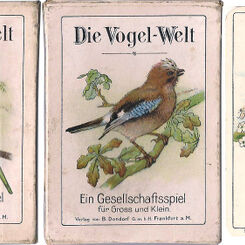
Die Vogel-Welt No. 351
Dondorf’s “Die Vogel-Welt” No. 351 quartet game, c.1905
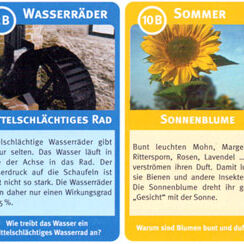
Klipp Klapp Karten
“Klipp Klapp Karten” printed by KZWP-Trefl (Poland) for Kindermuseum Oelde (Germany) in 2004
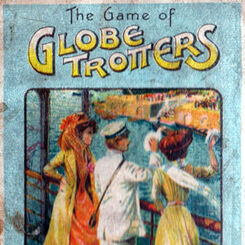
Globe Trotters
Globe Trotters follows the journey of a group of travellers who depart from Genoa by ocean liner and...
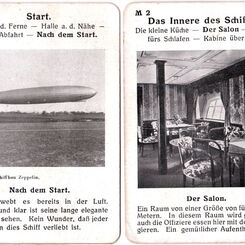
Graf Zeppelin
A card game commemorating the first round the world flight by the Graf Zeppelin, published by J.W. S...
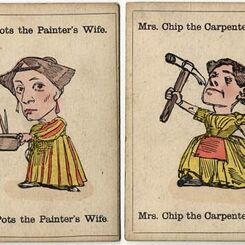
Jaques’ Happy Families
In 1851 the games manufacturer John Jaques of London (founded in 1795) commissioned a set of drawing...
Most Popular
Our top articles from the past 60 days


