Van Genechten
A. Van Genechten ran a flourishing business, supplying various kinds of cards both inside the country and abroad including England, Spain, France, Denmark, South-East Asia, China and Japan.
A. Van Genechten, 1856-1970
Antoon Van Genechten ran a flourishing business, supplying various kinds of cards both inside the country and abroad including England, Spain, France, Denmark, South-East Asia (Thailand, Java, the Celebes), India, China and Japan. Van Genechten supplied prayerbooks (even in Spanish) and also paper to Mexico. The company's sales and production facilities were finally merged, along with Brepols and Biermans, into the newly formed company Carta Mundi in 1970.
See also: The Bongoût pattern • Escalada y Vidiella (Montevideo) 1860 • Great Mogul • Dilkhus playing cards for India • Standard Genoese pattern • Sport No.31.
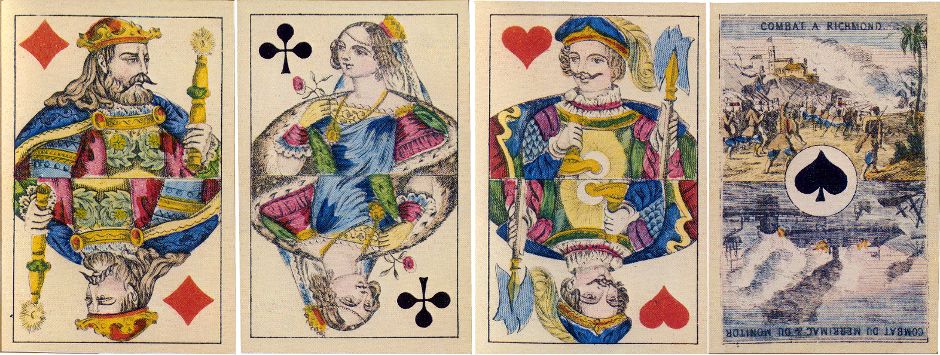
Above: "Cartes Royales", 1880. These cards belong to the most expensive category, that of the "romantic" cards. Their elegant finish made for easy sales abroad. Aces were added with scenes relevant for the destination country.
The firm of A. Van Genechten was determined to conquer the overseas markets, so their products had to be of a high quality. In 1852 Glénisson & Van Genechten, printers and playing card manufacturers, had installed the very first steam engine in Turnhout. This made larger machines possible, which were too heavy to be powered manually, and larger scale production. A price list from the 1850s states that Van Genechten was the sole owner of the Belgian patent for exports of cards with rounded corners, stiffened or metallised in gold and silver. In 1868 Van Genechten had been granted an official licence to print playing cards with Chinese and Japanese paintings. On the death of Antoon Van Genechten in 1874 his son-in-law Jan de Somer took over running the business. In 1882 the Van Genechten company won a medal for their "papers and playing cards" at the London Exhibition. In 1885 at the World Exhibition in Antwerp the company won a diploma of honour, a gold medal and a silver medal for its products. In 1909, three years before De Somer himself died, the firm was made into a limited company.
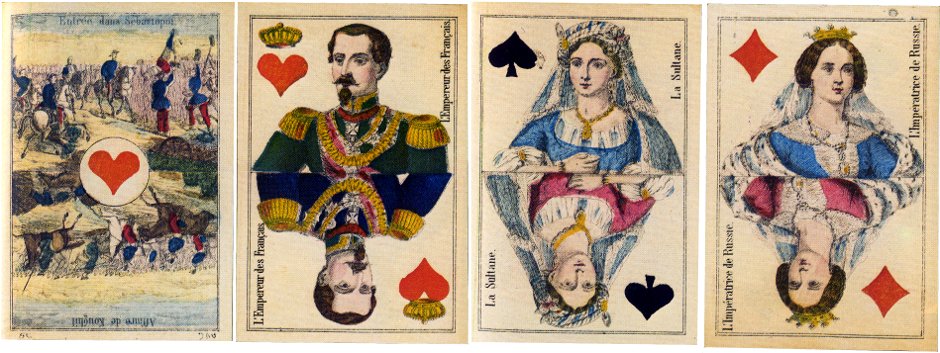
Above: the "Four Emperors" pack, 1880, also known as the "Crimean War", in which the Courts represent the monarchs involved in that disastrous campaign, while the Aces evoke various episodes of the war. Here we see the 'Entry into Sebastopol' and the 'Koughil affair'.
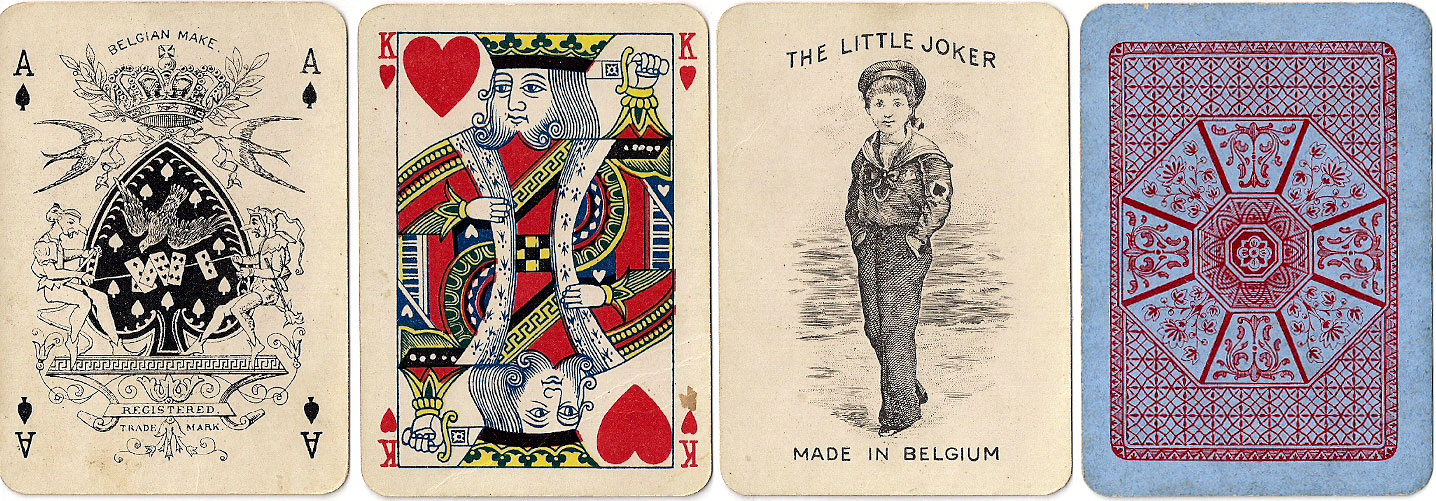
The first trademark registered by Van Genechten was the bust of the "Great Moghul" (23 August 1881) followed by an Ace of Spades with the initials A.V.G. and the words "Sole Agent Koerber, London". Then a "postilion mounted on a trotting horse passing through a gate, in his hand a playing card surrounded by a garland" was registered on 10 April 1883. This card was called a Joker, in a pack destined for export to Canada, and was engraved by Baddeley Bros of London. In 1888 this was followed by the Sailor and the Skater, both designed by Houssiaux of Brussels. Van Genechten had problems with imitations of his trademarks being produced by competitors and legal disputes sometimes arose. A number of trademarks were registered in the countries for which they were destined. In 1908 another Brussels engraver named Becker designed a Joker with a long face, holding a balloon in his right hand.
Above: Sport No.31 playing cards artwork.
Above: Celebrated Eagle Brand trade mark registered in 1904.
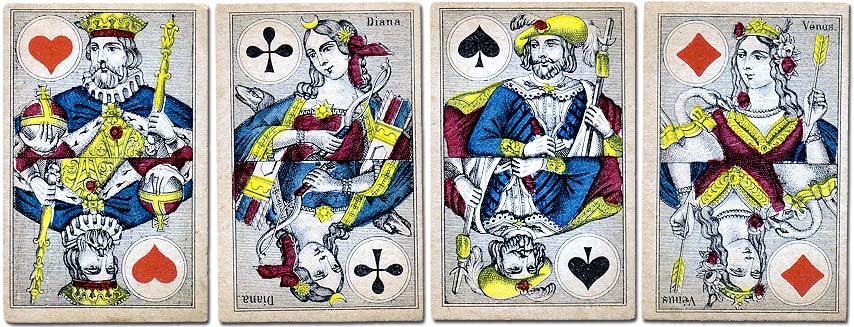
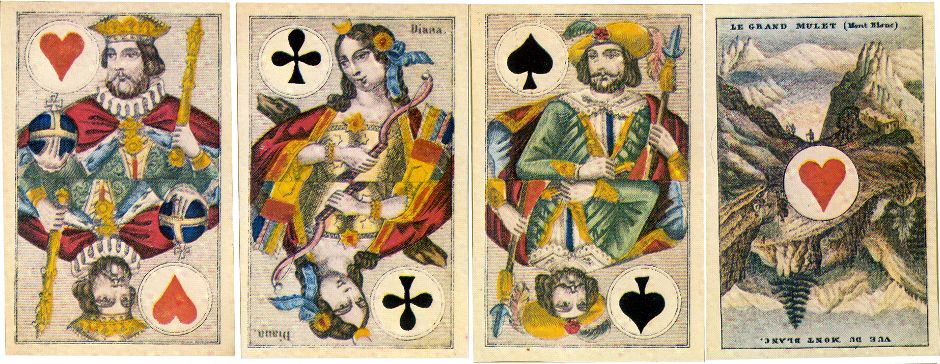
Above: "Cartes Suisses", 1880-1910. The Queens bear the names of goddesses whilst the Aces represent Swiss scenery. The Turnhout factories turned out a great many of these packs.
A price list from the 1850s reveals a wide assortment of cards available in those days: Cartes Orientales, or Crimean Cards (still being sold in 1887); Bongoût (copperplate engraving); Moghul coloured A (magnificent cards not intended for India), Moghul coloured by chromolithography; Italiennes; Suisses; Belges; Hollandaises; Allemandes; Fines; A la Rose (cards for the Liėge region); Marbrées; Francfortoises; Fines Extra; Royales; Cartes Anglaises; Cartes Américaines; Cartes Turques; Cartes Espagnoles; Cartes Portugaises. In later sample books pictorial Aces and historic personages were added to the range. It also comes to light that Van Genechten sometimes had cards produced for them by arrangement with Brepols and also vice-versa, Van Genechten supplied cards to Brepols.
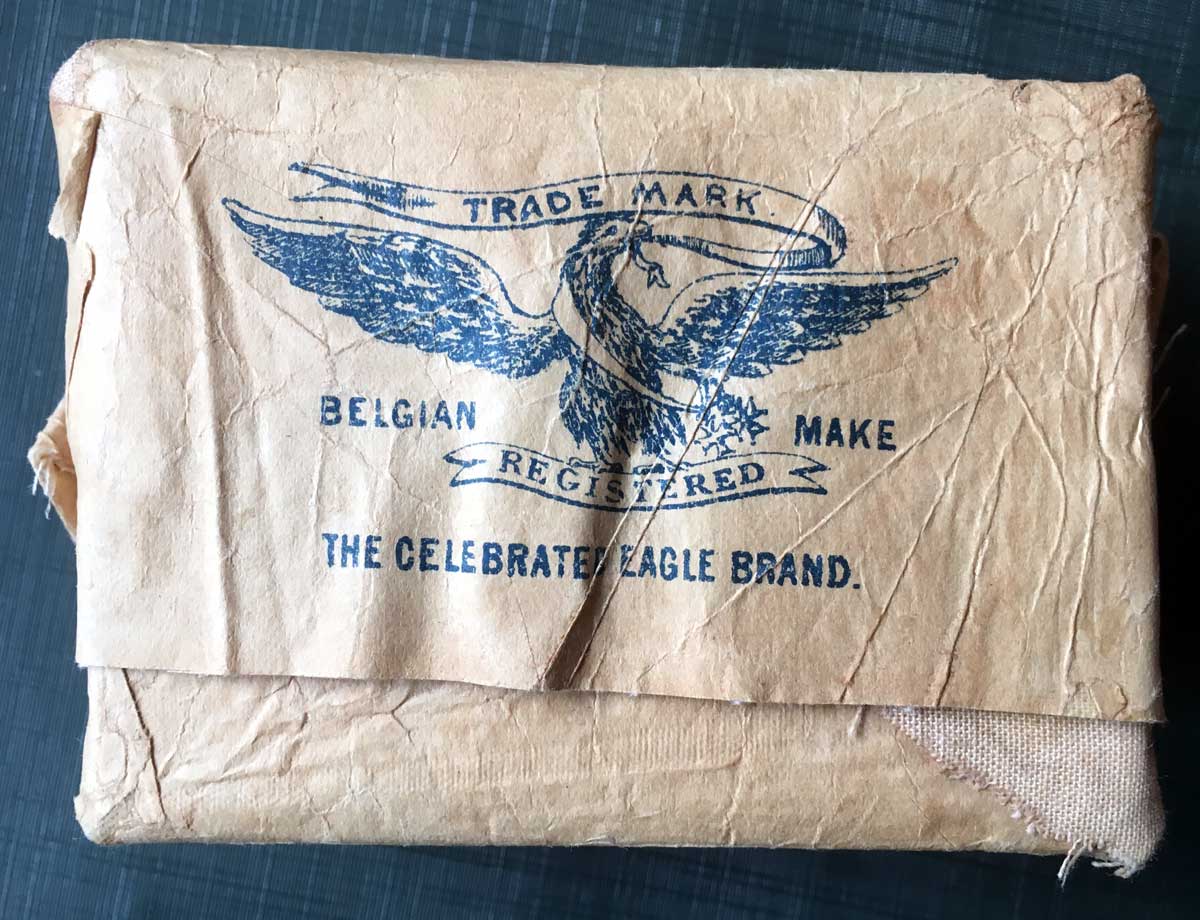
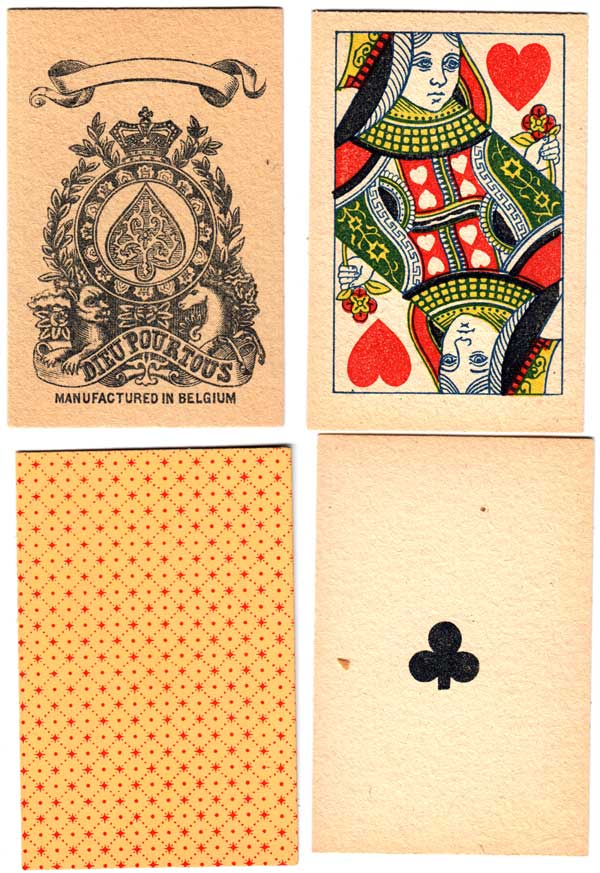
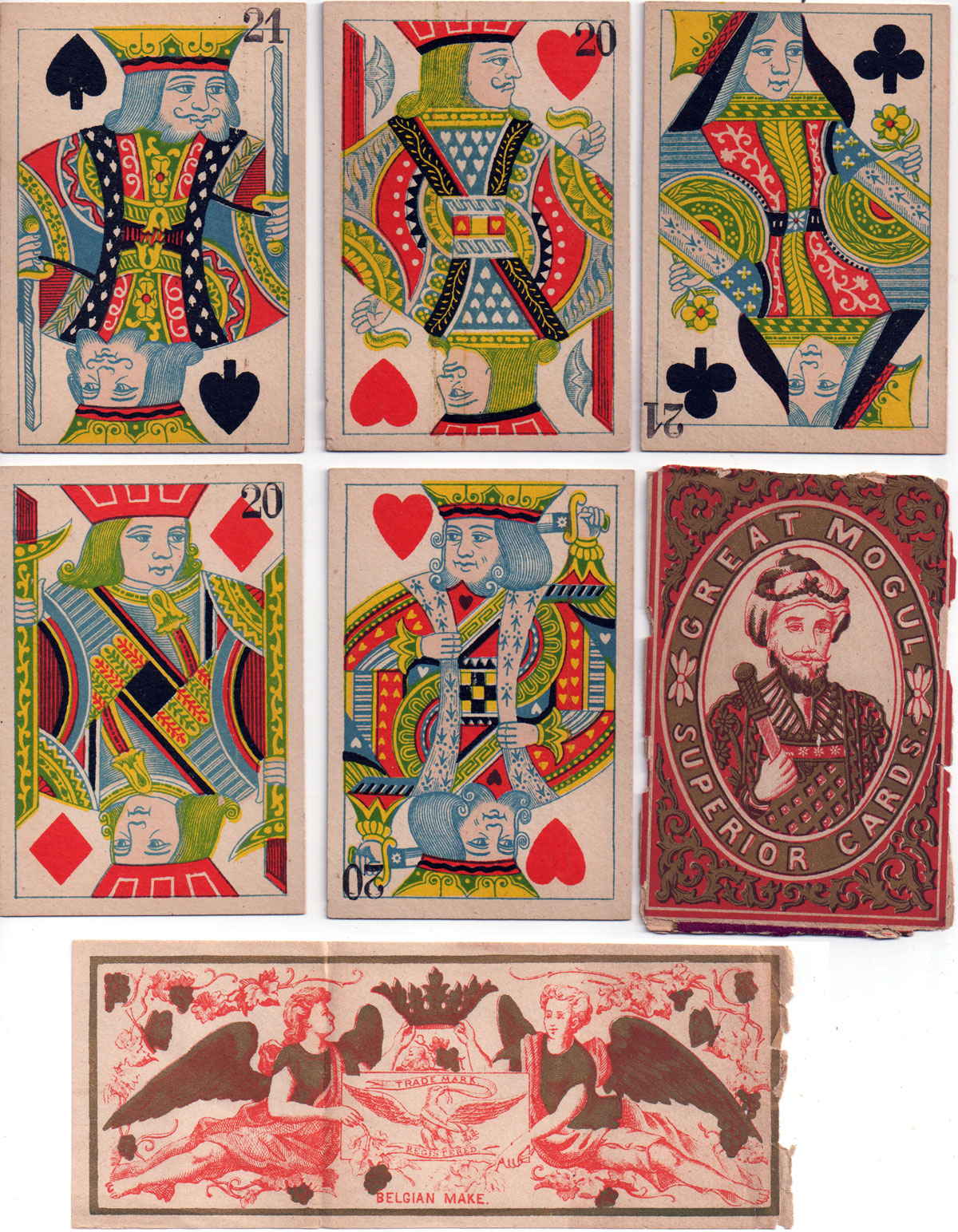
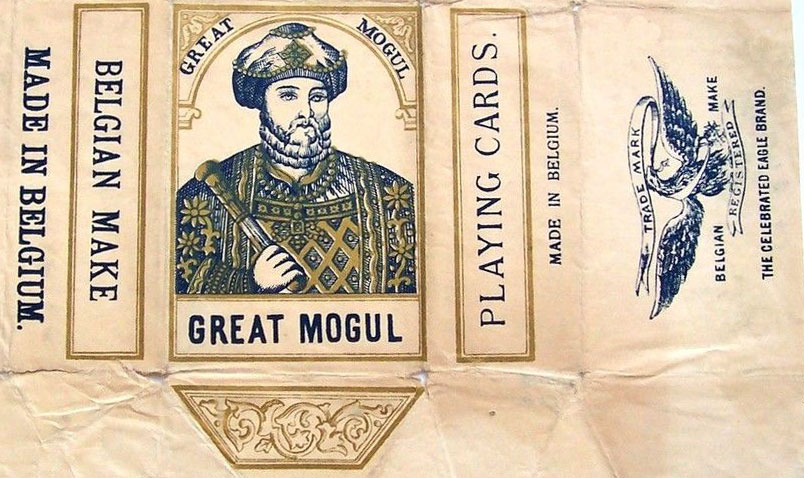
Above: Great mogul wrapper and cards, c.1925. The ribbon on the ace of spades is blank, possibly because he was manufacturing for a third party or an agent. The quality of card is often of low grade in these packs which are often misdated because they look old, but in fact they were made for export to India as temple offerings not for play. Images courtesy Hugh Grenville Morris.
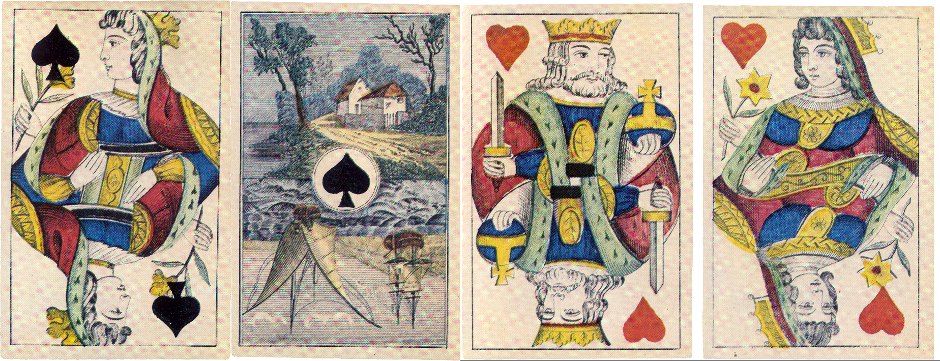
Above: "Cartes Hollandaises", 1887. These cards are the typical designs intended for the Dutch market. The Aces feature views of Holland.
In October 1912 a fire broke out in the factory. A newspaper report gives a good description of the premises. The building was 70 metres long. On the ground floor were 50 glazing machines; marbled paper was produced here as well. The first floor was a stockroom, but machines had been set up here too: two sizing machines, three calenders and two trimmers. The pasteboard room was at the top floor. The fire started in the machine room in the rear wing of the building, and caused damage estimated at over a quarter of a million francs, but luckily the firm had insurance cover.
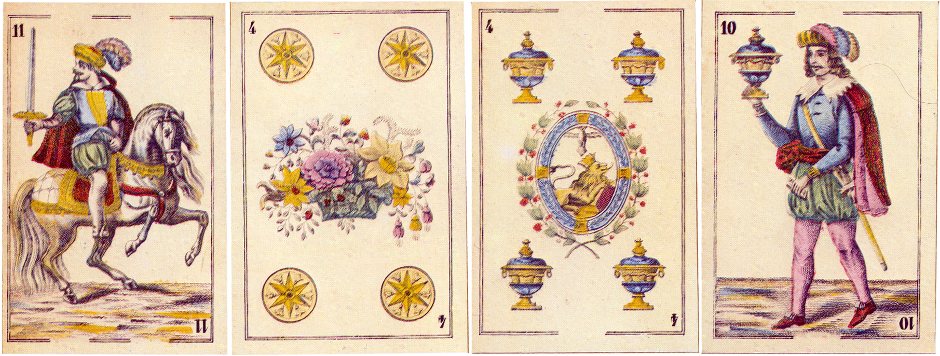
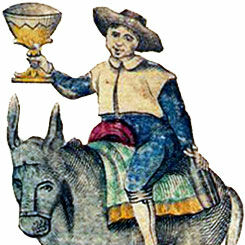
Above: "Naipes", 1877. The Turnhout cardmakers exported vast quantities of Spanish-suited cards to Spain and South America. This example by Van Genechten is certainly among the finest in the category. See also: Escalada y Vidiella (Montevideo) 1860.
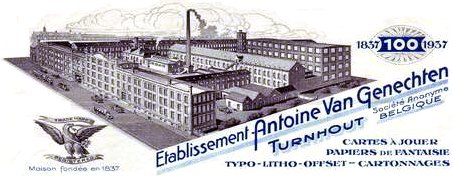
In 1937 the firm's centenary was celebrated. By then the workshops covered a total area of 20,000 sq. metres, and employed about 400 workers. English, French, Spanish and Chinese playing cards of all grades, both for the domestic market and for export, as well as advertising packs, were produced. In 1968 Etablissements Antoine Van Genechten took over Mesmaekers and in 1970 the Dutch firm Speelkaartenfabriek Nederland (Amsterdam).
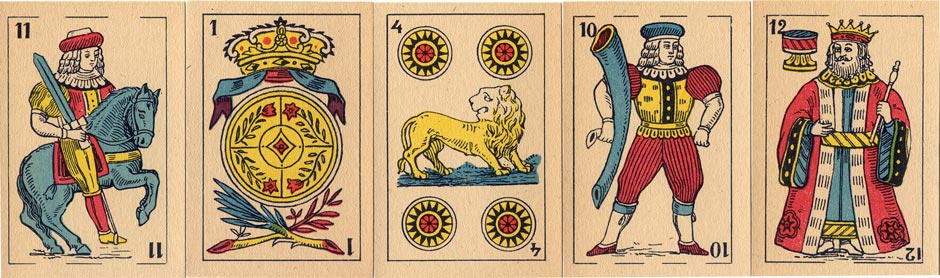
Above: Spanish playing cards for export to Spanish-speaking markets (Spain, Latin America, North Africa), c.1920.
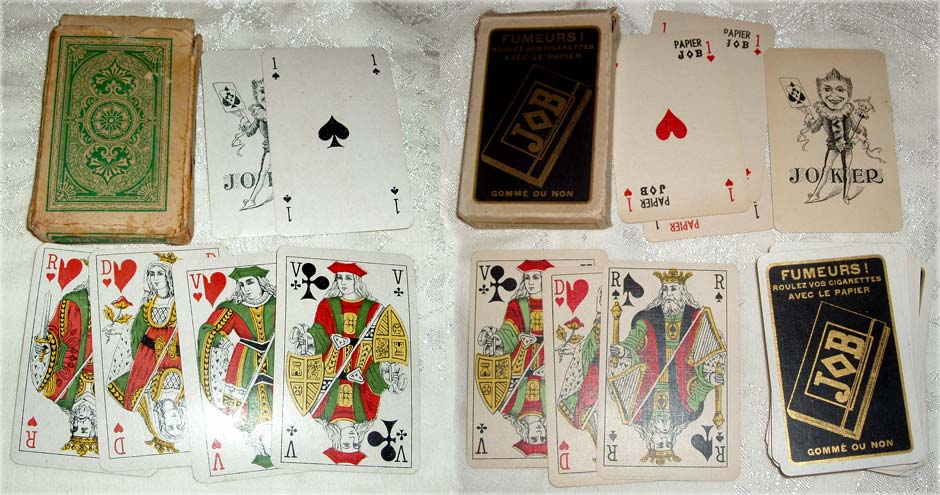
Above: standard Belgian style cards, 1920s.
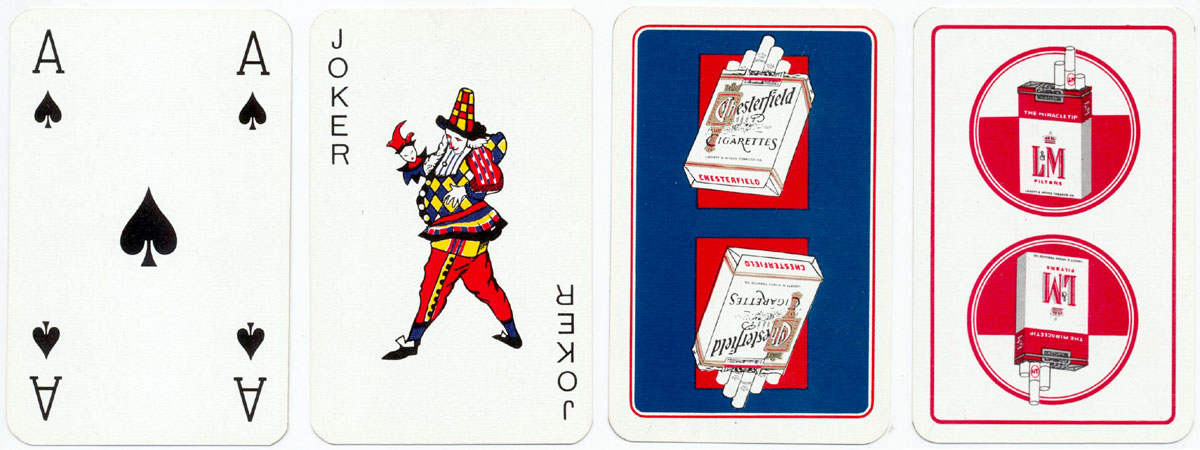
Above: Tobacco advertising cards, 1960s
References:
Autenboer, Dr Eugeen van: The Turnhout Playing Card Industry 1826-1976, Aurelia Books, Brussels 1976
Turnhout: National Museum of the Playing Card►
See also: The Bongoût pattern • Dilkhus playing cards for India • Bayer Pharmaceuticals • Standard Genoese pattern • Sport No.31 •

By Simon Wintle
Spain • Member since February 01, 1996 • Contact
I am the founder of The World of Playing Cards (est. 1996), a website dedicated to the history, artistry and cultural significance of playing cards and tarot. Over the years I have researched various areas of the subject, acquired and traded collections and contributed as a committee member of the IPCS and graphics editor of The Playing-Card journal. Having lived in Chile, England, Wales, and now Spain, these experiences have shaped my work and passion for playing cards. Amongst my achievements is producing a limited-edition replica of a 17th-century English pack using woodblocks and stencils—a labour of love. Today, the World of Playing Cards is a global collaborative project, with my son Adam serving as the technical driving force behind its development. His innovative efforts have helped shape the site into the thriving hub it is today. You are warmly invited to become a contributor and share your enthusiasm.

Leave a Reply

Your Name
Just now Your comment here. Your comment here. Your comment here. Your comment here. Your comment here. Your comment here. Your comment here. Your comment here. Your comment here. Your comment here. Your comment here. Your comment here. Your comment here. Your comment here. Your comment here. Your comment here. Your comment here. Your comment here. Your comment here. Your comment here. Your comment here. Your comment here. Your comment here. Your comment here. Your comment here. Your comment here. Your comment here. Your comment here. Your comment here. Your comment here. Your comment here. Your comment here.
Related Articles
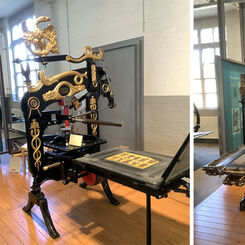
Printing Presses
Antique printing presses from the Turnhout Playing Card Museum collection.
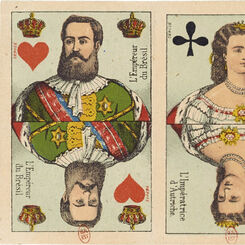
Jeu Quatre Empereurs
Brazilian scenic aces with emperors of Brazil, Austria and France and other dignitaries on the court...
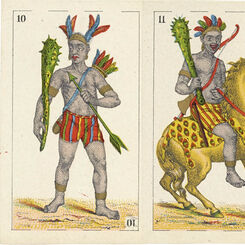
Cartes Universelles
Four Continents fantasy playing cards by Daveluy, Bruges, Belgium, 1860-1885.
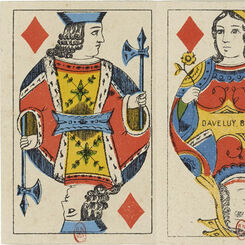
Cartes Marbrées
A provincial variant of the French ‘Paris’ pattern produced by Daveluy c.1850-1895.
Genever Giraf
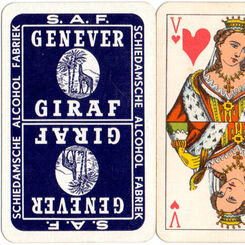
Dutch pattern advertising deck for Genever Giraf made by Van Genechten in the 1950s.
Domino Cards, c.1890
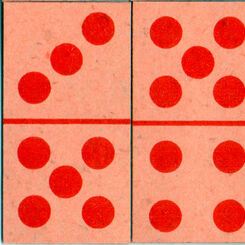
Domino Cards by Mesmaekers Frères, c.1890
Anon Spanish Cards c.1875
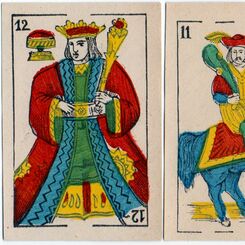
Spanish-suited playing cards made in Belgium by Mesmaekers Frères, c.1875.

Manuf’d for L.N. Mann
Standard English pattern manuf’d for L.N. Mann by Van Genechten, c.1890.
Carta Mundi
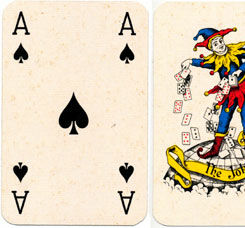
Carta Mundi was founded in Turnhout on 27 June 1970 by pooling the production and sales facilities o...

22: Belgian Makers: Van Genechten
Van Genechten started making playing cards in c.1840 and continued until the founding of Carta Mundi...
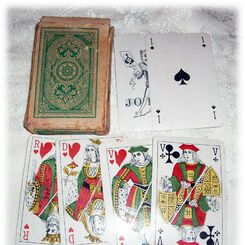
Standard Genoese
Van Genechten manufactured playing cards in various styles, including specially customised versions ...
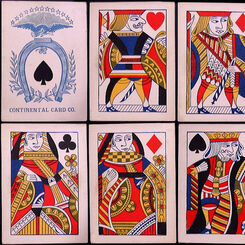
Continental Card Co
The Continental Card Company, 220 North Second Street, Philadelphia, started in 1874, manufacturing ...
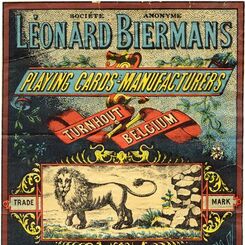
Léonard Biermans, Turnhout
Léonard Biermans had been employed by Brepols from 1871-1874 before opening his own playing card fac...
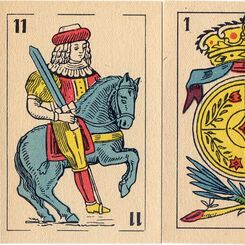
Spanish Cards c.1920
Spanish-suited Playing Cards manufactured by Van Genechten, c.1920.
Reynolds c.1809-1885
Joseph Reynolds had been producing playing cards in the traditional method since c.1809.
Genoese pattern
The design is purely 'Parisian' but the colouring is green, red, yellow and black. Belgium has taken...
Swiss Mogul Cards, 1880-1890
English type 'Mogul' playing cards manufactured in Switzerland by John Müller for export to India, c...
Belgian Playing Cards
Belgian cardmakers have been actively designing and exporting playing cards since the 14th century. ...

Naypes Finos made in Belgium
Belgian manufacturers were competing against Spanish makers. Features of the traditional Spanish des...
Escalada y Vidiella, Montevideo c.1860
Cards from a 40-card pack made in Belgium by Antoine van Genechten exclusively for the firm "Escalad...
Most Popular
Our top articles from the past 60 days