


Myriorama
Myriorama of Italian scenery, 1824.
The Myriorama was invented in France in c.1823 by Jean-Pierre Brés. The idea is that many different panoramic landscapes may be created by laying a set of illustrated cards in any order. The publisher Samuel Leigh employed artist John Heavside Clark (c. 1771–1863), to create Myrioramas for the English market. The example shown here is of Italian scenery.
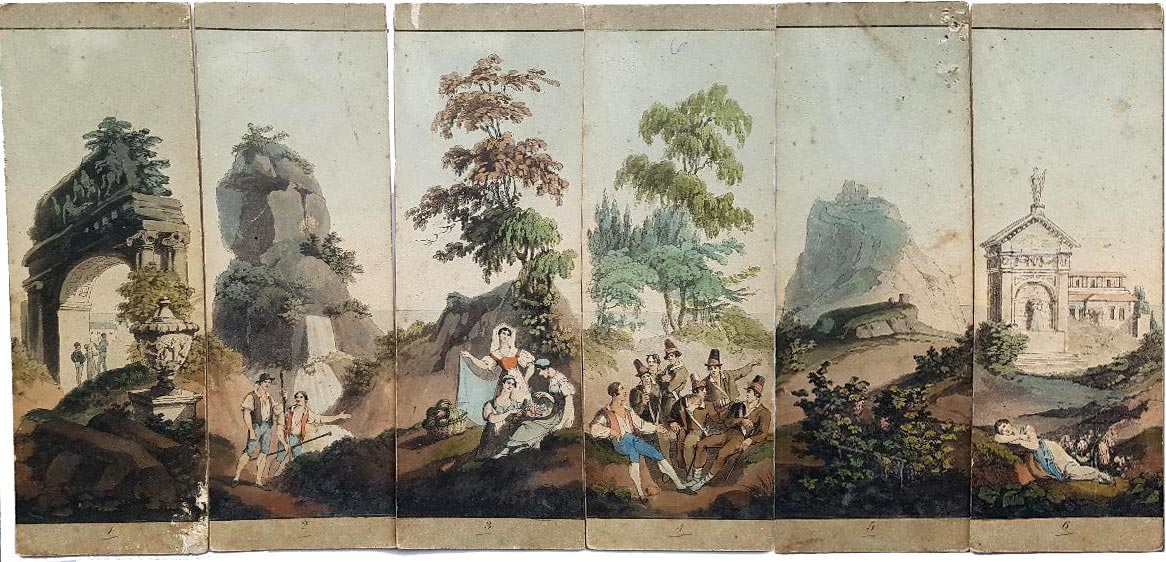
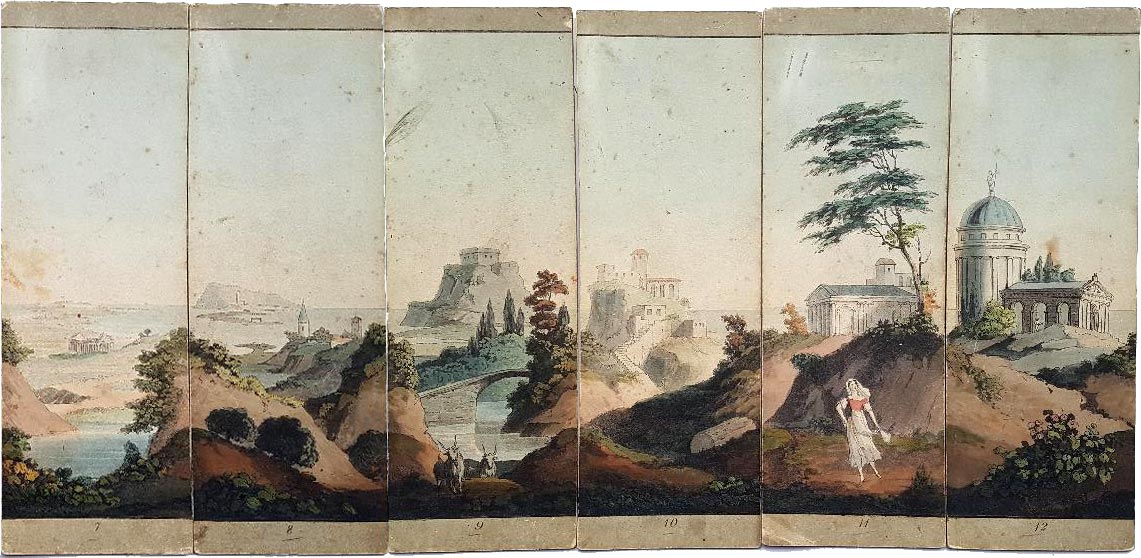
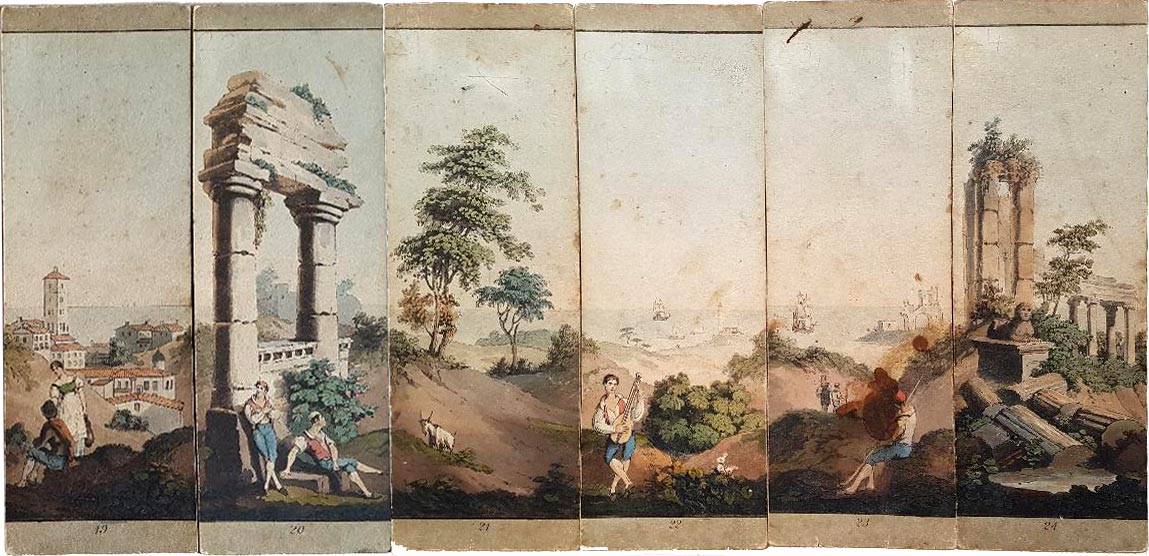
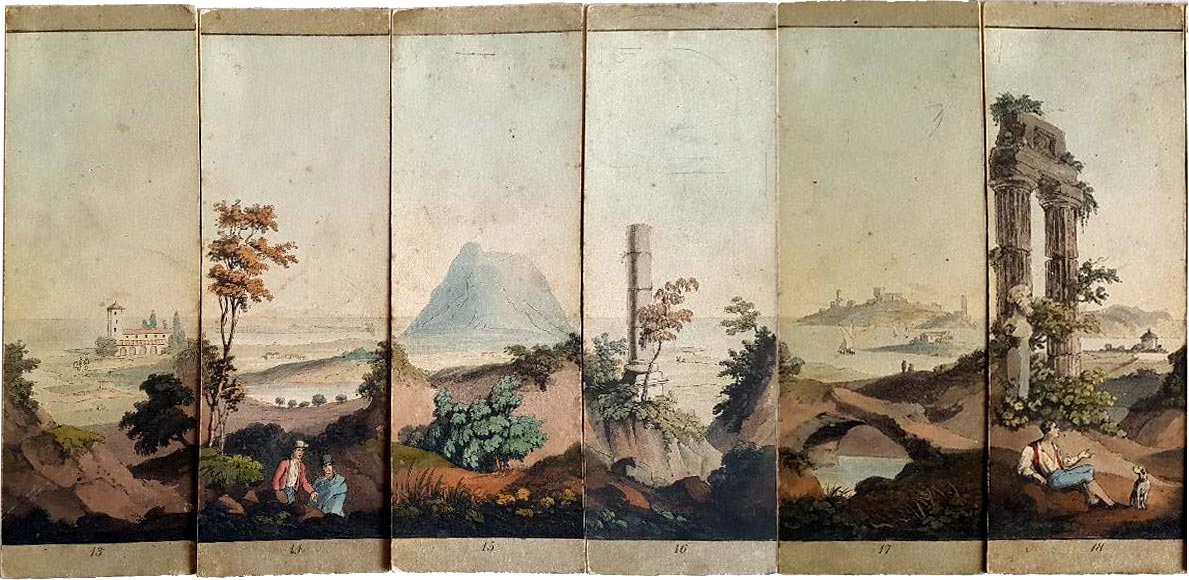
Above: Myriorama of Italian scenery, produced by John H. Clark, published by Samuel Leigh, 1824. 24 elongated cards in box. Images courtesy Shirley Ashman.
The game was known under the name of Myriorama; it consisted of up to thirty-two cards presenting fragments of landscapes drawn in such a way that the various pieces could connect indiscriminately with each other; after scrambling the pieces, compositions more or less pleasing could be made at random. As all the parts of trees, rocks, and clouds fitted together perfectly, each person could create a scene according to their taste. Thus it was a form of patience.
REFERENCES

By Simon Wintle
Spain • Member since February 01, 1996
I am the founder of The World of Playing Cards (est. 1996), a website dedicated to the history, artistry and cultural significance of playing cards and tarot. Over the years I have researched various areas of the subject, acquired and traded collections and contributed as a committee member of the IPCS and graphics editor of The Playing-Card journal. Having lived in Chile, England, Wales, and now Spain, these experiences have shaped my work and passion for playing cards. Amongst my achievements is producing a limited-edition replica of a 17th-century English pack using woodblocks and stencils—a labour of love. Today, the World of Playing Cards is a global collaborative project, with my son Adam serving as the technical driving force behind its development. His innovative efforts have helped shape the site into the thriving hub it is today. You are warmly invited to become a contributor and share your enthusiasm.

Activity for Myriorama
Sign in to comment or save this article.

Related Articles
Learning to play Cribbage
I learned to pay cribbage when I was very young, aged around six or seven.
Carte Osteologiche
Skulls and bones of all descriptions have become the suits and pips in this 40-card pack from Italy....
Gone to Pot: Gardener’s playing cards
‘Gone to Pot’: special playing cards for keen gardeners, United Kingdom.
The Origin of Patience Games in English
Jessel’s Bibliography of works in English on Playing Cards and Gaming describes “The first book on P...
History of London illustrated playing cards
A catalogue in 54 cards of some of the treasures held within the Museum of London collections.
Cribbage Patience or Cribbage Squares
Cribbage Patience or Cribbage Squares, produced by Messrs Edward Mortimer, Halifax and London.
Ethics Education playing cards
Ethics Education playing cards produced by the Centre for Military Ethics at King’s College London, ...

Night & Day playing cards
‘Night & Day’ playing cards produced by London Underground, United Kingdom
Tea & Coffee Lovers playing cards
Tea & Coffee Lovers playing cards produced by Cultzilla.
Animal Aid playing cards
Animal Aid playing cards with anti-shooting cartoons created by Steve Hutton.
House of Commons Playing Cards
House of Commons playing cards designed to serve as a civic guide to the UK Parliament.
XIXth Century
The XIXth Century published by John Jaques & Son, c.1875.
Aesop’s Fables
Aesop’s Fables playing cards by I. Kirk, c.1759.
Pantheon or Heathen Mythology
Pantheon or Heathen Mythology cards for instruction of youth, c.1770.
Desperanto
Desperanto language game by Qui Vive Ltd, c.1990.
Weights and Measures
“Weights and Measures” card game by John Jaques & Son, Ltd., c.1910, a reminder of some of our more ...
Arms of English Peers
The Arms of English Peers playing cards were first published in 1686. Heraldry, or a knowledge of th...

University of Essex
Playing Cards produced for the University of Essex during 2005-2007.
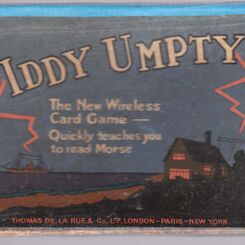
Iddy Umpty
“Iddy Umpty” card game based around learning to read the Morse Code Alphabet. by Thomas de la Rue & ...
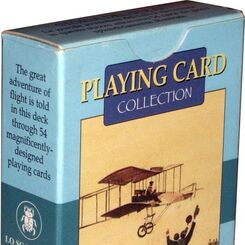
History of Flight
“History of Aviation” playing cards published by Lo Scarabeo (2003) in which every card carries a pa...
Most Popular
Our top articles from the past 60 days


Zoyander Street
04 April 2026, 05:00SavedSaved this article to Myriorama