Adolfo Matarelli Transformation
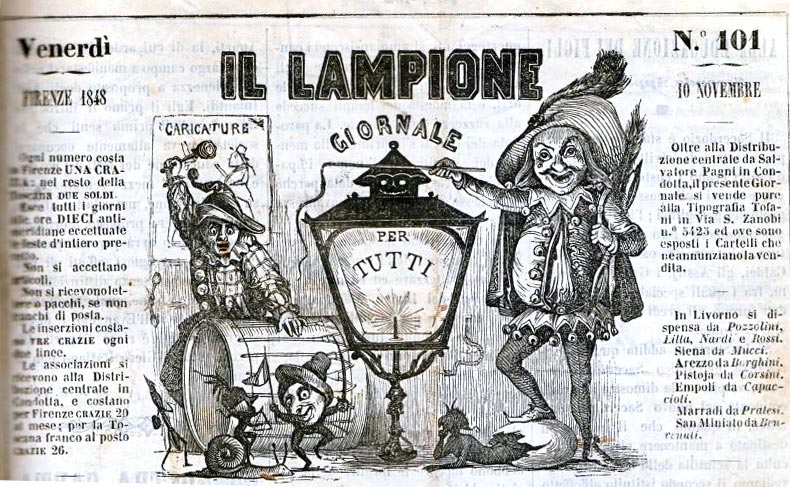
Matarelli was a well known caricaturist who first illustrated Carlo Collodi's famous Pinocchio story. He was also a collaborator in the satirical magazine “Il Lampione”, founded by Collodi.
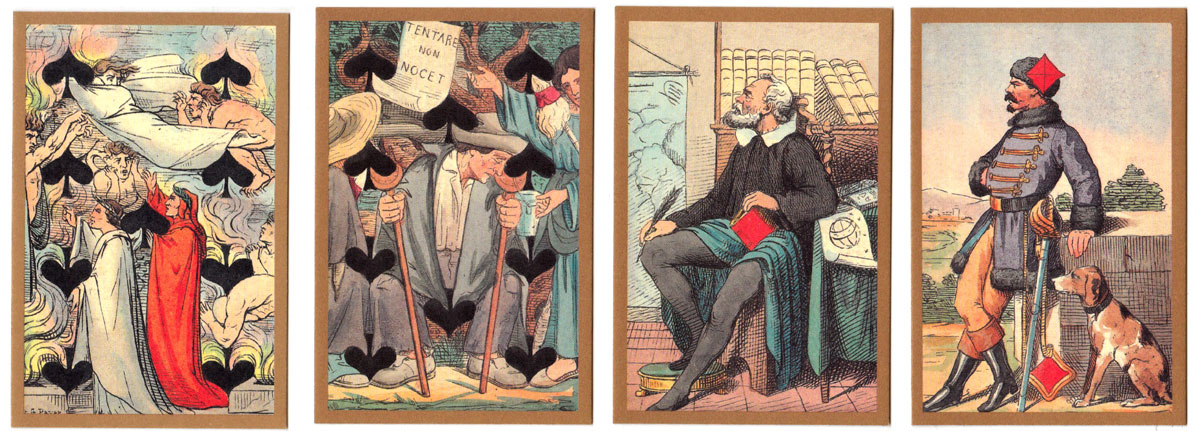
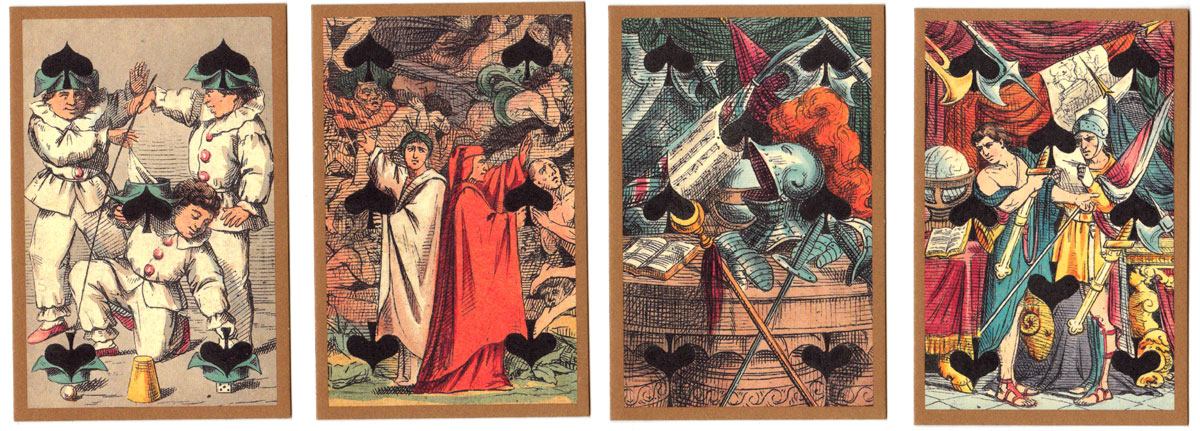
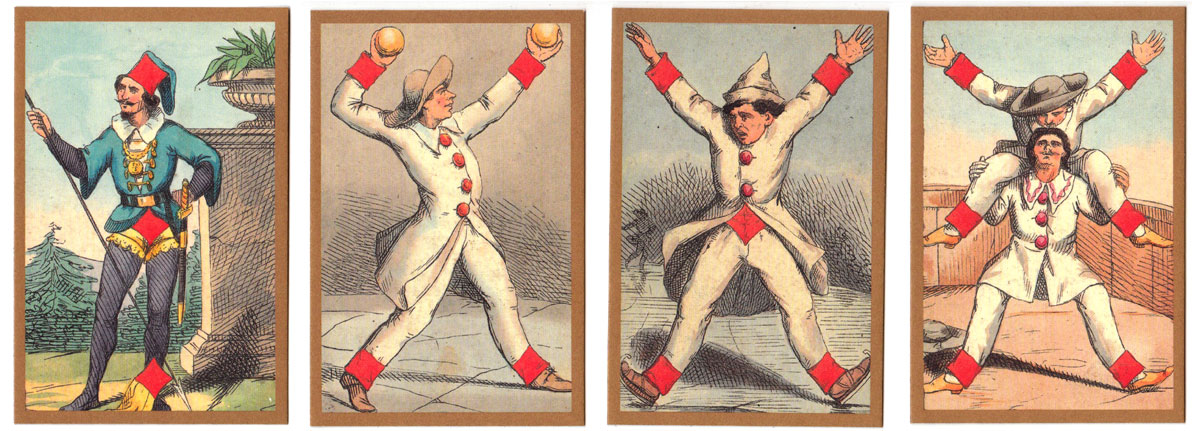
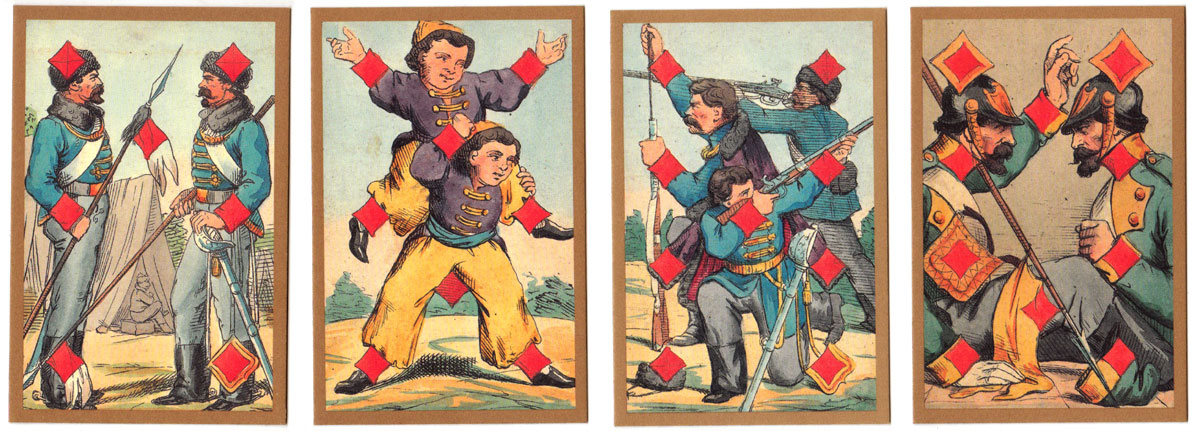
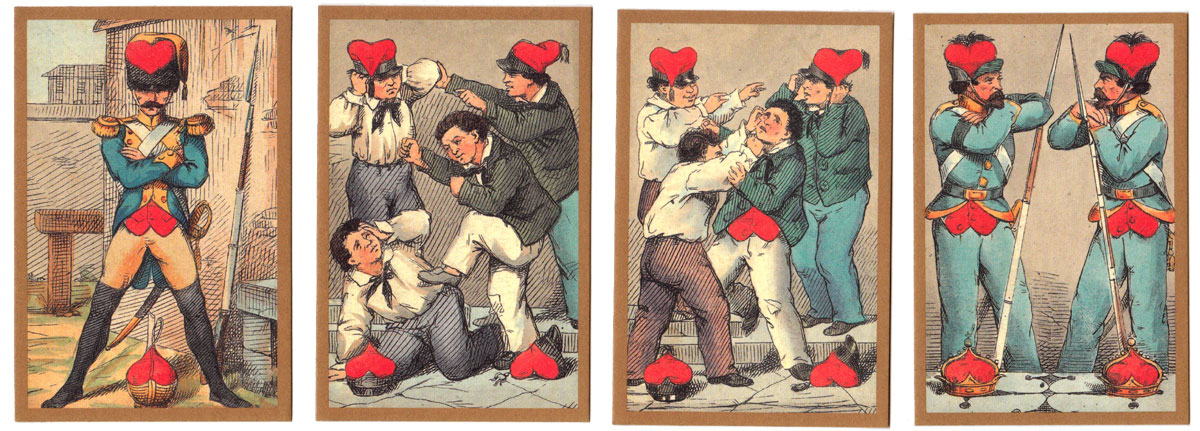
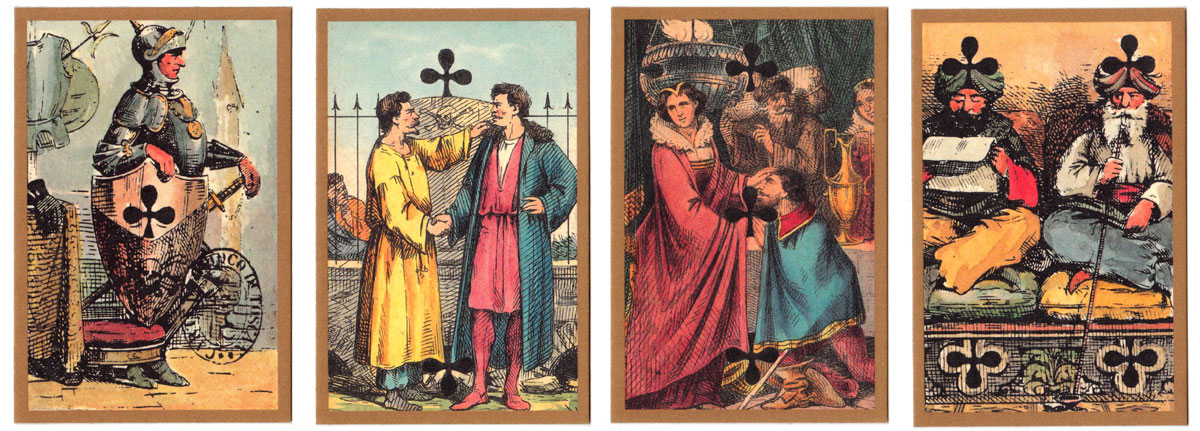
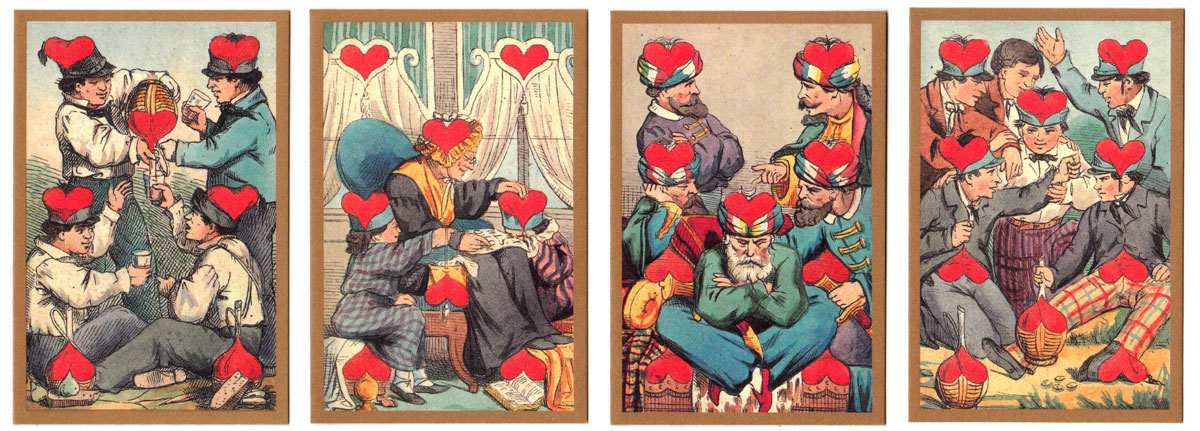
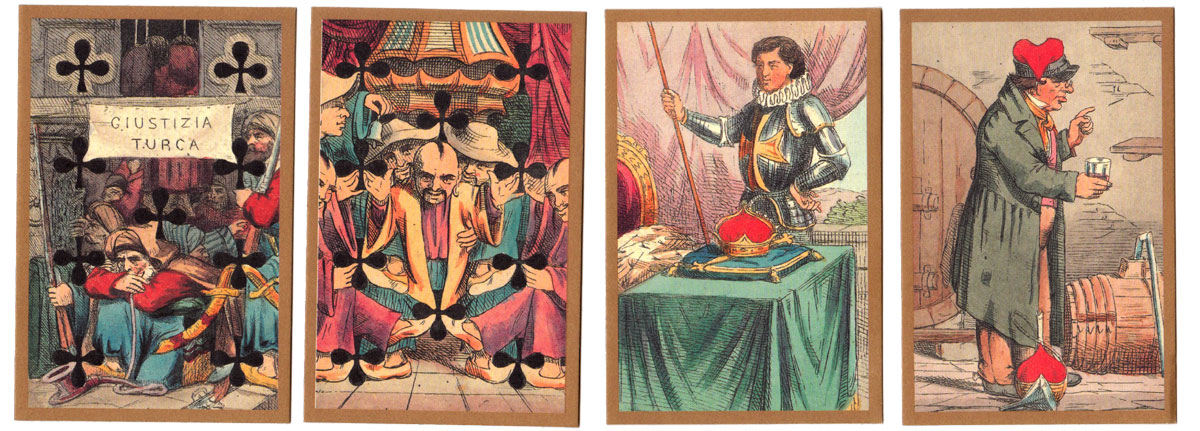
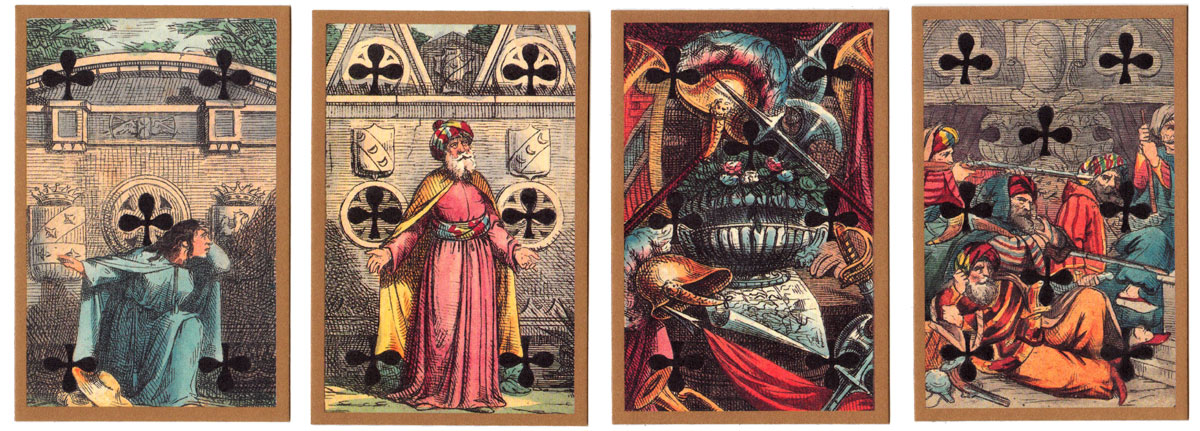
Transformation playing cards designed by Adolfo Matarelli (1832-1877) and originally published by Lit. G. Payer, Florence, c.1860 with the title “Album”. Matarelli was a well known caricaturist who first illustrated Carlo Collodi's famous Pinocchio story. He was also a collaborator in the satirical magazine “Il Lampione”, founded by Collodi. The images in the intricately designed “transformed” playing cards are supposed to be street scenes, but are often allegorical or symbolic, suggesting a moral or political innuendo and resulting in a visually pleasing and intriguing transformation deck.
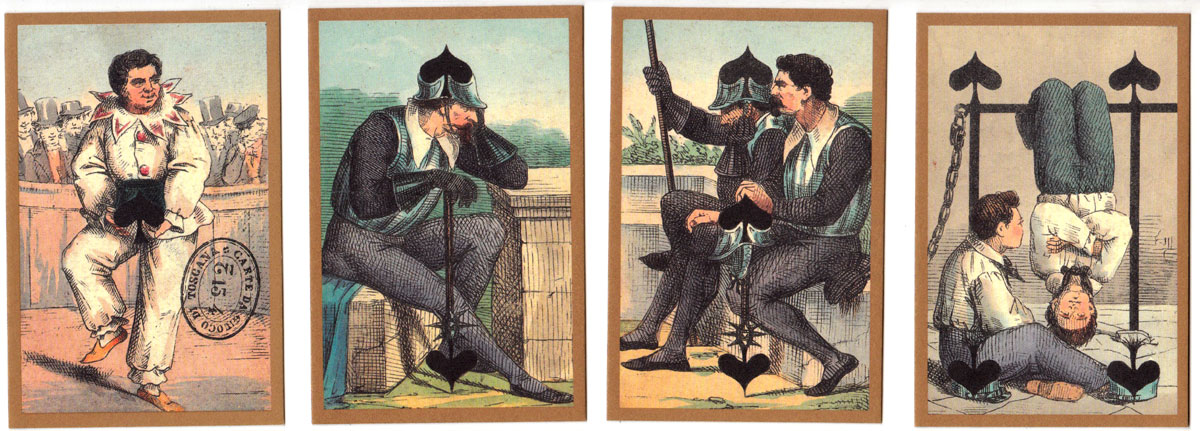
The Court Cards
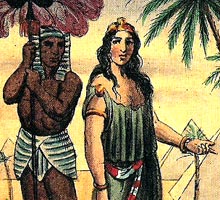
The 12 court figures are all standing in front of a background scene which enhances the sense of drama.
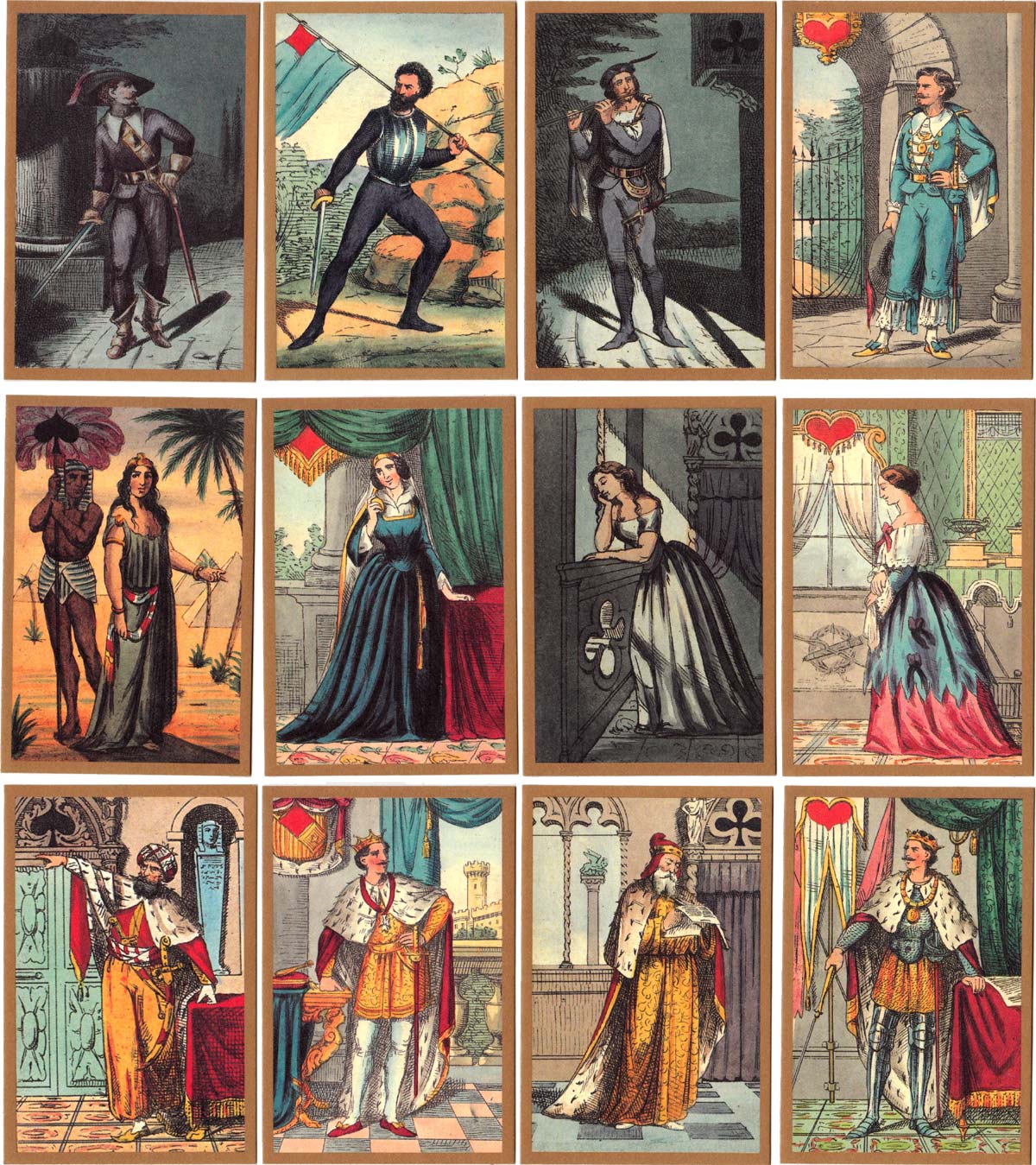
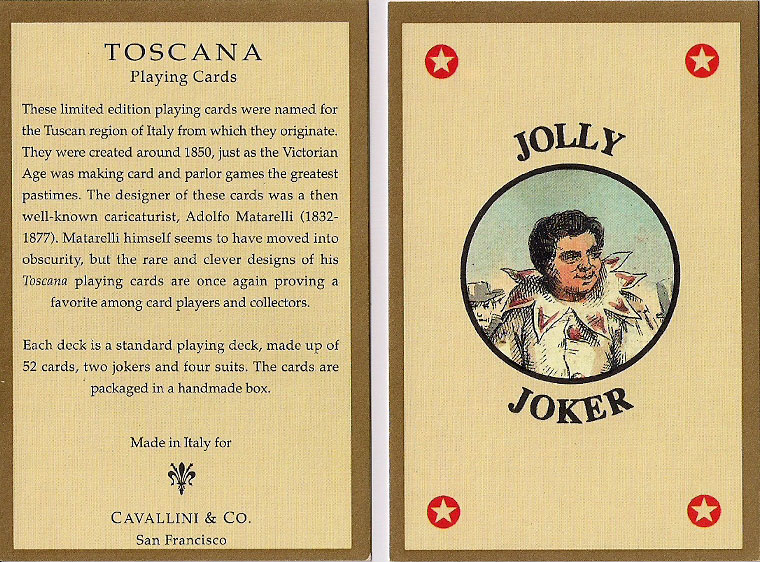
Above: 52-card deck of transformation playing cards designed by Adolfo Matarelli (1832-1877), reissued here as a facsimile edition named 'Toscana playing cards' published by Cavallini & Co., San Francisco. The set is presented in a handmade box accompanied by a Jolly Joker and information card. The original pack was printed in two versions: 52 cards and 40 cards. Images courtesy Rex Pitts.
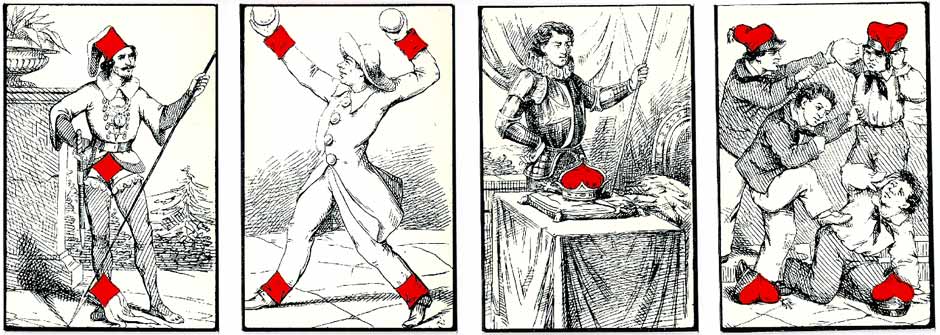
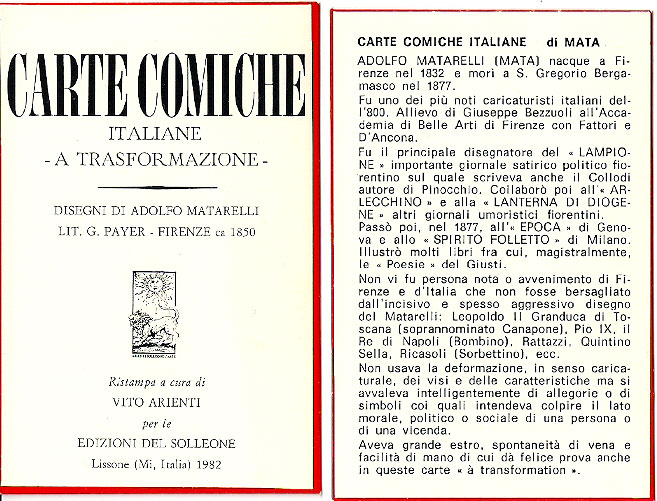
Above: the same cards in an uncoloured version reissued in a facsimile edition named 'Carte Comiche' published by Vito Arienti, Edizioni del Solleone, Lissone, 1982. The edition includes a title card and an information card. images courtesy of Rod Starling, author of "The Art and Pleasures of Playing Cards".

By Rex Pitts (1940-2021)
United Kingdom • Member since January 30, 2009
Rex's main interest was in card games, because, he said, they were cheap and easy to get hold of in his early days of collecting. He is well known for his extensive knowledge of Pepys games and his book is on the bookshelves of many. His other interest was non-standard playing cards. He also had collections of sheet music, music CDs, models of London buses, London Transport timetables and maps and other objects that intrigued him.
Rex had a chequered career at school. He was expelled twice, on one occasion for smoking! Despite this he trained as a radio engineer and worked for the BBC in the World Service. Later he moved into sales and worked for a firm that made all kinds of packaging, a job he enjoyed until his retirement. He became an expert on boxes and would always investigate those that held his cards. He could always recognize a box made for Pepys, which were the same as those of Alf Cooke’s Universal Playing Card Company, who printed the card games. This interest changed into an ability to make and mend boxes, which he did with great dexterity. He loved this kind of handicraft work.
His dexterity of hand and eye soon led to his making card games of his own design. He spent hours and hours carefully cutting them out and colouring them by hand.

Activity for Adolfo Matarelli Transformation
Sign in to comment or save this article.

Related Articles
The Comedy of Courtship
Courtship, class and convention in a Biedermeier satirical card deck from Germany.
Early nineteenth-century Transformation cards
Vernacular hand-painted Transformation cards, probably early 19th century.
Le Geant, or Second Empire pack
Transformation cards issued during the Second Empire under Napoleon III.
Hand-drawn transformation cards, c1870
Whimsical pen-and-ink drawings copied from the Maclure, Macdonald & Macgregor transformation pack.
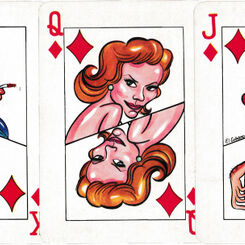
Le Ore playing cards
Caricatures of famous personalities from the late 1970s for the Italian magazine Le Ore.
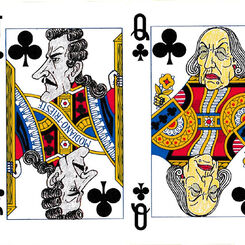
Le Carte di Forattini
Political caricatures by Giorgio Forattini published by Arnoldo Mondadori Editore, Italy, 1993.
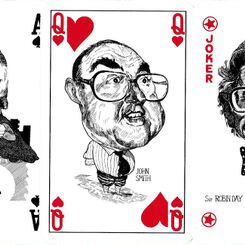
Playing Politics ’92: Pack of lies
Playing Politics ’92: Pack of lies with caricatures by Grant Robertson, UK.
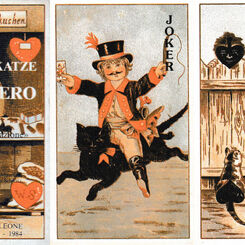
Schwarze Katze (or Gioco del Gatto Nero)
Reproduction of a 40-card transformation pack with designs by “WS”, adapted for the game of Black Ca...
El Jueves playing cards
Caricatures of 52 famous Spaniards for the satirical magazine “El Jueves”.
Carte da gioco anticomuniste del Comitato civico
Anti-Communist propaganda pack with satirical designs by Benito Jacovitti.
52 Transformierte Spielkarten
Modern transformation pack including some saucy images created by Siegfried Heilmeier.
Vanity Fair 1868-1914
Vanity Fair 1868-1914 playing cards published by Billy Bembo, United Kingdom, 1995.
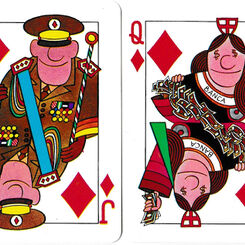
Panorama playing cards
Panorama playing cards included with a weekly news magazine published in Milan, Italy, c. 1979.
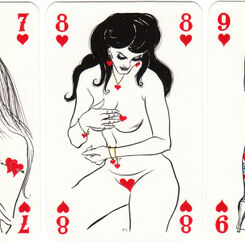
Eroticartes
Eroticartes with drawings by Pino Zac, 1983.
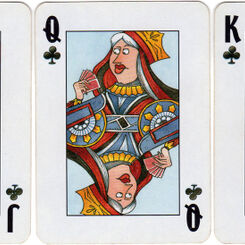
Klutz Card Deck
Klutz Card Deck with comic courts.
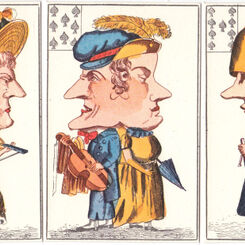
Jeu Grotesque
Jeu Grotesque was first published in France c.1800.
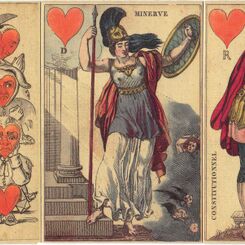
Cartes à Rire
Transformed playing cards featuring satirical caricatures of political figures then in the ascendant...
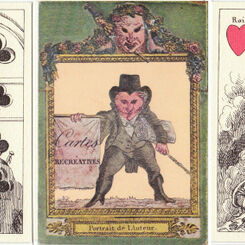
Cartes Recréatives
Cartes Recréatives is a set of Transformed playing cards designed by Armand-Gustave Houbigant (1790-...
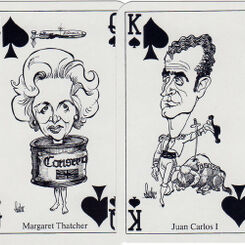
Polit-Poker 1983
Black and white caricatures of famous world leaders by the German artist Bubec.
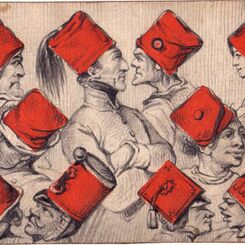
Transformation of Playing Cards
The best-known fantasy playing cards are Transformation cards, in which figurative scenes are drawn ...
Most Popular
Our top articles from the past 60 days