Gumppenberg of Milan
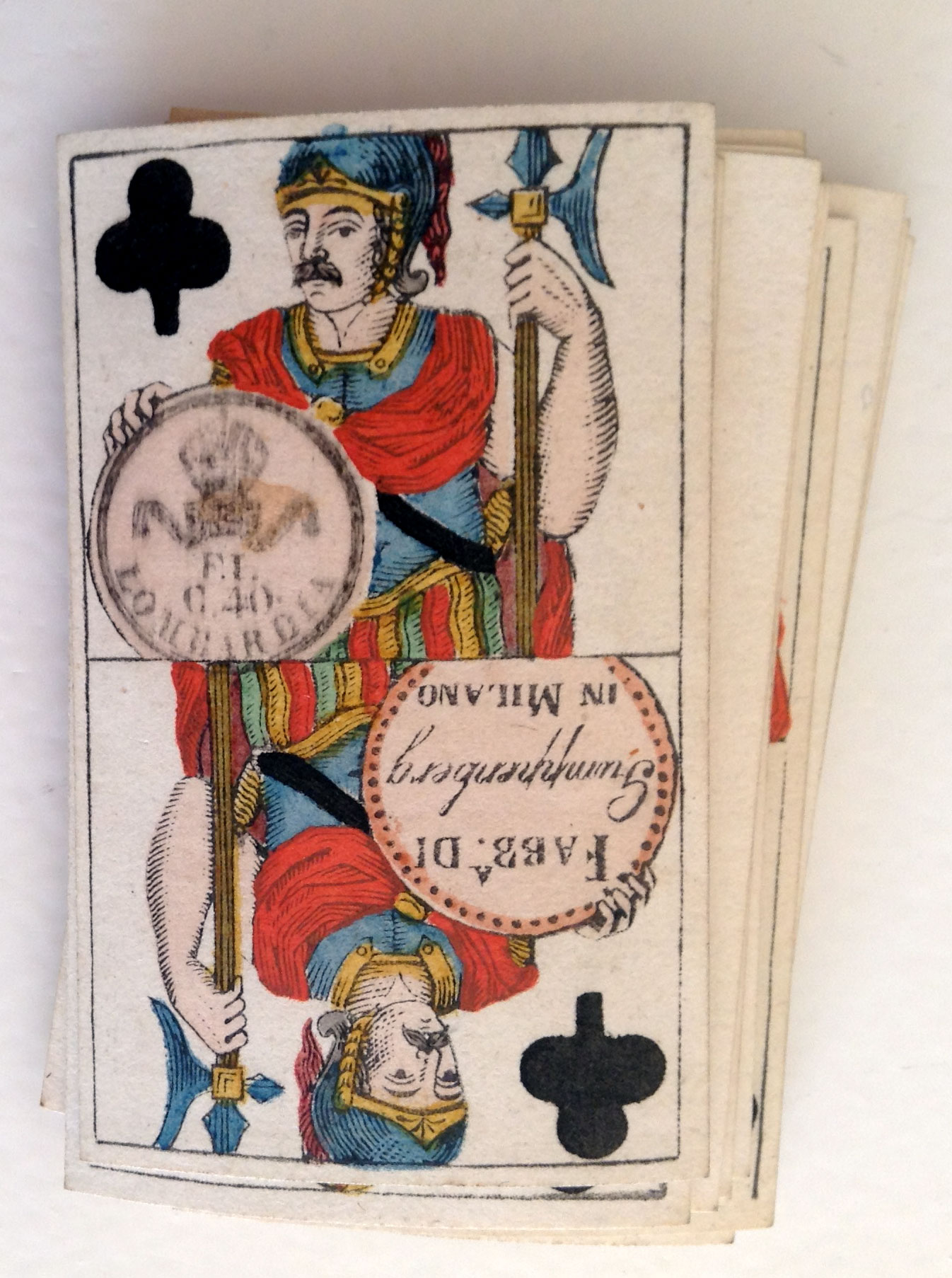
Fine playing cards made by Gumppenberg of Milan evoking the style of antiquity, c.1830
Gumppenberg of Milan
c.1830
Ferdinando Gumppenberg (active 1809-c.1846) was a major card designer and manufacturer in the early 19th century. Arriving in Milan in 1809 from Munich, he introduced German technical innovation and taste into Italy¹. He is best known for a great range of tarot packs, especially the very successful “Della Rocca” tarot, c.1830 and the non-standard “Corona Ferrea” pack having episodes in the history of the Lombard Iron Crown on the trumps.
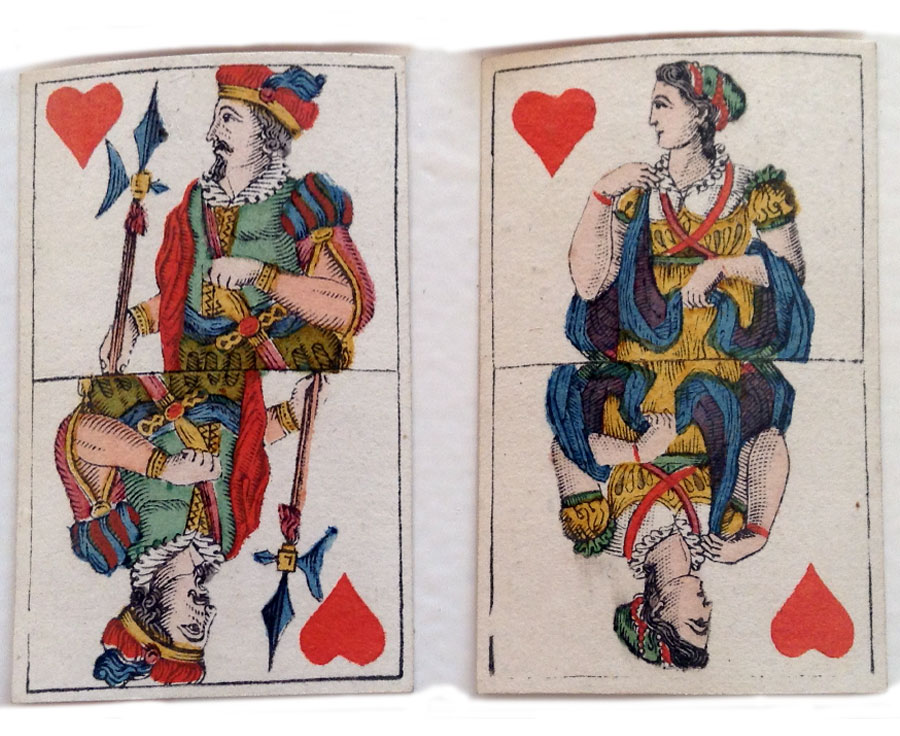
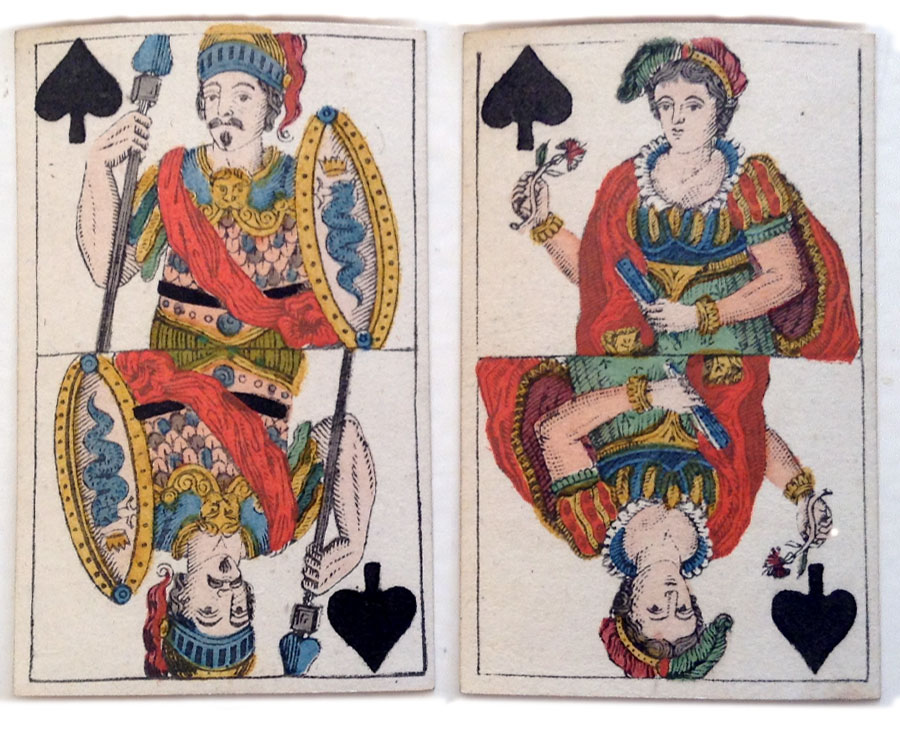
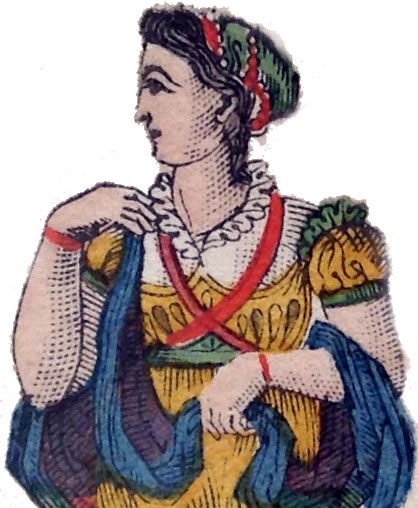
Playing cards were also produced at Gumppenberg’s Fabbrica in Milano. Many of his original designs were copied by other manufacturers (eg Edoardo Dotti). The court cards in this example are stencil-coloured woodcuts, with vibrant imperial-style costumes evoking antiquity but perhaps lacking in facial expressions.
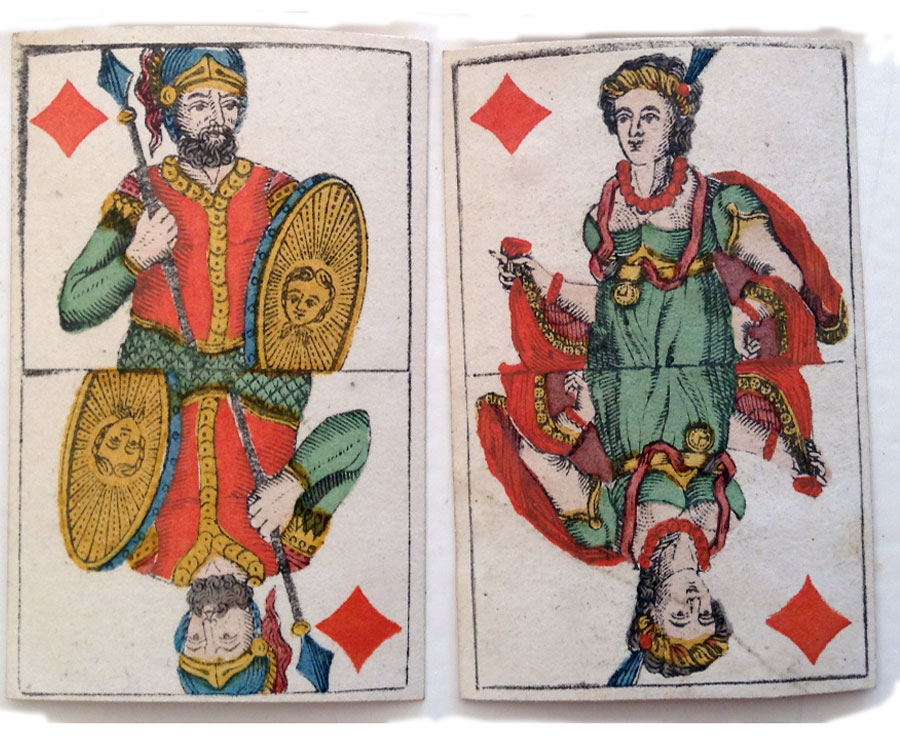
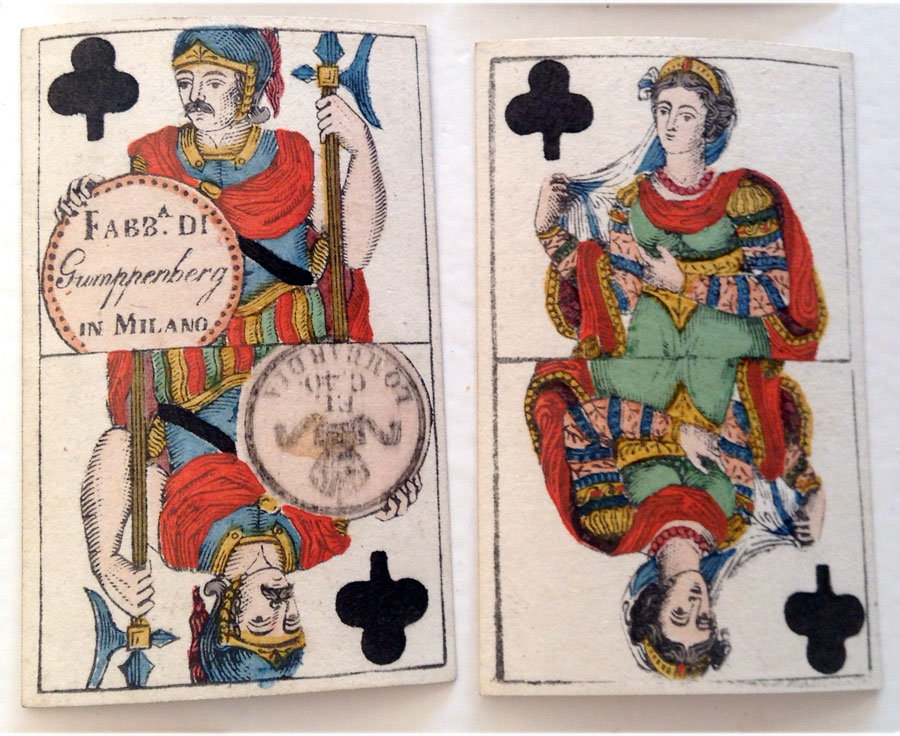
Above: the tax stamp on the Jack of clubs was used in the Kingdom of Lombardy between 1823-1840. more→
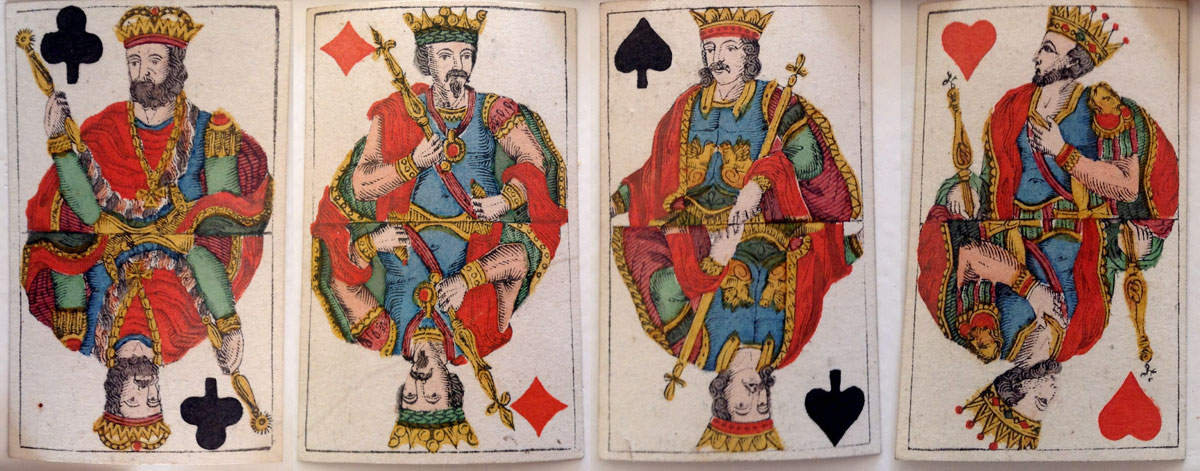
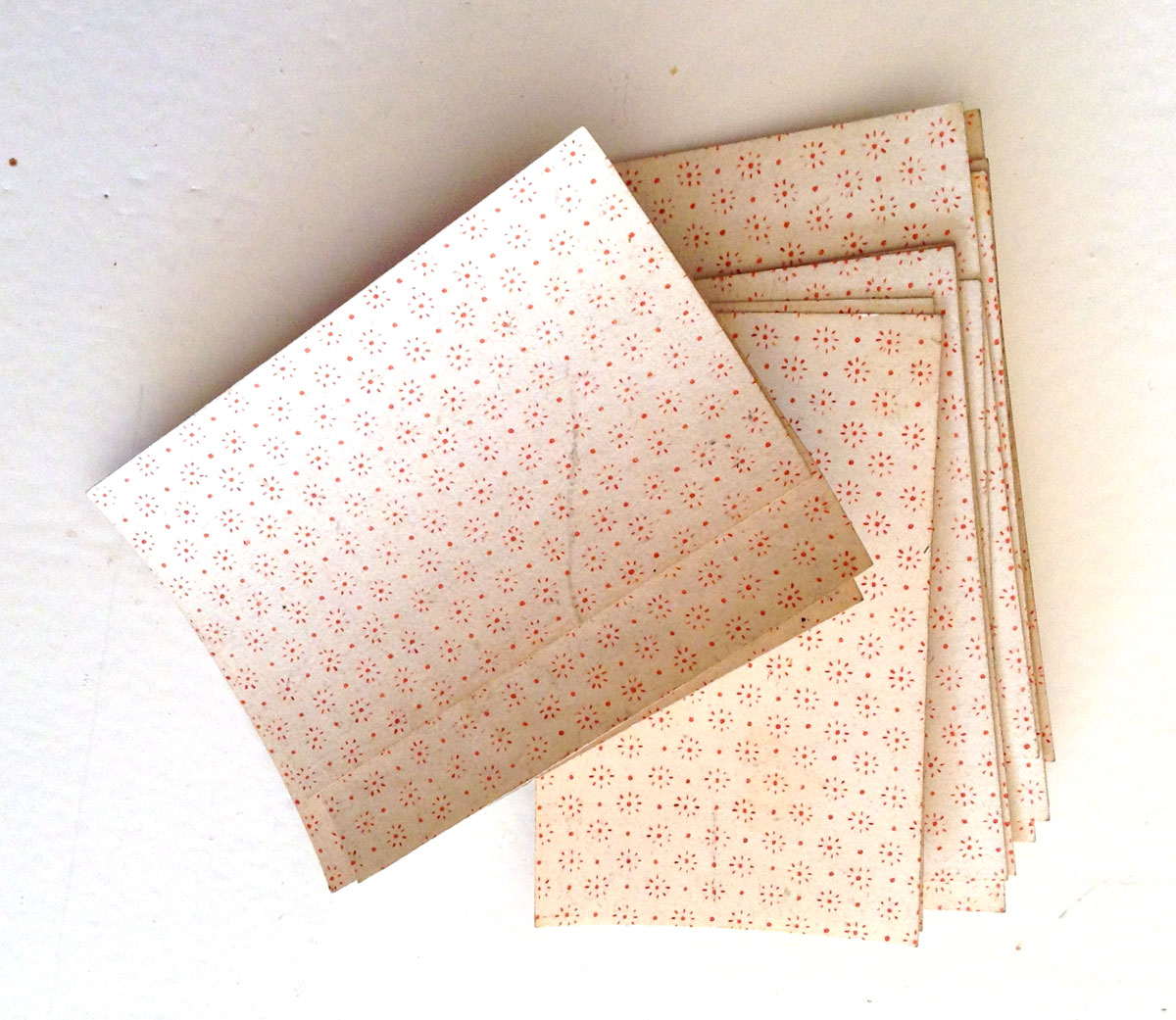
Above: playing cards by Ferdinando Gumppenberg, Milan, c.1830. The reverse has a repeating pattern of red dots on plain white. Images courtesy Siobhan Johnson.
¹ According to the publisher Osvaldo Menegazzi: “Ferdinando Gumppenberg is one of the greatest innovators and inventors, ingenious in the field of playing card production during the 19th century. When he arrived in Milan in 1809 from Munich, he brought German technology along with a trunk full of experience to share with Italy. He had studied with J. Fetscher and also brought with him the news, taste, fashion and trends that were of contemporary Germany and Austria during the 2nd half of the 1700s.” See also: Gumppenberg en Dellarocca→

By Simon Wintle
Spain • Member since February 01, 1996 • Contact
I am the founder of The World of Playing Cards (est. 1996), a website dedicated to the history, artistry and cultural significance of playing cards and tarot. Over the years I have researched various areas of the subject, acquired and traded collections and contributed as a committee member of the IPCS and graphics editor of The Playing-Card journal. Having lived in Chile, England, Wales, and now Spain, these experiences have shaped my work and passion for playing cards. Amongst my achievements is producing a limited-edition replica of a 17th-century English pack using woodblocks and stencils—a labour of love. Today, the World of Playing Cards is a global collaborative project, with my son Adam serving as the technical driving force behind its development. His innovative efforts have helped shape the site into the thriving hub it is today. You are warmly invited to become a contributor and share your enthusiasm.

Related Articles
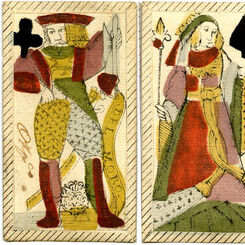
Lyon pattern made in Italy by Pietro de Santi
The Lyon pattern was initially developed in France during the 16th century. As Lyon was a trading hu...

Neapolitan pattern by Luigi Pignalosa, Naples
Two versions of the Neapolitan pattern from the British Museum by Luigi Pignalosa, Naples, 1875 & 18...
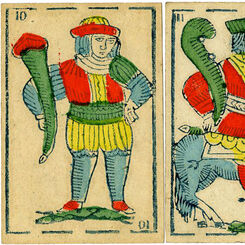
P. Buscaglia: Spanish-suited cards
Spanish-suited cards published by P. Buscaglia, Mele & Genova.
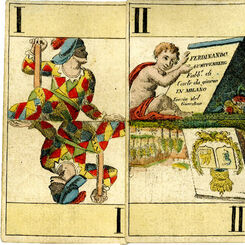
Natural History Tarocchi
Natural History Tarocchi by Ferdinando Gumppenberg, Milan.
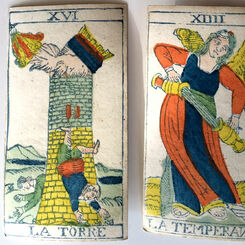
V. F. Solesio Tarot
V. F. Solesio Tarot, Genoa, mid-late 19th century.
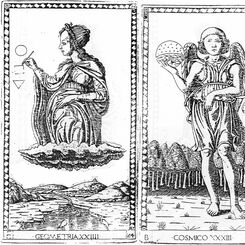
Tarocchi di Mantegna, c.1465
The so-called Tarocchi di Mantegna (c.1465) reflect an ideological structure bringing to mind the so...
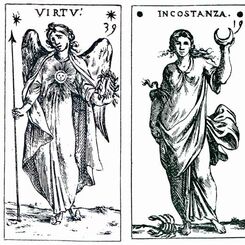
Mitelli ‘Gioco di Passatempo’
Il Gioco di Passatempo contains 40 figurative playing cards depicting moral virtues and vices, dated...

Etruria Minchiate
The Cavaliers are man/beast creatures. The Valets (or Pages) are male for clubs and swords, and fema...

Corona Ferrea
Trumps depict historical scenes primarily of the political period known as the Holy Roman Empire fro...

Tarocco Neoclassico
Gumppenberg published several new decks by artists or engravers of the day. The designs are clear an...

Giuseppe Cattino
Playing cards manufactured in Italy by Giuseppe Cattino and Paolo Montanar for Spanish markets.
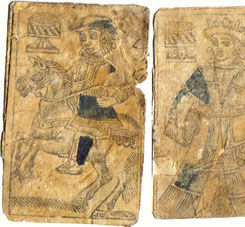
Pedro Bosio, 2
Cards of the Spanish National Pattern manufactured by Pedro Bosio, Genova (Italy) during the 18th ce...
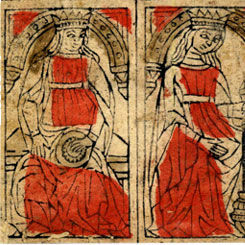
XV Century Italian Playing Cards
Cards from a pack of an early form of north Italian playing cards, with the swords back-to-back and ...

Minchiate Fiorentine
The Florentine game of Minchiate is played with a pack of 97 cards. The subjects and arrangements of...
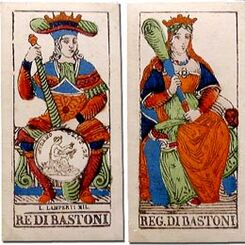
Tarocco Milanesi by Lamperti (Milan) c.1850
Tarocco Milanesi by Lamperti (Milan) c.1850

Sicilian playing cards by Antonio Monasta
"Il Leon" Sicilian playing cards, 40-card pack based on Spanish designs, made in Sicily by Antonio M...

Sardinian playing cards
Sardinian playing cards.
Small Tuscan Pattern
Small Tuscan Pattern
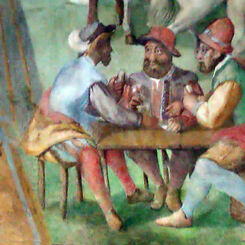
Italian Playing Cards
The first reliable evidence that playing cards were being used in Italy is from 1376, when a game ca...

Playing cards in the Upper Rhine region
Documentary evidence suggests that card playing established itself in Italy in 1376, and then spread...
Most Popular
Our top articles from the past 60 days