


Pekka-peli
‘Pekka’, an additional card in the set, is an ethically-incorrect golly look-alike card, embodying the caricature of foreign heritage without a status or family structure. In other countries the game is often known as ‘Old Maid’, ‘Black Peter’, ‘Petter-spel’ or ‘Schwarzer Peter’.
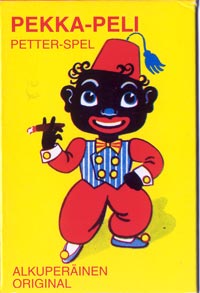
Traditional Finnish children’s card game titled ‘Pekka-game’ or ‘Funny Families’.
The Pekka-game consists of family members of four, illustrating the stereotypes of Caucasian Finns with various occupations such as the Baker, the Skipper, the Tailor, the Fisherman, the Farmer, the Pilot, the Banker, the Photographer, each with their wife, daughter and son. ‘Pekka’, an additional card in the set, is an ethically-incorrect golly look-alike card, embodying the caricature of foreign heritage without a status or family structure. In other countries the game is often known as ‘Old Maid’, ‘Black Peter’, ‘Petter-spel’ or ‘Schwarzer Peter’. The object of the game is to collect the sets of family members and avoid getting the loser-card ‘Pekka’.
Right: the front of the box shows the Pekka character. The captions are in Finnish and Swedish.
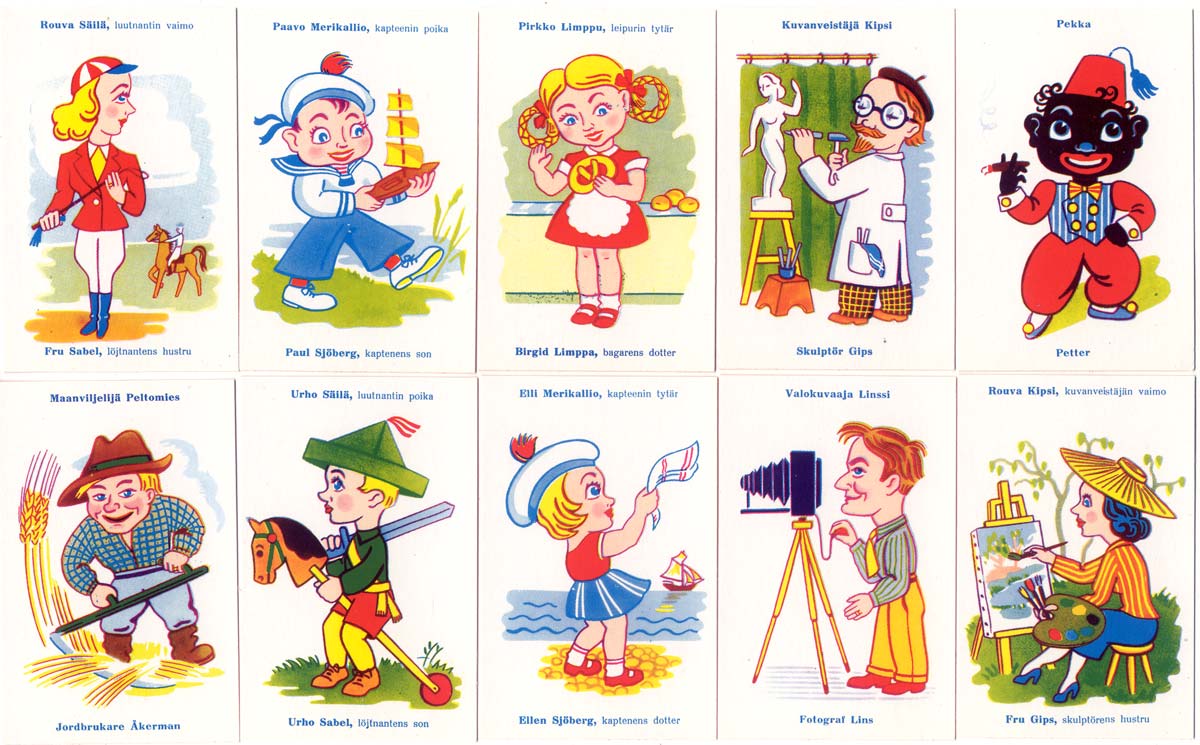
Above: Pekka-Peli card game, produced by Peliko/Martinex Oy, Raisio, Finland. The card names are in Finnish at the top and in Swedish at the bottom of each card. Traditional card games like these have been played by Finnish children for decades. The game is here in its original form.
Finnish cards have a relatively short history, presumably because the country only finally broke loose from Russian influence in 1920.
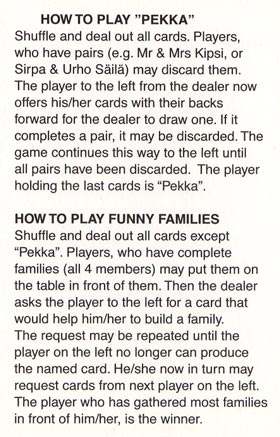
Right: the rules for two different games are included in the set.
Cards courtesy Reetta Hiltunen.
See also: Happy Families Reshuffle by Reetta Hiltunen Noddy Happy Families Jaques' Illustrated Proverbs Jaques' Happy Families Black Peter Walt Disney Cromy Card Games Zoo Comics.

By Simon Wintle
Spain • Member since February 01, 1996
I am the founder of The World of Playing Cards (est. 1996), a website dedicated to the history, artistry and cultural significance of playing cards and tarot. Over the years I have researched various areas of the subject, acquired and traded collections and contributed as a committee member of the IPCS and graphics editor of The Playing-Card journal. Having lived in Chile, England, Wales, and now Spain, these experiences have shaped my work and passion for playing cards. Amongst my achievements is producing a limited-edition replica of a 17th-century English pack using woodblocks and stencils—a labour of love. Today, the World of Playing Cards is a global collaborative project, with my son Adam serving as the technical driving force behind its development. His innovative efforts have helped shape the site into the thriving hub it is today. You are warmly invited to become a contributor and share your enthusiasm.

Activity for Pekka-peli
Sign in to comment or save this article.

Related Articles
Aónikenk playing cards
Ethnographic playing cards made by members of the Aónikenk culture from Patagonia.
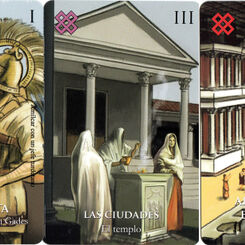
Hispania Romana
Educational card game depicting the Roman period in Spanish history.
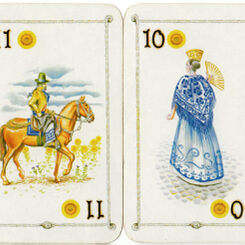
Naipes Cardón
Naipes Cardón designed by Mario Luis Rivero depicting traditional Argentine culture and identity, 20...
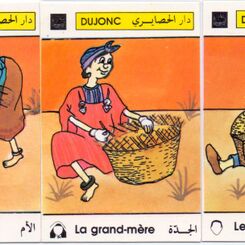
Les Artisans Tunisiens
“Les Artisans Tunisiens” Jeu de Sept Familles published by Éditions de la Mediterranée, Alpha S.A., ...
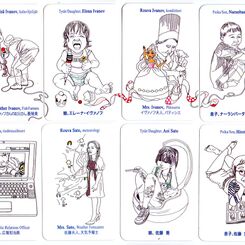
Reshuffle
“Reshuffle” by Reetta Hiltunen, Finland, is a playing card installation stemming from the traditiona...
Finnish Stamps
Playing cards featuring a selection of Finland's postage stamps made by Nelostuote Oy (Tactic Games)...
World Tour
World Tour Quiz Game published by Tactic Group for Finnair involves recognising flags from different...
Ojibwa Native Indian Cards
Ojibwa Native Indian playing cards hand manufactured on birch bark in imitation of standard French /...
Comic Families
“Comic Families” card game from Australia, c.1940s
Apache Playing Cards
Apache Indian Playing Cards made on rawhide, first recorded 1875.
Baraja Canaria
‘La Auténtica Baraja Canaria’ was published in 1995 by Justo Pérez as an expression of the history a...
Mongolian Playing Cards
Mongolian Playing Cards.
Aeronaves de Mexico
Special pack for Aeronaves de Mexico S.A., designed by Ramón Valdiosera Berman, mid-1960s.
Circular Coon Cards
Circular playing cards in a round tin titled: Sutherland's Circular Coon Cards published by Hartley ...
Playing cards from Finland
Playing cards from Finland. Finnish cards have a relatively short history, presumably because the co...
Naipes Condor
"Naipes Condor" Chilean playing cards, with Chilean symbolism on the suit signs.
Happy Families
Happy Families is probably one of the most popular card games ever invented, with educational benefi...
Estonian Historic Playing Cards
The court cards and indices on Estonian playing cards are Södur, Emand, Kuninga.
Gaucho Playing Cards
Florencio de los Ángeles Molina Campos (1891-1959) produced the artwork for his series of Gaucho pla...
Baraja Aparcero
Designed to illustrate the history of four indigenous tribes who represent the roots of the Argentin...
Most Popular
Our top articles from the past 60 days


