


Emilio Tadini playing cards
Beautiful dreamlike playing card designs by Emilio Tadini.
Imagine a deck of cards that transcends mere game play. This limited edition set, designed by the late Emilio Tadini, is an eye-opener. Known for his surreal and evocative style, Tadini treats each card as a miniature canvas, rejecting the standard commercial aesthetic. Forget your typical queens; here, they're rendered as classical nudes. Even the mundane numeral cards, those often-overlooked pips and indices, are imbued with artistic integrity.
Emilio Tadini (Milan, 1927-2002) was an Italian painter, writer and poet who worked in abstract, surreal and metaphysical styles. He also adopted aspects of Pop Art and advertising graphics. www.moussemagazine.it►
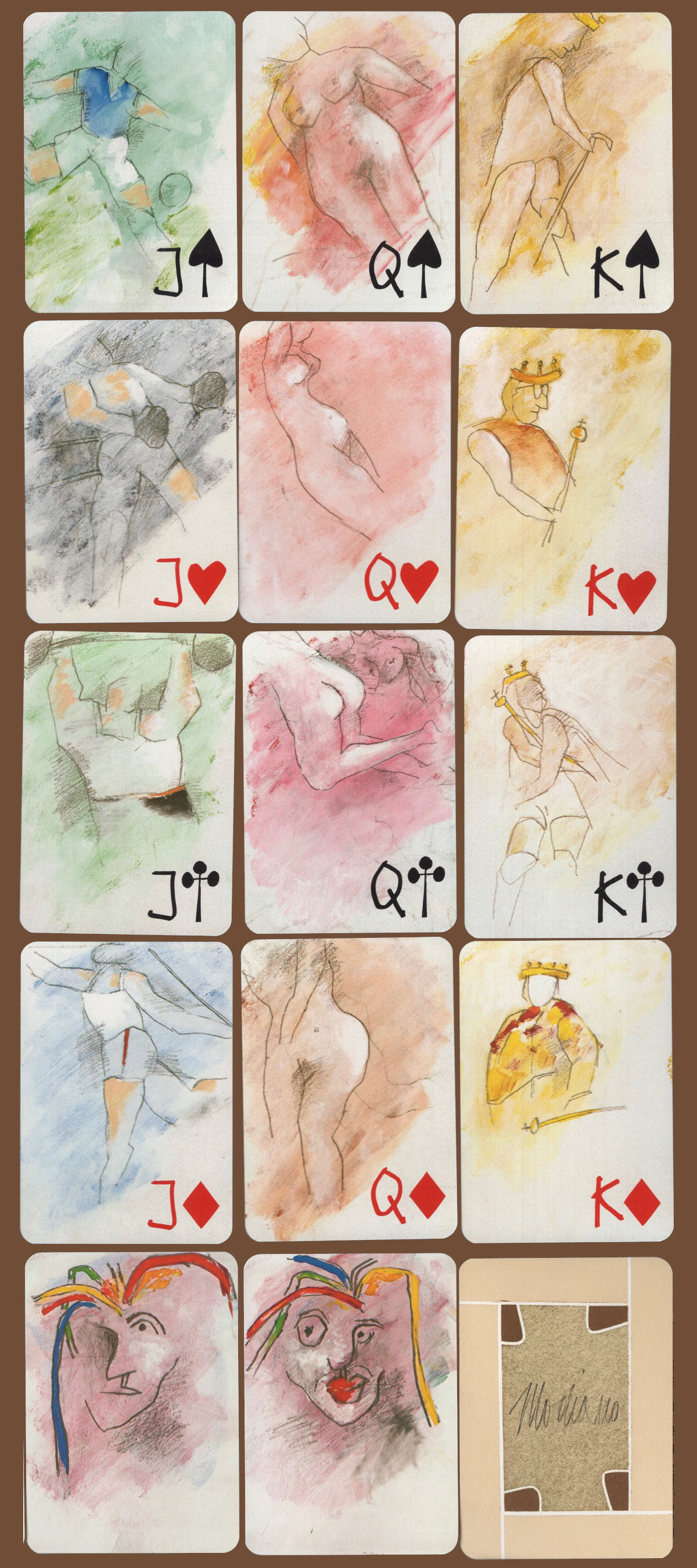
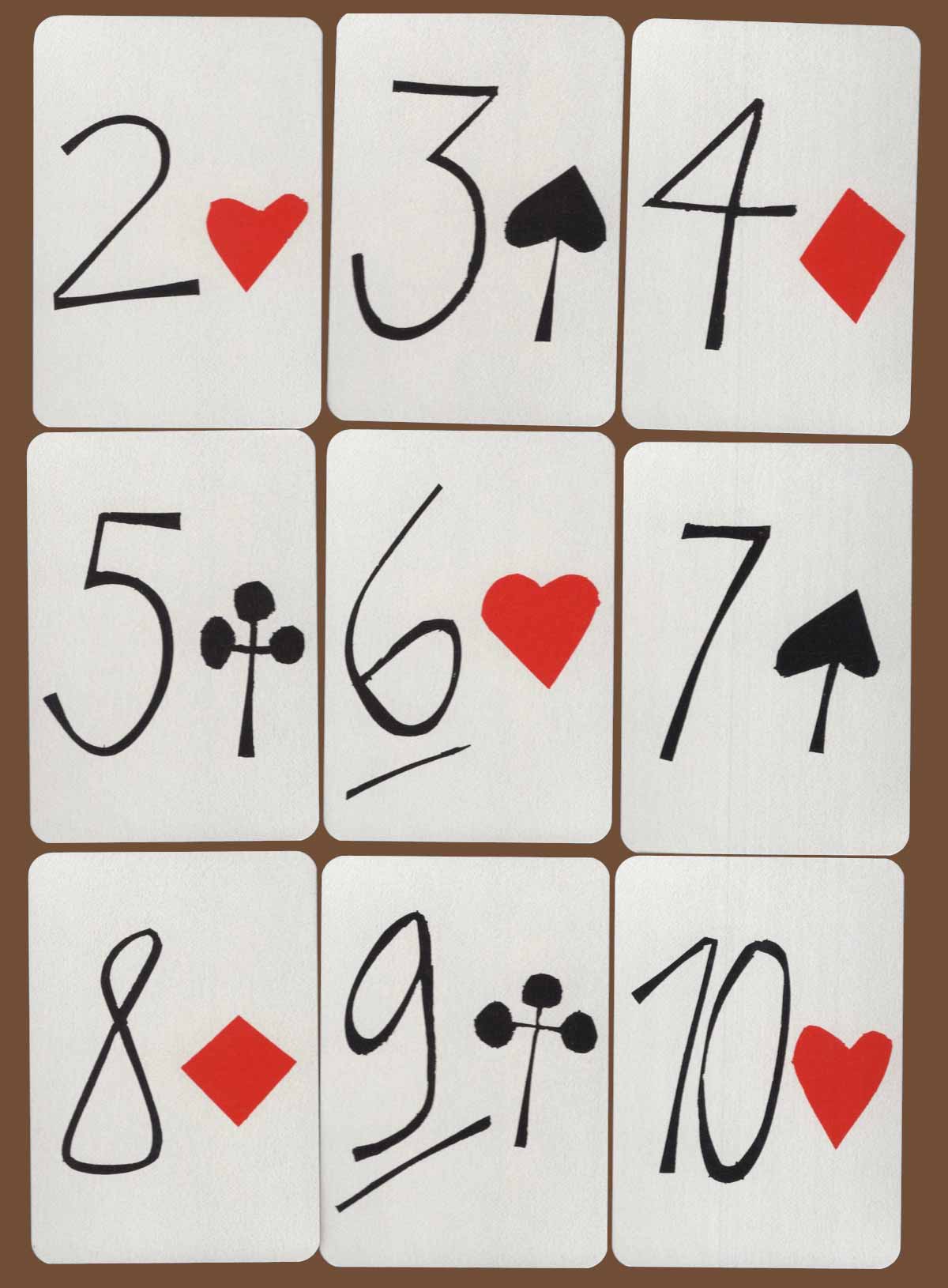
Above: Emilio Tadini playing cards produced by Modiano, c.1982. 52 cards, plus 2 Jokers in box; 89mm x 62mm ; limited edition set of 1000 numbered and signed by the artist.

By Jon Randall
Australia • Member since May 28, 2020
From 6 or 7 years of age I enjoyed playing cards with my family, and still enjoy a variety of games today with various groups and individuals. I contribute my competitive nature to enjoying games … it’s not that I like to win, I dislike losing! I was barely 10 years old when my great Uncle left me a small collection of playing cards and that was the starting point of my collecting. The competitive streak in me helped develop me into a competitive swimmer that sent me to various places around the world, including a 6 year stint in the US, where for much of that time I was at university. I’ve always enjoyed car boots flea markets, yard sales, charity shops etc., and my eye would never miss a pack of playing cards. Even after my swimming career finished I coached at a high level for many years and continued enjoying the discovery of some great finds around the world. For decades my collection continued to grow, despite selling a portion of it via eBay over the years. It wasn’t until post 2010 that I realised, mostly due to correspondence with Australian friends, that there were so many single playing card collectors. This intrigued me. I had so many packs of cards at home that I made the bold decision to share a good number with singles collectors, and subsequently listed around 7000 for sale on eBay. That did make a dent in my collection, but there’s still around 30,000 packs taking up quite a bit of space at home. Crazy? Yes, but I’ve seen bigger hoards a few times! There’s so many I surprise myself finding packs I forgot I had when I look in a box I’d not seen in a while.
My eBay IDs if you’d like to look are “worldwide_playing_cards” & “playing_cards_world”►

Activity for Emilio Tadini playing cards
Sign in to comment or save this article.

Related Articles
Modiano Napoletane Cards
From Trieste with Pride – a 150th Anniversary Edition of the Neapolitan Pattern.
Czech National Patterns by S.D. Modiano
Modiano produced cards with the Prague and Trappola patterns in the early 20th century.
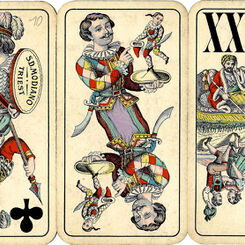
Austrian Tarock by S.D. Modiano
Modiano’s Austrian Tarock with country scenes has been in production for over 100 years.
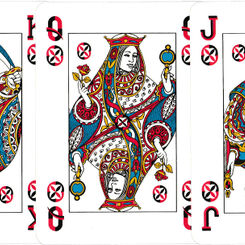
Il Quinto Seme
An Italian pack with a fifth suit of “amici” (“friends”).
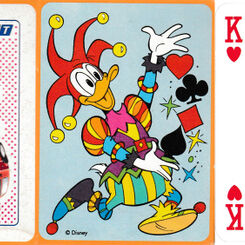
Topolino Fiat Cinquecento
Fully illustrated Italian Disney pack advertising the Fiat Cinquecento, made by Modiano, Trieste, It...
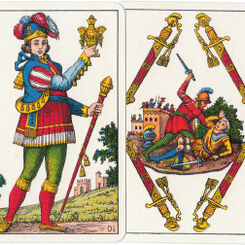
Sarde Pattern
Sarde pattern published by Modiano, c.1975, based on early XIX century Spanish model.
Triestine Pattern
The Triestine pattern is derived from the Venetian (Trevisane) pattern but with its own characterist...
Primiera Bolognese
Primiera Bolognese by Modiano, c.1975
Bergamasche Pattern
Bergamasche Pattern by Modiano, 1970s.
Il Destino Svelato Dal Tarocco
The Cagliostro Tarot was first published in 1912 as “Il Destino Svelato Dal Tarocco”.
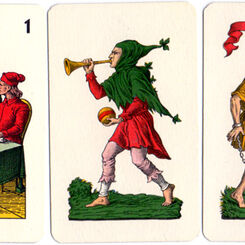
Tarocco Siciliano
The highly individual Sicilian Tarot has the Italo-Portuguese suit system with straight, interlockin...
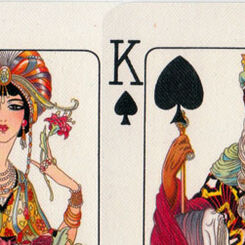
World Bridge
‘World Bridge’ produced by Modiano in Trieste, Italy, since around 1950.
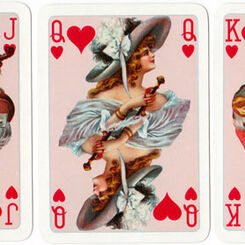
Club Bridge
Modiano’s ‘Club Bridge’ is a new edition of a stylish deck originally published in c.1895.
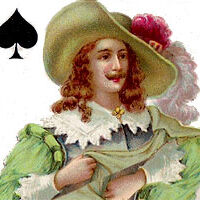
Austrian Lloyd Steamship Company
Possibly one of the most beautiful decks produced for commercial purposes, this was printed by Modia...
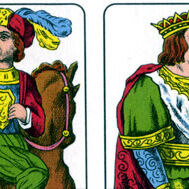
Piacentine Pattern
Piacentine Pattern, several double-ended versions.
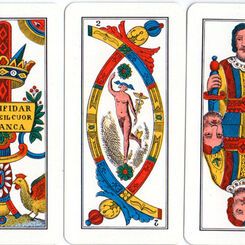
Trevisane pattern
The double-ended version of the ‘Trevisane’ pattern originated in the early 19th century.
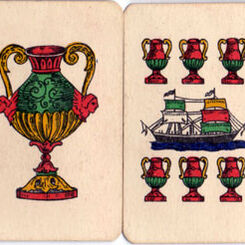
Sicilian Pattern
The Sicilian pack has a similar composition to the Neapolitan pack, and is small and squat in appear...
Neapolitan Pattern
Cartine da Gioco Vesuvio miniature Neapolitan pattern.
Brescia pattern
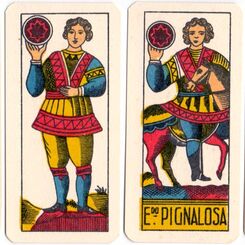
The Brescia pattern contains elements which come from a past age.
The History of Playing Cards
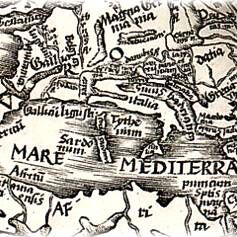
Playing cards appear in European records in the late 14th century, but their earlier history lies fu...
Most Popular
Our top articles from the past 60 days


