


Ordnance Recognition
Ordnance Recognition Playing Cards cards designed to help people at risk from unexploded bombs

Ordnance Recognition Playing Cards
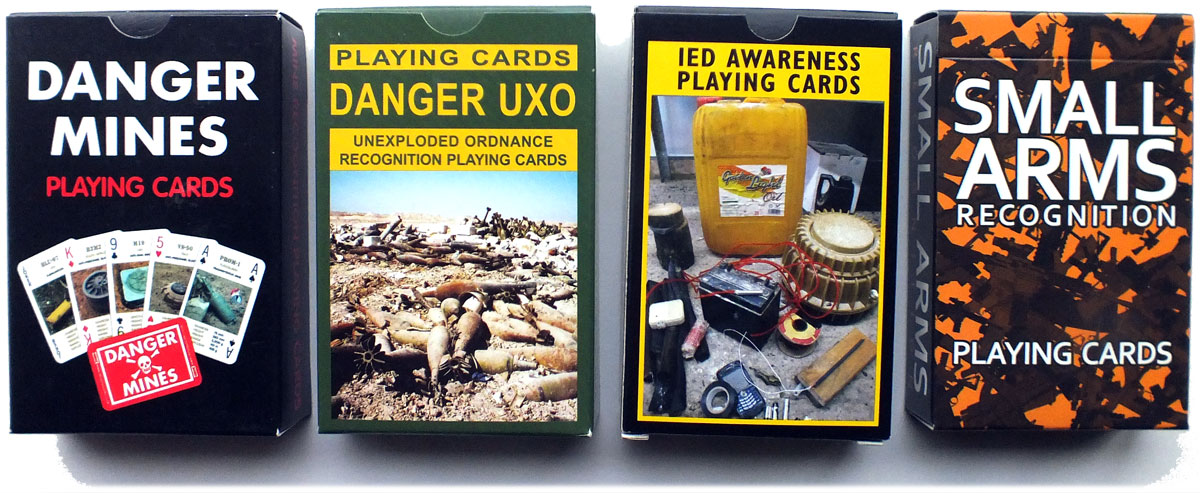
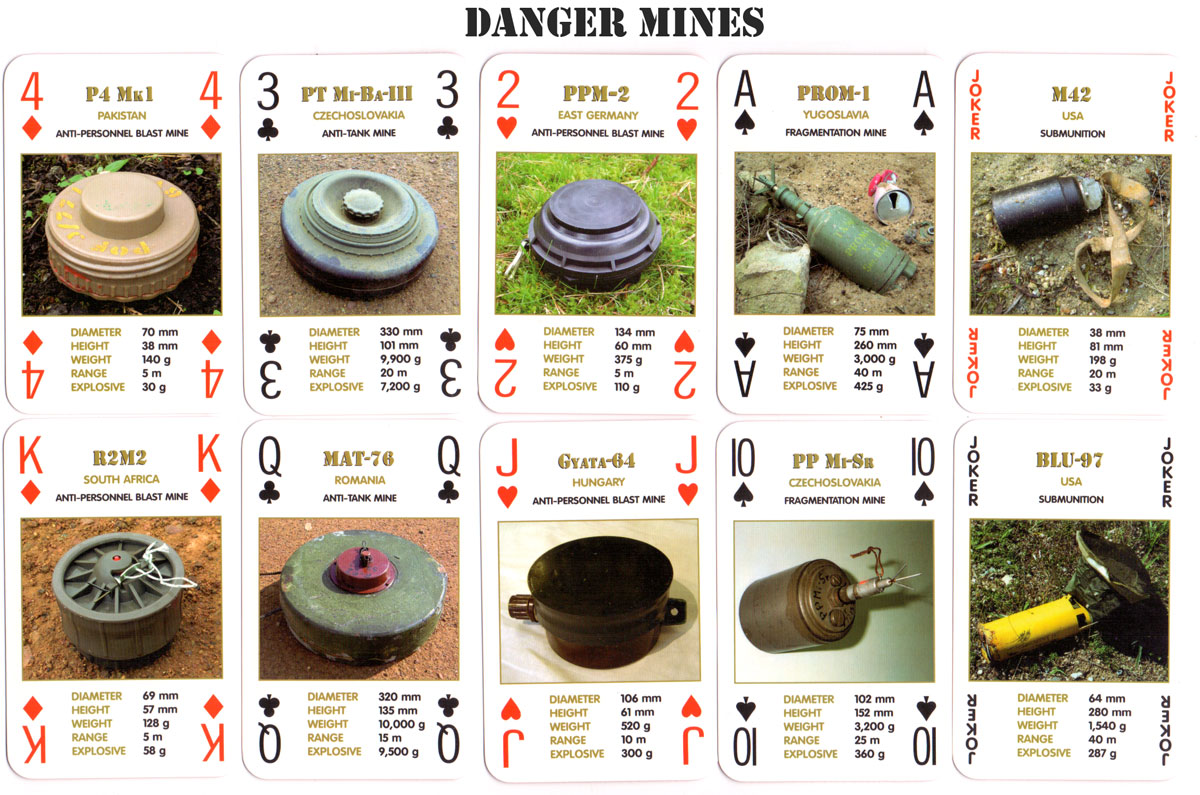
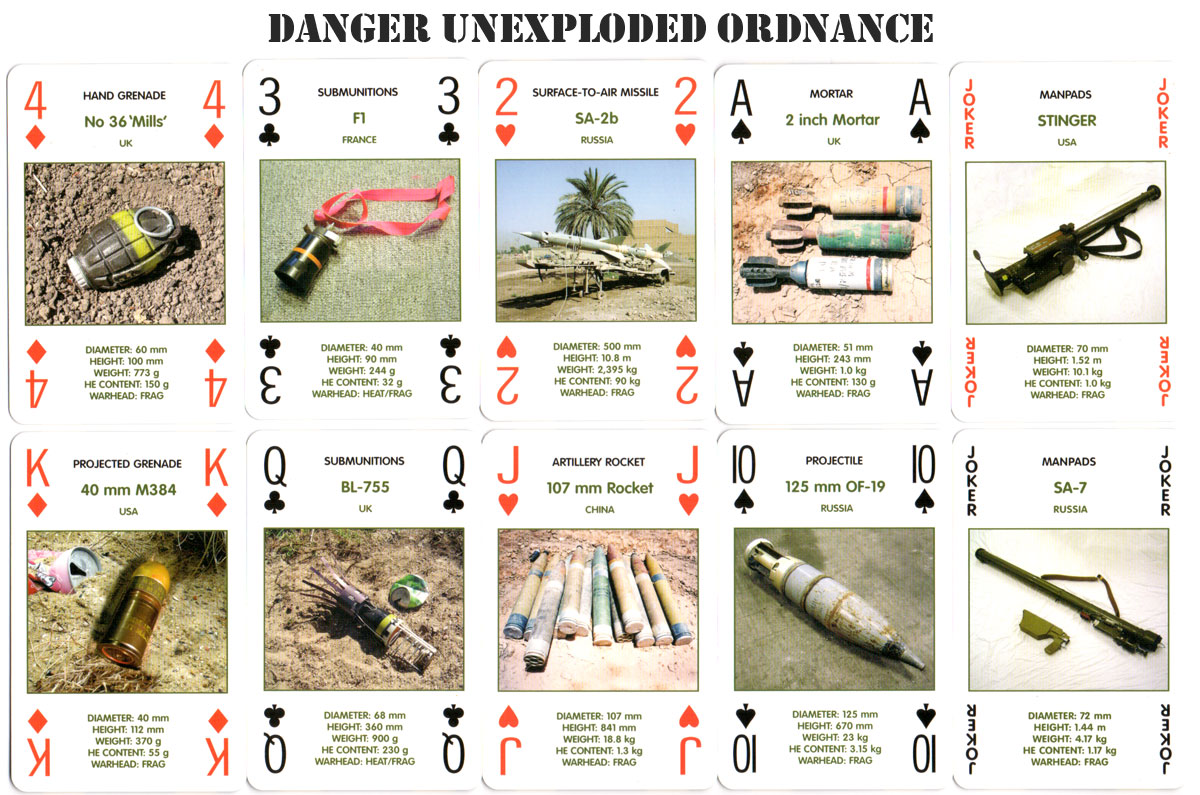
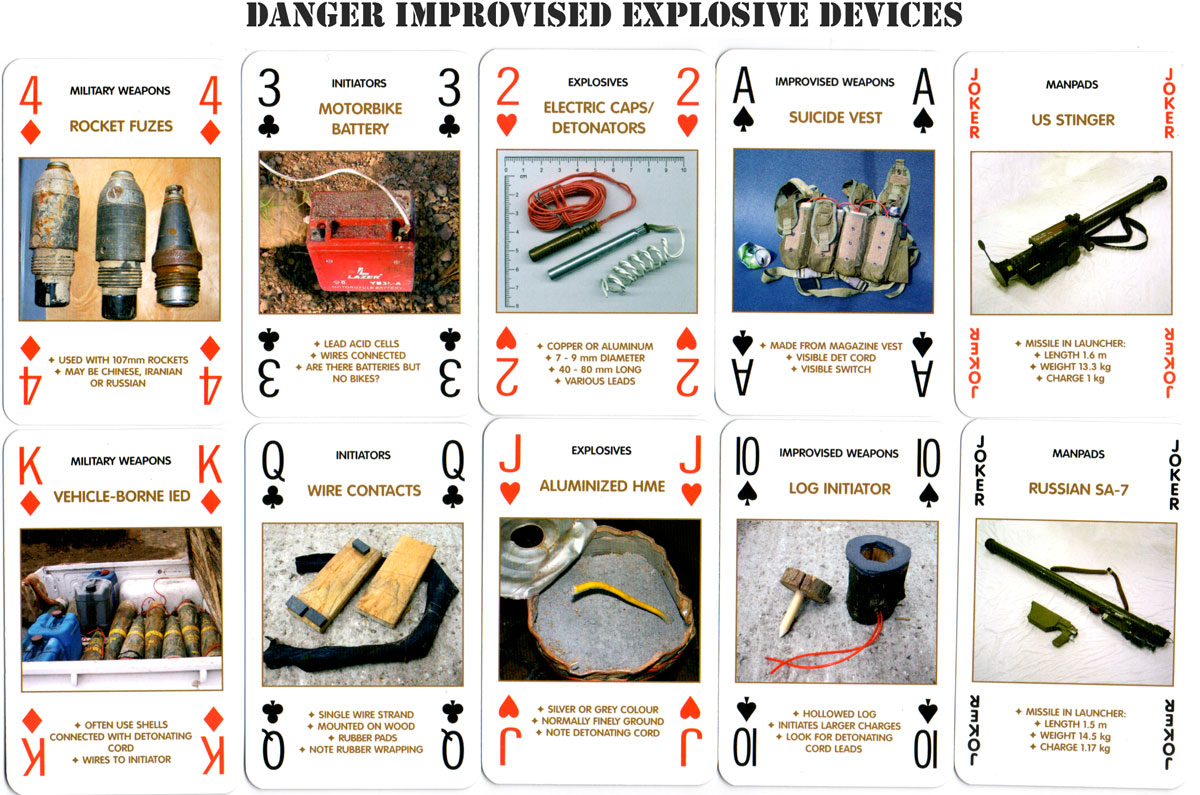
A set of four packs of educational playing cards designed to help people at risk – whether they are soldiers, civilians, aid workers or deminers - to identify and learn about the threats they face from unexploded ordnance. Careful thought has been given to helping the recognition and learning process. Each card has a good clear image of the item, together with its country of origin, type and basic details. The cards are published by CKA and Fenix, operational bomb disposal companies, working mainly in post-conflict zones on the clearance of mines and other types of unexploded ordnance. The mines, UXO and IED cards were designed by Colin King. The cover design and backgrounds for the small arms packs were produced mostly by Darren Fletcher.
“Danger Mines” playing cards were designed to help people living in mine-affected regions to identify the dangers of unexploded landmines.
“UXO Recognition” playing cards are designed to help people to learn more about, and to avoid, common examples of unexploded ordnance (UXO).
“IED Recognition” playing cards are designed to help you recognize some of the key components used to make improvised explosive devices (IED).
Small Arms Recognition cards show representative examples of commonly used firearms.
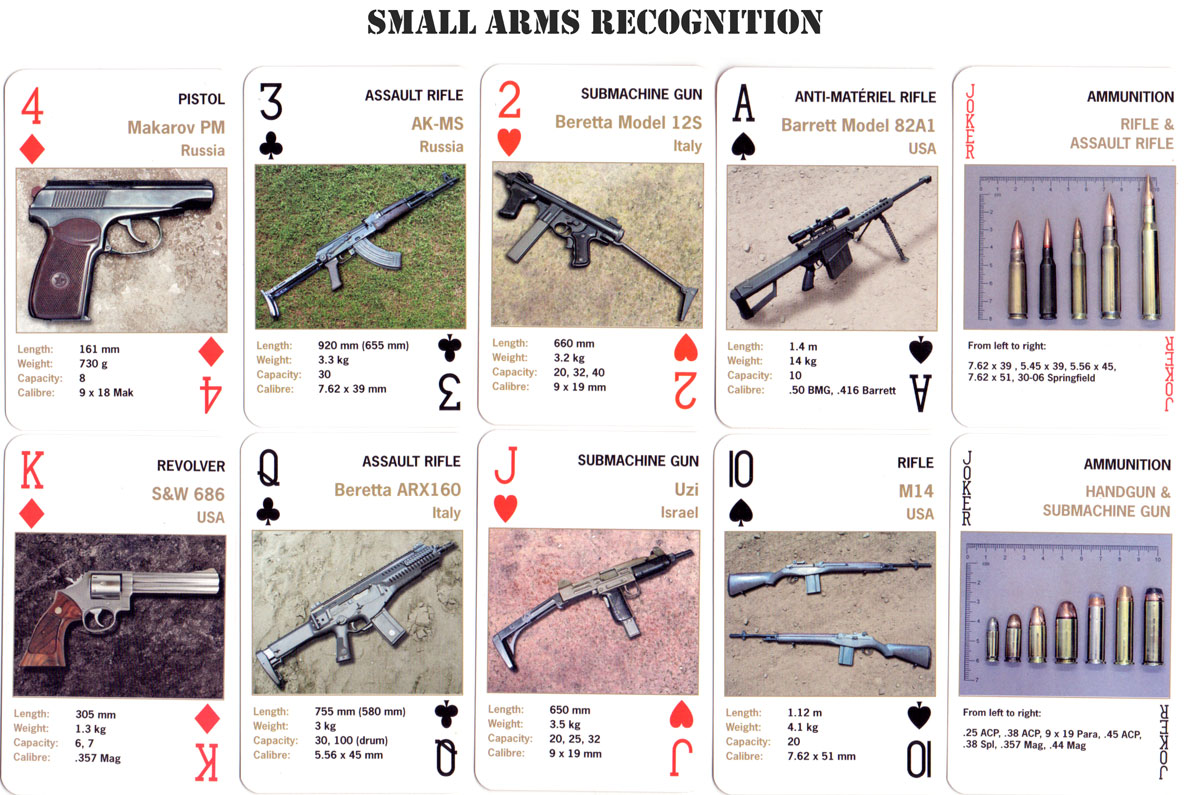
These cards are bought by UN and government agencies, often for distribution to their own staff and to local people. The funds raised then allow us to donate cards to smaller organisations and the people we meet or work with in affected countries. Feedback has been very positive and we sincerely believe that these cards help to save lives and limbs.
REFERENCES
Notes by Colin King, Mine Action & ERW Consultancy
To purchase packs visit: Cadet Direct→

By Simon Wintle
Spain • Member since February 01, 1996
I am the founder of The World of Playing Cards (est. 1996), a website dedicated to the history, artistry and cultural significance of playing cards and tarot. Over the years I have researched various areas of the subject, acquired and traded collections and contributed as a committee member of the IPCS and graphics editor of The Playing-Card journal. Having lived in Chile, England, Wales, and now Spain, these experiences have shaped my work and passion for playing cards. Amongst my achievements is producing a limited-edition replica of a 17th-century English pack using woodblocks and stencils—a labour of love. Today, the World of Playing Cards is a global collaborative project, with my son Adam serving as the technical driving force behind its development. His innovative efforts have helped shape the site into the thriving hub it is today. You are warmly invited to become a contributor and share your enthusiasm.

Activity for Ordnance Recognition
Sign in to comment or save this article.

Related Articles
Learning to play Cribbage
I learned to pay cribbage when I was very young, aged around six or seven.
Verkeers Kwartet
A helpful quartet game celebrating the 75th anniversary of road safety exams making traffic safer.
Ethics Education playing cards
Ethics Education playing cards produced by the Centre for Military Ethics at King’s College London, ...
Myriorama
Myriorama of Italian scenery, 1824.
Anma US Armed Forces
Anma US Armed Forces, 1942.
Aesop’s Fables
Aesop’s Fables playing cards by I. Kirk, c.1759.
Prisoners of War
Hand-made playing cards by French prisoners of war in Porchester Castle, Hampshire, c.1796.
The Royal Historical Game of Cards
The Royal Historical Game of Cards invented by Jane Roberts and published by Robert Hardwicke, c.184...
Victory Snap
Wartime Snap, a memoir of past times, c.1941.
Arms of English Peers
The Arms of English Peers playing cards were first published in 1686. Heraldry, or a knowledge of th...
Army Health Promotion
Health Promotion playing cards issued by the British Army with cartoons about army life and informat...
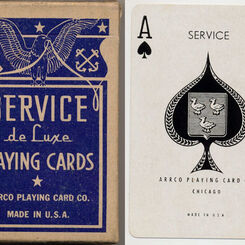
ARRCO
ARRCO Playing Card Co., Chicago, c.1935 - 1987, when acquired by USPCC.
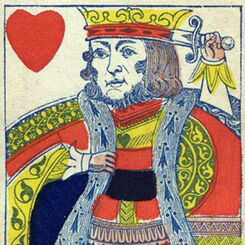
Suicide King
The King of Hearts, holding a sword behind his head, is sometimes nicknamed the “Suicide King”. He c...
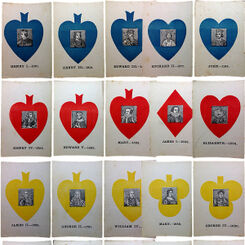
Quits
Jaques' Quits card game, c.1880-85, with portraits of monarchs inside suit symbols in red, blue and ...
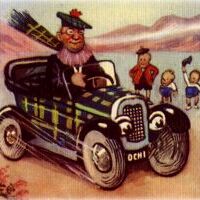
Belisha
Belisha, published by Castell Brothers Ltd (Pepys Games) in 1937, was produced with a desire to make...
National Gallery (British School)
Jaques' The National Gallery Card Game, c.1895.
Robert Morden’s Playing Cards
The 52 Counties of England and Wales described as a pack of cards first published in London in 1676....

Marlborough’s Victories
Marlborough’s Victories playing cards, first published in 1707, depict Marlborough's campaigns and t...
Waddington’s Playing Cards
John Waddington Limited was a leading producer of playing cards and card games in the UK during the ...
History of Court Cards
The court cards in English packs of playing cards derive from models produced by Pierre Marechal in ...
Most Popular
Our top articles from the past 60 days


