


Playing Cards in Mexico
MEXICO shares a long tradition with Spain in the field of playing cards and also merges two completely distinct cultures, ancient indigenous cultures and modern Spanish colonialism.
 EXICO shares a long and continuous tradition of playing cards with Spain. From the earliest decades of colonisation, Spanish settlers brought packs of cards with them, and the baraja española—with its suits of oros, copas, espadas, and bastos—became firmly established in New Spain. The popularity of card play is evident from early attempts at regulation: prohibitions were issued as early as 1539, reflecting official concern over gambling and social disorder.
As part of the Viceroyalty of New Spain, Mexico occupied a central position within the Spanish imperial system. In 1539 the first printing press in the Americas was established in Mexico City by Juan Pablos (Giovanni Paoli), working under licence from the Crown. While initially intended for religious and administrative printing, the press formed part of a wider infrastructure that supported regulated manufacturing and trade, including the production of playing cards.
In 1552 the Spanish Crown established the Estanco de Naipes, a royal monopoly controlling the manufacture and sale of playing cards in New Spain. Production was subject to licensing, taxation, and close supervision. Playing cards were supplied both by import—principally from Seville, and occasionally from other European centres—and by local manufacture. In 1583 Alonso Martínez de Orteguilla was authorised to administer the production and sale of playing cards within New Spain, which at that time included not only central Mexico but also regions such as Guatemala, Honduras, and Nicaragua.
Despite recurrent shortages of paper and other materials, local production expanded steadily. By the late 16th century, playing cards manufactured in Mexico were widely distributed and appear to have been favoured over imported decks, which were more expensive and subject to delays. Contemporary sources suggest that by the end of the century tens of thousands of packs were being produced annually under licence, demonstrating both the scale of demand and the effectiveness of the monopoly system, even as illicit manufacture and evasion of controls persisted alongside official production.
From 1777, the viceroy of New Spain determined that cards for Mexico had to be imported from Spain. Until 1811, the Real Fábrica de Madrid cards were sold there. That year, the state monopoly fell.
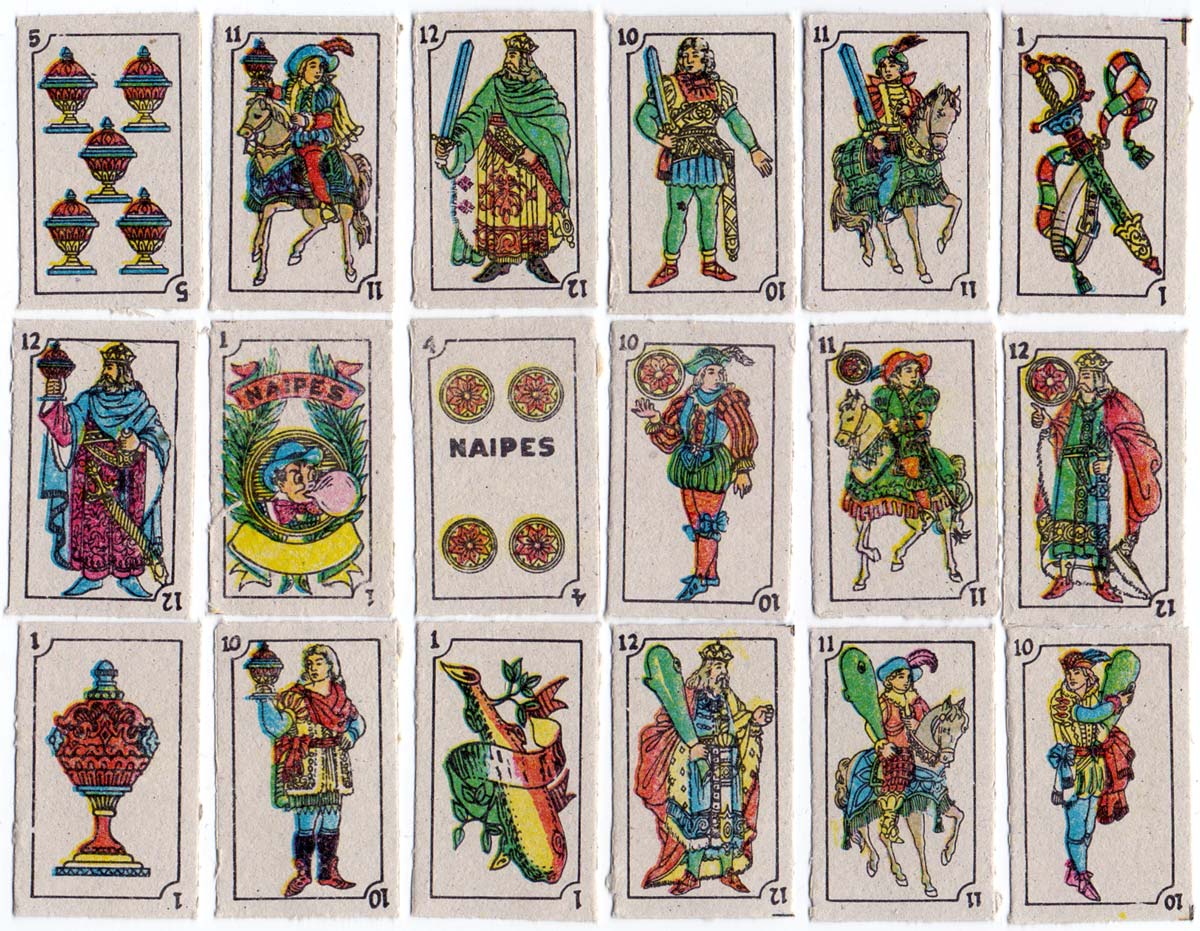
Mexico re-gained independence in 1821. Local manufacturers were free once again to produce their own cards, although cards also continued to be imported. Initially designs followed the Spanish National pattern and its derivatives. Over time, Mexican card designs have incorporated elements of indigenous art: motifs such as Aztec or Mayan glyphs, symbols, and mythological figures are often incorporated into the artwork. These elements provide a Mexican twist to the classical Spanish layout. Many packs from this period are anonymous and their manufacturers cannot be identified.
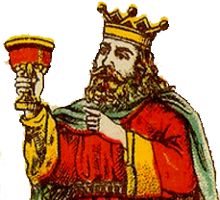
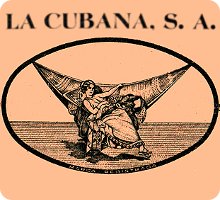
F. Munguia commenced producing playing-cards in Mexico in 1868 with the brand names La Campana and La Estrella. A few years later, in 1872, a certain P. Munguia started production, and La Cubana S.A. became the successors of P. Munguia and continued producing the brand names La Campana and La Estrella. Their 1960s catalogue shows an extended range of playing card brands as well as other products.
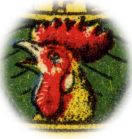
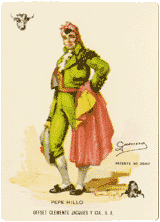
One of the more influential, and widely plagiarised, Mexican designs has been Clemente Jacques’ “Marca Gallo” playing cards, first published in the 1920s and still produced today by Pasatiempos Gallo S.A. Clemente Jacques also produced the magnificent Naipes Nacionales →
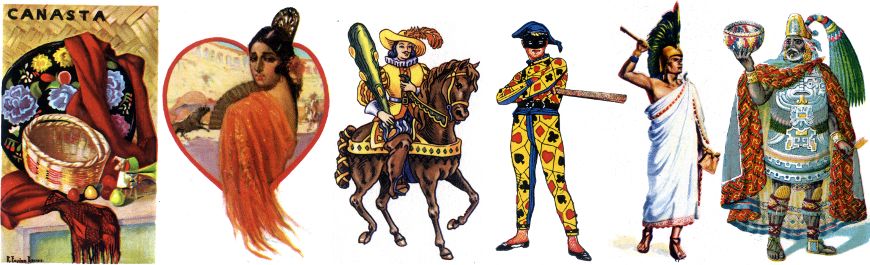
"Los naipes, un juego muy antiguo difundido entre los orientales y los europeos, llegaron hasta América desde los primeros encuentros de las dos civilizaciones. Los navegantes de Cristóbal Colón se entretenían al jugar cartas durante el trayecto del viaje y de igual manera, los pasajeros que viajaron de Europa a las Indias eran jugadores apasionados que se valían de los naipes para matar las largas horas que la nao recorría hasta llegar a su destino.…"
Playing Cards in Mexico employ Spanish suit symbols: cups, swords, coins and clubs - termed copas, espadas, oros and bastos.
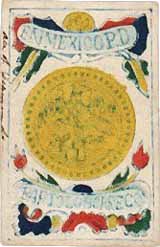
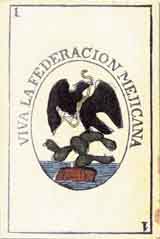
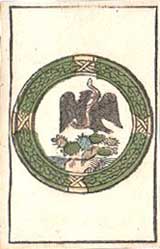
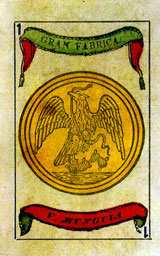
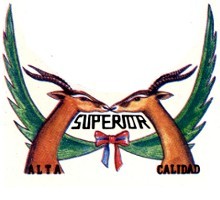
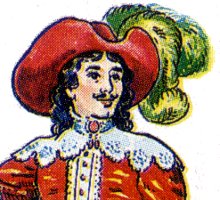
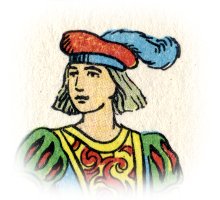
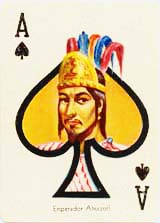
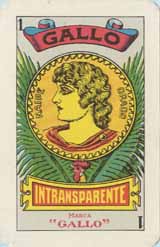
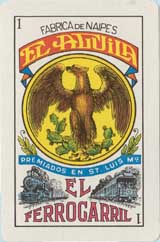
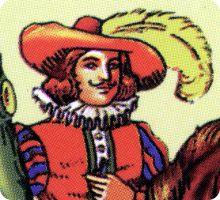
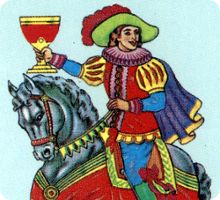
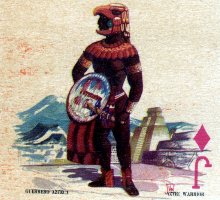
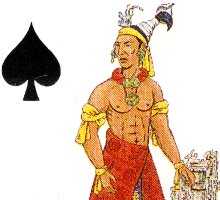
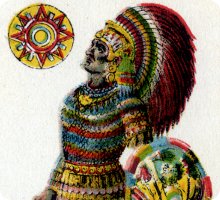
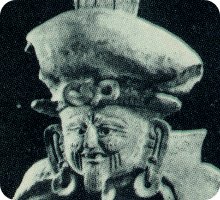
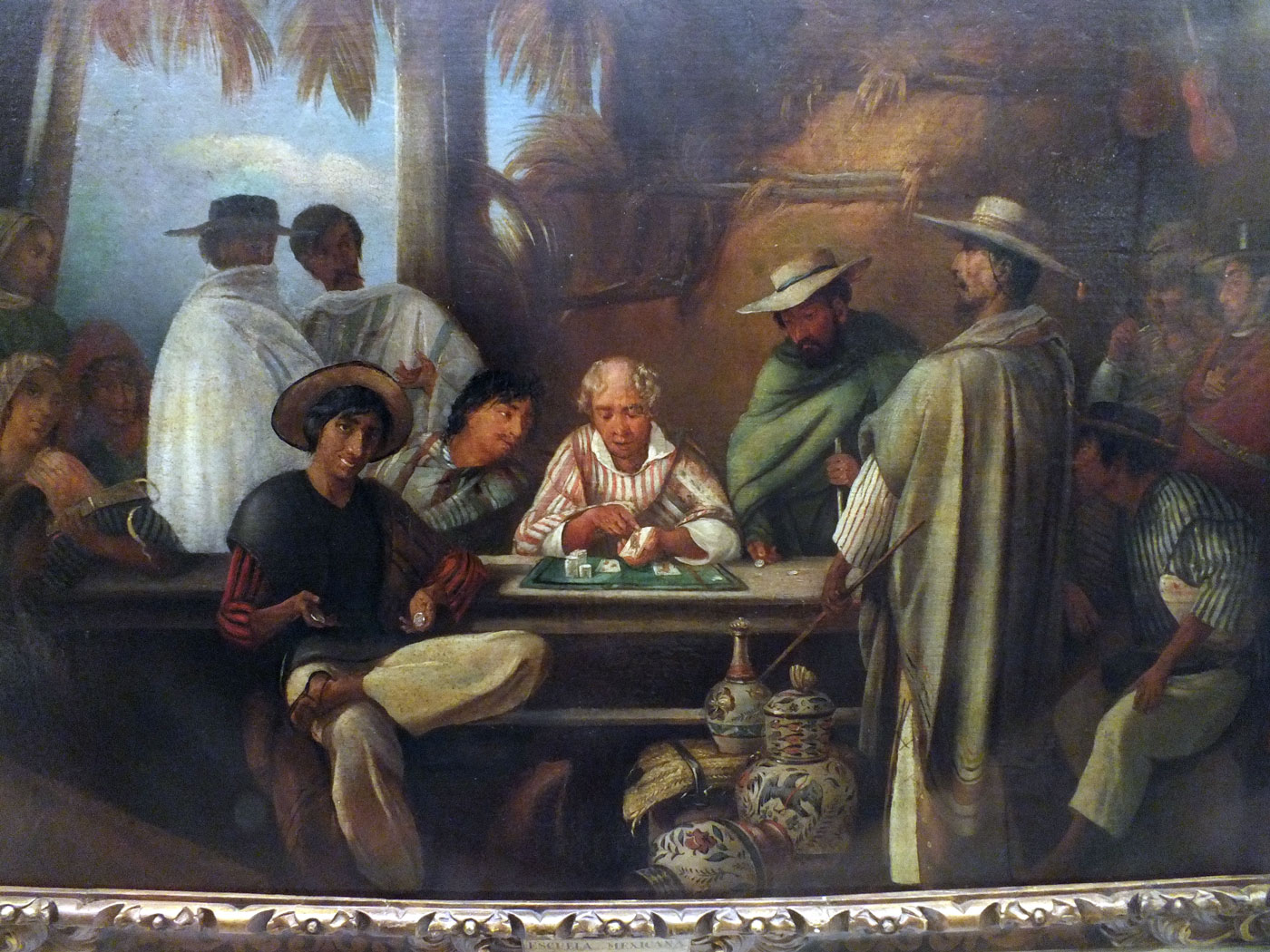
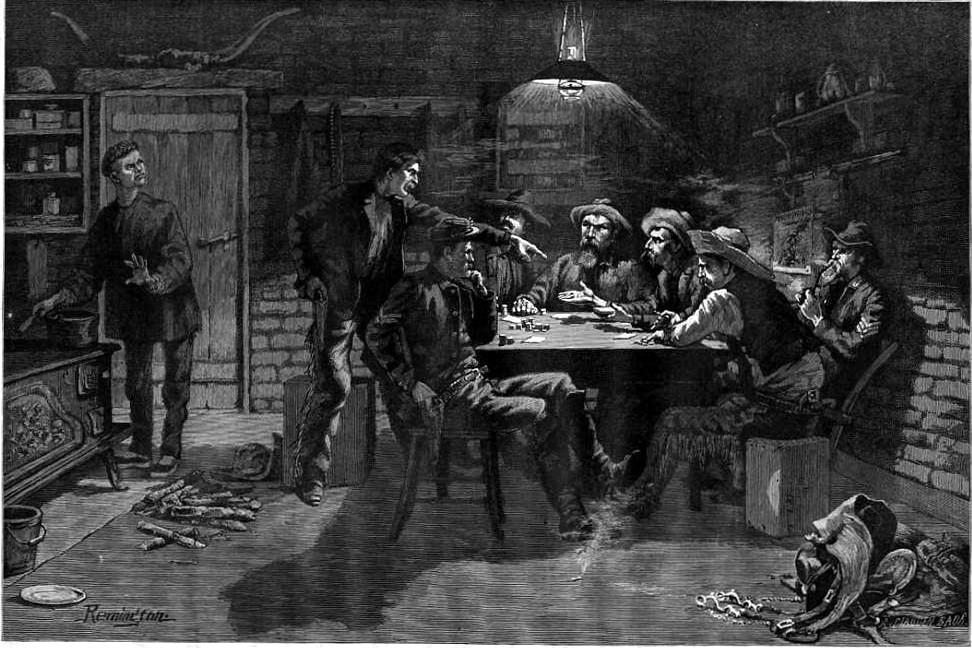
Playing cards (barajas) formed an integral part of everyday leisure among Spanish settlers in the American colonies during the sixteenth century. Alongside dice and other games of chance, card play was commonly practised in taverns, wine shops and so-called peluquerías, informal social spaces whose back rooms often served multiple purposes. These venues brought together settlers of different social backgrounds, with gambling and alcohol consumption widely tolerated across classes. Card play frequently acted as a social catalyst, though disputes arising at the gaming table could escalate from minor quarrels into serious violence, contributing to the regular involvement of colonial courts and magistrates in regulating public order.
FURTHER REFERENCES:
Cremers, Filip: Belasting is Troef, Nationaal Museum van de Speelkaart, Turnhout, 1992.
Grimberg, Carl: La Hegemonía Española, Ediciones Daimon, 1968.
García Martín, Enrique: "Clemente Jacques", in LA SOTA no.15, Asescoin, Madrid, September 1996
García Martín, Enrique: "Las Barajas de Símbolos Españoles en América", in LA SOTA no.25, Asescoin, Madrid, September 2001
Grañen Porrúa, María Isabel: "Hermes y Moctezuma, un Tarot Mexicano del Siglo XVI".
Links to other Latin American Countries: Argentina Brazil Chile Colombia Cuba Dominican Republic Ecuador El Salvador Galapagos Guatemala Honduras Panama Paraguay Peru Puerto Rico Uruguay Venezuela

By Simon Wintle
Spain • Member since February 01, 1996
I am the founder of The World of Playing Cards (est. 1996), a website dedicated to the history, artistry and cultural significance of playing cards and tarot. Over the years I have researched various areas of the subject, acquired and traded collections and contributed as a committee member of the IPCS and graphics editor of The Playing-Card journal. Having lived in Chile, England, Wales, and now Spain, these experiences have shaped my work and passion for playing cards. Amongst my achievements is producing a limited-edition replica of a 17th-century English pack using woodblocks and stencils—a labour of love. Today, the World of Playing Cards is a global collaborative project, with my son Adam serving as the technical driving force behind its development. His innovative efforts have helped shape the site into the thriving hub it is today. You are warmly invited to become a contributor and share your enthusiasm.

Activity for Playing Cards in Mexico
Sign in to comment or save this article.

Related Articles
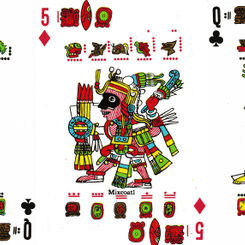
Baraja Mexicana Calendárica
Scholarly Mexican playing cards with Aztec and Maya calendar motifs.
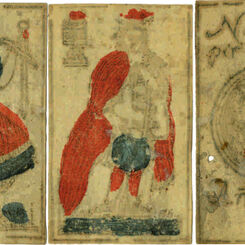
Naipes en Chile
Noticias y crónicas de la época del virreinato.
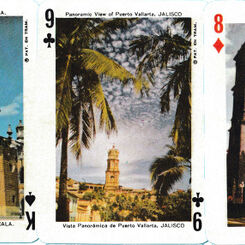
Visite Mexico
Promoting Mexican tourism with 54 different photographs in full colour.
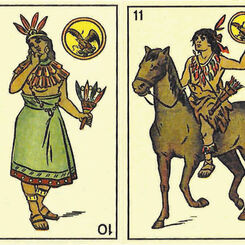
Mexican ethnic playing cards
Mexican ethnic groups depicted on playing cards by Fábrica de Naipes Cuauhtemoc.
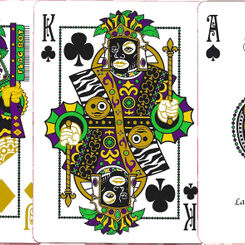
Mardi Gras playing cards
Mardi Gras playing cards illustrated by Dave Edgerly, USA, 2015
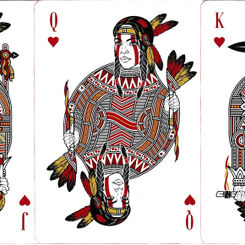
Malam playing cards
Malam playing cards created by Michael Muldoon, USA, 2015.
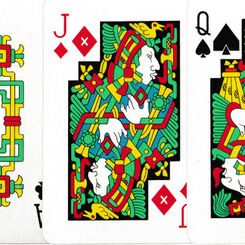
Baraja Maya
Original designs inspired by Mayan art and culture published by Fernando Güemes, Mexico.
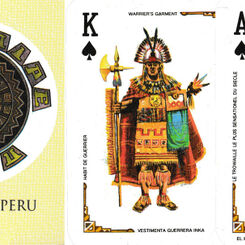
Inka Naipe Souvenir
54 colour photographs of costumes and artefacts connected with the Inca civilisation, unknown publis...
Tonalamatl
Baraja Tonalamatl Mexican Aztec playing cards based on the prehispanic Codex Borgia manuscript.
Maya
“Maya” playing cards designed by Russian artist V. M. Sveshnikov and first published by The Colour P...
Iranian Popular Art
Representing Iranian culture and history and intended for a Persian market, these playing cards were...
Tunisia
Playing Cards in Tunisia. Chkobba is one of the most popular card games in Tunisia, mainly played by...
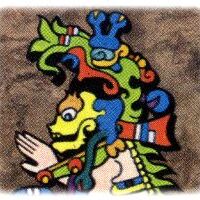
Maya Playing Cards
The designs of Mayan artists shown here give a general idea of their enormous artistic and cultural ...
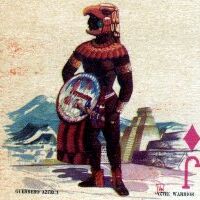
Aeronaves de Mexico
Special pack for Aeronaves de Mexico S.A., designed by Ramón Valdiosera Berman, mid-1960s.
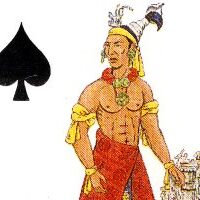
Mexican Poker
Mexican Poker cards made by Juegos y Fichas, S.A. de C.V., Mexico, 1991
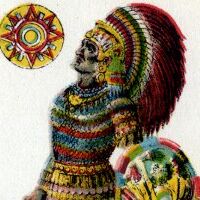
Naipes Nacionales
Naipes Nacionales designed by Manuel Bayardi and published by Clemente Jacques y Cia, Mexico c.1940....
Thai Playing Cards Manufacturing Factory
Thai Playing Cards Manufacturing Factory was established in 1938 as part of the government Excise De...

Guatemala
Playing Cards in Guatemala
Playing Cards in Honduras
Honduras shares a long tradition with Spain in the field of playing cards.
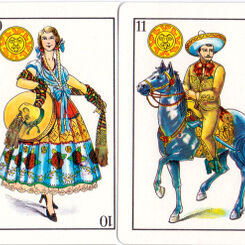
El Ferrocarril
Naipe El Ferrocarril made by La Cubana, S.A. (Fabrica de Naipes El Aguila), Mexico, c.1960
Most Popular
Our top articles from the past 60 days


