


Recent Changes
Archives
December 2025

Perspectives on the History of Tarot
-
by Simon Wintle

Tarot, originally a 15th century card game from Italy, has evolved into a form of personal mysticism and spiritual exploration, offering new visions of expanding awareness.

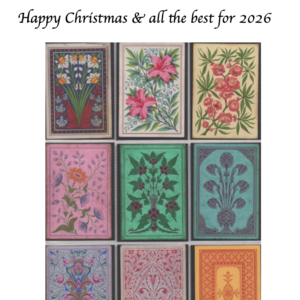
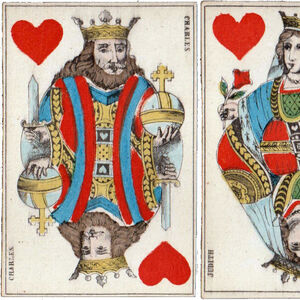

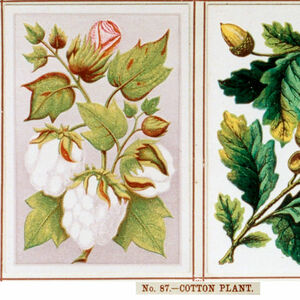
59: Owen Jones (1809-74) and De La Rue
-
by Ken Lodge

A selection of examples of Owen Jones's artwork printed by De La Rue.
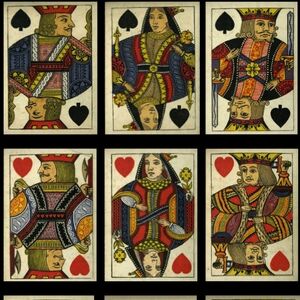
78: The Standard English pattern - Part 2, the tricky bits
-
by Ken Lodge
There are many less straightforward aspects to the designs of the English pattern, which need careful consideration.

Bizkaia Mus Championship

Results of the Bizkaia Mus Championship organized by the Basque Oware and Strategic Games Association.
Solitaire
-
by Simon Wintle
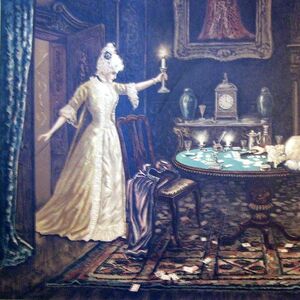
We worked with the Solitaired.com to customise this game using traditional woodblock courts.

Guiding
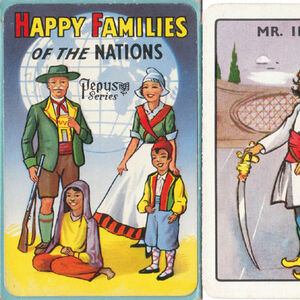
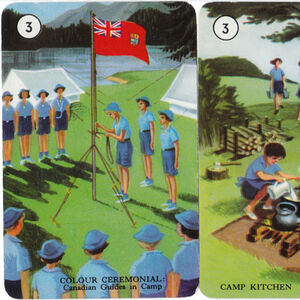
Guiding card game published by Pepys in co-operation with the Girl Guides Association, 1958.
November 2025
Why our playing-cards look the way they do
-
by Paul Bostock

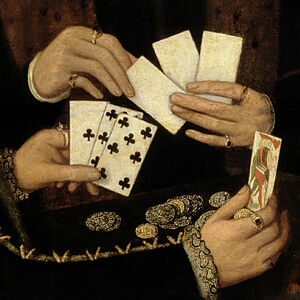
Analysis of early playing card designs: origins, suit differences, standardization, technological advancements and key innovations leading to modern designs.
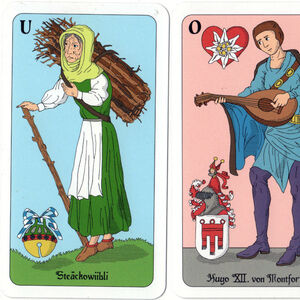
Vorarlberg Büschel Jasskarten
-
by Simon Wintle
“Vorarlberg Büschel Jasskarten” designed by Austrian artist and typographer Konrad Hämmerle.
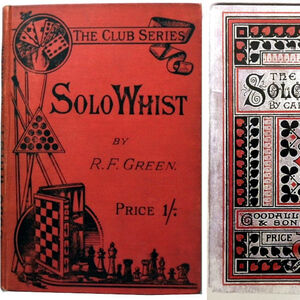
Solo Whist
-
by Tony Hall

A distinctive British trick-taking game that emerged in the mid-19th century.

Spanish Playing Cards ~ La Baraja Española
-
by Simon Wintle
Spain has played a pivotal role in the history of playing cards in Europe and Latin America.
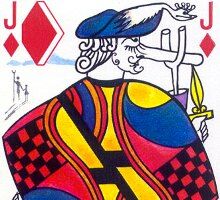
Salvador Dalí

Based on the standard French ‘Paris’ pattern, Dalí composed his playing card figures out of geometric shapes, like a surrealist tapestry, but retaining the traditional aspects of playing card design.

Slovak Season Playing Cards (Dvouhlavé Hrací Karty)

Slovakian edition of the Wilhelm Tell pattern found on a day trip to Bratislava.
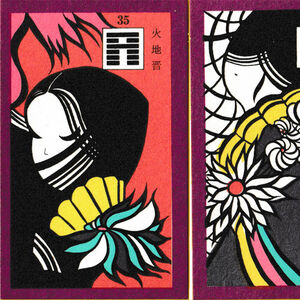
Eki karuta
Japanese fortune-telling cards based on I Ching with bold, modern designs by Kayoko Asako.

Games & Print Services
-
by Simon Wintle
Games & Print Services Limited, of Canvey Island, now part of Cartamundi.
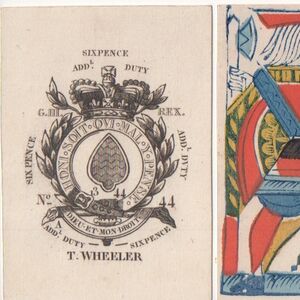
53: Some recent acquisitions and corrections
-
by Ken Lodge
The following items are additions and alterations to my collection, the rest of which is listed on page 69.
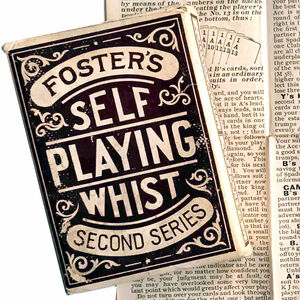
Foster’s Self-Playing Whist Cards
-
by Tony Hall
In 1890 R. F. Foster published the first edition of “Foster’s Whist Manual” which was to become the bible for serious whist players for the next two decades.
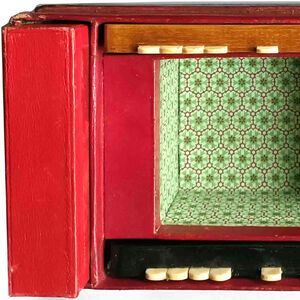
Mystery Objects
-
by Tony Hall
I need help in identifying the purpose of this particular piece of card-playing kit.
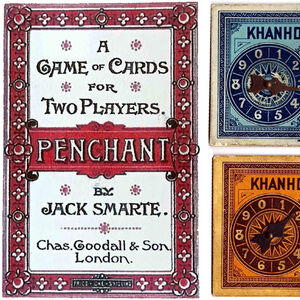
The Search for New Games in the late 19th century
-
by Tony Hall
A few new games survived and are still around today; most came and went and are only witnessed in the literature by the equivalent of a vapour trail.
The Origin of Patience Games in English
-
by Tony Hall
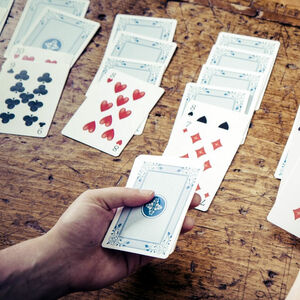
Jessel’s Bibliography of works in English on Playing Cards and Gaming describes “The first book on Patience published in English”, dated 1859.
New interest in old games
-
by Tony Hall
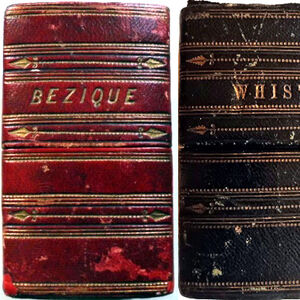
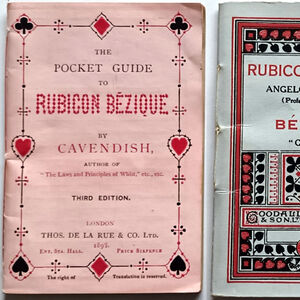
Games once fashionable are now eclipsed by quicker gratifications.
The Molassine Company and its link to Whist and Bridge
-
by Tony Hall
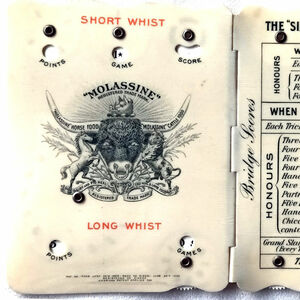
A savvy marketing strategy blending Victorian decorative design with Edwardian practicality.
77: The Standard English pattern - Part 1, the basics
-
by Ken Lodge
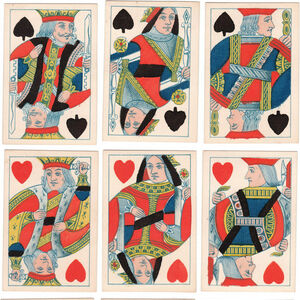
A simple set of criteria for defining the standard English pattern

Dr Ken Lodge
-
by Ken Lodge
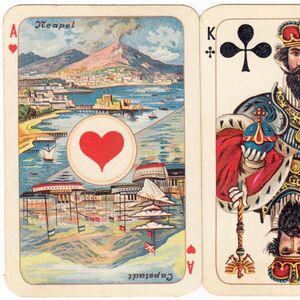
I'm Ken Lodge and ha e been collecting playing cards since I was about eighteen months old (1945). I am also a trained academic, so I can obser e and analyze reasonably well. I' e applied these analytical techniques o er a long period o time to the study o playing cards and ha e managed to assemble a large amount o in ormation about them, especially those o the standard English pattern.

Lithographic Stone
-
by Simon Wintle
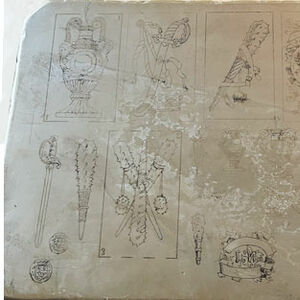
Historic lithographic stone from the Fournier playing card factory, c.1888.
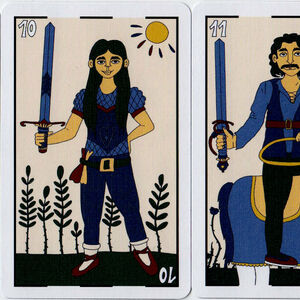
Baraja Quimera
-
by Simon Wintle
An imaginative reinterpretation of the Spanish-suited deck in a contemporary folk-art style.
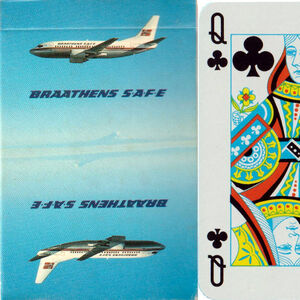
Braathens SAFE playing cards
Airline advertising pack combining international courts with horizontal images of passenger aircraft.
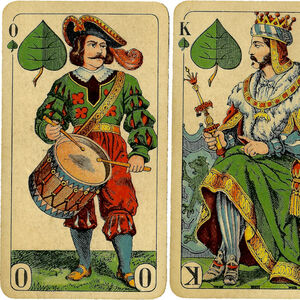


Later Bavarian Pattern
-
by Simon Wintle
Later Bavarian single-ended pattern by Vereinigte Altenburg-Stralsunder Spielkarten-Fabriken
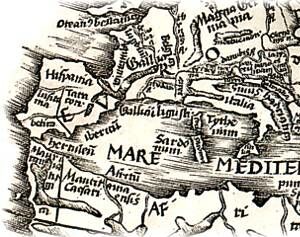
The History of Playing Cards
-
by Simon Wintle
Playing Cards have been around in Europe since the 1370s. Some early packs were hand painted works of art which were expensive and affordable only by the wealthy. But as demand increased cheaper methods of production were discovered so that playing cards became available for everyone...
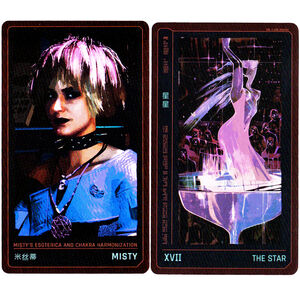
Cyberpunk 2077 Tarot Cards
-
by Adam Wintle

Polish cartoonist Jakub Rebelka created this set of tarot cards for the Cyberpunk 2077 video game.
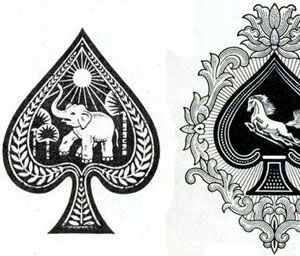
Modern Aces of Spades
-
by Matt Probert

Many modern aces of spades are anonymous so that, in the absence of any other information, the collector has difficulty deciding who made them.

October 2025
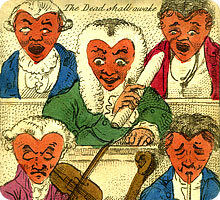
Metastasis Transformation Playing Cards, 1811
First published by S & J Fuller, Rathbone Place, London, September 1st 1811. This Nixon-Fuller deck was the first English deck now commonly known as transformation playing cards - the first use of the term "transformation".
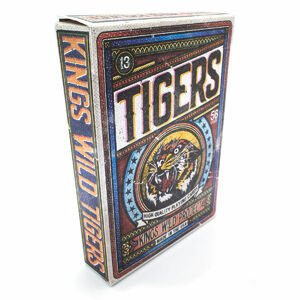
Kings Wild Tigers Playing Cards
-
by Adam Wintle
Kings Wild Tigers is Jackson Robinson’s 27th successful playing card Kickstarter campaign. A luxury collectable deck inspired by vintage matchboxes.
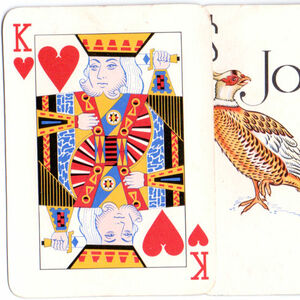
Pedro Domecq
-
by Simon Wintle
Anglo-American pattern for Pedro Domecq Mexican brandy made by Productos Leo S.A., c.2000.
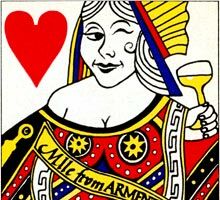
26th Yankee Division
“26th Yankee Division Playing Cards” was designed by Alban B. Butler, Jr and printed by the Press of the Woolly Whale, New York, in 1933.

Première Guerre Mondiale
-
by Matt Probert
“Première Guerre Mondiale 1914-1918” playing cards published by Éditions J.C. Dusserre.

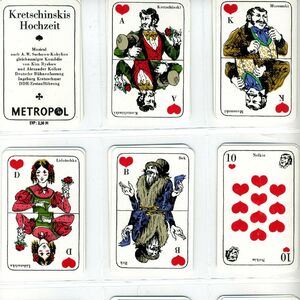
Wedding of Krechinsky • Свадьба Кречинского

A pack of cards depicting characters from the famous play "The Wedding of Krechinsky" by Sukhovo-Kobylina. Колода содержит изображения персонажей известной пьесы Сухово-Кобылина "Свадьба Кречинского"
Beowulf
-
by Simon Wintle
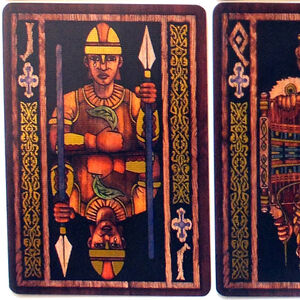
Jackson Robinson's Beowulf playing card deck inspired by the Old English pagan poem.
Studydrive Student Cards
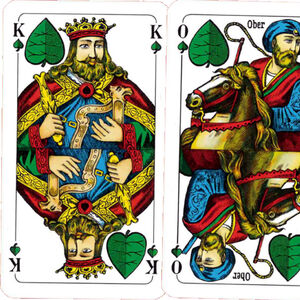
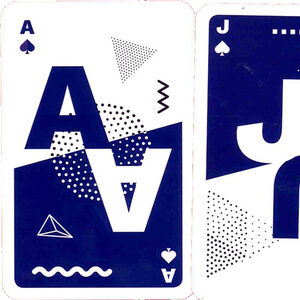
Minimalist playing cards from the “Ace your studies” Studydrive learning campaign.
Fanning the Playing Cards
-
by Simon Wintle
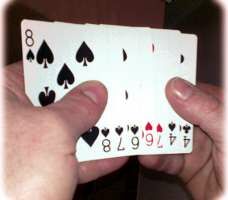
The manner of holding the cards in the hand is related to a player’s needs to view his/her hand in a logically organised way, perhaps categorised into sets or sequences, usually reading from left to right...


3: 20th/21st Century Variants including some from China
-
by Ken Lodge
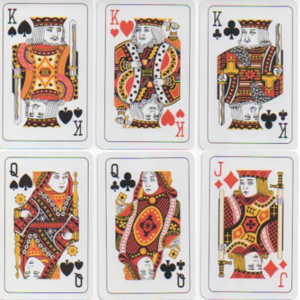
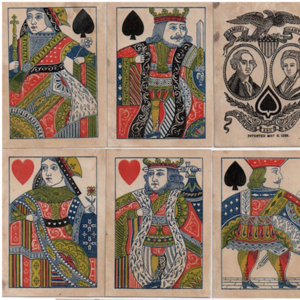
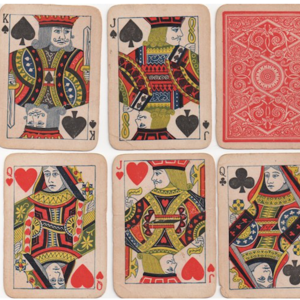
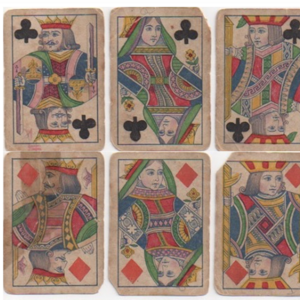
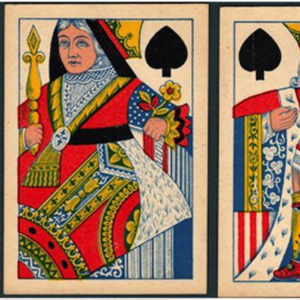
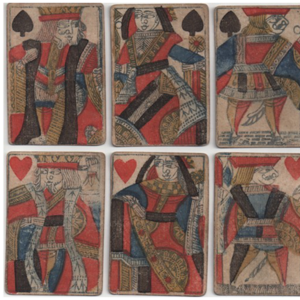
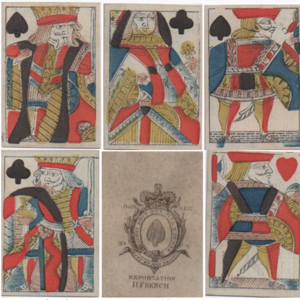
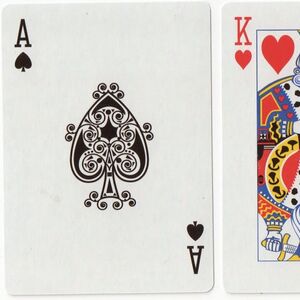
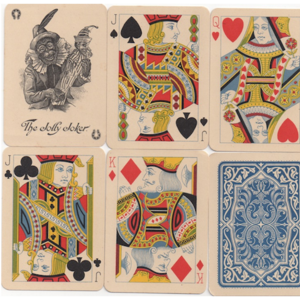
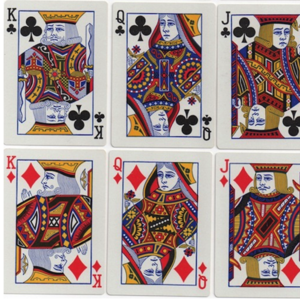
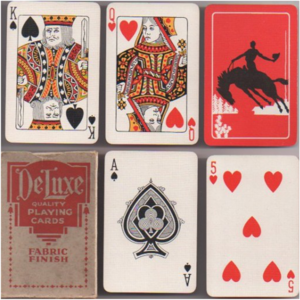
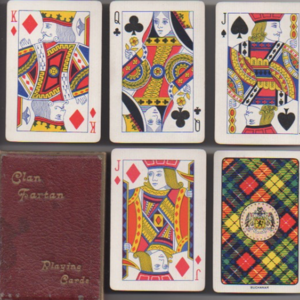
I expect most collectors ignore cards made in China for export. It's true that many are close copies of American models, but there are also some interesting, even peculiar, redrawings of the standard English pattern.

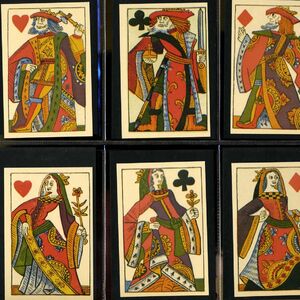
1: Playing Cards and their History: An Introduction and some links to other sites
-
by Ken Lodge
What was considered the first mention of playing cards in England is in 1463 when Edward I banned their importation, so they must have been popular by then.
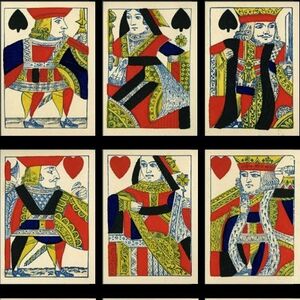
2: Still Collecting Playing Cards at 80
-
by Ken Lodge
This is a personal account of some of my experiences collecting playing cards.
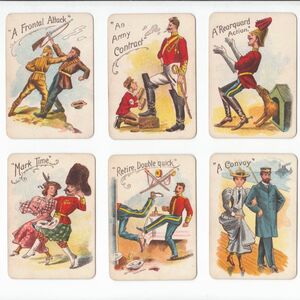
4: Some Card Games
-
by Ken Lodge
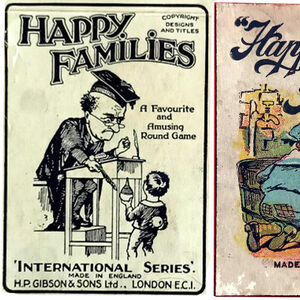
Yet another strand of the playing card world is that of card games, packs of cards usually designed to play just one game. The commonest are Happy amilies and similar collecting games, and Snap, but the variety is as great as in ordinary playing cards.
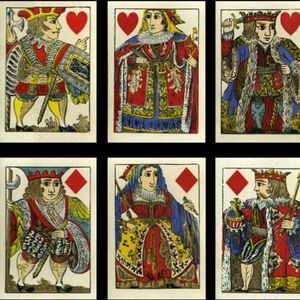
5: De La Rue
-
by Ken Lodge
In December 1831 Thomas de la Rue was granted his patent for printing playing cards by letterpress.
6: Some Non-Standard Cards
-
by Ken Lodge
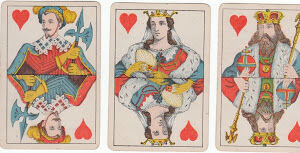
I only collect the English standard, but I thought it would be a good idea to add some different types of card from time to time.
7: Brands and Packs
-
by Ken Lodge
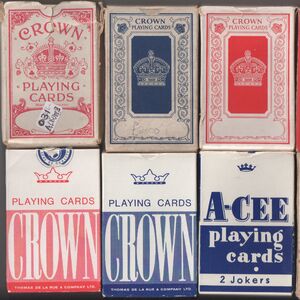
The introduction of brands commenced during the late 19th century as a development of the old qualities: Moguls, Harrys, Highlanders and Merry Andrews.
8: Standard English Cards in Latin America: Argentina, Brazil and Chile
-
by Ken Lodge
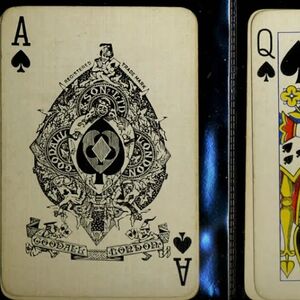
A brief survey of the designs of English cards in South America.

9: Standard English Cards from Latin America: Mexico, Peru, Uruguay and Venezuela
-
by Ken Lodge
A continuation of the survey of designs used in Central and South America.
10: Playing Cards in Germany
-
by Ken Lodge
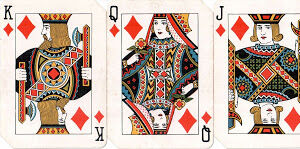
The playing card manufacturers of Germany from 1900 until 1939 provide a complicated set of relationships that deserve closer investigation. Here are some of the standard English designs to be found.
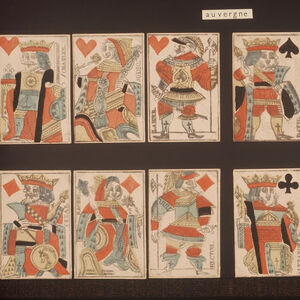
11: Some Cards from Sylvia Mann’s Collection
-
by Ken Lodge
A fascinating collection that was the basis of a lot of research that we still benefit rom today.
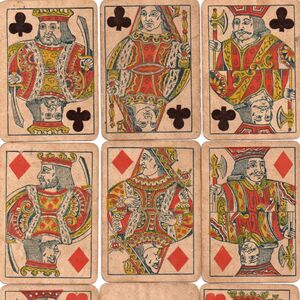
13: Some North American Cards
-
by Ken Lodge
I deal with some of the US makers in more detail on other pages, but here is a brief introduction.
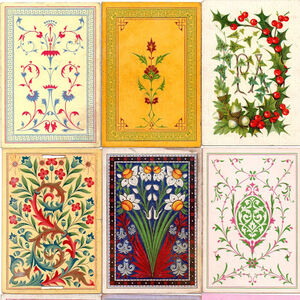
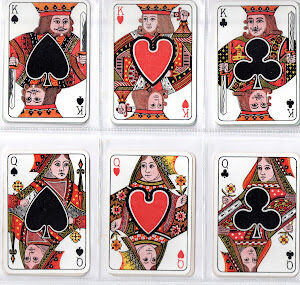
15: Perforated Cards, Metal finish and Other Oddities
-
by Ken Lodge
There are some unusual designs in playing cards, even the shape of the card.
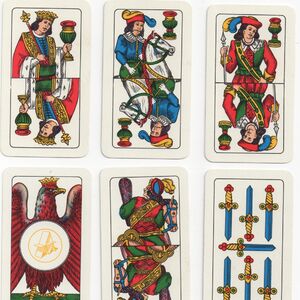
16: European Standard Playing Cards
-
by Ken Lodge
A brief survey of the different types of standard cards to be found in Continental Europe.

17: Waddington, Including some of their Less Common Packs
-
by Ken Lodge
John Berry's two-volume work on the Waddington archive and collection is a very comprehensive presentation of the history of the firm, but there are some items missing which I include here.
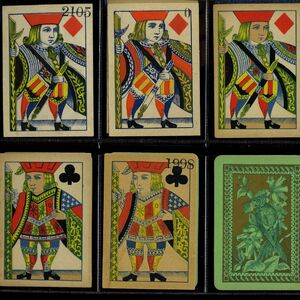
18: Belgian Cards: An Introduction
-
by Ken Lodge
The card-makers of Turnhout were prolific in their output and inveterate copiers.
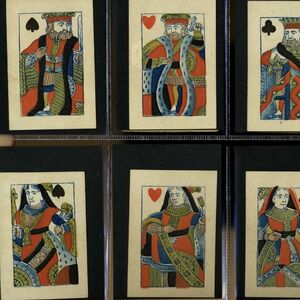
19: 19th Century Breaks with Tradition - Unusual versions of the Standard English Pattern
-
by Ken Lodge
The centuries-long tradition of English court cards was subject to misinterpretation and in some cases a desire for individuality. Here are some examples of breaks with that tradition.
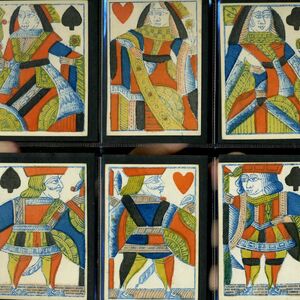
20: English Card-Makers 1761-1905
-
by Ken Lodge
An initial survey of 19th century playing-card production. More detailed information appears on other pages.
21: Belgian Makers: Brepols and Biermans
-
by Ken Lodge
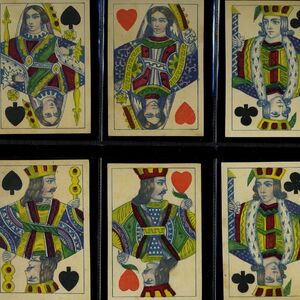
Brepols started making playing cards in 1826, although he had been in the printing trade since 1800. In 1833 the firm was called Brepols & Dierckx (the former's son-in-law). Biermans (1875-1970) was a relatively late arrival on the Turnhout playing card scene.
22: Belgian Makers: Van Genechten
-
by Ken Lodge
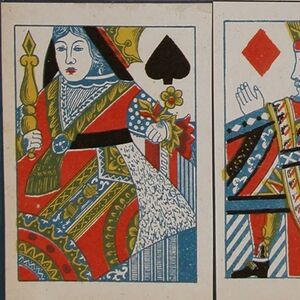
Van Genechten started making playing cards in c.1840 and continued until the founding of Carta Mundi in 1970.
23: Belgian Makers: Mesmaekers
-
by Ken Lodge
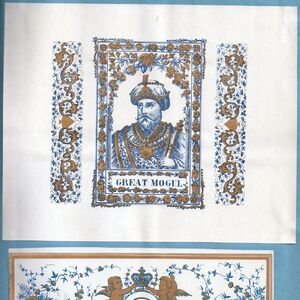
Gustaaf Mesmaekers founded his business in 1859 in association with Louis- François Moentack, who left the business in 1862.
24: The Fournier Museum Catalogue: Comments and Corrections
-
by Ken Lodge
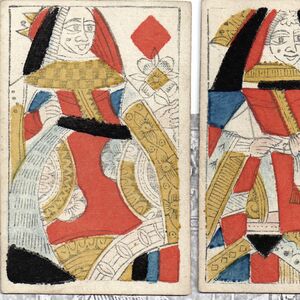
The Fournier catalogue is a very useful reference book, full of pictures of cards from all over the world, especially Europe. Unfortunately, there are quite a few mistakes and unlikely assumptions in it.
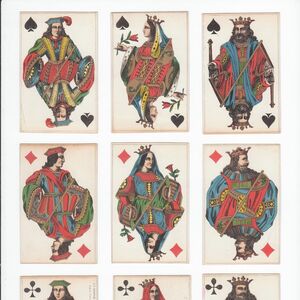
25: More Standard European Cards
-
by Ken Lodge
A further selection of European standard patterns including various redrawings.
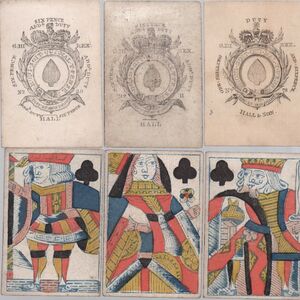
26: Playing Cards: Rarity, Value, Dating, Sellers and eBay
-
by Ken Lodge
Notions like rarity and monetary value are slippery customers and need careful handling. And there are still plenty of misleading descriptions on eBay - as well as looney prices!
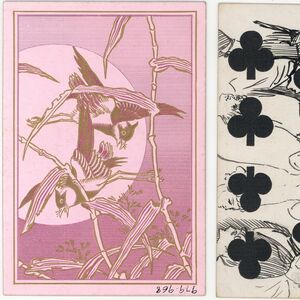
27: Cards at Strangers’ Hall, Norwich
-
by Ken Lodge
There is a very interesting collection of playing cards held at the Strangers' Hall Museum in Norwich.
![28: How to Analyze and Differentiate Playing Card Plates (De La Rue, Waddington and the Berlin pattern [Französisches Bild])](/core/cache-wopc-thumbs/var/www/wopc/production/www/images/contributors/kenlodge/4889-analyzing-playing-card-plates/JS_D1-D2-D3.9dc9d844.jpg "28: How to Analyze and Differentiate Playing Card Plates (De La Rue, Waddington and the Berlin pattern [Französisches Bild])")
28: How to Analyze and Differentiate Playing Card Plates (De La Rue, Waddington and the Berlin pattern [Französisches Bild])
-
by Ken Lodge
My interest in postage stamp variants led me to apply the same principles to playing cards.
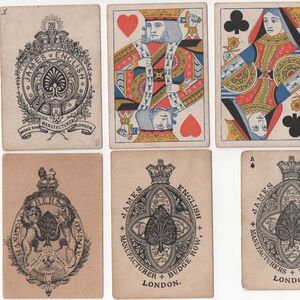
29: James English
-
by Ken Lodge
An overview of the courts and aces of spades produced by James English

30: The Not-So-Minor Cardmakers of the 19th Century - Gibson, Hunt & Bancks
-
by Ken Lodge
A preliminary look at the card-makers operating in the 19th century.
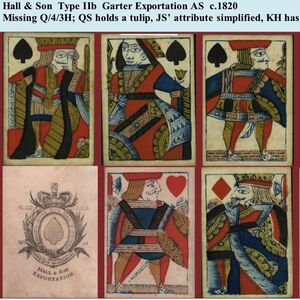
31: The Not-So-Minor Cardmakers of the 19th Century - Part 2
-
by Ken Lodge
This page continues the presentation of examples of the major English cardmakers of the 19th century.

32: The Not-So-Minor Cardmakers of the 19th Century - Part 3
-
by Ken Lodge
A survey of the cards made by Creswick and Hardy, with a brief mention of De La Rue, Goodall and Reynolds.
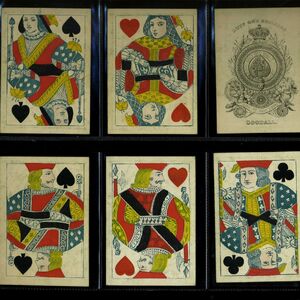
33: Functional Changes to Playing Cards
-
by Ken Lodge
The emphasis throughout my collecting has been on the design of the courts cards, and it should be pointed out that there have been some functional changes to cards, which have affected the traditional designs, especially in the 19th century.

34: Design Copies
-
by Ken Lodge
Some copies of the designs of Goodall and the New York Consolidated Card Co.
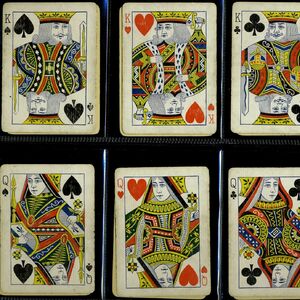
35: More Design Copies
-
by Ken Lodge
Here I want to take another widely copied design and see how individual variation by the copier can take the original design through a lot of changes. I shall take the three USPCC designs: US3 (wide), US3.1 (bridge) and US4 (wide). To the best of my knowledge these are no longer used in the US, except perhaps or special productions, as in the retro market.
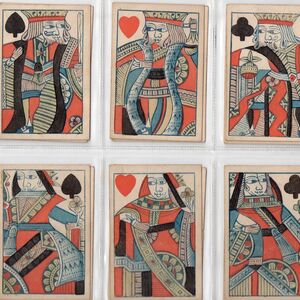
36: Minor Makers of the 19th Century
-
by Ken Lodge
In 19th century England there were a number of makers who produced cards in relatively small quantities.
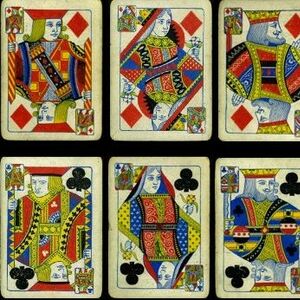
37: Late 19th Century Card-Makers and Problem Cases
-
by Ken Lodge
After the Old Frizzle period and the tax was reduced to 3d per pack, from 1862 onwards, a number of makers started up, who hadn't made cards before, although they were part of the paper and pasteboard industry.