

Cartes Questions-Devinettes
A “Questions & Answers” family game from France produced by Imagerie Pellerin.
Imagerie Pellerin “Guess What?” card game
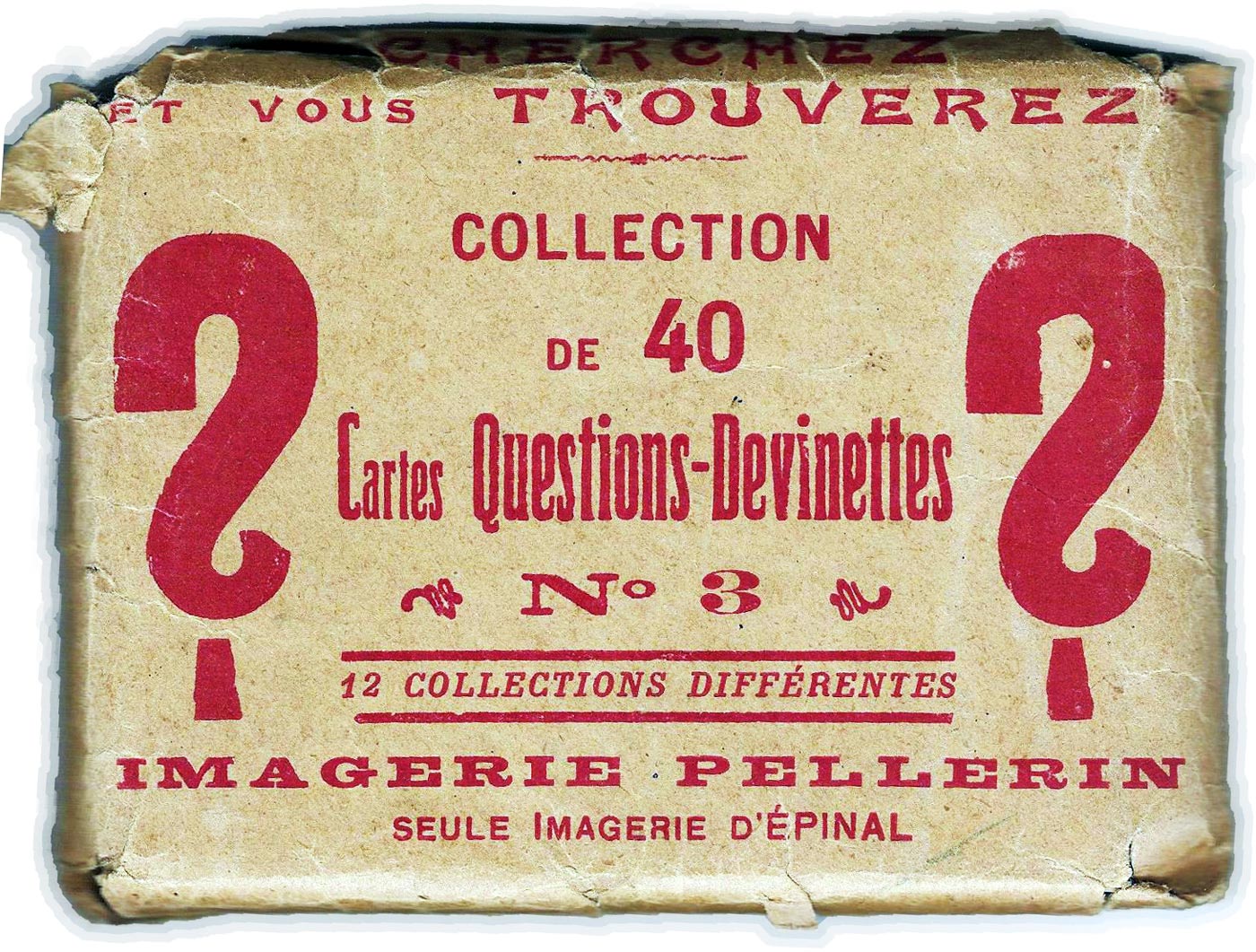
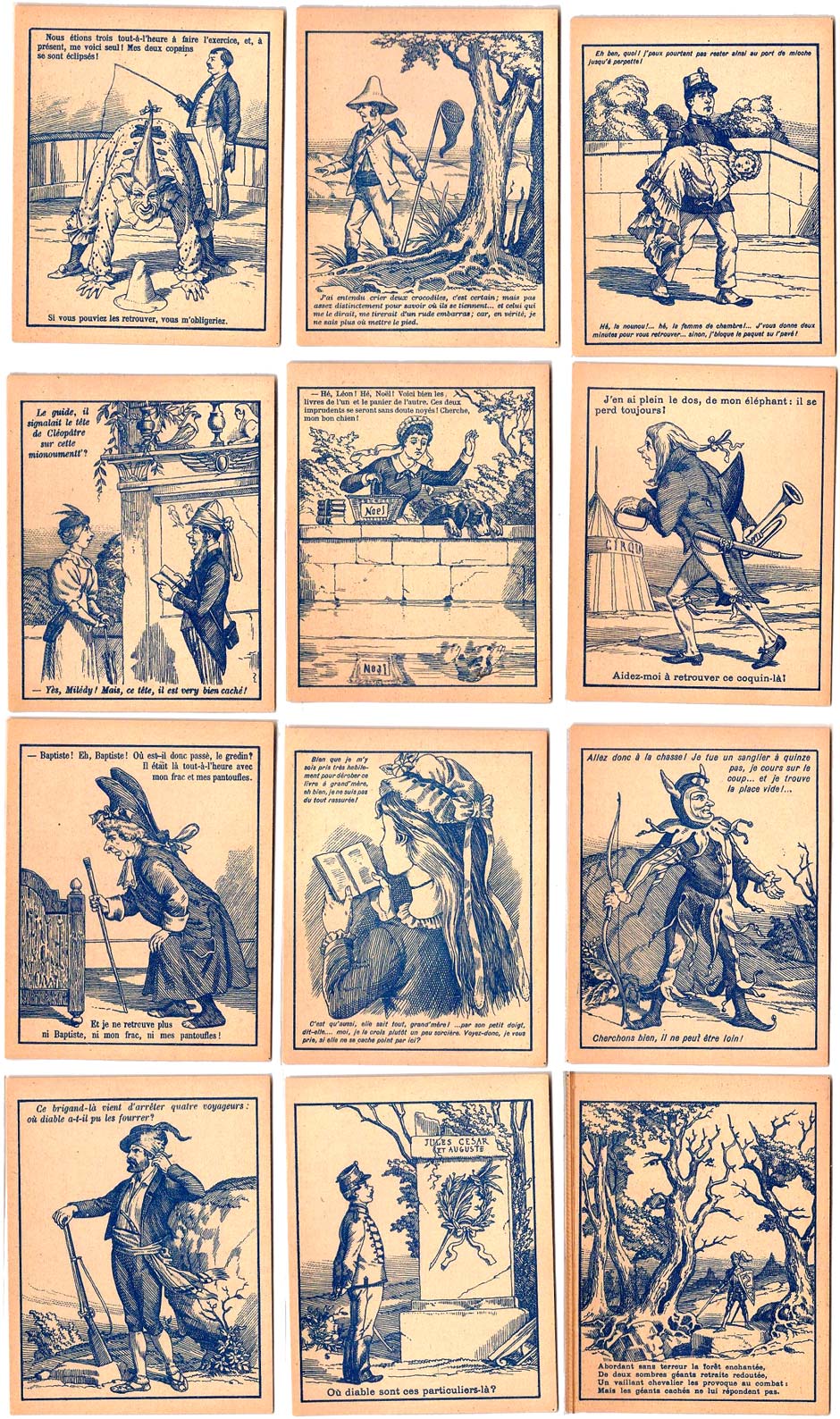
A “Questions & Answers” family game produced by Imagerie Pellerin, Épinal, France, c.1840.
Pellerin was a celebrated publisher of popular art, including playing cards and games. In 1796, Jean Charles Pellerin had set up the “Imagerie d’Epinal” and popularised printed images of everyday scenes. Épinal, France is best known for the “Images d'Épinal”, the popular prints created by Imagerie Pellerin and the Pellerin family. These hand-coloured woodcuts or lithographs of military subjects, storybook characters and other folk themes were widely distributed throughout the 19th century. Pellerin ended up becoming the leading French firm in the field of popular imagery and also published playing cards and tarots.
Right: outer wrapper, printed in red, which mentions that the set contains 40 cards and is no.3 out of twelve different collections. The cards themselves are printed in blue and are uncoloured. The cards are also designed as optical illusions, and hidden images or faces appear depending on how you look at the drawings.
See also: Black Peter Cromy Card Games Happy Families Hijitus Illustrated Proverbs Jaques' Happy Families Noddy Happy Families Pekka-Peli Peruvian Animals Quartet Reshuffle Walt Disney Zoo Comics

By Simon Wintle
Spain • Member since February 01, 1996 • Contact
I am the founder of The World of Playing Cards (est. 1996), a website dedicated to the history, artistry and cultural significance of playing cards and tarot. Over the years I have researched various areas of the subject, acquired and traded collections and contributed as a committee member of the IPCS and graphics editor of The Playing-Card journal. Having lived in Chile, England, Wales, and now Spain, these experiences have shaped my work and passion for playing cards. Amongst my achievements is producing a limited-edition replica of a 17th-century English pack using woodblocks and stencils—a labour of love. Today, the World of Playing Cards is a global collaborative project, with my son Adam serving as the technical driving force behind its development. His innovative efforts have helped shape the site into the thriving hub it is today. You are warmly invited to become a contributor and share your enthusiasm.

Leave a Reply

Your Name
Just now Your comment here. Your comment here. Your comment here. Your comment here. Your comment here. Your comment here. Your comment here. Your comment here. Your comment here. Your comment here. Your comment here. Your comment here. Your comment here. Your comment here. Your comment here. Your comment here. Your comment here. Your comment here. Your comment here. Your comment here. Your comment here. Your comment here. Your comment here. Your comment here. Your comment here. Your comment here. Your comment here. Your comment here. Your comment here. Your comment here. Your comment here. Your comment here.
Related Articles

Cartes de Conversation
Question and answer game printed by Daveluy, Bruges. Each card contains a question (Q.) and an answe...
Les 7 Familles Pyrénées
Mountains, flowers, animals, tourist sites of the Pyrenees, all drawn by the artist Pertuzé.

Jeu de Quaternes ‘Rizá’
Jeu de Quaternes ‘Rizá’

La Belle au bois dormant
Sleeping Beauty card game published in France, c.1980s.
Jeu du Moulin
Jeu du Moulin by Watilliaux, Paris.
La Mariée du Mardi-Gras
La Mariée du Mardi-Gras, published by Jeux et Jouets Français. Paris, early 1900s.
Jeu des 7 Familles
Jeu des 7 Familles © K.F.S. Opera Mundi c.1960.
Candid Confessions
“Candid Confessions” published by Jaques & Son, Ltd, c.1905.
Le Bossu de Notre-Dame
“Le Bossu de Notre-Dame” families card game published by Ducale (France Cartes), c.1998.

Veto
‘Veto’ is a Polish CCG game. Players compete for power and influence. The game is set in 17th centur...
Mauclair Dacier Familles
This “Jeu de Sept Familles” was produced by Mauclair Dacier in the late 19th century.

Marché 7 Familles
“Marché 7 Familles” Happy Families card game published by France Cartes
Dartex
Dartex, the Thrilling New Card Game of Skill (1938) based on the traditional pub game where darts ar...
Richard Bouvier
The assorted antique playing cards shown below are examples of the French 'Paris' pattern from the s...
Jeu des 7 Familles by Miro Company
Jeu des 7 Familles by Miro Company, c.1960.

Translucent Erotic Playing Cards, page 2
Translucent Erotic Playing Cards, page 2
Translucent Playing Cards, c.1850
Cards from a translucent pack. Erotic images are concealed in the middle layer of the card and becom...

Cromy card games
Juegos de Cartas Cromy card games made in Argentina 1983-1995
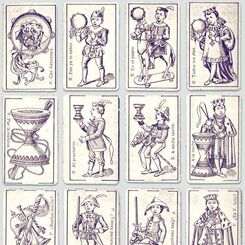
Baraja Infantil made in Cuba
cards from a 40-card children's "Questions and Answers" game. The Spanish suit signs have been chang...
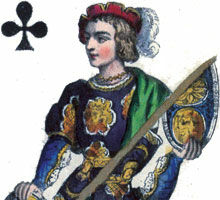
O. Gibert, Paris c.1840-60
Gibert was a master card-maker whose fashionable playing cards were of a very high standard.
Most Popular
Our top articles from the past 60 days


