


Agostino Bergallo
Agostino Bergallo Spanish pattern made for South American countries
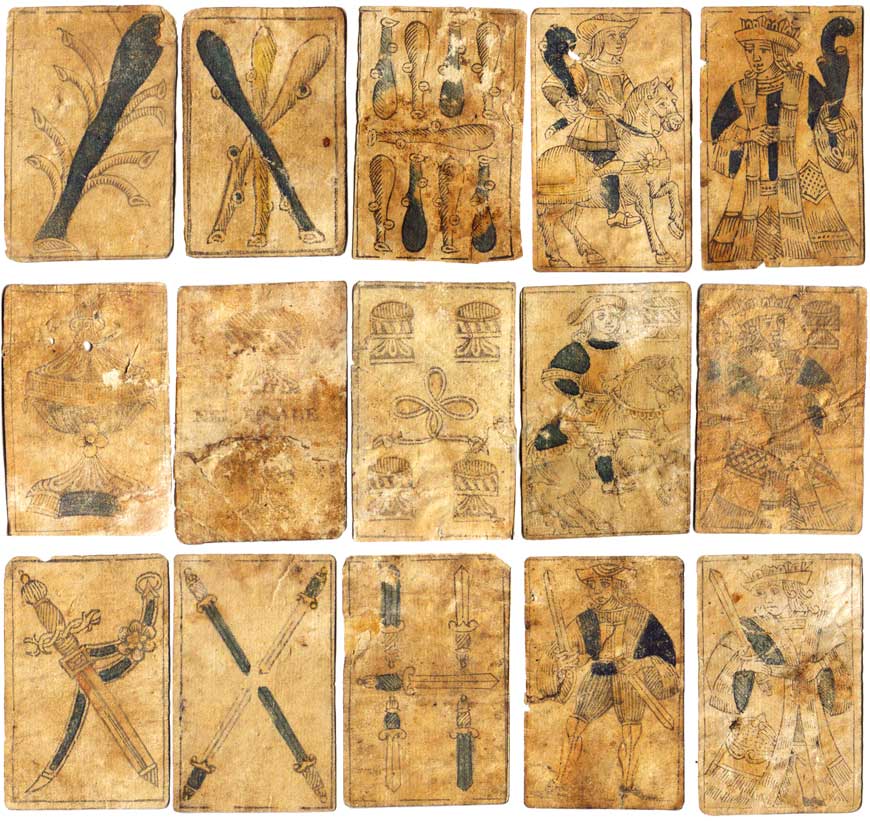
Spanish National pattern / ‘Money Bag’ type / made in Italy, 18th century.

As well as cards made in Italy for Italians to play with, Spanish-suited cards were made for export or for visitors. Genoa was an exporter of Spanish cards, and makers such as Bosio, Bergallo, Armanino and Solesio all exported packs of Spanish-suited cards, including some made for South American countries. In the standard version of the Spanish ‘National’ Pattern, the Jack (‘Sota’) of Coins usually holds in his right hand a kind of horn, but in many examples made in Italy this becomes a small bag, hence the name of this sub-type: ‘Money Bag’ type.
See also: ‘Money Bag’ type by Pedro Bosio.
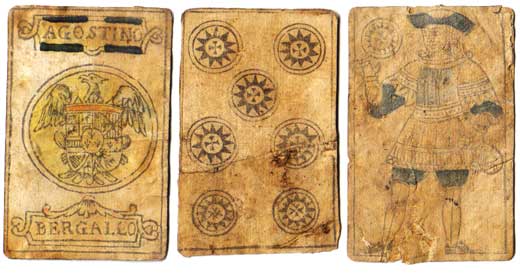
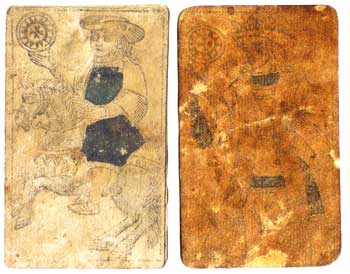
Above: woodblock-printed and stencil-coloured Spanish-suited playing cards made in Italy by Agostino Bergallo for export to Spanish territories, 18th century. The Ace of Coins carries the maker's name and the Spanish coat-of-arms, and there is a scarcely-legible inscription on the Two of Cups.
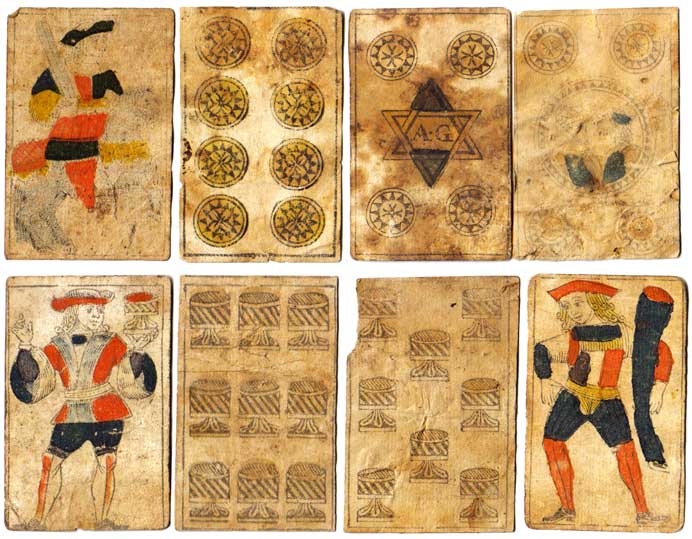
Above: some additional cards of a similar style and date were found with the above deck, with the initials A.G. inside a six-pointed star on the Four of Coins. The Five of Coins has the traditional facing profiles of Ferdinand and Isabella. Close examination of the Coins and Cups symbols shows slight differences in design between some cards and the cards from the deck shown above by Bergallo. However, in other respects the cards are difficult to sort out into their respective packs. The cards have come to light in a collection in Chile.
See also: ‘Money Bag’ type by Pedro Bosio Giuseppe Cattino Spanish National Pattern South America

By Simon Wintle
Spain • Member since February 01, 1996
I am the founder of The World of Playing Cards (est. 1996), a website dedicated to the history, artistry and cultural significance of playing cards and tarot. Over the years I have researched various areas of the subject, acquired and traded collections and contributed as a committee member of the IPCS and graphics editor of The Playing-Card journal. Having lived in Chile, England, Wales, and now Spain, these experiences have shaped my work and passion for playing cards. Amongst my achievements is producing a limited-edition replica of a 17th-century English pack using woodblocks and stencils—a labour of love. Today, the World of Playing Cards is a global collaborative project, with my son Adam serving as the technical driving force behind its development. His innovative efforts have helped shape the site into the thriving hub it is today. You are warmly invited to become a contributor and share your enthusiasm.

Activity for Agostino Bergallo
Sign in to comment or save this article.

Related Articles
La baraja de Almagro
De la chimenea al monumento nacional: la baraja de Almagro y el renacer del corral de comedias.
History of Tarot and Playing Cards: Timeline & Origins
An alternative history of tarot and playing cards – from Mamluk Egypt to the invention of tarot in R...
Luigi Del Pieve Minchiate
Luigi Del Pieve and the “Alli Sorte” Minchiate of Florence.
Ganjifa - Playing Cards from India
Indian playing cards, known as Ganjifa, feature intricate designs with twelve suits and are traditio...
Portuguese-suited cards
Portuguese-suited cards with dragon aces, made in Italy, 1613.
Le Jeu de la Guerre
Facsimile of “Le Jeu de la Guerre” designed by Gilles de la Boissière in 1698.
64: The descendants of the French regional patterns: 2
A continuation oF the development of the off-spring of the Paris patterns and a few examples of how ...
Trentine Pattern
Trentine Pattern
Primiera Bolognese
Primiera Bolognese by Modiano, c.1975
Hermanos Solesio
“Money Bag” pattern by Hermanos Solesi, late 18th c.
Anonymous Spanish Suited pack, c.1760
Anonymous archaic Spanish suited pack, c.1760.
Rois de France
Cartes des Rois de France (1644) facsimile edition by Edizioni del Solleone, 1986.
1: Playing Cards and their History: An Introduction and some links to other sites
What was considered the first mention of playing cards in England is in 1463 when Edward I banned th...
Giuseppe Cattino
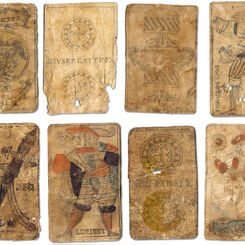
Playing cards manufactured in Italy by Giuseppe Cattino and Paolo Montanar for Spanish markets.
Pedro Bosio
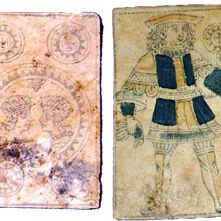
Cards of the Spanish National Pattern manufactured by Pedro Bosio, probably during the 18th century ...
Lombardy (or Milanesi) pattern
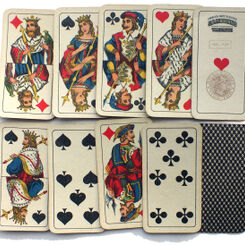
The origins of the Lombardy pattern probably lie in the early 19th century when it was a full-length...
XV Century Italian Playing Cards
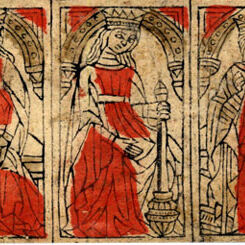
Cards from a pack of an early form of north Italian playing cards, with the swords back-to-back and ...
Sicilian playing cards by Antonio Monasta.
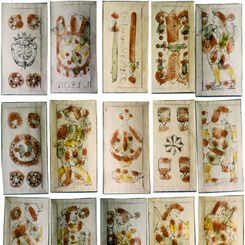
"Il Leon" Sicilian playing cards, 40-card pack based on Spanish designs, made in Sicily by Antonio M...
Italian Playing Cards
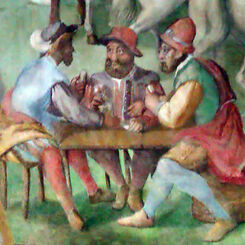
The first reliable evidence that playing cards were being used in Italy is from 1376, when a game ca...
The History of Playing Cards
Playing cards appear in European records in the late 14th century, but their earlier history lies fu...
Most Popular
Our top articles from the past 60 days


