

Netherlands
Playing cards have been known in the Low Countries since the 14th century
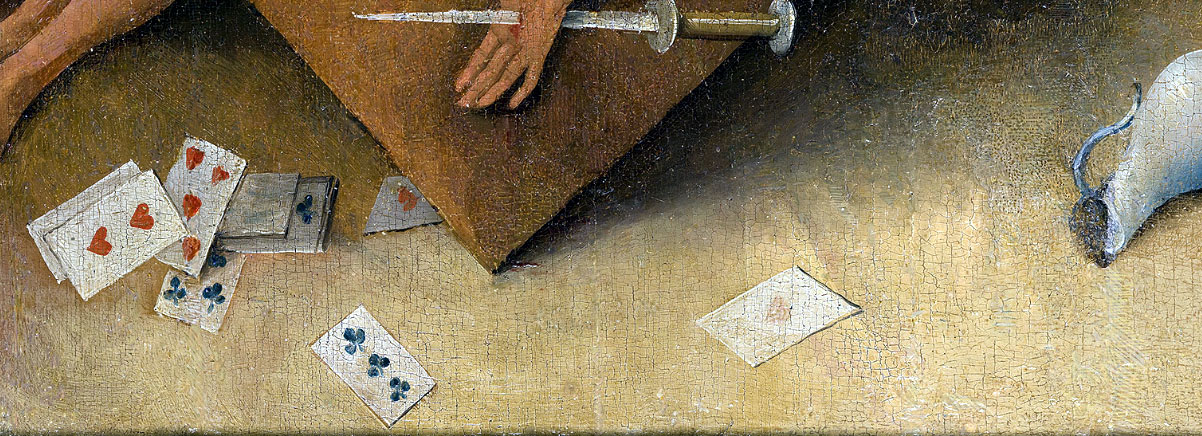
Above: Hidden meanings in painting by Hieronimus Bosch, where souls are tormented by fear, anxiety, chaos and distress more →
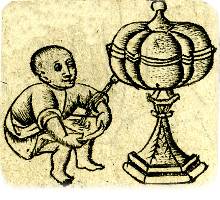
Above: playing cards by the “Master of the Banderoles” more►

Above: detail from “The Card Players”, after Lucas van Leyden, Netherlandish, probably c. 1550-1599 more →
Playing cards have been known in the Low Countries since the 14th century, mostly imported from France or Belgium, but until the 17th century there were few Dutch card makers. An edict from Lyons in 1583 caused many French playing card makers to emigrate so some of them may have arrived in Holland more →
There is also the period of the Spanish Netherlands under King Philip II of Spain when the histories of Spain and the Netherlands were connected more →
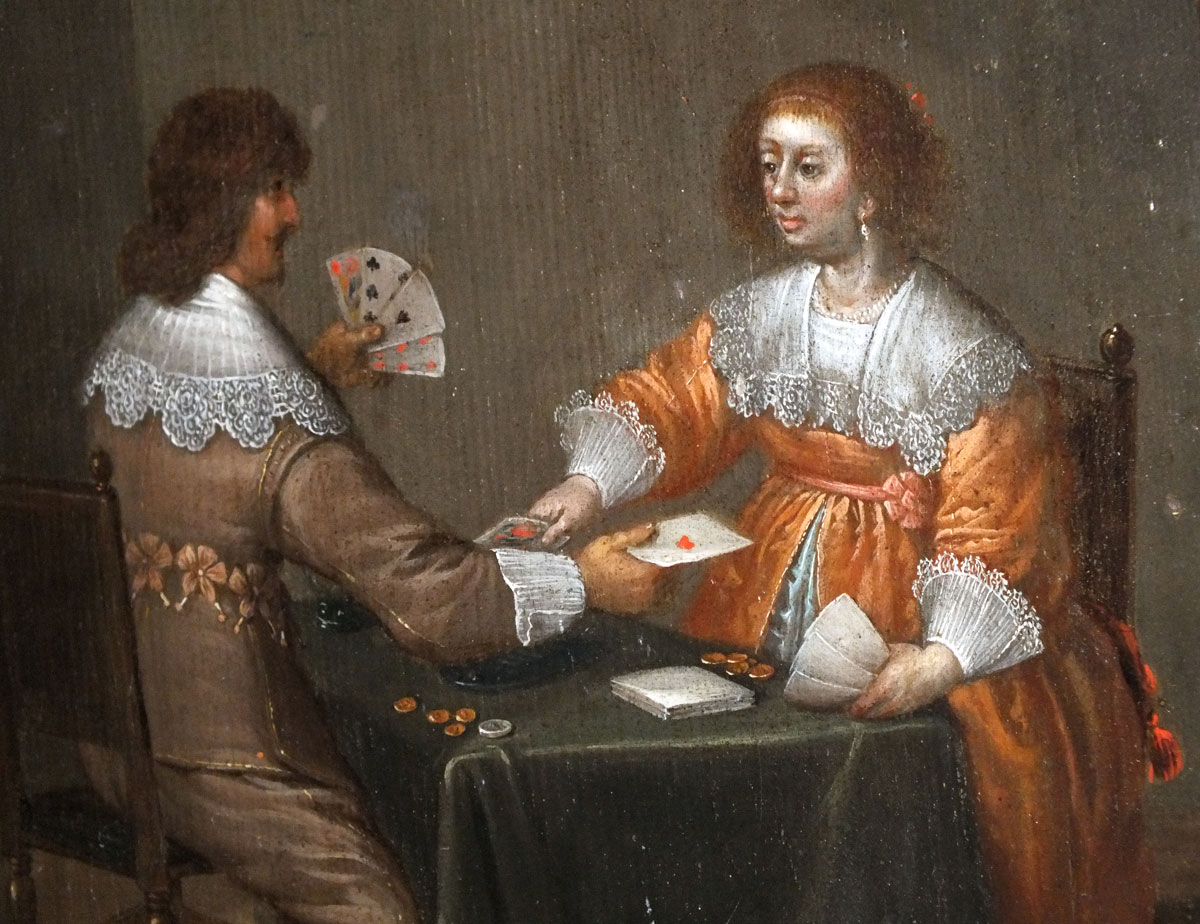
Above: detail from “Man and Woman Playing Cards” by Dutch artist from the circle of Anthoine Palamedesz (1601-1673). The card game is used as a metaphor for love: the man is handing the ace of hearts to the woman. Image courtesy Grosvenor Art Gallery, Chester.
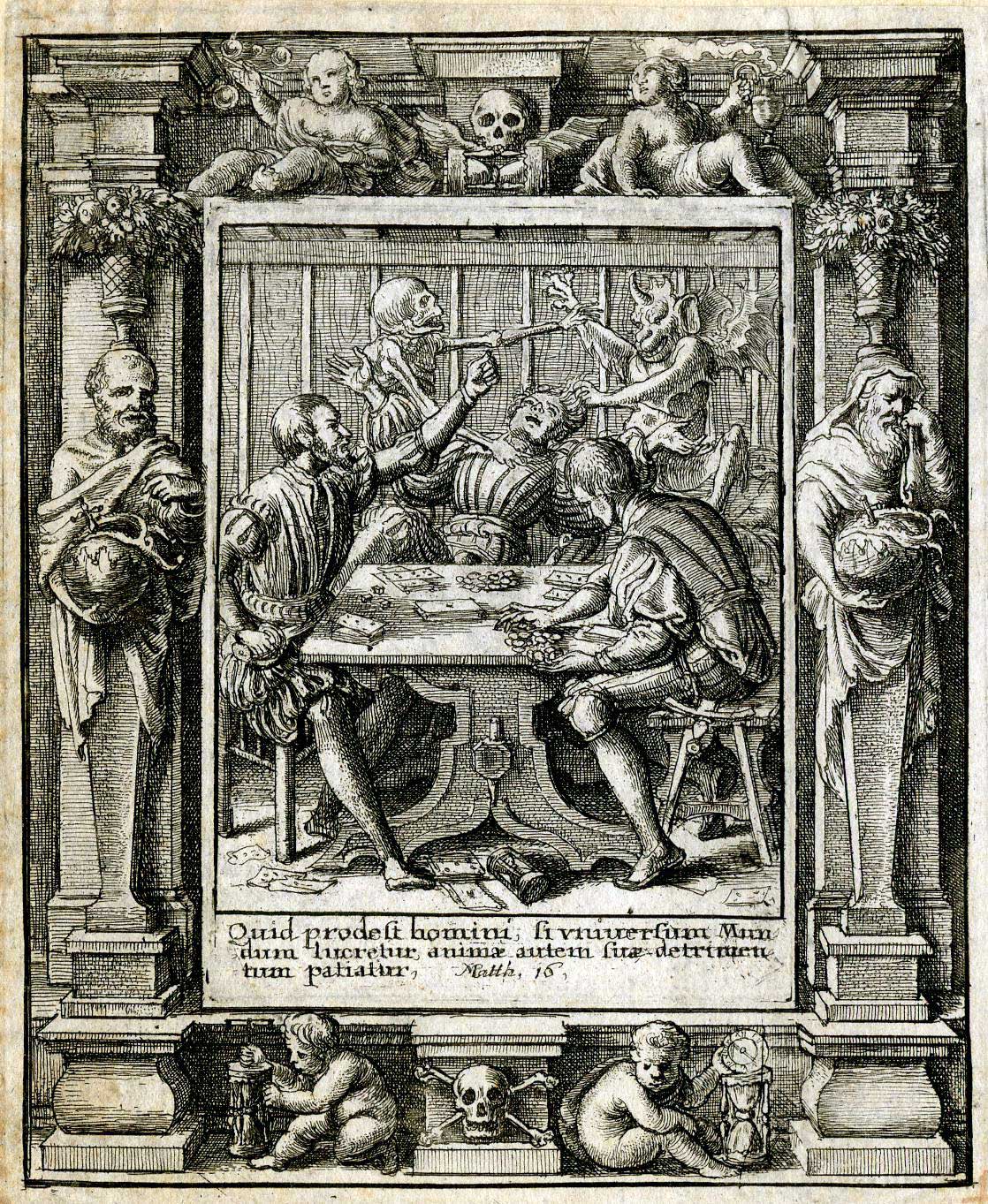
Above: three card players at a table, 1651. © The Trustees of the British Museum • Museum number Q,4.100►
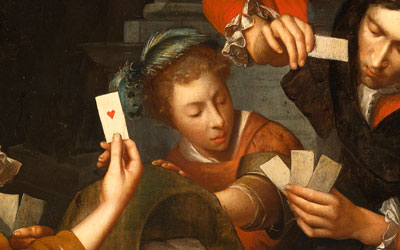
Above: detail from “The card game on the cradle allegory” attributed to Johannes van Wijckersloot, 1683 more →
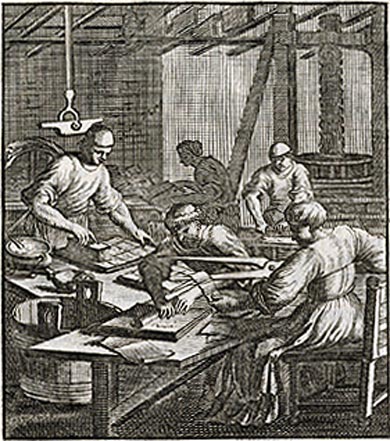
Above: de Speelkaartemaker. The woman at front-right is using a very large pair of cutting shears, whilst in the background several other operations, such as colouring, are being performed.
During the 17th century, Holland’s so-called Golden Age, Amsterdam witnessed a great blossoming in the manufacture of playing cards and thanks to their steadily increasing production, they were able to capture a significant portion of the European market. In 1662 card makers joined a new guild, together with booksellers, printers and binders. This meant that their interests could be better protected against plagiarism and unfair competition.
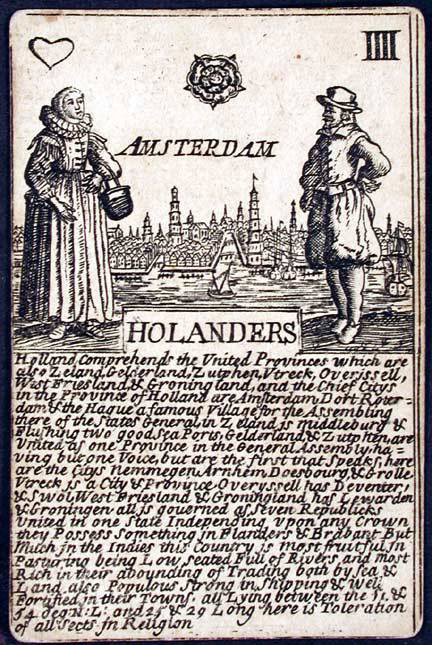
Above: card from Henry Winstanley's Geographical playing cards, 1676, depicting a Dutchman and woman in typical outfits along with the most important geographic, political and economic facts of the day.
Above: Kriegs-Spiel by Peter Schencken, Amsterdam, c.1670
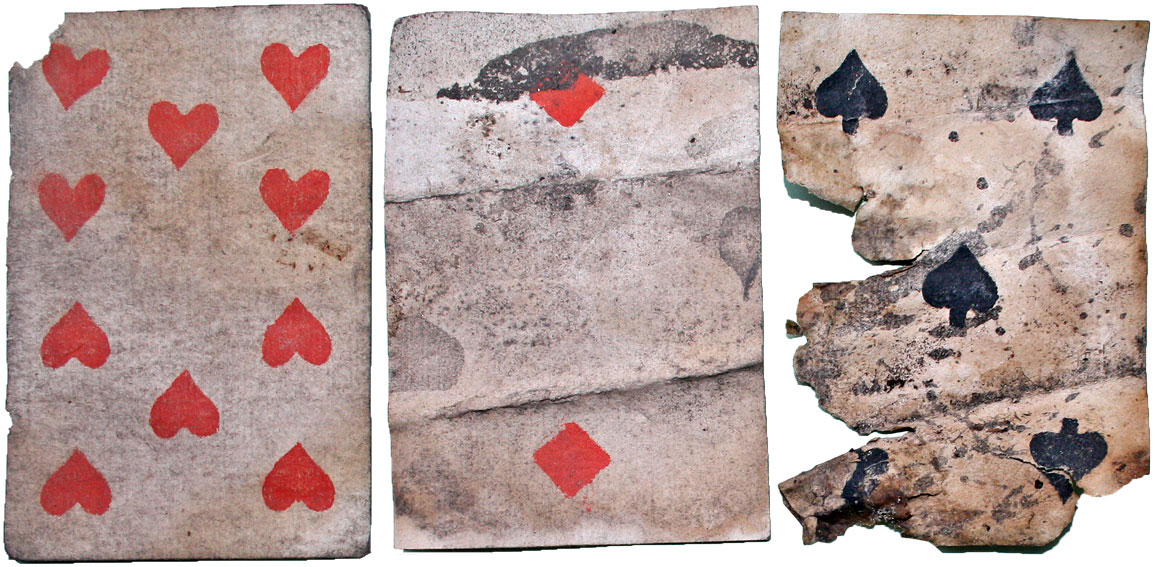
Above: Archaeological find: old playing cards under the floorboards.
Early manufacturers based in Amsterdam at that time include Jean Fouquet, P. Mortier, who also imitated French educational, geographical or satirical packs, J. Gole, Gerard Valk, Carel de Wagenaer and A. de Winter. A number of French card-makers had emigrated to Holland because of the duties imposed at home.
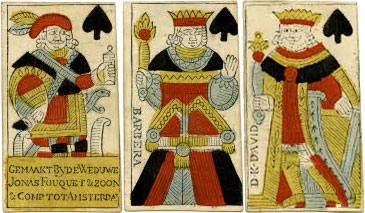
Above: cards published by Jonas Fouquet & son, Amsterdam, 18th Century.
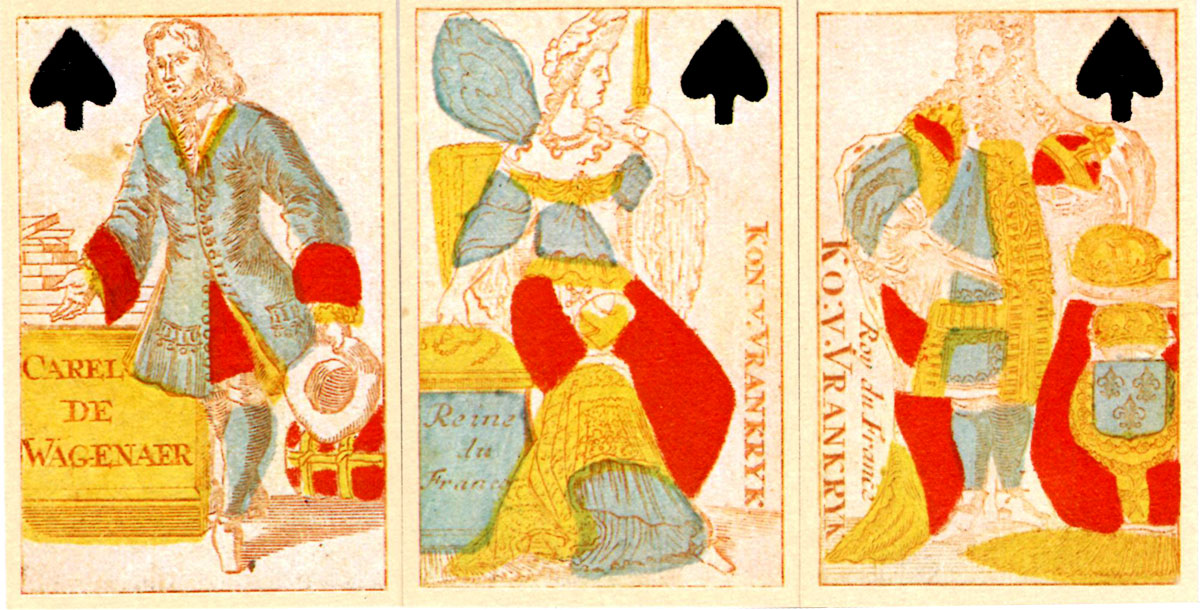
Above: cards first published by Carel de Wagenaer, Amsterdam, c.1698
A two-volume “Traité du Jeu” concerning the morality of gaming was published in Amsterdam in 1709 and editions of “Maison des Jeux” (1702) and “Académie des Jeux” (1728) were also published. In the 18th century non-standard pictorial cards were exported to England.
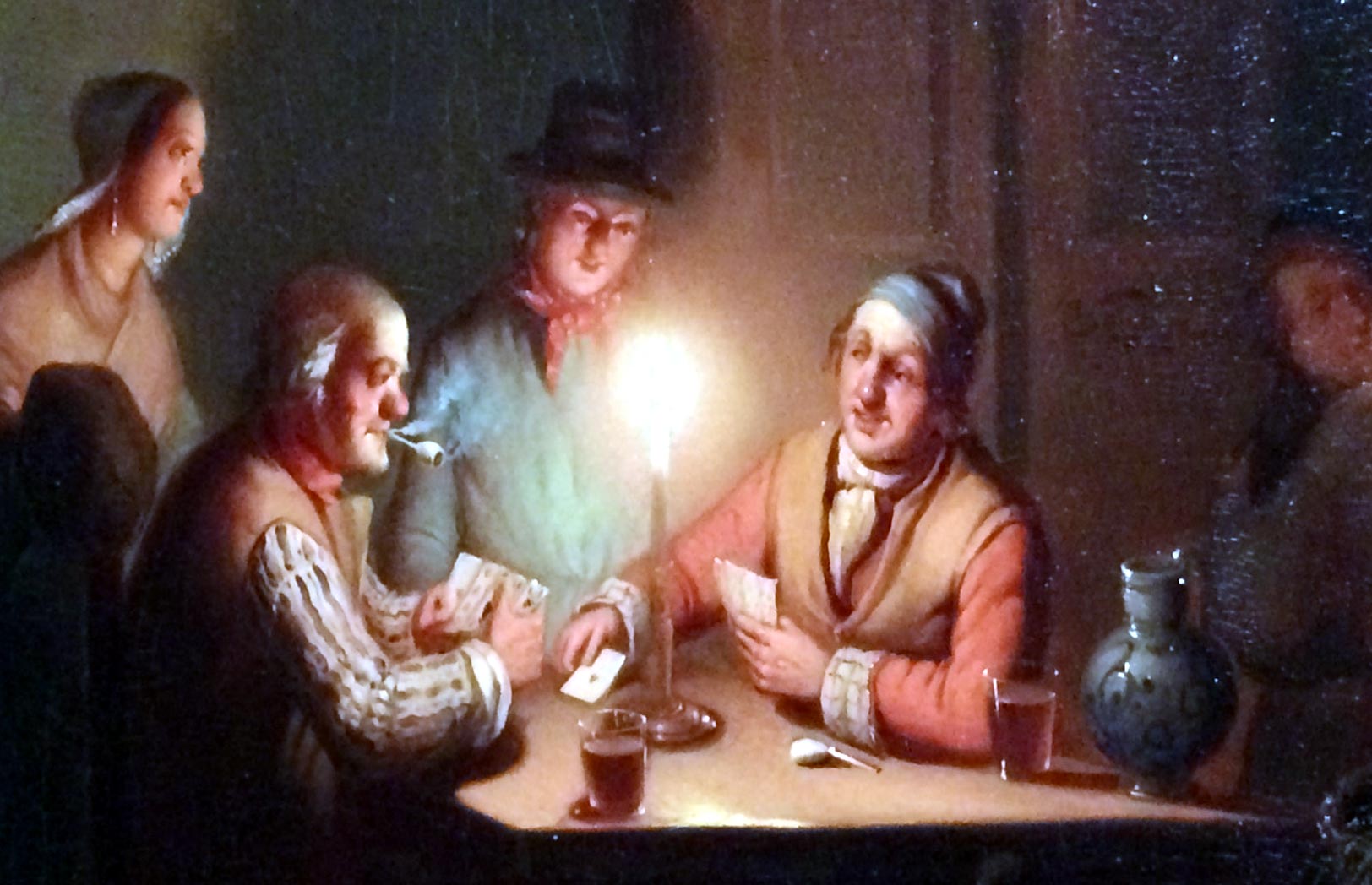
Card Players by Candlelight, Johan Mengels Culverhouse (c.1820-1891).
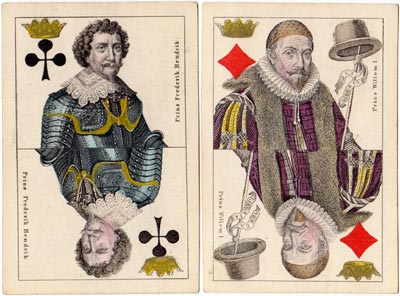
Above: Dutch costume playing cards, second half of the 19th century.
Among later cards made in Holland, the majority have French suit signs. Sometimes the courts resemble French ones, sometimes German ones, and very often these packs have pictorial aces.
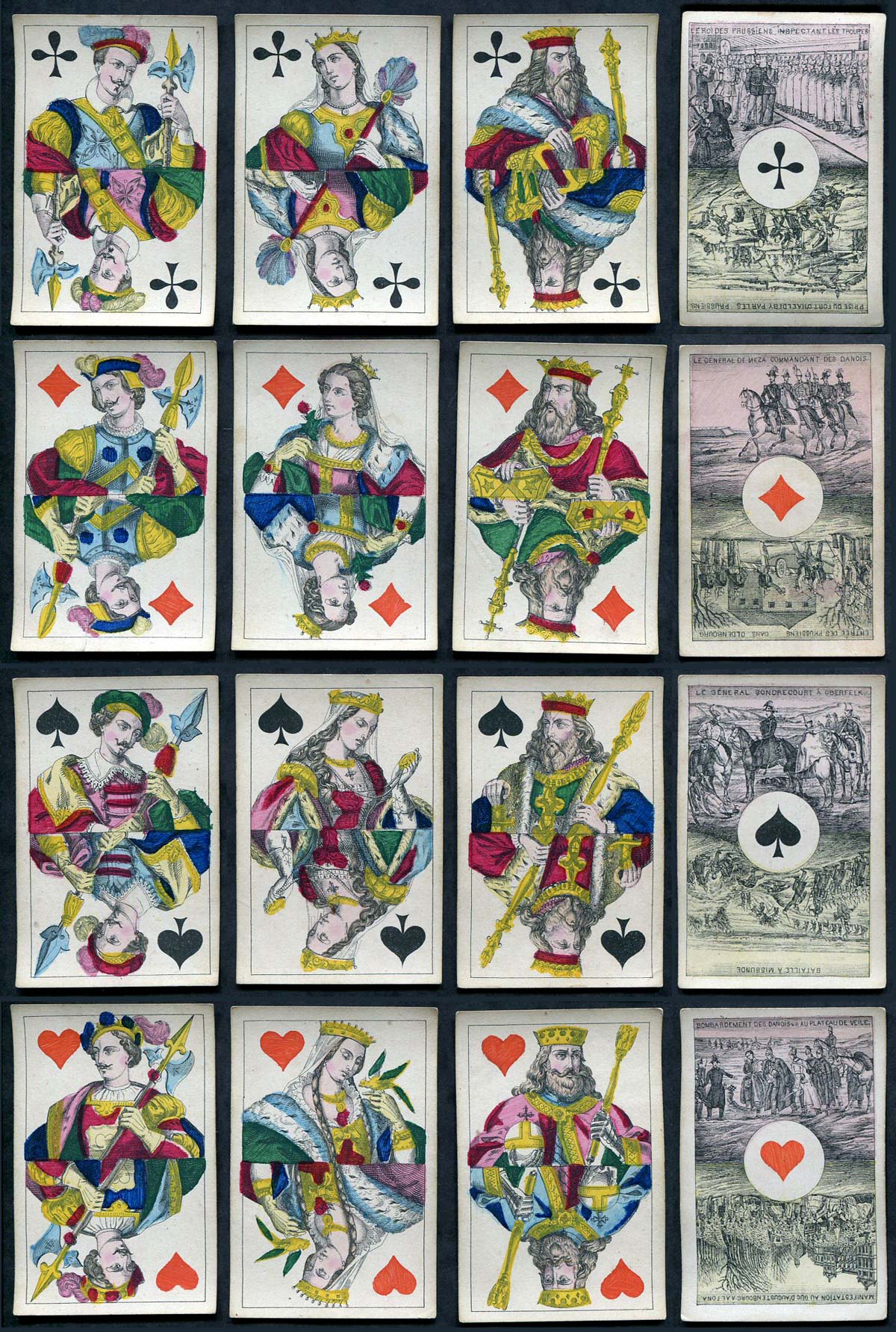
Above: late 19th century War deck by Nederlandsche Speelkaarten Fabriek from Amsterdam
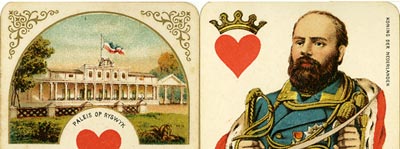
Above: B. Dondorf's “Fynste Java Speelkaarten” for the former Dutch East Indies during the colonial period, 1879
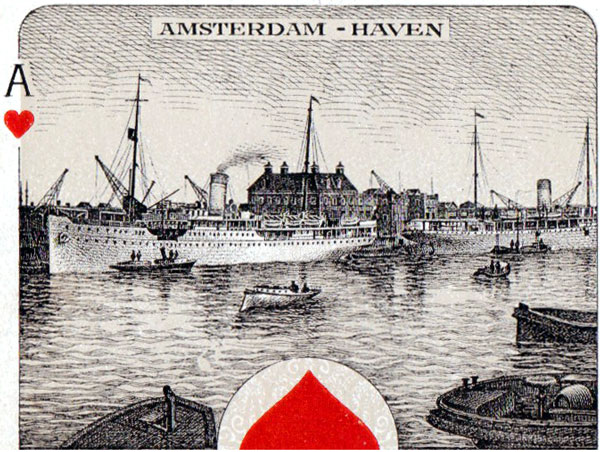
Above: “S. M. N” shipping line playing cards produced by Nederlandse Speelkaarten Fabriek, c.1910 more →
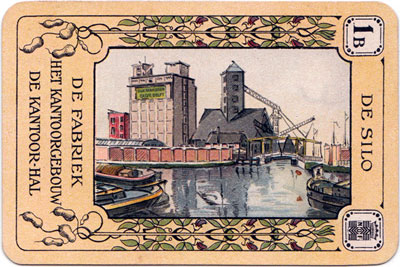
Above: Nederlandsche Oliefabriek Calvé quartet game, c.1920
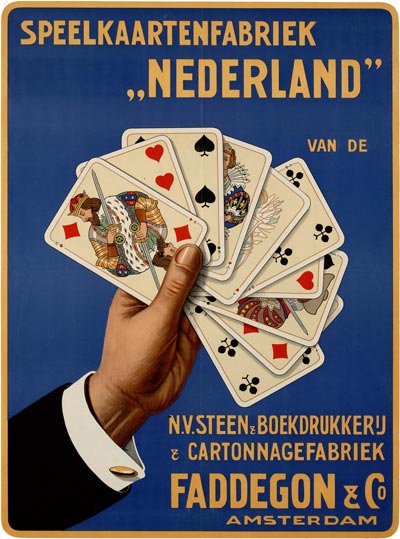
Above: advertisement for Speelkaartenfabriek Nederland, which operated from 1909-1969 until it was taken over by Carta Mundi in 1970.
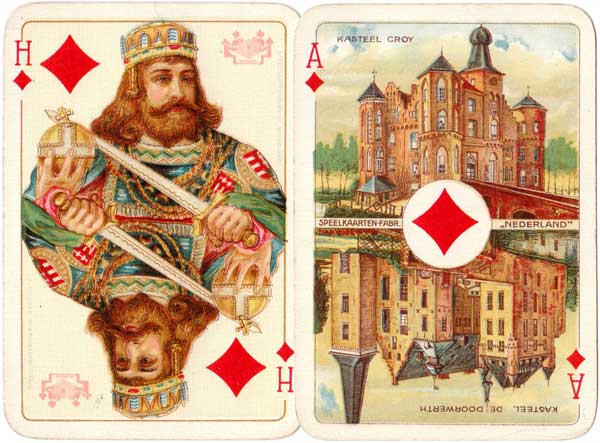
Above: Speelkaartenfabriek Nederland “Fortuna” deck, 1926
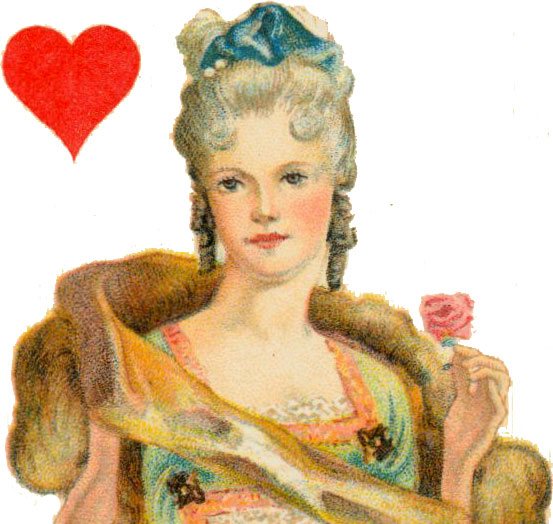
Above: Elegant “Nieuw Neerlandia” pattern designed by M.A. Koekkoek, 1930
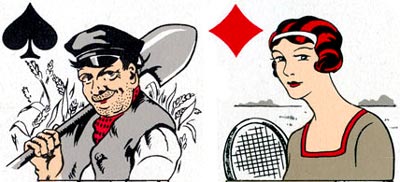
Above: Sikar publicity deck by Speelkaartenfabriek Nederland, Amsterdam, 1935 more →
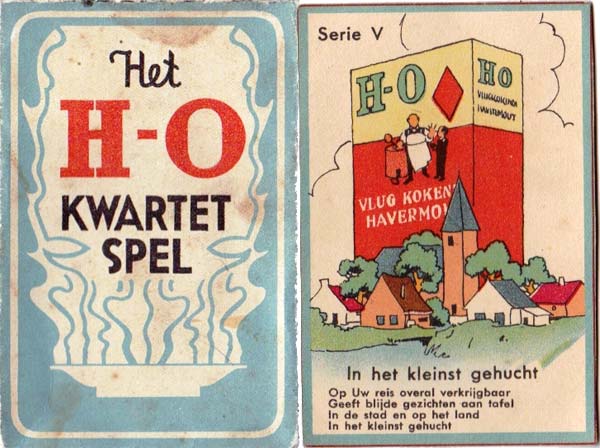
Above: Havermout Kwartetspel more►
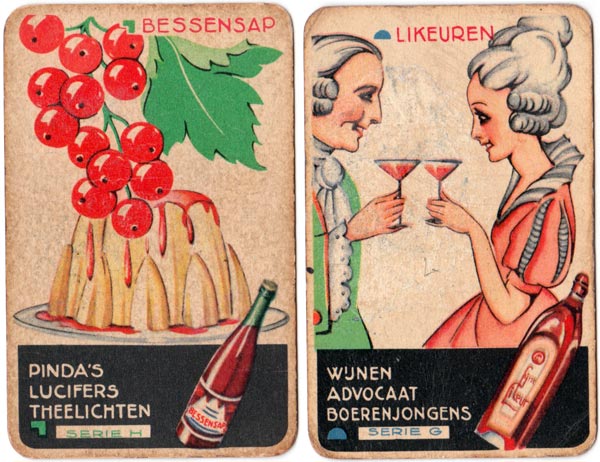
Above: Albert Heijn’s “Boffie” Kwartetspel first published in 1936 more►
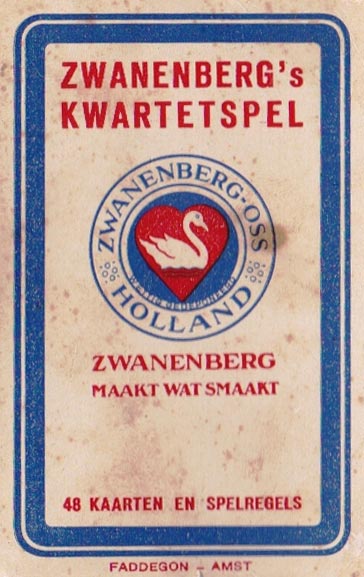
Above: Zwanenberg’s Kwartetspel, 1938 more →
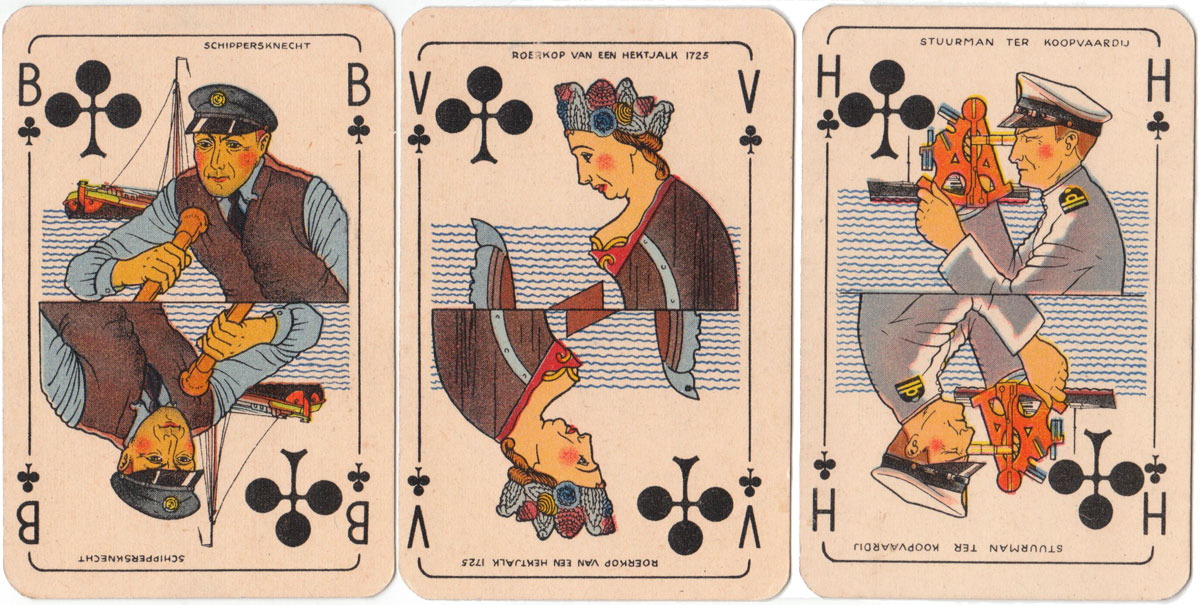
Above: Maritime pack designed by J.Verhoeven, c.1938 more►
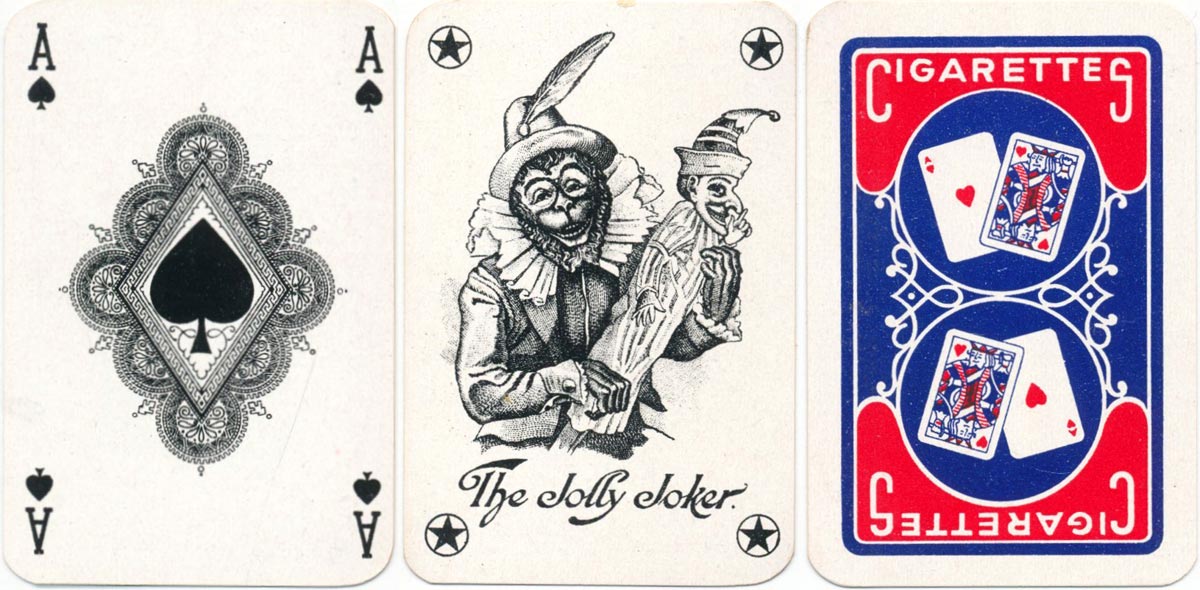
Above: patience deck for British American Tobacco, c.1940 more →
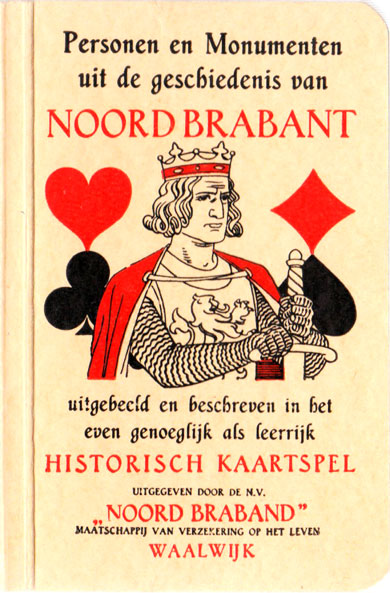
Above: Historic card game published for Noord Braband Insurance Society, 1943 more →
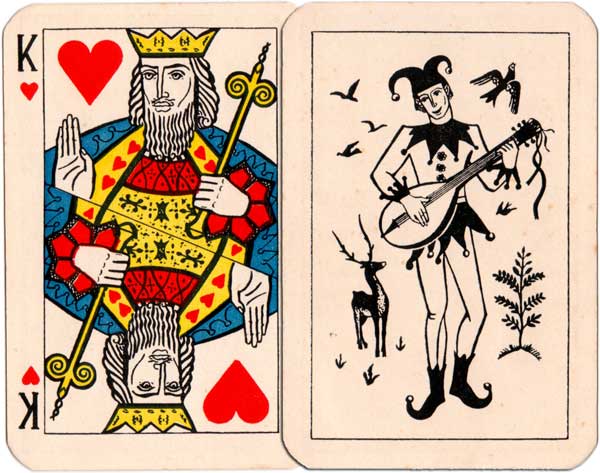
Above: Anonymous Dutch deck, 1940s more →
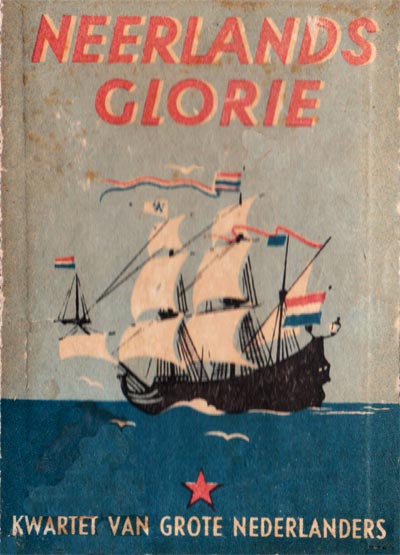
Above: Neerlands Glorie Kwartetspel published by Hausemann & Hötte, 1945 more →
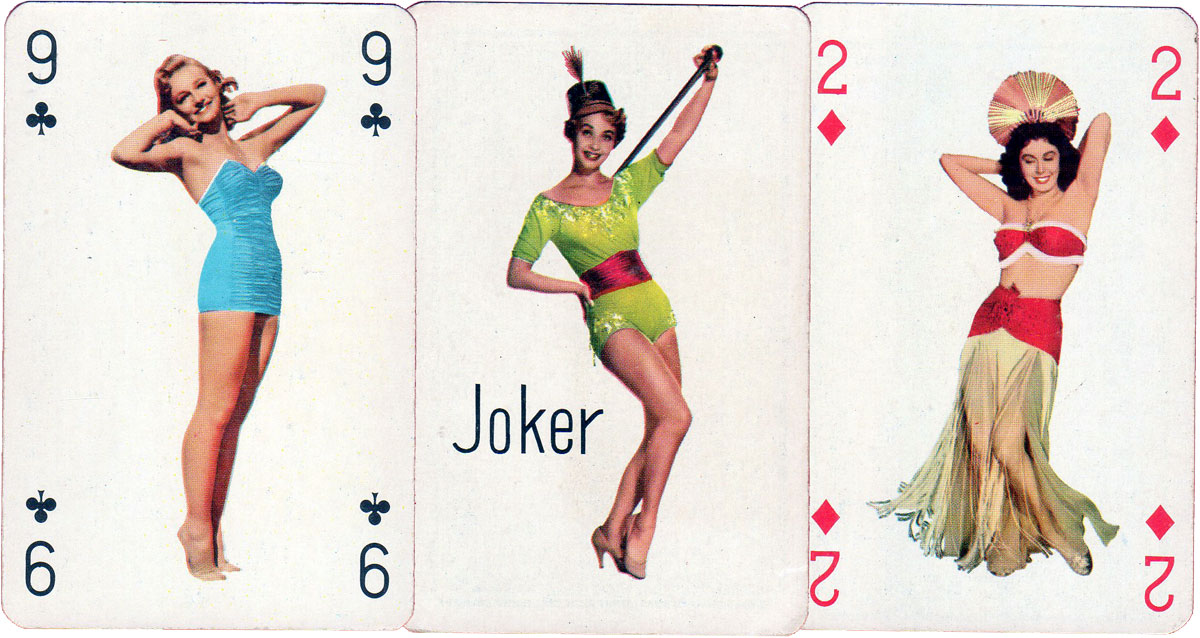
Above: Hollywood Stars, c.1957 more →
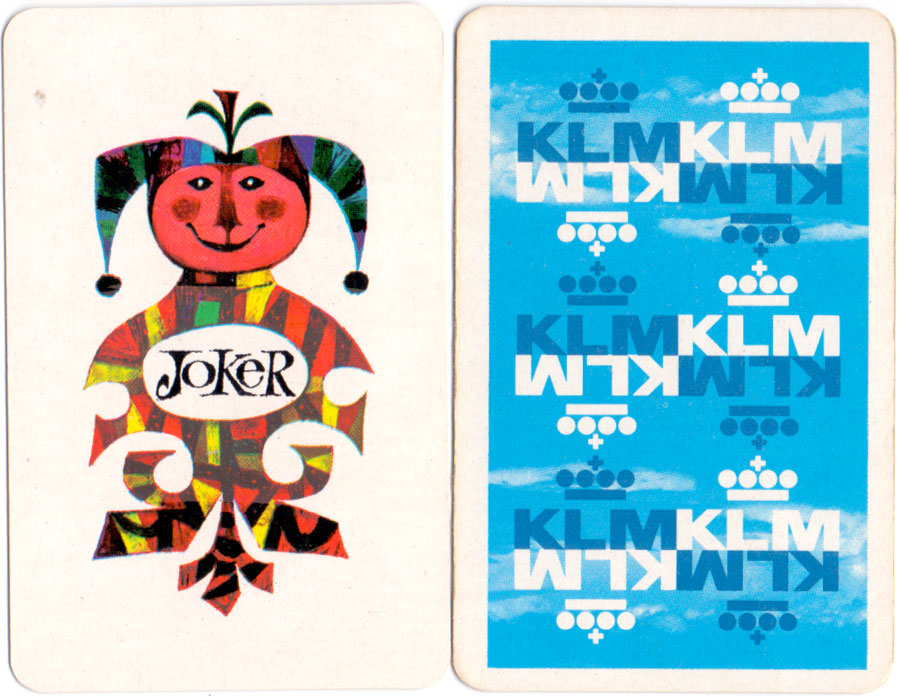
Above: deck designed by Max Velthuijs for KLM airlines more →
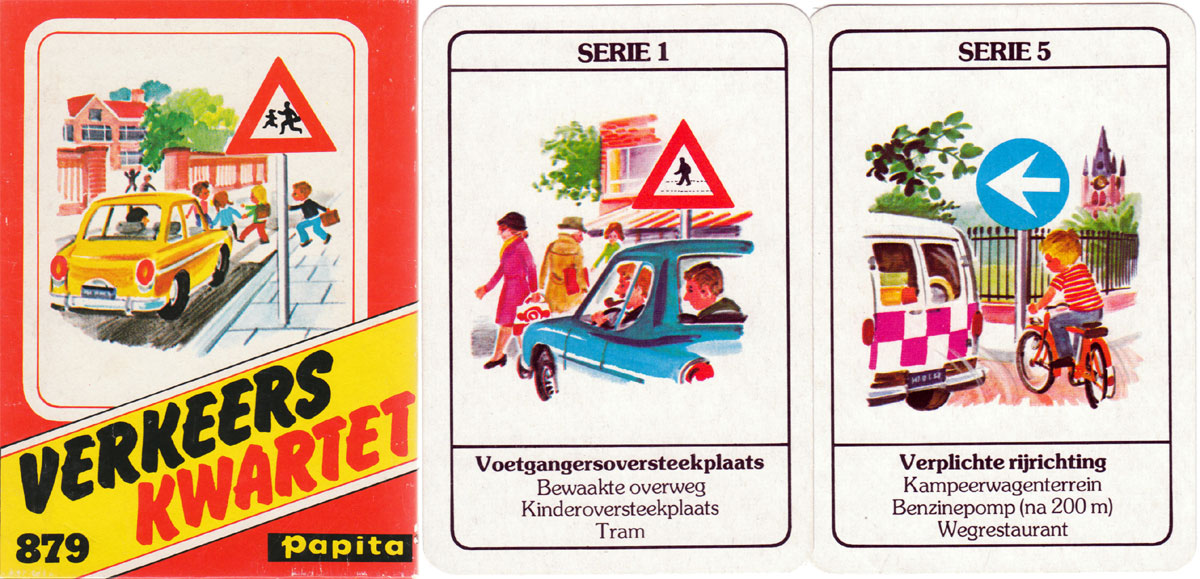
Above: Verkeers Quartet, c.1965
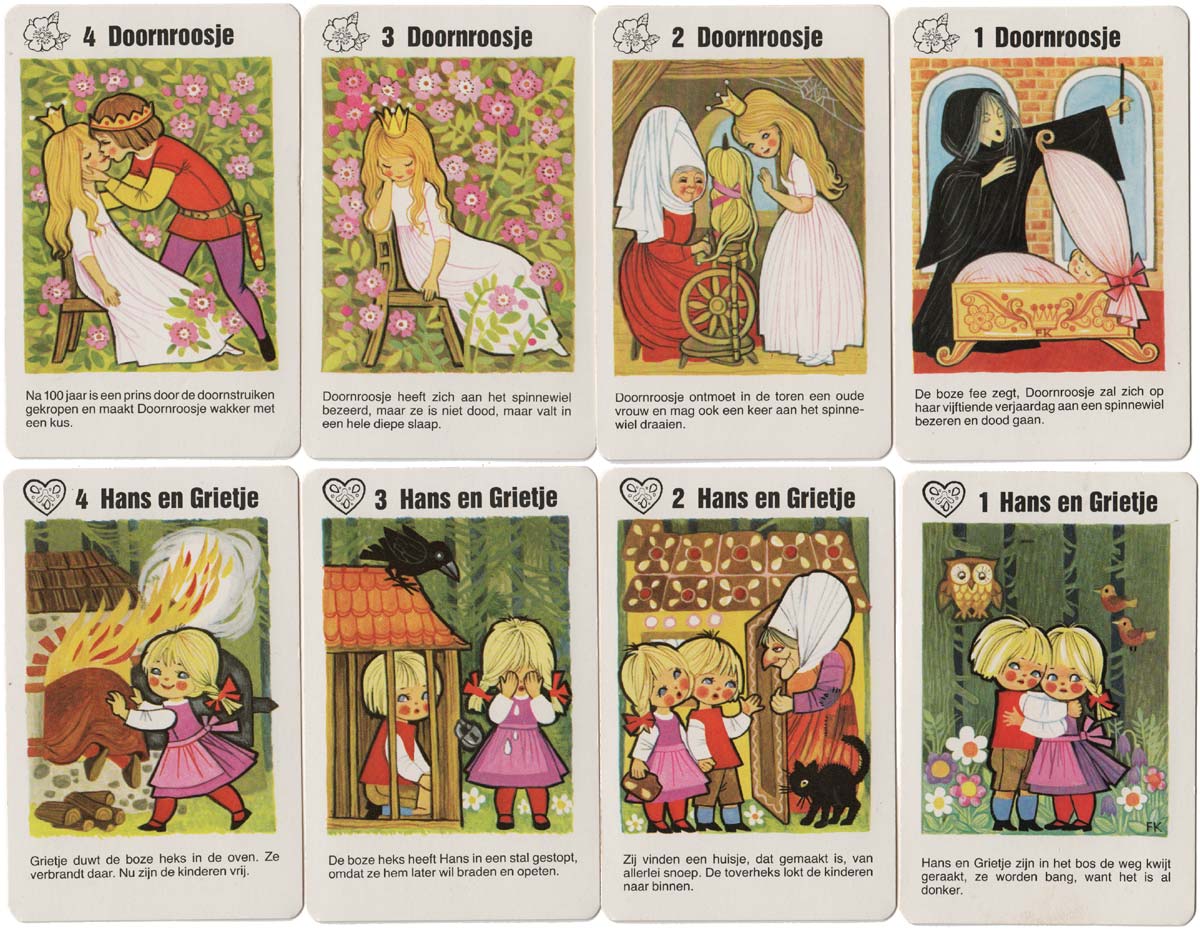
Above: Sprookjes Kwartet, c.1970
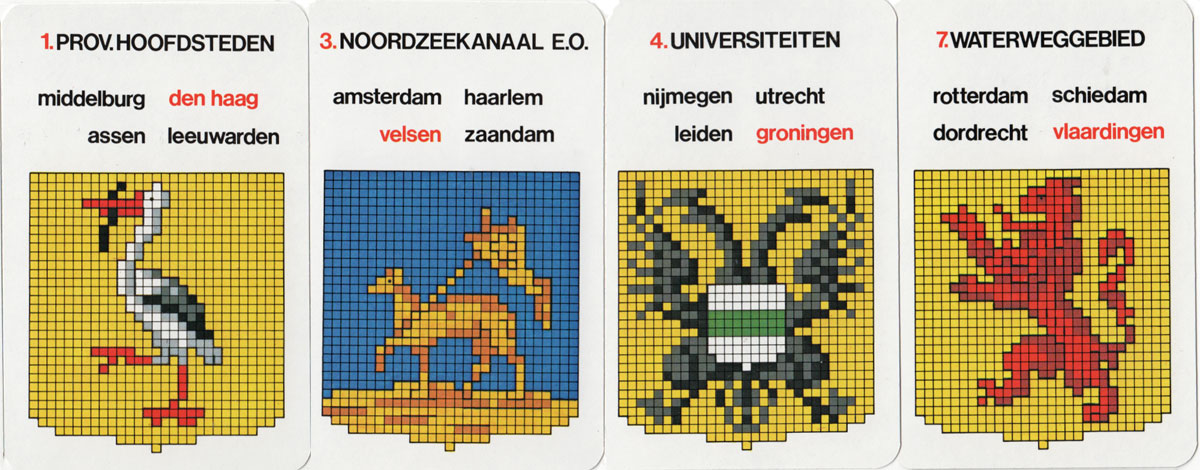
Above: Nederlands Stedenkwartet, c.1970
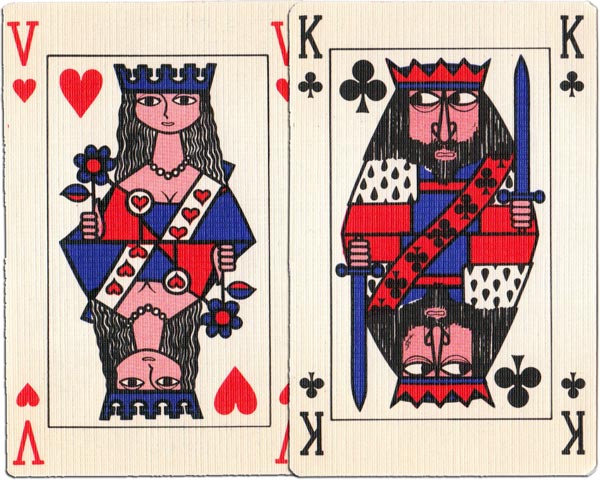
Above: “De Kloof” Advertising Playing Cards, c.1970
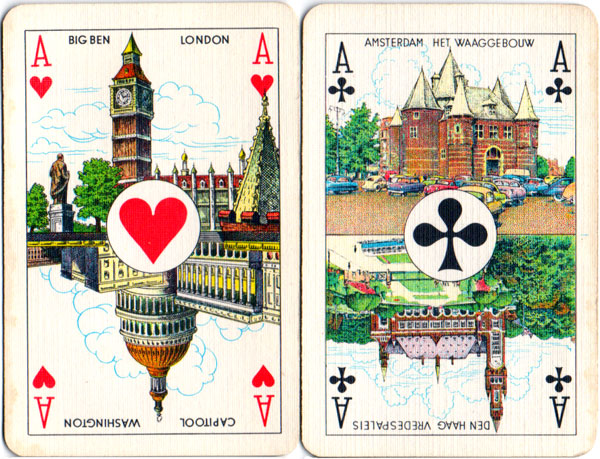
Above: Genoese pattern made in Hungary for Dutch market, 1970s

Above: Boekenkwartet, 1970s
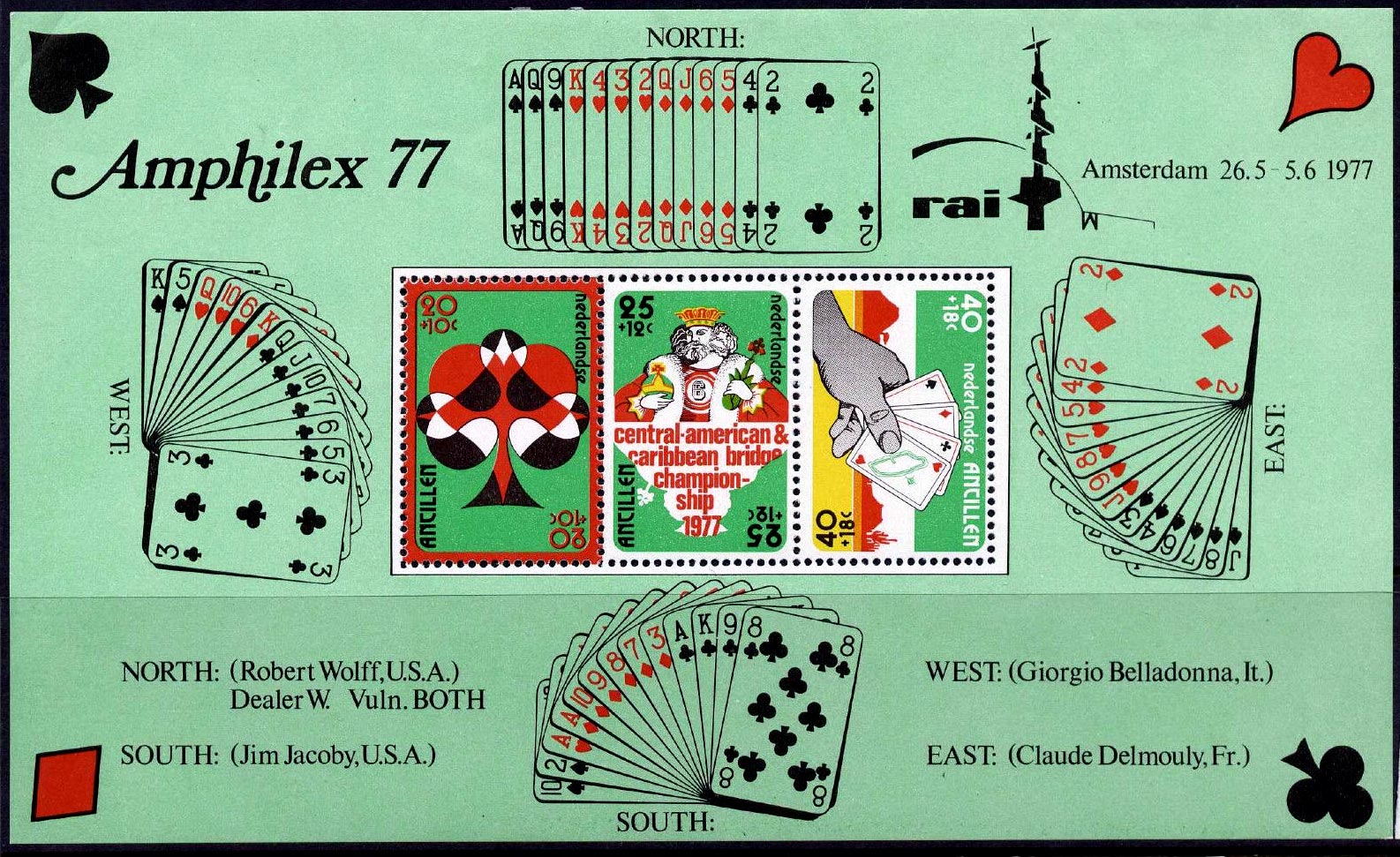
Above: Netherlands Antilles stamps issued on May 26, 1977
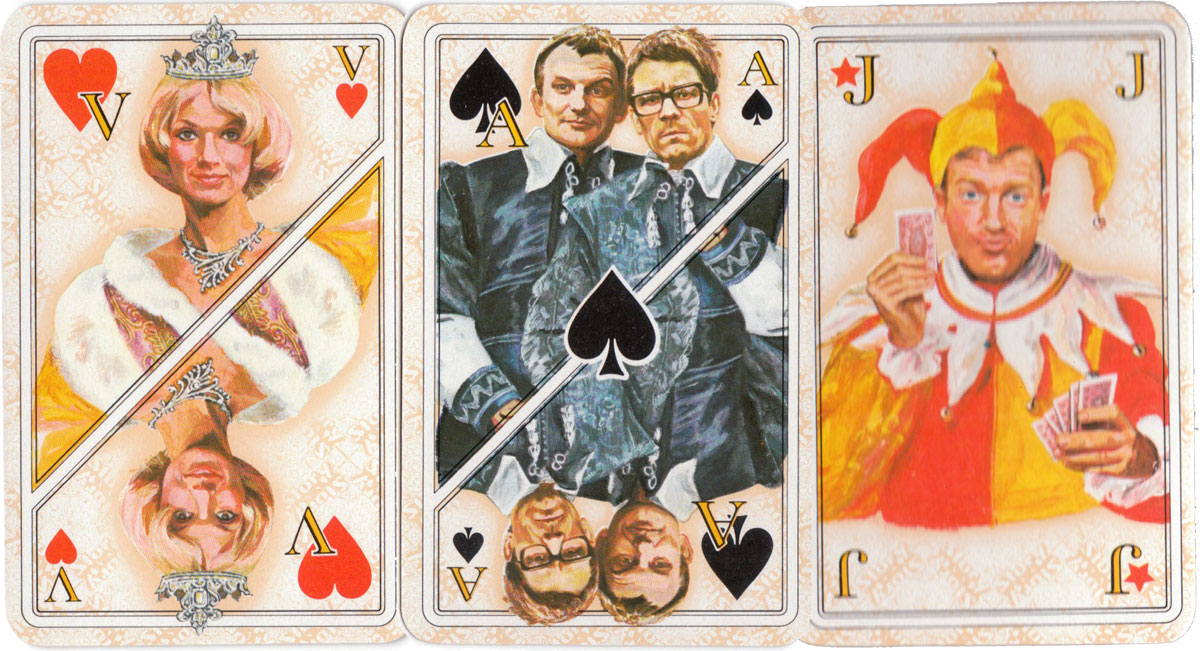
Above: Story Magazine, 1978 more →
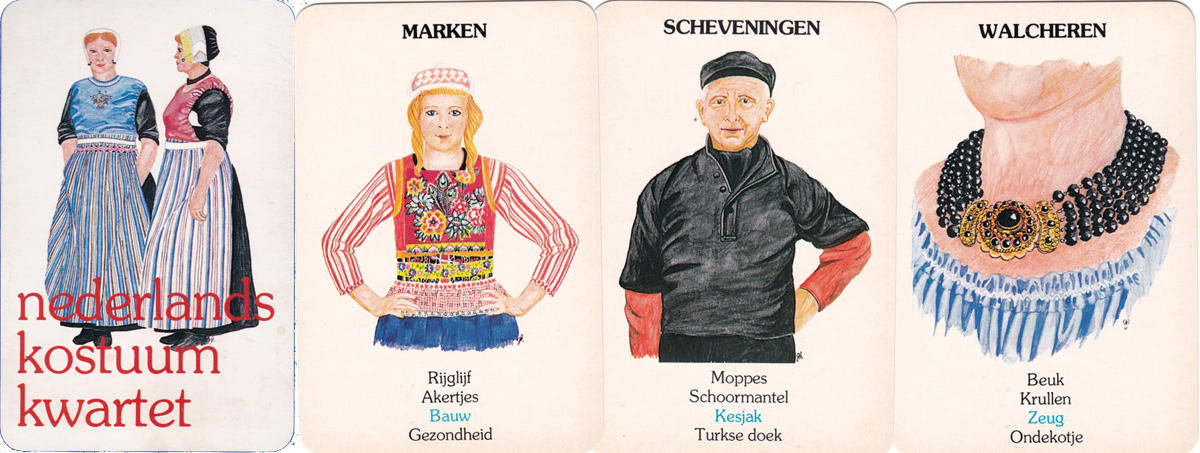
Above: Netherlands Kostuum Kwartet, 1983 more →
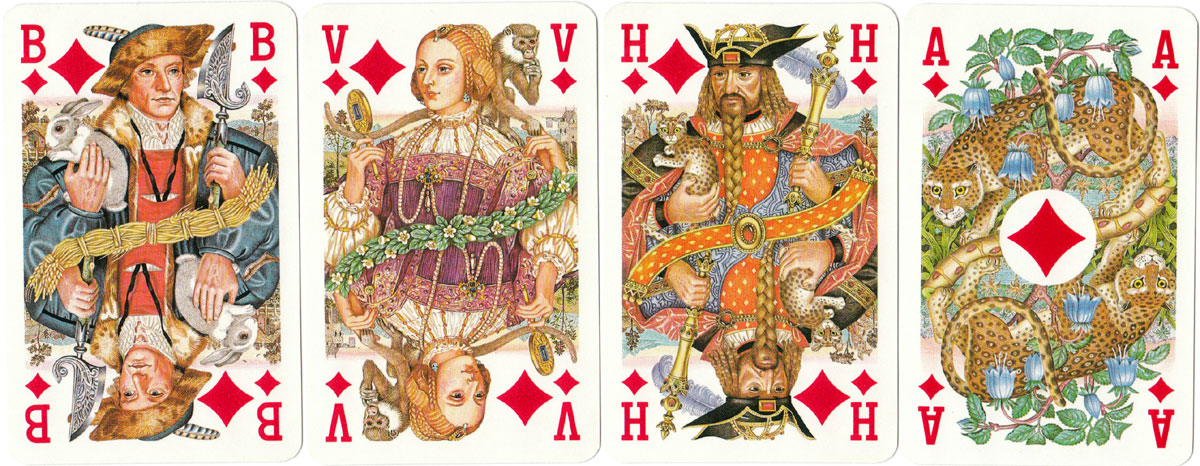
Above: Nationale-Nederlanden insurance company, 1984 more →
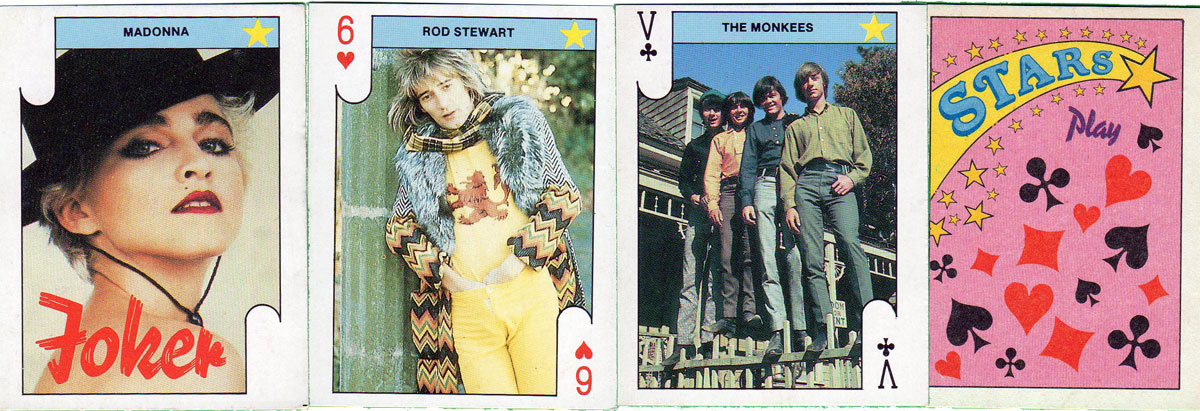
Above: ‘Stars Play’ card set published by Monty Gum in 1988 more →
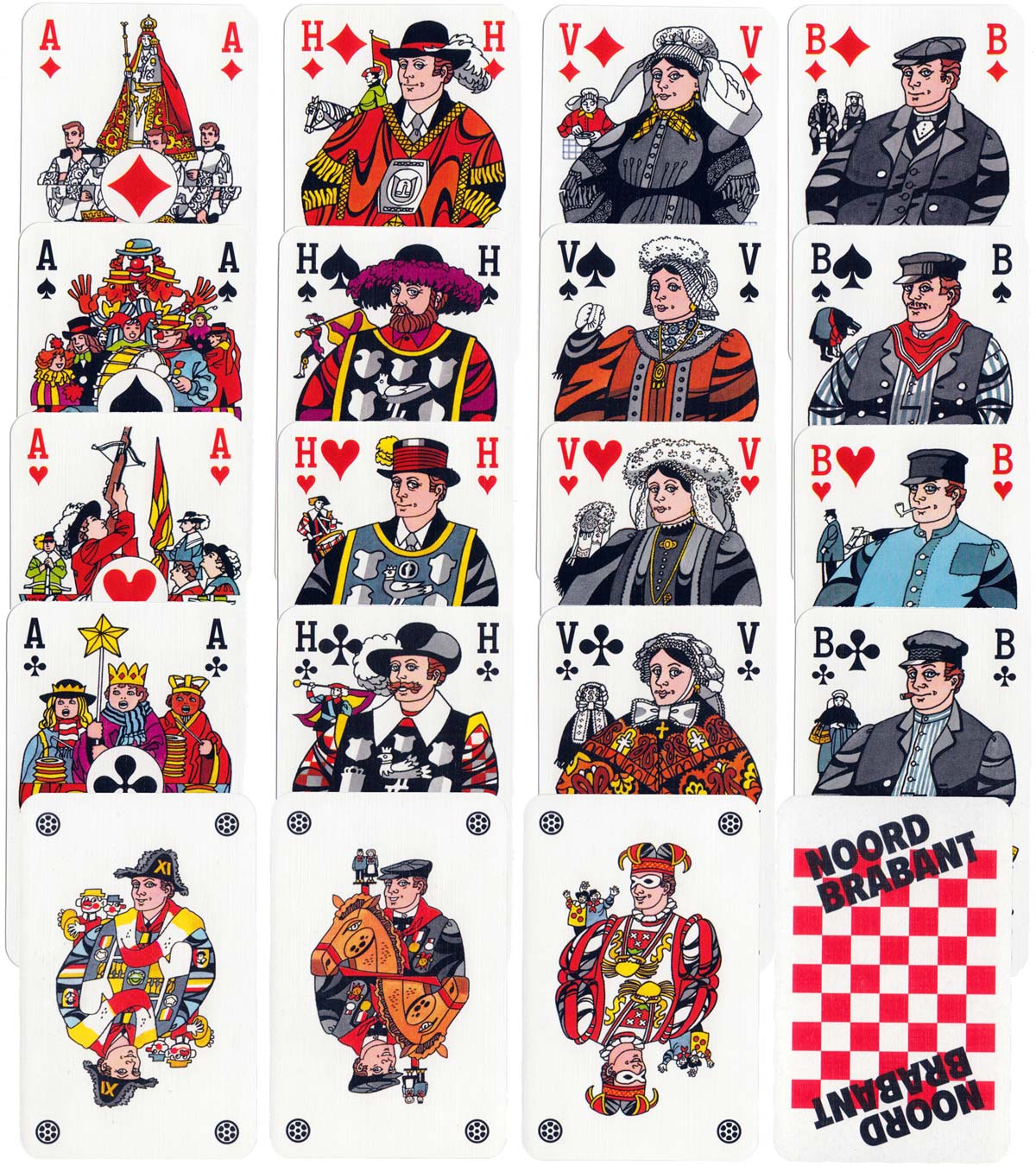
Above: “Noord Brabant” deck designed by Han Janssen and printed by Carta Mundi in 1992 for the I.P.C.S. convention in Veldhoven, Netherlands. The courts show farmers, women and guild members in local costumes. The jokers show representatives of the carnival tradition in North Brabant.
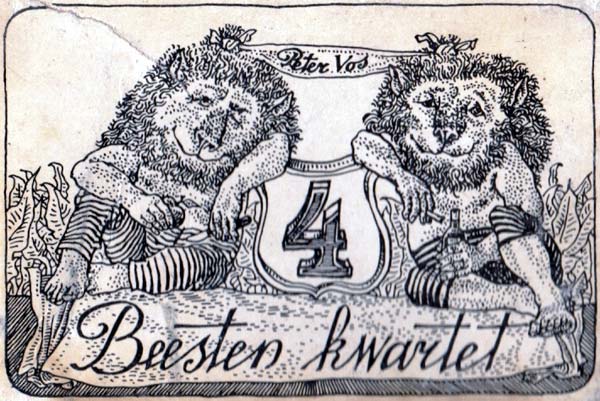
Above: Beesten Kwartet designed by Peter Vos, 1995
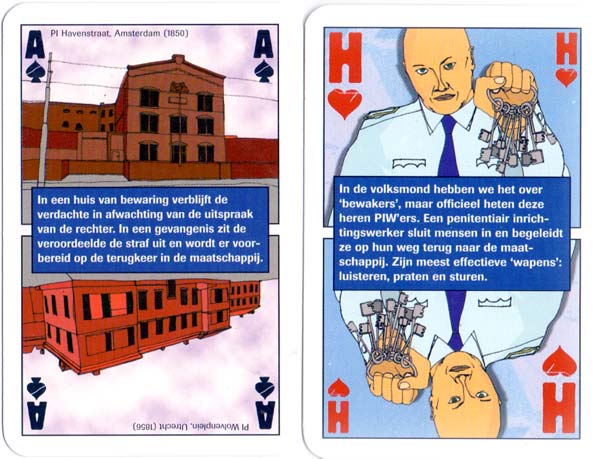
Above: Dienst Justitiële Inrichtingen playing cards, c.2003
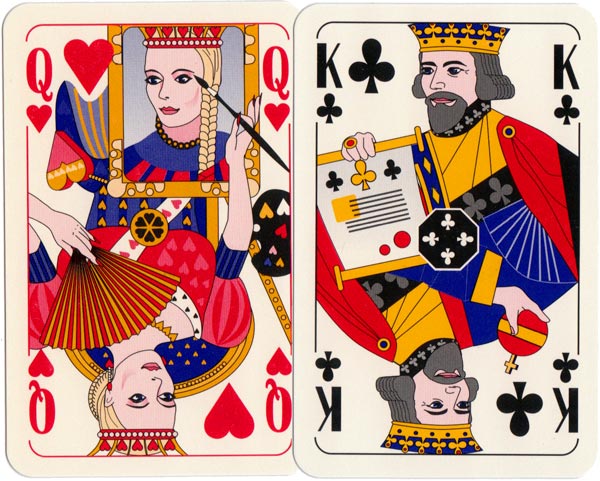
Above: publicity deck by Esveco Specialities for Alto Imaging Group more►
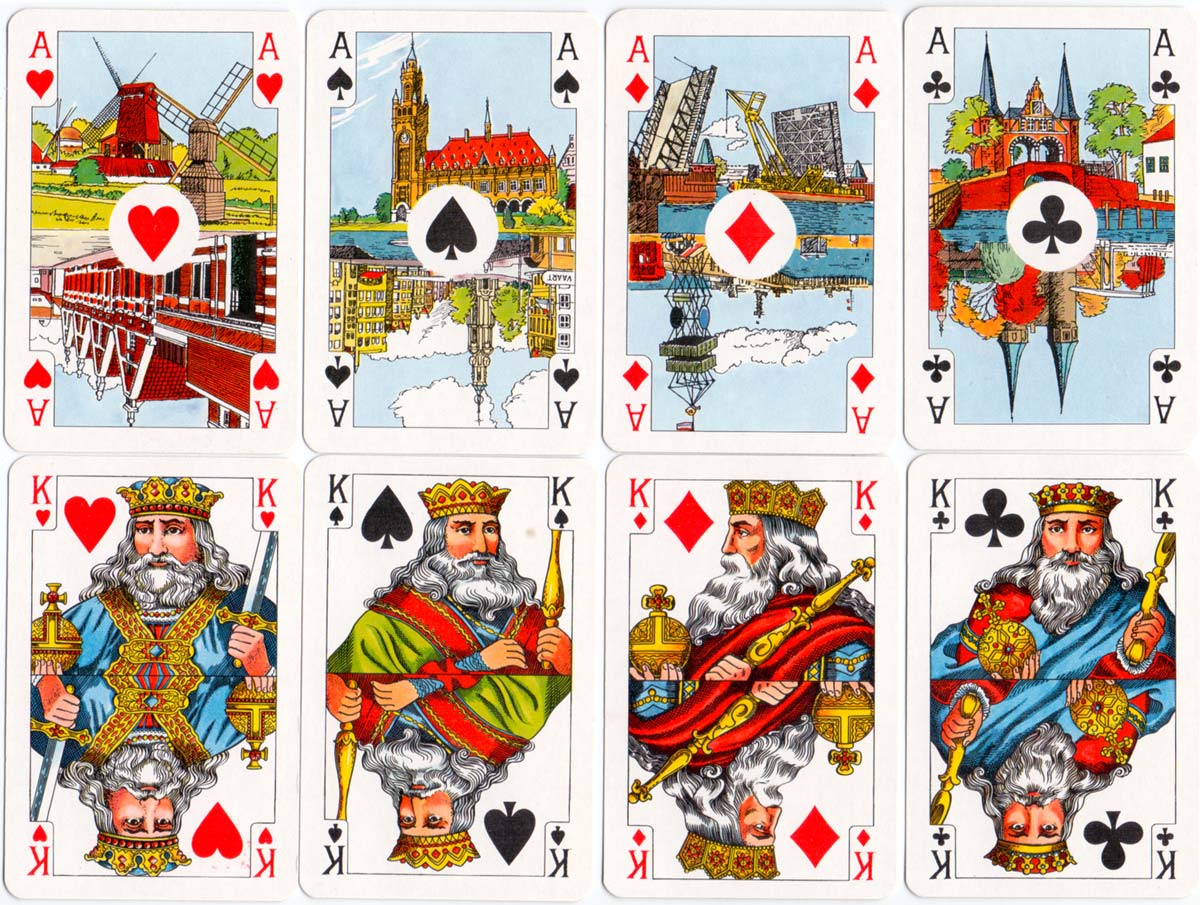
Above: Rhineland pattern for the Netherlands with Dutch scenic aces by F X Schmid, c.1990
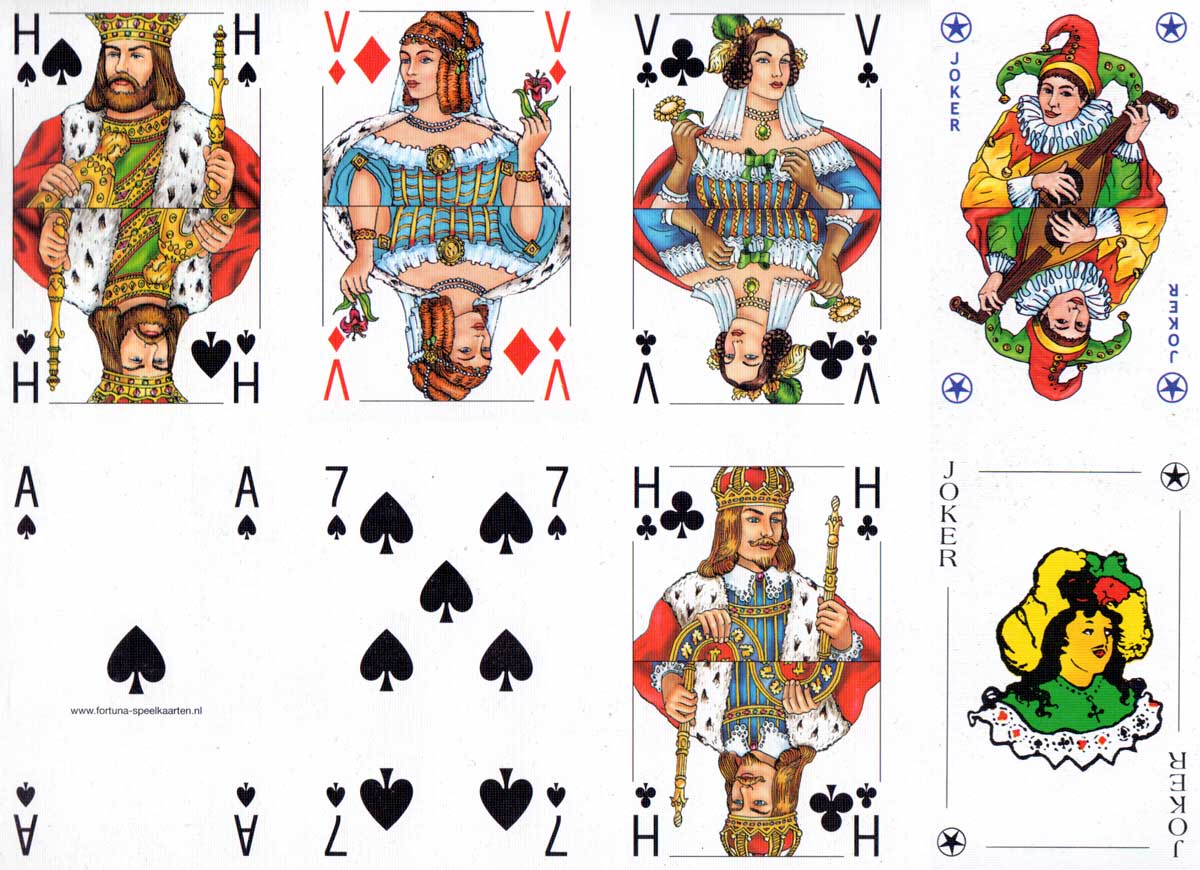
Above: North German pattern printed by KZWP-Trefl for Fortuna Speelkaarten, 2004
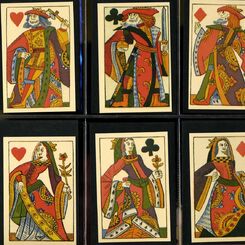
The so-called ‘Dutch Pattern’ was first produced by Belgian cardmakers in the 19th century and subsequently became associated with the Netherlands.
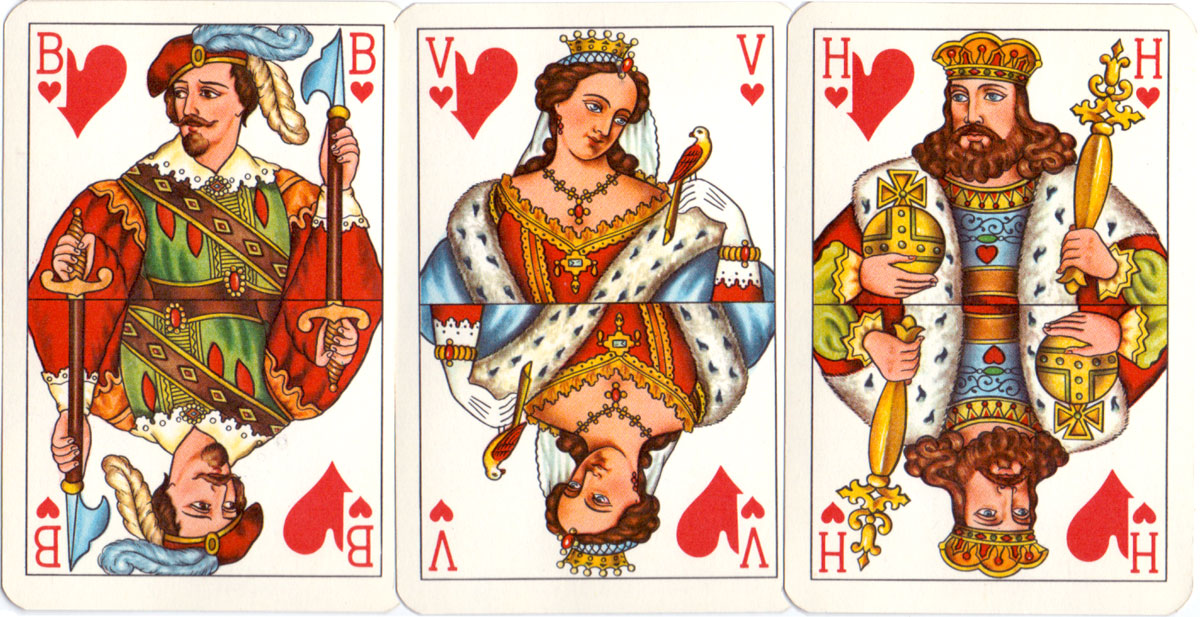
Above: Dutch Pattern for Van Perlstein, c.1960.
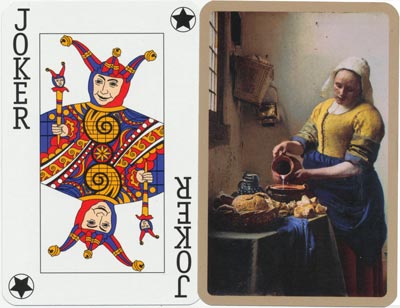
Above: Souvenir for Rijksmuseum Amsterdam by Hearts Playingcards, c.2012 [www.heartsplayingcards.com]
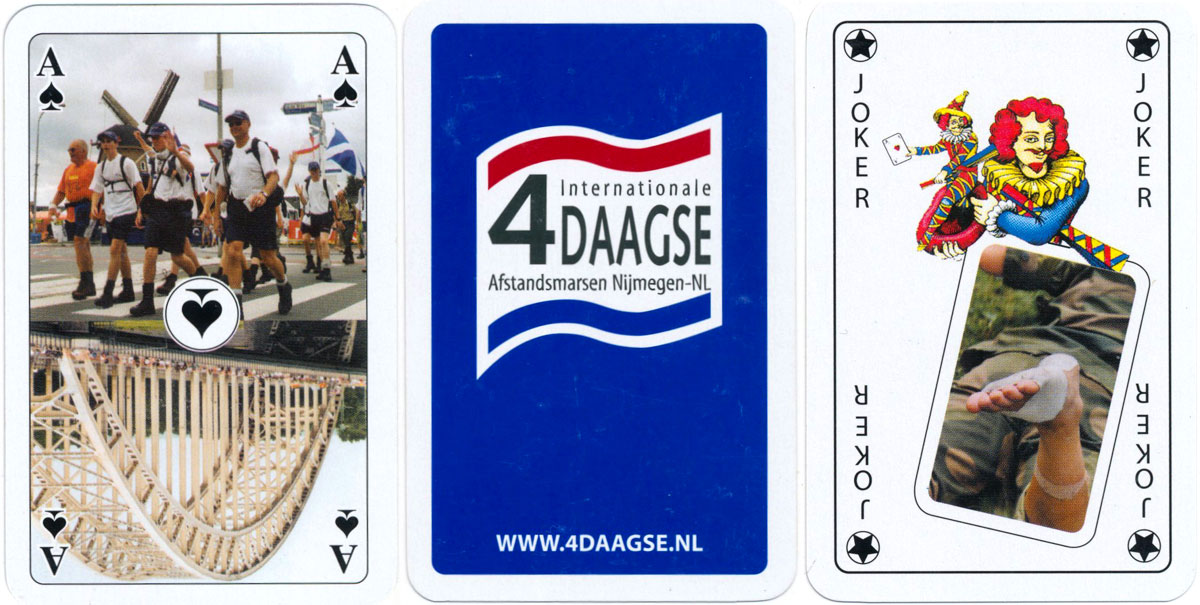
Above: Four Days of Walking Event, 2016
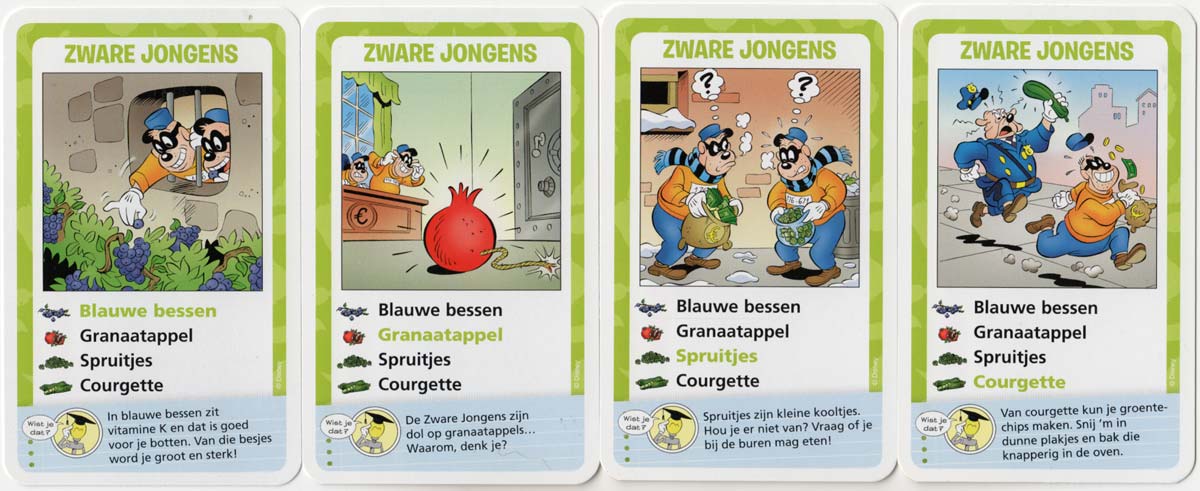
Above: Donald Duck Groente & Fruit Pretkwartet more →
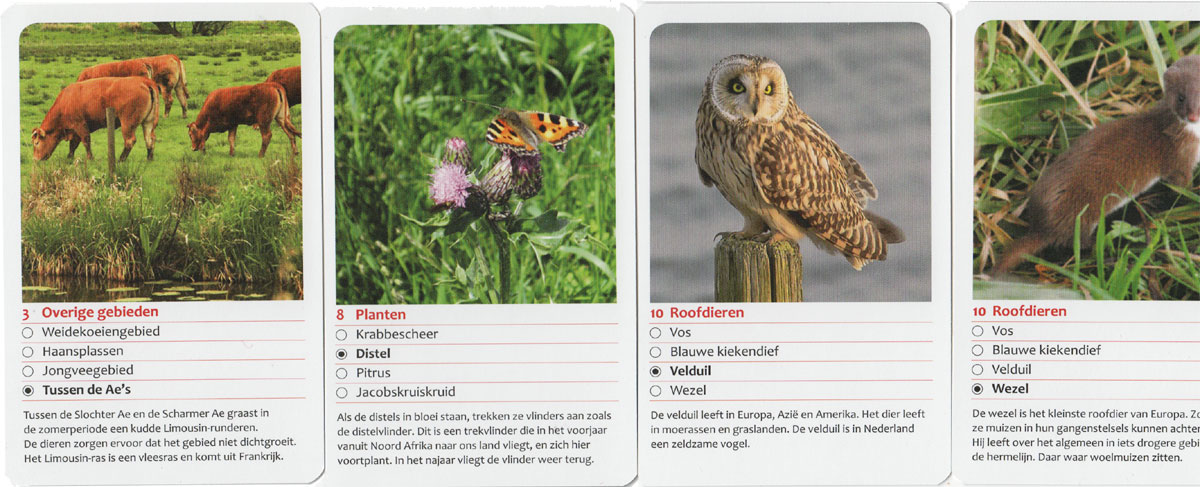
Above: Natuurkwartet more →
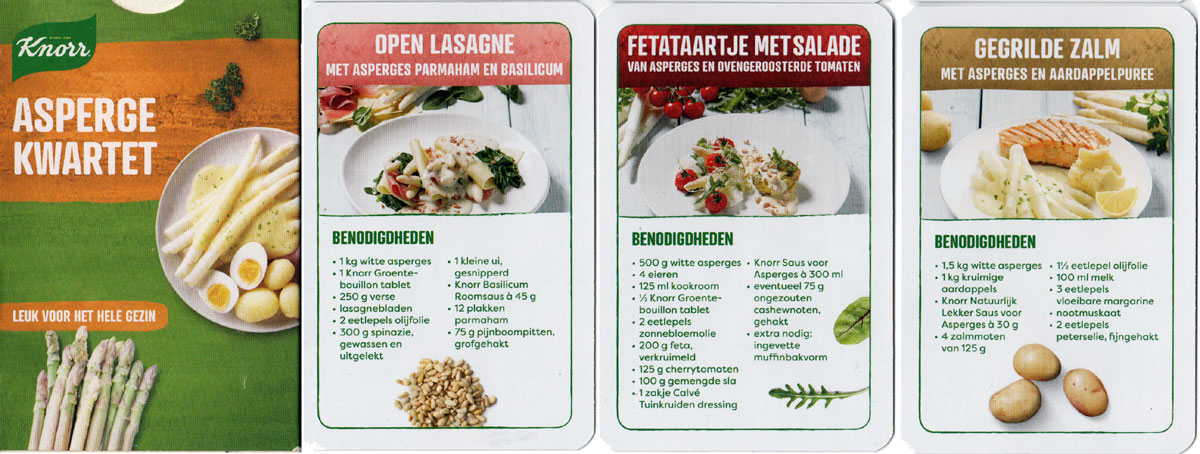
Above: Asperge Kwartet more →

By Simon Wintle
Spain • Member since February 01, 1996 • Contact
I am the founder of The World of Playing Cards (est. 1996), a website dedicated to the history, artistry and cultural significance of playing cards and tarot. Over the years I have researched various areas of the subject, acquired and traded collections and contributed as a committee member of the IPCS and graphics editor of The Playing-Card journal. Having lived in Chile, England, Wales, and now Spain, these experiences have shaped my work and passion for playing cards. Amongst my achievements is producing a limited-edition replica of a 17th-century English pack using woodblocks and stencils—a labour of love. Today, the World of Playing Cards is a global collaborative project, with my son Adam serving as the technical driving force behind its development. His innovative efforts have helped shape the site into the thriving hub it is today. You are warmly invited to become a contributor and share your enthusiasm.

Leave a Reply

Your Name
Just now Your comment here. Your comment here. Your comment here. Your comment here. Your comment here. Your comment here. Your comment here. Your comment here. Your comment here. Your comment here. Your comment here. Your comment here. Your comment here. Your comment here. Your comment here. Your comment here. Your comment here. Your comment here. Your comment here. Your comment here. Your comment here. Your comment here. Your comment here. Your comment here. Your comment here. Your comment here. Your comment here. Your comment here. Your comment here. Your comment here. Your comment here. Your comment here.
Related Articles
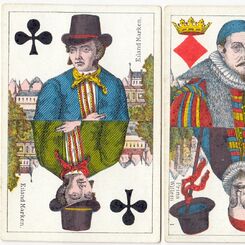
Dutch costume playing cards from an unknown maker
Another pack of Dutch costume playing cards c.1880.
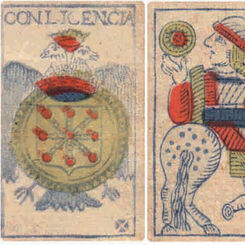
Navarra Pattern, 1793
Navarra pattern by an unknown cardmaker with initials I. I., 1793.
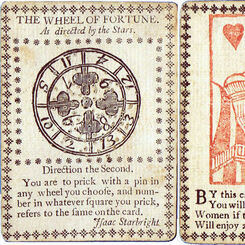
Fortune Telling playing cards
English Fortune Telling cards probably published c.1770.
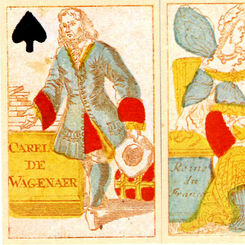
Carel de Wagenaer
Facsimile edition of cards first published by Carel de Wagenaer, Amsterdam in c.1698
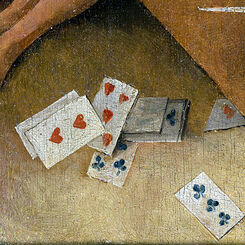
Hidden meanings in painting by Jheronimus Bosch
Medieval View of Gambling in the ‘Garden of Earthly Delights’ by Jheronimus Bosch
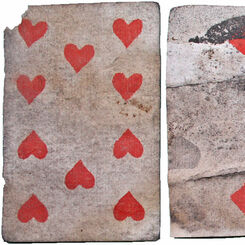
Archaeological find: old playing cards under the floorboards
The municipal archaeological service in Dordrecht (Netherlands) recently found some antique playing ...
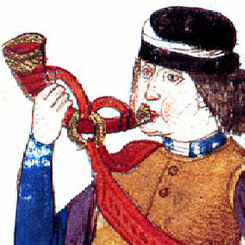
Flemish Hunting Deck
Set of medieval playing cards with King, Queen, Knave and numeral cards from one to ten in each of f...
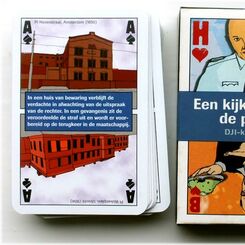
Dienst Justitiële Inrichtingen
Playing cards published by the Dutch Prison Service, giving a look behind the gates of Judicial / Cu...
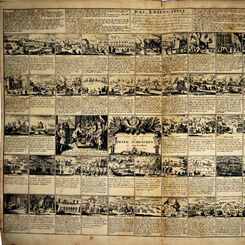
Kriegs-Spiel by Peter Schencken, Amsterdam
Peter Schencken of Amsterdam copied the "Jeu de la Guerre" or "Das Kriegs-Spiel" (with German captio...
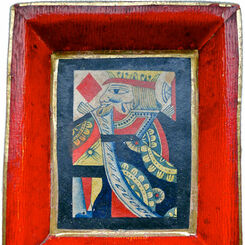
Pope Joan Trays
Some traditional Pope Joan boards comprise a circular tray, others are square, divided into sections...
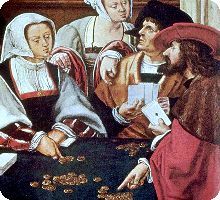
Playing Cards & Gaming
Soon after their first appearance in Europe we hear of playing cards being banned by the authorities...
1: Playing Cards and their History: An Introduction and some links to other sites
What was considered the first mention of playing cards in England is in 1463 when Edward I banned th...
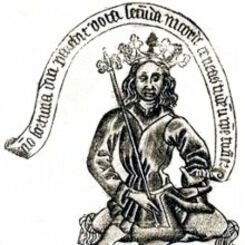
Master of the Banderoles
Playing Cards by the Master of the Banderoles, one of the earliest professional printmakers.
History of Blackjack
Over the years the origin of Blackjack, like many other games, has eluded researchers for a long tim...
History of Online Casinos
Online casinos appeared shortly after the internet became a more mainstream tool for the public to u...
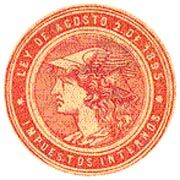
Argentina Tax Stamps on playing cards 1895-1968
Argentina Tax Stamps on playing cards 1895-1968
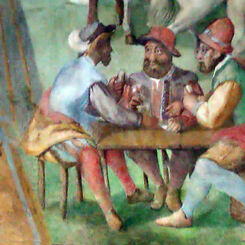
Italian Playing Cards
The first reliable evidence that playing cards were being used in Italy is from 1376, when a game ca...
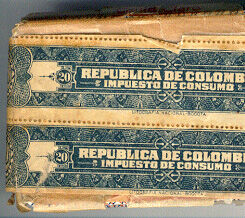
Impuesto de Timbre para Naipes
EL CONGRESO DE COLOMBIA. LEY 69 DE 1946, por la cual se elevan las tarifas de algunos impuestos indi...
History of English Playing Cards & Games
The History of English Playing Cards dates probably from the mid 15th century
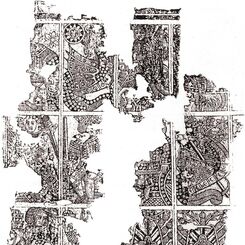
Early Spanish/Portuguese type
Fragment of a sheet of archaic Spanish-suited 'Dragon' playing cards found during restoration of a h...
Most Popular
Our top articles from the past 60 days


