

J. M. Gandarillas, Buenos Aires, c.1815
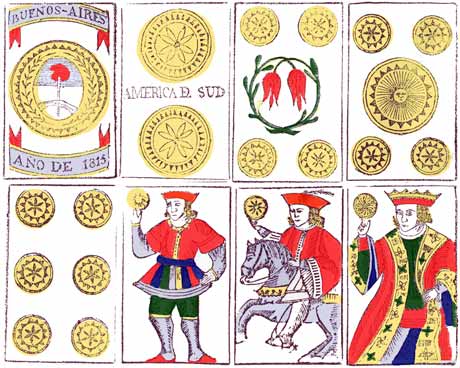
Playing cards believed to have been designed in 1815 by the Chilean immigrant Manuel José Gandarillas in Buenos Aires and published the following year.
Manuel José Gandarillas
The illustration below shows a sheet (uncoloured and anonymous) of playing cards believed to have been designed in 1815 by the Chilean immigrant Manuel José Gandarillas in Buenos Aires and published the following year. The style of the cards closely follows the Spanish "National" pattern, but with local symbolism added to several cards, e.g. the flower on the four of coins is Argentina's national flower, 'flor del seibo'.
Close examination of the drawings in Gandarillas' pack shows that although he was closely following the typical Spanish "National" pack of the day, or even that of a few decades earlier, nevertheless, some idiosyncrasies or deviations can be identified in the designs.
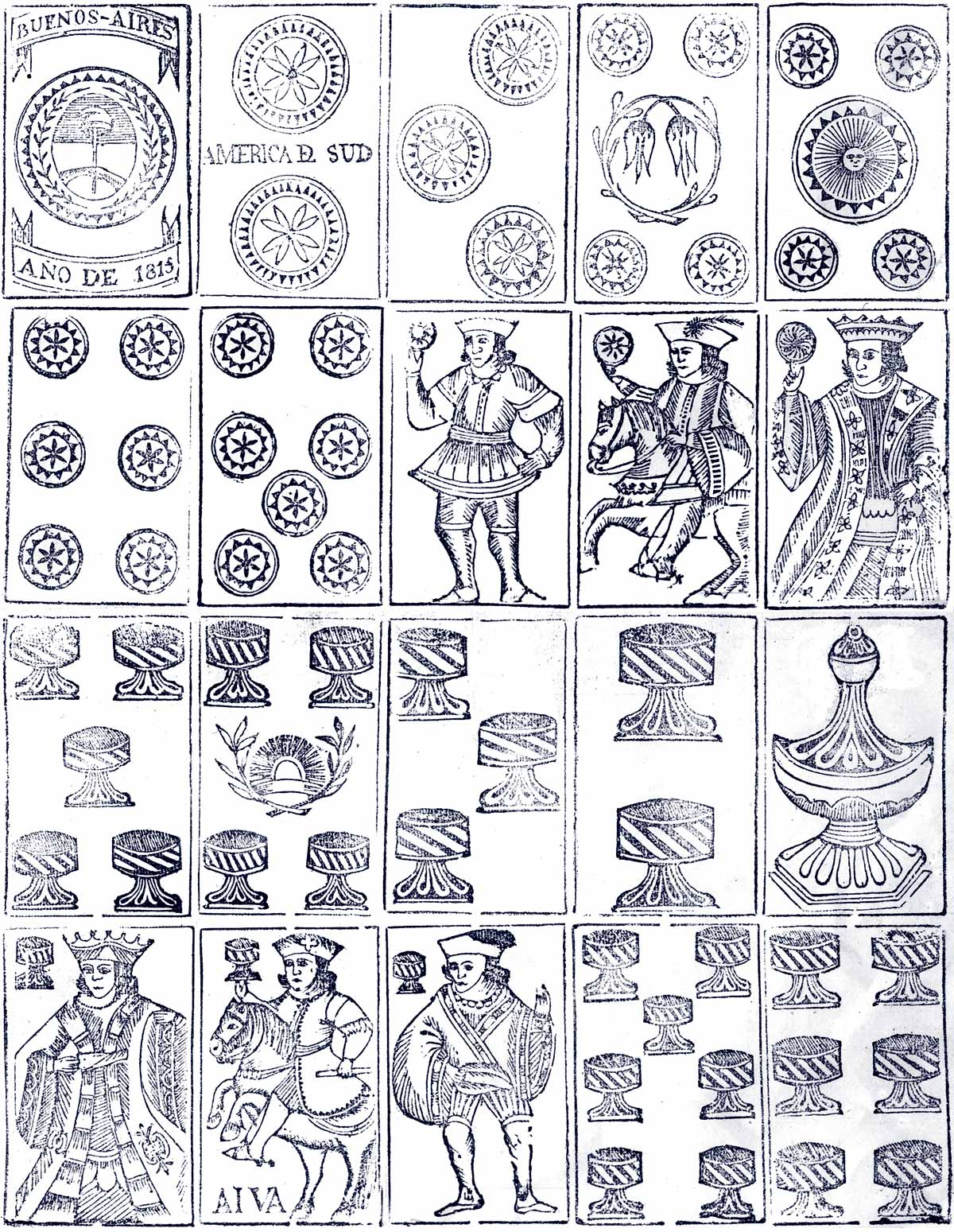
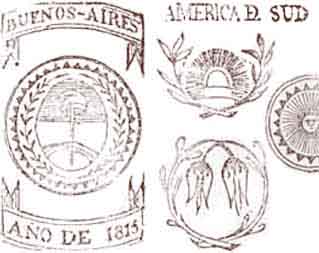
The ace of coins features the Argentinean coat-of-arms, which had been ratified at the Constitutional General Assembly in 1813. In 1815 Buenos Aires was only a province of the River Plate region, occasionally spelt "Buenos Ayres", (and hyphenated in our example). It did not become the capital city of the Republic of Argentina until 1882.
The laurel wreath on the four of cups symbolises liberty and The Independence (from Spanish government) is represented by the rising sun. The two of coins bears the words "America del Sud": at this time there was a movement for a South American Republic (República de Sud América), involving national heroes such as Simón Bolivar and General San Martín. The final outcome was the diverse collection of individual countries existing today. The sun shown on the five of coins is the sun found on the Argentinean national flag.
Images courtesy of Dra. Graciela Bercoff, curator of the Archivo General de la Nacion, Buenos Aires.
See also: Spanish Playing Cards • Phelippe Ayet • Baraja Morisca • History of Playing Cards • Seville 17th Century • Spanish National Pattern • The Money Bag pattern • Pedro Bosio • Gothic Spanish-Suited Cards • Rotxotxo Inventories • Navarra XVII Century • Quercia y Possi • Naipes Artiguistas • Macharaviaya • Francisco Flores • 16th Century 'Rimac' Cards • Spanish-suited playing cards made in Germany • Joan Barbot • Simon Wintle's Spanish-Suited pack • Anabella Corsi's Naipes La Criolla

By Simon Wintle
Spain • Member since February 01, 1996 • Contact
I am the founder of The World of Playing Cards (est. 1996), a website dedicated to the history, artistry and cultural significance of playing cards and tarot. Over the years I have researched various areas of the subject, acquired and traded collections and contributed as a committee member of the IPCS and graphics editor of The Playing-Card journal. Having lived in Chile, England, Wales, and now Spain, these experiences have shaped my work and passion for playing cards. Amongst my achievements is producing a limited-edition replica of a 17th-century English pack using woodblocks and stencils—a labour of love. Today, the World of Playing Cards is a global collaborative project, with my son Adam serving as the technical driving force behind its development. His innovative efforts have helped shape the site into the thriving hub it is today. You are warmly invited to become a contributor and share your enthusiasm.

Leave a Reply

Your Name
Just now Your comment here. Your comment here. Your comment here. Your comment here. Your comment here. Your comment here. Your comment here. Your comment here. Your comment here. Your comment here. Your comment here. Your comment here. Your comment here. Your comment here. Your comment here. Your comment here. Your comment here. Your comment here. Your comment here. Your comment here. Your comment here. Your comment here. Your comment here. Your comment here. Your comment here. Your comment here. Your comment here. Your comment here. Your comment here. Your comment here. Your comment here. Your comment here.
Related Articles
Félix Solesio e Hijos
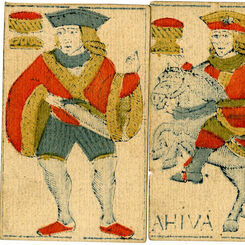
Félix Solesio e Hijos, Fábrica de Macharaviaya, Spanish National pattern for West Indies, 1801.
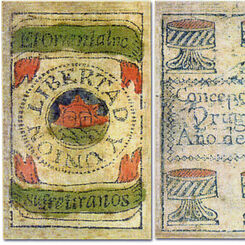
Naipes Artiguistas, 1816
Naipes Artiguistas published in Concepción del Uruguay, Entre Rios province (Argentina) in 1816, by ...

Naipes Españoles “El Mexicano”
Standard Catalan-type deck, titled "El Mexicano", by an anonymous Argentinean manufacturer, c.1980s....

La Española Classic
‘La Española Classic’ is a traditional ‘La Española’ Spanish-suited pack and is produced in several ...
Lagos del Sur Souvenir
Lagos del Sur Souvenir playing cards published by Gráfica S.A., Buenos Aires, c.1980.
Naipes Vigor S.R.L.
VIGOR S.R.L (1955 - c1975) manufactured a range of playing cards and card games, including Chinita, ...

Minifusor Clásico
Minifusor Clásico, a modern re-drawing of the Catalan pattern published by Difusora, c.1980.
Naipes Joketa
“Naipes Joketa” by anonymous manufacturer, c.1975. A slightly elaborated version of conosur pattern....
Naipes Victoria - page 2
Naipes Victoria was Cía Fabril Financiera's leading brand of Spanish-suited playing cards.

Joker S.A.
Playing cards manufactured by Joker S.A.
Argentinian Playing Cards - Naipes Argentinos
Playing cards were introduced to the Americas by Spanish explorers in the 16th century.
C. Della Penna & Cía, Bs Aires, c.1930-1978
C. Della Penna S.A. playing card manufacturer and publisher, Buenos Aires, c.1930-1978.

Justo Rodero e Hijos
Justo Rodero e Hijos, playing card manufacturer in Buenos Aires, Argentina.

Casa Escasany
Naipes Casa Escasany ~ Magnificent novelty playing cards published by Casa Escasany, Buenos Aires, A...

Francisco Girbau & Cia, Buenos Aires
Francisco Girbau & Cia, Buenos Aires, c.1890-1935
Quercia y Possi, Buenos Aires 1815-16
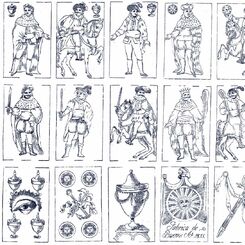
José Maria Quercia y Possi was an Italian immigrant who joined the Chilean Independence army. He se...
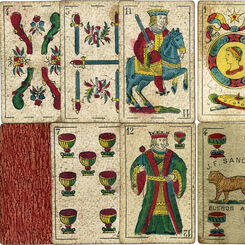
J. F. Sanchez - Buenos Aires c.1895
J. F. Sanchez - Buenos Aires c.1895.

Real Fábrica de Macharaviaya
This is the official Spanish National pattern of the 18th century. Design and production was control...
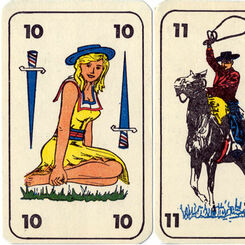
Chilean Playing Cards
Naipes Chilenos ~ Chilean playing cards were based upon Spanish models.
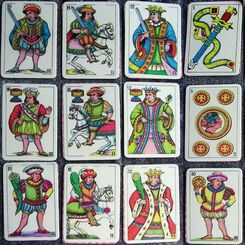
Playing Cards from Ecuador
There has been very little playing card manufacture in Ecuador. Cards are mostly supplied from Colom...
Most Popular
Our top articles from the past 60 days


