


Wereldvlucht Kwartet
Published in 1933, this game celebrated the burgeoning passenger services by air around the world. Spears Weltflug Quartette was produced in German, Dutch and English versions.
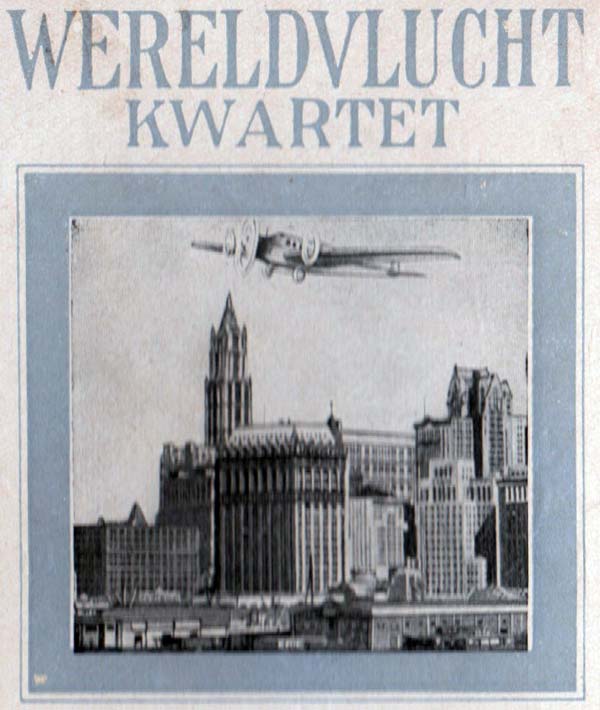
Weltflug Quartette - Wereldvlucht Kwartet
article by Rex Pitts
Published in 1933 this game celebrated the burgeoning passenger services by air around the world. Most of the new airlines, wherever they were based, were using one of two aeroplanes. The Dutch designed Fokker F VII, nicknamed Fokker Trimotor, was taken to the USA in 1925 to compete in the Ford Reliability Trials and won. This resulted in orders for these aeroplanes by the American airlines. The machine was built with a canvas covered steel tube fuselage and the wings were wooden with a plywood skin and it was powered by three engines; one in each wing and a third on the nose. It could carry 8 -12 passengers and it must have been awful to travel in. The alternative was the Ford Trimotor built almost entirely of metal with a similar engine arrangement. In 1931 when the Fokker had the majority of the market in its pocket there was a serious accident resulting in the death of the Notre Dame Football coach Knute Rockne and when this was blamed on the rotting wooden wing of the Fokker Trimotor in which he was flying the airliner industry was quick to change over to the Ford Trimotor. The rapid advances in aeroplane design, however, meant that by the mid 1930’s this style of machine was quickly outdated.
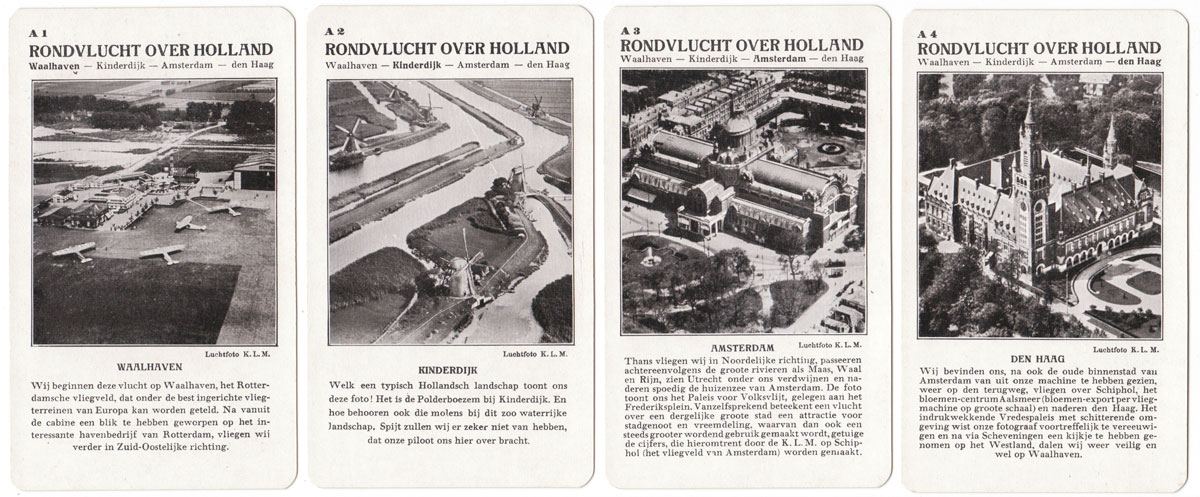
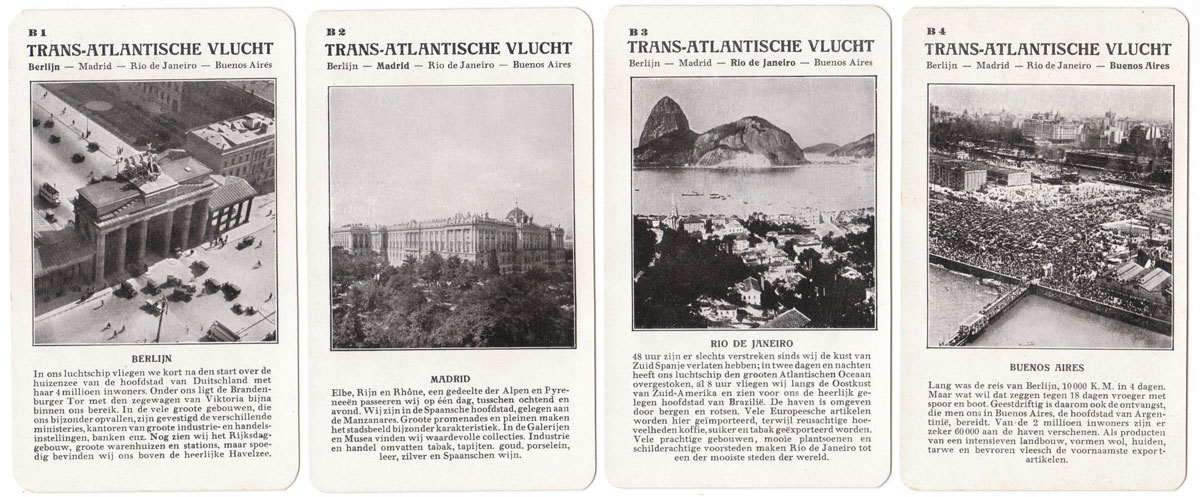
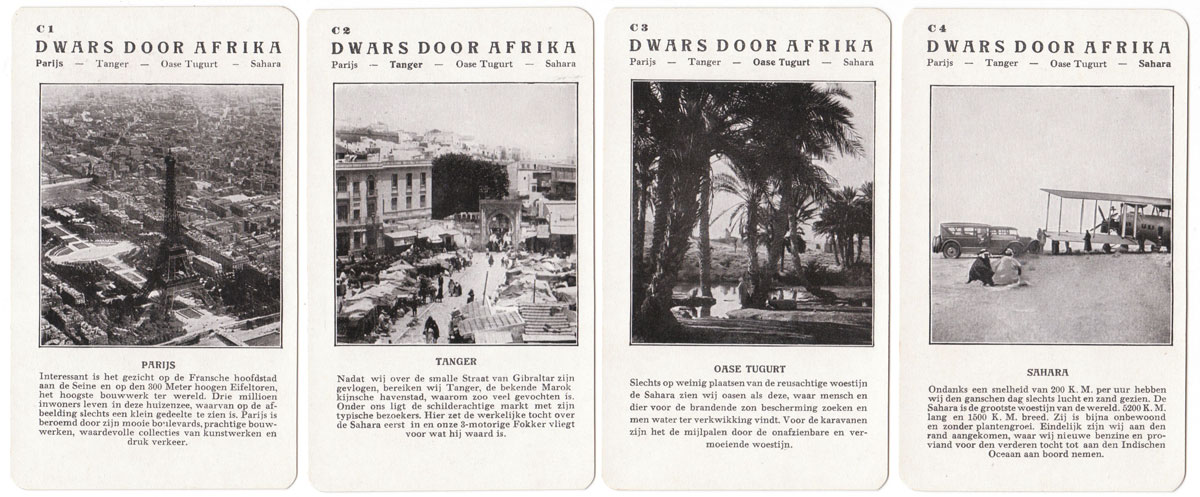
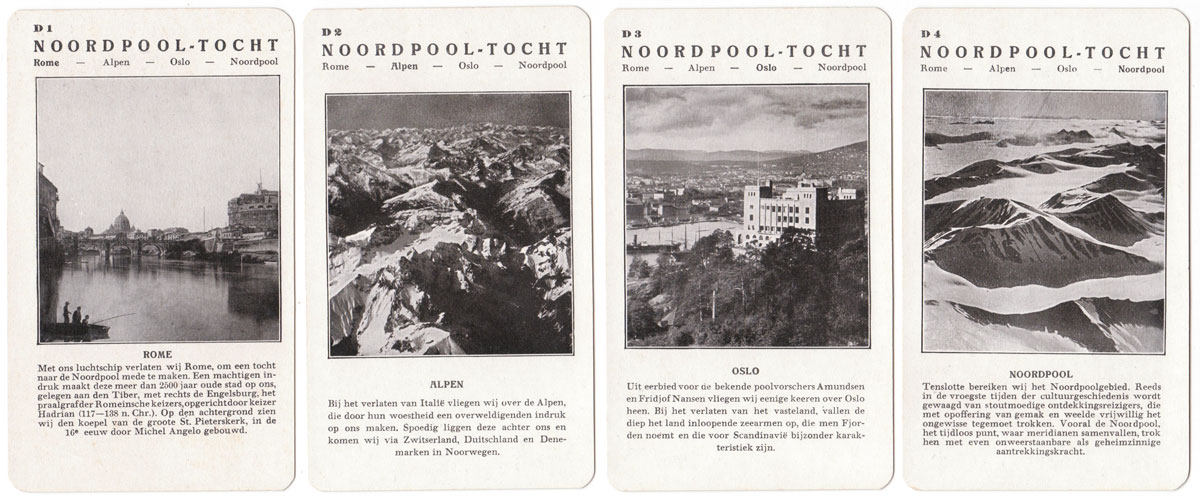
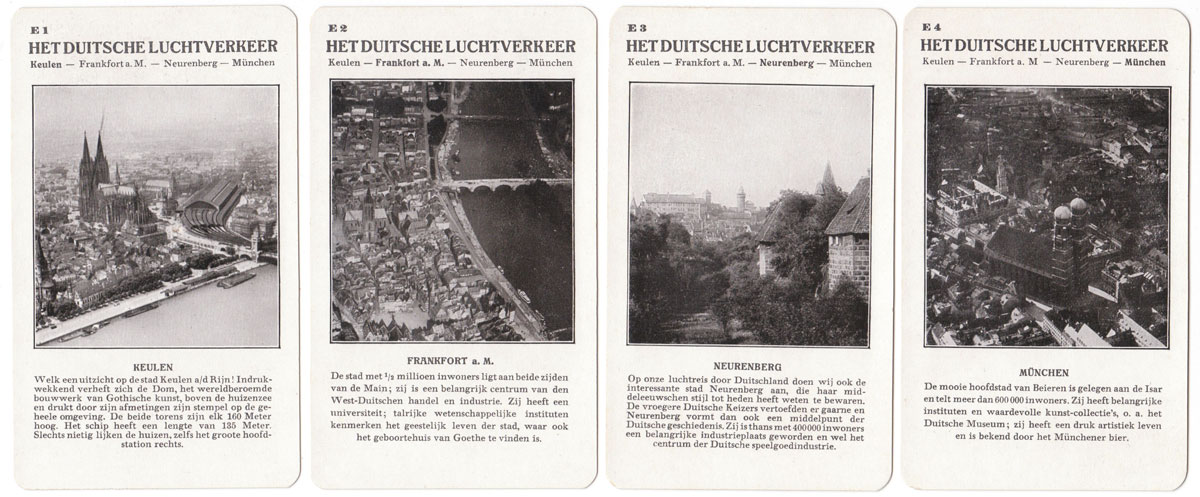
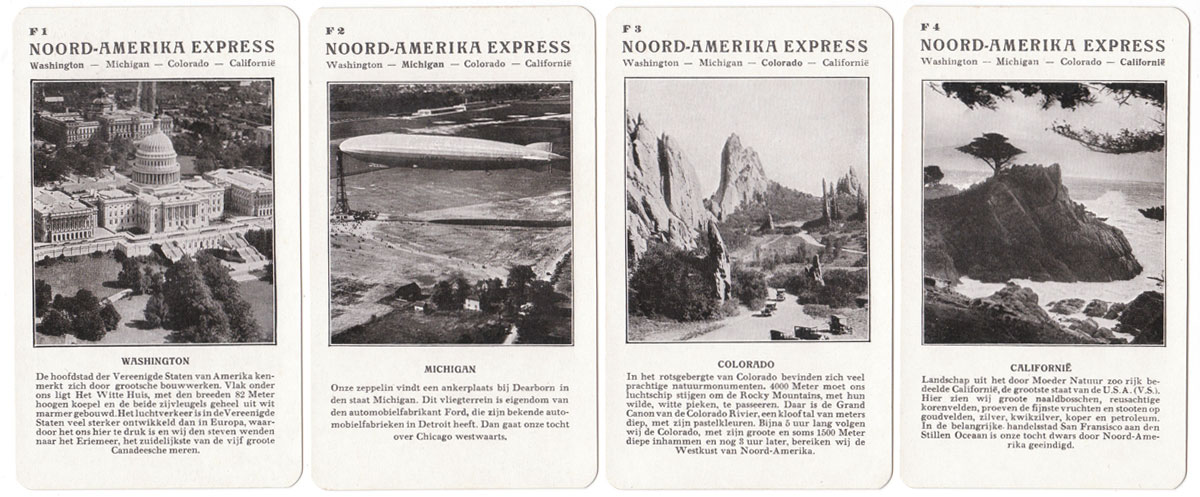
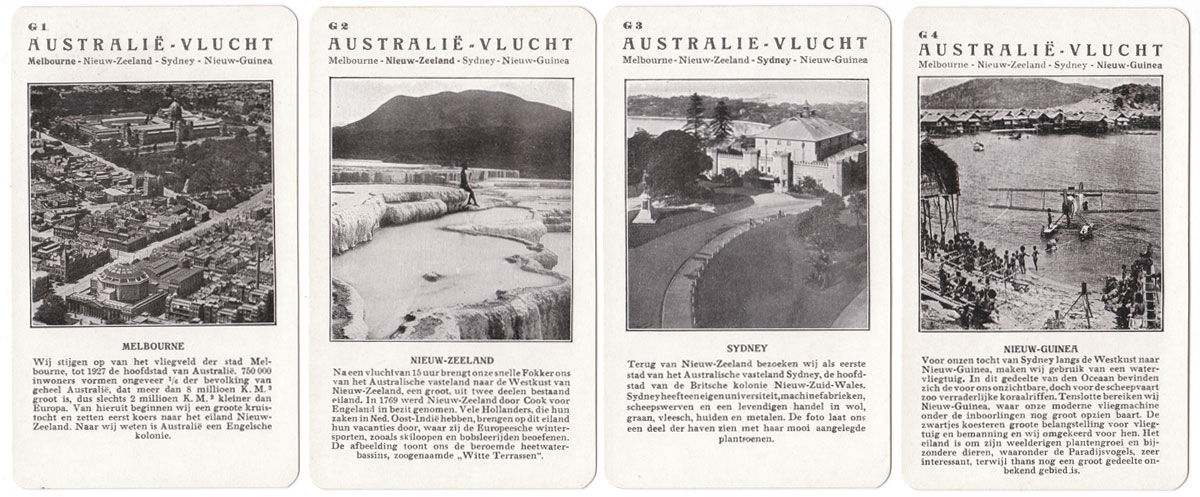
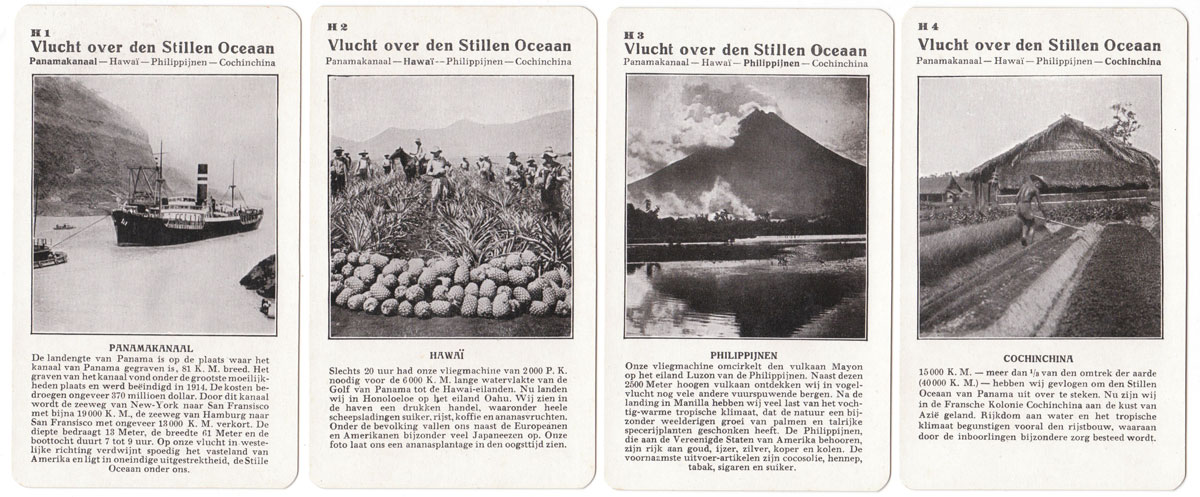
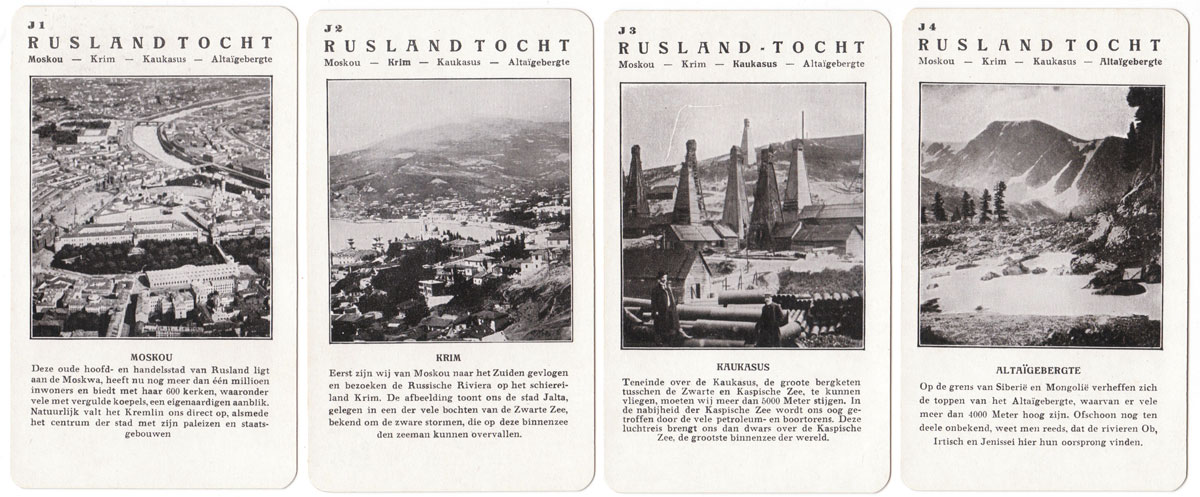
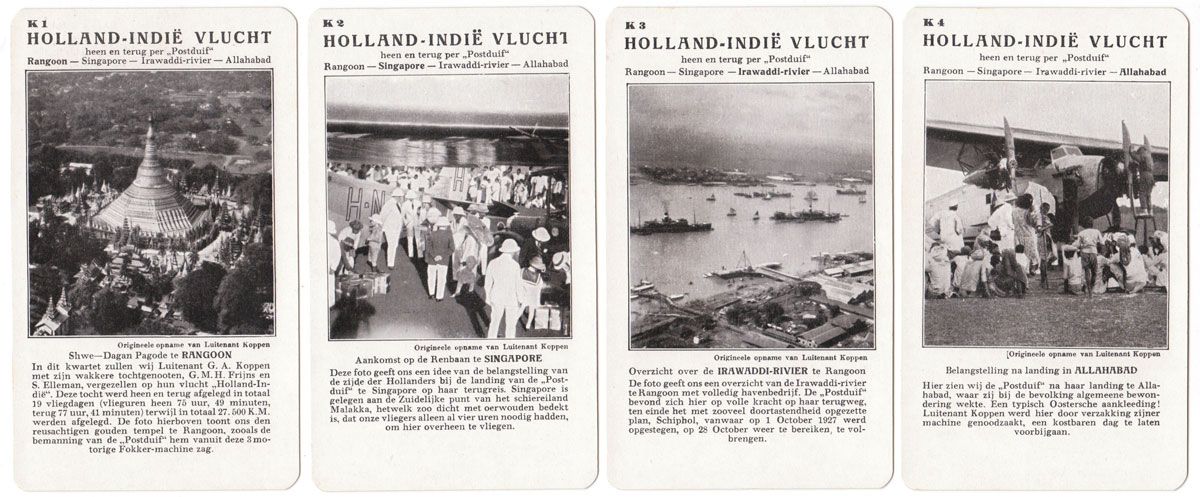
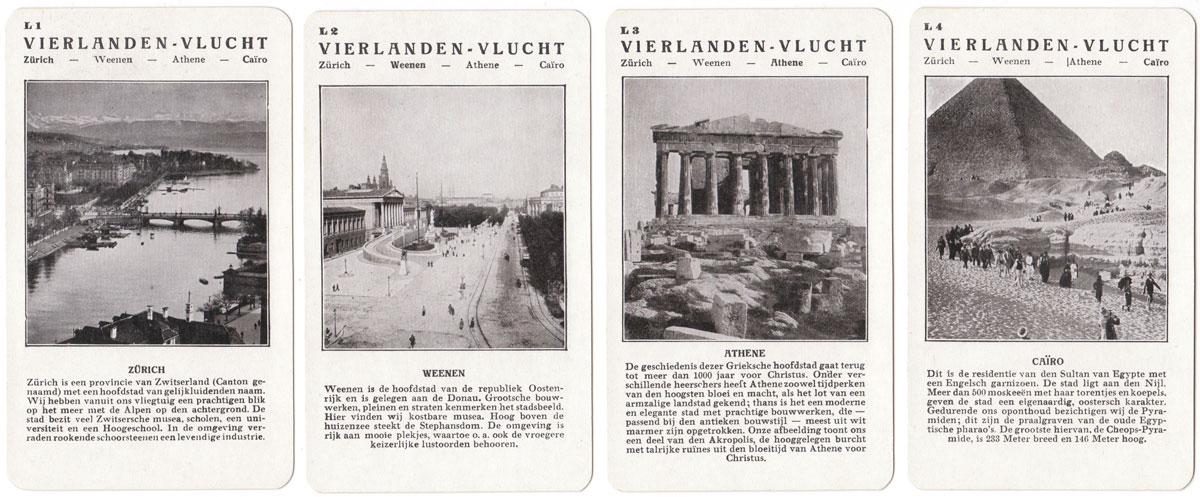
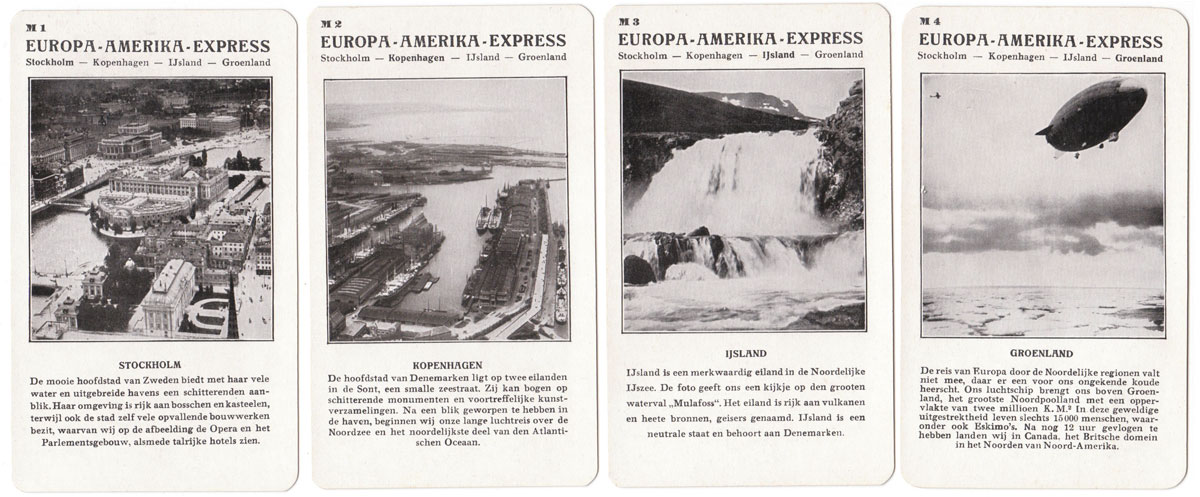
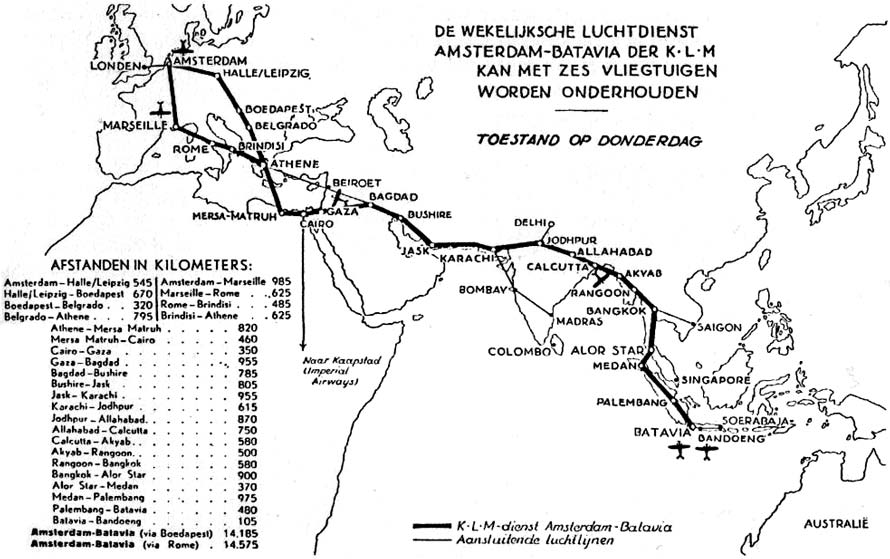
Spears “Weltflug Quartette” was produced in German, Dutch and English versions and may well have been produced in other languages too. The version illustrated is the Dutch version called “Wereldvlucht Kwartet” and set A is specifically for the Dutch market with pictures of a flight over Holland. Also the set K is a flight to the Dutch East Indies for the benefit of Dutch players. Lieutenant G Koppen carried out trial flights to Batavia (now Jakarta) in the Dutch East Indies in 1927 in a Fokker Trimotor to test the suitability for a KLM regular route. His flight out took 10 days and the return flight took 12 days. Illustrated below is a Map of the route that was eventually established.
REFERENCES
“The Games We Play” the history of J W Spear & Sons by Helmut Schwarz & Marion Faber published by the Nuremberg Toy Museum 1998
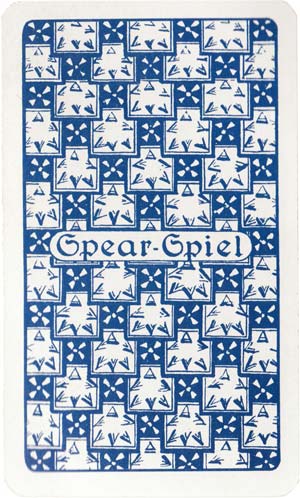
Above: the back design. All images courtesy Rex Pitts.

By Rex Pitts (1940-2021)
United Kingdom • Member since January 30, 2009
Rex's main interest was in card games, because, he said, they were cheap and easy to get hold of in his early days of collecting. He is well known for his extensive knowledge of Pepys games and his book is on the bookshelves of many. His other interest was non-standard playing cards. He also had collections of sheet music, music CDs, models of London buses, London Transport timetables and maps and other objects that intrigued him.
Rex had a chequered career at school. He was expelled twice, on one occasion for smoking! Despite this he trained as a radio engineer and worked for the BBC in the World Service. Later he moved into sales and worked for a firm that made all kinds of packaging, a job he enjoyed until his retirement. He became an expert on boxes and would always investigate those that held his cards. He could always recognize a box made for Pepys, which were the same as those of Alf Cooke’s Universal Playing Card Company, who printed the card games. This interest changed into an ability to make and mend boxes, which he did with great dexterity. He loved this kind of handicraft work.
His dexterity of hand and eye soon led to his making card games of his own design. He spent hours and hours carefully cutting them out and colouring them by hand.

Activity for Wereldvlucht Kwartet
Sign in to comment or save this article.

Related Articles
Learning to play Cribbage
I learned to pay cribbage when I was very young, aged around six or seven.
Verkeers Kwartet
A helpful quartet game celebrating the 75th anniversary of road safety exams making traffic safer.
Netherlands Kostuum Kwartet
Dutch costumes quartet game designed by Gerard Huijg, 1983.
Nederlands Stedenkwartet
Nederlands Stedenkwartet with heraldic needlepoint patterns by Permin, c.1970.
Zwanenberg’s Kwartetspel
Zwanenberg’s Kwartetspel printed by Speelkaartenfabriek Nederland, 1938.
Asperge Kwartet
Asperge Kwartet published by Knorr.
Natuurkwartet
Nature Quartet game published by Staatsbosbeheer, printed by Roem Speelkaarten, Kampen.
Sprookjes Kwartet
Fairy Tales quartet published by Heinrich Schwarz + Co for Dutch market, c.1970.
Boekenkwartet
Boekenkwartet featuring illustrations from children's books, 1970s.
Jip en Janneke
Jip en Janneke quartet game published by Hema, a Dutch department store, c.1960.
Papita Sport Kwartet
Papita Sport Kwartet by Nederlandse Spellenfabriek, c.1975.
Chief Cities Quartettes
Hand-made ‘Chief Cities Quartettes’ card game, c.1910.
Donald Duck Groente & Fruit Pretkwartet
Donald Duck Vegetables & Fruit Quartet exclusive from Jumbo supermarkets, © Disney 2016.
John Bull
“John Bull”, the Capital English Game published by W. Cremer, c.1865.
Funny Families
“Funny Families” card game manufactured by Woolley & Co, 1890s.
Comic Families
“Comic Families” card game from Australia, c.1940s
Das Lustige Familien Quartett
“Das Lustige Familien Quartett” published by Eugen Schmidt K.G., Dresden, c.1930s
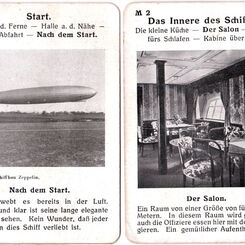
Graf Zeppelin
A card game commemorating the first round the world flight by the Graf Zeppelin, published by J.W. S...
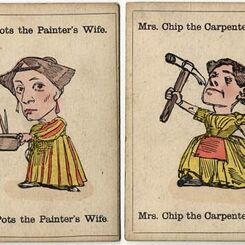
Jaques’ Happy Families
In 1851 the games manufacturer John Jaques of London (founded in 1795) commissioned a set of drawing...
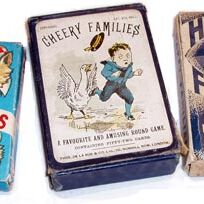
Happy Families
Happy Families is probably one of the most popular card games ever invented, with educational benefi...
Most Popular
Our top articles from the past 60 days


