


Argentinian Playing Cards - Naipes Argentinos
Playing cards were introduced to the Americas by Spanish explorers in the 16th century.
Playing Cards in Argentina employ Spanish suit symbols: cups, swords, coins and clubs (termed copas, espadas, oros and bastos).
See List of Manufacturers →

Above left: Argentinean playing cards, made in Buenos Aires in 1815 by M.J. Gandarillas, a Chilean immigrant. The ace of coins shows the emblem of the newly established Federal Republic, the four of cups a rising sun within a laurel wreath. The remainder of the pack resembles the Spanish National pattern. more →
Above right: ace of coins and king of swords by José Maria Quercia y Possi, an Italo-Chilean immigrant who also set up business in Buenos Aires in 1815. The pack is based on the Spanish Maciá pattern. more →


Above: La Primitiva, Bs As., playing card manufacturer c.1880-1920 more →
It is assumed that playing cards had been introduced to the Americas by early explorers. Cards would almost certainly have travelled from Spain, and stories are told of them being improvised from drum-skins. Later, locally-made cards were deemed illegal by the Spanish authorities who wished to exploit their monopoly, for which purpose the 'Real Fábrica de Naipes de Macharaviaya' (1776-1815) was established, officially supplying playing cards for Central and South American colonies and controlled by the 'Ministerio de Hacienda' in Madrid. These cards are in the so-called 'National Spanish' style.
However, there were many problems with the cards, including poor quality and high prices in comparison with locally manufactured ones. In 1815 the 'Real Fábrica' was closed and once again local playing card industries were legally licensed to operate in their respective countries. Manuel José de Gandarillas was the first manufacturer to set up business in 1815, and by 1830 there were at least four playing card manufacturers operating in Buenos Aires. See complete list here.
Argentinian playing cards have followed Spanish styles, notably the Maciá, Cádiz and Catalan patterns which became established during the 19th century based on models imported from Spain, notably by Fló Hnos and Bertrand Domec.
Duty was first introduced on playing cards in Argentina in 1892, as part of the Internal Duties law, and in 1896 the first duty labels were printed to be used on packets of 1 gross packs. In 1899 these were replaced by bands, initially for a dozen packs and then for single packs more →

Many packs published in Argentina contain references to Argentina's national identity such as National Symbolism, Politics, Gauchos, Tango dance, Bull Breeding and Folklore. However, for everyday games requiring a Spanish-suited pack, a simple version of the Spanish Catalan pattern is commonly used. Native Indian cards, modelled on the Spanish pack, are a curious spin-off.
Several varieties of Cartomancy, Fortune-Telling, Tarock and Tarot packs have been produced in Argentina, as well as a number of souvenir packs, card games, advertising packs, etc.

Above: Angus playing cards designed by Gustavo A. Pueyrredón, c.1975 more →


Above: Casa Escasany

Above: Leonor Fini

Above: Caloi
Football

Above: Figuritas Golazo collectible football cards, 1973 more →

Above: “Desafio” Spanish-suited playing cards with caricatures of football players on every card, c.2000.

Above: World Cup ’98 caricatures.

Above: Axe Deodorant Playing Cards by Zecat, Argentina, c.2004 more →

Above: 125th anniversary of the Argentinian “Servicio de Hidrografía Naval”, 2004 more →

Above: Naipes Truco “Únicos” designed by Gerardo N. Perez, 2006 more →
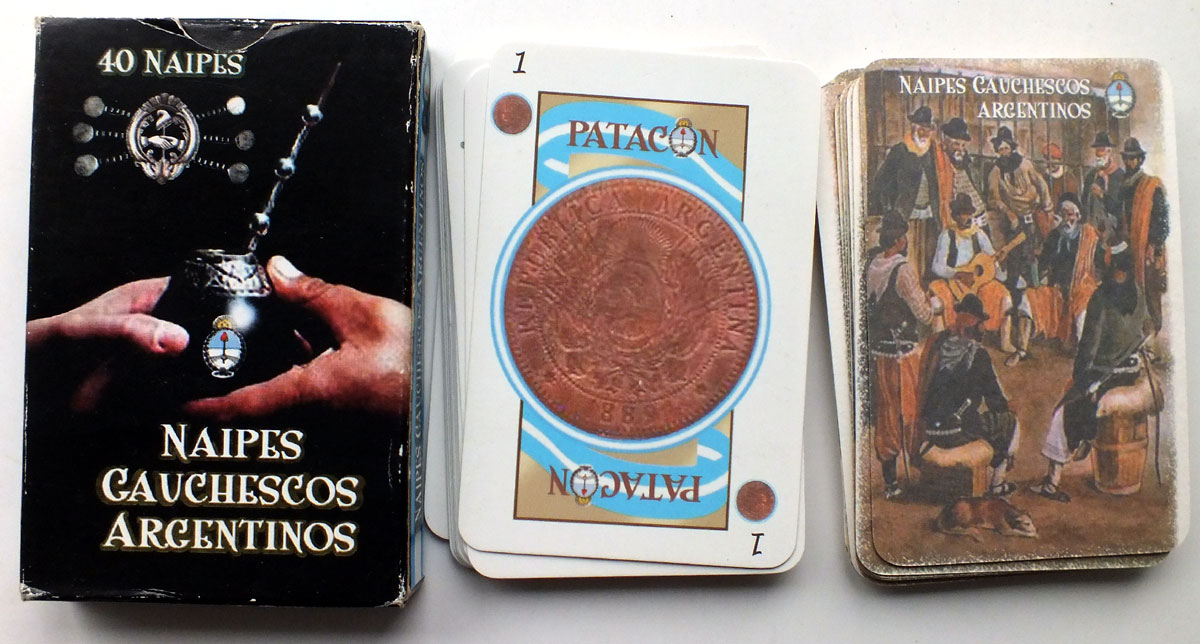
Above: Naipes Gauchescos Argentinos, 2004. more →

Above: ‘Naipe Criollo Caraí Pujol’ with Gaucho designs by Julio F. Parada Seifert, 2005. more →

Above: ‘Gaucho’ Spanish-suited deck made in Argentina, 2001. more →

Above: El Rodeo Talabartería. more →

Above: Roche Pharmaceutical deck, 1980s more →

Above: Cartas Precolombinas, 2001 more →

Above: Naipes Garaycochea, c.2002 more →
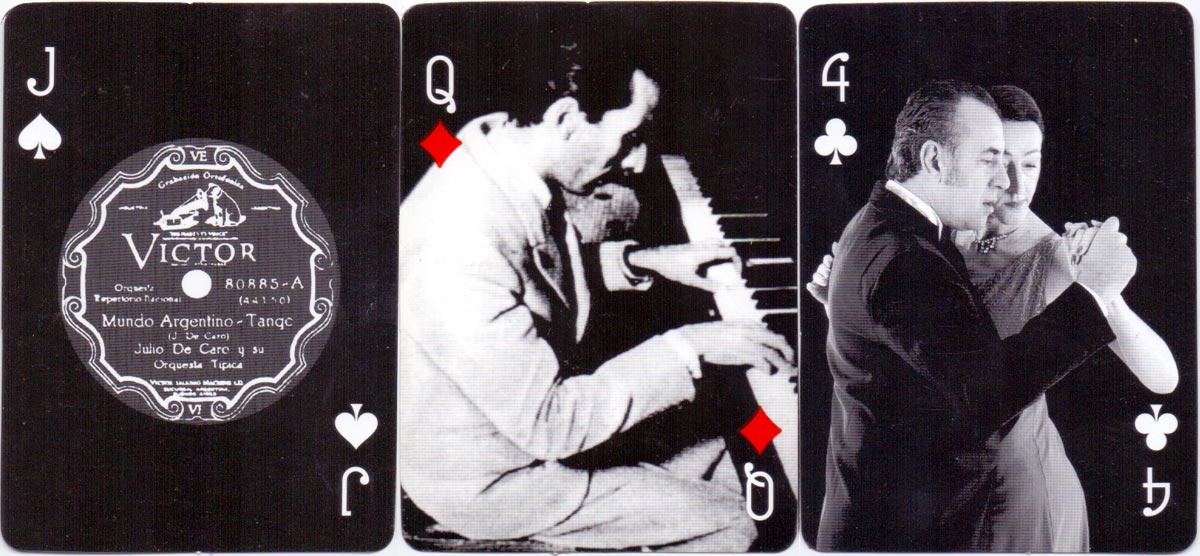
Above: ‘Black Tango’ playing cards published by Gardés Editorial, 2003 more →
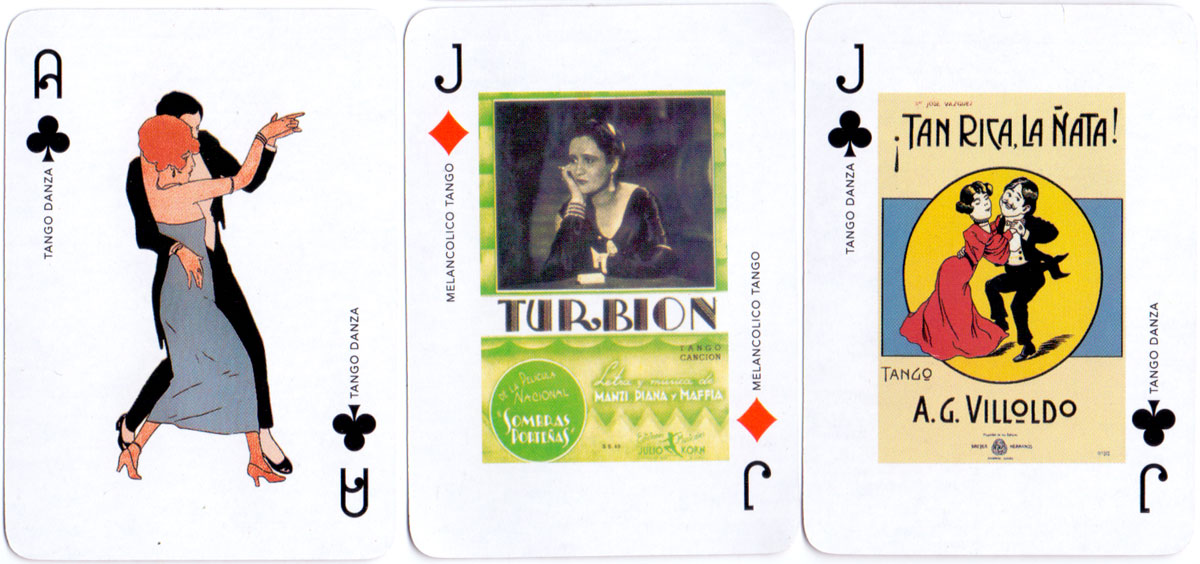
Above: Naipes de Poker “Milonguita”, Gardés Editorial, 2003 more →

Above: La Cumparsita Tango deck, 2001 more →

Apeles S.A.

Camilloni, Conrado & Carlos


Gráfica 2001 - Naipes La Española

Juegos Victoria (Jugetes Royal)
Ministerio de Salud de la Nación (Ministry of Health)

Naipes Castilla
Obsequios Empresarios Argentinos
Industrias Gráficas Pesout S.A.

Article in Infobae 10th May 2005


By Simon Wintle
Spain • Member since February 01, 1996
I am the founder of The World of Playing Cards (est. 1996), a website dedicated to the history, artistry and cultural significance of playing cards and tarot. Over the years I have researched various areas of the subject, acquired and traded collections and contributed as a committee member of the IPCS and graphics editor of The Playing-Card journal. Having lived in Chile, England, Wales, and now Spain, these experiences have shaped my work and passion for playing cards. Amongst my achievements is producing a limited-edition replica of a 17th-century English pack using woodblocks and stencils—a labour of love. Today, the World of Playing Cards is a global collaborative project, with my son Adam serving as the technical driving force behind its development. His innovative efforts have helped shape the site into the thriving hub it is today. You are warmly invited to become a contributor and share your enthusiasm.

Activity for Argentinian Playing Cards - Naipes Argentinos
Sign in to comment or save this article.

Related Articles
Spanish-Suited Playing Cards in Latin America
The journey of Spanish-Suited decks from Conquistadores to local makers.
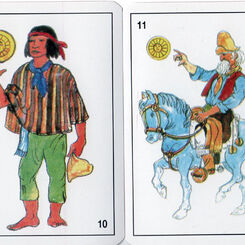
Naipes Criollos
“Naipes Criollos” Gaucho playing cards, 1995.

Naipes Españoles “El Mexicano”
Standard Catalan-type deck, titled "El Mexicano", by an anonymous Argentinean manufacturer, c.1980s....

Parke-Davis Pharmaceuticals
Parke-Davis Pharmaceuticals, c.1998 & Bodegas Trapiche, 2003.

8: Standard English Cards in Latin America: Argentina, Brazil and Chile
A brief survey of the designs of English cards in South America.

Aparcero
Naipes Argentinos 'La Partida' y 'Aparcero' published by Obsequios Empresarios Argentinos, Santa Fe....

La Española Classic
‘La Española Classic’ is a traditional ‘La Española’ Spanish-suited pack and is produced in several ...

Lagos del Sur Souvenir
Lagos del Sur Souvenir playing cards published by Gráfica S.A., Buenos Aires, c.1980.

Axe Deodorant
Clearly promoting good personal hygiene, each card shows a young female model posing seductively and...

Naipes Vigor S.R.L.
VIGOR S.R.L (1955 - c1975) manufactured a range of playing cards and card games, including Chinita, ...

Minifusor Clásico
Minifusor Clásico, a modern re-drawing of the Catalan pattern published by Difusora, c.1980.

Naipes Joketa
“Naipes Joketa” by anonymous manufacturer, c.1975. A slightly elaborated version of conosur pattern....

Naipes Victoria - page 2
Naipes Victoria was Cía Fabril Financiera's leading brand of Spanish-suited playing cards.

Joker S.A.
Playing cards manufactured by Joker S.A.

J. F. Sanchez - Buenos Aires c.1895
J. F. Sanchez - Buenos Aires c.1895.
Justo Rodero e Hijos
Justo Rodero e Hijos, playing card manufacturer in Buenos Aires, Argentina.

C. Della Penna & Cía, Bs Aires, c.1930-1978
C. Della Penna S.A. playing card manufacturer and publisher, Buenos Aires, c.1930-1978.

Francisco Girbau & Cia, Buenos Aires
Francisco Girbau & Cia, Buenos Aires, c.1890-1935

J. M. Gandarillas, Buenos Aires, c.1815
Playing cards believed to have been designed in 1815 by the Chilean immigrant Manuel José Gandarilla...

Casa Escasany
Naipes Casa Escasany ~ Magnificent novelty playing cards published by Casa Escasany, Buenos Aires, A...
Most Popular
Our top articles from the past 60 days


