Italian Playing Cards
The first reliable evidence that playing cards were being used in Italy is from 1376, when a game called 'naibbe' is forbidden in a decree, with the implication that the game had only recently been introduced there.

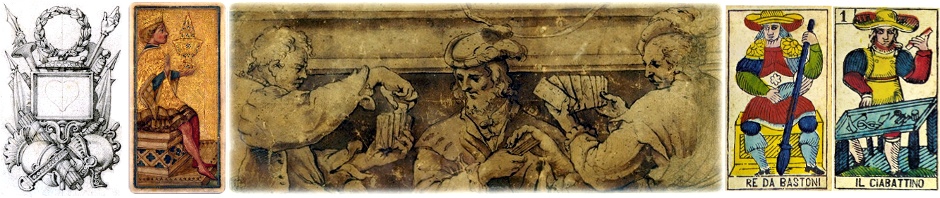
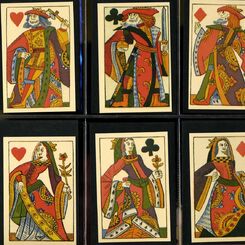
Above: Tarocchi di Mantegna, c.1465.
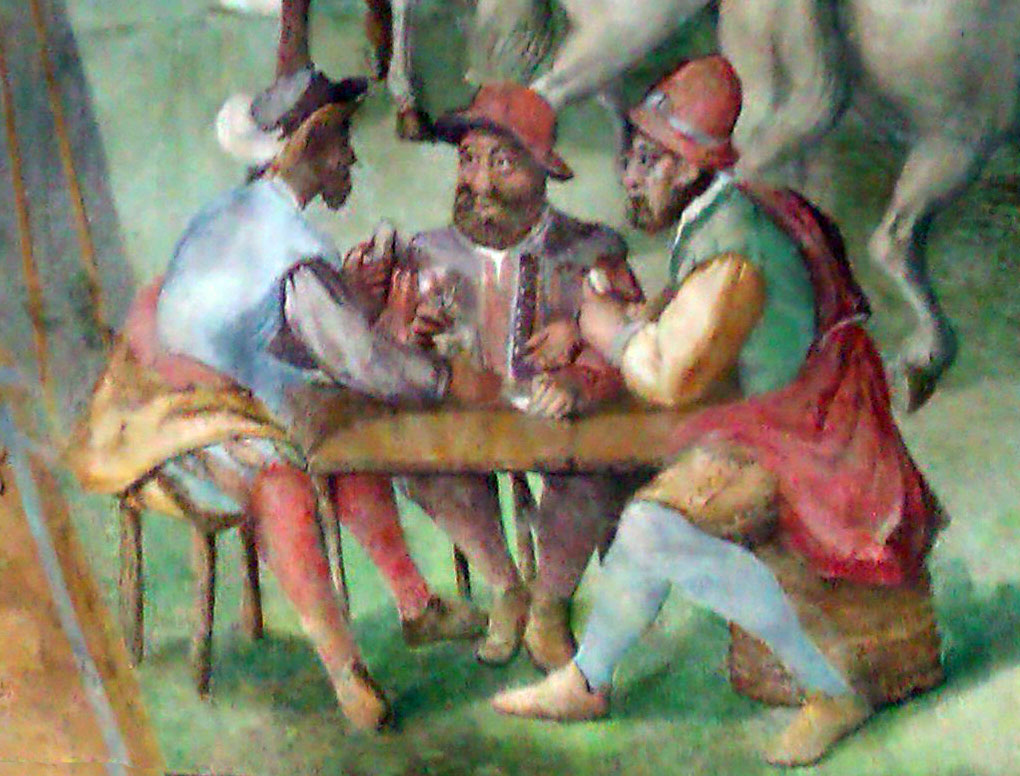
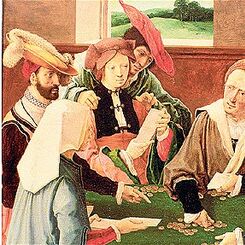
Above: detail from “La Sala de Las Batallas” mural painting in El Escorial palace (Madrid) produced by a team of Italian artists overseen by Orazio Cambiasso, late 16th century.
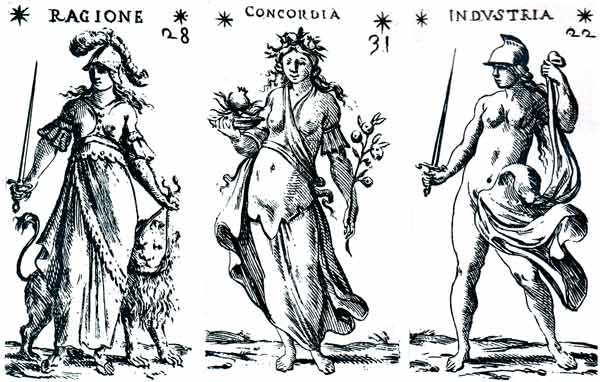
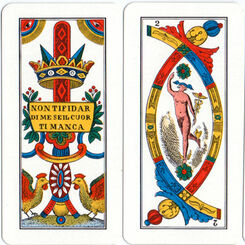
Above: Mitelli’s ‘Gioco di Passatempo’, 1690.
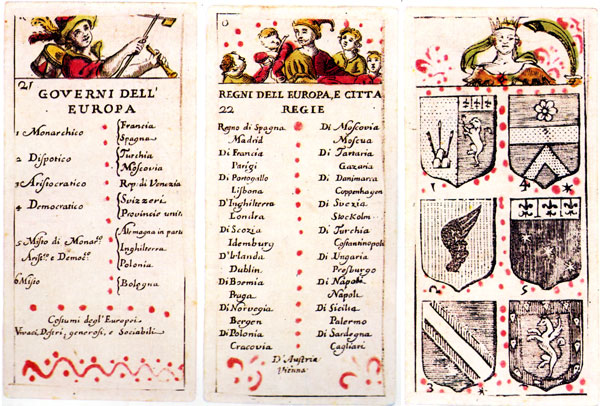
Above: Geographical and Heraldic Tarocchi cards from Bologna, 1725.
Early evidence that playing cards were being used in Italy comes from Florence in 1376, when a game called 'naibbe' is forbidden in a decree, with the implication that the game had only recently arrived there. This is followed in 1379 by another reference from Viterbo (in the vicinity of Rome) in which it is claimed that a new game called 'nayb' was introduced by a 'Saracen' (= Oriental, Arab or Muslim). We infer that the game was still a novelty, even it's name was still something of a mystery. However, quite soon playing cards did not meet with approval from the church authorities, and they were demonised by preachers who urged that they be destroyed.
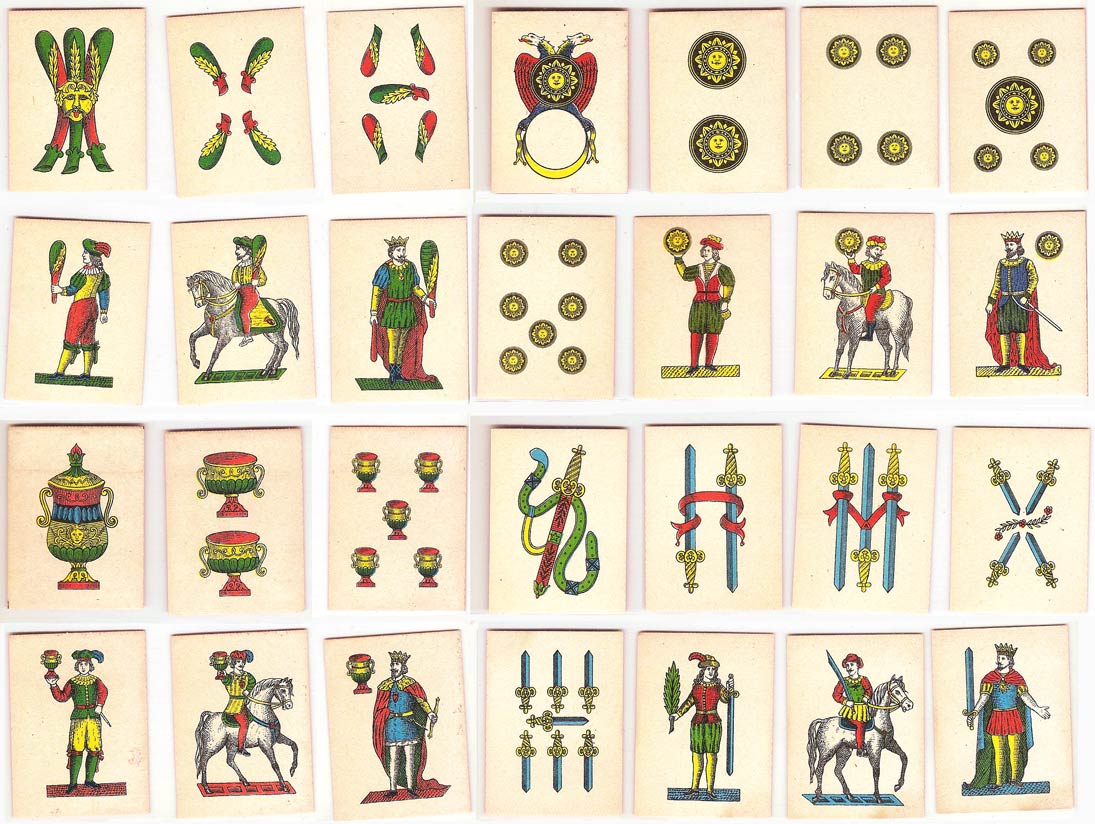
The generally accepted view is that the Arabs introduced playing cards to Europe, via both the Iberian and Italian peninsulas, in the second half of the fourteenth century, and that European cards evolved from the suit system and composition of these cards. The famous Topkapi Museum pack, made from several incomplete Mamluk packs, clearly shows four suits of 13 cards including 3 court cards. Through a process of assimilation and adaptation the original Arabic suit symbols, and even the name na'ib, became Westernised. The typical Italian suit system uses the same symbolic objects as the Spanish (cups, coins, swords and clubs), with some differences of style dating back to an early stage in their history.
Italy did not form a single kingdom; several important ducal dynasties included the Visconti's, the Borgia's and the Scaliger's. There was the kingdom of Naples, the Vatican, the republics of Genova, Venice and Florence.
Italian-suited cards from the Venice area were probably the first ones to cross the Alps and Italian-suited trappola cards survived for some time in Austria, Poland, Czech Republic, Germany and the Balkans. Cards from Southern Italy, including Sicily, are closer in design to Spanish cards. It is here that the Spaniards had come to Italy bringing with them their beloved playing cards and gambling habits.
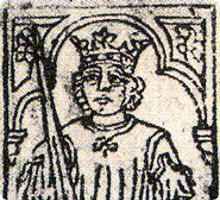
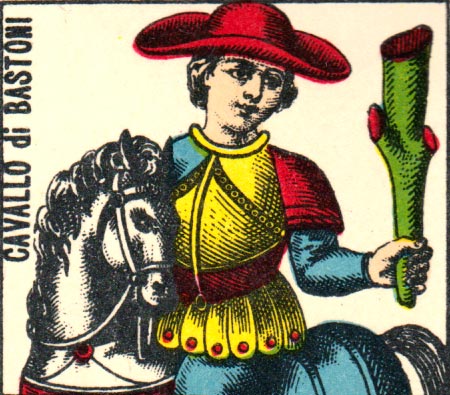
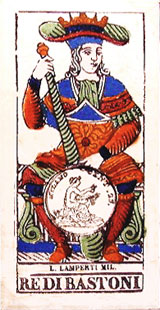
A specimen of XV century Italian cards shows that the suit symbols and court hierarchy were indeed very close to the Mamluk set, and have not changed much since then. One characteristic of early Italian cards is that the edges of the back paper, which had a pattern or design printed on it, were wrapped around the edges of the card thereby providing a border around the front. This artesanal method of production is more time-consuming but produces stiff and robust cards which handle and shuffle particularly well. Some early Spanish cards were also manufactured using this technique.
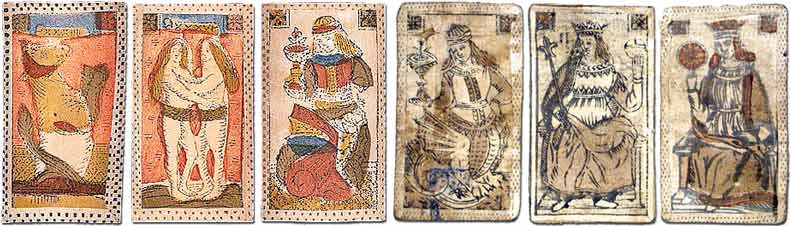
Italy has produced a number of variant types of extended packs. The hand-painted tarot cards, which date probably from the first half of the fifteenth century, contain 78 cards. In this game, apart from the four Italian/Latin suits, which could be said to derive from the Arabic 'Mamluk' suit symbols, there are also 22 trump cards; and there are 4 court cards per suit, including a king, queen, cavalier and page plus numeral cards 1-10, making a total of 78 cards. A variant called "Bologna Tarocchino" has only 62 cards (omitting numerals 2-5). Florentine Minchiate has a total of 97 cards.
Regional Patterns
Italy today enjoys reasonable political unity, but this has not always been the case. The fourteen regional patterns found in Italy reflect the history of French, Spanish and Imperial influences. The outcome today is that the north-west use French suit signs, the north and north-east use Italian suited packs and in the southern two-thirds of the peninsula Italo-Spanish suit signs prevail.
Bergamo Pattern Brescian Florentine Genoese Lombardy (Milanesi) Napolitan Piacentine Piedmont Primiera Bolognese Romagnole Sarde Sicilian Spanish National Pattern Tarocco Bolognese Trentine Trevisane (Venetian) Triestine Tuscan Pattern
Minchiate & Tarot
Tarocchi di Mantegna Visconti Tarocchi Minchiate Fiorentine "Etruria" Minchiate Minchiate c.1850 Tarocco Bolognese Mitelli Tarocchini Serravalle-Sesia Tarot Sola-Busca Tarot Tarocco Neoclassico Tarocco della “Corona Ferrea” Tarocchino Lombardo Tarocco Piemontese Tarocco Siciliano Tavaglione Stairs of Gold Tarot
Other Stuff
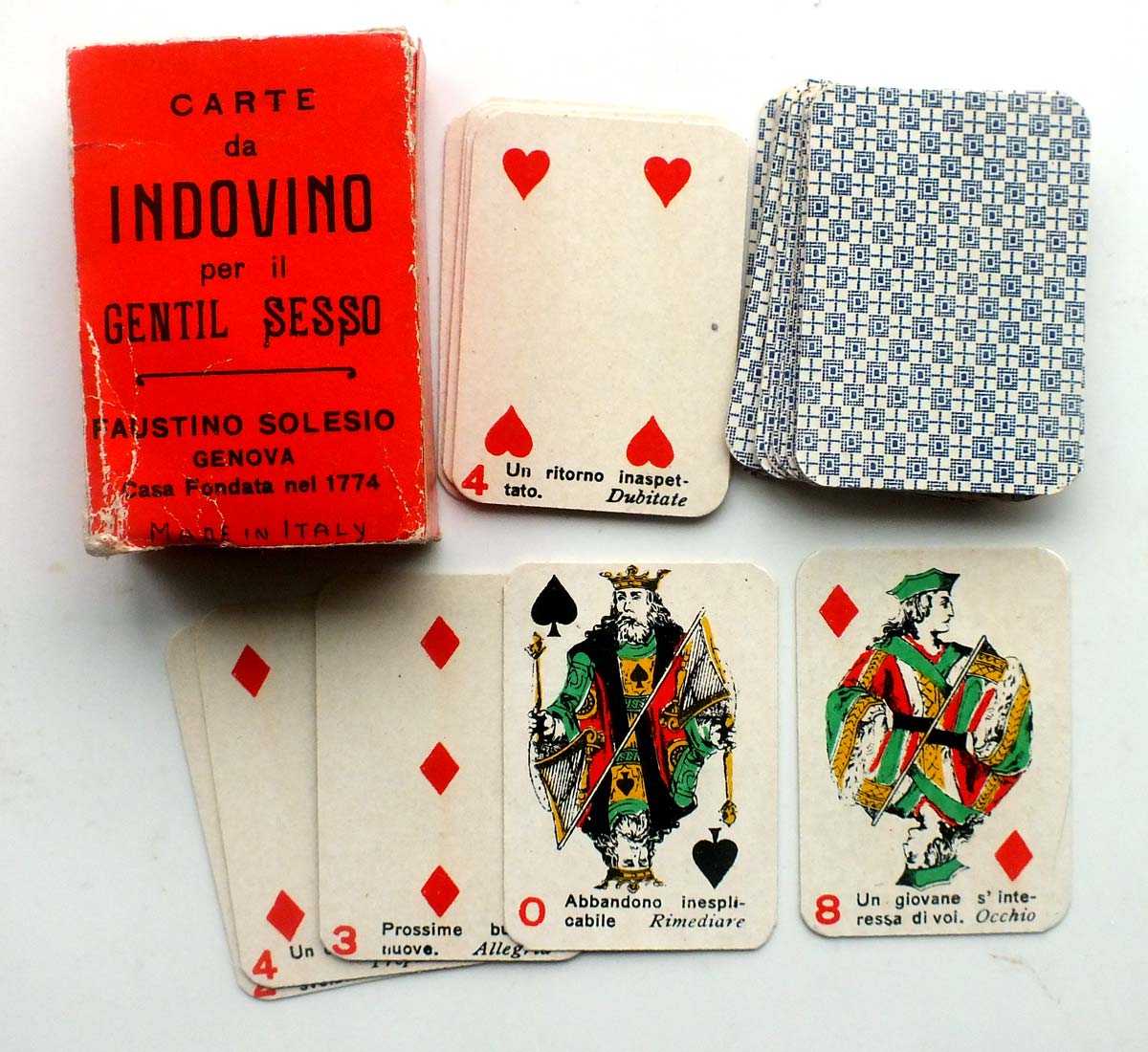
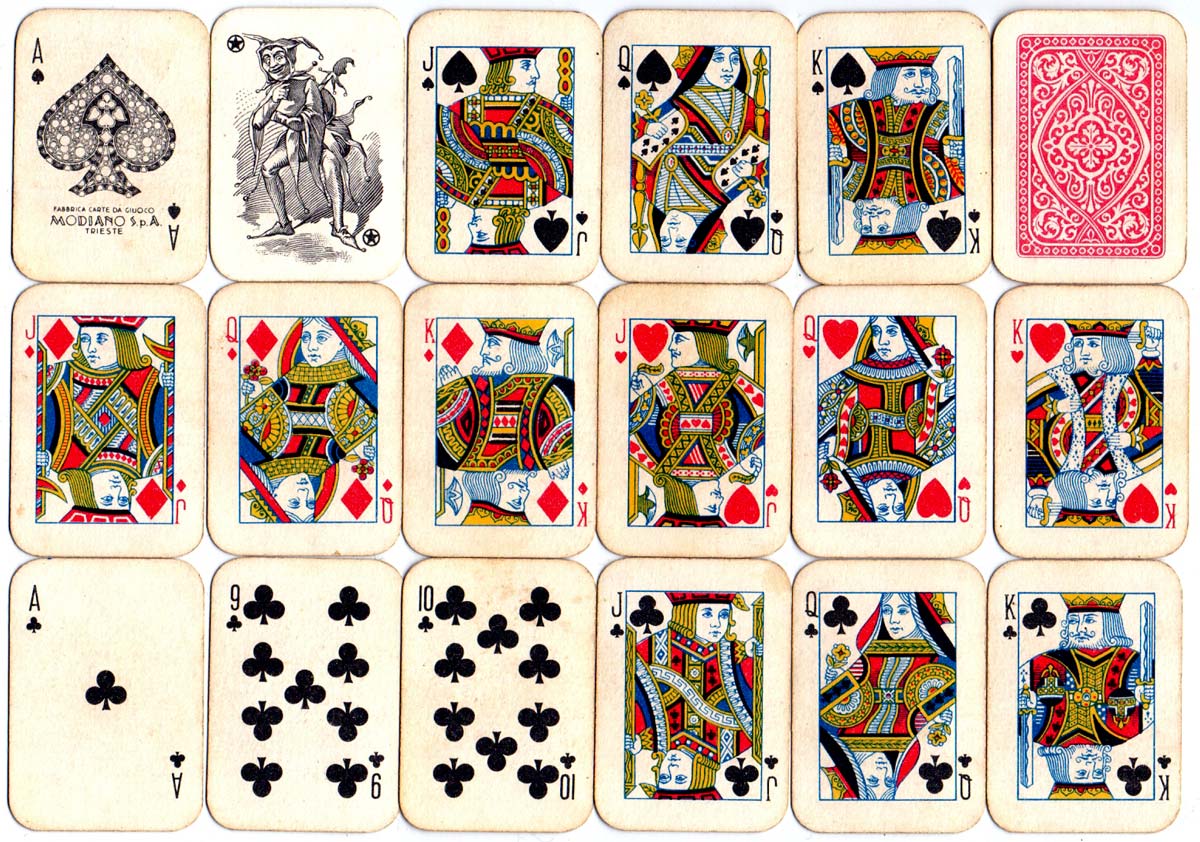
Agostino Bergallo Archaic North Italian Austrian Lloyd Steamship Co Pedro Bosio Carte da Indovino Carte Romane Carte per Signora Cucco Giuseppe Cattino Pavol Montanar Credito Commerciale Gumppenberg Lamperti (Milan), c.1820 Mamluk Cards Matarelli Transformation Mitelli ‘Gioco di Passatempo’ Modiano Cartine da Gioco Antonio Monasta "Moorish" Playing Cards Pinocchio Sardinia Spain Modiano ‘World Bridge’ Vienna pattern
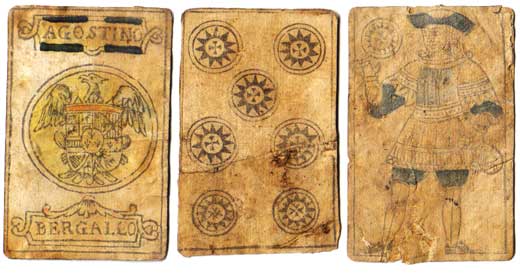
Above: woodblock-printed and stencil-coloured Spanish-suited playing cards made in Italy by Agostino Bergallo for export to Spanish territories, 18th century. The Ace of Coins carries the maker's name and the Spanish coat-of-arms.
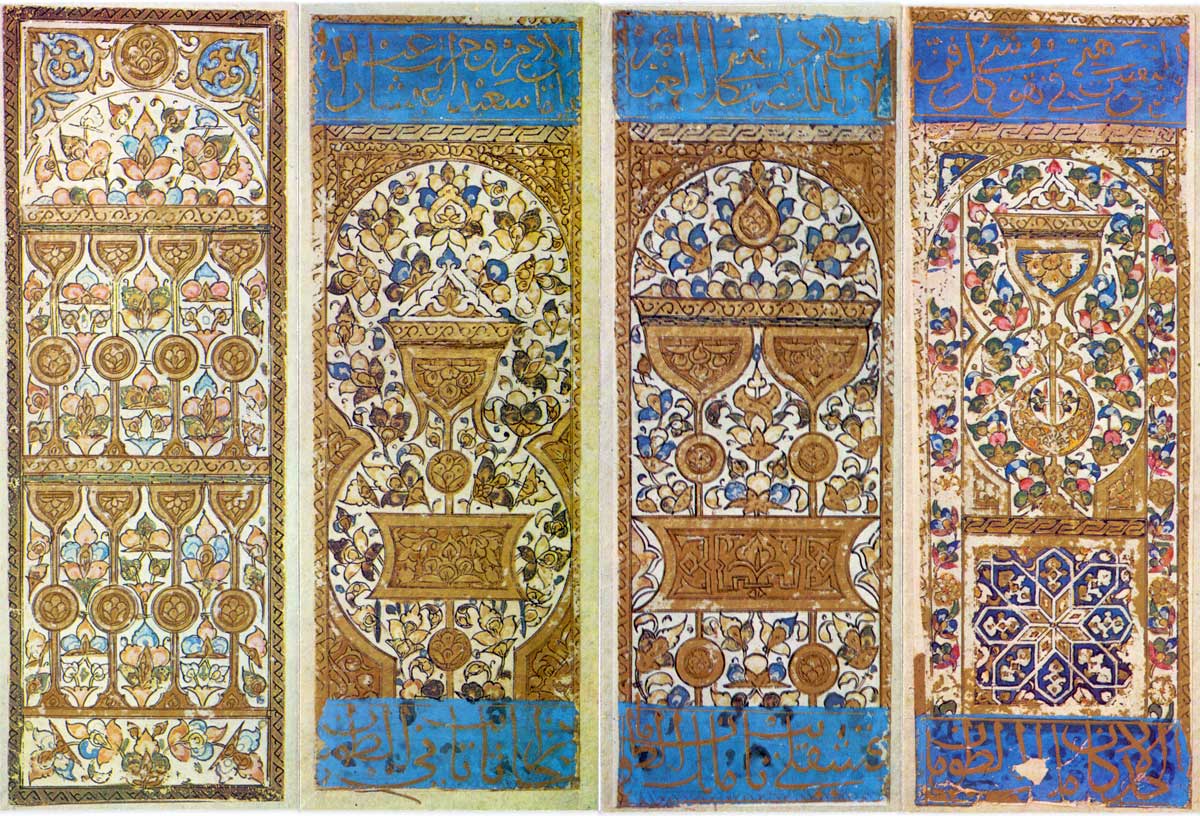
Above: the suit symbols and court hierarchy in early Italian cards were very close to the Mamluk set and have not changed much since then.




By Simon Wintle
Spain • Member since February 01, 1996 • Contact
I am the founder of The World of Playing Cards (est. 1996), a website dedicated to the history, artistry and cultural significance of playing cards and tarot. Over the years I have researched various areas of the subject, acquired and traded collections and contributed as a committee member of the IPCS and graphics editor of The Playing-Card journal. Having lived in Chile, England, Wales, and now Spain, these experiences have shaped my work and passion for playing cards. Amongst my achievements is producing a limited-edition replica of a 17th-century English pack using woodblocks and stencils—a labour of love. Today, the World of Playing Cards is a global collaborative project, with my son Adam serving as the technical driving force behind its development. His innovative efforts have helped shape the site into the thriving hub it is today. You are warmly invited to become a contributor and share your enthusiasm.

Leave a Reply

Your Name
Just now Your comment here. Your comment here. Your comment here. Your comment here. Your comment here. Your comment here. Your comment here. Your comment here. Your comment here. Your comment here. Your comment here. Your comment here. Your comment here. Your comment here. Your comment here. Your comment here. Your comment here. Your comment here. Your comment here. Your comment here. Your comment here. Your comment here. Your comment here. Your comment here. Your comment here. Your comment here. Your comment here. Your comment here. Your comment here. Your comment here. Your comment here. Your comment here.
Related Articles
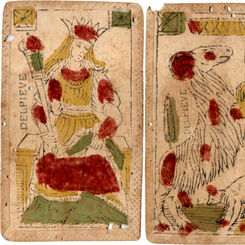
Luigi Del Pieve Minchiate
Luigi Del Pieve and the “Alli Sorte” Minchiate of Florence.
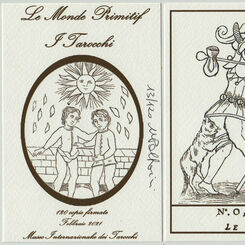
Le Monde Primitif Tarot
Facsimile edition produced by Morena Poltronieri & Ernesto Fazioli of Museo Internazionale dei Taroc...
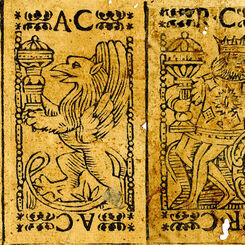
Portuguese-suited cards
Portuguese-suited cards with dragon aces, made in Italy, 1613.

Trentine Pattern
Trentine Pattern

Hermanos Solesio
“Money Bag” pattern by Hermanos Solesi, late 18th c.
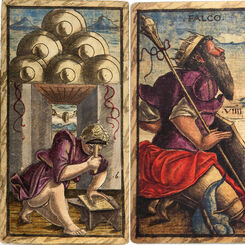
Sola-Busca Tarocchi
The Sola-Busca Tarocchi, c.1491
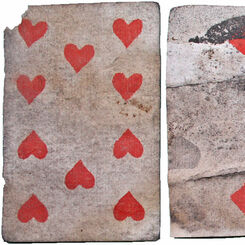
Archaeological find: old playing cards under the floorboards
The municipal archaeological service in Dordrecht (Netherlands) recently found some antique playing ...
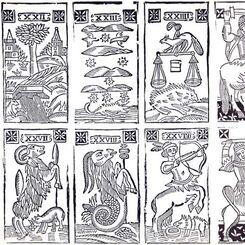
Minchiate Fiorentine, 17th C.
17th century Minchiate cards reprinted from the original woodblocks.
1: Playing Cards and their History: An Introduction and some links to other sites
What was considered the first mention of playing cards in England is in 1463 when Edward I banned th...
Netherlands
Playing cards have been known in the Low Countries since the 14th century

Agostino Bergallo
Agostino Bergallo Spanish pattern made for South American countries

Giuseppe Cattino
Playing cards manufactured in Italy by Giuseppe Cattino and Paolo Montanar for Spanish markets.

Pedro Bosio
Cards of the Spanish National Pattern 'Money Bag' type manufactured by Pedro Bosio, Genova (Italy) ...
History of Blackjack
Over the years the origin of Blackjack, like many other games, has eluded researchers for a long tim...
Trevisane pattern
The double-ended version of the ‘Trevisane’ pattern originated in the early 19th century.
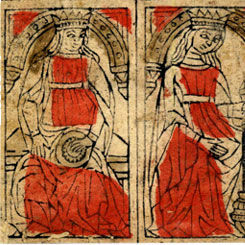
XV Century Italian Playing Cards
Cards from a pack of an early form of north Italian playing cards, with the swords back-to-back and ...

Minchiate Fiorentine
The Florentine game of Minchiate is played with a pack of 97 cards. The subjects and arrangements of...

Sicilian playing cards by Antonio Monasta
"Il Leon" Sicilian playing cards, 40-card pack based on Spanish designs, made in Sicily by Antonio M...
History of English Playing Cards & Games
The History of English Playing Cards dates probably from the mid 15th century

Playing cards in the Upper Rhine region
Documentary evidence suggests that card playing established itself in Italy in 1376, and then spread...
Most Popular
Our top articles from the past 60 days