

United Kingdom
Playing cards first arrived in England during the 15th century, but none have survived from such an early date.
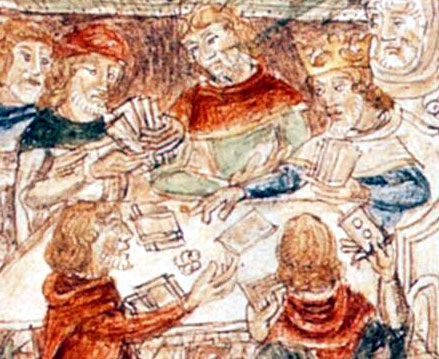
Above: imaginary scene depicting the newly introduced game of cards, British Library Add MS 12228►
English soldiers probably brought French cards back with them from battles and expeditions into French territory during the fifteenth century, and these cards served as models for the first English makers. None have survived from such an early date and little is known about early English card manufacturers.
Cards were probably imported (or smuggled) from France since the XV century or earlier - most likely from nearby Rouen - and also possibly from Flanders or Spain. However, their importation was officially banned in an act of parliament of 1463 upon the petition of the English artificers. About 1484 they seem to have become an important part of the Christmas festivities, at least among the upper classes, and in 1495 an edict of Henry VII forbade their use to servants and apprentices except during the Christmas holidays. Henry apparently enjoyed this new game, ‘cards for playing’, for among his private expenses are several entries for losses at cards.
The earliest surviving cards
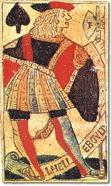
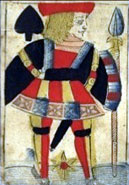
The earliest known complete pack of English-made cards is a non-standard set from 1590 showing the 52 counties of England and Wales (British Museum Number 1938,0709.57.1-60). Regarding standard cards, some odd single standard cards have survived in museums and country houses, and the name Stiven Bricket appears on a card dated c.1600. These cards have stylistic resemblances to cards made in Rouen during the fifteenth century and which became the English pattern. Ken Lodge has examined in his blog how the standard English pattern evolved from French regional ones (see here and here). Possibly the earliest surviving complete standard English pack is a 17th century example made by Robert Whitfield of London, reviewed by Paul Bostock (here) and also reported by John Sings (2023) in the EPCS Newsletter.
The next most well-known English manufacturers whose cards survive are Hewson, Blanchard, Gibson, Hunt, Reynolds, Goodall, etc. English pattern cards remained single-figured on the courts until shortly after 1850; even then it was at least another ten years before the more conservative players would accept double-headed cards. The English pattern was widely copied and imitated by American manufacturers during the nineteenth century, then exported to Australia, and has since been adopted by manufacturers world-wide as the standard ‘International’ pattern for Bridge, Poker, Canasta and so on.
Tax on playing cards
In England, the special tax on playing cards dates back to 1588. In that year, Queen Elizabeth I granted a monopoly to Ralph Bowes, who received permission to open a factory for making cards. Following the death of Bowles, the monopoly passed to Edward Darcy, Groom of the Privy Chamber, for a period of 21 years from the expiry of Bowes' patent. Darcy therefore took it over from Bowes' estate in 1600, but it was rescinded in 1603. Darcy's patent required him to use a mark of "E.R." on the cards. (Shilton, EPCS, 2020).
The Worshipful Company of Makers of Playing Cards

Above: excerpt from Calendar of State Papers, Domestic Series, of the Reign of Charles I for 1628, page 354 • Charter of incorporation of WCMPC►
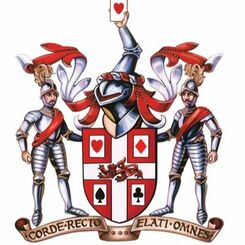
On October 2, 1628, King Charles I graciously approved the formation of the Worshipful Company of Makers of Playing Cards, with primarily London card makers as members: ten miles' compass. The law of 1463 was by now being ignored, so this guild was endowed with protectionist measures, including restraint of the importation of foreign cards, in exchange for paying a tax. The import of cards into England and Wales was banned. Customs officials received orders to confiscate and destroy all imported cards. Conversely, they had to reward informers who reported smuggled cards. The Worshipful Company received 3 shillings per gross of cards produced. The revenue was shared between the king (2 shillings) and the receiver/sealer William Watkins (1 shilling). This royal protection generated annual sums of around £3,000-£5,000 for the crown, corresponding to an inferred yearly production of up to half a million packs.
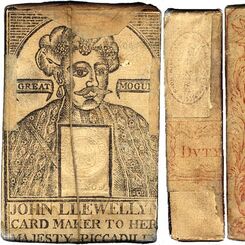
Additionally, the Worshipful Company was tasked with making enough cards to meet the demand. Furthermore, the sale price could not be higher than what was requested for foreign cards in England. Finally, each manufacturer had to place a personal mark (trademark) on the cards or wrapper, so the origin could be identified. Trademarks such as The Great Mogul or Highlander would have indicated grades of quality which consumers sought.
The protection of the English market was evidently not completely secure. Complaints from London cardmakers led the government to publish a royal proclamation on November 7, 1684, prohibiting importation once more.
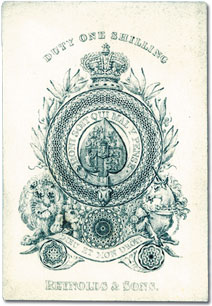
Above: 'frizzle' duty ace of spades with the legend Duty One Shilling at the top.
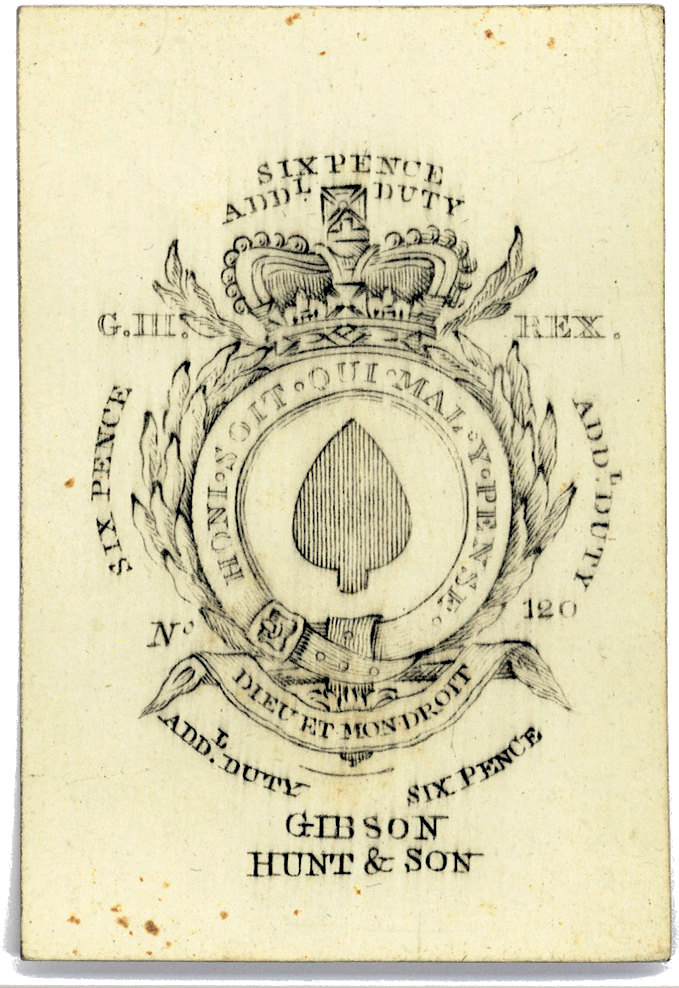
Above: 'garter' duty ace of spades with Six Pence Addl Duty three times, making a total of 2 shillings and 6 pence tax.
From 1711 the tax was set at six pence per pack, which outraged card-makers, and was to be indicated by handstamps on certain cards. In 1756, the tax was increased to 1 shilling and after 1765 this tax was indicated by a special ace of spades. This is when a new system of tax collection began. The Stamp Office printed taxed aces of spades as well as extra duty wrappers for cardmakers on application. As the tax varied, inscriptions appeared around these aces noting the additional duty on top of the one shilling already denoted by the garter design. Note: cards for export carried no tax and the ace of spades had only the word Exportation.
On June 1, 1776, the tax was raised yet again to 1 shilling and 6 pence, then to 2 shillings on August 1, 1789, and to 2 shillings and 6 pence in 1801. In 1804, the government adjusted the tax downwards to 1 shilling per pack and in 1828 an new 'Frizzle' ace of spades was issued for this one shilling tax. The tax was changed to an excise duty on September 1, 1862, and reduced to just 3 pence per pack which was paid only on the card wrappers. The aces of spades continued to be decorative but only as the manufacturer's identity badge and were no longer taxed. The 3d duty remained unchanged until its abolition on August 4, 1960. See also: The Ace of Spades►
Fraud cases
As the tax on playing cards increased during the the eighteenth and into the nineteenth century, the temptation to avoid paying the tax must have increased. Fraud cases involving playing cards led to severe punishments. For instance, John Blackin was indicted for forging and selling packs of cards with forged duty aces. He was executed in 1805, as reported by The Times on April 30, 1805.
Another case involved Richard Harding, who was tried and convicted in 1805 for forging the Ace of Spades and selling packs with forged aces. The infamous fraud case was tried in the Old Bailey (London) for the same charges: 1. Forging and manufacturing the legal stamp or the Ace of Spades; 2. Selling and distributing packs with this forged stamp, knowing that they were forged. A clerk from the Stamp Office was one of the witnesses. He testified that he confiscated several decks of cards from Harding in 1805, all of which had forged Aces of Spades. Harding's housekeeper was also involved in the fraudulent trade of forged cards. She sold these counterfeit packs from her private residence. His apprentice testified that Harding made the forged Aces of Spades under his supervision. Harding was seen creating and selling these forged cards. The ink used to print the forged Aces was very similar to the original, and he used a liquid to simulate the gloss on the real cards.
References
- Cremers, Filip: Belasting is Troef, Nationaal Museum van de Speelkaart, Turnhout, 1992.
- Hargrave, Catherine Perry: A History of Playing Cards and a Bibliography of Cards and Gaming, Dover Publications, New York, 1966
- Lodge, Ken: Fakes, Forgeries and Tax Evasion, WoPC January 21, 2023►
- Lodge, Ken: The Standard English Pattern (second revised and enlarged edition), Bungay, Suffolk, 2010
- Mann, Sylvia: Collecting Playing Cards, Arco Publications, 1966
- Mann, Sylvia: All Cards on the Table, Jonas Verlag/Deutsches Spielkarten-Museum, Leinfelden-Echterdingen, 1990
- Shilton, Julian: The Pre-History of Taxation on Playing Cards in England (part 2) -1600-35, English Playing Card Society Newsletter No.130, Nov 2020, pp.10-15.
- Sings, John: A very rare pack of English standard playing cards, English Playing Card Society Newsletter No.138, Oct 2023, pp.22-23.

By Simon Wintle
Spain • Member since February 01, 1996 • Contact
I am the founder of The World of Playing Cards (est. 1996), a website dedicated to the history, artistry and cultural significance of playing cards and tarot. Over the years I have researched various areas of the subject, acquired and traded collections and contributed as a committee member of the IPCS and graphics editor of The Playing-Card journal. Having lived in Chile, England, Wales, and now Spain, these experiences have shaped my work and passion for playing cards. Amongst my achievements is producing a limited-edition replica of a 17th-century English pack using woodblocks and stencils—a labour of love. Today, the World of Playing Cards is a global collaborative project, with my son Adam serving as the technical driving force behind its development. His innovative efforts have helped shape the site into the thriving hub it is today. You are warmly invited to become a contributor and share your enthusiasm.

Leave a Reply

Your Name
Just now Your comment here. Your comment here. Your comment here. Your comment here. Your comment here. Your comment here. Your comment here. Your comment here. Your comment here. Your comment here. Your comment here. Your comment here. Your comment here. Your comment here. Your comment here. Your comment here. Your comment here. Your comment here. Your comment here. Your comment here. Your comment here. Your comment here. Your comment here. Your comment here. Your comment here. Your comment here. Your comment here. Your comment here. Your comment here. Your comment here. Your comment here. Your comment here.
Related Articles
Fortune Telling playing cards
English Fortune Telling cards probably published c.1770.
Arms of English Peers
The Arms of English Peers playing cards were first published in 1686. Heraldry, or a knowledge of th...
Hewson
Antique English woodblock playing cards by a card maker named C. Hewson, mid-17th century.
Fake Blanchard Ace of Spades
Fake Blanchard Ace of Spades with court cards based on Hall.
Suicide King
The King of Hearts, holding a sword behind his head, is sometimes nicknamed the “Suicide King”. He c...
Pope Joan Trays
Some traditional Pope Joan boards comprise a circular tray, others are square, divided into sections...
David James Binns
Hand-made “Tudor Playing Cards” by David James Binns, age 12.
Mathematical Instruments
Mathematical Instruments playing cards forming an instrument maker's trade catalogue, Thomas Tuttell...
Tax on Spanish Playing Cards
Taxation on Spanish playing cards, the monopolies and smuggling.
John Llewellyn, playing card manufacturer, London, 1778-1785
John Llewellyn, playing card manufacturer, London, 1778-1785

History of Court Cards
The court cards in English packs of playing cards derive from models produced by Pierre Marechal in ...
Argentina Tax Stamps on playing cards 1895-1968
Argentina Tax Stamps on playing cards 1895-1968
Silk Inlaid Playing Cards for Charles I
Silk Inlaid Playing Cards for Charles I
The Worshipful Company of Makers of Playing Cards
The Worshipful Company of Makers of Playing Cards was founded by Royal Charter in 1628.
Impuesto de Timbre para Naipes
EL CONGRESO DE COLOMBIA. LEY 69 DE 1946, por la cual se elevan las tarifas de algunos impuestos indi...
History of English Playing Cards & Games
The History of English Playing Cards dates probably from the mid 15th century
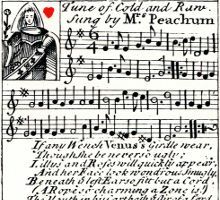
The Beggars’ Opera
The Beggars’ Opera Playing Cards were first published in 1728. The cards carry the words and music o...
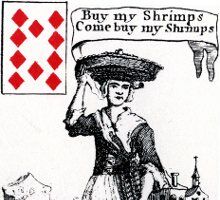
Cries of London
The cards were printed from copper plates, with the red suit symbols being applied later by stencil....
Estanco de Naipes del Perú
In October 1888 the Republic of Peru Congress passed Law no.26 establishing taxes on playing cards, ...
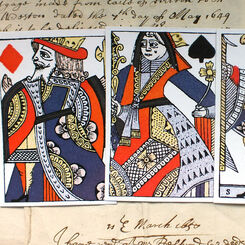
Hewson Replica Pack
Hand-made replica 17th century English playing cards, based on museum originals.
Most Popular
Our top articles from the past 60 days


