U. S. A.
The manufacture of playing cards in America only began during the second half of the 18th century, and not before 1776 by some estimates.
Playing Cards from U.S.A.
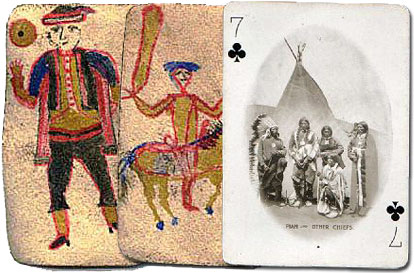
The earliest playing cards to reach America were brought by the Spaniards learn more → Legends tell how sailors with Columbus, who were inveterate gamblers, threw their cards overboard in superstitious terror upon encountering storms, but later, on dry land, they regretted their rashness and so had to make new cards for themselves out of leaves. Cards of deerskin or sheepskin, painted after the manner of the old Spanish cards, have been found among the Indians of the Southwest learn more →
Most of the early North American Colonists were British subjects who depended on playing cards imported from England to play with. Cards found their way into Puritan New England and a Plymouth Colony record of 1633 states that several persons were fined two pounds each for card-playing. In 1656 there is a Plymouth Colony law fixing the penalty for card-playing at forty shillings for adults; children and servants ‘to bee corrected att the discretion of theire parents or masters and for the second offence to bee publickly whipt.’ In the same year, in New Amsterdam, playing at tric-trac during the time of the divine service is prohibited.
Jack of Hearts
“The heathen Chinee”. This title was given to the Jack in the Far West when the game of Euchre was played, after the story of a Chinese gambler who cheated by concealing the card up his sleeve.
Playing cards and card playing have both remained contentious subjects since the early days of puritan American settlers. However, new technology can now provide a safe and convenient place for card players to congregate. Legalization of online card games in general and poker specifically is progressing across different areas of the country.
In most colonies a ship from England would bring supplies of almost everything which required some skill in manufacture. During the 18th century playing cards were sold by stationers, Post Offices, etc., and advertised in newspapers. Around this time playing cards were frequently used for secondary purposes such as invitations, admission cards or visiting cards, and some of the earliest cards have survived in this manner.
Cards Made in U.S.A.
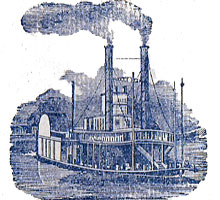
Above: The Steamboat Brand.
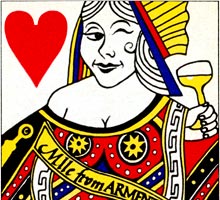
Above: 26th Yankee Division, 1933.
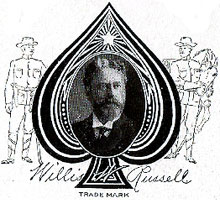
Above: Willis W. Russell Card Co, established 1905.
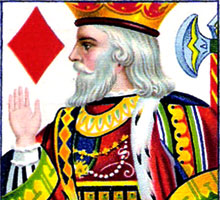
Above: Norwood #85, c.1909.
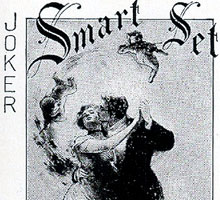
Above: Smart Set 400 Series appealing to the social ranks of New York’s high society.
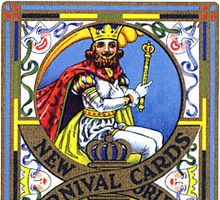
Above: Carnival Playing Cards, New Orleans, 1925.
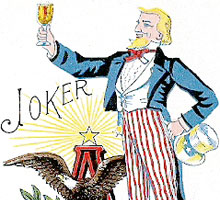
Above: Anheuser-Busch 1899.
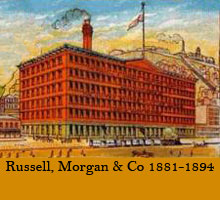
Above: Russell, Morgan & Co.
Above: Parker Brothers.
Above: Warren Paper Products Co.
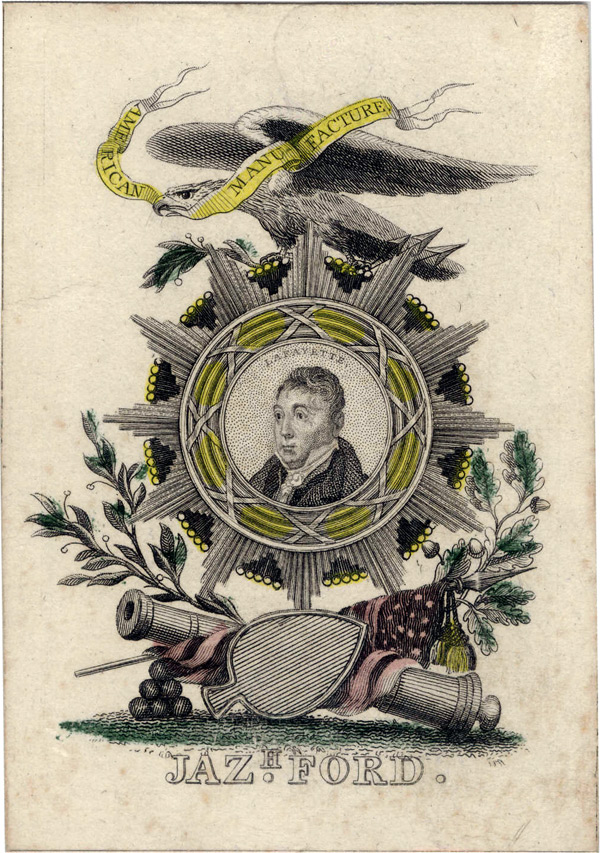
Above: picturesque Ace of Spades by Jazaniah Ford, c.1824, in honour of General Lafayette's visit to America. The engraved Ace shows a portrait medallion of Lafayette with an eagle, boughs of bay and oak, the flag, cannon and the maker's name.
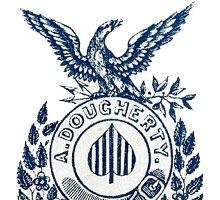
Above: Andrew Dougherty, 1848-1930
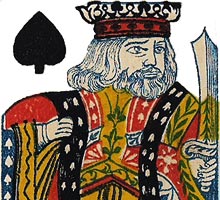
Above: Charles Bartlet (c.1845-1860)
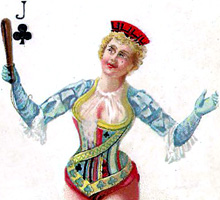
Above: Hard-a-Port tobacco insert cards, c.1890
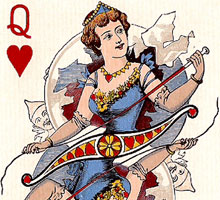
Above: Circus No.47, 1896
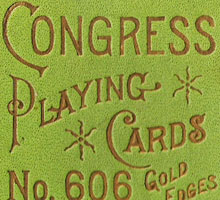
Above: Congress No.606
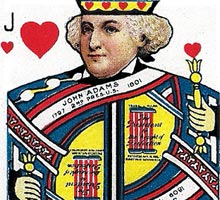
Above: President Suspender, c.1905
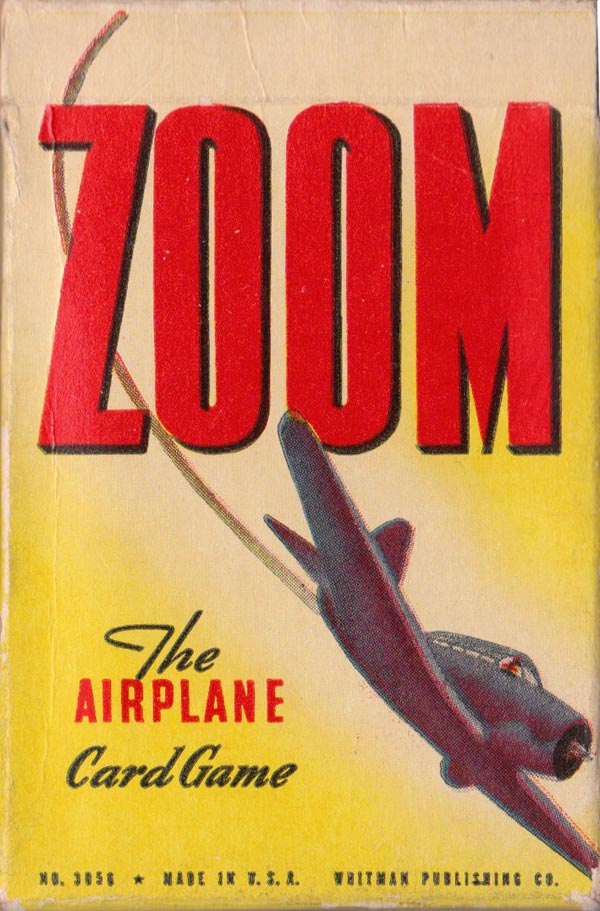
Above: “Zoom” Airplane card game by Whitman Publishing Co., 1941
The actual manufacture of playing cards in North America is reckoned to have begun during the second half of the 18th century, although it is possible that general printers or bookbinders were producing cards before then. Edward Ryves began business making paper hangings in Philadelphia, and also advertised playing-cards in 1774. James Robertson, Jazaniah Ford, born in Milton (Massachusetts) in 1757, Amos Whitney, born in 1766, Thomas Crehore, born in 1769 and James Y. Humphreys of Philadelphia were early card-makers.
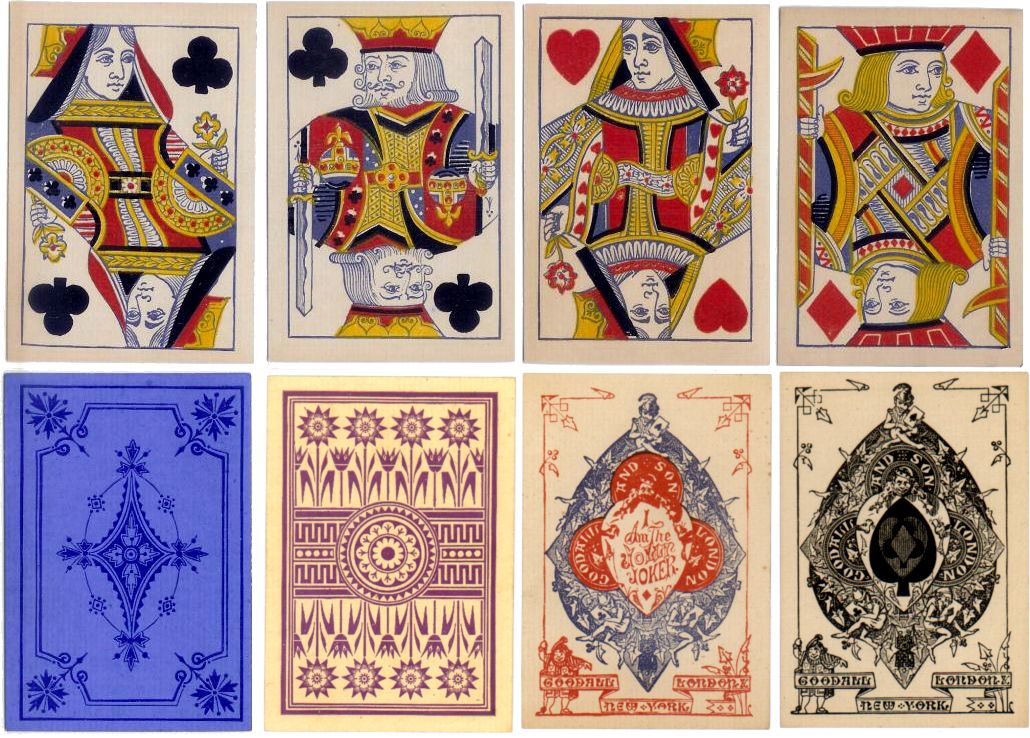
To begin with there was little difference between the early home-produced decks and those imported from England (see example →) although gradually American Aces of Spades became more picturesque than the standard English duty Aces. In addition, the English royal crown at the top of the Ace was replaced by an American eagle, with further patriotic iconography embellishing the design. Some examples of cards manufactured by the early pioneers are represented here:
Lewis I. Cohen (1832-1860) • Andrew Dougherty (1848-1930) • Samuel Hart (1849-1871) • Charles Bartlet (c.1845-1860) • Thomas Crehor c.1850 • Strauss & Trier c.1860 • Union P. C. Co (c.1870-90) • Lawrence & Cohen (1864-71) • Perfection P.C.Co (1885-94) • Globe Card Co (1874-80) • New York Consolidated Card Company (1871-1930) • Continental Card Co., (1874-1880) • Russell & Morgan Co., (1881-1894) • National Card Co., (c.1886-1894) • Standard Playing Card Co • U.S.P.C.C. • Victor Mauger • Winters Art Lithographing Co., Chicago, 1890s • Kalamazoo P.C.Co • Russell P.C.Co • American Bank Note Co • Card Fabrique Company
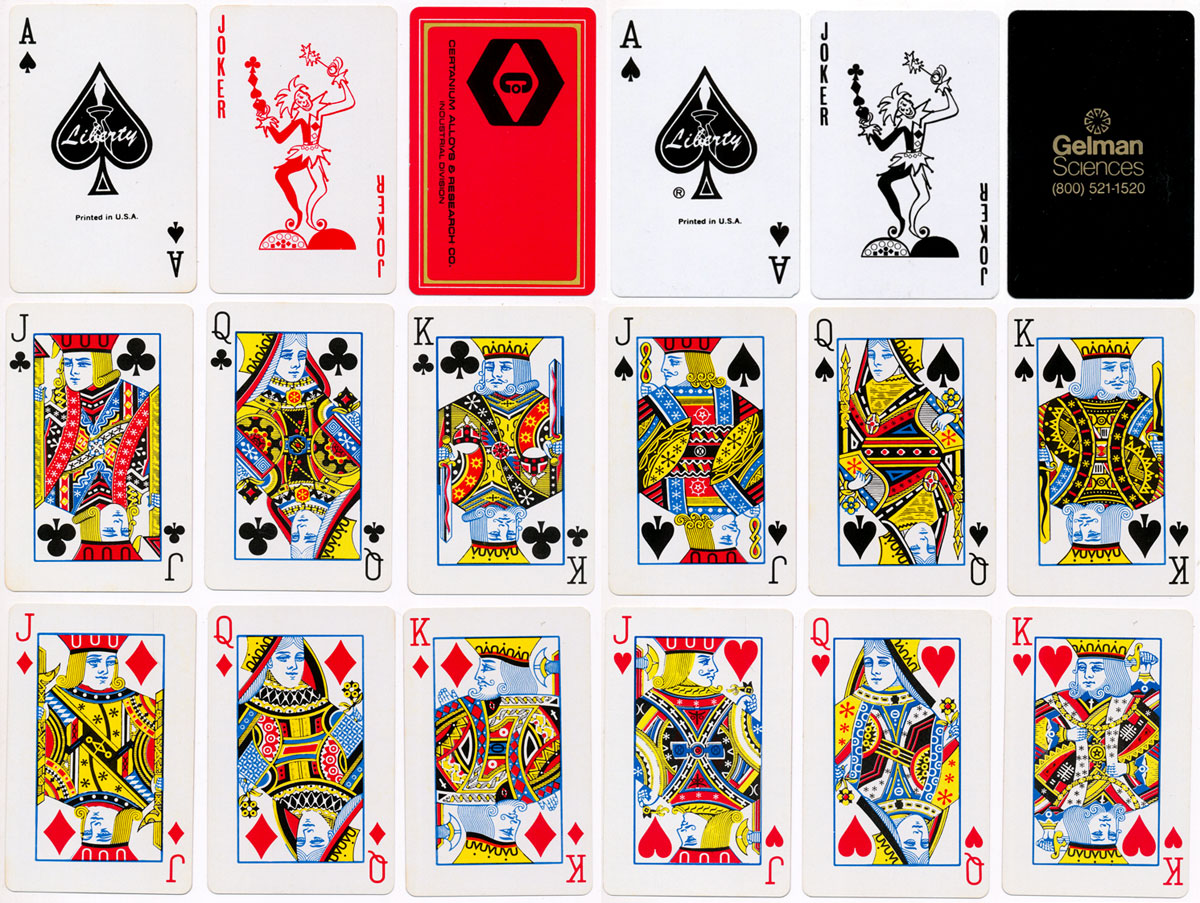
Early playing cards in the traditional design had full-length court cards and no corner indices. This made them harder to read when the cards were fanned in the hand. Gradually attempts were made to overcome this problem, with various patented innovations leading to the standard double-ended playing cards we are familiar with today. American card-makers first introduced the Joker sometime during the 1860s followed shortly after by the introduction of indices, along with various technical improvements in the finished surface of playing cards which were all introduced during the last quarter of the nineteenth century.
Standard cards aside, the non-standard cards of the United States have been many and varied. The large and growing number of advertising decks, Transformation Cards, Political and Patriotic cards, Historical decks, Tarot and Fortune Telling cards, Tobacco insert decks. Railroad Souvenir decks, Pictorial decks, Exposition and World's Fair cards, children's card games and other Novelty playing cards are the true strength of North American playing card production. It would be impossible to fully represent them all, but a tiny sampling is shown here.
Bartlett Ackermann Transformation, 1833 • Dougherty's “Army & Navy” deck, c.1865 • Parker Brothers Inc • Clausen & Son Brewing Co • Monarch Bicycle • The Stage No.65 • The Stage, 1908 • Craddock Soap Theatrical • Hard-a-Port Tobacco • President Suspender • Movie Souvenir • Tales from the Stage • The Steamboat Story • Tigers No.101 • Army No.303 • Navy No.303 • Army & Navy No.303 • Bicycle No.808 • Bicicleta No.810 • Congress No.606 • Cabinet No.707 • Capitol No.188 • Squared Faro No.366 • Tourists No.155 • American Skat • Anheuser-Busch 1 • Anheuser-Busch 2 • Squeezers No.35 • Ivorette No.70 • Triplicate No.18 • Indicator No.50 • Cruiser No.96 • Triton No.42 • Tally-Ho No.9 • Lighthouse No.922 • De Luxe No.142 • World's Fair Souvenir • Vanity Fair Transformation • Trophy Whist No.39 • New Era No.46 • Circus No.47 • Hustling Joe • Ye Witches No.62 • Norwood No.85 • Cotton Belt Route • Cuba Souvenir • Niagara Falls Souvenir • Panama Souvenir • Peru Souvenir • 26th Yankee Division • Lawrence & Cohen • Smart Set No.400 • Russian Monarch • Historic Boston • Pyramid P.C.Co • Gibson P.C.Co • TDC Inc • Hoyle • Kismet Temple • E.E. Fairchild Co • Past-l-Eze • Hycrest Modern Royalty • Carnival Playing Cards • ARCCO • Brown & Bigelow • Submarine Playing Cards • Western P.C.Co • Kem plastic playing cards • ZByte • Self-Nurture Solitaire • Emily Arkin • Pippoglyph Playing Cards • Picture Book of Ana Cortez • Liberty Playing Cards • The Deal • Ian Roth's Unique Playing Cards • Pharaoh Palmier • Sheba • Bonnie Blue's Rummy • Renaissance Playing Cards • McDonald’s • Inky-Dinky • Maxpedition Hard-use • Politicards 2000 • Politicards 2012 • Paulson • Uusi Blue Blood
Over the years the pressures of competition and other market forces have led to many smaller manufacturers being taken over by larger ones. The outcome is that the United States Playing Card Company is now the largest manufacturer in the United States, and has inherited many brands previously owned by smaller manufacturers. At the same time there is a vibrant constituent of emerging new designers who are producing innovative designs in many different styles.
If any collector wishes to contribute images of early American cards to these pages, hi-res scans will be appreciated and acknowledged.
REFERENCES
Dawson, Tom & Judy: The Hochman Encyclopedia of American Playing Cards, U.S. Games Systems Inc., 2000
Hargrave, Catherine Perry: A History of Playing Cards and a Bibliography of Cards and Gaming, Dover Publications, New York, 1966
Heriaud, Maxime: The Early Makers, Clear the Decks, Newsletter for 52plusJoker, vol.XXIX, No.4, Dec 2015.
Starling, Rod: The Art and Pleasures of Playing Cards, Xlibris Corporation, 2008, 2010
We are grateful to Rod Starling for generously sharing knowledge and images of cards and from his collection.

By Simon Wintle
Spain • Member since February 01, 1996 • Contact
I am the founder of The World of Playing Cards (est. 1996), a website dedicated to the history, artistry and cultural significance of playing cards and tarot. Over the years I have researched various areas of the subject, acquired and traded collections and contributed as a committee member of the IPCS and graphics editor of The Playing-Card journal. Having lived in Chile, England, Wales, and now Spain, these experiences have shaped my work and passion for playing cards. Amongst my achievements is producing a limited-edition replica of a 17th-century English pack using woodblocks and stencils—a labour of love. Today, the World of Playing Cards is a global collaborative project, with my son Adam serving as the technical driving force behind its development. His innovative efforts have helped shape the site into the thriving hub it is today. You are warmly invited to become a contributor and share your enthusiasm.

Related Articles
Romeo and Juliet
Unbranded ‘Romeo and Juliet’ backs by Russell Playing Card Company, c.1911.
A Look Back with Hope for the Future
“A Look Back with Hope for the Future” by Rod Starling

Screen Legends
‘Screen Legends’ playing cards published by U.S. Games Systems, Inc.
Gibson Playing Card Co
Gibson Playing Card Co., Cincinnati and New York.

The Lumberjacks
2nd edition of Lumberjacks designed by Vadim Smolenskiy and manufactured by U.S.P.C.C.
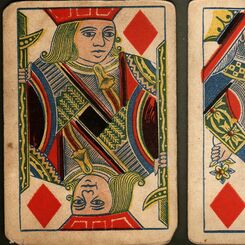
42: Andrew Dougherty
Andrew Dougherty was one of the biggest American card-makers in the 19th century
Card Fabrique Company
Card Fabrique Company had connections with several other manufacturers and their complete history is...

Grimm's Forest Playing Cards
A non-standard pack created to play an original board game; inspired by the Brothers Grimm fairy tal...
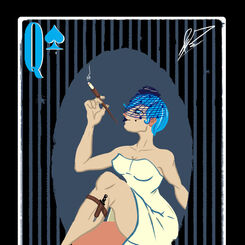
Gangster playing cards
A small set of gangster and mafia inspired cards created by Jacob Reynolds.
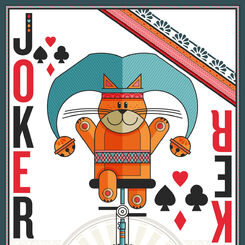
Minneapolis Bike Tour Cards
Ellen Schofield has created some amazing posters for the Minneapolis Bike Tour, each poster has been...
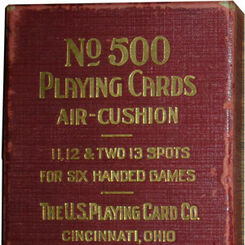
No.500 Playing Cards
No.500 Playing Cards published by U.S.P.C.C., c.1910
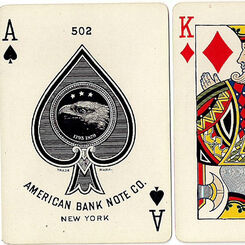
American Bank Note Company
The American Bank Note Company was a long-established firm producing national currency, finely engra...
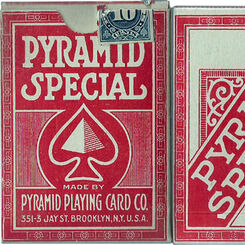
Pyramid P.C.C.
The company introduced a number of standard brands until it was absorbed into U.S.P.C.C. and its aff...
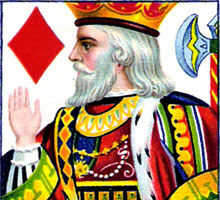
Norwood #85, c.1909
The deck features a colourful Ace of Spades and Joker, decorated Aces, unique courts and two beautif...
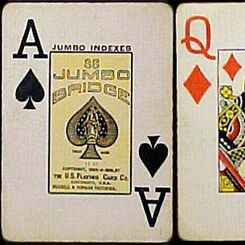
Jumbo Bridge 88
Cards with jumbo indices were introduced in 1895, and were given the subtitle '88'.
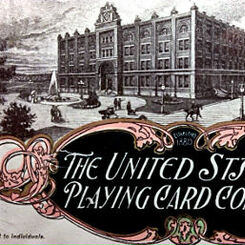
The United States Playing Card Company
Over the years the pressures of competition and other market forces have led to many smaller manufac...
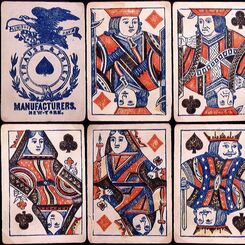
Strauss & Trier, c.1860
Strauss & Trier, New York, c.1860.
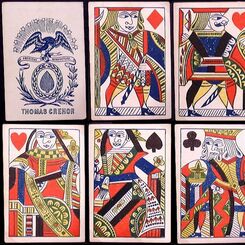
Thomas Crehore copy, c.1850
Thomas Crehore copy, c.1850.
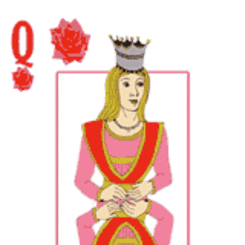
Bonnie Blue’s Rummy Cards
Bonnie Blue’s Rummy Cards.
4 Seasons Playing Cards
Colours of the Four Seasons - Playing Card Art Deck
Most Popular
Our top articles from the past 60 days